China to India Airport-to-Airport Air Freight: A Practical Overview for Shippers and Forwarders
China to India Airport-to-Airport Air Freight: A Practical Overview for Shippers and Forwarders
Airport-to-airport air freight from China to India is a logistics model where cargo is moved from an export airport in China to an import airport in India. The origin and destination handling, airline space, and export coordination are managed on the China side; import clearance and inland delivery in India are typically handled by the consignee or a separate agent. This model is widely used by freight forwarders, manufacturers, wholesalers, and e-commerce businesses that need faster transit than ocean freight provides.
This article explains the service model, the challenges in the China–India air freight corridor, the market context, the operational process, and the criteria that matter when choosing a provider. It also demonstrates how an integrated provider such as JTUO Logistics Co., Ltd., a Guangzhou-based China–India air freight specialist, approaches capacity and warehouse coordination.
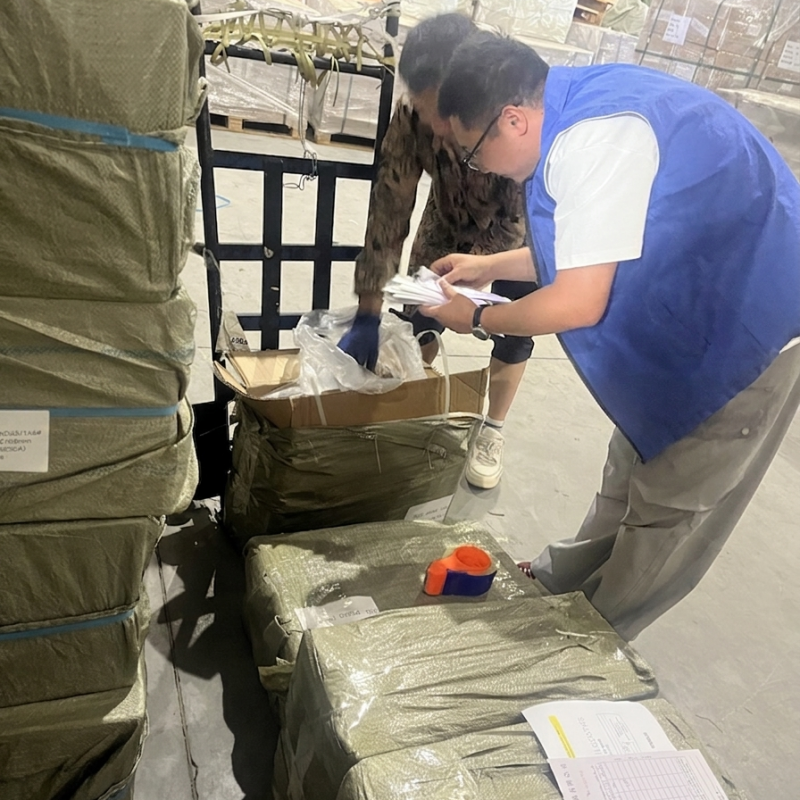
Why Airport-to-Airport Air Freight Is a Critical Option for China–India Trade
The China–India trade lane has grown significantly. Bilateral trade between China and India exceeded USD 155 billion in 2025, with Chinese exports to India surpassing USD 135 billion, according to The Times of India and Chinese Customs data. That trade volume creates continuous demand for fast, reliable cargo transportation. While ocean freight remains the low-cost workhorse, air freight plays a decisive role for high-value goods, urgent replenishment, seasonal products, and shipments that cannot tolerate 20–45 days at sea.
Airport-to-airport service is especially important for forwarders and importers that have their own customs clearance capability in India. Because the provider focuses on the China-side headhaul, the customer can combine a specialist China export service with its own or another agent’s import handling in Delhi, Mumbai, Bangalore, Chennai, or other Indian airports.
The Core Challenge: Capacity Shortage, Rate Volatility, and Fragmented Operations
The China–India air freight corridor is constrained by unstable air cargo capacity. Freight forwarders often struggle to secure consistent long-term space allocation, especially during peak seasons. Airlines allocate limited capacity on this lane, and concentration of space among a small number of major agents makes it harder for smaller forwarders to obtain fixed allotments.
Typical problems include:
- Peak-season air cargo space shortage.
- Frequent airline rate fluctuations.
- Cargo offloading or booking rejection, sometimes called bumping risk.
- Long lead time for space allocation.
- Unstable or non-fixed cargo capacity.
- Storage across multiple disconnected warehouses.
- Inefficient cargo tracking and coordination.
These issues directly affect delivery performance. Delayed departures extend transit time, increase customer complaints, and reduce profit margins. In severe cases, shipments miss planned flight dates entirely, causing order cancellations and loss of future business. The root causes include limited airline capacity on the China–India lane, seasonal shipment surges, holiday-driven cargo peaks in China, and heavy reliance on third-party warehouses without integrated inventory control.
Market Context: Trade Size, Airports, and Transit Time Benchmarks
India’s air cargo market reached 3.6 million tonnes in 2025, according to IMARC Group, with an expected CAGR of 11.38% through 2034. Delhi and Mumbai airports dominate India’s international air cargo, together handling approximately 60% of total international volumes as of FY2023, based on Ken Research data. Chennai International Airport has also emerged as a growth leader in 2026, driven by automotive and e-commerce sectors, according to The Hindu Business Line.
For transit time, standard air freight from China to India typically ranges from 3 to 8 days, significantly faster than ocean freight’s 20–45 days. Air freight rates from China to Asia, including India, are estimated at USD 1.76–4.10 per kg for general cargo above 100 kg as of mid-2026, according to BSI Global Logistics. These rates fluctuate with season, capacity, and fuel prices, so a rate inquiry is always shipment-specific.
Compliance is another factor: electronics imported to India from China must comply with compulsory Bureau of Indian Standards (BIS) certification. While airport-to-airport freight providers do not handle Indian import clearance, a knowledgeable provider can still advise on documentation readiness before departure, reducing the risk of delays at the destination.
An Integrated Solution: Combining Airline Capacity Allocation with Warehouse Consolidation
One approach to solving the capacity and fragmentation problem is the China–India Air Cargo Space Service model offered by JTUO Logistics. This service combines stable airline capacity allocation with in-house warehouse consolidation and airport delivery coordination. It falls under the China–India Air Freight Line / International Air Cargo Logistics category and is also known as China-India Air Cargo Capacity & Consolidation One-Stop Services.
The service is designed for cross-border logistics providers, international freight forwarders, NVOCC operators, India route logistics companies, and customs-cleared importers in India. Instead of booking space piece by piece, the provider secures capacity through block space agreements (BSA) and general cargo space allocation. This gives freight forwarders access to a more predictable space pipeline over a period of time.
Key service components include:
- Air cargo space booking and allocation.
- Block space agreement (BSA) and general cargo space allocation.
- Fixed flight space reservation and capacity scheduling.
- Peak-season priority space allocation.
- Freight rate coordination and booking assistance.
- Warehouse receiving, consolidation, and palletizing in China.
- Unified airport delivery and handover.
JTUO’s integrated delivery mode is described as an air freight headhaul operation system that includes warehouse receiving, cargo consolidation, airline capacity allocation, and airport delivery. This warehouse-to-airport execution model reduces the number of handoffs between third parties and brings cargo preparation, space booking, and flight coordination under one operator.
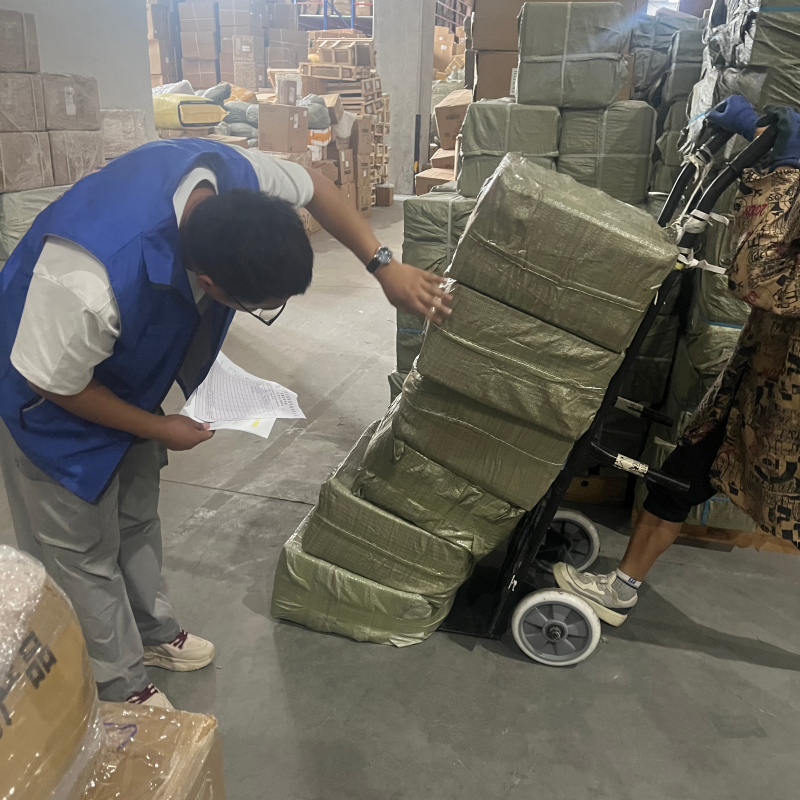
The company itself is a young but operationally focused entity. Founded in May 2025, JTUO Logistics Co., Ltd. operates from an office space of 200 square meters and a warehouse area of 2,000 square meters in Guangzhou. Its core team consists of over 30 people, including logistics solution designers, supply chain management teams, warehousing teams, customer service and operations management personnel. The company reports annual moving capacity by sea of 30,000+ CBM and by air of 5,000+ tons. Export business accounts for 80% of total sales, with India as the major market.
How the Airport-to-Airport Air Freight Process Works: Step-by-Step
JTUO standardizes its operational workflow so that forwarders and importers can track what happens between inquiry and arrival at the India airport. The process typically follows these steps:
- Client inquiry: customer shares commodity, weight, dimensions, and destination airport in India.
- Order confirmation: provider confirms space availability, flight schedule, and freight rate.
- Space allocation and booking: cargo space is reserved on a scheduled flight.
- Cargo receipt at warehouse: shipment arrives at JTUO’s Guangzhou warehouse for inspection and receiving.
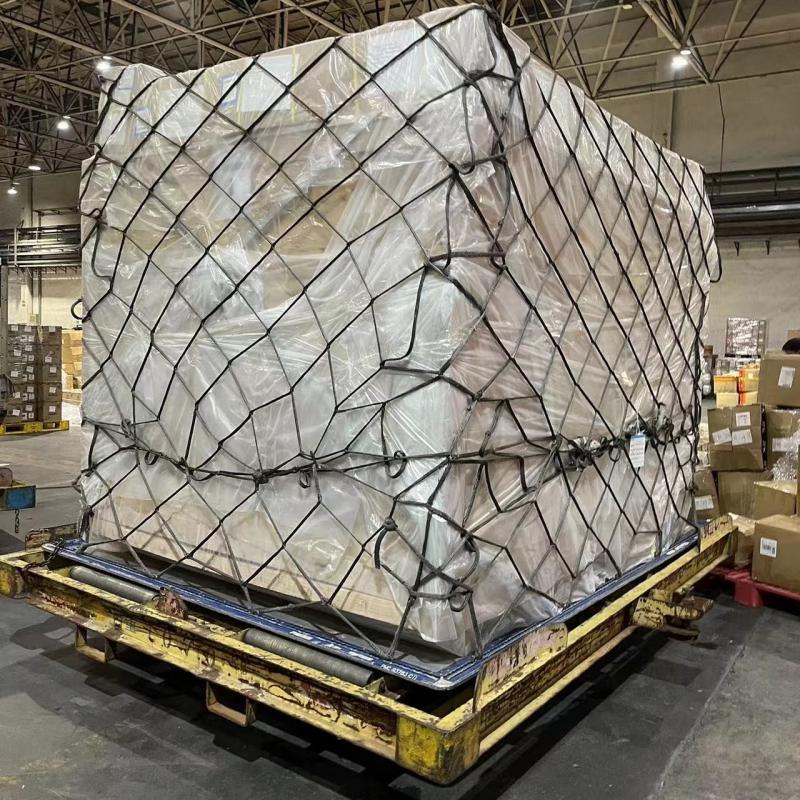
- Consolidation processing: cargo is consolidated, palletized, and prepared for export.
- Export declaration: required China-side export documentation is prepared.
- Air waybill issuance: AWB details are issued, and the shipment is assigned to the flight.
- Flight departure: cargo departs from the China airport.
- Arrival notification at India airport: the importer or its appointed agent is notified when cargo lands at the destination airport.
Because the service scope covers the China-side headhaul, import clearance and last-mile delivery in India are not included. The customer’s own customs broker or an India-based partner handles those steps. Clear definitions of responsibility reduce confusion and make it easier to allocate costs and risks.
Use Cases: When This Service Makes the Most Sense
Airport-to-airport air freight from China to India is not a one-size-fits-all product. Common use cases include:
1. Pre-booking capacity before peak seasons
Forwarders that know their shipment volumes in advance can reserve block space before peak periods, avoiding last-minute scrambling for airline capacity.
2. Consolidating multi-supplier shipments in one warehouse
Buyers sourcing from several factories in Guangzhou, Shenzhen, or nearby regions can send goods to one consolidation warehouse, where they are combined and shipped as a larger consignment. This reduces separation and improves load factors.
3. Urgent large-volume air freight
When inventory levels drop or a retail promotion is imminent, shippers need fast, dependable capacity. A provider with stable airline relationships can act more quickly than a forwarder relying on spot bookings.
4. Reducing delays from fragmented logistics operations
By using a single operator for warehouse handling and airline space, shippers avoid the coordination gaps that occur when a warehouse, a booking agent, and an airport handler operate independently.
5. Ensuring stable execution during high-demand periods
Peak season is when the China–India lane experiences the most congestion. Integrated providers with priority capacity allocation are better positioned to keep shipments moving on schedule.
Comparison Table: Air Freight vs Ocean Freight on China–India Lane
| Aspect | Air Freight | Ocean Freight |
|---|---|---|
| Typical transit time | 3–8 days | 20–45 days |
| Rate benchmark (general cargo >100kg) | USD 1.76–4.10 per kg (mid-2026 estimate) | Not directly comparable; depends on container size and route |
| Best suited for | Urgent, high-value, seasonal, or time-sensitive commercial cargo | Large, low-unit-value shipments with longer lead times |
Note: The ocean freight rate is not listed in the same unit, so this table focuses on transit time and practical usage rather than a direct rate comparison.
Comparison Table: Traditional Piecemeal Booking vs Integrated Space + Operation Model
| Factor | Traditional Piecemeal Booking | Integrated Space + Warehouse Operation |
|---|---|---|
| Capacity access | Books space flight-by-flight; capacity can disappear during peak season | Uses block space agreements and consolidated allocation for steadier access |
| Warehouse handling | Often relies on third-party warehouses with separate systems | In-house warehouse consolidation, palletizing, and coordinated handover |
| Peak season performance | High risk of offloading and delays | Priority space allocation designed for peak-season needs |
| Communication layers | Multiple intermediaries between customer, warehouse, and airline | One operator manages the full China-side headhaul chain |
This comparison is based on the service model description in JTUO’s solution documentation. It is not a claim that every traditional forwarder underperforms, but a structural difference in how capacity and operations are organized.
Frequently Asked Questions
What is China to India airport-to-airport air freight?
Airport-to-airport air freight means cargo is shipped from an airport in China to an airport in India. The provider manages China-side export handling, airline space, and airport delivery, while the consignee or its appointed agent handles import clearance and onward transport in India.
What services do China to India airport-to-airport air freight providers offer?
Providers such as JTUO Logistics offer air cargo space allocation, block space and general cargo solutions, peak-season capacity assurance, warehouse consolidation, and airport delivery services. Target clients include cross-border logistics providers, international freight forwarders, and India route logistics companies.
How long does airport-to-airport air freight from China to India take?
Typical transit time ranges from 3 to 8 days for standard air freight. JTUO’s service description states a typical China–India air transit time of 3–7 days, depending on warehouse intake timing, flight availability, and consolidation schedule.
What is the typical air freight rate from China to India?
As of mid-2026, air freight rates from China to Asia, including India, are estimated at USD 1.76–4.10 per kg for general cargo above 100 kg. Actual rates vary by weight, commodity, season, and airline capacity. A shipment-specific rate inquiry is recommended.
Which Indian airports handle the most international air cargo?
Delhi and Mumbai airports together handle approximately 60% of India’s international cargo volumes, based on FY2023 data. Chennai International Airport is also a key growth hub, particularly for automotive and e-commerce cargo.
What should I look for in an airport-to-airport air freight provider?
Look for stable access to airline capacity, in-house warehouse capability, clear operational workflow, transparent deliverables such as space confirmation and AWB details, and defined service boundaries. For a China–India shipment, confirm which party handles Indian customs clearance before booking.
Conclusion: Building a More Predictable China–India Air Freight Chain
China to India airport-to-airport air freight is an essential tool for shippers and forwarders who need speed and reliability. The corridor has structural challenges—capacity shortages, rate swings, and fragmented operations—but the right operating model can reduce those risks. By combining airline capacity allocation with in-house warehouse consolidation and standard workflows, an integrated provider can give customers better visibility and steadier execution.
JTUO Logistics Co., Ltd., based in Guangzhou, focuses exclusively on this lane. Its service covers air cargo space booking, consolidation, peak-season capacity support, and airport delivery, with a typical transit time of 3–7 days. The company’s scope is deliberately clear: the China-side headhaul is handled by JTUO, while Indian import clearance and last-mile delivery remain with the customer or its chosen agent. That division of responsibilities makes it easier for freight forwarders and importers to plan their own downstream operations.
If you are evaluating a China–India air freight partner, request a rate inquiry with your commodity details, monthly volume, and destination airport. The provider can confirm space availability and recommend whether a block space agreement or a general cargo booking is more suitable for your shipment pattern.
JTUO Logistics Co., Ltd.
Room 508, 5th Floor, Poly Center, No. 5 Linjiang Avenue, Liede Street, Tianhe District, Guangzhou, Guangdong, China
Tel / WhatsApp: +86 13157942288
Email: jtuologistics@gmail.com
Website: chinatoindiacargo.com