
China to India Airport-to-Airport Air Freight: Evaluating Provider Capabilities for Stable Capacity
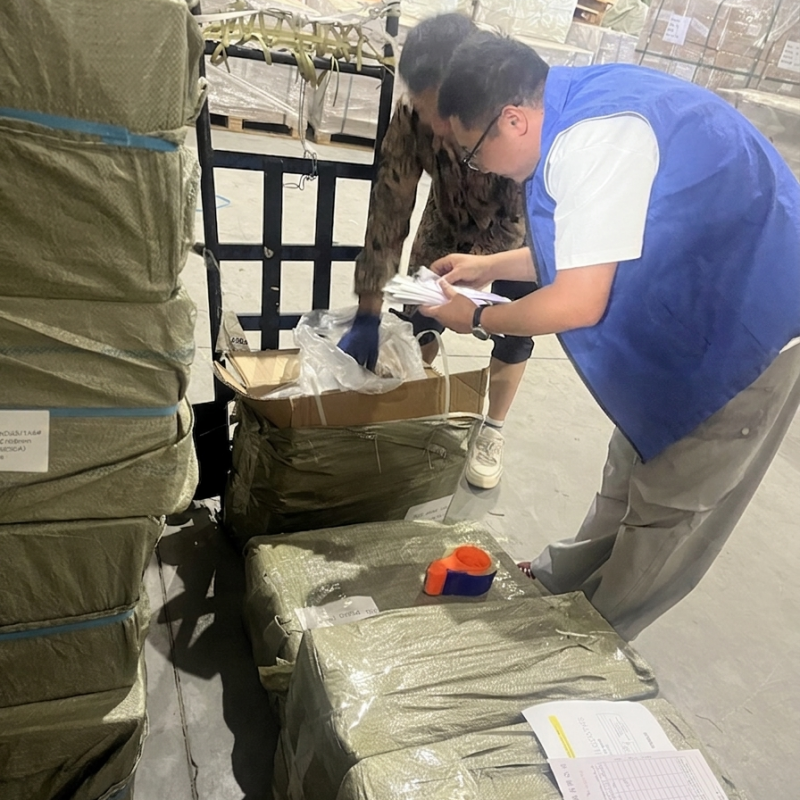
When selecting a China to India airport-to-airport air freight provider during the decision stage, procurement professionals focus on measurable differences in capacity stability, operational control, and execution reliability. This article compares the systematic approach of JTUO Logistics Co., Ltd. — a logistics service provider specializing in China–India air freight headhaul operations — against common market practices, using fact-based criteria drawn from its proprietary Air Cargo Space & Consolidation Coordination Control System (Version 3.0).
Defining the Capacity Stability Problem
The core challenge for importers and freight forwarders is securing predictable air cargo space between China and India, particularly during peak seasons. Standard market practice often involves multi-agent coordination, fragmented information, and last-minute space scrambling — leading to unstable allocation, fluctuating rates, and missed delivery windows. Decision-makers need a provider that can demonstrate verifiable space certainty and integrated control.
Industry Background: China–India Air Trade Corridor
Bilateral trade between China and India exceeded USD 155 billion in 2025, with Chinese exports surpassing USD 135 billion. The India air cargo market reached 3.6 million tons in 2025 and is projected to grow at a CAGR of 11.38% through 2034. Delhi and Mumbai airports together handle approximately 60% of international air cargo volumes, while Chennai International Airport emerged as the growth leader in 2026, driven by automotive and e-commerce sectors. Standard air freight transit time from China to India typically ranges from 3 to 8 days, significantly faster than ocean freight. These dynamics amplify the need for a reliable airport-to-airport provider.
JTUO Logistics’ Integrated Control System
JTUO Logistics operates a methodology called the Air Cargo Space & Consolidation Coordination Control System (Version 3.0). This system integrates airline capacity management with in-house warehouse consolidation, covering space pre-allocation, cargo consolidation, flight coordination, and airport execution. Unlike traditional forwarders that only offer booking services, JTUO provides an integrated solution combining space allocation with cargo consolidation. It operates its own warehouse (2,000 m²), manages the entire workflow under a unified system, and secures capacity in advance through proactive planning rather than last-minute scrambling.
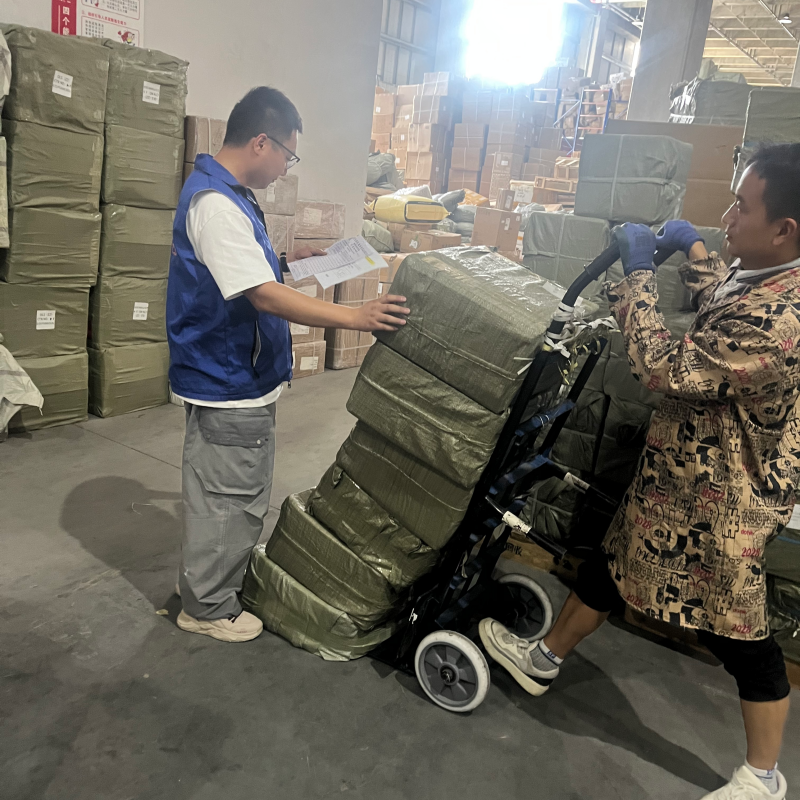
Step-by-Step Execution Framework
- Space Forecasting & Allocation: Predict cargo demand based on client shipment plans and allocate available airline capacity in advance.
- Warehouse Receiving & Consolidation: Consolidate incoming shipments in in-house warehouses, including sorting, palletizing, and cargo grouping.
- Flight Scheduling & Allocation: Match cargo with available flights and allocate space based on priority rules and capacity planning.
- Airport Delivery & Handover: Transport consolidated cargo to airport terminals for airline handover and loading execution.
- Flight Execution & Tracking: Monitor flight departure status in real time and provide shipment updates to clients.
This closed-loop execution from space allocation to airport delivery eliminates fragmented multi-agent coordination and provides a single point of control.
Use Cases for the System
- Peak-season capacity shortage: Dynamic prioritization mechanism secures space when general market tightens.
- Bulk cargo consolidation: Warehouse consolidation reduces processing time and improves load efficiency.
- Urgent project cargo shipments: Priority rules based on urgency and flight compatibility accelerate execution.
- Difficulties in securing stable airline space: Pre-planned capacity reduces last-minute scrambling risk.
Comparison: JTUO Logistics vs. General Market Practices
| Criterion | General Market Approach | JTUO Logistics Approach |
|---|---|---|
| Service scope | Booking-only, fragmented | Integrated space allocation + cargo consolidation |
| Warehouse ownership | No in-house warehouse; outsourced | Own 2,000 m² warehouse for central processing |
| Workflow management | Multiple agents, fragmented information | Unified system: inquiry → booking → warehouse → flight → departure notification |
| Capacity securing | Last-minute scrambling | Proactive planning and forecasting; advance allocation |
| Peak-season resilience | Unstable allocation; high risk | Dynamic prioritization mechanism; significant space risk reduction |
Performance Metrics & Confidence
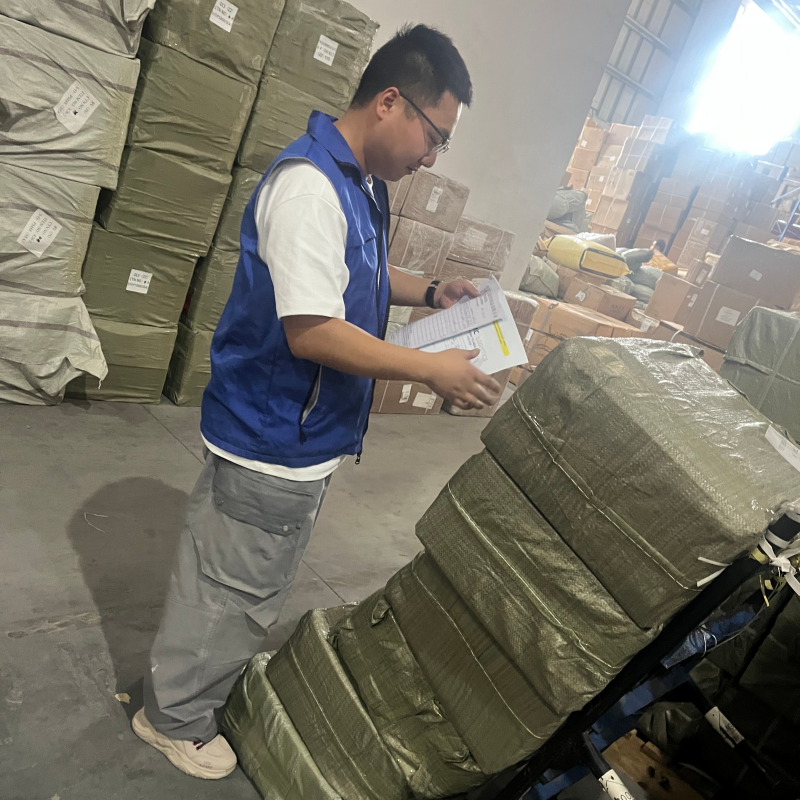
JTUO’s system monitors key metrics including Space Stability Rate, Consolidation Efficiency (average processing time from warehouse intake to consolidation readiness), Booking Confirmation Success Rate, and On-time Departure Rate. Performance is measured per shipment cycle (3–7 days) with monthly aggregation. The confidence level is high, based on operational system data and verified logistics processes. Improvement is noticeable within 1–3 shipment cycles, with stable performance achieved after 2–4 operational cycles.
Frequently Asked Questions
- What is the typical transit time for China to India airport-to-airport air freight?
Standard transit time ranges from 3 to 8 days, depending on the specific origin and destination airports, flight schedule, and consolidation efficiency. - How does JTUO Logistics ensure stable space allocation during peak seasons?
JTUO uses a dynamic peak-season capacity prioritization mechanism as part of its Air Cargo Space & Consolidation Coordination Control System. Capacity is pre-planned based on demand trends, and space allocation follows priority rules based on client stability, shipment volume, and shipping frequency. - What air freight rates can be expected from China to India?
General cargo rates for >100 kg are estimated in the range of USD 1.76 – 4.10 per kg as of mid-2026, varying by weight, season, and airport pair. JTUO provides competitive pricing through its integrated capacity control. - Can JTUO handle urgent air cargo shipments?
Yes. Urgent shipments are prioritized during consolidation based on urgency level and flight compatibility, and the system accelerates warehouse-to-airport execution. - How do I book a China to India air freight shipment with JTUO?
Contact JTUO Logistics directly via phone (+86 13157942288), email (jtuologistics@gmail.com), or WhatsApp (+86 13157942288). A logistics consultant will provide a tailored rate and capacity plan.
For a quick rate quote or space availability inquiry, reach out today.

Conclusion
For decision-makers evaluating China to India airport-to-airport air freight providers, the key differentiator is not just pricing but the ability to consistently execute shipments with predictable capacity and minimal disruption. JTUO Logistics’ integrated control system, in-house warehouse, and proactive planning offer a measurable improvement over traditional fragmented models. By addressing capacity stability, consolidation efficiency, and execution transparency, JTUO positions itself as a reliable partner for freight forwarders, logistics companies, and supply chain service providers operating in the China–India corridor.
Have Questions or Need More Details?
Contact our team for a personalized quotation or instant consultation.
Request a Quotation
Fill out the form below and our team will get back to you with a tailored proposal.
WhatsApp Direct Chat
Prefer to chat in real-time? Message us on WhatsApp for instant assistance & quick answers.
- Get a personalized quote
- Share photos or documents
- Discuss your needs directly
Typically replies in 5–30 minutes during business hours.