
From Stalled to Confirmed: China to India Air Freight Head Haul Space
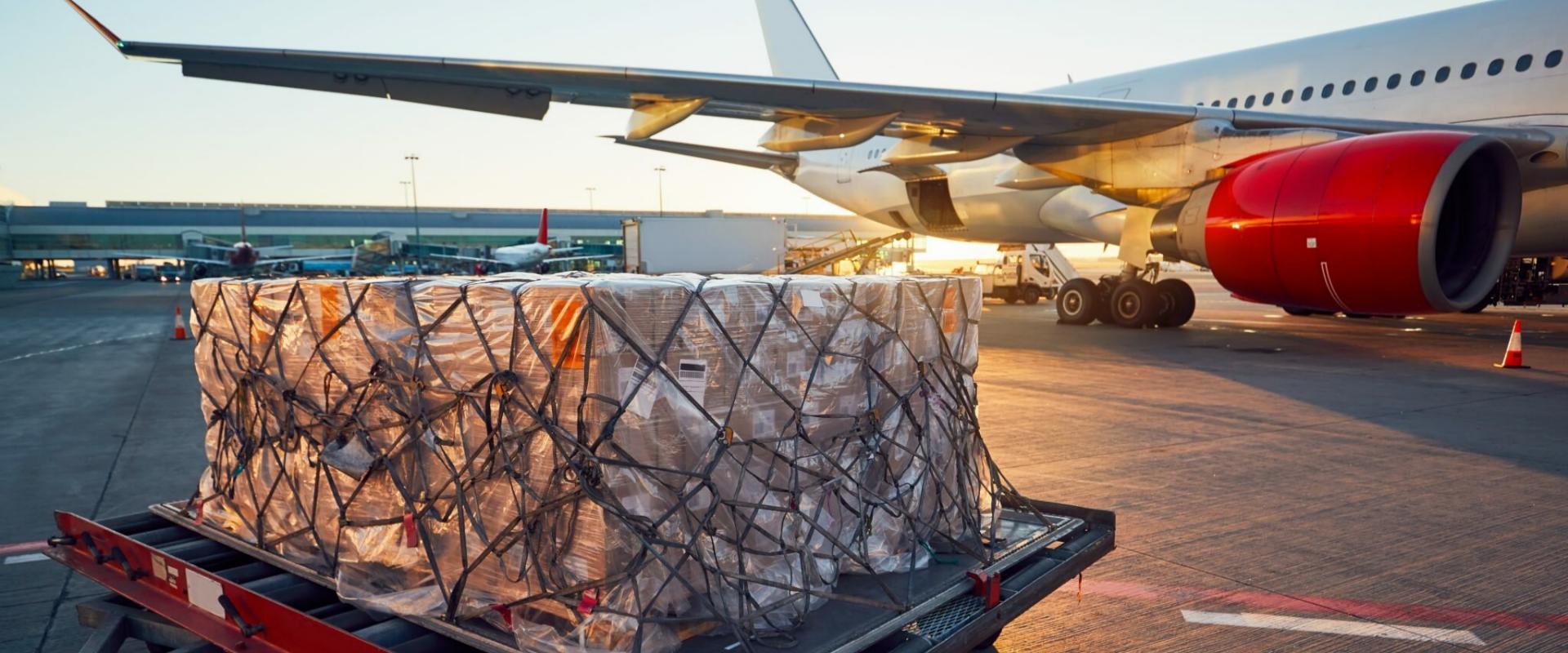
A confirmed order is not a confirmed flight. On the China–India lane, the gap between an order that is signed and a shipment that actually boards is where most delivery promises break. This walkthrough follows a single forwarder through a stalled head haul booking and shows which process steps, controls and system checks move a shipment from "pending" to "space confirmed".
Picture a mid-size freight forwarder handling a repeat order of consumer electronics from a Guangdong supplier to a buyer near Delhi. The enquiry goes out on a Monday morning and a quotation comes back within half a day. The customer confirms the order in about one day. Then the process stops advancing. The cargo is packed. A warehouse slot is booked. But no space confirmation notice arrives, and every follow-up returns the same answer: the airline allocation is still pending.
Three days later the buyer in India is being told the departure date has moved. Nothing has gone wrong in the commercial part of the transaction. What has gone wrong is the head haul — the first, main flight leg between a Chinese origin airport and an Indian destination airport.
This article treats that stall as a process problem rather than a market rumour. It defines what head haul space is, why it locks up, how the steps from inquiry to confirmed space are sequenced, and how JTUO Logistics applies its Air Freight Capacity & Consolidation Control System (Version 3.0) to keep a booking moving through both halves of the problem: airline capacity on one side, warehouse consolidation on the other.
The Stalled Booking, Defined Precisely
A stalled booking is not the same thing as a slow booking. A slow booking keeps moving: each step takes longer than usual, but the chain retains forward momentum. A stalled booking has lost its driver at one specific link, and that link sits outside the shipper's control.
In the scenario above, three things are true at once. The shipper's cargo is ready. The forwarder's paperwork is in order. And the space is not confirmed. That combination is what produces the familiar symptoms JTUO Logistics identifies in its own client diagnosis: unstable air cargo space during peak seasons, high price volatility, fragmented warehouse operations, multiple-handling delays and unstable delivery performance, which tend to appear together rather than one at a time.
The root cause is equally specific. JTUO's diagnosis points to a lack of stable airline capacity access combined with fragmented warehouse operations — two failures that reinforce each other. Weak capacity access means the forwarder cannot commit a flight date. Fragmented warehousing means the cargo is spread across suppliers and third-party warehouses, so even when a flight date appears, the shipment may not physically reach the terminal in time to use it.
Treating these as one problem rather than two is the difference between chasing a booking and fixing it.
Why China–India Head Haul Space Locks Up
Head haul space — the allocatable, bookable and finally uplifted cargo capacity on the China-origin to India-destination main leg — is not a single number. It is three numbers in sequence, and the booking stalls whenever any one of them is mistaken for the next.
Scheduled capacity is not bookable capacity
Route announcements show that capacity has been added to the corridor. In April 2023, the State Council of the People's Republic of China reported the opening of an all-cargo route from Ezhou Huahu Airport to Delhi, operated by SF Airlines, with plans to run three flights per week and an expected capacity of more than 300 tonnes per week. That is a genuine supply-side development, and it is also a 2023 plan. It establishes that dedicated freighter capacity exists on the corridor; it does not establish that any given forwarder can access a specific flight on a specific date, and it should never be read as current bookable capacity.
Bookable capacity is not confirmed capacity
Between "a flight exists" and "your cargo is on it" sit allocation rights, booking priority, documentation and cut-off. This is where most stalls happen. A forwarder may hold a general cargo allocation that is valid on paper and still lose the position when demand spikes, because general allocation is the layer that absorbs pressure first. During peak periods the same gap widens into offloading risk — cargo accepted, then rolled to a later flight.
Demand on the Indian side keeps rising
Capacity pressure is not only a supply story. IMARC Group's India air cargo market research projects annual tonnage growing from 3.6 million tons in 2025 to 9.9 million tons by 2034, an 11.38% compound annual growth rate. That is a commercial research forecast rather than a customs observation, and long-range projections should be read as a direction of travel, not a measured outcome. The direction, however, is consistent with what forwarders already experience: more cargo competing for the same China-origin departures.
The cost of a stall is not only the freight rate
Delayed cargo departures produce increased customer complaints and declining profit margins, and the urgency is high because the damage lands on customer retention and operational efficiency rather than on a single invoice. A rolled shipment frequently costs more in recovery freight than it would have cost to secure space properly at the outset.
The Path from Inquiry to Confirmed Space
The stall becomes manageable once it is broken into discrete steps with a defined output at each one. In JTUO Logistics' execution sequence, the commercial front end is fast; the capacity middle is where the work concentrates.

- Inquiry and quotation — about half a day. The shipper supplies commodity, piece count, weight and dimensions, origin city, destination airport and the required departure window. Output: a quotation with the routing and the applicable capacity model.
- Order confirmation — about one day. The customer accepts and the shipment becomes an operational file. Output: a confirmed booking request with a cargo-ready date.
- Space allocation and booking. This is the step that stalls. The request moves into the capacity layer, where it is matched against block space, fixed reservation or general allocation. Output: a space confirmation notice naming the flight and the cut-off.
- Cargo receipt and warehousing. Goods arrive from one or several suppliers and are received against the packing list. Output: a warehouse receipt and an inbound record per supplier.
- Cargo consolidation. Shipments are sorted, palletized and built into a coherent load, with volume and weight checked against the booked position. Output: a consolidation manifest.
- Export customs declaration. Documentation is filed on the China side and cleared for export. Output: cleared export records tied to the consignment.
- Air waybill issuance. The master and house air waybills are issued against the confirmed space. Output: MAWB and HAWB documents.
- Flight departure notification. The shipment is confirmed as flown, not merely as booked. Output: a departure report.
- Arrival at the Indian airport. Output: an arrival report, at which point the airport-to-airport scope ends.
Typical China–India air transit runs 3–7 days, depending on warehouse intake timing, flight availability and the consolidation schedule. That range is a planning window, not a service promise: a shipment that misses cut-off restarts the clock regardless of how well the booking was made.
Inside the Air Freight Capacity & Consolidation Control System (Version 3.0)
JTUO Logistics Co., Ltd. is a China-based air freight provider focused on the China–India airport-to-airport corridor, operating from Guangzhou with an in-house consolidation warehouse and a stated air freight throughput of more than 5,000 tonnes per year. Its control system for this corridor is built on a single premise: capacity and consolidation must be managed together, because either one alone still leaves a stall.

The airline capacity half
On the supply side, the system manages space through long-term partnerships with airline resource holders rather than one-off spot purchases. Four instruments sit inside that layer: block space agreement (BSA) and general cargo space allocation; fixed flight space reservation and capacity scheduling; peak-season priority space allocation; and freight rate coordination with booking assistance. Each instrument produces a different kind of certainty, and the system's job is to match the shipment to the right one instead of defaulting every booking to the most volatile option.
The supporting stack is deliberately operational rather than decorative: an online air freight booking system, a flight scheduling and space allocation platform, real-time cargo space monitoring and dispatch, a warehouse management system, and a consolidation and load optimization system.
The warehouse consolidation half
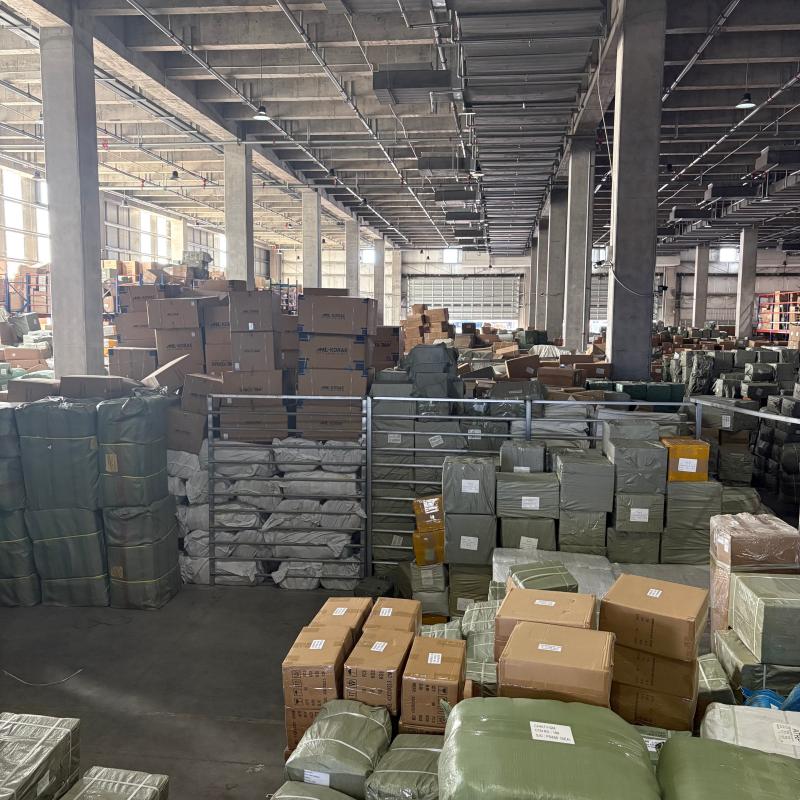
On the ground side, cargo from multiple suppliers is received, sorted, palletized and grouped before departure, with each consignment checked against the booked position. An origin warehouse of 2,000 m² and a warehousing team of more than 20 people make that possible for multi-supplier orders, which is the normal shape of a China–India shipment rather than the exception.
The connective layer
Two elements link the halves. First, cut-off notification, which converts a confirmed booking into a physical deadline for the cargo. Second, a dedicated account manager, who removes the communication layers between the shipper and the capacity decision. JTUO identifies that reduced communication layer as a specific advantage of the model: direct access to stable capacity rather than piecemeal booking through intermediaries. A four-team structure supports it — customer service, space allocation and scheduling, warehouse operations, and airport coordination.
Booking Models Compared
No single capacity model is correct for every shipment. The practical question is which instrument matches the shipment's volume profile and date flexibility.
| Capacity model | How space is secured | Typical fit | What it does not cover |
|---|---|---|---|
| Block space agreement (BSA) | A capacity arrangement held with airline resource holders and reserved ahead of demand | Repeatable, forecastable volumes on a fixed lane | Does not make every individual flight certain; documentation and cut-off still apply |
| Fixed flight space reservation | Space held against a specific flight or date window | Orders with a defined shipping window | Depends on cargo being received before the warehouse cut-off |
| Peak-season priority allocation | Priority handling of space requests during high-demand periods | Large volume shipments booked ahead of peak | Requires advance request; cannot create capacity the lane does not have |
| General cargo space allocation | Space drawn from available capacity at the time of booking | Smaller or irregular shipments | The most exposed to rate movement and rollover pressure |
The limitation column matters as much as the fit column. A BSA changes how a forwarder competes for space; it does not remove the operational discipline that decides whether the cargo is physically ready. Fixed reservations, likewise, are only as good as the inbound schedule behind them.
Cut-Off Discipline and the Account Manager Layer
Cut-off is where most recovered bookings are lost a second time. A space confirmation names a flight; the cut-off names the moment after which that flight is no longer available to that cargo. In practice three clocks run in parallel: warehouse intake cut-off, documentation cut-off and airline acceptance cut-off.

This is why cut-off notification is treated as a system output rather than a courtesy message. When the notification reaches the shipper early, the shipper can sequence production and trucking against it. When it arrives late, the shipment joins the rollover queue no matter how strong the capacity position was.
Communication channels supported for this workflow are email, WhatsApp and WeChat, in English and Chinese. A dedicated account manager carries the escalation path: if cargo will miss intake, the manager can raise a re-timing decision before the airline deadline rather than after it.
What a Forwarder Case Looks Like in Outline
JTUO Logistics' documented capacity and consolidation integration project involved a medium-to-large freight forwarding company that outsources air freight execution to a specialised capacity provider. The client's challenges were listed as unstable air cargo space during peak seasons, high volatility in air freight pricing, fragmented warehouse operations, multiple-handling delays and unstable delivery performance.
The diagnosis identified the core issue as a lack of stable airline capacity access and consolidated warehouse operations — the same pairing described earlier in this article — producing a fragmented and inefficient execution chain. The response was an integrated capacity locking, warehouse consolidation and airport execution model delivered through the Air Freight Capacity & Consolidation Control System (Version 3.0), including peak season capacity priority support.
The documented deliverables were a space confirmation notice, warehouse receipt, consolidation manifest, air waybill (MAWB/HAWB), and flight departure and arrival reports. Results were reported qualitatively: improved supply chain stability, more predictable delivery performance, reduced operational workload and stronger peak season scalability. No quantitative outcome figures were published, so none are claimed here.
The client's recorded feedback was: "Space availability became much more stable, even during peak seasons. Much more reliable than using multiple forwarders." That is one anonymised client statement, not a general performance guarantee.
Where the Model Fits — and Where It Stops
The fit is clearest for freight forwarders and NVOCC operators running China–India routes, and for cross-border e-commerce logistics and supply chain service providers whose volumes are large enough that a missed departure is commercially visible. The trigger scenario is specific: large volume shipments requiring committed air cargo space, and peak-season capacity that has to be booked in advance rather than requested on the day.
The scope boundary should be stated with equal clarity. The service covers China-side air cargo space booking, warehouse consolidation, cargo preparation and airport delivery coordination. It does not cover customs clearance within India, and it does not cover last-mile delivery to warehouse or door. A buyer evaluating this model should plan the Indian leg separately rather than assume it is included.
What to Verify Before You Commit Space
Six checks that separate a booking from a promise
- How the capacity is held. Ask whether space comes from a block space agreement, a fixed reservation or general allocation, and ask for that to appear on the confirmation.
- Who issues the air waybill. Confirm whether the provider issues MAWB, HAWB or both, because that reflects where the capacity relationship actually sits.
- Whether the warehouse is controlled. An in-house origin warehouse changes the cut-off conversation; a subcontracted one adds a handover.
- The written cut-off schedule. Intake, documentation and airline acceptance deadlines should be dated and attached to the space confirmation notice.
- The peak-season allocation basis. For large volume shipments, request the priority allocation in writing before peak, not during it.
- The escalation route. Know the named account manager and the decision point at which a missed cut-off becomes a re-timing decision.
Frequently Asked Questions
How should I evaluate China to India air freight providers for direct airline booking?
Separate three supply models before comparing prices. A carrier sells directly; a capacity operator holds space through long-term partnerships with airline resource holders and allocates it onward; a broker sources space on the open market close to departure. JTUO Logistics operates the second model — its service is built on long-term partnerships with airline resource holders and block space agreements rather than direct carrier contracting. Verification is the same in every case: ask how the space is held, who issues the AWB, and what the written cut-off and peak-season allocation terms are.
What is the difference between a block space agreement and a fixed space reservation?
A block space agreement is a capacity arrangement held ahead of demand across a period, and it answers the question of whether capacity exists at all. A fixed flight space reservation is tied to a specific flight or date window, and it answers whether this particular shipment boards. Most stable China–India programmes combine the two: the BSA secures the pool, the fixed reservation claims a position inside it.
What can be done once a booking has already stalled?
Work three questions in order. First, is a capacity position actually held, and on which flight — request the space confirmation notice rather than a verbal assurance. Second, can the cargo physically meet the warehouse intake and documentation cut-offs for that flight. Third, if not, what is the next viable departure and does the customer accept the re-timing. Handling these in sequence prevents the common error of chasing a new flight before confirming the cargo can reach the terminal.
What is outside the scope of a China–India head haul space service?
Customs clearance inside India and last-mile delivery to warehouse or door are outside the stated scope. The service covers China-side space booking, origin warehouse consolidation, cargo preparation and airport delivery coordination, ending at arrival at the Indian airport. Buyers should budget and contract the Indian leg separately.
How do I start a space enquiry for a specific shipment?
Send commodity, piece count, gross weight, dimensions, origin city, destination airport and the required departure window. With those details, a quotation can typically be returned within about half a day and a booking request raised on confirmation. Enquiries for the China–India corridor can be directed to JTUO Logistics through the contact details published on its website, and larger or peak-season volumes are better raised early so that priority allocation can be arranged in advance rather than requested at the last moment.
Conclusion
A stalled China–India head haul booking is rarely caused by a missing quotation or a slow order confirmation. Those two steps typically complete inside a day and a half. The stall sits in the capacity layer, and it persists because capacity access and warehouse consolidation are usually managed by different parties with different clocks.
The practical answer is not a faster email chain. It is a workflow that names the capacity instrument on the confirmation, attaches a written cut-off to it, and keeps the origin warehouse operating against the same clock. JTUO Logistics runs that combined model across a 2,000 m² origin warehouse, a team with more than 15 years of China–India air shipping and cargo space management experience, and a stated volume of over 1,500 air cargo spaces handled per month. Whether that model fits a specific forwarder still depends on the verification steps above — but the sequence from enquiry to confirmed space is the same either way, and it is worth knowing where it breaks before the next order is confirmed.
Have Questions or Need More Details?
Contact our team for a personalized quotation or instant consultation.
Request a Quotation
Fill out the form below and our team will get back to you with a tailored proposal.
WhatsApp Direct Chat
Prefer to chat in real-time? Message us on WhatsApp for instant assistance & quick answers.
- Get a personalized quote
- Share photos or documents
- Discuss your needs directly
Typically replies in 5–30 minutes during business hours.