
Long-Term China–India Air Freight Head Haul Partnerships: FAQ on Space Locking and Ongoing Support
Short answer: a long-term China–India air freight head haul partnership is an arrangement in which a freight forwarder or NVOCC operator reserves recurring airport-to-airport cargo space with one China-side capacity provider across many flight cycles, instead of sourcing space shipment by shipment. Whether that arrangement actually holds comes down to two things — whether the space is genuinely locked in advance, and whether a named person stays accountable after the booking is confirmed. This FAQ answers the questions buyers raise most often on both points.
What a Long-Term Head Haul Partnership Covers — and What It Does Not
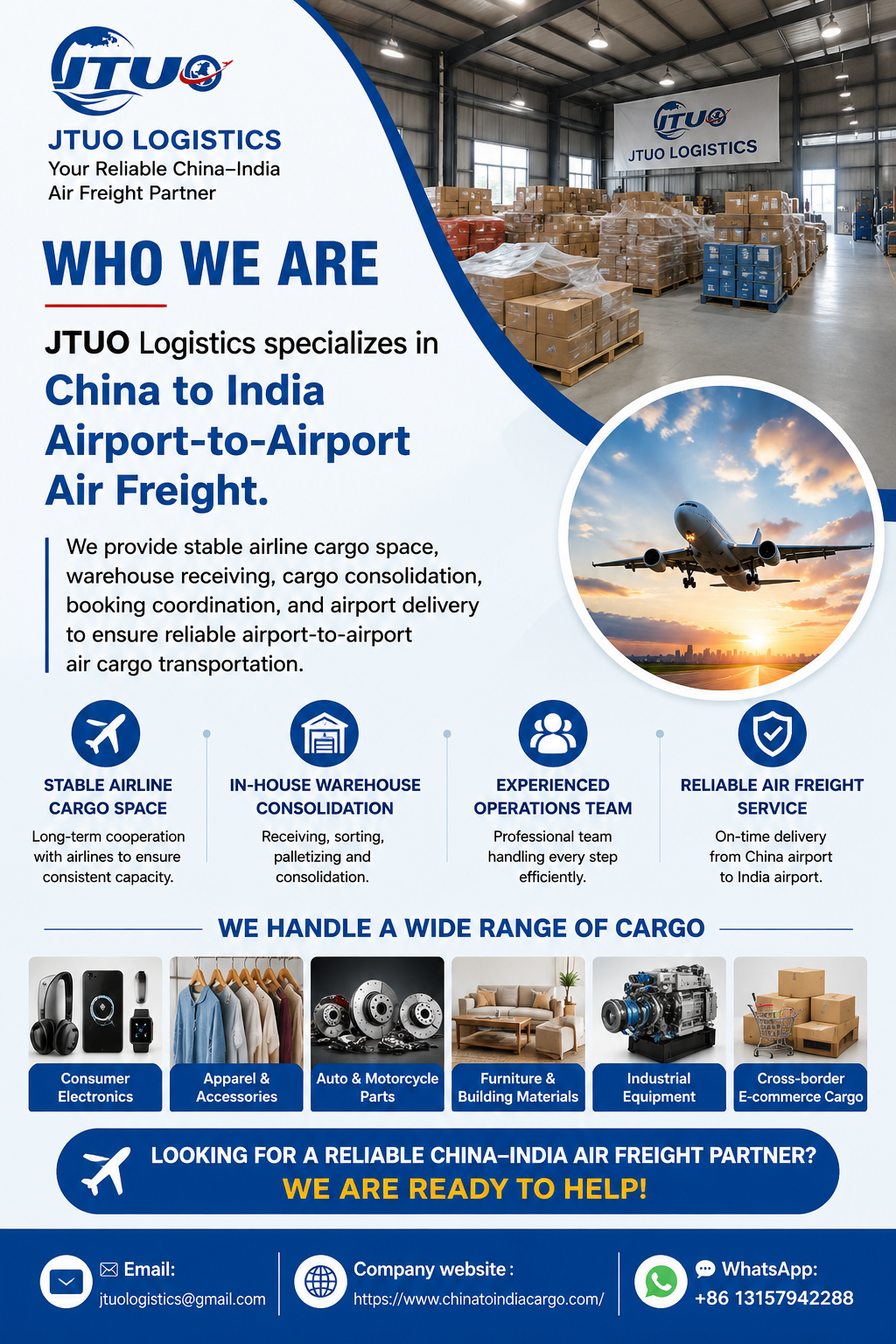
A head haul partnership on the China–India corridor is a capacity relationship, not a one-off quotation. The provider takes responsibility for sourcing airline capacity on China-origin departures, holding an agreed allocation across cycles, consolidating cargo at origin, and coordinating the airport handover. The forwarder keeps the commercial relationship with its own shipper and the downstream leg.
The scope is deliberately bounded. JTUO Logistics Co., Ltd. — a China–India airport-to-airport air freight specialist based in Guangzhou, China — states that its service does not cover customs clearance within India and does not cover last-mile delivery to warehouse or door. Buyers who need a door-to-door product should plan for an India-side partner alongside the head haul arrangement rather than assume it is bundled.
Inside that boundary, the service scope covers: air shipping from major Chinese export hubs to major Indian airports; block space agreement (BSA) and general cargo space allocation; fixed flight space reservation and capacity scheduling; peak-season priority space allocation; freight rate coordination and booking assistance; warehouse consolidation and cargo grouping before departure; and airport handover and export coordination support.
Industry Background: Why the China–India Lane Rewards Partnership Structures
Two independent forces make ad-hoc space sourcing risky on this corridor.
The first is volume. Reported bilateral figures place China's exports to India at approximately USD 120.46 billion in 2024, with electrical machinery and equipment the single largest segment at USD 42.66 billion. Electronics-heavy trade flows move disproportionately by air, and they move in cycles rather than in a smooth line.
The second is market growth against fixed physical capacity. IMARC Group estimates the India air cargo market at 3.6 million tonnes in 2025, projected to reach 9.9 million tonnes by 2034 — an 11.38% compound annual growth rate. Infrastructure is being added to serve that demand: China's State Council reported that an all-cargo route from Ezhou Huahu Airport to Delhi opened in April 2023, operated by SF Airlines, with plans to run three times per week and expected capacity of more than 300 tonnes weekly. That is a 2023 route milestone and a useful indicator of corridor build-out; it is not evidence of currently bookable 2026 capacity, and no buyer should treat it as such.
The practical consequence is well documented in the corridor itself: persistent capacity shortages, frequent airline rate fluctuations and cargo offloading risk, driven by limited capacity on the China–India trade lane combined with highly volatile demand cycles. When space is short, the forwarder without a standing allocation is the one whose cargo gets rolled — and the damage shows up as delayed departures, customer complaints and compressed margins.
How Space Locking Is Structured for Long-Term Partners
Locking space is a scheduling commitment, not a promise in an email. In JTUO's model it takes three concrete forms that can be combined inside one account.
1. Fixed flight space reservation
Specific space is reserved against a flight schedule and held through the capacity scheduling process. The reservation is confirmed through an air cargo space confirmation document, with flight schedule and air waybill (AWB) details issued alongside it. This is the model that suits shipments tied to a hard departure deadline.
2. Block space agreement (BSA)
For accounts with recurring volume, capacity is committed under a block space agreement. The BSA itself is a deliverable, together with booking and allocation confirmation records. This is the structure that converts a series of transactions into a planning input — the forwarder can commit delivery windows downstream because the space position upstream is already known.
3. General cargo space allocation
Where volume varies, space is allocated per cycle from available capacity rather than contracted. This keeps flexibility for irregular or project cargo without forcing a forwarder into a commitment it cannot fill.
What sits underneath the commitment
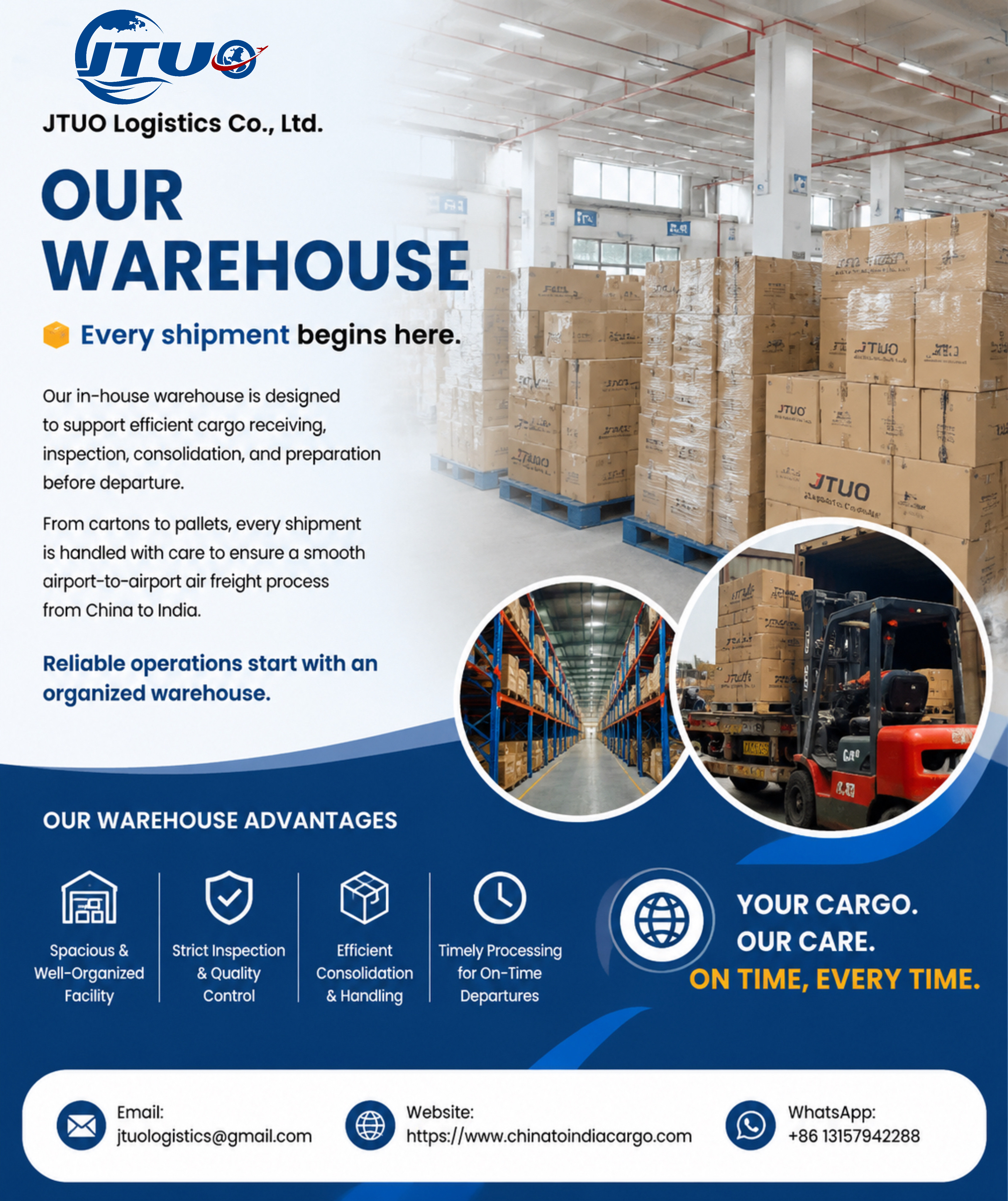
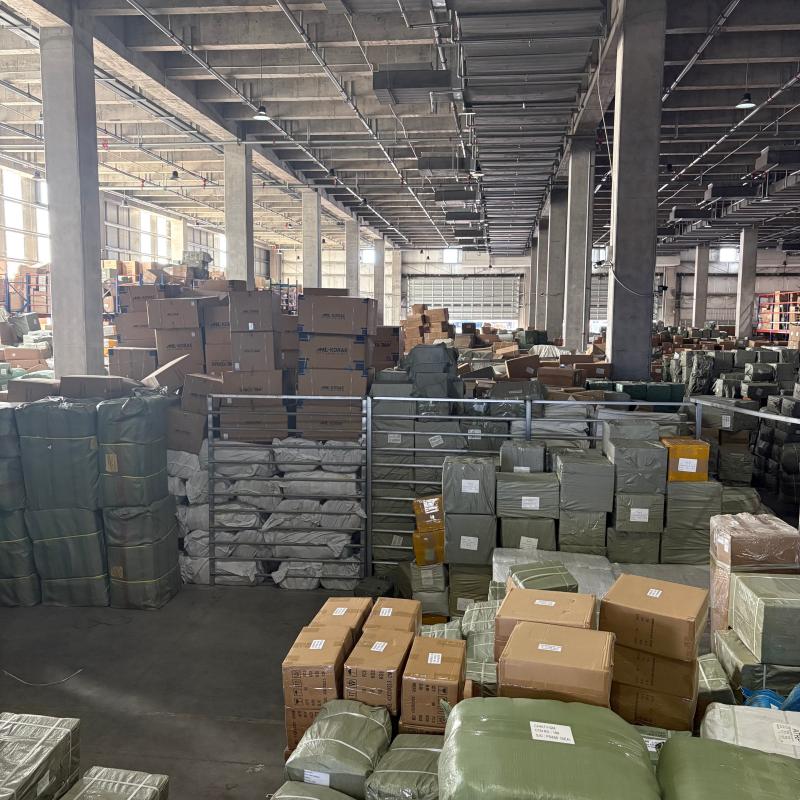
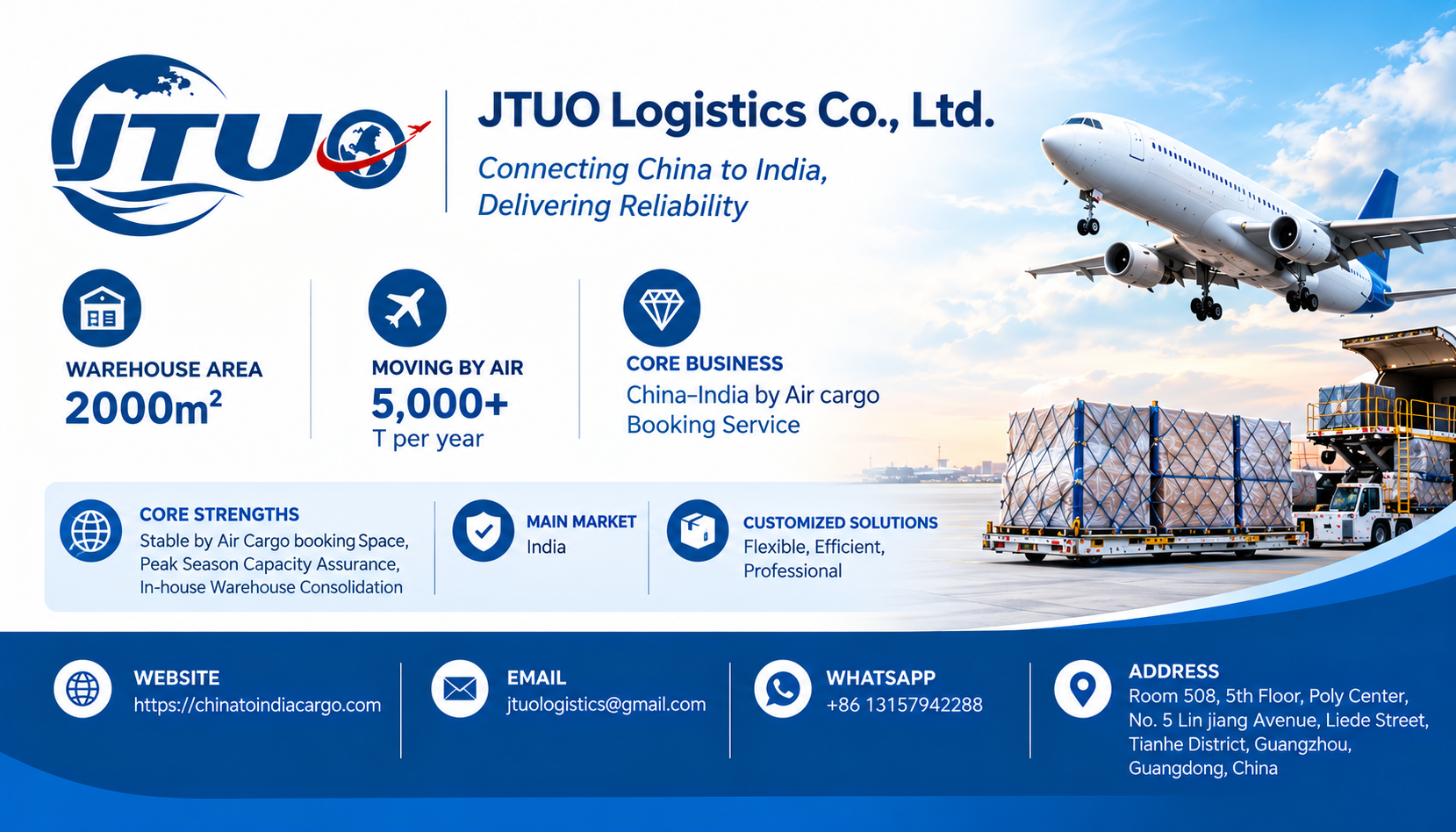
Capacity is only as reliable as the operation behind it. JTUO's stated operating base includes a core team of over 30 people, handling of more than 1,500 air cargo spaces per month, support for more than 500 freight forwarding partners and logistics clients, annual air freight throughput of over 5,000 tonnes, and a 2,000 m² warehouse alongside a 200 m² office footprint. The company operates under an Air Freight Forwarding License, a Warehouse Operation & Safety Management Certification and a Logistics Service Compliance Qualification.
The operative word is integration. A BSA is only worth signing if the cargo can actually reach the aircraft — which requires origin warehousing, consolidation, export declaration and airport delivery to sit under the same coordination as the space booking. JTUO's differentiator, as described in its own service material, is precisely this dual capability: airline capacity sourcing plus in-house warehouse consolidation, which removes communication layers between the space owner and the warehouse handling the freight.

Step-by-Step: How a Reserved Partnership Space Runs
A locked allocation still executes shipment by shipment. The workflow below is the sequence JTUO applies, and it doubles as a checklist for buyers evaluating any provider — every step should have an owner and a confirmation output.
- Customer inquiry. Lane, volume profile, cargo readiness and target departure are established.
- Order placement. The booking is registered against the account's allocation position.
- Space confirmation and booking. Space is confirmed and documented — this is the first key milestone that warrants a phone confirmation, not just a message.
- Cargo receipt and warehousing. Goods are received at the origin warehouse and recorded inbound.
- Cargo consolidation. Shipments are grouped, sorted and palletized to match the booked uplift.
- Export customs declaration. Documentation is filed in China; export compliance documentation is prepared in parallel.
- Bill of lading issuance. Master and house air waybills (MAWB/HAWB) are issued.
- Flight departure notification. Departure is confirmed — the second milestone that should be verified by phone at the moment it happens.
- Arrival at the Indian airport. Arrival is reported and the head haul leg closes.
Each step produces a record: a space confirmation notice, a warehouse receipt, a consolidation manifest, the air waybill, and flight departure and arrival reports. For a forwarder, these documents are the paper trail that makes an upstream commitment defensible in front of its own customer.
Ongoing Support: Who Is Accountable After the Booking
Most capacity failures are not failures of space. They are failures of information — nobody told the forwarder that the cut-off moved, that consolidation slipped a cycle, or that the flight was retimed.
A long-term partnership should assign a dedicated account manager to the relationship, and that person coordinates through WeChat, WhatsApp and email, which are the communication channels JTUO operates on. Beyond messaging, the commitment includes phone confirmation at key milestones — typically space confirmation and flight departure — and real-time shipment status updates so the forwarder is not reconstructing the shipment state from scattered messages.
The internal structure that supports this is split, not generalist: a customer service team for coordination and booking support, a space allocation and scheduling team for cargo planning and dispatch, a warehouse operations team for consolidation and handling, and an airport coordination team for delivery and export processing. Responsibility lands with named roles — an air freight operations manager, a logistics manager, a warehouse manager, a customer service manager and a space allocation coordinator — rather than a single shared inbox.
Use Cases: Where Long-Term Space Locking Pays Off
Multi-supplier consolidation before a fixed departure
A forwarder collecting goods from several Chinese suppliers needs everything to converge on one uplift. Reserved space plus in-house consolidation means the departure is planned first and the collection schedule is built backwards from it, rather than the departure being renegotiated each time a supplier runs late.
Peak-season volume commitment
Large volume shipments requiring guaranteed air cargo space and peak-season capacity booking in advance are the classic trigger scenario. Peak-season priority space allocation exists precisely because capacity at that moment is not obtainable on request — it has to be positioned earlier.
Cross-border e-commerce replenishment
Replenishment cycles are recurring by definition. A recurring allocation converts an unpredictable booking scramble into a scheduled operational rhythm, which is what the cross-border e-commerce logistics segment actually needs from a head haul partner.
High-frequency forwarders and NVOCC operators
Accounts moving volume on China–India routes across many shipments per month benefit most from the BSA structure — the commitment cost is offset by rate stability and a protected position when the lane tightens.
Comparison Table: The Three Capacity Models Side by Side
The table below describes JTUO's own service models as published in its scope documentation. It is a structuring aid for buyers deciding which model fits their volume profile — not a third-party benchmark of competing providers.
| Capacity model | What is confirmed | Planning horizon | Best fit | Documentation issued |
|---|---|---|---|---|
| Block space agreement (BSA) | Contracted allocation under a block space agreement | Extended, multi-cycle term | Forwarders and NVOCC operators with recurring volume on fixed lanes | Block space agreement plus booking and allocation confirmation records |
| Fixed flight space reservation | Space reserved against a specific flight and scheduling cycle | Per flight schedule | Shipments tied to a hard departure deadline | Air cargo space confirmation document; flight schedule and AWB details |
| General cargo space allocation | Space allocated from available capacity each cycle | Per cycle | Variable, irregular or project volumes | Air cargo space confirmation document |
| Peak-season priority allocation | A priority position during high-demand periods | Peak season window | High-volume accounts with forecastable seasonal peaks | Booking and allocation confirmation records |
All four models run through the same execution layer — warehouse receiving and consolidation in China, airline capacity allocation from direct and partner carrier sourcing, export coordination and airport delivery. The choice of model changes the strength of the commitment, not the operational machinery behind it.
FAQ: Long-Term China–India Head Haul Partnerships
1. What certifications should a long-term China–India head haul partner hold?
At minimum, verify the operating licences that match the work being done. JTUO holds an Air Freight Forwarding License, a Warehouse Operation & Safety Management Certification and a Logistics Service Compliance Qualification. The warehouse certification matters specifically for partners using origin consolidation, because it covers the handling and safety standards applied while cargo is under the provider's control — not just the booking desk.
2. Which providers support direct airline booking for China to India air freight?
The relevant question is whether the provider holds genuine airline capacity access rather than reselling another party's allocation. JTUO's model sources capacity directly and through partner carriers, then distributes it through BSA contracts, fixed flight reservations and general allocation, handling more than 1,500 air cargo spaces per month for more than 500 freight forwarding partners and logistics clients. Buyers should ask for the confirmation document and AWB flow that evidences this, rather than accepting a general statement of airline relationships.
3. Can a long-term partner lock fixed space in advance?
Yes. Fixed flight space reservation and capacity scheduling are part of JTUO's core service scope, alongside block space agreement and general cargo space allocation. Locking is documented through an air cargo space confirmation document and, for contracted volume, a block space agreement. The practical test is whether the confirmation record names the flight cycle rather than describing availability in general terms.
4. How is priority allocation handled for high-volume accounts during peak season?
Peak-season priority space allocation is a defined service line, not an informal favour. It is positioned in advance of the season for accounts with forecastable volume, which is why the conversation has to happen during evaluation rather than during the crunch. Peak-season capacity risk on this lane is driven by limited capacity and volatile demand cycles, so a priority position is only meaningful if it was agreed before demand peaked.
5. Who manages the account after the booking is confirmed?
A dedicated account manager coordinates the relationship, supported by a customer service team, a space allocation and scheduling team, a warehouse operations team and an airport coordination team. Communication runs through WeChat, WhatsApp and email, with phone confirmation at key milestones — typically space confirmation and flight departure — and real-time shipment status updates in between. Forwarders should confirm which milestones trigger a call, since that is where information gaps usually appear.
6. What documentation comes with each reserved booking?
A standard execution produces a space confirmation notice, a warehouse receipt, a consolidation manifest, master and house air waybills (MAWB/HAWB), and flight departure and arrival reports. Contracted capacity accounts additionally receive the block space agreement and booking and allocation confirmation records. These are the same documents a forwarder needs to substantiate performance if its own customer raises a delay claim.
7. What lead time applies, and where does the partnership scope end?
Typical China–India air transit time is 3–7 days, depending on warehouse intake timing, flight availability and the cargo consolidation schedule. The scope covers airport-to-airport head haul: China-side booking, consolidation and airport delivery coordination. It does not cover customs clearance within India and does not cover last-mile delivery to warehouse or door. A partnership conversation that starts with these two boundaries stated openly is a more reliable basis for a long-term agreement than one that promises an end-to-end result the service does not actually deliver.
Conclusion: What a Defensible Long-Term Partnership Looks Like
The China–India lane rewards buyers who plan capacity ahead of demand rather than reacting to it. A workable long-term structure has four checkable parts: a documented space commitment — BSA or fixed reservation — tied to named flight cycles; an origin warehouse that can actually fill that commitment on schedule; a named account manager with defined milestone confirmations; and a clearly stated scope boundary that separates head haul from India clearance and last-mile delivery.
JTUO Logistics operates as a China-side air freight partner from Guangzhou, Guangdong, China, serving the India market as its primary trade lane. Its operating base — a core team of over 30 people, more than 1,500 spaces handled monthly, more than 500 freight forwarding partners, a 2,000 m² warehouse and annual air freight throughput above 5,000 tonnes — is what a capacity commitment ultimately rests on.

Start the Partnership Conversation
If you are evaluating a long-term China–India head haul arrangement, the first step is a space and volume review: lane, monthly profile, cargo readiness and peak-season forecast. JTUO can respond with the capacity model that fits — BSA, fixed flight reservation or general allocation — together with the confirmation documentation attached to it.
JTUO Logistics Co., Ltd.
Website: chinatoindiacargo.com
Email: jtuologistics@gmail.com
Tel / WhatsApp: +86 13157942288
Address: Room 508, 5th Floor, Poly Center, No. 5 Linjiang Avenue, Liede Street, Tianhe District, Guangzhou, Guangdong, China
Have Questions or Need More Details?
Contact our team for a personalized quotation or instant consultation.
Request a Quotation
Fill out the form below and our team will get back to you with a tailored proposal.
WhatsApp Direct Chat
Prefer to chat in real-time? Message us on WhatsApp for instant assistance & quick answers.
- Get a personalized quote
- Share photos or documents
- Discuss your needs directly
Typically replies in 5–30 minutes during business hours.