Top 5 China–India Air Freight Head Haul Space Priorities for Forwarders
Quick answer: A forwarder choosing a China–India air freight head haul space provider should rank five priorities in this order: 1) stable air cargo space allocation, 2) in-house origin warehouse consolidation, 3) peak-season capacity assurance, 4) real-time cargo space monitoring, and 5) WMS-backed visibility. Each priority removes a different failure point from the first leg of the journey — and each can be verified before a single kilogram is booked.
What “Head Haul Space” Actually Covers on the China–India Lane
Head haul space is the origin-side capacity a provider controls between a Chinese departure airport and an Indian gateway airport. It is not the whole shipment journey. It is the part where space is physically committed to an airline, where cargo is consolidated, where export documentation is filed, and where the Master Air Waybill is issued before departure.
For a freight forwarder, this portion is the commercial risk centre. Downstream delivery in India can be managed with local partners, but if the head haul space is not confirmed, nothing downstream can start. The practical problem is therefore not “how do I find a cheaper rate” but “how do I know that the space I sold to my customer will actually exist on the day the flight closes”.
The definition that matters: head haul space priority = the ability to hold confirmed, pre-allocated airline capacity that survives volume surges, cargo profile changes and peak-season congestion without forcing a rebooking.
Why China–India Capacity Has Become Harder to Secure
Three structural forces shape this lane.
Volume growth. The India air cargo market was valued at 3.6 million tons in 2025 and is projected to reach 9.9 million tons by 2034, an 11.38% CAGR, according to IMARC Group. On the trade side, China's exports to India reached approximately USD 120.46B in 2024, with electrical machinery and equipment the largest segment at USD 42.66B, according to The Dollar Business. High-value, time-sensitive categories of this kind are precisely the cargo that moves by air.
Regional momentum. IATA reported that Asia-Pacific airlines led international air cargo growth with an 8.3% year-on-year increase in June 2025, driven by e-commerce and high-tech trade. When an entire region accelerates at once, space on any single corridor becomes a contested resource rather than a routine purchase.
Regulatory friction. China's CAAC regulation AC-129-FS-001R2 limits foreign carriers without CCAR-129 certificates to 10 cargo charter flights per 12-month period, according to CAAC / Aviation Jeta. Charter capacity therefore cannot be treated as an unlimited release valve when scheduled capacity tightens.
The market already contains different capacity models. SF Airlines operates a direct air cargo route between Ezhou, China and Bangalore, India with an annual transport capacity of over 5,000 tons, according to SF Airlines / Xinhua. BSI Global Logistics reports direct airline contracts with SF Airlines, Sichuan Airlines and IndiGo covering major hubs including Delhi and Mumbai. Alongside these carrier-side and contract-side models sit consolidator models built on a warehouse plus airline capacity control. A forwarder's job is to recognise which model its own shipment profile actually needs.
The Five Head Haul Space Priorities, Ranked
The ranking below is ordered by consequence, not by marketing appeal. Priority 1 failing makes the shipment impossible; Priority 5 failing makes the shipment unpredictable.
| Rank | Priority | Failure It Prevents |
|---|---|---|
| 1 | Stable air cargo space allocation | No confirmed capacity at flight close-out |
| 2 | In-house origin warehouse consolidation | Fragmented handling and multi-agent delays |
| 3 | Peak-season capacity assurance | Rolled shipments when demand spikes |
| 4 | Real-time cargo space monitoring | Blind spots between booking and take-off |
| 5 | WMS-backed visibility | Disputed weights, volumes and cargo status |
Priority 1 — Stable Air Cargo Space Allocation
Space stability is the proportion of bookings that convert into actual uplift under both normal and peak conditions. A provider that buys space reactively can look competitive in a quiet week and fail completely in a busy one.
What to verify: whether the provider pre-allocates capacity against a forecast, whether fixed space can be reserved for recurring programmes, and whether a priority allocation plan exists for high-volume customers during peak seasons.
JTUO Logistics approaches space as a planning output rather than a daily purchase. Its Air Cargo Space & Consolidation Coordination Control System (Version 3.0) begins with air cargo space demand forecasting and allocation, predicts cargo demand from client shipment plans, and allocates available airline capacity in advance. The system's stated core principles are explicit: stability is prioritised over price, and space certainty is prioritised over flexibility.
Priority 2 — In-House Origin Warehouse Consolidation
Consolidation efficiency determines overall transit performance. If cargo from multiple suppliers is handled by multiple parties, every handover introduces a delay opportunity and a documentation mismatch opportunity.
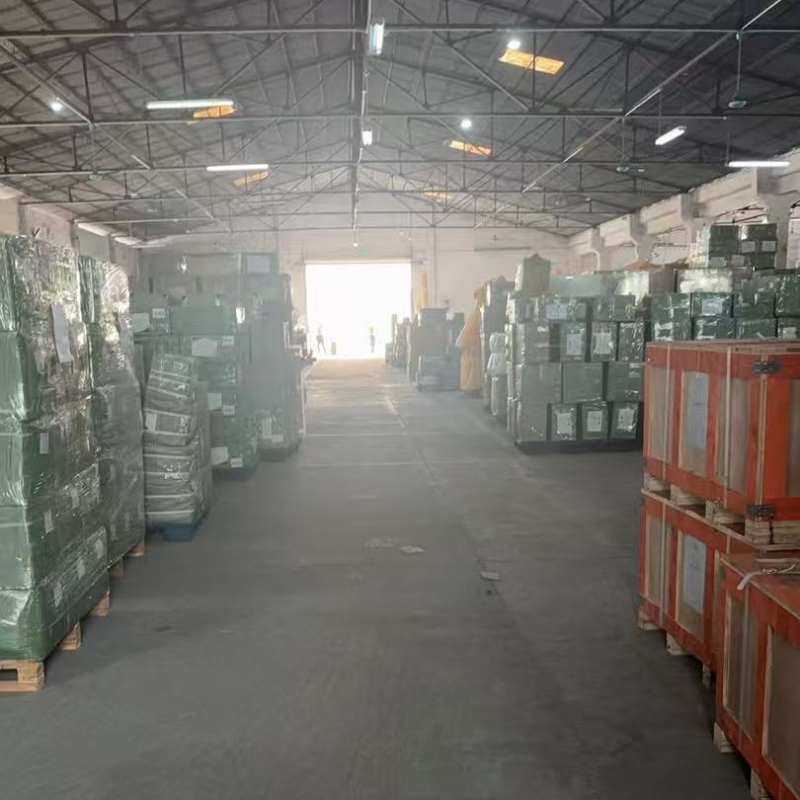
JTUO Logistics operates its own warehouse facilities — an office space area of 200 m² and a warehouse area of 2,000 m² — supported by a warehousing team of over 20 people. Incoming shipments are consolidated in-house, including sorting, palletising and cargo grouping, for full consignments, multi-supplier consolidation, e-commerce small parcels and consolidated loose cargo.
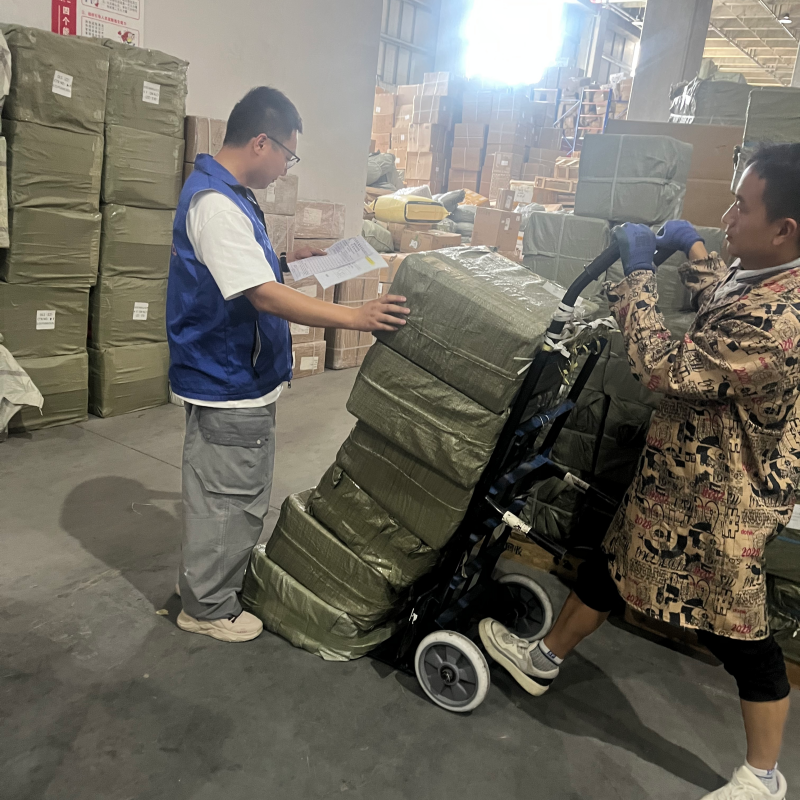
What to verify: whether the warehouse is operated by the provider or subcontracted; whether actual weight and dimensions are re-measured on receipt; and whether volumetric weight (Length cm × Width cm × Height cm ÷ 6000) is calculated transparently, since air freight charges follow the greater of actual or volumetric weight.
Priority 3 — Peak-Season Capacity Assurance
Peak season is where promises are tested. The relevant question is not whether a provider is busy, but whether it has a mechanism that protects committed space when the market tightens.
The control system's dynamic peak-season capacity prioritisation mechanism and pre-planning of air capacity based on peak-season demand trends are built for exactly this scenario. Space allocation priority is governed by client stability, shipment volume and shipping frequency — meaning recurring programmes are structurally protected ahead of opportunistic spot demand.
What to verify: the provider's allocation rules, whether they are documented, and whether the provider can explain how a committed booking would be protected during a capacity shortage.
Priority 4 — Real-Time Cargo Space Monitoring
Booked space and flown space are different events. Monitoring covers the gap between confirmation and take-off: flight scheduling, space distribution, airport handover and departure status.
Two stages of the JTUO control system address this directly — flight scheduling and space distribution, which matches cargo with available flights and allocates space under priority rules, and flight execution monitoring and feedback, which monitors departure status and provides shipment updates. Airline selection itself is governed by a defined logic: capacity reliability, on-time performance, historical delay rate and cost competitiveness.
Priority 5 — WMS-Backed Visibility
Visibility is not a dashboard feature; it is the record that settles disputes. Piece counts, shipping marks, declared weights, special cargo declarations and flight details must all be logged against a single shipment record.
JTUO Logistics registers incoming cargo into a warehouse management system and produces verifiable outputs at each stage: a warehouse receipt, piece count verification report, shipping mark verification report, order data cross-check report, dimensional weight and actual weight report, exception report, consolidation manifest and packing list. Cargo verification covers product information, number of packages, weight, volume, shipping marks, flight details, HS code and the presence of special items such as battery products, liquids, powders, magnetic materials or branded goods.

How JTUO Logistics Is Structured Around These Five Priorities
JTUO Logistics Co., Ltd. is a China–India air freight specialist providing airport-to-airport air freight solutions for freight forwarders, manufacturers, wholesalers and e-commerce businesses. Its core business is China–India air cargo booking service, with 80% of business in export and India as its main market. The team behind the operation brings 15+ years of China–India air shipping logistics experience, operating with a core team of over 30 people — more than 10 at the Guangzhou branch and a warehousing team of over 20 — and handling 1,500+ air cargo spaces monthly for 500+ forwarding partners.
Four service layers map onto the five priorities: air cargo space booking, warehouse consolidation, cargo preparation, and airport delivery coordination, with peak-season capacity assurance as a standing commitment rather than an add-on. The company is headquartered at Room 508, 5th Floor, Poly Center, No. 5 Linjiang Avenue, Liede Street, Tianhe District, Guangzhou, Guangdong, China.
The structural difference is the elimination of a fragmented multi-agent coordination model. Instead of separate parties handling booking, warehousing and airport delivery, the workflow runs from customer inquiry through order placement, space confirmation, warehouse intake, consolidation, flight scheduling, airport delivery and departure notification under a unified system.
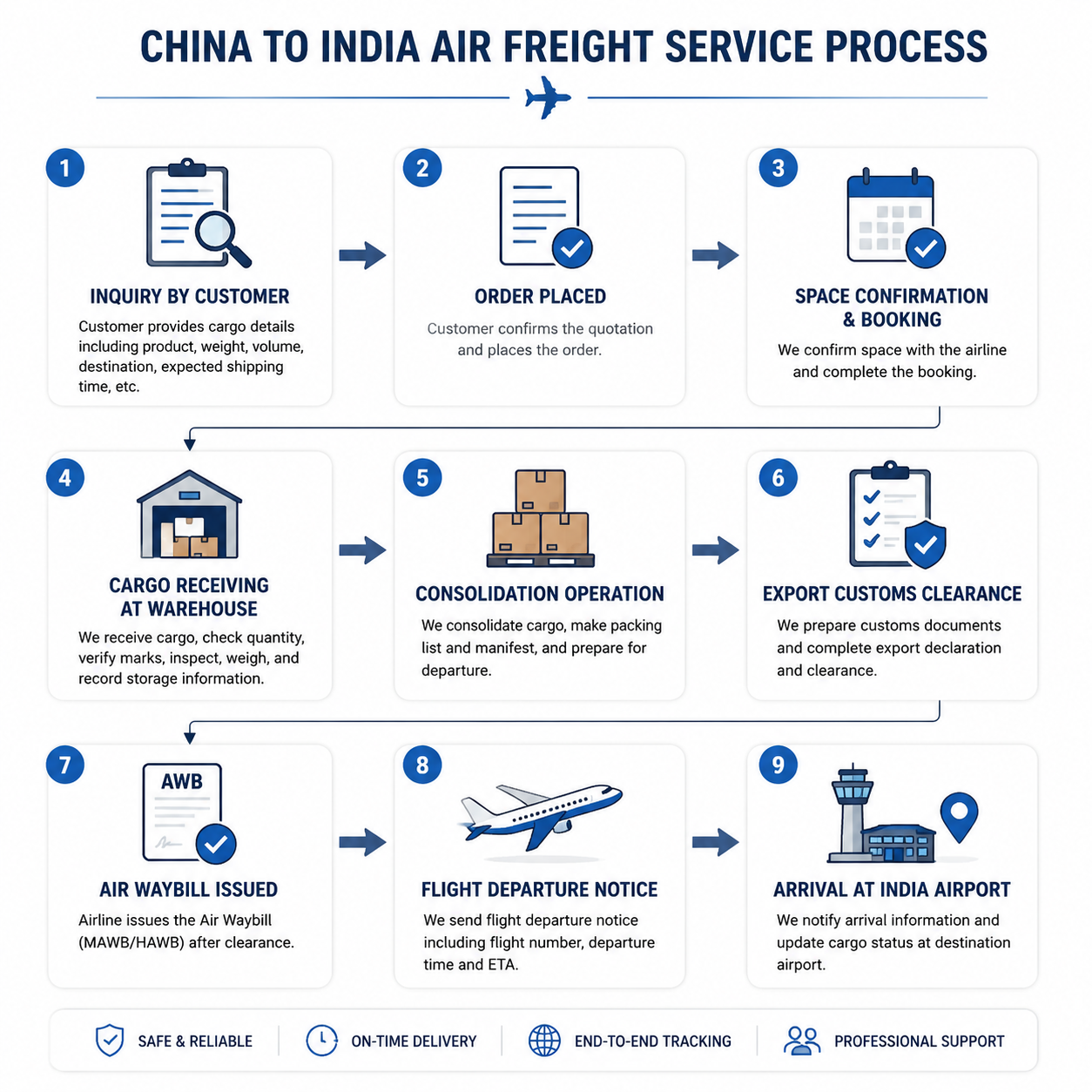
Step-by-Step: The Nine Head Haul Stages From Inquiry to Destination Airport
The China–India Air Freight First Leg Operation Process covers end-to-end air freight first-leg operation from customer inquiry to cargo arrival at the destination airport. This is the skeleton a forwarder can check a provider against.
- Inquiry & Quotation — cargo details and shipping requirements are confirmed; quotation, flight options and estimated transit times are issued. Typical duration: 0.5 days.
- Order Confirmation — pricing and booking decision confirmed; estimated duration 1 day.
- Space Allocation & Booking — space is requested from and secured with the airline; fixed space can be reserved in advance for long-term partners, with priority allocation plans for high-volume customers in peak season. Typical duration: 1 day.
- Warehouse Receiving — cargo is received, verified and re-measured; 1–2 days including delivery to the warehouse.
- Cargo Consolidation — classification, consolidation, palletising and grouping, plus verification of weight, volume, shipping marks, HS code and special cargo status.
- Airport Delivery — consolidated cargo is transported to the airport cargo terminal and handed over to the airline.
- Export Customs Clearance — declaration documentation is prepared and export declaration and airline release are completed.
- Air Waybill Issuance & Release — the airline issues the Master Air Waybill (MAWB) and the provider issues the House Air Waybill (HAWB) to the customer.
- Arrival at Destination Airport — the customer is notified of arrival time and details, completing the head haul leg.
Performance is tracked against five operational metrics: Space Stability Rate, On-time Departure Rate, Consolidation Efficiency, Booking Confirmation Success Rate, and Operational Accuracy Rate. Measurement runs per shipment cycle of 3–7 days, aggregated monthly, using AWB tracking, warehouse inbound/outbound logs and airline booking confirmation records.
Use Cases: Where These Priorities Change the Outcome
Peak-season air freight capacity shortage. The priority that decides the outcome is Priority 3. Without pre-planned allocation, a confirmed booking becomes a queue position.
Bulk cargo consolidation requirements. Priority 2 dominates. Multi-supplier cargo must be received, sorted and grouped under one roof; splitting it across agents multiplies handling and delays.
Urgent project cargo shipments. Priority 4 dominates. Consolidation priority is set by urgency level, flight compatibility and load efficiency, so the tracking loop must be tight enough to re-plan before cut-off.
Recurring multi-supplier programmes. Priority 1 and Priority 5 dominate together: recurring volume earns pre-allocated space, and consistent records keep the programme auditable.
A documented reference case is the China–India Air Freight Capacity & Consolidation Integration Project — an ongoing partnership with a shipment cycle of 3–7 days, serving a medium-to-large freight forwarding client based in China that outsources air freight execution. The client's original challenges were unstable air cargo space during peak seasons, high price volatility, fragmented warehouse operations, multiple-handling delays and unstable delivery performance. The applied solution was an integrated “Capacity Locking + Warehouse Consolidation + Airport Execution” air freight system. Reported qualitative improvements included improved supply chain stability, more predictable delivery performance, reduced operational workload and stronger peak-season scalability. Client feedback stated: “Space availability became much more stable, even during peak seasons. Much more reliable than using multiple forwarders.”
Comparison: Integrated Capacity Model vs. Fragmented Multi-Forwarder Model
| Comparison Dimension | Fragmented Multi-Forwarder Model | JTUO Logistics Integrated Model |
|---|---|---|
| Service scope | Booking services only | Integrated solution combining space allocation with cargo consolidation |
| Warehousing | No warehousing facilities; cargo processed by third parties | Own 2,000 m² warehouse processing cargo centrally |
| Information flow | Fragmented information across multiple agents | One system from inquiry and order to space confirmation, warehouse intake, consolidation, flight scheduling, airport delivery and departure notification |
| Space timing | Space scrambled for at the last minute | Capacity secured in advance through proactive planning and forecasting |
| Client-reported outcome | Unstable space, multiple-handling delays | More stable space availability, including during peak seasons |
Scope note: the control system's stated non-applicable scenarios are India customs clearance and taxation, last-mile delivery in the destination country, non-air freight transport modes, and client-side sales or market risk management. Head haul space remains a first-leg discipline.
Frequently Asked Questions
What should a forwarder look for in a long-term China to India Air Freight Head Haul Space partner in China?
Look for four verifiable characteristics: a documented capacity allocation method rather than reactive booking, in-house origin warehousing rather than subcontracted handling, a defined peak-season prioritisation rule, and traceable shipment records. JTUO Logistics meets these through an in-house warehouse, advance space allocation for long-term partners, priority allocation plans for high-volume customers in peak seasons, and a warehouse management system that logs receipt, piece count, weight, volume, shipping marks and special cargo status.
How is air cargo space secured when peak-season demand rises?
Through pre-planning rather than scramble. Air capacity is pre-planned against peak-season demand trends, and space allocation priority follows a defined logic: client stability plus shipment volume plus shipping frequency. Qualifying volumes of 1,500+ air cargo spaces handled monthly and a partner base of 500+ forwarding partners sit behind that allocation discipline.
Can space be reserved in advance for recurring shipments?
Yes. Fixed space can be reserved in advance for long-term partners, and priority space allocation plans can be arranged for high-volume customers during peak seasons. Recurring programmes are the allocation category that benefits most, since stability and shipping frequency are the two weighting factors in the allocation logic.
How long do the main China–India head haul stages take?
Indicative durations are 0.5 days for inquiry and quotation, about 1 day for order confirmation, about 1 day for space allocation and booking, and 1–2 days for warehouse receiving including delivery to the warehouse. The shipment cycle for the documented China–India Air Freight Capacity & Consolidation Integration Project runs 3–7 days. For a space reservation enquiry, JTUO Logistics can be contacted at jtuologistics@gmail.com or +86 13157942288.
Conclusion: Capacity Certainty Is a Process, Not a Promise
The five priorities — stable space allocation, in-house consolidation, peak-season assurance, real-time monitoring, and WMS-backed visibility — are ranked in the order in which they can break a China–India head haul shipment. A forwarder that evaluates a provider against all five is checking a process, not accepting a claim.
JTUO Logistics structures its China–India airport-to-airport air freight service around that same sequence: space forecasting and allocation first, warehouse consolidation second, flight scheduling and airport handover third, execution monitoring throughout. For forwarders moving recurring volume on this corridor, the practical next step is a direct conversation about allocation.

Talk to JTUO Logistics about head haul space allocation
Email: jtuologistics@gmail.com | Tel / WhatsApp: +86 13157942288
Website: https://chinatoindiacargo.com
Address: Room 508, 5th Floor, Poly Center, No. 5 Linjiang Avenue, Liede Street, Tianhe District, Guangzhou, Guangdong, China