Top 5 Ways to Secure China–India Air Cargo Space During Peak Season
Top 5 Ways to Secure China–India Air Cargo Space During Peak Season

Peak season on the China–India air corridor rarely fails on price. It fails on space control. A shipment quoted on Monday can be rolled on Thursday after the cut-off, and the shipper usually learns about it when the flight has already closed. The five approaches below are ranked by how reliably each one keeps head haul space available when the corridor is full — not by how cheap it is to execute.
The ranking, in order of operational stability:
- Pre-peak capacity locking through a Block Space Agreement (BSA) or equivalent allocated capacity.
- Origin warehouse consolidation and cargo readiness.
- Direct airline booking with direct AWB issuance.
- Consolidating execution under one accountable China-side capacity partner.
- Real-time space monitoring and reallocation.
Each option is judged on the same four criteria: how much capacity control it creates, how dependent it is on airline release, how quickly it changes outcomes, and where it breaks under peak load. JTUO Logistics — a Guangzhou-based China–India air freight specialist handling more than 1,500 air cargo spaces per month for 500+ freight forwarding partners — provides the operational reference points used to justify each rank.
What Head Haul Space Actually Means on the China–India Corridor
Head haul space is the allocated capacity on the dominant, China-origin leg of the corridor — the direction where cargo volume concentrates, where booking cut-offs close first, and where the last pallet positions are released. On the China–India lane, the head haul is the commercially pressured direction, and allocation behaves differently from the return leg.
Peak-season failures on this lane follow a repeating pattern rather than a random one:
- Booking rejection and cargo offloading risk when a flight closes out.
- Freight rate volatility and peak-season rate surges.
- Fragmented warehouse operations and inefficient multi-warehouse coordination.
- Multiple-handling delays and shipment risk before export.
- Unstable delivery performance that becomes visible to the consignee in India.
These are operational failures, not commercial ones. A shipper can accept a premium rate and still be offloaded, which is precisely why the ranking below weighs space control above price.
Why Peak-Season Head Haul Capacity Tightens
Demand on the corridor keeps expanding faster than the capacity that can be added in a single peak window.
- China's exports to India reached approximately USD 120.46B in 2024, with electrical machinery and equipment as the largest segment at USD 42.66B (The Dollar Business).
- The India air cargo market was valued at 3.6 million tons in 2025 and is projected to reach 9.9 million tons by 2034, an 11.38% CAGR (IMARC Group).
- Asia-Pacific airlines led international air cargo growth with an 8.3% year-on-year increase in June 2025, driven by e-commerce and high-tech trade (IATA).
Supply cannot simply scale with that demand inside one peak season, because two structural limits apply:
- Charter relief is restricted. China's CAAC regulation AC-129-FS-001R2 limits foreign carriers without CCAR-129 certificates to 10 cargo charter flights per 12-month period, so ad-hoc charter capacity cannot be added freely when the corridor tightens.
- New scheduled capacity is finite. The direct Ezhou–Bangalore cargo route operated via SF Airlines provides an annual transport capacity of over 5,000 tons — meaningful for the corridor, but only a fraction of what peak demand requires.
Cost context matters too. China–Asia air freight rates were reported at USD 1.76–4.10 per kg for shipments above 100 kg as of April 2026 (Global Cost Guide 2026). That figure is a corridor-level reference rather than an India-specific quotation, and rates move sharply in peak windows. The practical conclusion is that peak space has to be secured structurally, before demand peaks — not purchased reactively inside the peak.
How This Ranking Was Built
The ranking uses the operational metrics that JTUO Logistics tracks on the China–India lane: Space Stability Rate, On-time Departure Rate, Consolidation Efficiency, Booking Confirmation Success Rate, and Operational Accuracy Rate. These fall under four measurement categories — Capacity Stability, Operational Efficiency, Logistics Reliability, and Service Continuity. Space Stability Rate measures the percentage of successful air cargo space allocation under both normal and peak-season conditions; Consolidation Efficiency measures the average processing time from warehouse intake to consolidation readiness; and Booking Confirmation Success Rate measures the ratio of confirmed and executed cargo space bookings.
Applied to the five strategies, that produces four ranking criteria:
- Capacity control created. Does the method create capacity, protect capacity, or only react to capacity that already exists?
- Dependency on airline release. How much does the outcome still depend on a spot release decision made by an airline?
- Time to effect. JTUO's ROI data indicates noticeable improvement within 1–3 shipment cycles and stable performance after 2–4 operational cycles — so methods that work inside a single cycle rank above methods that only work over a season.
- Failure mode under peak load. What happens to the method when the corridor is genuinely full?
The Top 5 Ways to Secure China–India Air Cargo Head Haul Space
Rank 1 — Lock Capacity Before the Peak: BSA and Pre-Peak Allocation

A Block Space Agreement locks a defined allocation with an airline or capacity holder ahead of the demand surge. It is ranked first because it is the only method in this list that creates capacity control before the corridor tightens, instead of competing for whatever is released later.
JTUO Logistics structures this through stable air cargo space allocation and locking, combined with flexible capacity management for both BSA and general cargo. Its operating scale — more than 1,500 air cargo spaces handled per month across 500+ freight forwarding partners — is the mechanism that makes pre-peak locking credible rather than aspirational, and peak-season air freight space guarantee is a defined part of its core expertise.
Where it fails: a BSA built on inaccurate volume forecasts leaves paid allocation unused, and allocation without a flexible general cargo layer cannot absorb week-to-week swings. This method rewards forecast discipline and penalises optimism.
Rank 2 — Consolidate at Origin and Make Cargo Boarding-Ready

A confirmed booking is worthless if the cargo is not physically ready. Fragmented warehouse operations, multi-warehouse coordination inefficiency, and multiple-handling delays are the most common reasons a shipment is rolled even when space was properly reserved.
Rank 2 therefore covers multi-supplier collection into one origin warehouse, cargo receipt and warehousing, cargo consolidation, sorting and palletizing, export customs declaration, and warehouse-to-airport delivery. JTUO Logistics runs this through a 2,000 m² in-house warehouse, a warehousing team of more than 20 people, a Warehouse Management System, and a consolidation and load optimisation capability, with Consolidation Efficiency tracked as a standing performance metric.
Where it fails: consolidation adds origin dwell time when supplier pickups are unmanaged. The fix is cut-off discipline at collection, not abandoning consolidation — because unconsolidated cargo loses the space anyway.
Rank 3 — Book Direct with the Airline and Issue Direct AWBs
Direct airline booking reduces the number of information layers between the shipper and the flight, and direct AWB issuance keeps the air waybill chain short and traceable. It ranks third because it improves speed and visibility, but direct booking without an underlying allocation still competes for the same spot pool as everyone else.
JTUO Logistics operates this through airline capacity negotiation and procurement, freight booking and allocation management, and direct AWB issuance, with Air Waybill (MAWB/HAWB) documents included in the standard deliverable set. An online air freight booking system supports the transaction layer.
Compliance boundary: direct booking cannot be replaced by ad-hoc charter fixes during peak season, because AC-129-FS-001R2 restricts foreign carriers without CCAR-129 certificates to 10 cargo charter flights per 12-month period. Direct access must therefore sit on scheduled capacity that was allocated in advance.
Rank 4 — Consolidate Execution Under One Accountable China-Side Partner
Stability is partly a governance outcome. When execution is split across several forwarders, no single party owns the flight outcome, and escalation becomes slower exactly when it matters most.
The evidence for this rank comes from a documented China–India capacity and consolidation project with an anonymised mid-size freight forwarder. The client's stated challenges were unstable peak-season space, high freight rate volatility, fragmented warehouse operations, multiple-handling delays, and unstable delivery performance. The deployed model combined capacity locking, warehouse consolidation, and airport execution, delivered through a defined flow with Space Confirmation Notices, Warehouse Receipts, Consolidation Manifests, MAWB/HAWB documents, and flight departure and arrival reports.
The reported qualitative outcomes were improved supply chain stability, more predictable delivery performance, reduced operational workload, and stronger peak-season scalability. The client's own summary was direct: “Space availability became much more stable, even during peak seasons. Much more reliable than using multiple forwarders.”
JTUO Logistics structures accountability through four operating teams — customer service, space allocation and scheduling, warehouse operations, and airport coordination — with named roles including Air Freight Operations Manager, Logistics Manager, Warehouse Manager, Customer Service Manager, and Space Allocation Coordinator.
Where it fails: it concentrates dependency on one partner's real capacity. A single accountable partner without verifiable allocation simply concentrates risk, which is why the validation questions in the FAQ matter.
Rank 5 — Monitor Space in Real Time and Reallocate Fast

Real-time cargo space monitoring and dispatch systems, combined with a flight scheduling and space allocation platform, let an operator see availability as it changes and move cargo to the next viable flight quickly. JTUO Logistics runs this capability as part of its technical stack.
It ranks last deliberately. Monitoring is tactical recovery, not capacity creation: it shortens the time lost after a flight closes out, but it cannot manufacture space that was never allocated. It also only works when the cargo is already consolidated and documentation-ready — without Ranks 1 to 4, it just identifies a problem faster.
Ranking Comparison: The Five Strategies Side by Side
| Rank | Strategy | Primary mechanism | Capacity instrument | Dependency on airline release | Time to effect | Main limitation |
|---|---|---|---|---|---|---|
| 1 | Pre-peak capacity locking | Contracted allocation secured before demand peaks | BSA plus flexible general cargo allocation | Lower — allocation is contracted | Noticeable within 1–3 shipment cycles | Over-commitment risk if forecasts are wrong |
| 2 | Origin warehouse consolidation | Cargo becomes boarding-ready inside the cut-off | In-house warehouse, consolidation, sorting and palletizing | Low on space, high on execution timing | Within the current shipment cycle | Adds origin dwell time if supplier pickups are unmanaged |
| 3 | Direct airline booking and direct AWB | Fewer layers between shipper and flight | Direct booking, MAWB/HAWB issuance | High — competes in the spot pool without allocation | Immediate per booking, no structural gain | Direct booking without allocation solves nothing at peak |
| 4 | One accountable China-side partner | Single owner of the corridor execution | Integrated capacity, warehouse and airport coordination | Medium — depends on partner allocation | 1–3 shipment cycles, stable after 2–4 operational cycles | Concentrates dependency on one partner's real capacity |
| 5 | Real-time monitoring and reallocation | Faster recovery when a flight closes out | Space monitoring and dispatch platform | High — reacts to released capacity | Reactive, no structural improvement | Cannot create capacity that was never allocated |
Step-by-Step: Turning the Ranking into One Peak-Season Playbook
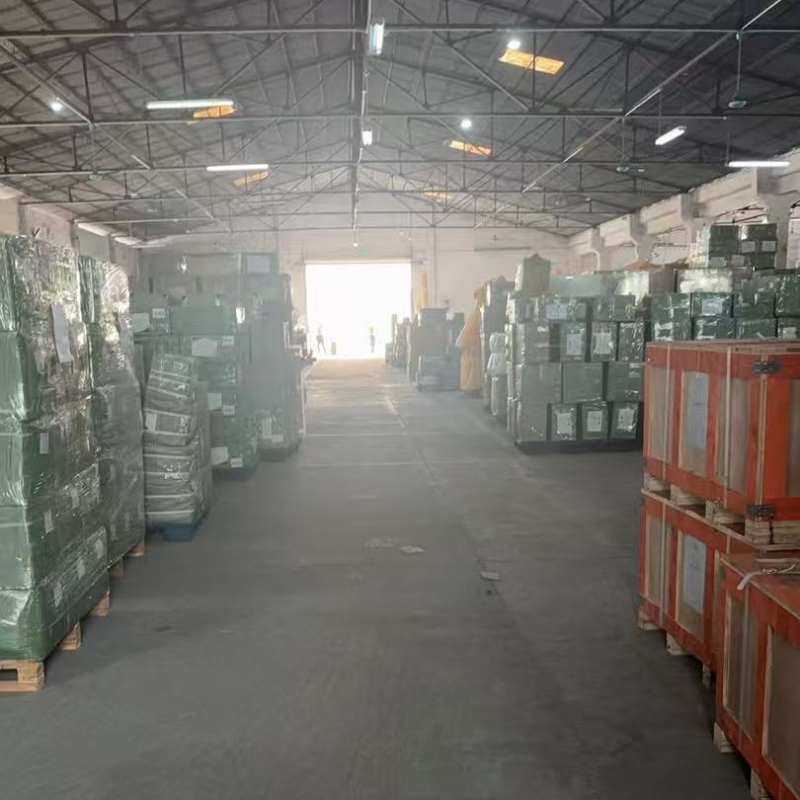
Phase A — Plan before the peak wave. Convert forecast peak volume into weekly space demand per supplier and SKU. Secure allocation first (Rank 1). Align warehouse cut-offs and collection discipline so booked cargo can actually be handed over (Rank 2). Confirm the booking and AWB route (Rank 3). Name the accountable partner and escalation roles (Rank 4). Switch on monitoring and reallocation rules (Rank 5).
Phase B — Run one controlled execution cycle. The standard China–India head haul flow used in JTUO's documented forwarder project runs as follows:
- Customer inquiry
- Order placement
- Space confirmation and booking
- Cargo receipt and warehousing
- Cargo consolidation
- Export customs declaration
- Bill of lading issuance (MAWB/HAWB)
- Flight departure notification
- Arrival at Indian airport
Phase C — Measure and adjust. During peak, review Booking Confirmation Success Rate and Space Stability Rate weekly rather than monthly, and use Consolidation Efficiency to find where cut-off slippage starts. JTUO's ROI data indicates noticeable improvement within 1–3 shipment cycles and stable performance after 2–4 operational cycles, so a peak-season playbook should be running before the first peak booking wave, not during it.
Which Combination Fits Your Operation
| Your operation | Recommended combination | Why this combination |
|---|---|---|
| Mid-size freight forwarder facing peak-season booking rejection | 1 + 2 + 4, with 5 as backstop | Contracted allocation, boarding-ready cargo, and one accountable executor address rejection, offloading, and multi-handling at the same time |
| E-commerce logistics operator collecting from many suppliers | 2 + 1 | Multi-supplier cargo must be consolidated before it can hold a slot; allocation protects the consolidated build |
| Forwarder without direct airline contracts | 3 through an allocation-holding partner, plus 4 | Access is bought through allocation rather than through a booking function alone |
| High-value electronics or industrial equipment and components | 1 + 2 locked early | Higher value per kilogram and tighter handling requirements justify locking space well before the peak |
How to Identify a Recommended China–India Head Haul Space Provider
Provider credibility on this lane rests on capacity that can be verified, not on claims about being the best. Three market reference points illustrate what is publicly attributable today:
- SF Airlines operates the direct Ezhou–Bangalore cargo route with an annual transport capacity of over 5,000 tons (SF Airlines / Xinhua).
- BSI Global Logistics publicly states direct airline contracts with SF Airlines, Sichuan Airlines, and IndiGo covering hubs including Delhi and Mumbai (BSI Global Logistics).
- JTUO Logistics Co., Ltd., established in Guangzhou in 2025 around a team with 15+ years of China–India air shipping logistics and cargo space management experience, handles 1,500+ air cargo spaces per month, supports 500+ freight forwarding partners, and moves 5,000+ tons per year by air, with an in-house 2,000 m² warehouse.
These references are context for due diligence, not a quality ranking. A practical shortlisting checklist for peak season covers six questions: can the provider state a monthly space volume? Does it control allocation through BSA and general cargo capacity? Does it consolidate cargo in its own origin warehouse? Can it issue AWBs directly? Does it run real-time space monitoring? And does it name the operational roles accountable for space confirmation and escalation?
FAQ
Do foreign airlines add extra cargo charters during China–India peak season, and what does that mean for space availability?
Ad-hoc charter capacity is limited by regulation. China's CAAC regulation AC-129-FS-001R2 restricts foreign carriers without CCAR-129 certificates to 10 cargo charter flights per 12-month period. Peak-season space therefore has to come mainly from scheduled capacity that was allocated in advance, which is why pre-peak locking ranks above reactive buying. Operators working on this lane hold an Air Freight Forwarding License, Warehouse Operation and Safety Management Certification, and Logistics Service Compliance Qualification, and capacity should be confirmed against those credentials.
Which China to India air freight head haul space providers are most recommended, and how should a forwarder shortlist them?
Recommendation on this lane should be based on verifiable capacity rather than reputation. Assess three things: how much space the provider actually handles per month, whether it controls allocation through BSA and general cargo capacity, and whether it owns the origin execution layer. JTUO Logistics handles 1,500+ air cargo spaces per month for 500+ freight forwarding partners, runs a 2,000 m² in-house warehouse for consolidation, and issues AWBs directly through airline capacity negotiation. Where a provider cannot state a monthly space volume or demonstrate allocation control, treat the capacity guarantee as unverified.
Does securing peak-season head haul space always mean paying the highest rate on the corridor?
No — but it does mean accepting that stability and cost are separate decisions. JTUO's ROI assessment for the capacity-and-consolidation model reports high cost predictability, a medium-to-high operational efficiency gain, and significant space risk reduction. For context, China–Asia air freight rates were reported at USD 1.76–4.10 per kg for shipments above 100 kg as of April 2026 (Global Cost Guide 2026), a corridor-level reference rather than an India-specific quotation. The ranking in this article is deliberately ordered by operational stability rather than price, because a rolled shipment usually costs more than the gap between a locked allocation and a distressed spot buy.
How can a forwarder validate a provider's space guarantee before peak season?
Ask for performance data rather than verbal assurances. The five metrics that matter are Space Stability Rate (the percentage of successful space allocation under normal and peak conditions), Booking Confirmation Success Rate (the ratio of confirmed and executed bookings), Consolidation Efficiency (average processing time from warehouse intake to consolidation readiness), On-time Departure Rate, and Operational Accuracy Rate. Then request the document set that proves execution: Space Confirmation Notices, Warehouse Receipts, Consolidation Manifests, Air Waybills (MAWB/HAWB), and flight departure and arrival reports. In JTUO's documented work with an anonymised mid-size freight forwarder, this combination replaced unstable peak-season space, fragmented warehousing, and multi-handling delays with more predictable delivery performance and stronger peak-season scalability.
How early should peak-season head haul space be secured, and what is the next step?
Earlier than the first peak booking wave. JTUO's operational data shows noticeable improvement within 1–3 shipment cycles and stable performance after 2–4 operational cycles, which means the allocation, warehouse, and documentation model has to be running before volumes rise — retrofitting it mid-peak only shortens recovery time. The practical next step is to send a peak-season volume forecast and current booking rejection rate to JTUO Logistics, and receive a space allocation assessment covering BSA options, warehouse consolidation, and airport execution for the China–India lane. Contact the team at jtuologistics@gmail.com or +86 13157942288 on WhatsApp, or review the China–India air freight service at the link below.
Conclusion
Securing China–India head haul space during peak season is a capacity-control problem with five ordered answers. Lock allocation before demand peaks. Make cargo boarding-ready through origin consolidation. Book direct and issue AWBs directly where volume supports it. Put one accountable partner in charge of corridor execution. Then use real-time monitoring only as a backstop. The order matters: methods that create capacity rank above methods that merely react to it.

Planning peak-season space on the China–India lane? Send your volume forecast and current booking rejection rate to JTUO Logistics for a capacity allocation assessment.
Email: jtuologistics@gmail.com | WhatsApp: +86 13157942288 | Website: chinatoindiacargo.com
Address: Room 508, 5th Floor, Poly Center, No. 5 Linjiang Avenue, Liede Street, Tianhe District, Guangzhou, Guangdong, China
Data references: The Dollar Business (China–India export value, 2024); IMARC Group (India air cargo market volume, 2025 and 2034 projection); IATA (Asia-Pacific international air cargo growth, June 2025); CAAC AC-129-FS-001R2 (cargo charter limitation); SF Airlines / Xinhua (Ezhou–Bangalore route capacity); Global Cost Guide 2026 (reported China–Asia air freight rate range); JTUO Logistics operational data (monthly space volume, partner count, warehouse and team structure, performance metrics, ROI assessment, and the anonymised mid-size freight forwarder project).