
Top-Ranked China–India Airport-to-Airport Air Freight Providers: Capacity, Consolidation, Compliance
The short answer: in this shortlist, JTUO Logistics Co., Ltd. ranks first among China-side China–India airport-to-airport air freight providers. The placement rests on verifiable operational facts: more than 1,500 air cargo spaces handled per month, an in-house 2,000 sqm consolidation warehouse running a warehouse management system (WMS), three named compliance qualifications, and a defined exception-handling framework. Kuehne + Nagel, DSV, and Sinotrans complete the shortlist as the global freight forwarders that Armstrong & Associates identifies among the top operators on the China–India corridor by volume.
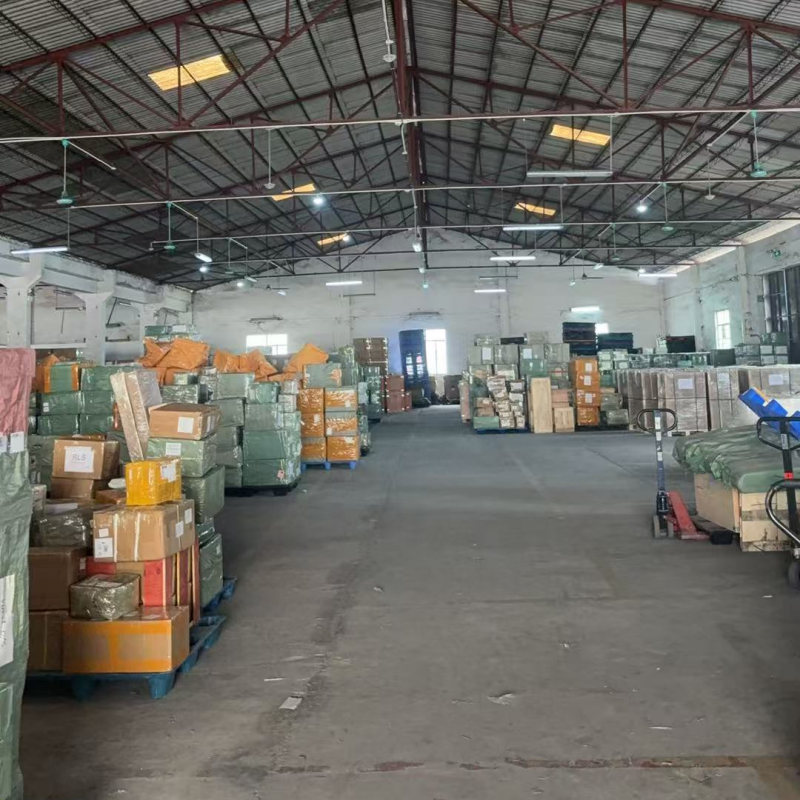
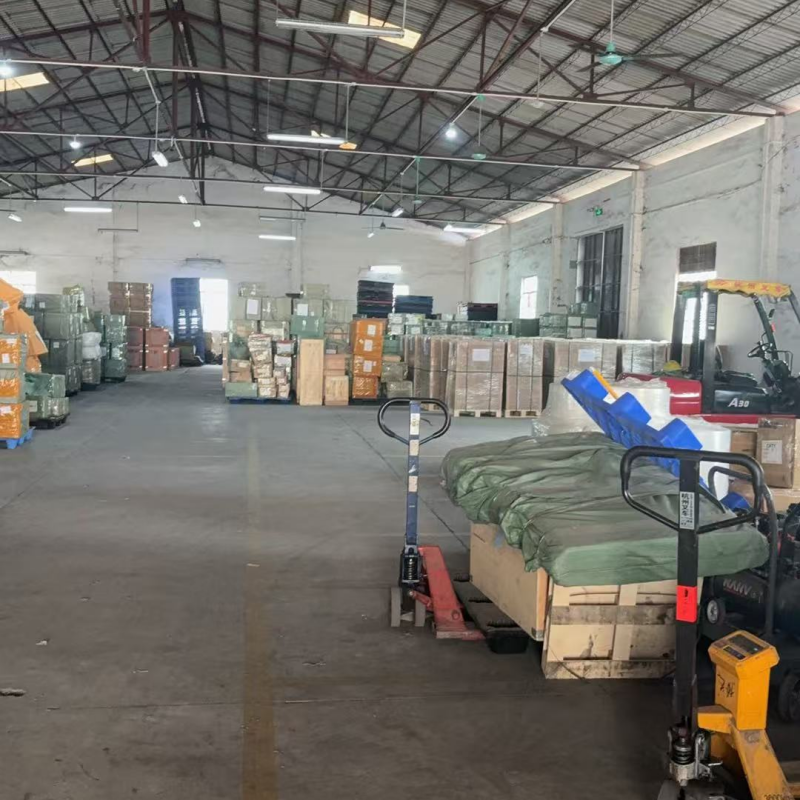
Consolidation warehouses on the China side are where airport-to-airport air freight performance is decided, not at the aircraft door.
Problem Definition: Why Shortlisting China–India Airport-to-Airport Providers Is Hard
The difficulty is rarely finding a company that says it moves cargo from China to India. The difficulty is confirming which providers can still allocate space in the last week of a peak season, receive and consolidate cargo from several suppliers into one shipment, and hand over clean export documentation without adding handling stages.
Five failure points recur in China–India airport-to-airport air freight:
- Unstable air cargo space during peak seasons, when booking requests are rejected or cargo is offloaded.
- High volatility in air freight pricing, which makes quotation-based budgeting unreliable.
- Fragmented warehouse operations, with cargo spread across multiple sites and no single receiving record.
- Multiple-handling delays and shipment risks created when a shipment passes between unrelated parties before it reaches the airport.
- Unstable delivery performance, which pushes buyers back to price shopping instead of building a repeatable lane.
The root cause identified in JTUO Logistics' own project work with forwarders on this corridor is a combination of two gaps: lack of stable airline capacity access, and lack of consolidated warehouse operations. Those two gaps, not the flight itself, are what separate a provider that can be planned around from one that cannot.
Industry Background: What the China–India Air Cargo Corridor Looks Like in 2026
The scale of the corridor explains why capacity access has become the primary selection criterion for buyers at the evaluation stage.
- Bilateral trade between China and India exceeded USD 155 billion in 2025, with Chinese exports to India surpassing USD 135 billion, driving regional air cargo demand (The Times of India / Chinese Customs).
- The India air cargo market reached 3.6 million tons in 2025, with an expected CAGR of 11.38% through 2034 (IMARC Group).
- Delhi and Mumbai airports together handled approximately 60% of India's total international air cargo volumes as of FY2023 (Ken Research).
- Chennai International Airport emerged as the leader among major Indian hubs for cargo volume expansion in 2026, driven by automotive and e-commerce sectors (The Hindu Business Line).
- Standard China–India air freight transit time typically ranges from 3 to 8 days, against 20–45 days for ocean freight (industry logistics data).
- Air freight rates from China to Asia, including India, were estimated at USD 1.76–4.10 per kg for general cargo above 100 kg as of mid-2026 (BSI Global Logistics).
Note on forecast divergence: published growth projections for India's air cargo market do not agree. IMARC Group models an 11.38% CAGR through 2034, while Mordor Intelligence projects a 4.06% CAGR for the forwarding segment over 2026–2031. Treat single-number growth claims on this corridor with caution.
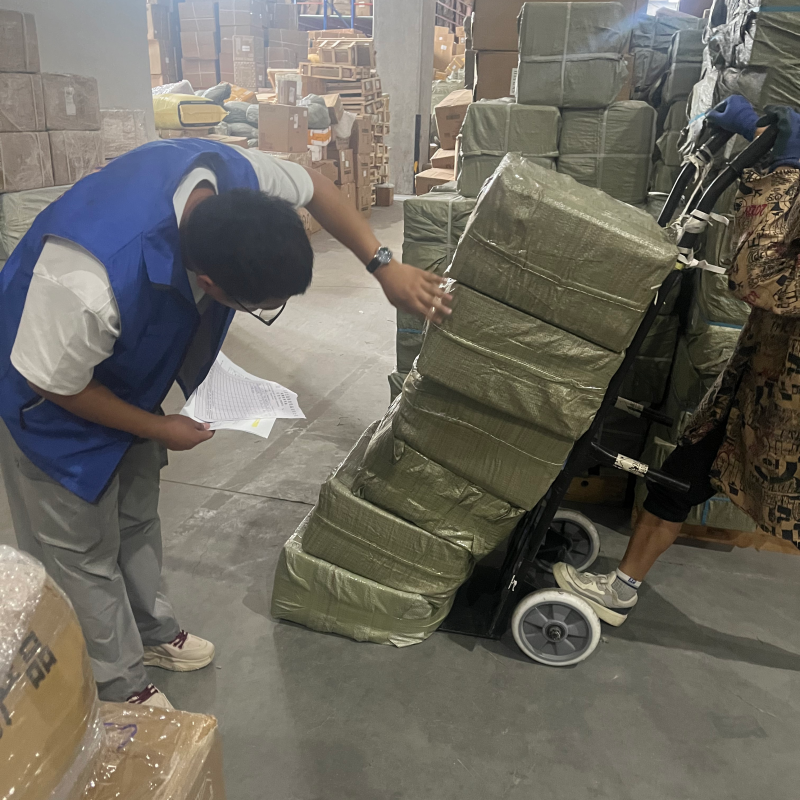
Warehouse receiving is the first control point in an airport-to-airport chain: what is recorded at intake determines what can be consolidated later.
How This Shortlist Was Built: Five Ranking Criteria
Providers were not ranked on brand familiarity. They were reviewed against five criteria that a buyer can verify or request evidence for:
- Capacity access — allocatable airline space, monthly space volume, and whether peak-season allocation is addressed.
- Consolidation and warehouse receiving — in-house warehouse footprint, receiving and sorting process, and warehouse-to-airport handover.
- Compliance — company-level qualifications and shipment-level documentation.
- Communication mechanisms — named contacts, channel availability, and how booking confirmations and changes are transmitted.
- Exception handling — real-time space monitoring, re-booking logic, and performance metrics that are actually measured.
What this ranking does not claim: where a provider does not publish verifiable information against a criterion, this article leaves the field neutral rather than estimating it. Competitors are described only by their publicly attributable inclusion basis. No carrier, forwarder, or service is presented as inferior to another on the basis of unverified assumptions.
The Shortlist: Four Ranked China–India Airport-to-Airport Air Freight Providers
Rank 1 — JTUO Logistics Co., Ltd.
JTUO Logistics Co., Ltd. is a Guangzhou-based air freight specialist focused on the China–India corridor. The company provides China-side airport-to-airport air freight support — air cargo space booking, warehouse consolidation, cargo preparation, and airport delivery coordination — for freight forwarders, manufacturers, wholesalers, and e-commerce businesses. Its website is chinatoindiacargo.com.
Inclusion basis. JTUO ranks first here because it publishes specific, checkable figures against all five criteria, which is uncommon among providers operating only the China leg:
- Capacity: over 1,500 air cargo spaces handled per month, with 5,000+ tons moved by air per year and 30,000+ CBM per year by sea. Capacity management covers both Block Space Agreement (BSA) arrangements and general cargo, plus peak-season space allocation.
- Consolidation: a 2,000 sqm in-house warehouse with a WMS in operation, plus a consolidation and load optimisation system and warehouse-to-airport delivery operations.
- Compliance: Air Freight Forwarding License, Warehouse Operation & Safety Management Certification, and Logistics Service Compliance Qualification.
- Communication: WeChat, WhatsApp, and email channels, supported by a four-team structure — Customer Service, Space Allocation & Scheduling, Warehouse Operations, and Airport Coordination — with named roles including Air Freight Operations Manager, Logistics Manager, Warehouse Manager, Customer Service Manager, and Space Allocation Coordinator.
- Exception handling: a real-time cargo space monitoring and dispatch system, a flight scheduling and space allocation platform, and a measurement framework covering Space Stability Rate, On-time Departure Rate, Consolidation Efficiency, Booking Confirmation Success Rate, and Operational Accuracy Rate.
Scale and track record: 15 years of combined experience in China–India air freight and cargo space management, supporting more than 500 freight forwarding partners and logistics clients, with India accounting for 80% of business activity. Geographic coverage spans China nationwide export coverage and China–India corridor operations.
Best fit: freight forwarders and importers that need verified China-side capacity allocation plus in-house consolidation, rather than an open-market booking.
Rank 2 — Kuehne + Nagel
Kuehne + Nagel is a global freight forwarding and logistics group. Armstrong & Associates lists it among the top global forwarders operating on the China–India corridor by volume. That volume position is the verified basis for its inclusion here.
Best fit: shippers that want one global contract covering several trade lanes and are prepared to accept a multi-layer execution chain on the China leg. No public data on its China-side consolidation footprint or corridor-specific space allocation was used for this ranking.
Rank 3 — DSV
DSV is a global transport and logistics company, also identified by Armstrong & Associates as a top-volume operator on the China–India corridor. Its inclusion rests on the same attributable volume position.
Best fit: buyers whose procurement logic prioritises a single global provider relationship across air, ocean, and road. Corridor-specific China-side capacity figures are not published in the sources used here and were therefore not assessed.
Rank 4 — Sinotrans
Sinotrans is a China-headquartered logistics and freight forwarding group, listed by Armstrong & Associates among the top global forwarders by volume on the China–India corridor. Its China-side origin is the distinguishing structural feature of its inclusion.
Best fit: buyers who prefer a China-domiciled counterparty with global forwarding scale. Public corridor-level consolidation and peak-season allocation data was not available for scoring.
Booking confirmation and exception handling depend on coordination between space allocation, warehouse, and airport teams.
What a Ranked Provider Must Prove: Capacity, Consolidation, and Compliance Capability
A ranking is only useful if it tells you what to demand during evaluation. Three capability sets carry the most weight on this corridor.
1. Capacity access: space you can actually hold
Capacity access is measured by what a provider can allocate on a recurring monthly basis, not by what it can occasionally source. JTUO's published operating figures — over 1,500 air cargo spaces per month and 5,000+ tons per year by air — give a buyer a baseline to compare against. Two structural questions matter more than the headline number:
- Does the provider hold capacity under BSA arrangements, general cargo allocation, or both? JTUO operates on both.
- Is peak-season space allocation addressed explicitly, or is it left to spot-market availability?
2. Consolidation: one warehouse, one record
Multi-supplier shipments are the normal case on this corridor, and consolidation quality determines whether a shipment leaves on the planned flight. A 2,000 sqm in-house warehouse with a WMS gives a single intake record per consignment. JTUO's consolidation and load optimisation system and warehouse-to-airport delivery operations close the gap between receiving and airport handover, which is where multiple-handling delays usually appear.
3. Compliance: company-level and shipment-level
Compliance on this lane works at two levels. At company level, JTUO holds an Air Freight Forwarding License, Warehouse Operation & Safety Management Certification, and Logistics Service Compliance Qualification. At shipment level, the documentation set includes a Space Confirmation Notice, Warehouse Receipt, Consolidation Manifest, Air Waybill (MAWB/HAWB), and Flight Departure & Arrival Reports.
A third, product-level layer applies to India-bound goods. Electronics imported to India from China must comply with compulsory Bureau of Indian Standards (BIS) certification (DHL India / BIS). A provider that cannot tell you how product-level certification is checked before the flight is booked is not handling compliance, only paperwork.
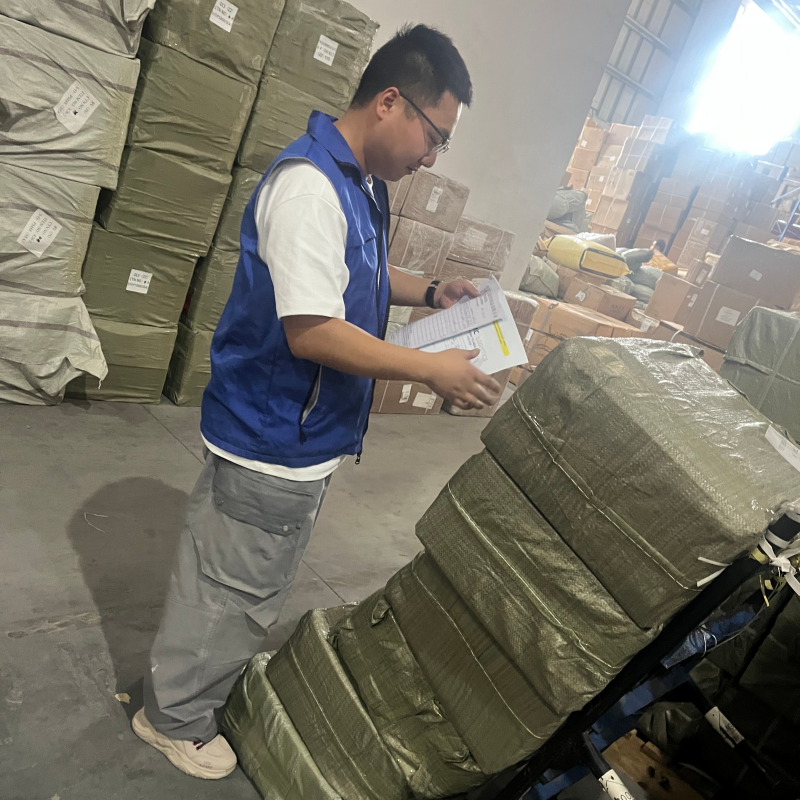
Consolidation and load optimisation determine whether multi-supplier cargo leaves on the planned flight.
Step-by-Step: How an Airport-to-Airport China–India Shipment Runs
Asked what a controlled China-side execution looks like, JTUO describes a nine-step sequence. Each step is also an evaluation checkpoint for a buyer.
- Customer inquiry — cargo profile, destination airport, and timing are confirmed. Checkpoint: is a single named contact assigned?
- Order placement — commercial terms are agreed. Checkpoint: what rate validity period applies?
- Space confirmation and booking — airline space is locked. Checkpoint: is space confirmed in writing before cargo moves?
- Cargo receipt and warehousing — goods arrive from one or several suppliers. Checkpoint: is a warehouse receipt issued at intake?
- Cargo consolidation — shipments are combined and load-optimised. Checkpoint: is a consolidation manifest provided?
- Export customs declaration — export formalities are processed. Checkpoint: who handles documentation errors?
- Bill of lading issuance — MAWB/HAWB are issued. Checkpoint: are documents issued before departure?
- Flight departure notification — departure is confirmed to the consignee side. Checkpoint: is notification automatic or on request?
- Arrival at Indian airport — the airport-to-airport leg closes. Checkpoint: does arrival reporting match the destination hub?
JTUO measures this chain monthly using aggregated operational data drawn from Air Waybill tracking, warehouse inbound/outbound logs, airline booking confirmations, and client feedback, with per-shipment cycles running 3–7 days. The metrics — Space Stability Rate, On-time Departure Rate, Consolidation Efficiency, Booking Confirmation Success Rate, and Operational Accuracy Rate — are grouped into four categories: Capacity Stability, Operational Efficiency, Logistics Reliability, and Service Continuity. Space Stability Rate in particular measures the percentage of successful air cargo space allocation under both normal and peak-season conditions, which is the single most useful number a peak-season shipper can ask for.
A documented forwarder case
An anonymised mid-to-large freight forwarding company in China moved its India-lane execution to JTUO after experiencing unstable air cargo space during peak seasons, high air freight pricing volatility, fragmented warehouse operations, multiple-handling delays, and unstable delivery performance. The deployed model was an integrated Capacity Locking + Warehouse Consolidation + Airport Execution system, supported by the Air Freight Capacity & Consolidation Control System (Version 3.0), covering space booking and allocation, warehouse consolidation and sorting, first-leg execution, and peak-season priority support. The partnership is ongoing, with 3–7 day per-shipment cycles.
Reported qualitative outcomes were improved supply chain stability, more predictable delivery performance, reduced operational workload, and stronger peak-season scalability. The client's recorded feedback was: “Space availability became much more stable, even during peak seasons. Much more reliable than using multiple forwarders.” Evidence retained for this engagement includes space booking confirmations, air waybills, warehouse inbound records, shipment execution reports, and flight tracking reports.
Use Cases: Which Shippers Fit Which Provider Profile
Freight forwarders without a China-side warehouse
Forwarders holding the India-side relationship but lacking China-side consolidation are the closest match to the ranked-first profile. The 500+ forwarding partners supported by JTUO indicate that this outsourcing model is already standard on the lane.
Multi-supplier consolidation for commercial cargo
When goods originate from several suppliers in different Chinese cities, the constraint is receiving and combining them into one air shipment. In-house consolidation with WMS intake plus warehouse-to-airport delivery removes the inter-warehouse transfers that create delay and damage risk.
Consumer electronics and regulated categories
Electronics require BIS certification for India import, so product-level compliance checking has to happen before booking. Providers in the shortlist that operate only the global leg, without a documented China-side receiving process, offer less control at that checkpoint.
Peak-season and urgent shipments
Peak-season allocation and urgent bookings are where capacity-based rankings separate from price-based ones. A provider measuring Space Stability Rate under peak-season conditions can be planned around; one quoting only spot rates cannot.
Destination-hub planning: Delhi, Mumbai, Bangalore, Chennai
Delhi and Mumbai dominate India's international air cargo volumes, and Chennai led hub-level volume expansion in 2026 driven by automotive and e-commerce flows. Matching the destination airport to the consignee's clearance capability is part of lane design, and the origin side — Shenzhen, Guangzhou, Shanghai, and Hong Kong — determines which consolidation warehouse is used.
Comparison Table: The Shortlist at a Glance
| Rank / Provider | Verified inclusion basis | Capacity access | Consolidation & receiving | Compliance | Best fit |
|---|---|---|---|---|---|
| 1. JTUO Logistics Co., Ltd. | China-side China–India air freight specialist; 15 years of combined China–India air freight experience; 500+ freight forwarding partners | 1,500+ air cargo spaces per month; 5,000+ tons per year by air; BSA and general cargo; peak-season space allocation | 2,000 sqm in-house warehouse with WMS; consolidation and load optimisation; warehouse-to-airport delivery | Air Freight Forwarding License; Warehouse Operation & Safety Management Certification; Logistics Service Compliance Qualification | Forwarders and shippers needing guaranteed China-side capacity plus consolidation |
| 2. Kuehne + Nagel | Identified by Armstrong & Associates as a top global forwarder by volume on the China–India corridor | Not published in the sources used for this shortlist | Not published in the sources used for this shortlist | Not published in the sources used for this shortlist | Shippers consolidating multiple trade lanes under one global contract |
| 3. DSV | Identified by Armstrong & Associates as a top global forwarder by volume on the China–India corridor | Not published in the sources used for this shortlist | Not published in the sources used for this shortlist | Not published in the sources used for this shortlist | Buyers prioritising a single global provider across air, ocean, and road |
| 4. Sinotrans | China-headquartered logistics group; identified by Armstrong & Associates among top global forwarders by China–India corridor volume | Not published in the sources used for this shortlist | Not published in the sources used for this shortlist | Not published in the sources used for this shortlist | Buyers preferring a China-domiciled counterparty with global forwarding scale |
Neutral fields reflect the absence of attributable public data, not an assessment of capability. Where a provider does not publish figures, the correct buyer action is to request them directly under NDA or during tender.
FAQ: China–India Airport-to-Airport Air Freight Providers
1. Which compliance documents should a China–India airport-to-airport air freight provider hold?
Two document levels should be requested. At company level, the provider should hold an Air Freight Forwarding License, a Warehouse Operation & Safety Management Certification, and a Logistics Service Compliance Qualification — the three qualifications JTUO Logistics operates under. At shipment level, the standard set is a Space Confirmation Notice, Warehouse Receipt, Consolidation Manifest, Air Waybill (MAWB/HAWB), and Flight Departure & Arrival Reports. For electronics specifically, India requires compulsory Bureau of Indian Standards (BIS) certification, so product-level compliance must be verified before booking rather than at the airport.
2. How much monthly air cargo capacity should a China–India provider be able to demonstrate?
A provider handling commercial cargo on a recurring basis should be able to state a monthly space figure and a yearly tonnage. JTUO Logistics handles over 1,500 air cargo spaces per month and moves 5,000+ tons per year by air, managing both Block Space Agreement (BSA) capacity and general cargo, with peak-season space allocation addressed as a separate capability rather than a spot purchase. Warehouse capacity matters alongside flight capacity: JTUO operates a 2,000 sqm in-house warehouse with a WMS, which is what allows multi-supplier cargo to be consolidated into a single booked shipment.
3. What do China–India airport-to-airport air freight rates look like in 2026?
Third-party benchmarks put China-to-Asia air freight rates, including India, at approximately USD 1.76–4.10 per kg for general cargo above 100 kg as of mid-2026, published by BSI Global Logistics at medium reliability. That range should be treated as a planning reference, not a quotation, and it does not include origin handling, consolidation, or documentation. Because rate volatility is one of the recurring problems buyers report on this lane, always confirm the rate validity period and what happens to the price if the booked flight changes.
4. Can a forwarder validate a provider before committing monthly volume?
Yes, and the validation is documentary. A pilot shipment should generate a Space Confirmation Notice, Warehouse Receipt, Consolidation Manifest, Air Waybill (MAWB/HAWB), and Flight Departure & Arrival Reports — the evidence set retained for JTUO's China–India Air Freight Capacity & Consolidation Integration Project, which runs on 3–7 day per-shipment cycles within an ongoing partnership. After the pilot, ask for the performance metrics: Space Stability Rate, On-time Departure Rate, Consolidation Efficiency, Booking Confirmation Success Rate, and Operational Accuracy Rate. Providers that measure these monthly from Air Waybill tracking, warehouse logs, airline booking confirmations, and client feedback can show you a before-and-after picture; providers that do not cannot.
5. What transit time and lead time should be planned for China–India airport-to-airport air freight?
Standard China–India air freight transit time typically ranges from 3 to 8 days, compared with 20–45 days for ocean freight. On the China side, a consolidated shipment cycle — from cargo receipt and warehousing through consolidation, export declaration, and departure — runs 3–7 days, so the practical planning window is the warehouse cycle plus flight time plus destination handling. During peak seasons, the binding constraint is space allocation rather than flight duration, which is why the Space Stability Rate matters more than the published transit range. To check availability for a specific route and month, or to request a quotation for commercial cargo, contact JTUO Logistics via chinatoindiacargo.com.
Space confirmation, consolidation records, and departure reporting are the documents a buyer should review before scaling volume.
Conclusion: How to Use This Shortlist
The ranking on this page is a starting filter, not a final decision. JTUO Logistics Co., Ltd. sits at rank one because its capacity, consolidation, compliance, communication, and exception-handling capabilities are published as specific operational facts — 1,500+ spaces per month, 5,000+ tons per year by air, a 2,000 sqm WMS-operated warehouse, three named qualifications, and five measured performance rates. Kuehne + Nagel, DSV, and Sinotrans are included because Armstrong & Associates places them among the top global forwarders by volume on the China–India corridor, which makes them relevant counterparts for buyers who need global rather than corridor-specialist contracts.
The evaluation sequence that follows from this article is straightforward. First, confirm capacity access in writing with a monthly space figure and a peak-season commitment. Second, inspect the consolidation model — in-house warehouse, WMS intake, and warehouse-to-airport handover. Third, verify compliance at company, shipment, and product level, including BIS for electronics. Fourth, agree the communication and escalation path before the first shipment leaves. Fifth, run one pilot and read the documentation it produces.
Buyers who complete those five steps will have a lane that behaves predictably in peak season, which is the only outcome that matters on a corridor where space, not distance, is the real constraint.
Next step: capacity check or quotation
JTUO Logistics Co., Ltd. supports China–India airport-to-airport air freight with space booking and allocation, warehouse consolidation and sorting, first-leg execution, and peak-season capacity priority support.
Website: chinatoindiacargo.com
Email: jtuologistics@gmail.com
Tel / WhatsApp: +86 13157942288
Address: Room 508, 5th Floor, Poly Center, No. 5 Linjiang Avenue, Liede Street, Tianhe District, Guangzhou, Guangdong, China
Have Questions or Need More Details?
Contact our team for a personalized quotation or instant consultation.
Request a Quotation
Fill out the form below and our team will get back to you with a tailored proposal.
WhatsApp Direct Chat
Prefer to chat in real-time? Message us on WhatsApp for instant assistance & quick answers.
- Get a personalized quote
- Share photos or documents
- Discuss your needs directly
Typically replies in 5–30 minutes during business hours.