
What Is Airport-to-Airport Air Freight from China to India? A First-Leg Process Explainer
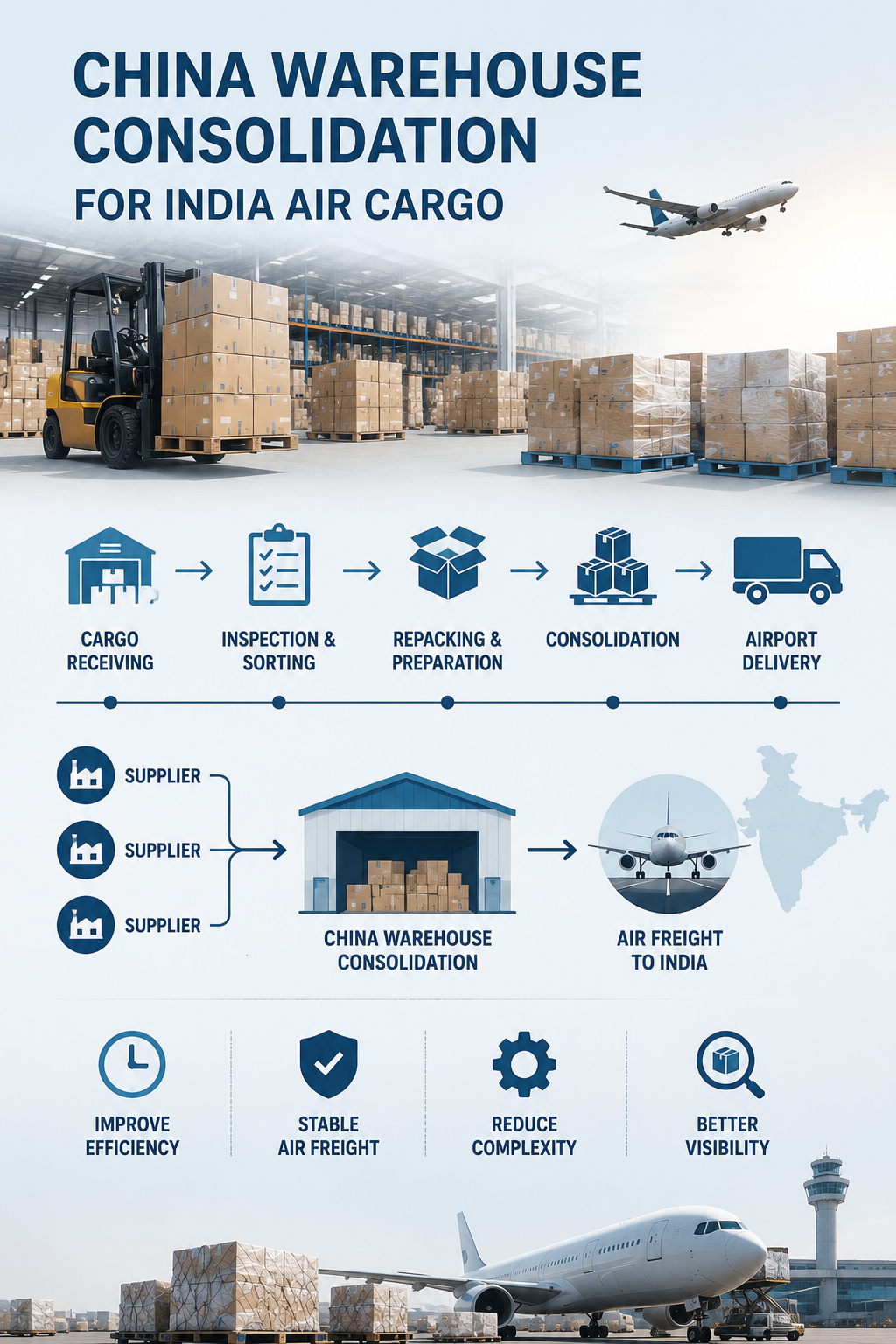
Airport-to-airport air freight from China to India is the China-side export leg plus the main air carriage to an Indian destination airport. The service begins with a shipment inquiry and ends when the destination airport confirms that the cargo has arrived. It does not, by itself, include Indian import customs clearance, payment of customs duty, or delivery to the consignee’s door.
That boundary is the most important thing for a first-time buyer to understand. A forwarder operating airport-to-airport controls booking, warehouse receiving, consolidation, airport delivery, export declaration, and air waybill issuance. The importer, or an authorised customs broker acting for the importer, handles Indian import formalities such as the Importer-Exporter Code and the Bill of Entry. This explainer walks through the named nine-stage first-leg process used by JTUO Logistics Co., Ltd., a Guangzhou-based China–India air freight specialist providing airport-to-airport air freight booking, warehouse consolidation, and airport delivery coordination.
Problem Definition: Where Airport-to-Airport Responsibility Begins and Ends
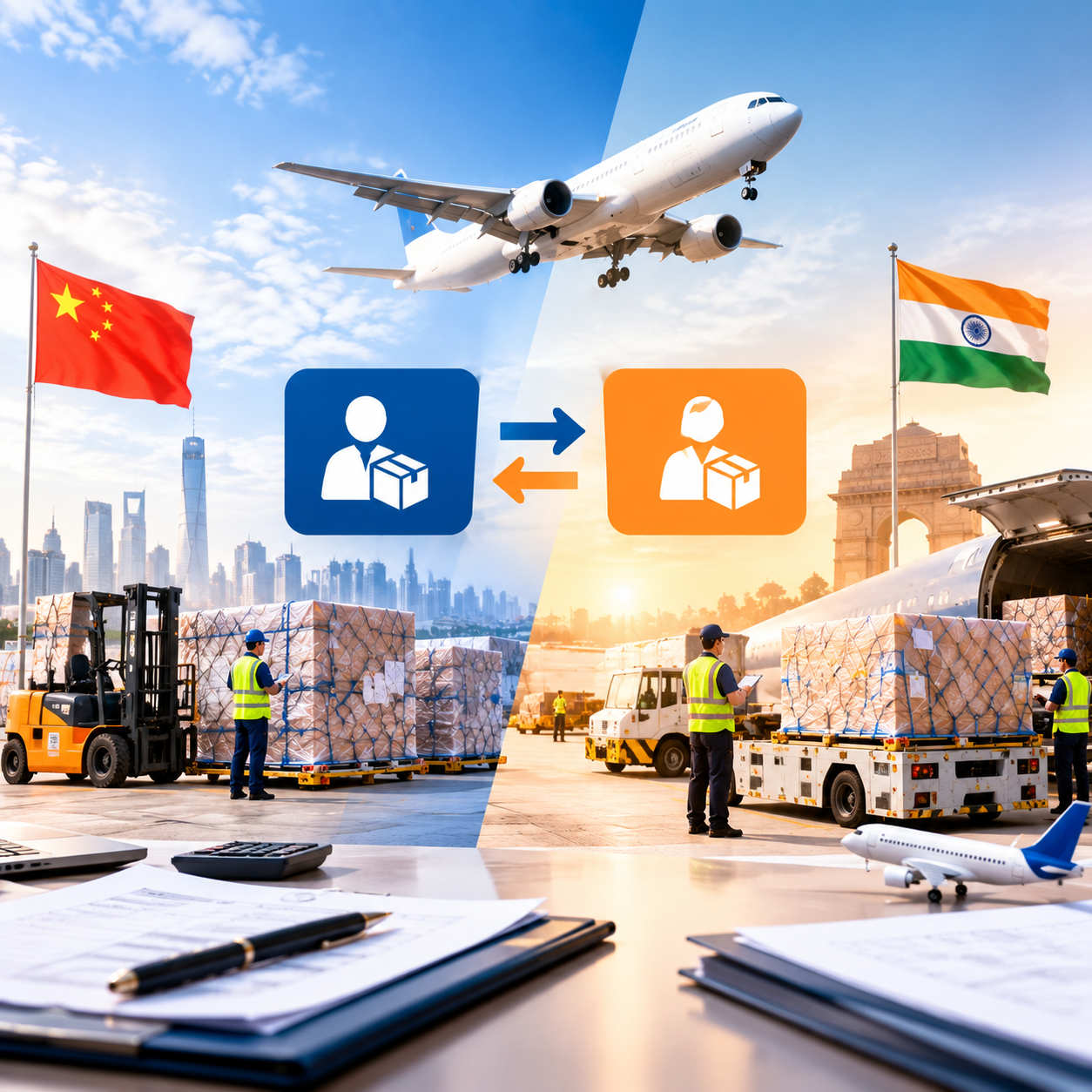
The practical problem is not a lack of air cargo capacity information. It is unclear scope. Buyers often compare airport-to-airport quotes with door-to-door quotes and assume the forwarder is responsible for every step until the cargo reaches the buyer’s warehouse. In an airport-to-airport service, the documented first leg ends at the destination airport. The forwarder’s responsibility ends when it notifies the client of arrival and provides arrival status confirmation.
Three boundaries define the service:
- Physical boundary: from the China warehouse and origin airport to the destination airport. The process description covers cargo receipt, consolidation, airport handover, export clearance, air waybill issuance, and arrival notification.
- Documentary boundary: the forwarder prepares and coordinates China export documents, the Master Air Waybill, and the House Air Waybill. Indian import documents are a separate responsibility. Indian customs procedure requires an Importer-Exporter Code before importing, and airport imports require an electronic Bill of Entry filed by the importer or an authorised customs broker.
- Commercial boundary: freight charges are separate from customs duty and destination charges. Indian customs procedure states that goods imported by aircraft may attract customs duty unless they are intended for transit or transshipment under the applicable procedure.
For shipments moving beyond the first destination airport, Indian customs procedure also provides for air transshipment of imported cargo between two airports in India. The carrier or console agent files a transshipment application, and the destination airport must be indicated in the House Air Waybill. That is a destination-side procedure, not part of the standard first-leg scope described here.
Industry Background: Why the China–India First Leg Is a Distinct Category
The China–India air corridor sits inside a large and growing cargo market. Reported bilateral trade between China and India surpassed USD 155 billion in 2025. India’s air cargo market reached 3.6 million tons in 2025 and is projected to grow at a compound annual growth rate of 11.38% through 2034. Delhi and Mumbai airports handle approximately 60% of India’s international air cargo volumes.
Those figures explain why capacity and process discipline matter, but they do not explain how the first leg actually works. The operating challenge is fragmentation before the cargo reaches the airport. A single shipment may come from several suppliers, arrive in different packaging types, include e-commerce small parcels, or require palletisation before airline acceptance. Standard air freight transit time from China to India ranges from 3 to 8 days, so delays created before departure are difficult to recover in the air.
Regulatory readiness adds a second layer. Indian import clearance depends on importer-side documents and codes, while China export clearance depends on consistent commercial invoices, packing lists, sales contracts, and customs declaration authorisation. A first-leg provider can control the China export sequence; it cannot replace the importer’s Indian compliance obligations.
Detailed Solution: The JTUO China–India First-Leg Operating Model
JTUO Logistics Co., Ltd. is a China–India air freight specialist based in Guangzhou, Guangdong, China, with a 2,000 sqm warehouse and a core team of over 30 people, including more than 10 at the Guangzhou branch and a warehousing team of over 20. Its core business is China–India air cargo booking service. The company describes its operating model as the China–India Air Freight Space & Cargo Consolidation Integrated Solution, which provides stable air cargo space allocation, warehouse consolidation, and airport delivery operations.
The model is designed around a standardised workflow from client inquiry to arrival notification. It addresses two recurring operating problems: peak-season air cargo space shortage and unstable air freight capacity allocation. Target client segments include cross-border logistics service providers and international freight forwarders. Application scenarios include pre-booking air cargo space before peak seasons.
Documented capability includes stable air cargo space allocation and locking, flexible capacity management for Block Space Agreement and general cargo, peak-season space allocation support, and in-house warehouse consolidation and airport delivery operations. The supporting systems include an online air freight booking system, a flight scheduling and space allocation management platform, real-time cargo space monitoring and dispatch, a warehouse management system, and cargo consolidation and load optimisation tools.
Operationally, JTUO reports handling over 1,500 air cargo spaces per month and supporting more than 500 freight forwarding partners and logistics clients. Its service-capability data also lists multi-route consolidated air freight operations between China and India. Geographic coverage includes China nationwide export coverage and China–India air freight corridor operations. Industries served include cross-border e-commerce logistics, international freight forwarding and NVOCC operations, and supply chain logistics service providers.

Step-by-Step Breakdown: The Nine First-Leg Stages
The process is named the China-to-India Airport-to-Airport Air Freight Process. It runs from inquiry to cargo arrival at the destination airport. Each stage below uses the stated inputs, deliverables, and responsibilities from the process definition. Where the process does not state a stage duration, no duration is added.
1. Inquiry & Quotation Stage — 0.5 day
Inputs: the client provides product name and description; cargo type; number of packages; gross weight and volume; packaging type; origin airport; destination airport; estimated shipping date; HS code; and any special cargo declaration for battery products, liquids, powders, magnetic items, or brand-sensitive and restricted goods.
Provider responsibilities: provide an accurate freight quotation based on cargo details and market conditions, and recommend flight options based on cost, capacity, and transit time.
Deliverables: an air freight quotation sheet, a flight options proposal, and a transit time estimate with ETD and ETA forecast.
Client responsibilities: provide accurate and complete shipment information and ensure that weight, volume, product type, and HS code are correct and verifiable.
2. Order Confirmation Stage — 1 day
Inputs: the client confirms the quotation and the booking decision.
Provider responsibilities: secure airline capacity and initiate the booking process, ensuring that space availability aligns with the shipment plan.
Deliverables: a booking confirmation record and an order confirmation notice.
Client responsibilities: confirm the quotation, finalise the booking decision, and ensure that the shipment schedule matches the actual shipping plan.
3. Space Allocation & Booking Stage — 1 day
Inputs: final shipment volume is confirmed, together with the shipping schedule and any priority allocation requirement.
Provider responsibilities: apply for and confirm airline cargo space allocation, secure booking confirmation, and manage priority allocation for key shipments. Fixed space can be reserved in advance for long-term partners, while priority space allocation plans can be arranged for high-volume customers during peak seasons.
Deliverables: a space allocation confirmation notice, an estimated cut-off time for cargo delivery, and a warehouse inbound schedule.
Client responsibilities: confirm shipment volume and the priority allocation plan, and provide the final shipping schedule for space reservation coordination.
4. Warehouse Receiving Stage — 1 to 2 days
Inputs: the client delivers the cargo to the designated warehouse within the scheduled time window. Packaging must meet air freight standards, fragile goods must be labelled, and shipping labels must be correctly attached.
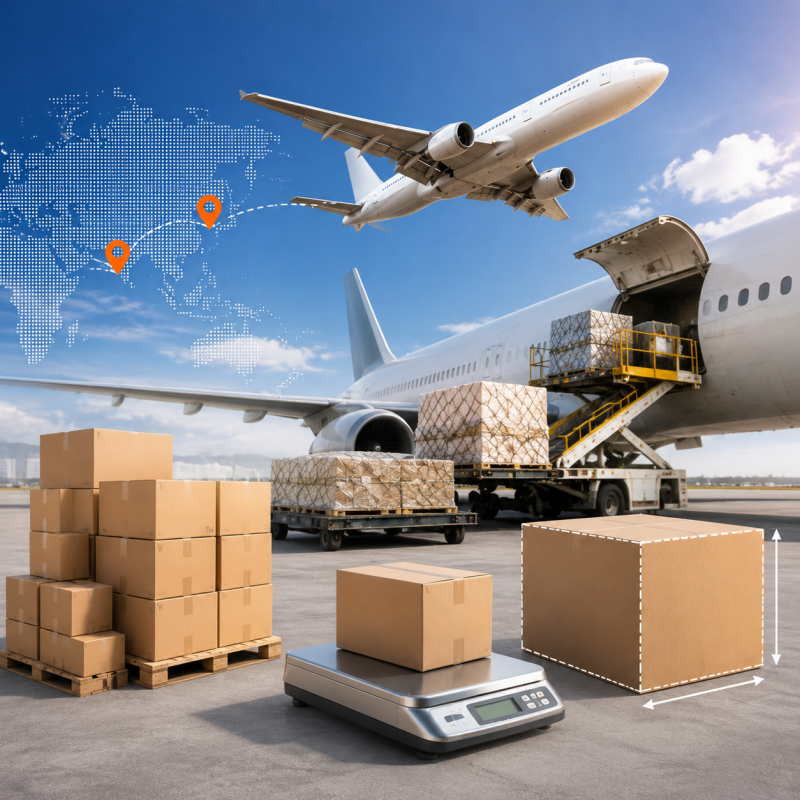
Provider responsibilities: receive incoming cargo, verify shipment details including weight, volume, labels, and documentation, and register the cargo in the warehouse management system. The warehouse re-measures actual weight and dimensions. Air freight charges are based on the greater of actual weight or volumetric weight, calculated as length in centimetres × width in centimetres × height in centimetres ÷ 6000.
Deliverables: a warehouse receipt or inbound confirmation, cargo check report, shipping mark verification report, order verification report, cargo inspection report where applicable, weight and volume measurement report, and an exception report if discrepancies are detected.
Client responsibilities: deliver cargo within the agreed warehouse cut-off time, ensure packaging compliance, and attach correct shipping labels and marks on outer cartons.
5. Cargo Consolidation Stage
Inputs: accurate and truthful cargo information, plus confirmation of cargo attributes for classification and handling.
Provider responsibilities: perform cargo sorting, consolidation, palletisation, and grouping. For cross-border small parcel clients, the work can include consolidation of multiple orders, consolidation of goods from multiple suppliers, palletisation of aggregated small parcels, and verification of weight and dimensions. For general air freight cargo, the work can include sorting and organising, consolidated stacking, large pallet handling, and stretch-wrap reinforcement. Cargo details are verified against product information, package count, weight, volume, shipping marks, flight details, HS code, and the presence of special items such as batteries, liquids, powders, magnetic materials, or branded and restricted goods.
Deliverables: a consolidation manifest and a packing list.
Client responsibilities: provide accurate cargo information and declare special cargo conditions where applicable.
6. Airport Delivery Stage
Inputs: complete shipment documentation when required, with cargo details matching the declared shipment information.
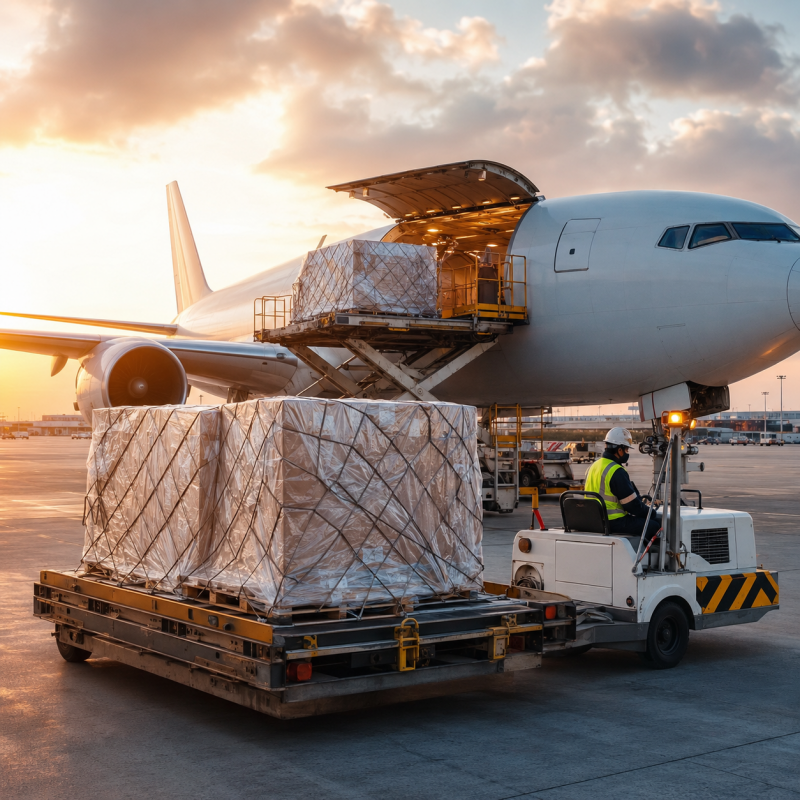
Provider responsibilities: coordinate the final shipment plan with airline schedules, arrange transport from the warehouse to the airport cargo terminal, and complete cargo handover to airline ground handling.
Deliverables: an airport handover record, cargo delivery note, and airline acceptance confirmation.
Client responsibilities: provide necessary shipping documents when required and ensure cargo information matches the declared details.
7. Export Customs Clearance Stage
Inputs: complete and consistent customs documents, including a commercial invoice, packing list, sales contract, and Power of Attorney for customs declaration authorisation. All document data must be fully consistent to avoid customs inspection, clearance delays, or shipment rejection.
Provider responsibilities: prepare and organise export customs documentation, submit the declaration through a customs broker, monitor the clearance process, resolve inspection issues if required, and support physical inspection if triggered by the customs authority.
Deliverables: an export declaration form, customs clearance documentation package, and clearance submission record.
Client responsibilities: submit complete and consistent customs documentation and ensure declared data is consistent to avoid inspection delays, clearance rejection, or shipment hold.

8. Air Waybill Issuance & Release Stage
Inputs: confirmation of Master Air Waybill and House Air Waybill details, and verification of shipment accuracy before flight departure.
Provider responsibilities: track issuance of the Master Air Waybill by the airline, issue the House Air Waybill to the customer, monitor customs clearance approval and cargo release status, and coordinate loading preparation for flight departure.
Deliverables: Master Air Waybill, House Air Waybill, flight departure notice with flight number and ETD, take-off confirmation report, and estimated arrival time update.
Client responsibilities: confirm air waybill details and verify shipment information before departure confirmation.
9. Arrival at Destination Airport Stage
Inputs: confirmation of receipt of the arrival notification from the destination airport, and coordination of follow-up handling after cargo arrival.
Provider responsibilities: provide real-time flight status updates, notify customers of departure, transit, and arrival milestones, and maintain end-to-end shipment visibility until arrival at the destination airport.
Deliverables: arrival confirmation report, flight landing report, cargo status update report, and destination airport receipt confirmation.
Client responsibilities: coordinate post-arrival arrangements at destination and respond promptly to destination-side shipment updates.
Use Cases: When Airport-to-Airport First-Leg Fits
Airport-to-airport first-leg execution is suitable when the buyer or its Indian agent already controls destination clearance and delivery, and needs a disciplined China-side operation. The process definition lists several shipment types that the warehouse can receive: full consignments, consolidation from multiple suppliers, e-commerce small parcels, and consolidated loose cargo.
- Freight forwarders and NVOCC operators that need China-side booking, consolidation, and airport handover without building a local warehouse team.
- Cross-border e-commerce logistics providers that need multiple orders consolidated, small parcels palletised, and weight and dimensions verified before airport delivery.
- OEM/ODM buyers sourcing from several factories that need cargo from multiple suppliers received, sorted, consolidated, and documented before export clearance.
- Peak-season shippers that need to pre-book air cargo space before peak seasons and confirm cut-off times and warehouse inbound schedules.
- Industrial and consumer goods shippers in sectors such as consumer electronics, apparel, industrial equipment and components, furniture and building materials, packaging products, household goods, lighting and electrical products, hardware tools, stationery, beauty accessories, sports products, travel goods, and pet-related products.
Comparison Table: Air vs Sea vs Rail and Airport Concentration
The table below uses the verified comparison data available for this article. It compares typical transit time only; it does not compare rates, capacity, or reliability, because those values are not part of the verified dataset used here.
| Mode | Typical transit time | What it means for first-leg planning |
|---|---|---|
| Air | 3–8 days | Fits urgent or time-sensitive cargo where airport-to-airport handover and destination clearance are separately managed. |
| Sea | 20–45 days | Longer transit; airport-to-airport air freight is not a substitute when the buyer’s deadline is measured in days. |
| Rail | 15–22 days | Intermediate transit window; still requires a separate destination clearance and delivery plan. |
Destination airport concentration also affects planning. Delhi and Mumbai handle approximately 60% of India’s international air cargo volumes. For shipments routed through either airport, the first-leg provider should confirm the airport code, cut-off time, and air waybill destination before warehouse receiving.
FAQ
Which documents must be complete before export customs clearance?
The China export customs package must include a commercial invoice, packing list, sales contract, and Power of Attorney for customs declaration authorisation. All document data must be fully consistent. Inconsistent data can trigger customs inspection, clearance delays, or shipment rejection.
Is the airport-to-airport process different for OEM/ODM buyers sourcing from multiple factories?
The nine first-leg stages do not change. What changes is the warehouse workload: cargo from multiple suppliers must be received, sorted, consolidated, palletised where needed, and checked against product information, package count, weight, volume, shipping marks, HS code, and special cargo conditions. The process definition explicitly covers consolidation from multiple suppliers and verification of branded or restricted goods.
Can the warehouse handle full consignments, small parcels, and multi-supplier consolidation?
Yes. The warehouse receiving stage accommodates full consignments, consolidation from multiple suppliers, e-commerce small parcels, and consolidated loose cargo. For cross-border small parcel clients, consolidation can include multiple orders, multiple suppliers, palletisation of aggregated small parcels, and weight and dimension verification. For general air freight cargo, it can include sorting, consolidated stacking, large pallet handling, and stretch-wrap reinforcement.
How is chargeable weight calculated for airport-to-airport air freight?
After cargo arrives at the warehouse, actual weight and dimensions are re-measured. Air freight charges are based on the greater of actual weight or volumetric weight. Volumetric weight is calculated as length in centimetres × width in centimetres × height in centimetres ÷ 6000. Packing compactly can help reduce chargeable weight.
How long do the first-leg stages take, and when does responsibility end at the destination airport?
The stated stage timelines are 0.5 day for inquiry and quotation, 1 day for order confirmation, 1 day for space allocation and booking, and 1 to 2 days for warehouse receiving. Other stages depend on airline schedules, documentation readiness, and customs processing; no separate duration is stated in the process definition. Standard air freight transit time from China to India ranges from 3 to 8 days. The first leg ends when the destination airport confirms arrival and the provider issues the arrival notification and status update. To plan a shipment, request a quotation sheet, flight options proposal, and transit time estimate with ETD and ETA forecast from JTUO Logistics.
Conclusion
Airport-to-airport air freight from China to India is a defined first-leg service, not a door-to-door guarantee. Its value lies in controlling the China export sequence: quotation, booking, space allocation, warehouse receiving, consolidation, airport delivery, export clearance, air waybill issuance, and arrival notification. The boundary is equally clear: Indian import clearance, duty, and final delivery remain with the importer or its appointed customs broker.
For forwarders, e-commerce logistics providers, and OEM/ODM buyers managing multi-supplier cargo, the decision comes down to whether the provider can document each stage and hand over a complete export file. JTUO Logistics Co., Ltd. provides that China-side execution through its China–India air freight booking, warehouse consolidation, and airport delivery operations. The company’s website is chinatoindiacargo.com.
Next step: request a quotation sheet, flight options proposal, and transit time estimate for your China–India airport-to-airport shipment.
Email: jtuologistics@gmail.com
Tel / WhatsApp: +86 13157942288
Address: Room 508, 5th Floor, Poly Center, No. 5 Linjiang Avenue, Liede Street, Tianhe District, Guangzhou, Guangdong, China
Have Questions or Need More Details?
Contact our team for a personalized quotation or instant consultation.
Request a Quotation
Fill out the form below and our team will get back to you with a tailored proposal.
WhatsApp Direct Chat
Prefer to chat in real-time? Message us on WhatsApp for instant assistance & quick answers.
- Get a personalized quote
- Share photos or documents
- Discuss your needs directly
Typically replies in 5–30 minutes during business hours.