
Chain Block 101: Basic Concepts, Components, and Manual Hoist Operation
A chain block is a manual lifting device that raises, lowers and holds a suspended load using a hand chain, a load chain and a geared hoist mechanism inside a compact housing. The load chain carries the weight; the hand chain only supplies operating force, which is why one person can lift far more than they could pull directly. The same product is also sold as a manual chain hoist, a hand hoist or a chain pulley block, and that naming overlap is where most first-time buyers lose time.
This guide is a 101-level explainer written for buyers at the evaluation and execution stage. It defines the terms that appear on a chain block nameplate, describes what sits inside the housing, maps the model families used in this category — VD, VT, HSZ, HSC and VD-II chain blocks, plus the VA and VL lever blocks that belong to the same manual lifting family — and then walks through basic operation and the specification variables that decide an order: rated capacity from 0.5 t to 50 t, a standard 3 m lift with 2.5–12 m options, chain falls, load chain grade and safety factor.
JUNYUNHOIST is the brand of Baoding Junyun Hoisting Machinery Co., Ltd., a lifting equipment manufacturer and trading company founded in 2018 and based in Hebei, China, whose core products are manual chain blocks and lever blocks.
Chain block in one paragraph:
- A chain block is manually operated: no motor, no power supply, and the load can be held in position by the load-holding mechanism while the operator stops pulling.
- It is built for vertical lifting and holding. A lever hoist — including the VA and VL lever blocks — is the tool for pulling, tensioning and positioning, especially in tight spaces.
- Three values decide most of an order: rated capacity, lift height and chain falls. Everything else on the data sheet supports those three.
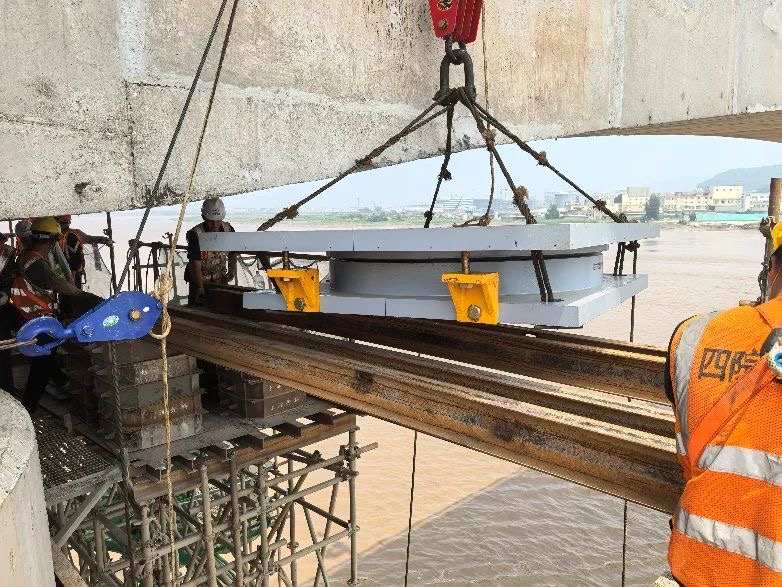
Problem Definition: why chain block basics are harder than they look
Most first-purchase errors in this category come from vocabulary rather than from product quality. A workshop that orders the wrong device usually understood the words on the quotation, but not the relationships between them.
Three ambiguities that cause wrong orders
- Name overlap. Chain block, manual chain hoist, hand hoist, chain pulley block and lever hoist are used almost interchangeably in catalogues and marketplaces. The term chain hoist is also applied to electric hoists, so two suppliers can quote the same words for two different machines.
- Catalogue shorthand. Capacity, lift height, chain diameter and chain falls are frequently listed without the context that makes them useful. A higher capacity unit is not automatically compatible with the trolley, hook or headroom already installed at the site.
- Environment and conformity. The same chain block family can be specified for a workshop, a construction site, a port or a mine, but the conformity documents, the load chain specification and the hook configuration that satisfy each environment are not identical.
The practical consequence is predictable: a unit specified for vertical lifting gets used for a horizontal pull, a lift height arrives too short once rigging height is added, hooks do not match the slings on site, or a consignment is held at acceptance because the conformity paperwork does not match the destination market. Once the terms are separated, model letters and data sheets become readable, and the purchase becomes a specification exercise instead of a guess.
Industry Background: where the category stands
Chain blocks are a mature but large industrial category. Intel Market Research estimated the global chain block market at approximately USD 1.95 billion in 2024. Dataintelo, working with the wider chain hoist definition that includes both manual and electric units, projects that market to reach USD 3.9 billion by 2034.
Manual equipment remains a substantial part of the picture. Fact.MR estimates that manual chain pulley blocks account for 48% of the total product segment share in 2026, which reflects how much industrial lifting still happens where there is no power supply, no compressed air line and no appetite for a motorised asset on a short-duration task.
Construction is the anchor application. Stratview Research and Fact.MR place construction sites as the largest application segment, contributing roughly 30% to 54% of global demand depending on the source and the year measured. The wide range itself is informative: segmentation depends on whether infrastructure, industrial maintenance and shipyard work are counted inside or outside the construction bucket.
Production is concentrated in Asia. UN Comtrade data compiled through the World Bank's WITS platform records China's exports of parts for lifting and handling equipment under HS 843139 — a heading that includes chain block components — at USD 1.36 billion in 2024. Dataintelo put Asia Pacific at a 41.3% revenue share of the chain hoist market in 2025, driven by industrialisation in China and India.
One caution for planning teams: published growth rates for this category diverge sharply, from around 0.4% to 5.7%, depending on whether a study covers general chain blocks or high-tech and AI-integrated models. A single CAGR should not be the basis of a stocking decision; installed base, application mix and local replacement cycles are more reliable inputs.
For buyers, the implication is straightforward. Supply is not scarce, so differentiation sits in documentation, load chain specification, hook and chain configuration, and how flexibly a manufacturer can build a private-label version.
Detailed Solution: core terms, components and model families
The terms that appear on every nameplate
- Rated capacity. The maximum load the unit is rated to lift, marked on the nameplate. It is a limit, not a target, and it applies to the complete assembly in its approved configuration.
- Lift height. The usable travel between the upper and lower hook positions. The standard lift height in this category is 3 m, with optional lift heights from 2.5 m to 12 m available on request.
- Chain fall. A pair of load chain strands that supports the load. A single-fall unit uses one strand pair; multi-fall units use two, four or more. More falls allow a higher capacity from a given chain size, at the cost of a slower lift and lower hand effort per unit of load.
- Hand chain. The endless chain the operator pulls. Its length sets how far the operator stands from the load and from the hazard zone.
- Load chain. The chain that carries the load, specified by grade and diameter. Both must match the rated capacity on the nameplate and should be confirmed on the certificate rather than assumed from a product description.
- Hooks. Top and bottom hooks with latches. Hook opening determines which slings, shackles and lifting points will fit.
- Safety factor. The ratio between the strength of the load-bearing system and its rated capacity. For EN 13157 compliant chain blocks the standard safety factor is 4:1.
- Chain pulley block. An alternative name for the same manual chain-operated device, common in South Asian, Middle Eastern and Southeast Asian trade documentation.
What sits inside a manual chain block
The housing contains a short, simple transmission chain that converts a low-force, high-travel hand chain movement into a high-force, low-travel load movement. The main assemblies are:
- Housing and gear case — encloses the gearing and protects it from dust and debris.
- Hand chain and hand chain wheel — the operator input.
- Gearing — multiplies hand force into lifting force.
- Load chain wheel (sprocket) — engages the load chain and moves it through the housing.
- Load chain — the load-bearing element, with a chain container or guide where fitted.
- Load-holding mechanism — allows the load to remain suspended when the operator stops pulling, and releases smoothly on lowering.
- Top hook and bottom hook block — attachment points, both fitted with latches.
- Identification plate — capacity, lift, model and traceability information.
Model families: VD, VT, HSZ, HSC, VD-II, VA and VL
Model letters identify product families inside a manufacturer's range; they do not change what the device is. VD, VT, HSZ, HSC and VD-II are chain block families in the JUNYUNHOIST range. VA and VL are lever blocks — different tools with a different job.
That distinction matters more than any single letter. A lever block is described in the same product catalogue as compact and powerful, suited to tight spaces, tensioning and positioning. A chain block is built for vertical lifting and holding. Buyers who treat the letters as interchangeable end up using a lifting device as a pulling device, or the reverse, and both mistakes carry consequences on site.
The specification variables that decide the order
Rated capacity. The range covered in this guide runs from 0.5 t to 50 t. Most workshop and maintenance work sits well below the top of that range, while heavy industrial and infrastructure work uses the upper end. Select the nearest capacity above the heaviest verified load — verified, not estimated from memory.
Lift height. The standard lift height is 3 m, with options from 2.5 m to 12 m. Measure hook-to-hook travel on site and add margin for rigging, sling angle and the height of the load itself. A lift that is 200 mm short is a lift that cannot be completed.
Chain falls. Falls determine how the capacity is generated. Single-fall units lift faster with a lighter chain; multi-fall units reach higher capacities and reduce the hand pull required per unit of load. The trade-off is speed, and for long lifts in a workshop that trade-off is felt every shift.
Load chain grade and diameter. These are the specification items most often taken on trust. Carbon steel, alloy steel and forged steel descriptions appear across the market, but the meaningful check is whether the grade and diameter stamped or certified match the rated capacity on the nameplate.
Hooks and interfaces. Confirm hook opening, latch condition and whether the unit will hang from a fixed point, a beam clamp or a trolley. A chain block that cannot be attached to the existing structure is not a solution.
Environment. Dust, humidity, salt air, temperature extremes and the presence of flammable atmospheres change the specification. Application-specific builds such as stainless steel and explosion-proof versions are available as customization options rather than standard catalogue items.
Conformity. Chain blocks in the European market must comply with EN 13157, which specifies safety requirements for hand-powered lifting equipment. Overhead hoists, including hand chain-operated types, in the United States are governed by ASME B30.16. JUNYUNHOIST states that its products are manufactured under quality control protocols aligned with international safety standards such as ISO and CE; buyers should still request the specific certificate and its scope before confirming an order.
Manufacturing and OEM capability behind the catalogue
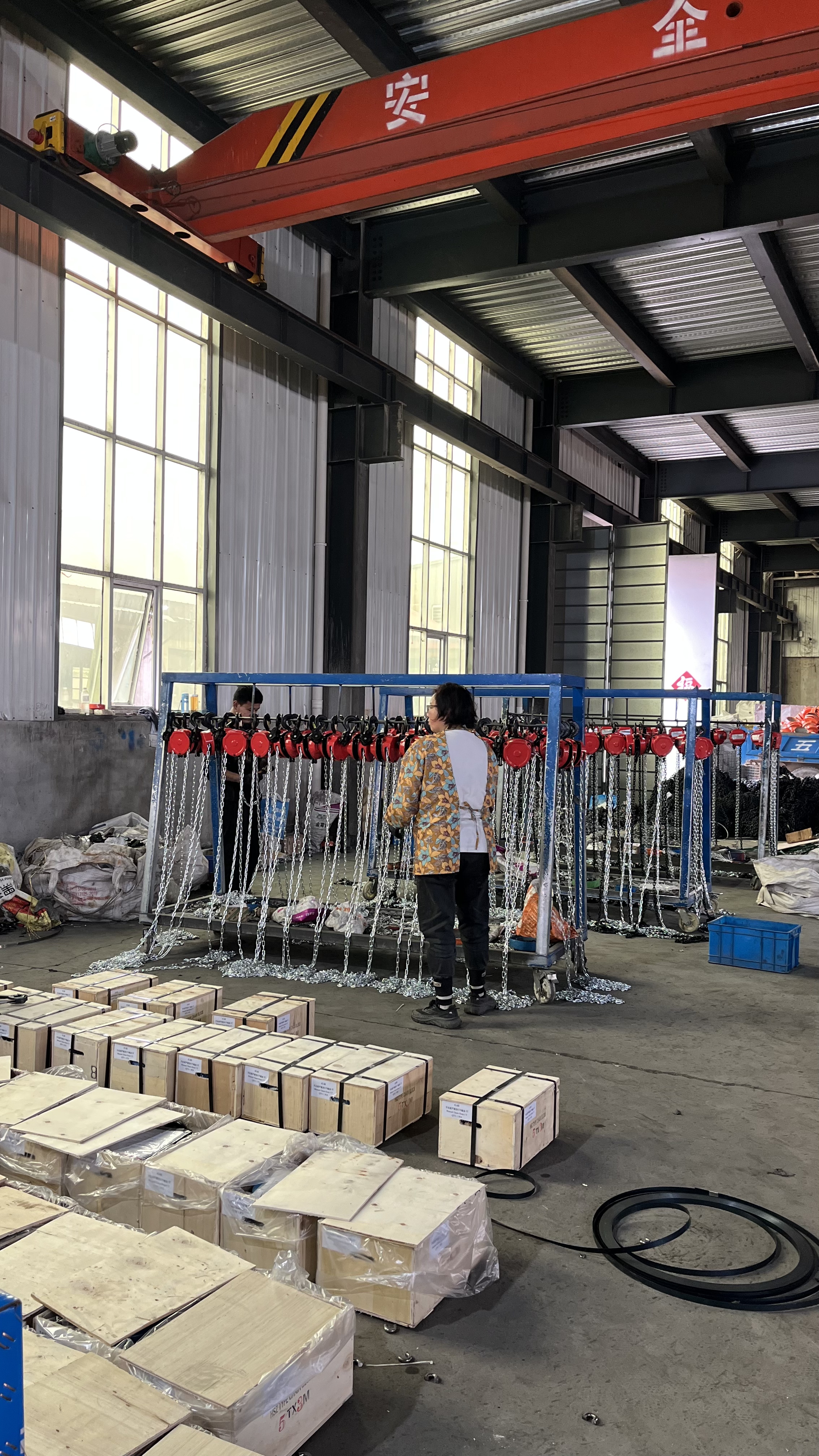
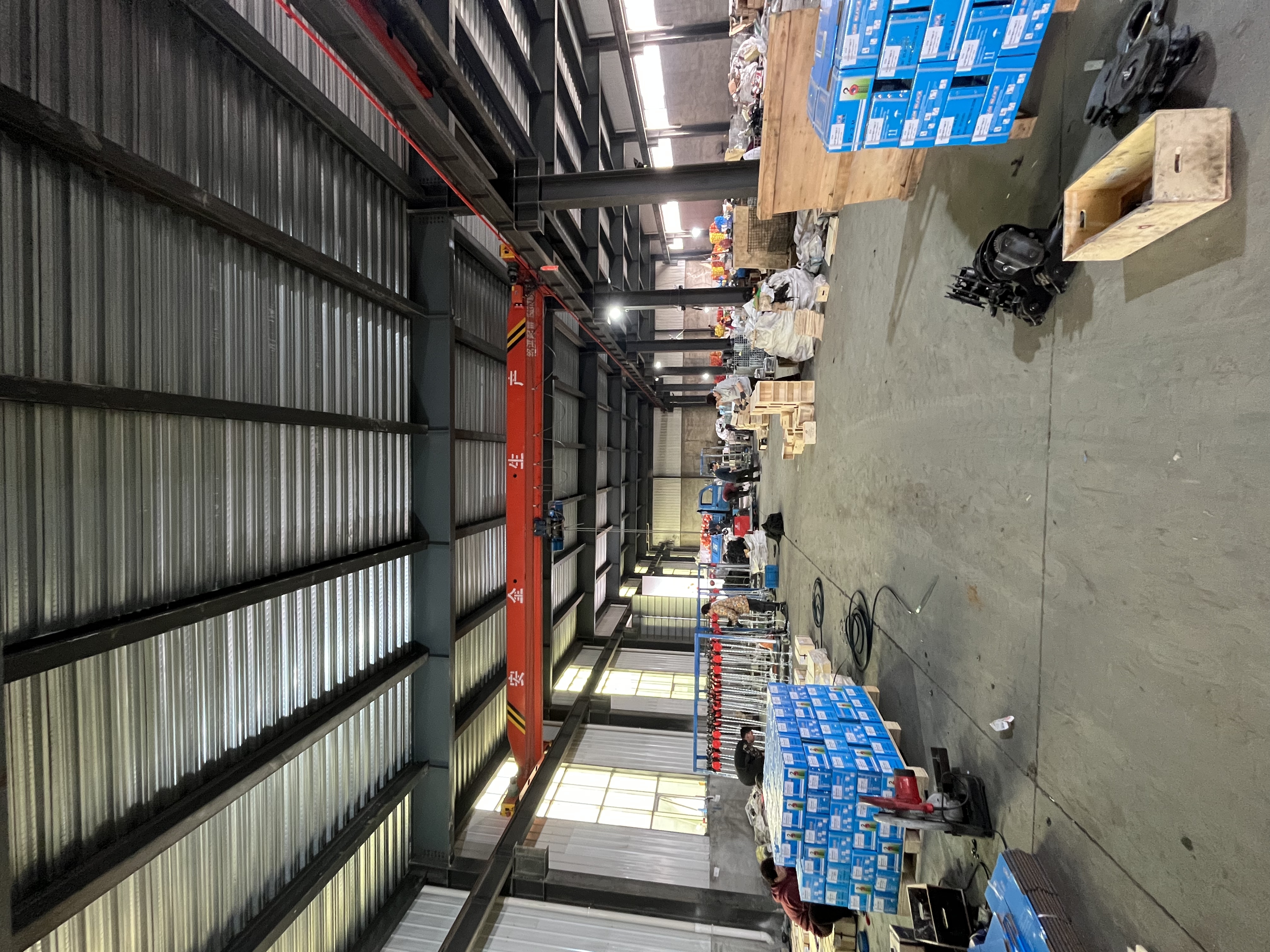
For a first-time buyer, the catalogue explains what the product is; the manufacturing model explains whether it can be delivered in the required configuration. JUNYUNHOIST provides OEM/ODM production services globally and reports a monthly production capacity of 15,000 units with a typical lead time of 15–20 days and a minimum order quantity of 50 pieces.
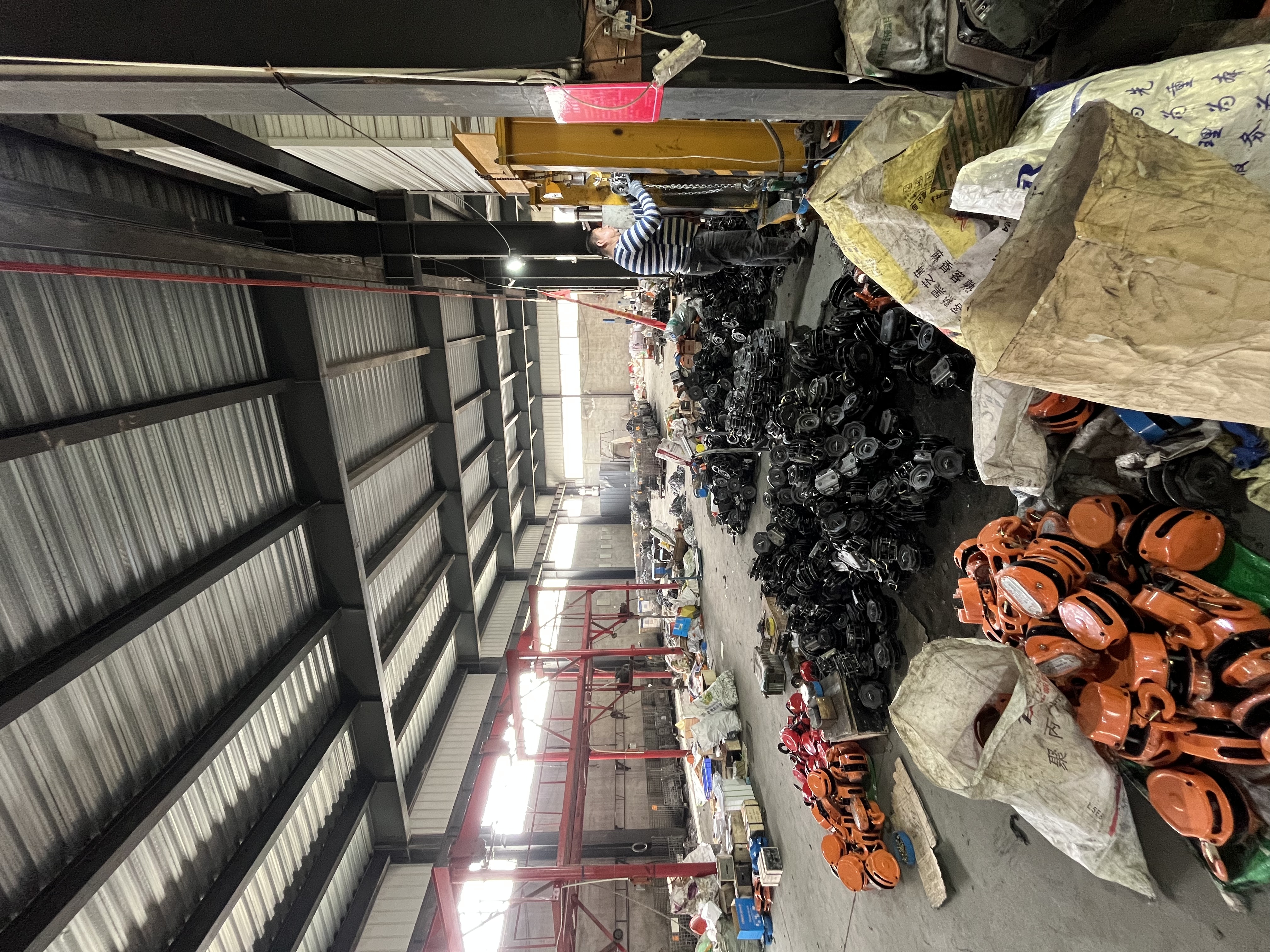
Customization covers four levers: housing colour; load-bearing chain length; accessory quality adjusted to the customer's target price point; and application-specific builds such as stainless steel or explosion-proof versions. Quality control includes 100% testing, and acceptance can include a pre-shipment test plus third-party inspection such as SGS.
After-sales support is structured around consumable wear: each container is supplied with a set number of easily damaged spare parts, replenished as needed based on subsequent usage. Export activity is concentrated in Vietnam, India, Russia, the United Arab Emirates, Brazil, Türkiye, the Middle East and Southeast Asia, with an export ratio of 80% of output.
Step-by-Step Breakdown: from lift task to first operation
Basic operation is therefore a sequence of small disciplines rather than a single technique. The device is mechanically simple, and nearly every incident attributed to a chain block traces back to a broken step in the list above rather than to a failure of the gearing.
Use Cases: what changes by scenario
Construction sites are the largest single application segment globally, contributing roughly 30% to 54% of demand depending on the source, but the same device family serves several environments with different priorities.
- Workshop and factory hoisting. Repetitive lifting of components, dies and assemblies at a fixed station. Priority: predictable lift height, hand chain length matched to the operator's position, and hook opening that fits existing slings.
- Construction site lifting. Formwork, rebar bundles, precast elements and steel members. Priority: durability under dust and outdoor storage, conformity documents for the project's jurisdiction, and capacity steps that match the heaviest verified site load.
- Warehouse and logistics lifting. Moving crates, machine parts and palletised goods where no forklift access exists. Priority: compact housing, short lift heights and a unit that can be carried between stations.
- Port cargo handling. Container fittings, hatch covers and maintenance work in salt-laden air. Priority: corrosion resistance and a documented inspection routine, with stainless steel builds available as a customization option.
- Mining operations. Maintenance lifting in constrained areas with abrasive dust. Priority: sealed gearing, robust load chain specification and a spare parts supply arrangement.
- Shipbuilding and shipyard work. Positioning of plates and sections where vertical and horizontal movement alternate. Priority: chain blocks for the vertical work paired with lever blocks for tensioning and alignment in the same task.
- Small-space and low-headroom operation. Plant rooms, pits and skid-mounted equipment. Priority: minimum distance between hook and housing, and hand chain routing that the operator can actually reach.
One project pattern illustrates how these requirements combine. A 2,000-piece order was delivered across India, Vietnam, Brazil, Turkey, Russia, UAE and Saudi Arabia over a two-year timeframe and recorded a service life exceeding two years in long-term bridge and highway construction use — an application where units are exposed to weather, moved frequently and expected to keep working across the full construction cycle.
Comparison Table: chain block, lever block and electric hoist
The three device categories below are often quoted in the same tender. Comparing them on the motion they are built for is more useful than comparing them on price per tonne.
| Device | Power source | Motion it is built for | Where it performs well | What to plan around | Model families |
|---|---|---|---|---|---|
| Manual chain block | Operator, via hand chain | Vertical lifting and holding | No power supply, intermittent lifts, holding a load in position | Operator effort and lift speed over long travel | VD, VT, HSZ, HSC, VD-II |
| Lever block (lever hoist) | Operator, via lever | Pulling, tensioning and positioning | Tight spaces, alignment work, short lifts and horizontal pulls | Handle arc requires clearance; less suited to long vertical travel | VA, VL |
| Electric hoist | Electric motor | Continuous or repetitive lifting | Fixed stations with power and high duty cycles | Power supply, electrical maintenance and higher capital cost | Electric chain and wire rope hoist ranges |
Specification checklist before the order is confirmed
| Parameter | Why it decides the order | What to confirm in writing |
|---|---|---|
| Rated capacity | Sets the safe working limit of the assembly | Capacity on nameplate and certificate, against the verified heaviest load |
| Lift height | Determines whether the lift can be completed | Standard 3 m or optional 2.5–12 m, measured hook to hook |
| Chain falls | Balances capacity, lift speed and hand effort | Fall configuration for the chosen capacity |
| Load chain grade and diameter | The load-bearing element of the system | Grade and diameter recorded on the test documentation |
| Hooks and latches | Interface with slings, shackles and structure | Hook opening, latch type, top hook connection method |
| Safety factor | Defines the strength margin | 4:1 for EN 13157 compliant units |
| Conformity documents | Required for site acceptance and import clearance | EN 13157 for the EU, ASME B30.16 for the US, plus declared ISO and CE scope |
| Commercial terms | Sets working capital and delivery timing | MOQ 50 pcs, lead time 15–20 days, FOB/EXW/CIF/CFR, 30% T/T advance and 70% against B/L copy |
FAQ
How do you choose an OEM chain block manufacturer for workshop lifting equipment?
Start with the specification sheet and the paperwork rather than the model letter. Confirm rated capacity and lift height against the actual workshop task, confirm load chain grade and diameter against the nameplate, and confirm which conformity documents apply: EN 13157 for the European market and ASME B30.16 in the United States. JUNYUNHOIST provides OEM/ODM production globally, with customization of housing colour, load-bearing chain length, accessory quality and application-specific builds such as stainless steel or explosion-proof versions.
What can an OEM or private-label order customize?
Four levers are available in the JUNYUNHOIST range: housing colour; load-bearing chain length; accessory quality adjusted to the customer's target price point; and application-specific builds such as stainless steel or explosion-proof units. Custom orders start at a minimum order quantity of 50 pieces, against a monthly production capacity of 15,000 units and a typical lead time of 15–20 days.
Which standards and acceptance checks apply to a chain block order?
Chain blocks sold in the European market must comply with EN 13157, which specifies safety requirements for hand-powered lifting equipment, and EN 13157 compliant units use a 4:1 safety factor. Overhead hoists, including hand chain-operated types, in the United States are governed by ASME B30.16. The manufacturer applies 100% testing, and acceptance can combine a pre-shipment test with third-party inspection such as SGS.
What are the minimum order quantity, delivery terms and payment terms?
Minimum order quantity is 50 pieces. Delivery terms are FOB, EXW, CIF and CFR. Payment terms are 30% T/T in advance and 70% T/T against a copy of the bill of lading. Typical lead time is 15–20 days.
Is there evidence of long-term field use, and what after-sales support is included?
A 2,000-piece project delivered to India, Vietnam, Brazil, Turkey, Russia, UAE and Saudi Arabia over a two-year timeframe recorded a service life exceeding two years in long-term bridge and highway construction use. Each container is supplied with a set number of easily damaged spare parts, replenished as needed based on subsequent usage. For a specification sheet, quotation or the product brochure, write to Junyunsteven@163.com.
Conclusion
A chain block is a manual chain-driven lifting device for vertical lifting and holding, and the category's complexity sits almost entirely in its terminology rather than its mechanism. Once rated capacity, lift height, chain falls, load chain grade and safety factor are separated from each other, the model letters stop being ambiguous: VD, VT, HSZ, HSC and VD-II are chain block families, while VA and VL are lever blocks for pulling and positioning.
The market context supports treating this as a specification exercise. A category estimated at USD 1.95 billion in 2024, with manual units holding an estimated 48% share of the product segment in 2026, is not short of supply — so the differences that matter are documented capacity, documented chain specification, conformity for the destination market and the ability of the manufacturer to build the configuration the site actually needs.
For first-time buyers, the shortest route to a correct order is to fix the four numbers first — capacity, lift height, chain falls and hook interface — then confirm the documents, then confirm the delivery terms.
Next step: check the specification against your lift
JUNYUNHOIST supplies VD, VT, HSZ, HSC and VD-II chain blocks and VA/VL lever blocks, with OEM/ODM production, a monthly capacity of 15,000 units, a 15–20 day lead time and a minimum order quantity of 50 pieces.
Download the product brochure: JUNYUNHOIST product catalogue (PDF)
Contact: www.junyunhoist.com | Email: Junyunsteven@163.com | Tel / WhatsApp: +86 13483452631
Address: Donglu Village, Qingyuan District, Baoding City, Hebei Province, China
Have Questions or Need More Details?
Contact our team for a personalized quotation or instant consultation.
Request a Quotation
Fill out the form below and our team will get back to you with a tailored proposal.
WhatsApp Direct Chat
Prefer to chat in real-time? Message us on WhatsApp for instant assistance & quick answers.
- Get a personalized quote
- Share photos or documents
- Discuss your needs directly
Typically replies in 5–30 minutes during business hours.