
Chain Block Comparison: Durability & Cost for Heavy-Duty Lifting
Chain Block Comparison: Durability & Cost for Heavy-Duty Lifting
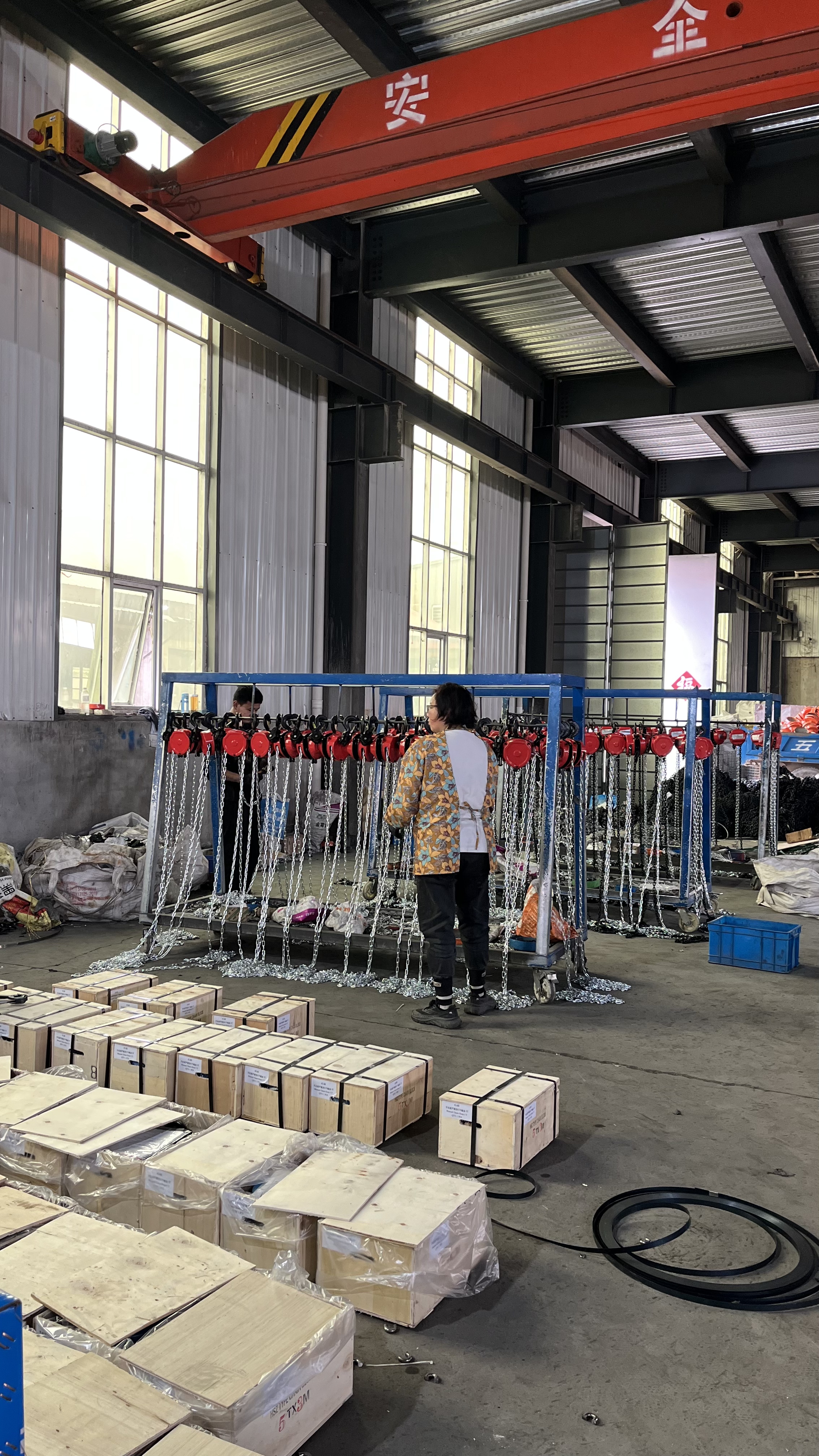
JUNYUNHOIST chain block production floor.
When a procurement team compares chain block options for a workshop, construction site, warehouse, port, or mining operation, the first number is usually rated load capacity. The long-term decision, however, depends on component-level choices: the grade of the load chain, the thickness of the outer shell, the diameter of the hand zipper, the number of bearings, and the heat treatment of spare parts.
This guide provides a practical chain block comparison for buyers at the decision stage. It explains what to inspect before choosing a heavy-duty chain block, how Baoding Junyun Hoisting Machinery Co., Ltd. (JUNYUNHOIST) positions its chain blocks against another factory, and how to evaluate the true cost of durability.
The Real Problem: Hidden Differences in Materials and Production Quality
Two chain blocks with the same rated capacity can perform very differently in daily service. The rated load does not reveal whether the load chain is G70 or G80, whether the outer shell can absorb impacts, whether the operator chain will bend under repeated pulls, or whether the spare parts will survive heavy usage.
When the decision is based only on purchase price and rated load, maintenance costs and downtime can appear soon after installation. This risk is higher in high-cycle environments such as construction sites, shipyards, mines, warehouses, and production lines.
Industry Background: Where Chain Blocks Are Used and Which Standards Apply
The global chain block market was valued at approximately USD 1.95 billion in 2024, according to Intel Market Research. Construction sites are the largest application segment, contributing roughly 30% to 54% of global demand depending on the source (Stratview Research, Fact.MR). Manual chain pulley blocks are projected to represent 48% of total product segment share in 2026 (Fact.MR). The broader chain hoist market, including electric and manual hoists, is projected to reach USD 3.9 billion by 2034 (Dataintelo).
Standards matter in this market. In the US, ASME B30.16 governs overhead hoists, including hand chain-operated hoists. In the EU, EN 13157 specifies safety requirements for hand-powered lifting equipment, and the typical safety factor for EN 13157 compliant chain blocks is 4:1. Major players such as Columbus McKinnon and Kito Crosby shape the global competitive landscape; Kito Crosby reported USD 1.1 billion in 2024 revenue. For a mid-size manufacturer like JUNYUNHOIST, differentiation comes from production control, component selection, and service support.
JUNYUNHOIST Chain Block Design: What the Specs Mean in Practice
Baoding Junyun Hoisting Machinery Co., Ltd. is a vertically integrated manufacturer and trading company based in Donglu Village, Qingyuan District, Baoding City, Hebei Province, China. The company produces VD, VT, HSZ, and HSC chain blocks, VA and VL lever blocks, electric hoists, and electric winches. Its annual output capacity is 200,000 units, and about 80% of products are exported to markets including India, Russia, Vietnam, Brazil, Türkiye, and Dubai.
In a factory-level comparison, the JUNYUNHOIST chain block differs from another factory in several specific areas:
- Load chain: G80 steel chain; other factories often use G70.
- Load chain length: full 3M; other factories may use a chain length that varies.
- Bearings: three bearings per unit.
- Spare parts: all quenched.
- Hand zipper diameter: 4.8 mm.
- Outer shell: thickened to 2.8 mm.
- Hook: VD-specific hook.
These details translate into practical benefits. The manufacturer reports 90% less maintenance compared with an alternative, a more effortless lifting feel, and an initial cost about 2% higher. The thickened outer shell makes the block more impact-resistant. The blackening and carburizing treatment of the chain improves corrosion resistance and wear resistance. Quenched hooks can show a 1.5x weight increase in testing, which indicates additional material and hardening.
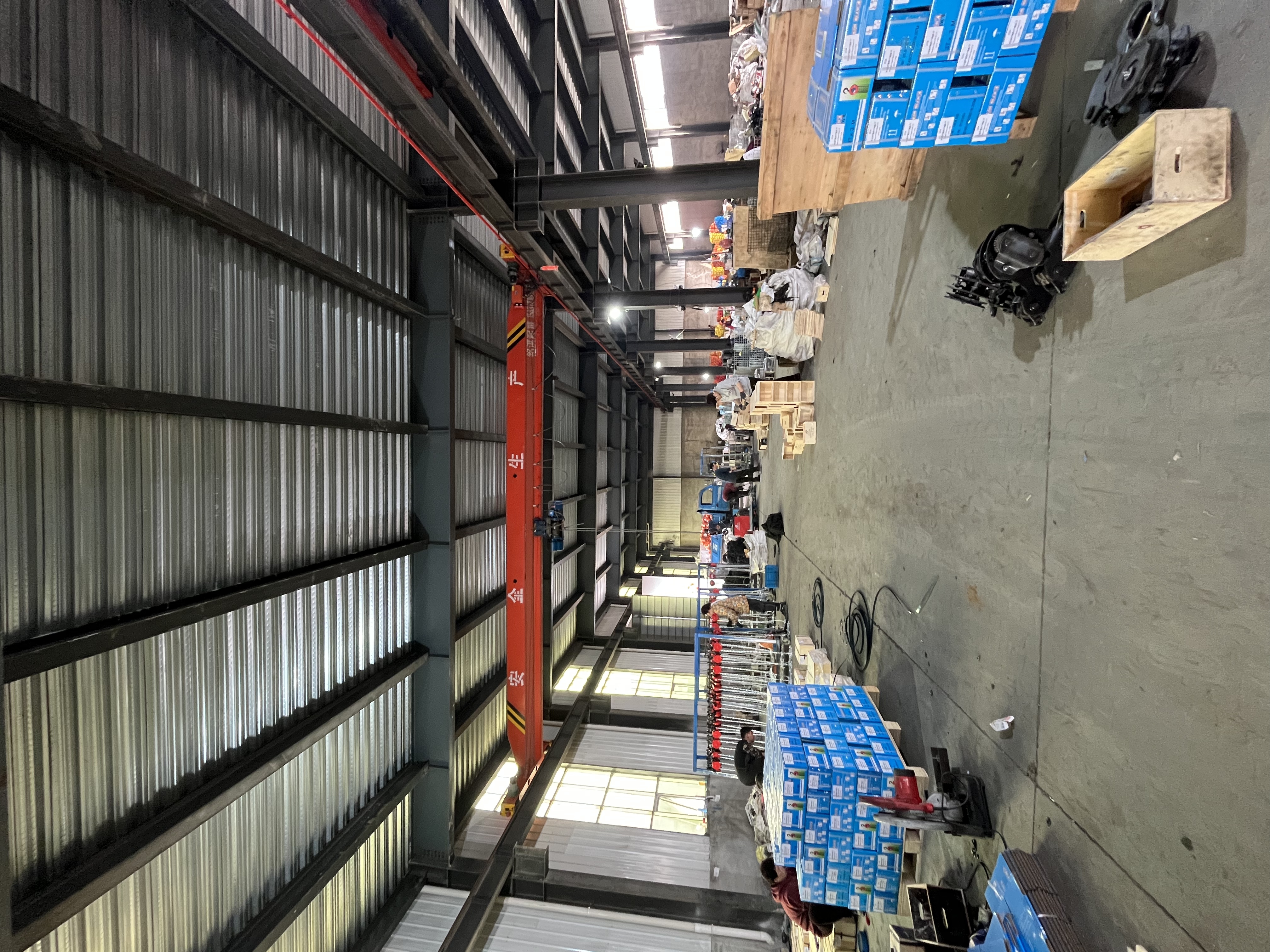
Chain block assembly and spare parts area at JUNYUNHOIST.
Load Chain Grade: G80 vs G70
The load chain carries the full working load. G80 steel chain is a higher-grade, heat-treated chain with greater wear resistance than G70. For repetitive heavy-duty lifting, G80 provides a wider safety margin and longer service life.
Outer Shell Thickness and Hand Zipper Diameter
A thickened outer shell of 2.8 mm helps the chain block resist impacts when it is lowered onto surfaces or hit by nearby materials. A 4.8 mm hand zipper diameter offers a larger gripping surface and reduces the risk of bending during high-force pulls.
Bearings, Spare Parts, and Hooks
Three bearings reduce friction during operation. Quenched spare parts are hardened to resist wear. The VD-specific hook is designed for the load path of the unit, and the quenching process makes it heavier and harder than standard hooks.
Step-by-Step Chain Block Comparison Checklist
When evaluating a chain block for a workshop, construction site, warehouse, or heavy industrial project, use this checklist:
- Confirm the load chain grade and length. Ask for G80 steel chain and a full 3M load chain.
- Measure the outer shell thickness. A 2.8 mm shell can improve impact protection.
- Check the hand zipper diameter. A 4.8 mm zipper is less likely to bend.
- Count the bearings. Three bearings provide smoother movement.
- Ask about heat treatment. Quenched spare parts, hooks, and chains are hardened and tend to have longer service life.
- Assess maintenance needs. Lower maintenance requirements reduce downtime.
- Calculate total cost, not just purchase price. A 2% higher initial cost can be recovered through lower maintenance.
Chain Block Use Cases Across Industries
The JUNYUNHOIST comparisons and design choices are relevant for a wide range of lifting environments:
- Workshop and factory hoisting
- Construction sites
- Mining operations
- Warehouse and logistics
- Port and shipyard cargo handling
- Agricultural and field work
- Stage and entertainment rigging
- Maintenance and repair
- Municipal and utility work
- Confined space operations
- Outdoor and no-power-supply areas
These applications depend on consistent lifting performance and minimal maintenance.
Side-by-Side Comparison: JUNYUNHOIST vs Another Factory
| Comparison area | JUNYUNHOIST chain block | Another factory (benchmark) |
|---|---|---|
| Load chain material | G80 steel chain | Often G70 steel chain |
| Load chain length | Full 3M | Varies |
| Number of bearings | 3 | Not specified |
| Spare parts treatment | Quenching | Not specified |
| Hand zipper diameter | 4.8 mm | Not specified |
| Outer shell thickness | 2.8 mm | Not specified |
| Hook design | VD-specific hook | Not specified |
| Maintenance requirement | 90% less maintenance | Baseline |
| Initial cost | About 2% higher | Baseline |
The comparison focuses on product behavior and known supplier differences. It does not attempt to rank brands; it gives procurement teams a framework for asking better questions.
Frequently Asked Questions
Which safety standards should a chain block meet for heavy-duty construction use?
In Europe, hand-powered lifting equipment must comply with EN 13157. In the US, ASME B30.16 covers overhead hoists, including hand chain-operated types. EN 13157 compliant chain blocks typically use a 4:1 safety factor. A CE-certified chain block should be verifiable against these recognized requirements.
What specifications should I compare first when selecting a heavy-duty chain block?
Compare load chain grade and length, shell thickness, hand zipper diameter, bearing count, heat treatment of spare parts, and hook design. For example, JUNYUNHOIST uses G80 chain, a 4.8 mm zipper, a 2.8 mm shell, three bearings, and quenched spare parts.
Is a more durable chain block worth a higher initial price?
JUNYUNHOIST reports an initial cost about 2% higher than another factory, with a 90% reduction in maintenance requirements. For continuous heavy-duty operations, this can lower the cost of ownership over the unit's service life.
Which applications are best suited to these chain blocks?
They are used in workshops, construction sites, mining operations, warehouses, ports, shipyards, agricultural work, stage rigging, maintenance, municipal work, confined spaces, and areas without power supply.
How can I request a sample or get a quotation?
Contact JUNYUNHOIST by email (Junyunsteven@163.com), phone or WhatsApp (+86 134-8345-2631), or the company website. You can also download the company brochure for detailed product specifications.
Conclusion
Choosing a chain block is a decision about materials, production quality, and life-cycle cost, not only rated load. When a manufacturer uses G80 load chain, full 3M chain length, three bearings, quenched spare parts, a 4.8 mm hand zipper, and a 2.8 mm outer shell, these details translate into lower maintenance, better impact resistance, and more predictable operation in demanding environments.

Request a sample or quotation
Email: Junyunsteven@163.com
Tel/WhatsApp: +86 134-8345-2631
Website: www.junyunhoist.com