Chain Block Selection by Application: 2026 Buying Guide
Chain Block Selection by Application: 2026 Buying Guide
Choosing a chain block should start with the job site, not the catalog. This guide maps the most common chain block applications—workshops, construction sites, warehouses, ports, mines, shipyards, factories, and confined spaces—to practical selection criteria, including load capacity, chain material, safety factor, and certification.
JUNYUNHOIST, the brand name of Baoding Junyun Hoisting Machinery Co., Ltd., is a manufacturer of manual chain hoists based in Baoding, Hebei, China. Founded in 2018, the company supplies VD, VT, HSZ, and HSC chain blocks, plus VA and VL lever blocks, to export markets including Vietnam, India, Russia, the UAE, Brazil, Türkiye, and the Middle East.
The Problem: Generic Chain Block Choices Lead to Costly Mismatches
Buyers evaluating chain blocks often focus on price and rated load capacity alone. That approach can produce equipment that is too heavy for a high-cycle factory line, too light for a bridge project, or too corrosion-prone for a coastal port. The real challenge is matching product specifications to the operating environment, duty cycle, and compliance requirements.
Buyers also face inconsistent product descriptions. Some suppliers call any manual hoist a chain block, while others differentiate by chain falls, hook design, or load chain grade. Without a clear comparison framework, a procurement team can end up comparing different configurations as if they were the same product.
Industry Background: Where Chain Block Demand Is Growing
The global chain block market was valued at approximately USD 1.95 billion in 2024. Manual chain pulley blocks are estimated to account for about 48% of the product segment share in 2026. Construction sites represent the largest application segment, contributing roughly 30% to 54% of global demand depending on the source. The Asia Pacific region led the wider chain hoist market in 2025 with a 41.3% revenue share.
On the regulatory side, chain blocks sold in Europe must meet EN 13157, which specifies safety requirements for hand-powered lifting equipment. In the United States, ASME B30.16 governs overhead hoists, including hand chain-operated models. A compliant chain block typically uses a 4:1 safety factor, as specified in EN 13157.
The competitive landscape includes Kito Crosby, which reported USD 1.1 billion in revenue in 2024, and Columbus McKinnon, which has a strong presence in the 0.5–20 ton segment. For buyers, the implication is not simply “choose a big brand”; it is to verify that the specific product configuration meets the application data.
Detailed Solution: Four Technical Checks That Define Chain Block Fit
Instead of asking “which chain block is best,” ask “which specifications will survive this environment.” The following checks form an application-based selection framework.
1. Load Capacity, Lift Height, and Chain Falls
Chain blocks in JUNYUNHOIST’s VD series offer rated load capacities from 0.5 to 50 tons, with 1 to 4 chain falls depending on capacity. Standard lift height is 3 meters, and 2.5–12 meters is optional. For high-lift applications, confirm the load chain length and hand chain slack—standard is lift height plus 0.5 meters—before ordering.
2. Load Chain Material and Corrosion Resistance
The load chain is the most stressed component. JUNYUNHOIST chain blocks use load chains in Grade V or Grade T according to DIN EN 818-7, with diameters from 6.3 to 11.2 mm. Housing finishes include RAL 2000 and RAL 1007. Materials used include 20Mn2, 25MnV, and 23MnNiMoCr54. Buyers often describe chain blocks by material type—carbon steel, alloy steel, forged steel, or high-strength steel—but the practical comparison should focus on the load chain grade, hook material, and finish.
3. Safety Factor and Hook Quality
EN 13157-compliant chain blocks work with a 4:1 safety factor for the chain and a 5:1 safety factor for structural parts. Hook openings range from 24 to 55 mm, and hooks are made of heat-treated forged alloy steel. These values matter in construction and heavy industrial use because they determine how much shock load the block can tolerate.
4. Certification, Testing, and Traceability
A CE mark is a declaration of conformity to applicable EU directives and standards. For chain blocks, that usually means EN 13157. For U.S. projects, ASME B30.16 is the relevant standard. JUNYUNHOIST reports 100% testing of each unit before shipment. Buyers should still request the specific test certificate, declaration of conformity, and applicable ISO certificate number for the exact batch they intend to purchase.
Some buyers search for “variable frequency chain block” or “remote monitoring chain block.” Those terms usually refer to electric chain hoists with motor speed control or data connectivity, not manual chain blocks. If the project requires those features, separate the evaluation of manual and electric hoists, and confirm that the supplier’s documentation specifies the control system and monitoring interface.
Step-by-Step: How to Build an Application-Based Chain Block Shortlist
Step 1: Define the operational load profile
Record the maximum load, average load, lift height, and number of lifts per day. High-frequency operations in a factory or warehouse require a chain block with lower hand chain pull—JUNYUNHOIST chain blocks keep pull force at or below 35 daN up to rated load—and a heavier-duty chain grade.
Step 2: Map the environment
Indoor workshops have different needs from open construction sites. Check temperature range, humidity, dust, salt air, and exposure to chemicals. JUNYUNHOIST chain blocks operate in a standard temperature range of –20°C to +50°C with standard grease. Outside that range, a special grease or material specification may be needed.
Step 3: Verify standards for the destination market
Europe requires EN 13157 compliance; the United States applies ASME B30.16 for overhead hoists. For phased projects such as railway or bridge construction, check whether the tender specification lists a particular standard. Ask the supplier for documentation before committing to a container order.
Step 4: Compare load chain material and connection hardware
Do not compare only by rated load. Look for the load chain grade (Grade V or Grade T), the chain diameter, and the hook material. Forged alloy steel hooks are standard in JUNYUNHOIST chain blocks, and hook openings of 24–55 mm allow the block to fit common shackles and rigging hardware.
Step 5: Confirm production capability, lead time, and after-sales support
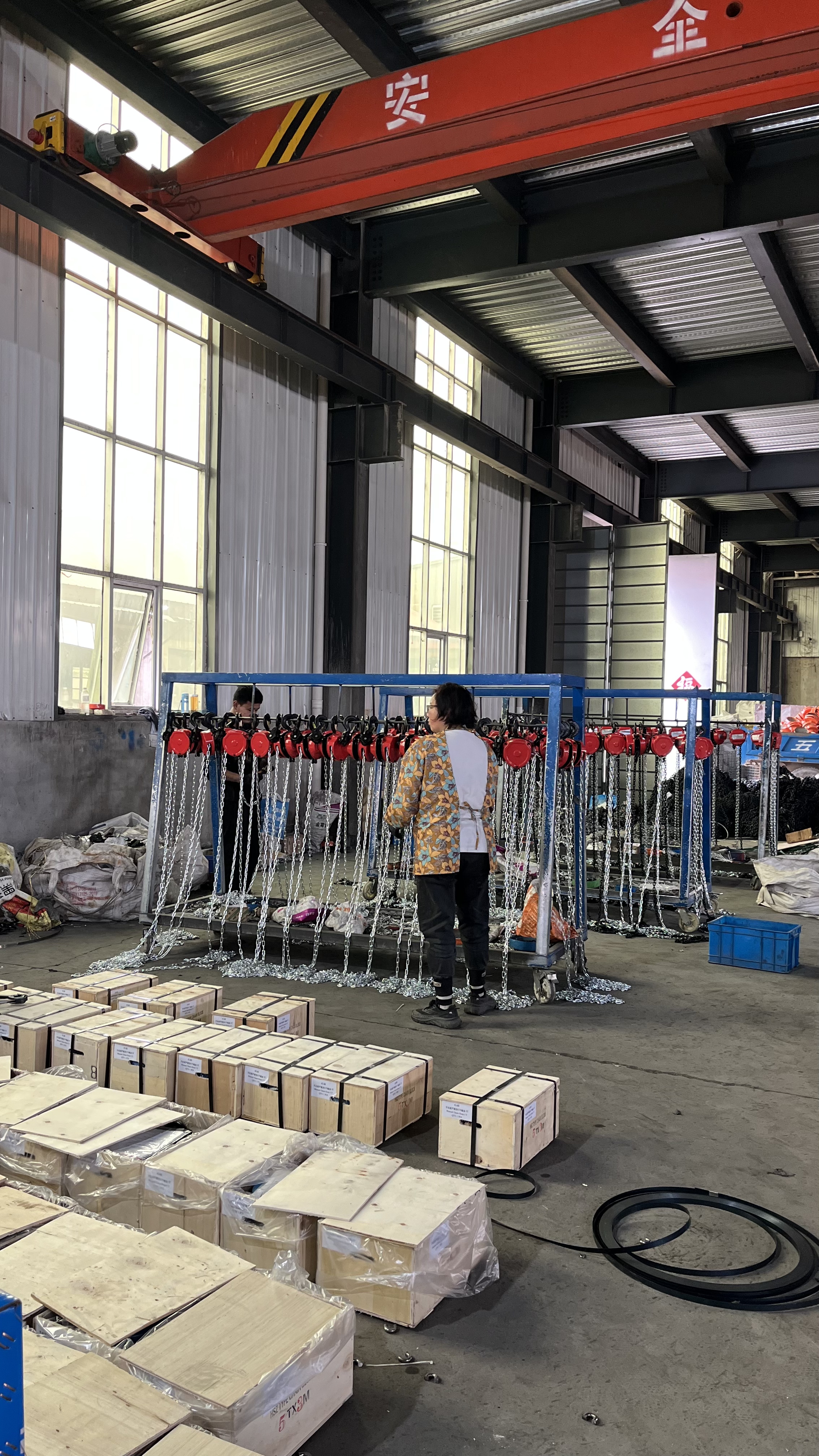
If you are sourcing in bulk, confirm the manufacturer’s monthly capacity, minimum order quantity, and lead time. JUNYUNHOIST reports a monthly capacity of 15,000 pieces and an annual output of 200,000 units, with a 50-piece MOQ and 15–20 days lead time for standard OEM orders. Each container includes a set of easily damaged spare parts, and replacements are replenished as needed based on usage feedback.
Use Cases: Matching a Chain Block to the Working Environment
Workshop Chain Block
Workshops usually need frequent positioning and repetitive lifting. A workshop chain block should have a comfortable hand chain pull, smooth brake engagement, and a compact body. A VD or VT manual chain block is a common starting point because it is easy to install on a trolley or fixed beam. Confirm that the hook opening fits existing jigs and fixtures.
Construction Site Chain Block
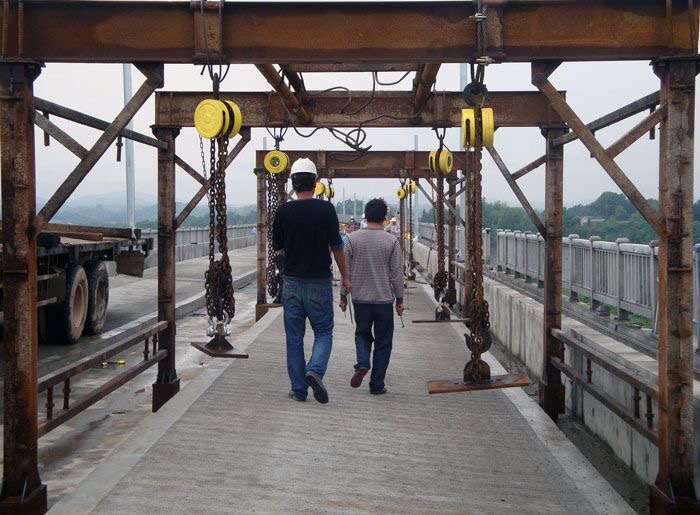
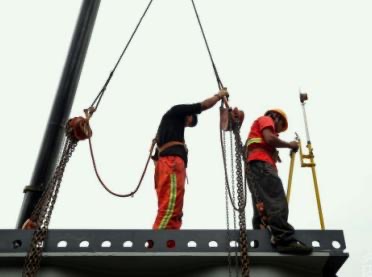
Construction sites are the largest application segment for chain blocks, according to market data. Site conditions can be dusty, wet, and subject to sudden load changes. For bridge or highway work, the load chain and housing must handle weather exposure. In a documented case, JUNYUNHOIST chain blocks were used in a long-term bridge or construction process, with the buyer reporting low loss and a service life exceeding two years. The case demonstrated that the product addressed durability concerns for long-term construction applications.
Warehouse Logistics Chain Block
Warehouse logistics often require moving loads to fixed workstations or loading bays. A warehouse chain block with a shorter headroom—minimum hook distance is 300–1000 mm depending on model—is easier to position in buildings with limited overhead space. Galvanised hand chains reduce corrosion in humid loading areas. One importer client distributed 2,000 chain blocks to local stores across markets including Vietnam, India, Brazil, Turkey, Russia, and the UAE; end users reported a service life exceeding two years in bridge and construction processes.
Port Cargo Chain Block
Port environments bring salt air and heavy, irregular loads. Buyers should prioritise corrosion-resistant finish, adequate hook opening, and a high safety factor. JUNYUNHOIST chain blocks use painted housing in RAL 2000 or RAL 1007 and corrosion-resistant chains, which supports coastal applications. If the operating temperature stays within –20°C to +50°C, the standard grease specification may be sufficient.
Mining Operation Chain Block
Mining operations expose chain blocks to dust, shock loads, and long maintenance intervals. The load chain grade becomes the key reliability factor. A Grade V or Grade T chain, with a 4:1 safety factor, is a sensible baseline. For mining-specific needs such as explosion-proof environments, JUNYUNHOIST states that it can customise products according to usage scenarios, including stainless steel and explosion-proof versions.
Shipbuilding Chain Block
Shipbuilding requires handling of steel sections, engines, and outfitting components. The work often happens in dry docks and confined hull sections. A lever block may be easier for horizontal pulling and tensioning, while a chain block is used for vertical positioning. The load chain and hooks must tolerate contact with sharp steel edges. Check the minimum hook distance and ensure the chain block can be secured with the available anchor points.
Factory Hoisting Chain Block
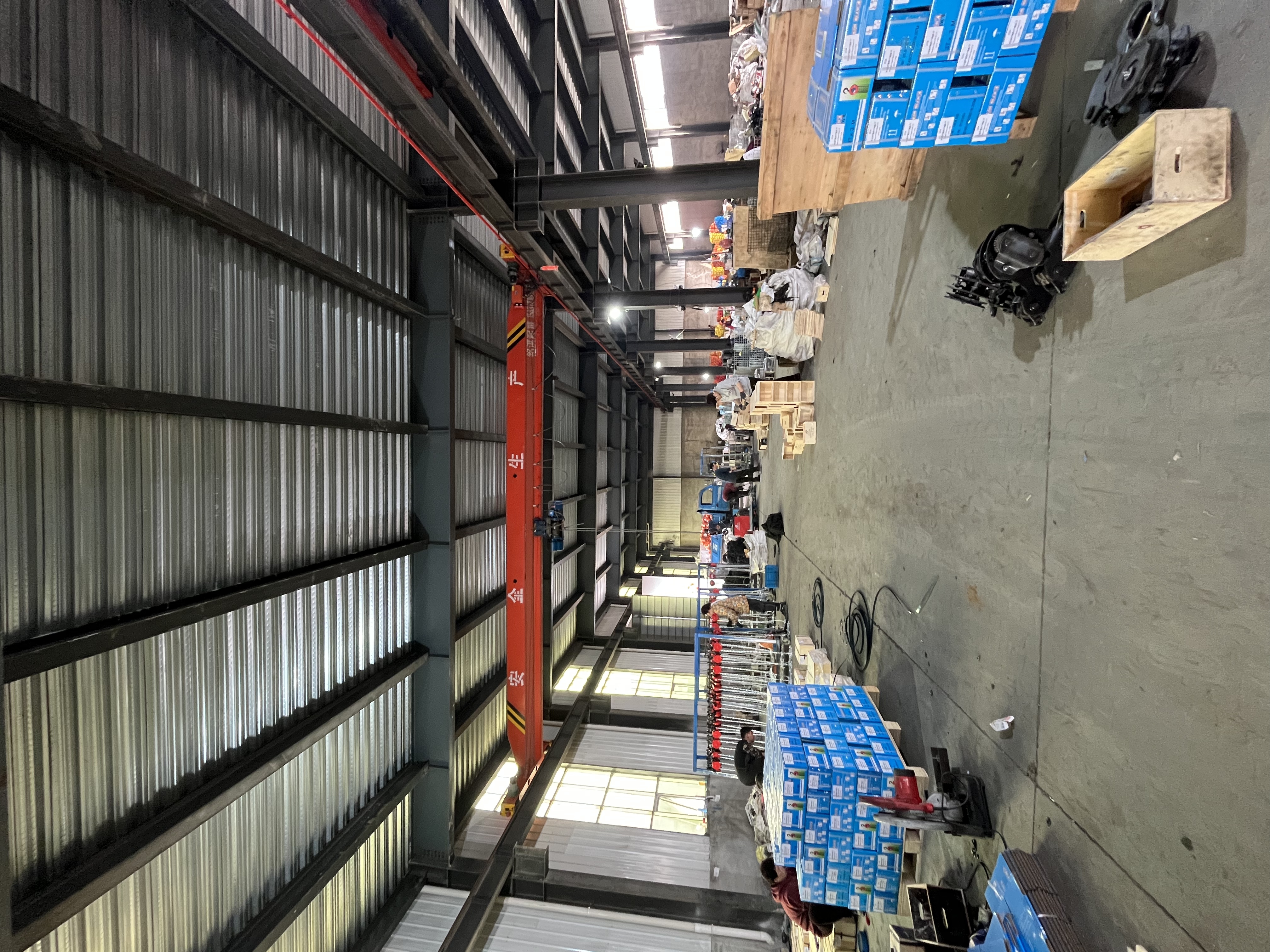
Factory hoisting is usually a continuous operation with defined cycle times. Maintenance access and spare parts matter as much as initial price. JUNYUNHOIST includes a set of wear-prone spare parts with each container, which supports long production runs. The 100% testing claim also matters here: each unit is tested before shipment, reducing the risk of receiving a unit with a manufacturing defect in a high-uptime environment.
Small Space Operation Chain Block
Confined spaces such as machine basements, narrow shafts, and modular construction zones require compact equipment. The minimum hook distance of 300–1000 mm across JUNYUNHOIST chain blocks lets buyers fit a hoist into tight headroom. For horizontal pulling and tensioning in a small space, a lever block from the VA or VL series may be more practical than a longer chain block.
Application Comparison Table
| Application | Typical Environment | Selection Priority | Verification Focus |
|---|---|---|---|
| Workshop | Indoor, low dust | Ease of positioning | Hand chain pull, hook fit |
| Construction site | Outdoor, wet/dusty | Durability and compliance | CE/EN 13157, long-term use record |
| Warehouse logistics | Humid, repeated handling | Headroom, corrosion resistance | Load chain coating, hook opening |
| Port cargo | Salt air, heavy loads | Corrosion resistance, safety factor | Housing finish, chain grade |
| Mining | Dust, shock, remote sites | Chain reliability | Grade V/T chain, 4:1 safety factor |
| Shipbuilding | Dry dock, confined spaces | Compactness and pulling flexibility | Headroom, lever block option |
| Factory hoisting | High cycle, fixed bay | Uptime and spare parts | 100% testing, after-sales parts |
| Small space operation | Low headroom, tight access | Compact body, lever block option | Minimum hook distance |
The table is a starting point, not a substitute for a load calculation. Always confirm the actual load weight, altitude, duty cycle, and applicable local standards with a qualified engineer before purchasing.
Frequently Asked Questions
What certifications should a chain block have for European or US projects?
For the European market, chain blocks should comply with EN 13157, which specifies safety requirements for hand-powered lifting equipment. For the United States, ASME B30.16 applies to overhead hoists, including hand chain-operated types. A CE mark indicates the manufacturer declares conformity with applicable EU requirements. The standard safety factor for EN 13157-compliant chain blocks is 4:1.
Can chain blocks be customised for different operating conditions?
Yes. JUNYUNHOIST offers OEM/ODM production for chain blocks, with customization options that include colour, load-bearing chain length, accessory quality, and customisation for usage scenarios such as stainless steel or explosion-proof versions. Buyers can also adjust accessory quality to reach a target price point. Monthly capacity is 15,000 pieces, with a 50-piece minimum order quantity.
How should I evaluate the durability of a chain block before buying in bulk?
Durability is best assessed through load chain material, safety factor, and documented application history. JUNYUNHOIST chain blocks use Grade V or Grade T load chains, materials such as 20Mn2, 25MnV, and 23MnNiMoCr54, and heat-treated forged alloy steel hooks. A documented case from a long-term bridge or construction process reported a service life exceeding two years, with low loss as the main highlight.
What lead time should I expect for an OEM chain block order?
JUNYUNHOIST quotes 15–20 days lead time for standard OEM orders, with a monthly capacity of 15,000 pieces. The minimum order quantity is 50 pieces. To get a lead time for your specific capacity, chain length, and finish, contact JUNYUNHOIST with your specification; you can also download the company brochure for an overview of available products and capabilities.
Conclusion
The best chain block for a purchase is the one that matches the load profile, environment, and compliance requirements of the site where it will be used. For 2026, buyers should focus less on generic brand strength and more on verifiable parameters: rated capacity, lift height, chain grade, hook material, safety factor, and the manufacturer’s production and after-sales capabilities.
JUNYUNHOIST supplies manual chain hoists, lever blocks, and related lifting equipment, and can support OEM/ODM orders with a monthly capacity of 15,000 pieces. If you are evaluating a chain block for a specific application, start with the specifications in this guide, then confirm the details with the manufacturer.
Download the JUNYUNHOIST brochure for product ranges and capability details: Open PDF.
For a quotation or inquiry, email Junyunsteven@163.com or call/WhatsApp +86 134-8345-2631.