
Chain Block Supplier Evaluation: Capability Verification and Delivery Assurance
A chain block supplier should be assessed on two separate evidence tracks: whether the manufacturer can genuinely build the product you specified, and whether the order terms will deliver exactly that product on the promised date. Certificates support the first track but rarely close it. A delivery promise means little unless it is anchored to a written configuration. Baoding Junyun Hoisting Machinery Co., Ltd., which markets manual and electric lifting equipment under the brand JUNYUNHOIST, is a Hebei-based vertically integrated manufacturer and trading company whose chain block range covers the VD, VT, HSZ and HSC models, alongside VA and VL lever blocks.
The framework below splits supplier due diligence into capability verification and delivery assurance, then ties both to the specifications that actually ship: a standard 3 m lift height with optional lifts from 2.5 m to 12 m, one to four chain falls, a 6.3–11.2 mm load chain, a hand chain cut to lift height plus 0.5 m of slack, and safety factors of at least 4:1 on the chain and 5:1 on structural parts. Every element is checkable, which is precisely the point.
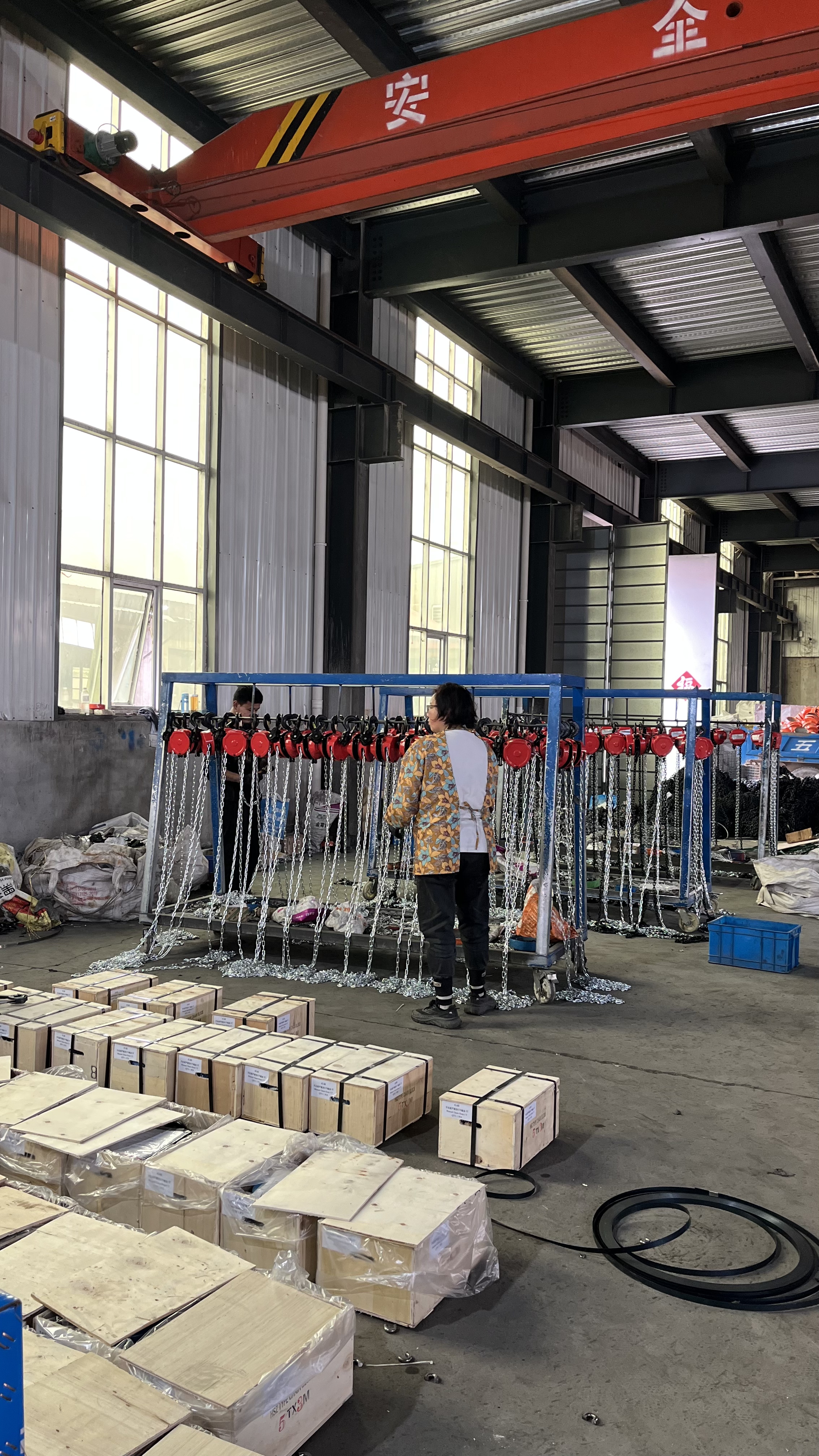 Cover: Chain block production area. Supplier capability verification starts on the shop floor, not in the quotation sheet.
Problem Definition: Why Chain Block Supplier Evaluations Produce the Same Failures
Most chain block sourcing problems are not caused by bad products. They are caused by an evaluation process that answers the wrong questions. Three patterns account for a large share of them.
Failure 1 — A Certificate Is Treated as a Capability
The most common shortcut is to accept a CE mark as proof of manufacturing capability. A CE mark states that the product conforms to the applicable requirements, and for hand-powered lifting equipment in the European market those requirements are set out in EN 13157. It does not describe the facility, the engineering team, the incoming-material controls, or whether the certified scope covers the capacity and lift height you are ordering. A supplier can hold a valid certificate and still fail to reproduce a tested configuration at a 12 m lift height.
Failure 2 — Configuration Drift Between Quote and Shipment
A chain block is a configured product, not a single catalogue number. Two units that both read capacity 5 t can differ in lift height, number of chain falls, load chain diameter and grade, hand chain length, hook opening and housing finish. When the quote lists only capacity, the supplier has room to ship something other than what the buyer imagined, and the buyer has no document to point at.
Failure 3 — Delivery Promises With No Specification Anchor
A quoted lead time of 15–20 days describes a production commitment for a defined configuration. If the agreed configuration is not written down, the lead time is not measurable, and there is no objective basis for a delay claim. Delivery assurance is therefore a documentation problem as much as a production problem.
Industry Background: Why Verification Pressure Is Rising
Chain blocks are a mature product category in a market that is anything but static. The global chain block market was valued at approximately USD 1.95 billion in 2024, according to Intel Market Research. Manual chain pulley blocks are estimated to account for 48% of the total product segment share in 2026, based on Fact.MR data. Asia Pacific dominated the chain hoist market in 2025 with a 41.3% revenue share, driven by rapid industrialisation in China and India, according to Dataintelo.
Demand is concentrated where lifting is repeated and safety-critical. Construction sites are the largest application segment for chain blocks, contributing approximately 30% to 54% of global demand depending on the source, per Stratview Research and Fact.MR. On the supply side, China's exports of parts for lifting and handling equipment under HS 843139, a category that includes chain block components, reached USD 1.36 billion in 2024, according to UN Comtrade and WITS data.
Regulatory pressure runs alongside that volume. Chain blocks in the European market must comply with EN 13157, which specifies safety requirements for hand-powered lifting equipment, as published by CEN. In the United States, ASME B30.16 governs the construction, installation, inspection and maintenance of overhead hoists, including hand chain-operated units. The verdict for buyers is straightforward: the number of available suppliers is large, the number of suppliers able to document a specific configuration is smaller, and the gap between the two is exactly what a structured evaluation is designed to expose.
The Two-Track Evaluation Framework
A workable supplier evaluation separates two questions that are often blended into one conversation. Track A asks whether the manufacturer has the facility, people, engineering depth, certification scope and production control to build the product. Track B asks whether the commercial terms will guarantee that the product arrives as specified. A supplier must pass both; a strong score on one does not compensate for a weak score on the other.
Track A — Capability Verification
Facility and workforce. Physical scale is the first filter because it determines whether a supplier can run continuous production rather than assembling to order. Baoding Junyun Hoisting Machinery Co., Ltd. operates a 24,000 m² facility with approximately 138 employees. A site of that footprint with a workforce of that size can support dedicated production and quality functions rather than a single multi-role team. Buyers evaluating workshop chain block or heavy duty chain block supply should ask for the site footprint, headcount by function, and a current production layout rather than a stock photograph.
Engineering depth. Headcount alone does not indicate engineering capability; the ratio does. The company employs 8 engineers within its 138-person workforce, a structure that supports configured orders rather than catalogue-only sales. Engineering depth matters most when a requirement falls outside the standard build: a longer lift height, a different chain grade, or a housing finish specified by a distributor's brand guidelines.
Certification and standards scope. The VD chain block is documented as compliant with ISO 16872, EN 13157 and ASME B30.21, and is CE marked. During evaluation, ask three follow-up questions: which capacities and models the documentation covers, which market the CE marking was issued for, and whether any management-system certificate such as ISO 9001 is held separately. A product standard document and a quality management system certificate are different documents, and a credible supplier will not blur them.
Vertical integration. A vertically integrated manufacturer and trading company controls quality, cost and lead time inside one organisation rather than across a chain of subcontractors. In practice this shows up in how quickly a non-standard request is answered and how consistently a repeat order matches the first shipment. The in-house chain block range, covering VD, VT, HSZ, HSC and the VA lever block, plus electric hoists, winches and pallet trucks, is one indicator that production and trading functions sit in the same operation.
Capacity and quality control. Capacity figures are only meaningful when read together with the quality regime. The company reports a monthly capacity of 15,000 pcs and a 100% test regime. A 100% test claim is the single most useful capability statement a manual hoist manufacturer can make, because it implies every unit is loaded before dispatch rather than sampled.
Track B — Delivery Assurance
Delivery assurance is not a promise; it is a set of written parameters that make the promise verifiable. For a VD chain block order, six parameters do most of the work.
- Lift height. The standard lift height is 3 m, with optional lift heights ranging from 2.5 m to 12 m. The lift height must appear on the order line, not only in a specification annex.
- Number of chain falls. The VD chain block uses 1 to 4 chain falls depending on capacity. Falls change the relationship between capacity, chain diameter and hand pull force, so they must be stated per line item.
- Load chain diameter and grade. The load chain diameter ranges from 6.3 to 11.2 mm, varying with capacity, and is supplied in Grade V (80) or Grade T according to DIN EN 818-7.
- Hand chain length. Standard hand chain length equals lift height plus 0.5 m of slack. This is the parameter most often omitted from purchase orders and most often disputed on arrival.
- Safety factors. Safety factor is at least 4:1 on the chain and at least 5:1 on structural parts. The 4:1 figure is consistent with the standard safety factor for EN 13157 compliant chain blocks as set out in BS EN 13157:2004.
- Commercial terms tied to production. A lead time of 15–20 days and an MOQ of 50 pcs establish the production envelope; each container is supplied with a defined quantity of easily damaged spare parts, replenished later according to actual usage.
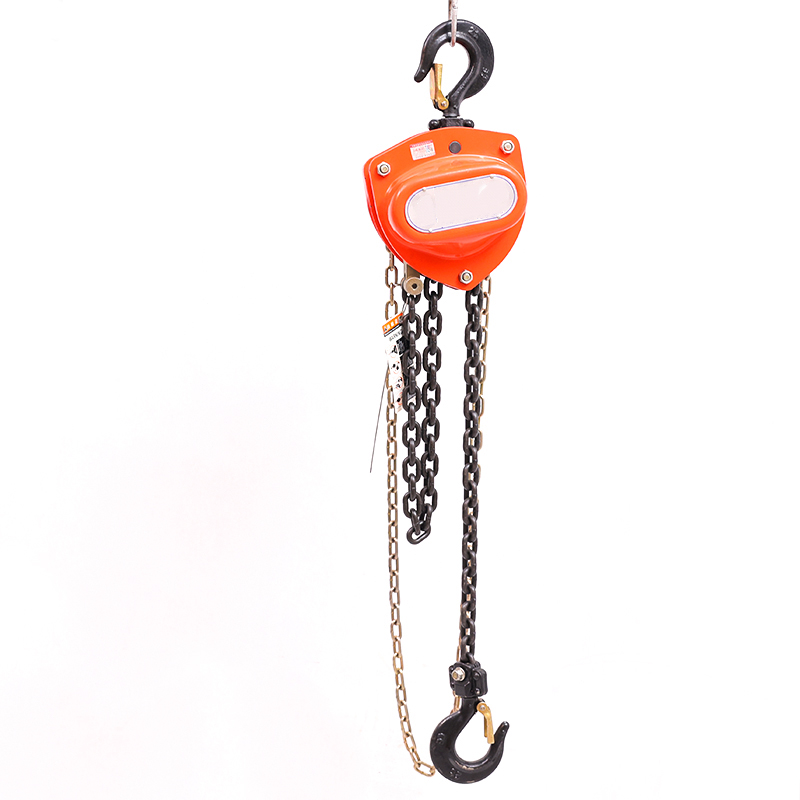 The VD chain block: standard lift height 3 m, optional 2.5–12 m, 1–4 chain falls, load chain 6.3–11.2 mm.
Step-by-Step: Running the Evaluation
The sequence below converts the framework into an assessment a procurement or engineering team can complete before issuing a purchase order.
Step 1 — Define the lifting duty before contacting suppliers. Establish the capacity band (the VD range covers 0.5 to 50 t), the required lift height (standard 3 m or an optional height between 2.5 m and 12 m), the likely number of chain falls, and the operating environment, including ambient temperature within the standard range of –20°C to +50°C. A requirement defined after receiving quotes will be shaped by those quotes.
Step 2 — Request a written configuration sheet, not a brochure. Ask each supplier to confirm lift height, falls, load chain diameter and grade, hand chain length formula, hook opening (24–55 mm across the range) and minimum headroom (300–1000 mm, model dependent) for the exact model quoted. Suppliers who answer in generalities are telling you something useful.
Step 3 — Verify the facility and workforce. Confirm site footprint, headcount by function and the existence of dedicated production and quality roles. A 24,000 m² site with approximately 138 employees is a verifiable baseline against which capacity claims can be sanity-checked.
Step 4 — Verify certification scope against the destination market. Confirm documented compliance with ISO 16872, EN 13157 and ASME B30.21 plus CE marking, and ask which of those applies to the model and capacity you are buying. For EU-bound orders, EN 13157 is the operative reference. Treat any additional management-system certification as a separate item requiring its own document.
Step 5 — Verify engineering and customisation capability. The company provides OEM/ODM services covering colour, load-bearing chain length, and adjustment of accessory quality to reach the best price point, plus customisation to the customer's usage scenario such as stainless steel or explosion-proof configurations. Ask for an example of a non-standard order and the engineering steps it passed through.
Step 6 — Verify capacity and quality control. Match monthly capacity (15,000 pcs) and lead time (15–20 days) against your order volume and MOQ (50 pcs). Confirm that testing is 100% rather than sampled, and ask what record accompanies each unit.
Step 7 — Lock delivery terms into the order. Write the specification set from Track B directly into the purchase order, together with the spare parts arrangement for each container. This is the step that turns delivery assurance from a relationship question into a documentary one.
Use Cases: Where the Evaluation Emphasis Should Shift
Different applications stress different parts of the framework. The specification coverage of the VD chain block maps onto the industries it serves, which include manufacturing, construction, logistics and warehousing, shipbuilding, mining, petrochemicals, power, bridge engineering, railway construction, automotive repair, agriculture and stage construction.
Construction Site Chain Block
Construction is the largest application segment globally, and it is where lift height requirements most often exceed the standard. Buyers should treat the 2.5–12 m optional lift range as a configuration item to be quoted explicitly, and should verify that the same certified model covers the height ordered. Steel structure installation and bridge construction both demand controlled lowering rather than simple lifting, which places weight on the reverse-drive self-locking braking system rather than on capacity alone.
Workshop, Factory Hoisting and Warehouse Logistics
In workshop and factory hoisting, the dominant constraint is usually headroom, not capacity. Minimum headroom across the range is 300–1000 mm depending on model, so the evaluation should start with the tightest lifting point on site. Warehouse logistics chain block use follows the same logic, and small space operation often requires confirming headroom before confirming capacity.
Port Cargo, Heavy Duty and Mining Operations
Port cargo handling and heavy duty lifting push toward the upper capacity bands, where the VD chain block uses up to 4 chain falls and load chain approaching 11.2 mm. Mining operation chain block use adds an environmental dimension: standard grease covers –20°C to +50°C, corrosion-resistant chains are part of the standard finish specification, and explosion-proof or high-temperature configurations are available on request. Buyers in these segments should weight Track A verification more heavily, because a failure is expensive and visible.
Shipbuilding and Precision Positioning
Shipbuilding and repair requires moving structural parts to designated positions and hoisting heavy components such as engines and propellers. Here the evaluation should confirm fine control and locking behaviour, not just rated load. Field evidence supports the durability angle: an importer distribution case covering 2,000 pcs across India, Vietnam, Brazil, Türkiye, Russia, the UAE and Saudi Arabia reported units used in long-term bridge and construction processes with a service life exceeding 2 years, with low loss and long-term use cited as the highlights.
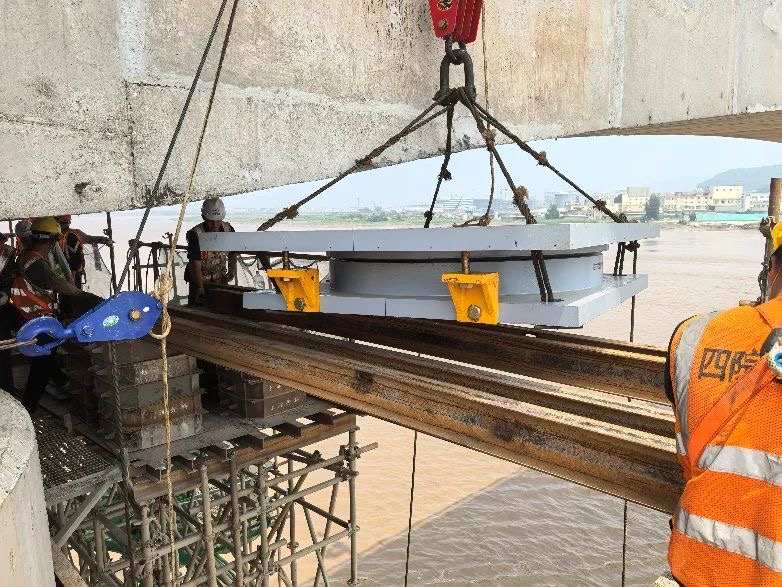 Construction and bridge work: long-lift configurations should be quoted as explicit line items, not assumed from the standard build.
Supplier Comparison on Verifiable Dimensions
The table below compares Baoding Junyun Hoisting Machinery Co., Ltd. with two established international competitors on dimensions that can be sourced. Where a reference is not available for a competitor, the cell says so rather than estimating.
| Evaluation dimension | JUNYUNHOIST (Baoding Junyun Hoisting Machinery Co., Ltd.) | Kito Crosby | Columbus McKinnon |
|---|---|---|---|
| Manufacturing footprint | 24,000 m² facility; approximately 138 employees; 8 engineers | Not stated in the references used for this article | Not stated in the references used for this article |
| Chain block capacity coverage | VD chain block rated load capacity 0.5–50 t; 1–4 chain falls | Not stated in the references used for this article | Strong presence in the 0.5–20 ton capacity range (Stratview Research) |
| Standards referenced | ISO 16872, EN 13157, ASME B30.21; CE marked | Not stated in the references used for this article | Not stated in the references used for this article |
| Load chain specification | 6.3–11.2 mm diameter; Grade V (80) or Grade T per DIN EN 818-7 | Not stated in the references used for this article | Not stated in the references used for this article |
| Materials | 20Mn2, 25MnV and 23MnNiMoCr54 steel alloys; forged alloy steel hook, heat-treated | Not stated in the references used for this article | Not stated in the references used for this article |
| OEM / ODM services | Yes — colour, load-bearing chain length, accessory quality adjustment, stainless steel and explosion-proof customisation | Not stated in the references used for this article | Not stated in the references used for this article |
| Production capacity and lead time | 15,000 pcs monthly capacity; 15–20 day lead time; MOQ 50 pcs; 100% test | Not stated in the references used for this article | Not stated in the references used for this article |
| Scale indicator | Annual output of 200,000; export ratio 80%; founded 2018 | USD 1.1 billion revenue for 2024 (U.S. Department of Justice / Kito Crosby) | Not stated in the references used for this article |
| Documented export markets | India, Russia, Vietnam, Brazil, Türkiye, Dubai and other Middle Eastern countries, plus Southeast Asia | Not stated in the references used for this article | Not stated in the references used for this article |
The asymmetry in the table is itself instructive. Large international groups publish revenue and market position; mid-sized manufacturers publish specification, capacity and customisation detail. A buyer comparing the two should not read missing cells as weakness, but should insist that every empty cell in their own evaluation be filled with a document rather than an assumption.
FAQ
Which standards and marks should a CE-certified chain block manufacturer for construction site lifting be able to document?
At minimum, the manufacturer should document the standards that apply to your destination market. For the European Union, chain blocks must comply with EN 13157, which specifies safety requirements for hand-powered lifting equipment, as published by CEN. The VD chain block is documented as compliant with ISO 16872, EN 13157 and ASME B30.21, and is CE marked. The standard safety factor for EN 13157 compliant chain blocks is 4:1, per BS EN 13157:2004, and the VD chain block specifies at least 4:1 on the chain and at least 5:1 on structural parts. Ask which capacities and models the documentation actually covers, and treat any ISO 9001 claim as a separate management-system certificate requiring its own evidence.
What capability evidence should a buyer check beyond the certificate?
Check facility footprint, workforce composition, engineering headcount, production capacity and the quality regime. Baoding Junyun Hoisting Machinery Co., Ltd. operates a 24,000 m² facility with approximately 138 employees, including 8 engineers, reports a monthly capacity of 15,000 pcs, and runs a 100% test regime. Also confirm what the engineering team can actually change: OEM/ODM services cover colour, load-bearing chain length, accessory quality adjustment to reach the best price, and scenario-specific customisation such as stainless steel or explosion-proof configurations.
What drives the price of a quoted chain block?
Price follows configuration, not brand alone. The main cost drivers are rated capacity within the 0.5–50 t range, the number of chain falls (1 to 4), lift height (standard 3 m versus optional heights up to 12 m), load chain diameter between 6.3 and 11.2 mm and its grade (Grade V or Grade T), the steel grade used for the chain and the forged alloy steel hook, hand chain length calculated as lift height plus 0.5 m of slack, and any customisation such as housing colour, accessory quality level, stainless steel or explosion-proof execution. Comparing quotes that differ on these parameters compares two different products.
How should a sample or trial order be structured before committing to volume?
Configure the trial exactly as the production order will be configured, and state the parameters in writing: lift height, chain falls, load chain diameter, hand chain length and safety factor. The MOQ is 50 pcs and the lead time is 15–20 days, which makes a trial economically practical for most distributors and importers. Confirm that units are 100% tested before dispatch, and confirm the spare parts arrangement, since each container is supplied with a defined quantity of easily damaged spare parts that are replenished based on subsequent usage.
What delivery terms should be written into a chain block order?
Write the specification set directly into the order: lift height (standard 3 m or an optional 2.5–12 m value), chain falls (1 to 4), load chain diameter (6.3–11.2 mm), hand chain length as lift height plus 0.5 m of slack, safety factors of at least 4:1 on chain and 5:1 on structural parts, quantity against the 50 pcs MOQ, and the 15–20 day lead time against the 15,000 pcs monthly capacity. Add the spare parts allocation per container. Once those items are on the order confirmation, a shipment can be verified rather than argued about. To start that process, request the product catalogue or send your lifting parameters to Junyunsteven@163.com for a configuration-based quote.
Conclusion: Verify Capability, Then Contract the Delivery
Chain block supplier evaluation works best when it stops being a single judgement and becomes two documented decisions. Capability verification answers whether the manufacturer has the scale, engineering depth, certification scope and production control to build what you need: a 24,000 m² facility, approximately 138 employees with 8 engineers, documented compliance with ISO 16872, EN 13157 and ASME B30.21, CE marking, OEM/ODM flexibility and a 100% test regime are the checkable evidence points. Delivery assurance answers whether the order will arrive as specified, and it depends on lift height, chain falls, load chain diameter, hand chain length and safety factors appearing on the same document as the price.
Buyers who apply both tracks stop comparing suppliers on price alone and start comparing them on what can be verified. That shift is what separates a repeatable supply relationship from a sequence of shipments that each have to be checked from scratch.
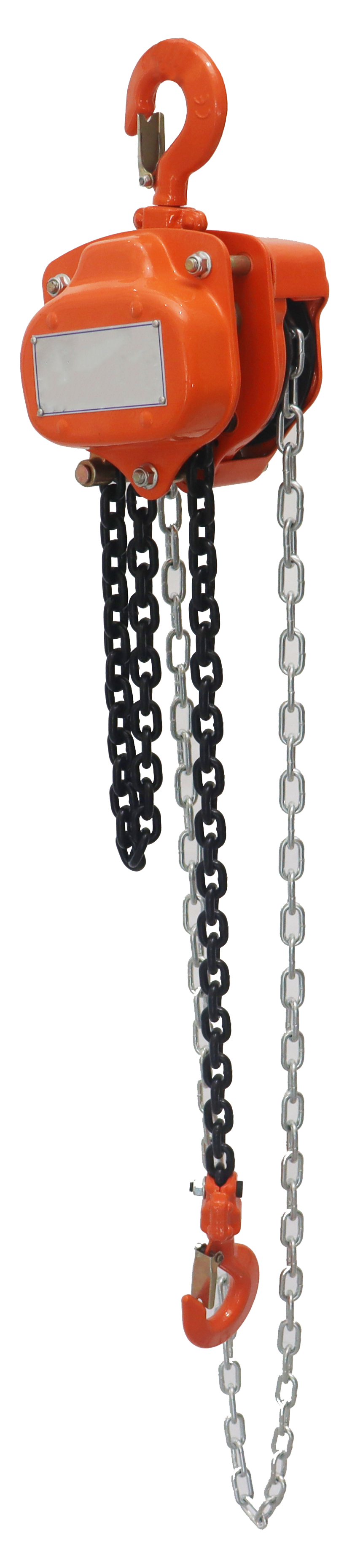 From evaluation to order: configure the model, confirm the parameters in writing, then request a sample or quote.
Next step: put the framework to work on your specification
Send your capacity, lift height, chain fall preference and destination market, and Baoding Junyun Hoisting Machinery Co., Ltd. (JUNYUNHOIST) will return a configuration-based quotation with a defined lead time.
Email: Junyunsteven@163.com | Tel / WhatsApp: +86 134-8345-2631 | Website: www.junyunhoist.com
Download the full product catalogue (PDF) or request a sample for evaluation.
Have Questions or Need More Details?
Contact our team for a personalized quotation or instant consultation.
Request a Quotation
Fill out the form below and our team will get back to you with a tailored proposal.
WhatsApp Direct Chat
Prefer to chat in real-time? Message us on WhatsApp for instant assistance & quick answers.
- Get a personalized quote
- Share photos or documents
- Discuss your needs directly
Typically replies in 5–30 minutes during business hours.