Chain Block Won't Fit? How Low-Headroom Manual Hoists Solve Tight Lifting Spots
Chain Block Won't Fit? How Low-Headroom Manual Hoists Solve Tight Lifting Spots
A chain block that will not fit into the gap above the load is not a capacity problem — it is a headroom problem, and it is decided by millimetres. On JUNYUNHOIST VD chain blocks, the minimum headroom (also called hook distance) is a documented specification that varies from 300 mm to 1000 mm depending on the model, so the model has to be matched to the measured gap before the order is placed, not after the crate is opened on site.
This article is written for maintenance planners, rigging teams and procurement engineers working in workshops, skid-mounted packages, between structural beams and in other restricted-height positions. It explains what headroom actually measures, how to take the four numbers that decide fit, how lift height (2.5–12 m optional), hand chain length (lift height + 0.5 m slack) and hand chain pull force (≤35 daN up to rated load) interact inside a tight bay, and which OEM and customization options exist when a standard configuration still does not close the gap.
When a Chain Block Won't Fit: The Real Constraint
Minimum headroom, or hook distance, is the shortest vertical distance between the top suspension point of a hoist and its load hook when the unit is in its most compact configuration. It is the number that determines whether a manual chain block can be installed in a confined bay at all, and it is a dimensional specification rather than a strength specification — increasing tonnage does not automatically solve a fit problem.
In confined-space work, three distinct failures appear:
- Rigging failure. The hoist body and top hook assembly is deeper than the clear gap, so the unit cannot be brought to the pick point or fouls the beam, the skid frame or the machine housing.
- Travel failure. The hoist hangs correctly, but the headroom it consumes leaves too little usable travel for the load to reach the required height, forcing a second rigging point or a different tool.
- Operation failure. The body fits, but the hand chain fouls pipework, rails or equipment, or the operator cannot stand in a position where the chain can be pulled cleanly. A hoist that technically fits can still be unusable in practice.
Because a chain block is a fixed assembly, the fit question cannot be resolved on site by adjustment. It has to be resolved at specification stage, using the measured gap and the documented model-level headroom value.
Why Tight Lifting Spots Keep Appearing in Industrial Maintenance
Chain blocks remain a high-volume category precisely because a large share of industrial lifting happens where powered equipment or mobile cranes cannot be positioned. The global chain block market was valued at approximately USD 1.95 billion in 2024, according to Intel Market Research, and manual chain pulley blocks are estimated to account for 48% of the total product segment share in 2026, according to Fact.MR. Construction sites remain the largest application segment, contributing approximately 30% to 54% of global demand depending on the source (Stratview Research / Fact.MR).
Supply is equally concentrated: Asia Pacific held a 41.3% revenue share of the chain hoist market in 2025, driven by industrialisation in China and India, as reported by Dataintelo, while China’s exports of parts for lifting and handling equipment under HS 843139 — a category that includes chain block components — reached USD 1.36 billion in 2024, according to UN Comtrade / WITS data.
On the user side, the pressure is structural. Retrofits, skid packages, mezzanine levels, cable trays, pipe racks and machine frames are all designed around process requirements, not around hoist geometry. When the rigging point cannot be raised and the load cannot be moved, the available vertical gap becomes the governing specification, and a small-space operation chain block is the realistic answer.
How JUNYUNHOIST VD Chain Blocks Are Specified for Restricted-Height Work
JUNYUNHOIST VD chain blocks are documented with a minimum headroom (hook distance) of 300–1000 mm depending on model, optional lift heights from 2.5 m to 12 m, and a hand chain pull force of ≤35 daN up to rated load. Those three figures, more than tonnage, decide whether a manual hoist can be rigged and operated inside a restricted bay.
| Specification | Documented value for the VD chain block |
|---|---|
| Rated load capacity | 0.5 – 50 t |
| Standard lift height | 3 m (2.5–12 m optional) |
| Number of chain falls | 1 – 4, depending on capacity |
| Load chain grade | Grade V (80) or Grade T, according to DIN EN 818-7 |
| Load chain diameter | 6.3 – 11.2 mm, varies with capacity |
| Documented load chain materials | 20Mn2, 25MnV, 23MnNiMoCr54 |
| Hand chain | Round link, galvanised or zinc-plated; length = lift height + 0.5 m slack |
| Hand chain pull force | ≤35 daN (350 N) up to rated load |
| Headroom / hook distance (minimum) | 300 – 1000 mm, model dependent |
| Hook opening | 24 – 55 mm |
| Hook material | Forged alloy steel, heat-treated |
| Safety factor | ≥4:1 (chain) / ≥5:1 (structural parts) |
| Operating temperature range | −20°C to +50°C with standard grease |
| Protection / finish | Painted housing (RAL 2000 or 1007), corrosion-resistant chains |
| Standards | ISO 16872, EN 13157, ASME B30.21, CE marked |
Read as a maintenance decision, the specification behaves as follows:
- Headroom 300–1000 mm, model dependent. The range matters less than the individual model value. A model documented near 300 mm and a model documented near 1000 mm are not interchangeable inside the same 400 mm gap, so a specification that names only capacity and tonnage leaves the critical dimension undefined.
- Lift height 2.5–12 m, 3 m standard. Confined bays usually need short travel. Specifying the shortest lift that covers the job keeps chain weight and hook travel manageable instead of introducing a long chain that must be stored and handled in a cramped position.
- Hand chain = lift height + 0.5 m slack. The additional slack is what allows the operator to pull from a workable stance instead of directly beneath the load — exactly the situation created by pipework, skid frames or equipment at floor level.
- Pull force ≤35 daN up to rated load. A documented pull limit tells the planner whether one operator can control the load from whatever posture the space allows, rather than discovering fatigue and jerky control during commissioning.
- Chain falls 1–4 and load chain 6.3–11.2 mm. These vary with capacity, which is why capacity and model selection have to be done together rather than sequentially.
- Compliance. VD chain blocks are documented to the ISO 16872, EN 13157 and ASME B30.21 standards and CE marking, with safety factors of ≥4:1 for the load chain and ≥5:1 for structural parts. Independently, the European market requires hand-powered lifting equipment to comply with EN 13157, which specifies safety requirements for hand-powered lifting equipment (CEN), and the standard safety factor for EN 13157 compliant chain blocks is 4:1 (BS EN 13157:2004).
Step-by-Step: Matching a VD Chain Block to a Measured Gap
- Measure the clear vertical gap at the actual pick point. Take the distance from the underside of the beam, lifting eye or trolley to the top of the load at the highest position it must reach. Measuring at floor level instead of at the pick point is the most common source of an unusable selection.
- Deduct rigging hardware and hook allowance. Slings, shackles and the load hook itself consume part of the gap. What remains is the maximum headroom the hoist is allowed to occupy.
- Compare that figure with the model-level minimum headroom. Documented VD chain block headroom / hook distance spans 300–1000 mm across models; select a model whose documented value sits below the measured gap, not equal to it.
- Convert required travel into a lift height. Required travel plus rigging take-up gives the lift height, chosen from the optional 2.5–12 m range (3 m is standard).
- Match the hand chain to the operator’s position. Standard hand chain length is lift height + 0.5 m slack. Where the operator must pull from a platform, across a rail or around equipment, this is the point to specify a different load-bearing chain length — a documented customization option.
- Confirm capacity, falls and pull force together. Rated capacity ranges from 0.5 t to 50 t with 1–4 chain falls; verify the load including rigging against the rating and confirm a ≤35 daN hand chain pull force is realistic for the operator’s posture.
- Check the hook against the attachment. Hook opening is documented between 24 mm and 55 mm, and hooks are forged alloy steel, heat-treated. Verify the intended sling, shackle or eye fits before ordering.
- Confirm compliance for the destination market. Match ISO 16872, EN 13157, ASME B30.21 and CE marking to the site requirements, and keep the safety factor documentation with the equipment record.
OEM and Customization Capability for Workshop Lifting Equipment
Baoding Junyun Hoisting Machinery Co., Ltd., operating under the JUNYUNHOIST brand, is a Hebei-based manufacturer and trading company founded in 2018 that exports approximately 80% of its output, with main markets including India, Russia, Vietnam, Brazil, Türkiye and Dubai, as well as the wider Middle East and Southeast Asia. Its lifting portfolio covers the VD chain block, VT chain block, HSZ chain block, HSC chain block, VD-II chain block, VA lever block and VL lever block, alongside pallet trucks, electric hoists and winches.
For a workshop chain block project where the gap is the constraint, the relevant capability facts are these:
- OEM/ODM production services are provided globally, so a distributor or brand owner can specify the configuration rather than accept a catalogue default.
- Documented customization scope: housing colour; load-bearing chain length; accessory quality adjusted to the customer’s target price point; and scenario-driven versions such as stainless steel or explosion-proof execution.
- Monthly capacity of 15,000 units with a lead time of 15–20 days, and a minimum order quantity of 50 pieces.
- 100% testing as part of quality control, with each unit inspected before delivery.
- After-sales: a certain number of easily damaged spare parts is shipped with each container and replenished as needed based on subsequent usage.
- Commercial terms: FOB, EXW, CIF and CFR; pre-shipment test and third-party inspection (SGS) available; 30% T/T in advance and 70% T/T against copy of B/L.
Why this matters for the headroom problem: when a measured gap falls near the bottom of the 300–1000 mm range, the difference between “almost fits” and “fits” is usually configuration rather than tonnage. Custom chain length, accessory selection and special material options are the levers that make a heavy duty chain block usable in a bay it was not originally designed around.
Where Low-Headroom Manual Chain Blocks Are Used
Restricted-height lifting is not a niche application; it is a routine condition across the industries documented for the VD chain block: manufacturing, construction, logistics and warehousing, shipbuilding, mining, petrochemicals, the power industry, bridge engineering, railway construction, automotive repair, agriculture and stage construction.
Typical situations where the gap governs the selection include:
- Workshop and plant maintenance between structural beams, under mezzanines or below service platforms where the rigging point is fixed and low.
- Skid-mounted equipment and package units, where the frame height limits how much hardware can be inserted above the load.
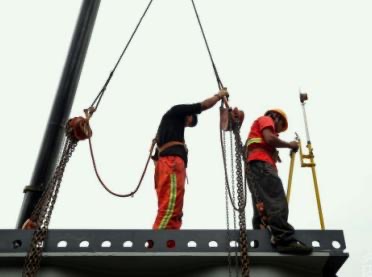
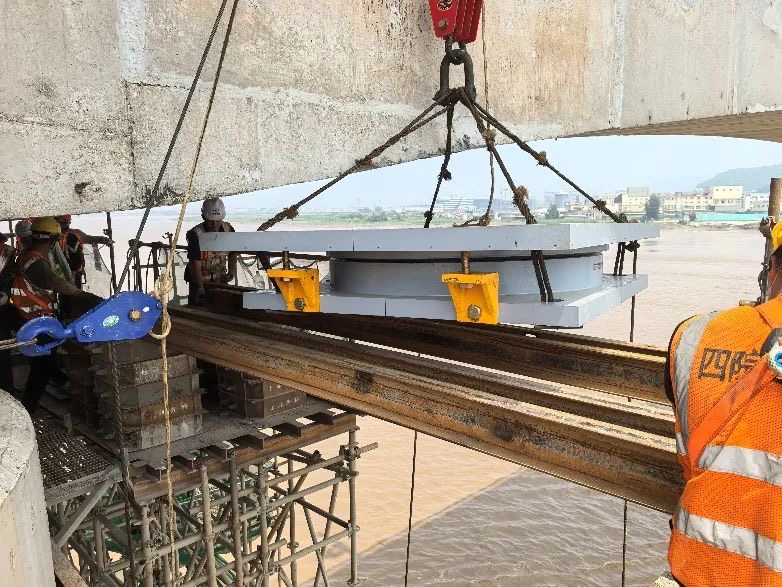
- Bridge and highway construction, where formwork, beams and temporary works repeatedly create constrained vertical space.
- Shipbuilding and ship repair, where compartments and engine-room spaces offer clearance but not height.
- Warehouse and logistics operations with low roof clearance, and port cargo handling where lifting points sit close to the load.
- Mining, petrochemical and power plant maintenance, where confined-space procedures already limit the rigging envelope.
A documented example comes from an importer project covering 2,000 pieces delivered to India, Vietnam, Brazil, Turkey, Russia, the UAE and Saudi Arabia and completed within a 2-year timeframe, used primarily for local store distribution. In long-term bridge and construction use, the product demonstrated a service life exceeding 2 years, with low loss and long-term use reported as the highlights — the pattern that matters when lifting equipment is exposed to sustained site conditions rather than short campaigns.
Comparison Table: Confined-Space Lifting Spec Reference
The table below compares the conditions a maintenance or rigging team actually measures against the documented VD chain block values they must match, so that a model can be selected before the order rather than after the delivery.
| Measured condition on site | What it determines | Documented VD chain block value | If it is mismatched |
|---|---|---|---|
| Clear gap above the load | Minimum headroom / hook distance | 300 – 1000 mm, model dependent | Hoist cannot be rigged, or usable travel is lost |
| Required vertical travel | Lift height | 3 m standard; 2.5–12 m optional | Load stops short of the required height |
| Operator standing position | Hand chain length | Lift height + 0.5 m slack | Chain cannot be reached or pulled cleanly |
| Force one operator can apply | Hand chain pull force | ≤35 daN (350 N) up to rated load | Fatigue and jerky load control in cramped posture |
| Load weight including rigging | Rated capacity and chain falls | 0.5 – 50 t; 1–4 falls | Overload; documented safety factor no longer valid |
| Sling, shackle or eye to be used | Hook opening and hook material | 24 – 55 mm; forged alloy steel, heat-treated | Hook will not accept the attachment |
| Destination market regulation | Documented standards | ISO 16872, EN 13157, ASME B30.21, CE marked; ≥4:1 chain, ≥5:1 structural | Non-conforming equipment rejected at site |
A second, simpler comparison decides which tool family to bring to a restricted space in the first place.
| Decision point | Manual chain block (VD) | Lever block (VA / VL) |
|---|---|---|
| Documented role | Vertical lifting of rated loads from 0.5 t to 50 t, with minimum headroom of 300–1000 mm by model | Described as compact and powerful, ideal for tight spaces, tensioning and positioning |
| Choose it when | A vertical lift is required and the measured gap is larger than the selected model’s documented headroom | The space is tighter than any available chain block headroom allows, or the task is pulling and positioning rather than lifting |
FAQ
Which standards and safety factors should a low-headroom chain block meet before it is accepted on site?
VD chain blocks are documented against ISO 16872, EN 13157 and ASME B30.21 and carry CE marking, with a safety factor of ≥4:1 for the load chain and ≥5:1 for structural parts. For the European market, hand-powered lifting equipment must comply with EN 13157, which specifies safety requirements for hand-powered lifting equipment (CEN), and the standard safety factor for EN 13157 compliant chain blocks is 4:1 (BS EN 13157:2004). A buyer should confirm that the cited standard matches the destination market and that the hook — forged alloy steel, heat-treated, opening 24–55 mm — accepts the sling actually used on site.
Can JUNYUNHOIST supply an OEM chain block for workshop lifting equipment where headroom is limited?
Yes. Baoding Junyun Hoisting Machinery Co., Ltd. provides OEM/ODM production services globally, and its documented customization scope covers housing colour, load-bearing chain length, accessory quality adjusted to the customer’s target price, and scenario-specific executions such as stainless steel or explosion-proof versions. Because minimum headroom / hook distance varies by model from 300 mm to 1000 mm, the measured workshop gap should be supplied as an input to the enquiry; that value is what allows the correct model and chain length to be selected instead of an approximate “short” configuration.
What commercial terms apply to a custom low-headroom configuration?
The minimum order quantity is 50 pieces, delivery terms available are FOB, EXW, CIF and CFR, and payment is 30% T/T in advance with 70% T/T against a copy of the B/L. In restricted-space projects the cost structure is driven less by tonnage than by configuration: chain length, accessory quality level and special materials such as stainless steel or explosion-proof execution are all adjustable, which is why the dimensional specification should be fixed before a quotation is issued.
How can a low-headroom chain block be validated before a full order?
Every unit is 100% tested as part of the quality control process, and procurement supports pre-shipment testing and third-party inspection (SGS). For a confined-space application, the decisive validation is dimensional rather than destructive: confirm the model’s documented minimum headroom against the measured gap, confirm the hand chain length (lift height + 0.5 m slack) against the operator’s standing position, and confirm that a ≤35 daN pull force is acceptable for the person who will operate it. The minimum order quantity of 50 pieces applies to these orders.
What lead time and capacity should be planned for a restricted-space configuration?
Monthly production capacity is 15,000 units with a typical lead time of 15–20 days, which is enough to absorb a customized chain length, colour or special material within a normal project window. A certain number of easily damaged spare parts can be shipped with each container and replenished as needed based on subsequent usage. To turn a measurement into a firm proposal, send the measured gap, the required lift height and the load weight so the matching VD chain block model, chain length and delivery schedule can be confirmed; the full product brochure is available for download here.
Conclusion: Measure the Gap, Then Choose the Model
When a manual chain block will not fit, the cause is almost always dimensional: the gap above the load is smaller than the headroom the hoist needs. The working sequence is therefore fixed. Measure the clear vertical gap at the actual pick point, deduct rigging and hook allowance, and compare the result with the model-level minimum headroom — documented at 300–1000 mm across VD chain block models. Then confirm lift height (3 m standard, 2.5–12 m optional), hand chain length (lift height + 0.5 m slack) against the operator’s position, pull force (≤35 daN up to rated load) against the posture the space allows, and capacity (0.5–50 t, 1–4 falls) against the load including rigging. Finish with the compliance check — ISO 16872, EN 13157, ASME B30.21, CE marking, ≥4:1 chain and ≥5:1 structural safety factors — and the selection is defensible to both the site team and the auditor.
Send the Gap, Get the Right Chain Block
If you are specifying a chain block for a workshop, skid, bridge site or any position where headroom is tight, send three numbers: the measured gap in millimetres, the required lift height and the load weight. Baoding Junyun Hoisting Machinery Co., Ltd. (JUNYUNHOIST) will confirm the matching VD chain block model, hand chain length and delivery schedule, and can quote OEM/ODM configurations including custom chain length, colour and special materials.
Website: www.junyunhoist.com | Email: Junyunsteven@163.com | Tel / WhatsApp: +86 134-8345-2631 | Product brochure: download PDF