
Grade V vs Grade T Chain for VD Chain Blocks: How to Decide
For a VD chain block, the load-chain grade is not a capacity decision. Capacity in this range is built from 1 to 4 chain falls, load-chain diameters of 6.3 mm to 11.2 mm and hook openings of 24 mm to 55 mm. Grade V versus Grade T sits inside that envelope: it decides chain tolerance, load-wheel fit, documentation, spares and price for the same rated capacity.
The direct answer. Grade T is the fine-tolerance hoist chain specified in DIN EN 818-7; Grade V is the general lifting-chain grade. Where a VD block runs high duty cycles, long lift heights or a recorded periodic-examination regime, Grade T is the easier specification to defend. Where the block is a general-purpose unit in intermittent use, Grade V keeps cost and replacement-chain sourcing simpler. Whichever grade is fitted, the block is specified at a chain safety factor of at least 4:1 and at least 5:1 on structural parts, with hand-chain pull force of 35 daN or less up to rated load, and operation from −20 °C to +50 °C with standard grease.
Scope note: this is a specification comparison. It weighs documented characteristics and the procurement decisions they drive. It does not claim a measured wear, fatigue or efficiency advantage for either grade inside the VD block, because no head-to-head test of Grade V against Grade T in this hoist is part of the data behind this article. Where a conclusion depends on a value that only the chain mill or the delivered certificate can supply, the text says so.
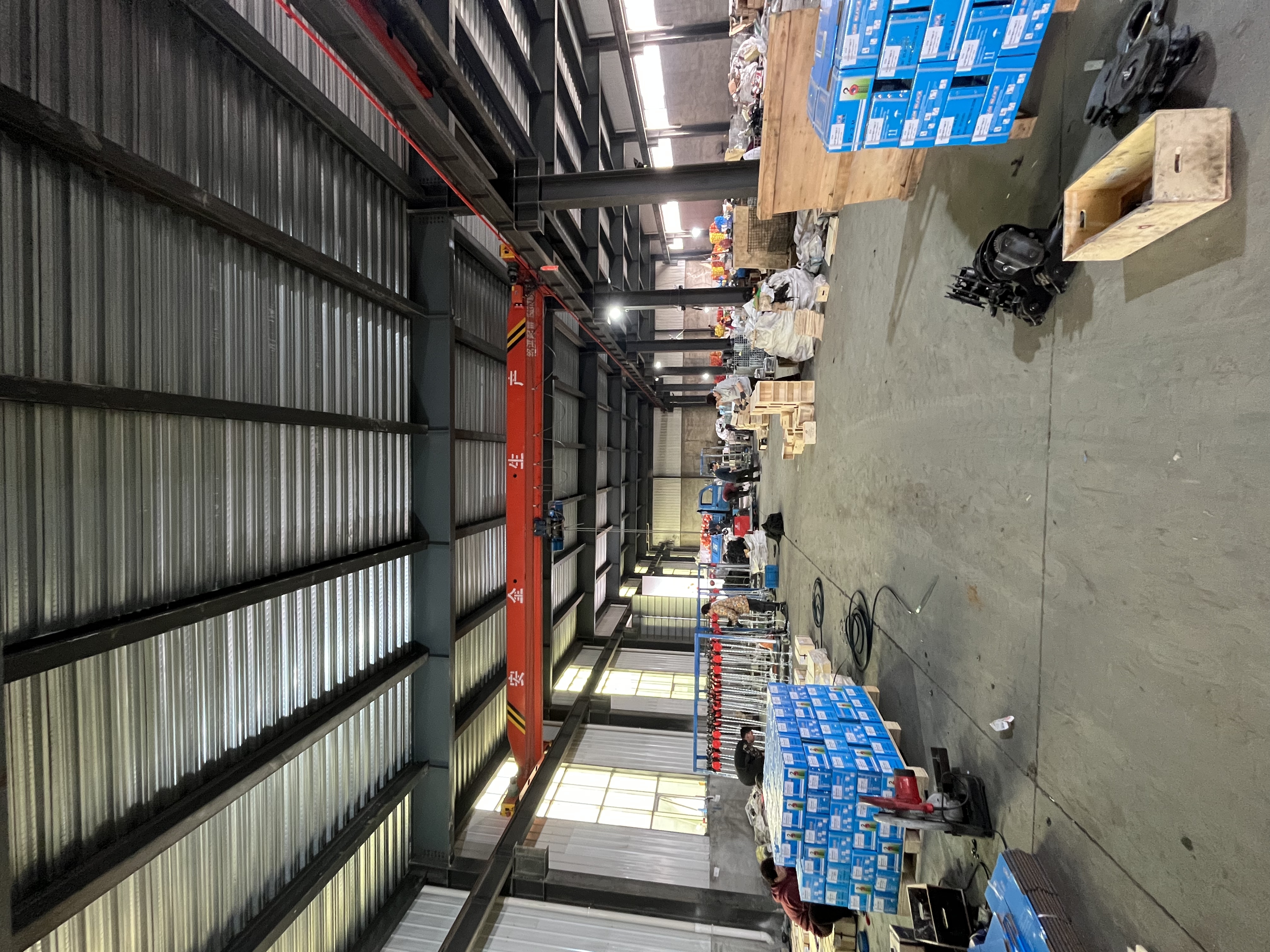
What the V-versus-T decision actually changes
Buyers often treat the chain grade as a rating: pay more, lift more. In a VD chain block that logic does not hold. Rated capacity is fixed by the number of chain falls and the load-chain diameter, while the margins come from the design and from EN 13157 practice — a chain safety factor of at least 4:1 and at least 5:1 on structural parts. Moving from Grade V to Grade T does not raise the nameplate capacity, does not push hand-chain pull force below the 35 daN limit, and does not widen the −20 °C to +50 °C window that standard grease allows.
What the grade does change is narrower, and all of it matters at the purchasing desk:
- Tolerance and load-wheel fit. A hoist chain indexes over the load wheel on every lift, and fine-tolerance chain exists precisely to control how consistently each link seats.
- Duty documentation. A chain ordered against a hoist-chain standard produces a certificate naming that standard, which is faster to file on regulated sites.
- Surface and wear practice. Chain finish and treatment decide how the chain survives dust, moisture and outdoor storage, largely independently of grade.
- Supply and spares. Replacement lengths must match the grade and certification already on the block; tolerance class affects what is interchangeable.
Because of that, the grade has to be fixed before the chain is cut. A VD block is ordered to a capacity, a fall count and a lift height, and the chain length follows from those, not the other way round.
Industry background: the standards that set the frame
Chain blocks are a mature, standards-driven category. Intel Market Research valued the global chain block market at about USD 1.95 billion in 2024, and Dataintelo projects the wider chain hoist market — manual and electric together — reaching USD 3.9 billion by 2034. Demand is concentrated geographically: Asia Pacific held a 41.3% revenue share of the chain hoist market in 2025, and construction is the largest single application segment, cited at roughly 30% to 54% of global demand depending on the study's scope.
For a buyer, the regulatory layer matters more than the market layer. In Europe, hand-powered lifting equipment is governed by EN 13157, and the standard safety factor for an EN 13157 compliant chain block is 4:1. In the United States, ASME B30.16 covers construction, installation, inspection and maintenance of overhead hoists, including hand chain-operated units. The load chain is a separate specification, and DIN EN 818-7 — the fine-tolerance hoist chain standard — is where the Grade T option comes from. A VD block destined for a European project therefore has to satisfy two layers at once: the hoist standard and the chain standard. The V-versus-T decision belongs to the second layer, which is why it looks like a detail until an inspector asks for the chain certificate.
The VD chain block specification envelope
The grade question cannot be answered until the block's envelope is fixed, because the chain is ordered against it. The VD range is defined by the following parameters.
| Parameter | VD chain block specification | What it controls for the buyer |
|---|---|---|
| Chain falls | 1 to 4 | How many chain parts share the load, and therefore the capacity available from a given chain diameter |
| Load-chain diameter | 6.3 mm to 11.2 mm | Chain size, which must match the load wheel and the hook fittings |
| Hook opening | 24 mm to 55 mm | The largest shackle, sling eye or attachment the hook will accept |
| Lift height | 2.5 m to 12 m, standard or optional | Chain length on the order, and the volume of chain hanging below the block |
| Chain safety factor | At least 4:1 | Margin between the chain's breaking capacity and the load it carries |
| Structural parts safety factor | At least 5:1 | Margin on housing, hooks and load wheel |
| Hand-chain pull force | 35 daN or less up to rated load | Operator effort at full capacity |
| Operating temperature | −20 °C to +50 °C with standard grease | Grease and seal compatibility on site |
Two rows cause more ordering errors than the rest. Lift height is not cosmetic: a 12 m unit carries four times the chain length of a 3 m unit, and all of it has to be pulled through and stored. Hook opening is the other one: a 24 mm opening will not take a large shackle or a heavy sling eye even when the capacity on the nameplate is correct.
How Grade V and Grade T differ inside a hoist
Tolerance class and load-wheel seating
A load chain in a chain block does two jobs at once. It carries the load, and it indexes over the load wheel every time the hand chain moves. Each link has to seat in the wheel pocket, take load, release and repeat. Link pitch and dimensional variation change how consistently that seating happens, and consistency is what a hoist-chain standard is written to control. EN 818-7 defines a fine-tolerance hoist chain; the general lifting family that Grade V belongs to is a medium-tolerance specification intended for slings and general lifting duty.
Both are grade-8 class chain, so what a buyer pays for in Grade T is dimensional control and hoist-specific scope rather than a higher nominal strength class. That distinction matters on a hard-worked block — a heavy duty chain block on daily lifts — and matters much less on a unit used a few times a week. In neither case does tolerance change the 4:1 chain safety factor the block is specified to.
Surface treatment and what actually protects the chain
Grade does not decide how a chain survives a site. JUNYUNHOIST, the brand of Baoding Junyun Hoisting Machinery Co., Ltd. — a Hebei-based chain block manufacturer and trading company founded in 2018 that exports about 80% of its output to markets including India, Russia, Vietnam, Brazil, Türkiye and Dubai — applies blackening and carburizing treatment to the load chain in its VD production, aimed at corrosion and wear resistance, and uses a G80 steel chain where the comparison factory uses G70. Those are block-level facts, not a Grade V versus Grade T result: both grades can be treated, and both corrode if the block is stored outdoors without attention.
The same applies to the housing. The VD block uses a thickened 2.8 mm outer shell for impact resistance and a 4.8 mm hand chain, and those choices protect the mechanism whatever load chain is fitted. On a rough site — a construction site chain block, a mining operation chain block, a port cargo chain block — the shell and the storage habit usually decide the block's condition before the chain grade does.
Documentation and periodic examination
A Grade T chain is ordered against a hoist-chain standard; a Grade V chain is ordered against a general lifting-chain standard. In daily use the difference shows in the paperwork: the grade marking on the chain, the mill's test certificate, and the traceability between certificate, purchase order and delivered length. Where examinations are recorded, a certificate naming a hoist-chain standard is simply faster to file. That is a documentation convenience, not a claim that Grade V chain is uncertified — the deliverable to insist on is a certificate matching the grade actually specified.
Supply, spares and replacement lengths
Fine-tolerance hoist chain is produced to a narrower specification than general lifting chain, so replacement lengths should be sourced to the same grade and matched to the certificate of the chain in service. Mixing one tolerance class into a block certified with another undermines the traceability the buyer paid for. Keep grade, chain diameter and lift height on the asset record so the next replacement order is unambiguous.
Grade V vs Grade T: specification comparison
| Decision dimension | Grade V load chain | Grade T load chain |
|---|---|---|
| Standard scope | General lifting-chain grade in the medium-tolerance family used for slings and general lifting | Fine-tolerance hoist chain specified in DIN EN 818-7 |
| Strength class | Grade-8 class; confirm on the mill certificate | Grade-8 class; confirm on the mill certificate |
| Tolerance | Medium tolerance | Fine tolerance |
| Load-wheel fit rationale | Adequate for intermittent hoist duty | Tighter dimensional control for repeated indexing over the load wheel |
| Effect on rated capacity | None — capacity comes from falls and chain diameter | None — capacity comes from falls and chain diameter |
| Chain safety factor | At least 4:1 | At least 4:1 |
| Structural parts safety factor | At least 5:1 (block, not chain) | At least 5:1 (block, not chain) |
| Hand-chain pull force | 35 daN or less at rated load; set by gearing and falls | 35 daN or less at rated load; set by gearing and falls |
| Operating temperature | −20 °C to +50 °C with standard grease | −20 °C to +50 °C with standard grease |
| Documentation | General lifting-chain certificate | Certificate naming the hoist-chain standard |
| Cost position | No differential disclosed; compare by quote | No differential disclosed; compare by quote |
| Best fit | Intermittent general lifting, workshop and warehouse blocks, cost-sensitive fleets | High-cycle duty, long lifts, regulated sites with recorded examinations |
The table is deliberately flat on capacity, safety factor, pull force and temperature. Those values belong to the block, not to the chain grade, and a supplier who implies otherwise is describing a different product.
Reading the safety data correctly
Chain safety factor of at least 4:1. The chain's breaking capacity is at least four times the load it is rated to carry. That is the figure an EN 13157 compliant chain block is held to, and it applies to the chain actually fitted — Grade V or Grade T. The grade does not change it.
Structural parts of at least 5:1. Housing, hooks and load wheel carry a higher margin than the chain, which is normal practice: the chain is the wearing, inspectable element, while the structure is designed with more headroom. Ask for both figures, because a single quoted safety factor usually hides which component it refers to.
Hand-chain pull force of 35 daN or less up to rated load. One decanewton is 10 newtons, so 35 daN is 350 N of pull at full rated load. That value is a product of gear ratio and fall count; a premium chain grade does not reduce it. When a site complains about a hard-pulling block, the useful diagnostics are falls, gearing and chain condition — not the grade on the chain.
−20 °C to +50 °C with standard grease. The limit is set by the grease as much as by the steel. Below −20 °C the grease stiffens and pull force rises; above +50 °C it thins and protection drops. A cold-store or foundry application outside that window is a grease-selection question for the supplier, not a reason to change chain grade.
Step-by-step: specifying the load chain for a VD block
- Fix rated capacity and fall count first. Decide the load, then choose between 1 and 4 falls. More falls share the load across more chain parts, which is how capacity is built; grade does not enter this step.
- Match chain diameter and hook opening to real rigging. With 6.3 mm to 11.2 mm diameters and 24 mm to 55 mm hook openings, check against the shackle or sling eye actually used on site.
- Set lift height and chain length. Standard and optional heights run from 2.5 m to 12 m. Longer chain adds weight to handle and surface to inspect, so specify the shortest length that covers the lift.
- Choose the grade by duty, not capacity. High-cycle, long-lift or audited duty points to Grade T for tolerance and documentation; general intermittent duty points to Grade V. Record the reason so the next order stays consistent.
- Verify chain marking and certificate. Confirm that marking, certificate and purchase order agree, and that the certificate names the standard you specified. File it with the examination record.
- Plan spares and maintenance before delivery. Decide who oils the chain, where the block is stored and which spares are held; this step affects service life more than the grade does.
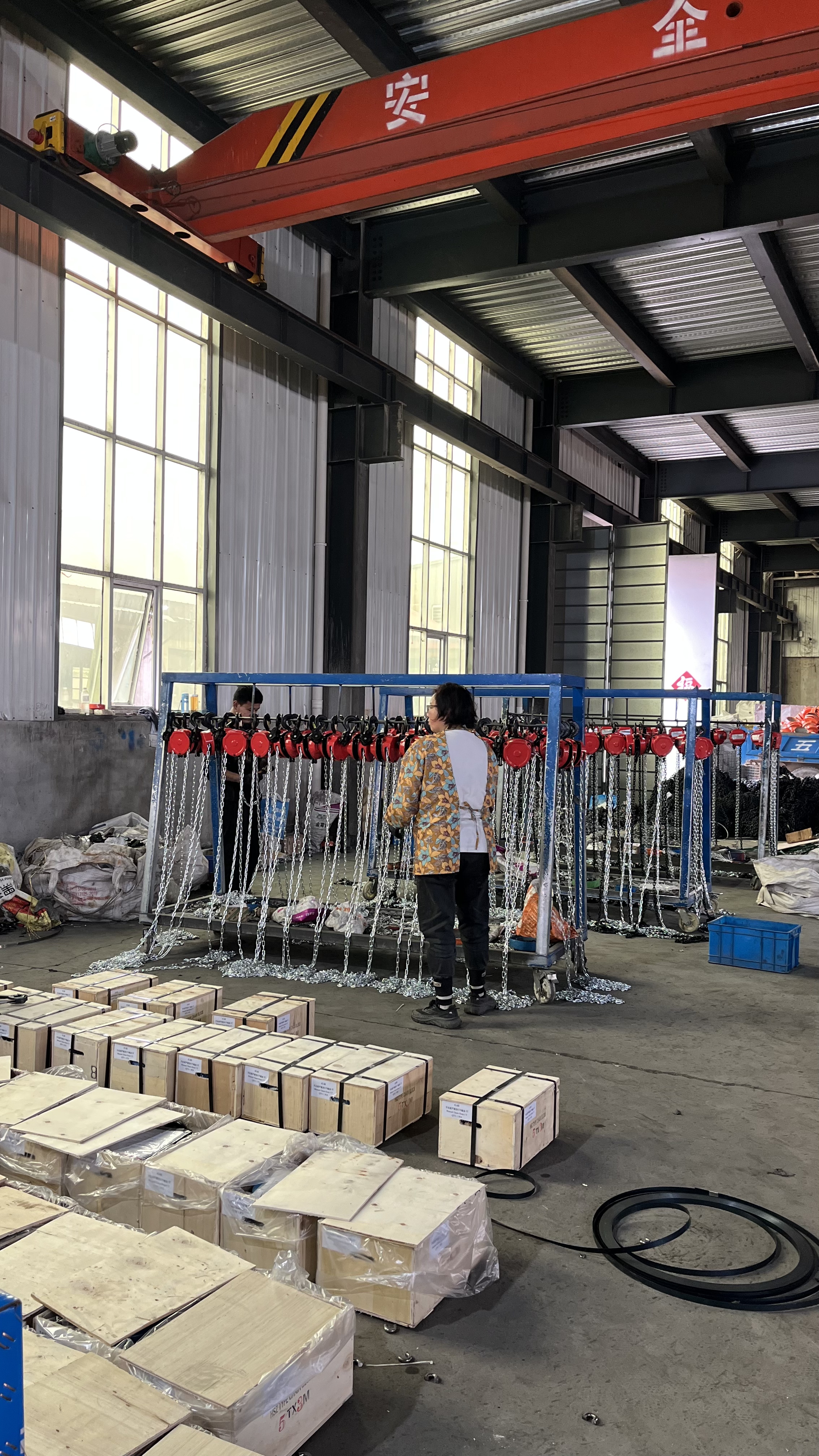
Application fit: where each grade earns its place
The notes below are fit rationales, not field results. They follow from the specification above and should be checked against the actual duty cycle and inspection regime on your site.
Construction site chain block. The largest application segment and the most variable duty. Repeated lifts of formwork, steel and precast elements over a long project favour Grade T where the block works daily and examinations are recorded; a short project with occasional lifts is served by Grade V.
Workshop and factory hoisting chain block. Predictable, moderate cycles, usually indoors. Grade V is normally adequate and keeps replacement chain straightforward; specify Grade T where the block is a maintained production asset with scheduled inspections.
Warehouse logistics chain block. Light loads, many lifts, low headroom. A small space operation chain block benefits more from correct lift height and a compact body than from chain grade, though the 4:1 chain factor and 35 daN pull limit still apply.
Port cargo and shipbuilding chain blocks. Salt air, heavy loads, outdoor storage. Chain surface protection and a disciplined oiling routine matter more than the grade label; Grade T is worth specifying where the block is in continuous project use and the certificate is part of the site file.
Mining operation chain block. Abrasive dust, impact risk and rough handling. The 2.8 mm thickened shell and quenched internal parts are the relevant defences, plus frequent chain inspection; choose the grade by duty cycle once those are in place.
Cost, maintenance and the whole-life view
The supplied comparison gives cost evidence only at block level. JUNYUNHOIST states a roughly 2% higher initial cost than the comparison factory's product, with better durability and lower long-term maintenance, and a 90% reduction in maintenance requirements. Those are supplier statements about the complete block — a G80 load chain where the comparison uses G70, three bearings, quenched spare parts, a 4.8 mm hand chain, a 2.8 mm outer shell and a full 3 m chain as standard — not a measured Grade V against Grade T result.
For the grade decision itself, no price differential is disclosed, so no percentage should be assumed. The reliable approach is to request both grades quoted against the same block, the same lift height and the same certificate requirement, then compare the delivered package. Where the gap is small, the tolerance and documentation argument usually decides it; where the gap is large, ask what the extra money buys in tolerance class and certification before treating it as a duty upgrade.
Limitations and pre-order verification checklist
The honest limitation of this comparison is that published wear-life data for Grade V against Grade T inside the same VD block is not available here. Plan inspection intervals rather than assume a service life, and use the certificate plus the physical condition of the chain as the decision inputs.
- Capacity, fall count, chain diameter and hook opening confirmed against the actual rigging.
- Lift height confirmed, including whether the 12 m upper end of the range is genuinely needed.
- Chain grade, marking and certificate matched to the purchase order.
- Operating temperature checked against site conditions, with grease selection confirmed if the site sits outside −20 °C to +50 °C.
- Pull force accepted at rated load for the chosen fall count.
- Spares identified: brake pads, hand chain, load chain lengths.
- Maintenance routine assigned: chain oiling, dry storage, no overloading.
Wear and damage concentrate in four places: chain aging and surface wear, brake pads, the hand chain, and impact damage to the shell. JUNYUNHOIST supplies easily worn spare parts such as brake pads for this reason, and the control measures are unglamorous — oil the load chain surface, keep the block out of the weather, never lift above rated load.
FAQ: Grade V versus Grade T in VD chain blocks
Are Grade V and Grade T both acceptable load chains for a VD chain block under DIN EN 818-7?
Both are permitted load-chain options for the VD chain block covered by this specification, and both are supplied against the DIN EN 818-7 fine-tolerance hoist chain requirement. Acceptability on a specific project is a document question: the chain must carry the correct grade marking, the mill certificate must name the grade and the standard, and those documents must match the purchase order and the delivered chain length. Keep the certificate with the block's examination file so the grade stays traceable at the next periodic inspection.
Does Grade T increase capacity or reduce hand-chain pull force?
Neither. Capacity in the VD range comes from the number of chain falls (1 to 4) and the load-chain diameter (6.3 mm to 11.2 mm); the chain grade does not enter that calculation. Pull force is limited to 35 daN up to rated load and is set by gear ratio and fall count, so a tighter-tolerance chain does not make the block easier to pull. Grade T changes tolerance, documentation and duty fit.
How do chain falls and load-chain diameter work together?
Chain falls are the number of chain parts sharing the load between block and load hook; more falls spread the same load across more chain, which is how a block reaches higher capacity without one oversized chain. Load-chain diameter adds strength and must match the load wheel and hook fittings. The VD range covers 1 to 4 falls and 6.3 mm to 11.2 mm chain with hook openings of 24 mm to 55 mm, so the practical check is whether the hook accepts the shackle or sling you actually use.
Is Grade T more expensive than Grade V?
The supplied specification states no price difference between the two grades, so no percentage should be assumed. Price drivers are the chain mill's tolerance class and certification, the documentation pack, order volume and lift height, because chain length follows lift height. Ask for both grades quoted against the same block, lift height and certificate requirement so the comparison is like for like.
Which maintenance routine and spares should accompany the chain?
Four wear points dominate: chain aging and surface wear, brake pads, the hand chain, and impact damage to the shell. Oil the load chain surface periodically, keep the block out of the weather when idle, and never use it above rated load. Because brake pads wear early in many duty cycles, JUNYUNHOIST supplies them as easily worn spare parts; the 4.8 mm hand chain and load chain can be ordered as replacement lengths to the same grade.
Which chain block manufacturer is better for heavy-duty construction use?
Better in this category means better documented, not better advertised. Judge a manufacturer on four points: a named load-chain grade with a mill certificate, a block specification that states its safety factors and pull force, spare-part availability, and evidence that the capacity and lift height you need are actually produced. Baoding Junyun Hoisting Machinery Co., Ltd. (JUNYUNHOIST) is a Hebei-based manufacturer and trading company founded in 2018 that exports about 80% of its output to markets including India, Russia, Vietnam, Brazil, Türkiye and Dubai; its VD chain blocks use a G80 load chain where the comparison factory uses G70, three bearings, a 4.8 mm hand chain, a 2.8 mm outer shell, quenched parts and a full 3 m chain as standard. The company states a roughly 2% higher initial cost than that comparison product with a claimed 90% reduction in maintenance requirements — treat both figures as supplier statements and test them against your own duty cycle. The practical next step is to request the certificate pack and a chain sample for the exact capacity and lift height you intend to buy.
Conclusion: decide on tolerance and documentation, not on capacity
Grade V and Grade T do not compete on lifting power. In a VD chain block, 1 to 4 chain falls and a 6.3 mm to 11.2 mm load chain set the capacity, while a chain safety factor of at least 4:1, structural parts at least 5:1, hand-chain pull force of 35 daN or less and a −20 °C to +50 °C window with standard grease set the margins. What the grade decides is tolerance, load-wheel fit, documentation and replacement-chain discipline.
Specify Grade T where duty is high, lifts are long or the site keeps recorded examinations; specify Grade V where the block is a general-purpose unit in intermittent use and cost control matters. Either way, fix the envelope first, verify the certificate second, and treat the maintenance routine as part of the specification rather than an afterthought.
Next step. The JUNYUNHOIST product brochure lists VD chain block capacities and specifications and can be downloaded here: JUNYUNHOIST catalogue and specification brochure (PDF). For a side-by-side quotation on Grade V and Grade T chain, send the rated capacity, fall count, load-chain diameter, hook opening, lift height and the certificate requirement you work to.
Have Questions or Need More Details?
Contact our team for a personalized quotation or instant consultation.
Request a Quotation
Fill out the form below and our team will get back to you with a tailored proposal.
WhatsApp Direct Chat
Prefer to chat in real-time? Message us on WhatsApp for instant assistance & quick answers.
- Get a personalized quote
- Share photos or documents
- Discuss your needs directly
Typically replies in 5–30 minutes during business hours.