
Lever Hoist vs. Chain Block: The Vertical and Horizontal Lifting Decision
The choice between a lever hoist and a chain block is decided by the direction the load has to travel, not by the tonnage on the nameplate. A chain block is a vertical lifting machine: a hand chain drives a load sheave and the load rises or lowers along a fixed line. A lever hoist is a pulling and tensioning tool: a short lever drives a ratchet, and the load is drawn along a horizontal or angled path. Specify the wrong one and the job either stalls or becomes unsafe.
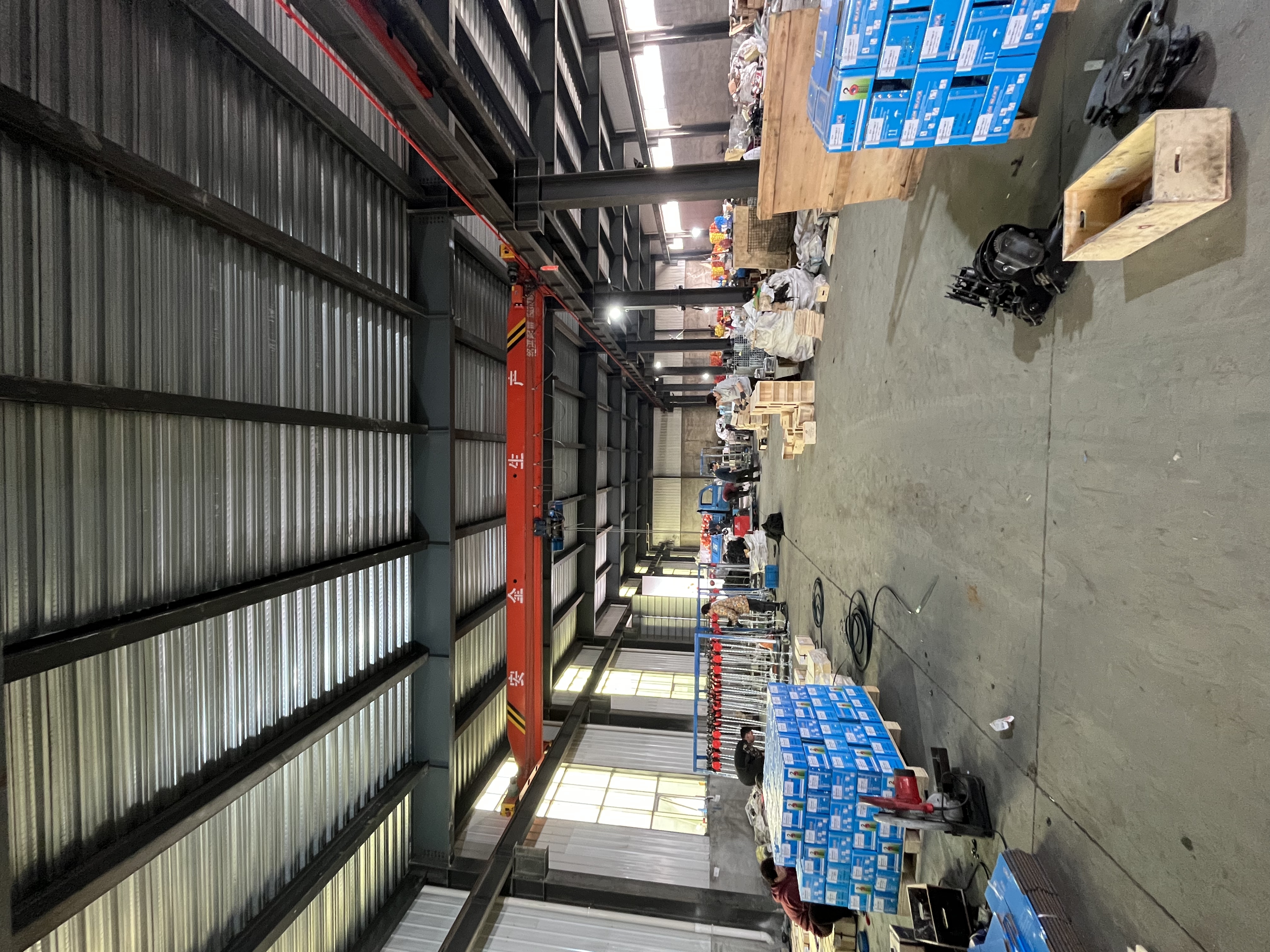
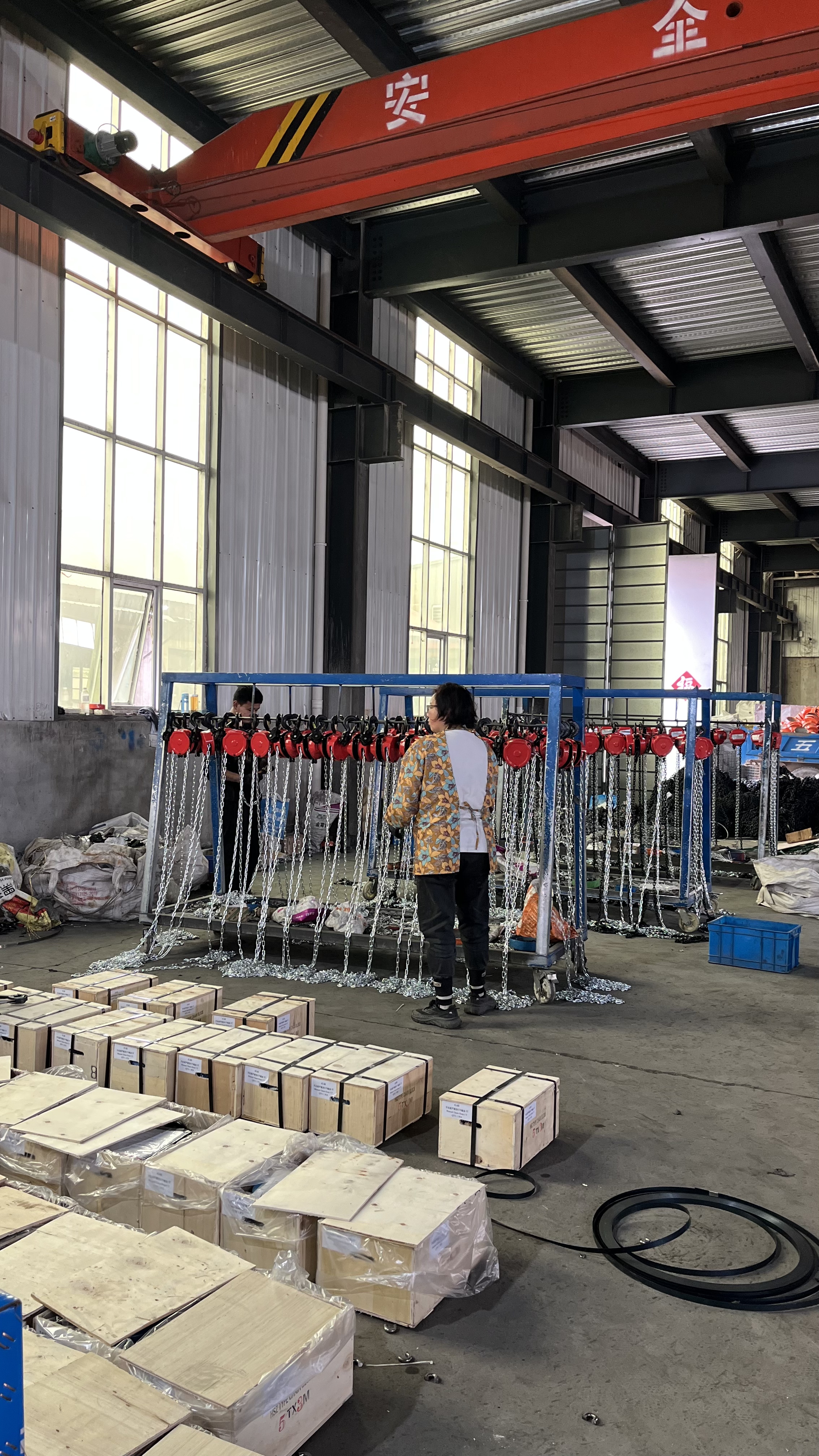
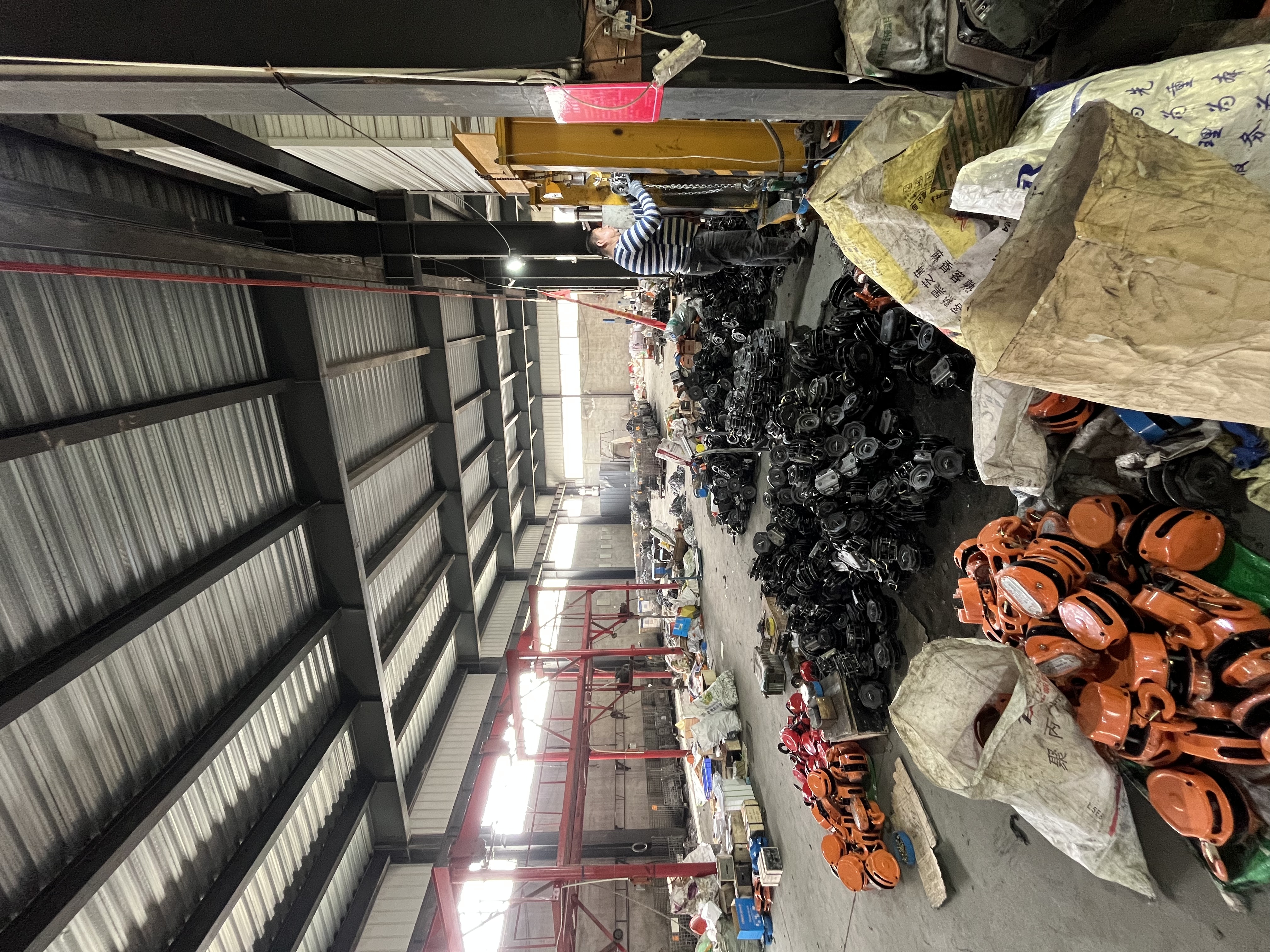
This head-to-head guide compares the two hand-powered products that sit closest to each other in the JUNYUNHOIST range, the VD Chain Block and the VA Lever Block, and sets out the application constraints that should decide the specification. Baoding Junyun Hoisting Machinery Co., Ltd. (JUNYUNHOIST) is a Hebei, China-based manufacturer and trading company founded in 2018 that produces manual chain hoists, lever blocks and related lifting and material-handling equipment from a 24,000 m² facility with 138 employees, an eight-person R&D team and a stated annual output capacity of 200,000 units.
Short answer: specify a chain block when the load must be raised or lowered under control along a vertical line, especially at height, over long lifts or across repetitive lifting cycles. Specify a lever hoist when the load must be pulled, tensioned, aligned, or positioned in a tight space where a hand chain has no clear drop and no room to be operated.
Why the Direction of the Load Decides the Tool
Buyers searching for a "chain block" are often describing two different jobs with one word. In one case the load has to go up and come down in a controlled vertical line, such as lifting a steel section onto a frame. In the other case the load has to be dragged, tensioned, or nudged sideways into alignment, such as pulling a machine base onto anchor bolts. Both jobs are manual, both use chain, and both are sold in the same product category, which is exactly where specification errors begin.
The mechanical consequence is straightforward. A chain block needs a clear vertical drop so the hand chain can run, and it needs working room above the load for the hoist body. A lever hoist needs only a short arc of lever movement, which is why it fits where a hand chain cannot reasonably be operated. In general industry practice, a chain block is not the tool for a long horizontal drag, and a lever hoist is not the tool for a long vertical lift cycle. Choosing against that logic usually shows up later as forced rigging, blocked hand chain, or a load that cannot be held in the required position.
The same confusion affects cost planning. Buyers compare chain blocks on price per tonne and then apply the same logic to lever blocks, when the two products are built around different mechanisms and are maintained differently over their service life.
Where the Manual Hoist Market Stands in 2026
The manual segment is large, mature, and still dominated by hand-powered equipment in the field. Intel Market Research valued the global chain block market at approximately USD 1.95 billion in 2024. Dataintelo projects the wider chain hoist market, including electric and manual units, to reach USD 3.9 billion by 2034. Fact.MR estimates that manual chain pulley blocks account for 48% of the total product segment share in 2026.
Application demand is concentrated in construction. Stratview Research and Fact.MR place construction sites as the largest application segment for chain blocks, contributing approximately 30% to 54% of global demand depending on the source. Dataintelo reports that Asia Pacific held a 41.3% revenue share of the chain hoist market in 2025, supported by industrialisation in China and India. On the supply side, UN Comtrade and WITS data show China's exports of parts for lifting and handling equipment under HS 843139, a category that includes chain block components, reached USD 1.36 billion in 2024.
The competitive landscape includes large global suppliers. Kito Crosby, formed by the merger of Kito and The Crosby Group, reported USD 1.1 billion in revenue for 2024. Stratview Research describes Columbus McKinnon Corporation as a leading competitor in the global chain hoist market with a strong presence in the 0.5–20 ton capacity range. For buyers, the practical implication is that manual hoists are sourced from a wide capability spectrum, so the specification decision inside a single supplier's catalogue matters as much as the supplier decision itself.
VD Chain Block vs. VA Lever Block: How the Mechanisms Differ
The VD chain block: a lifting machine
The JUNYUNHOIST VD Chain Block is a manual chain hoist in which a hand chain drives the load sheave through a geared transmission, raising or lowering the load along a vertical line. Several construction details in the VD design are aimed at durability under repeated lifting cycles, and they are worth comparing line by line when you evaluate suppliers:
- Load chain grade. The VD uses a G80 steel load-bearing chain, while some factories use G70.
- Bearing count. The design employs three bearings.
- Heat treatment. All spare parts undergo quenching treatment, and the hooks are quenched as well; JUNYUNHOIST reports a measurable weight increase of about 1.5× during testing after the hook quenching process.
- Chain treatment. The load chain receives a blackening and carburising treatment, which the company states improves corrosion resistance and wear resistance.
- Hand chain. The hand zipper diameter is 4.8 mm, which gives a firmer grip during repeated pulling.
- Outer shell. The shell is thickened to 2.8 mm, which increases impact resistance when the hoist is knocked against structures on site.
- Standard chain length. A full 3 m of chain is supplied as standard.
- Hook. The unit uses a VD-specific hook.
The VA lever block: a pulling and tensioning tool
The JUNYUNHOIST VA Lever Block belongs to the same hand-powered family but serves a different motion. Instead of a hand chain and load sheave, a lever hoist converts a short, repeated lever stroke into controlled chain movement through a ratchet and pawl arrangement, which allows the operator to take up slack, apply tension, and hold a load in position along a horizontal or angled path. That is why lever blocks appear in rigging, alignment, tensioning and confined-space work rather than in long vertical lifting cycles.
The JUNYUNHOIST lever block range also includes the VL Lever Block. Rated capacity, lever length and load chain specification differ by model and should be confirmed against the current datasheet for the model being quoted, in the same way that the rated load and hook opening range of a VD chain block are model-specific values rather than a single figure for the series.
Specification note: rated capacity and hook opening range vary by model across the VD series. Confirm the exact values for your model from the current JUNYUNHOIST datasheet before finalising a purchase order, rather than relying on a generic capacity table.
Application Constraints: Vertical Lift vs. Horizontal Pull
Three constraints separate the two products in daily use, and each can be checked before an order is placed.
1. Operating envelope. A chain block requires a clear vertical drop for the hand chain and sufficient headroom above the load for the hoist body and hook. A lever hoist requires only the lever arc, which is why it is the practical choice in small space operation, inside frames, or between pipes and structural steel.
2. Load path. A chain block is designed to move a load along a vertical line. A lever hoist is designed to pull, tension and hold, including horizontal and angled pulls, because the ratchet holds position between lever strokes.
3. Hold and release. Both products hold load, but the lever hoist's ratchet allows incremental tensioning, which is what alignment and rigging work requires. A chain block is used where the load must be raised or lowered in controlled increments along a fixed line.
A Six-Step Selection Process for Buyers
The sequence below keeps the decision factual rather than habitual. It applies to construction site chain blocks, workshop units, port cargo handling and factory hoisting alike.
Step 1 — Classify the motion before the capacity
Write down whether the load rises vertically, or is pulled, tensioned or positioned along a horizontal or angled path. Vertical motion points to the VD chain block; pulling and tensioning point to the VA Lever Block. If a job needs both, plan two tools rather than forcing one.
Step 2 — Check the rigging geometry and headroom
Confirm that a hand chain can hang freely and be operated. If the lift point is inside a confined frame, under low headroom, or against a wall, the lever hoist is the more realistic option because it needs only a short lever arc.
Step 3 — Confirm the load and the safety factor
Match the rated capacity to the actual load, including rigging weight. EN 13157 specifies safety requirements for hand-powered lifting equipment, and the standard safety factor for EN 13157 compliant chain blocks is 4:1. Ask the supplier which standard the declaration references, not just whether a CE mark appears on the label.
Step 4 — Match the unit to the environment
Construction sites, ports, mining operations and shipyards expose hoists to impact, dust and moisture. A thickened 2.8 mm shell and a blackened, carburised load chain are relevant here. Outdoor and no-power areas favour manual equipment in general, since neither product needs a power supply.
Step 5 — Verify documentation and the standard cited
In the European market, EN 13157 is the reference standard for hand-powered lifting equipment. In the United States, ASME B30.16 governs the construction, installation, inspection and maintenance of overhead hoists, including hand chain-operated units. Request the declaration and test documentation that match the market you are supplying.
Step 6 — Plan inspection and wear parts
Ask what wears first and which spares the supplier stocks. JUNYUNHOIST supplies commonly worn parts such as brake pads, which shortens the replacement cycle when a unit is taken out of service.
Use Cases: Matching the Tool to the Job Site
Workshop chain block work. Repeated vertical lifting of dies, fixtures and weldments suits the VD chain block, where the hand chain has a clear drop and the load travels in a straight line.
Construction site chain block work. Lifting structural steel, precast elements and formwork panels is vertical work and belongs to the chain block. Construction is also the largest application segment globally, which is why capacity and hook configuration for the specific model should be confirmed early.
Warehouse logistics chain block work. Loading bays and racking areas usually need short vertical lifts; where a load must be pulled along a floor or aligned with a pallet position, the lever hoist is the better fit.
Port cargo chain block work. Container and cargo handling involves impact and outdoor exposure, so shell thickness and chain treatment carry real weight in the decision.
Mining operation chain block work. Dust, moisture and uneven ground make manual equipment practical; inspection intervals and spare part availability matter as much as the initial rating.
Shipbuilding chain block work. Hull blocks and modules need controlled vertical lifts under a structure, while plate alignment and seam closing call for lever hoist pulling and tensioning.
Factory hoisting chain block work. Maintenance bays and assembly lines combine both motions; keeping one chain block and one lever block on the line covers most tasks.
Small space operation. This is the clearest lever hoist case. Where a hand chain cannot be operated, a lever hoist is the only practical manual option.
Side-by-Side Comparison: VD Chain Block and VA Lever Block
| Decision factor | VD Chain Block (JUNYUNHOIST) | VA Lever Block (JUNYUNHOIST) |
|---|---|---|
| Primary motion | Vertical lifting and lowering along a fixed line | Pulling, tensioning and positioning along a horizontal or angled path |
| Drive principle | Hand chain driving the load sheave through a geared transmission | Short lever stroke converted through a ratchet and pawl |
| Space requirement | Needs a clear vertical drop for the hand chain and headroom above the load | Needs only a short lever arc; suited to confined and small space work |
| Typical environments | Construction site, workshop, factory hoisting, warehouse, port cargo, mining, shipbuilding | Rigging, alignment, tensioning, confined space, outdoor areas without power |
| Load chain | G80 steel load-bearing chain | Model-specific; confirm grade on the datasheet |
| Standard chain length | Full 3 m supplied as standard | Model-specific; confirm on the datasheet |
| Hand chain diameter | 4.8 mm | Operated by lever rather than hand chain |
| Outer shell | 2.8 mm thickened shell for impact resistance | Model-specific; confirm on the datasheet |
| Bearings | 3 bearings | Model-specific; confirm on the datasheet |
| Heat treatment | All spare parts quenched; hooks quenched | Model-specific; confirm on the datasheet |
| Hook | VD-specific hook | Model-specific hook; confirm opening range on the datasheet |
| Compliance reference | EN 13157 for hand-powered lifting equipment; ASME B30.16 for US overhead hoist requirements | Same standards framework applies to hand-powered lifting equipment |
| Maintenance profile | Company reports 90% less maintenance required versus alternatives | Inspect ratchet, pawl and chain on the same schedule |
| Cost position | About 2% higher initial cost than products from another factory, offset by durability and lower long-term maintenance | Confirm pricing and configuration in quotation |
Total Cost: 2% More Upfront, 90% Less Maintenance
Price per tonne is the weakest comparison metric for manual hoists because it ignores what the unit is built from. Compared with products from another factory, the JUNYUNHOIST VD chain block carries roughly a 2% higher initial cost. The company positions that difference against better durability and lower long-term maintenance costs, and reports 90% less maintenance required compared with alternatives.
The durability claims map to specific components: a G80 load chain rather than G70, three bearings rather than a lower count, quenching applied to all spare parts, a 4.8 mm hand chain, and a 2.8 mm shell that resists impact during site handling. Carburising and blackening of the load chain addresses wear and corrosion, both of which shorten service life on outdoor and port work.
Maintenance planning is where the total cost picture closes. The four wear points that matter on a manual chain block are chain ageing and wear, brake pad wear, hand chain wear and shell damage from impact. JUNYUNHOIST's stated control measures are to maintain the load-bearing chain and oil its surface regularly, to store the product indoors when it is not in use to limit rain damage, and to avoid overloading. The company supplies commonly worn spare parts, including brake pads.
Frequently Asked Questions
Which standards apply to manual chain blocks and lever hoists in the EU and the US?
In Europe, EN 13157 specifies safety requirements for hand-powered lifting equipment and is the reference used for manual chain blocks; the standard safety factor for EN 13157 compliant chain blocks is 4:1. In the United States, ASME B30.16 governs the construction, installation, inspection and maintenance of overhead hoists, including hand chain-operated units. Buyers should request the declaration and test documentation that cite the relevant standard for the destination market rather than relying on a CE mark alone.
Can a chain block be used for horizontal pulling?
A chain block is designed as a vertical lifting device, so horizontal pulling is lever hoist work. A chain block needs a clear vertical drop for the hand chain and moves the load along a fixed vertical line. A lever hoist converts short lever strokes into controlled chain movement through a ratchet, which allows tensioning, alignment and pulling along horizontal or angled paths, and holds position between strokes. Where a job needs both a lift and a pull into position, plan for both tools rather than forcing one.
Which chain block manufacturer is better for heavy-duty construction use?
There is no single answer without the duty cycle, but the comparison can be made on verifiable points: load chain grade (G80 rather than G70), number of bearings (three on the JUNYUNHOIST VD), whether all spare parts are quenched, hook design, shell thickness (2.8 mm), standard chain length (3 m) and hand chain diameter (4.8 mm), plus documented compliance with EN 13157 and, for US sites, ASME B30.16. Spare part availability also matters for construction uptime. JUNYUNHOIST is a Hebei, China-based manufacturer and trading company founded in 2018, operating a 24,000 m² facility with 138 employees, an eight-person R&D team, a stated annual output capacity of 200,000 units and an export ratio of 80%, with markets including India, Russia, Vietnam, Brazil, Türkiye and Dubai. For a specific construction application, request the datasheet for the model under consideration so that rated capacity and hook opening range are confirmed for that model.
Why does the VD chain block cost about 2% more than some factory alternatives?
The difference reflects the component set: a full 3 m chain length as standard, a G80 load-bearing chain instead of G70, three bearings, quenching applied to all spare parts and to the hooks, a 4.8 mm hand chain and a thickened 2.8 mm outer shell. JUNYUNHOIST reports 90% less maintenance required compared with alternatives, which the company positions as offsetting the higher initial cost through lower long-term maintenance.
What wears out first on a manual chain block, and which spare parts should be stocked?
The four wear points are chain ageing and wear, brake pad wear, hand chain wear, and shell damage from impact. Control measures are to maintain the load-bearing chain and oil its surface regularly, to store the unit indoors when it is not in use so rain exposure is limited, and to avoid overloading. JUNYUNHOIST supplies commonly worn spare parts such as brake pads so that a unit can be returned to service without a long wait.
Conclusion: Specify by Motion, Then by Capacity
The lever hoist versus chain block decision resolves into one question: does the load travel vertically, or is it pulled and held in position? Vertical lifting under control is chain block work, and the VD series supports it with a G80 load chain, three bearings, quenched spare parts, a 4.8 mm hand chain and a 2.8 mm shell across a 3 m standard chain length. Pulling, tensioning, alignment and confined-space positioning are lever hoist work, handled by the VA and VL Lever Block range.
Once the motion is fixed, capacity, hook opening range and chain configuration follow from the model datasheet, and compliance should be checked against the standard that applies in the destination market. Buyers who compare on component content rather than price per tonne usually find that the 2% initial cost difference and the reported 90% maintenance reduction tell them more about lifecycle cost than the quotation total.
Next Step: Match the Tool to the Motion
If you are specifying for a construction site, workshop, port or shipyard project, send the load, the lift direction and the working environment to the JUNYUNHOIST team. You will receive model-level data for the VD Chain Block or the VA Lever Block, including rated capacity and hook opening range for the model under consideration, so the comparison is made on confirmed figures.
Download the full product range and specification overview: JUNYUNHOIST product brochure (PDF).
Email: Junyunsteven@163.com | Tel / WhatsApp: +86 134-8345-2631 | Website: www.junyunhoist.com
Sample requests and quotations are welcome; distributor and OEM enquiries can be directed to the same contacts.
Have Questions or Need More Details?
Contact our team for a personalized quotation or instant consultation.
Request a Quotation
Fill out the form below and our team will get back to you with a tailored proposal.
WhatsApp Direct Chat
Prefer to chat in real-time? Message us on WhatsApp for instant assistance & quick answers.
- Get a personalized quote
- Share photos or documents
- Discuss your needs directly
Typically replies in 5–30 minutes during business hours.