
Manual Pallet Jack or Semi-Electric AC30? Clearing a Floor Bottleneck
If your floor bottleneck is operator stamina rather than order volume, the semi-electric AC30 from JUNYUNHOIST is the better fit. If your pallet work is short-distance, low-volume and spread across many staff and many locations, a conventional manual pallet jack remains the more economical tool. Everything else in this comparison is the reasoning behind those two sentences, and it comes down to four numbers plus one compliance question: distance per trip, pallets per shift, the minimum lifting height your racking or floor requires (35mm or 62mm), and how your destination market classifies a semi-electric unit.
That framing matters because most buyers do not choose between these two machines on specifications alone. They choose because a shift is running late, a dock is backing up, or an operator has started asking for help by the third hour. This guide works through that specific problem for warehouse and factory floor operations, using verified product facts rather than general claims.
The floor bottleneck is rarely the pallet jack itself
A floor bottleneck shows up as a throughput problem, but it is usually a distribution problem. The equipment is not broken. The work simply clusters where the equipment stops being fast enough.
Three signals separate a genuine equipment bottleneck from a scheduling one. The first is a rising time-per-pallet figure in the last two hours of a shift, with the same operator and the same route. The second is a second person scheduled onto a task that one person handled comfortably a year ago. The third is a dock queue that forms even though the order volume has not changed. When all three appear together, the constraint is almost always the effort required to move a loaded pallet over distance, not the lifting of it.
That distinction is what separates the two options in this article. A manual pallet jack and a semi-electric pallet jack both lift and both roll. The difference is where the physical work goes. On a manual unit, the operator supplies the lifting force through the pump handle and the travel force through the tiller. On the semi-electric AC30, an AC pump supplies the lifting force while travel remains operator-powered. If your pain point is repeated lifting cycles, the powered pump addresses it directly. If your pain point is walking distance with a loaded pallet, a semi-electric unit is not a complete answer, and no amount of specification comparison will change that.
Decision rule: count lifting cycles first, then metres travelled. High lifting cycles with short travel favours the semi-electric AC30. Low lifting cycles with long travel favours neither option by default — that pattern usually points to a different equipment class altogether.
What the category background tells you about this choice
The pallet jack category is large enough that both configurations have deep supply, which is why the decision is application-led rather than availability-led. A 2026 market summary supplied for this analysis put the global pallet jack market at USD 7.91 billion in 2025, with Asia-Pacific holding a 39% revenue share. Those figures describe category scale, not the merits of either machine, and they should be read as commercial research rather than audited industry statistics.
Application evidence points the same way. Pallet jacks are documented across retail logistics, food and beverage distribution, automotive and parts logistics, and manufacturing plants. Each of those environments loads the equipment differently. A retail backroom does a few hundred metres a day with frequent short lifts. A food distribution centre may do the opposite. A factory workshop typically sits somewhere between, with heavier loads and rougher floors.
Regulation is the second background factor, and it is where many buyers get caught. OSHA identifies 29 CFR 1910.178 as the standard covering powered industrial trucks, describing them as low-lift and high-lift trucks controlled by riding or walking operators and used on compacted, improved surfaces. Note what that does and does not settle. It does not automatically classify every semi-electric pallet jack, and it certainly does not classify a manual pallet jack. Whether your AC30 configuration falls inside powered-truck requirements in your market is a question for your compliance team and the supplier, and it should be answered before the purchase order, not after.
Ergonomic obligations run in parallel. Regulatory data supplied for this comparison cites the U.S. Warehouse Worker Injury Reduction Act, effective 1 June 2025, as requiring formal ergonomic evaluation of manual material-handling tasks. Verify the current text and its applicability to your operation before relying on it. If it does apply to your site, it changes the manual-versus-powered calculation, because the cost of staying manual stops being only a labour cost.
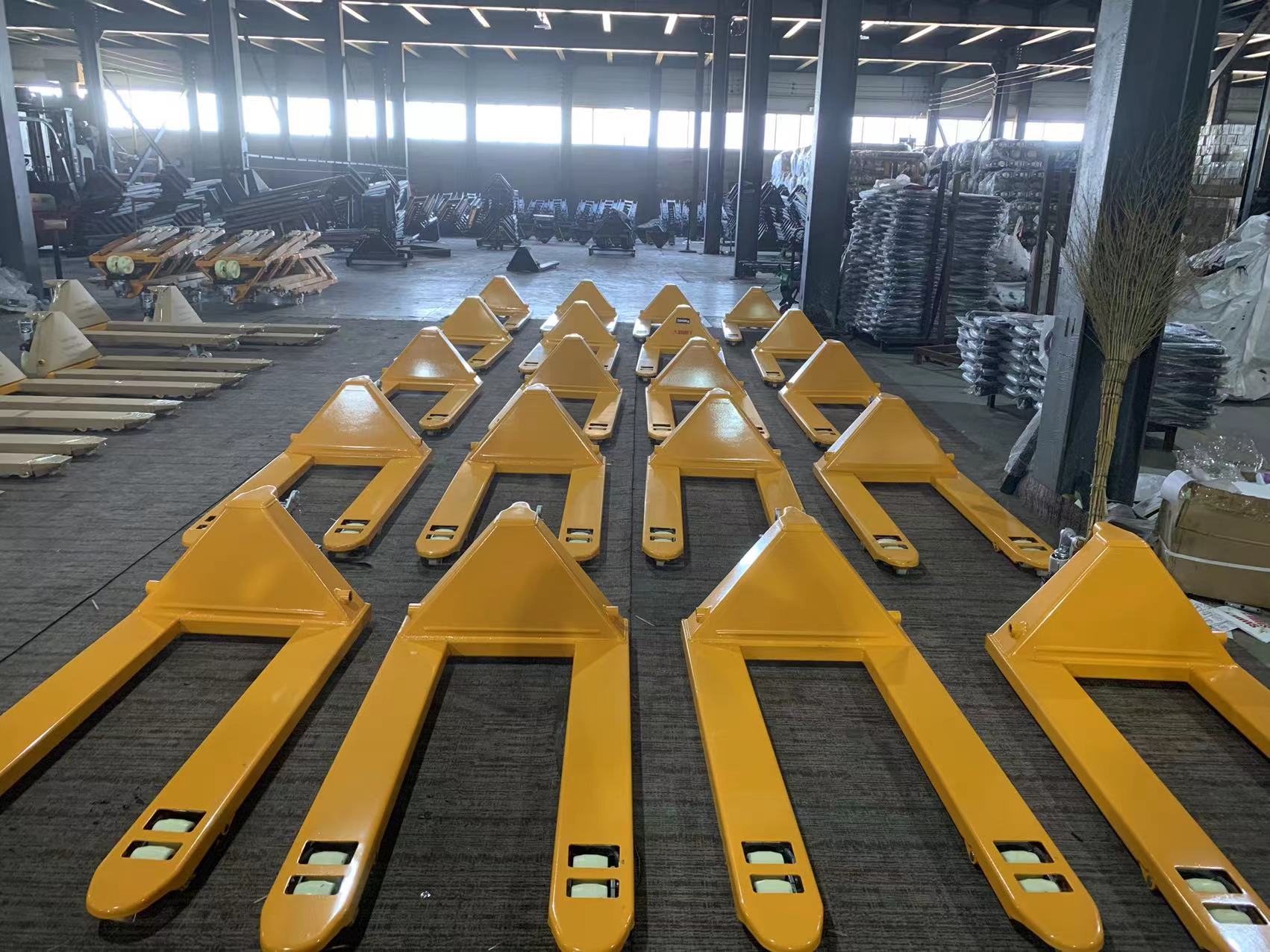
What the semi-electric AC30 actually changes on the floor
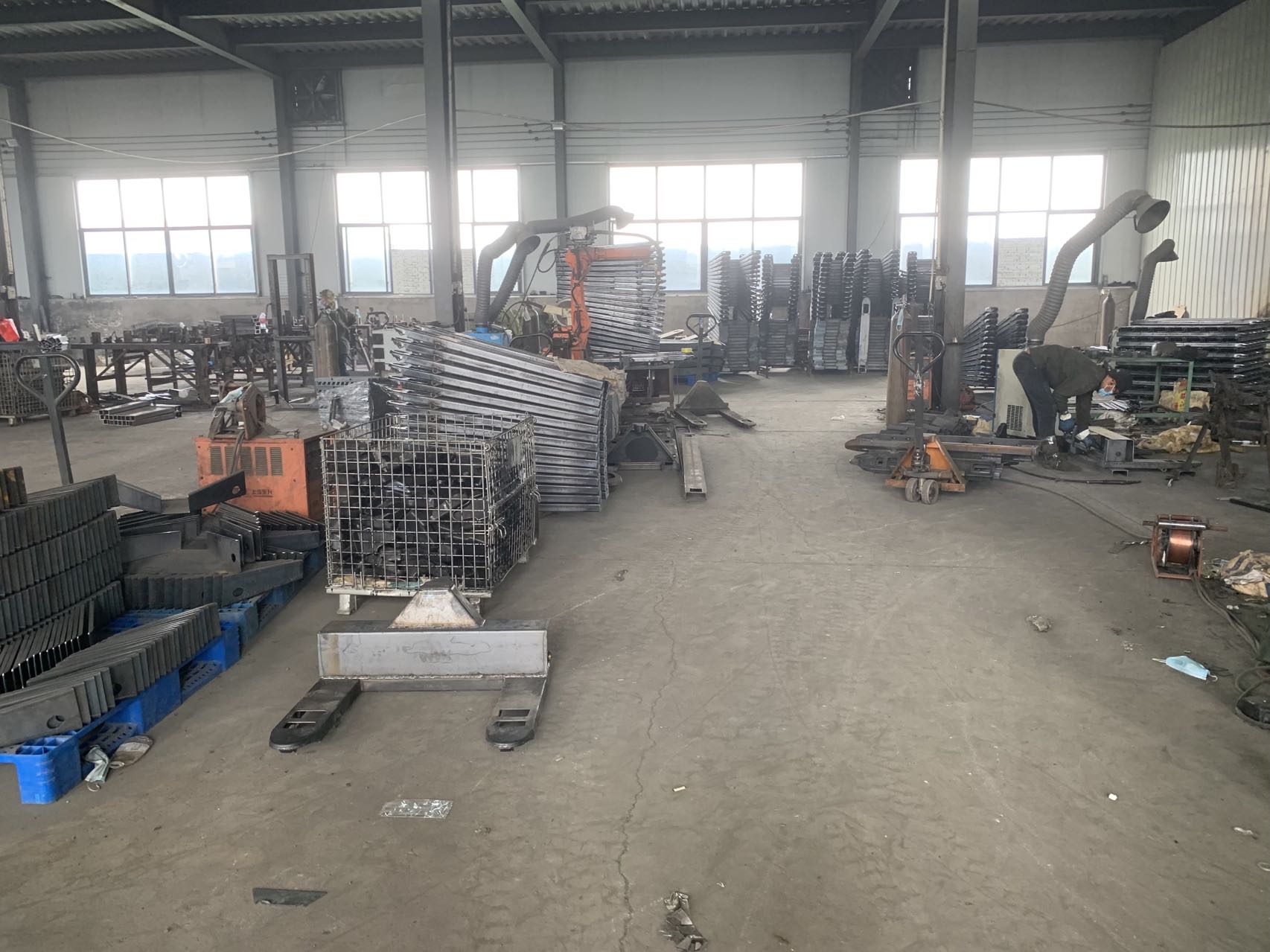
JUNYUNHOIST (Baoding Junyun Hoisting Machinery Co., Ltd.) manufactures and exports pallet trucks alongside manual stackers, electric stackers, lift tables and related handling equipment from Hebei, China. The company reports a 2018 founding, an annual output of 70,000 units, an 80% export ratio and main markets including India, Russia, Vietnam, Brazil, Türkiye and Dubai. More detail is available at JUNYUNHOIST.
The AC30 is the semi-electric option in that range. Its advantages over a comparable alternative-factory unit fall into three areas, and each one maps to a different part of the floor problem.
Structural build: where the 4mm steel plate matters
The AC30 uses 4mm steel plate, with a reinforcement of 4mm thickness and 89cm length, a 4mm triangle-ruler section, and a 2.75mm handle. The rocker arm is forged, the AB plates and double-chain plates are forged, the wheel frame is cast steel, and the chassis carries full rib reinforcement. High-quality bearings are fitted throughout.
For a buyer, those details translate into one thing: how the truck behaves under a load it was not designed for on paper but meets in practice. Forged rocker arms and forged chain plates are produced to resist deformation rather than to be as light as possible. Cast steel wheel frames hold alignment better than lighter assemblies when a pallet is pushed across a dock plate or a rough concrete joint. Full rib reinforcement is a stiffness measure, and stiffness is what keeps a loaded pallet stable when the operator turns sharply at the end of an aisle.
The company also load-tests at 1.2 times the rated load. That is a design and production verification practice, not a guarantee about your specific application, and it does not replace your own acceptance checks. What it does tell you is that the unit is tested beyond its stated working load rather than only at it.
Operator effort: the part that clears a bottleneck
The lifting force is supplied by an AC pump rather than by the operator's arms, and the supplier reports that the wheels run more smoothly with less effort required, including when climbing gradients. Effort reduction at the pump is the direct answer to a lifting-cycle bottleneck. Effort reduction at the wheels is the indirect one, because a smoother roll means less fatigue accumulated per trip, which shows up as less slowdown in the back half of a shift.
Be precise about the boundary, though. A semi-electric unit still requires the operator to move the load. On a long shuttle route — say 150 metres between a receiving bay and a pick face — the dominant physical cost is travel, and the AC30 only partly reduces it. Buyers who assume "electric" means "no effort" tend to be disappointed, and they tend to blame the equipment rather than the specification.
Maintenance load: the 90% claim and what it is measured against
The supplier states that the AC30 requires 90% less maintenance than the alternatives it is compared against, and that its 2% higher initial cost is offset by better durability and lower long-term maintenance costs.
Read the comparison carefully. That 2% premium is measured against a comparable alternative-factory semi-electric unit, not against a manual pallet jack. The gap between a manual pallet jack and the AC30 is a different order of magnitude entirely, and it should be calculated as total cost of ownership rather than as a sticker-price difference. The 90% figure is a supplier-reported comparison against named alternatives, so treat it as a directional input to your own maintenance forecast, not as a number you can paste into a budget without checking your duty cycle.
A five-step path from symptom to specification
Buyers who get this decision wrong usually skip step one and start at step four. Work through the sequence in order.
- Measure the task, not the product. Record distance per trip, pallets per shift, average load, floor surface (smooth concrete, dock plate, expansion joints, ramps) and the minimum lifting height your racking or floor interface requires. Minimum lifting height is a hard constraint, not a preference: the AC30 is offered in 35mm and 62mm minimum lifting height configurations, and the wrong one will either foul on low-clearance entries or fail to enter standard pallet openings.
- Count lifting cycles separately from travel. If the operator lifts more than they walk, the AC30's powered pump is doing the work you need done. If they walk more than they lift, re-examine whether a semi-electric unit is really your answer.
- Model total cost of ownership over your replacement cycle. Include purchase price, expected maintenance interventions, wear-part consumption and downtime. Apply the 2% premium against the correct baseline, and apply the 90% maintenance reduction as a supplier-reported figure to be validated against your own service history.
- Resolve the compliance classification. Confirm with your compliance team and the supplier how a semi-electric unit is classified in your destination market, and whether operator training or ergonomic evaluation obligations apply. Do this before you fix the equipment list.
- Verify the supply terms. Confirm customization limits for fork length and fork width, confirm the minimum lifting height against your measurement in step one, and confirm that every unit is tested before shipment. The AC30 range is quoted with 100% testing, an MOQ of 24 PCS and a 15–20 day lead time.
Which option fits which floor
The AC30 is listed for warehouse floors, factory floors, loading docks, retail backrooms, distribution centres, cold storage, construction sites, workshops, truck loading and unloading, and cross-docking facilities. That is a broad list, and it should be read as a statement of intended application rather than proof of suitability for every configuration within each one.
Where the AC30 earns its place is in repeated lifting under moderate to heavy load: a factory workshop cycling the same pallet in and out of a press area, a distribution centre handling inbound pallets at a fixed station, a loading dock where the operator lifts dozens of times rather than walking hundreds of metres. These are the environments where the powered pump removes the repeated strain that produces late-shift slowdown.
Where a manual pallet jack still wins is dispersion. If you have six backrooms, three of them used twice a day, a manual unit is cheaper to buy, cheaper to keep and easier to replace. The same applies where staff rotate frequently and training time matters. A manual unit needs no powered-system familiarization.
Two applications need an explicit caution. Cold storage appears on the AC30 application list; cold environments affect batteries, seals and lubricants generally, so confirm the specific cold-store configuration with the supplier rather than assuming a standard unit suits a freezer aisle. Food processing environments impose hygiene and material requirements that a standard carbon-steel finish may not meet; stainless steel and galvanized variants exist in the wider product range, and buyers in food-grade applications should specify material and cleaning requirements explicitly.
Head-to-head comparison
The table below compares documented characteristics, not measured outcomes in your facility. Where a manual pallet jack is described, it is described in general category terms, because the specific manual unit you would buy is a separate procurement decision.
| Decision dimension | Manual pallet jack | Semi-electric AC30 |
|---|---|---|
| Source of lifting force | Operator, via the pump handle | AC pump |
| Source of travel force | Operator | Operator — travel remains manual |
| Load verification | Varies by supplier | Tested at 1.2x the load |
| Structural specification | Varies by supplier | 4mm steel plate; 4mm x 89cm reinforcement; 4mm triangle-ruler section; 2.75mm handle; forged rocker arm and forged AB / double-chain plates; cast steel wheel frame; full rib reinforcement |
| Effort profile | Effort scales with both lifts and distance | Effort concentrated in travel; lifting largely powered; supplier reports smoother wheels and easier gradient climbing |
| Maintenance load | Simple mechanisms, low intervention count | Supplier reports 90% less maintenance than comparable alternatives |
| Initial cost position | Lowest capital outlay in the category | 2% higher than a comparable alternative-factory unit; not a like-for-like comparison against a manual jack |
| Configuration options | Standard fork sizes | Custom fork length and fork width; 35mm or 62mm minimum lifting height |
| Commercial terms | Varies by supplier | 100% testing; MOQ 24 PCS; 15–20 day lead time; OEM/ODM support; free wear-and-tear spares per container |
| Best fit | Short-distance, low-volume, dispersed handling | Repeated lifting, moderate to long distance, dock and workshop cycling |
Risks to control on either option
Both configurations fail in predictable ways, and the failure modes are worth writing into your receiving checklist rather than discovering during a shift.
On the hydraulic side, the pump can leak oil or draw in air. The practical controls are straightforward: do not overload the unit, and keep the forks balanced when lifting. Overloading is the most common cause of seal stress, and it is also the easiest to prevent, because it starts with a load that was never checked against the rating.
The handle can deform or become damaged, usually through impacts rather than normal use — backing into racking, dropping a loaded pallet onto the tiller, or using the handle as a lever. Wheel wear is progressive and load-dependent, and it accelerates on rough surfaces and through dock plates.
What matters commercially is spares availability. The supplier's stated measure is to include easily damaged spare parts free of charge with each container — seals, handles and wheel frames. For a buyer, that converts a set of unpredictable breakdown costs into a predictable one, and it is worth confirming the exact spares list and quantity per container in the quotation rather than assuming a standard allocation.
FAQ
Does a semi-electric AC30 require operator training or compliance review?
It depends on how your jurisdiction classifies the unit, and the classification should be confirmed before purchase. OSHA identifies 29 CFR 1910.178 as the standard covering powered industrial trucks, described as low-lift and high-lift trucks controlled by riding or walking operators on compacted, improved surfaces, and its training guidance covers formal instruction, practical training, workplace evaluation, refresher training and certification. Whether a semi-electric pallet jack falls inside that definition is not settled by the standard's summary alone. Treat classification, training and documentation as pre-purchase items to confirm with your compliance team and the supplier, not post-purchase discoveries.
What does the AC30's 4mm steel plate and 89cm reinforcement actually change in use?
It changes how the truck behaves under real floor conditions rather than ideal ones. The AC30 combines 4mm steel plate with a 4mm-thick, 89cm-long reinforcement, a 4mm triangle-ruler section, a 2.75mm handle, a forged rocker arm, forged AB and double-chain plates, a cast steel wheel frame and full rib reinforcement. In practice that means greater resistance to deformation at the points that take impact — the wheel frame, the chain plates and the handle — which is where lighter assemblies tend to lose alignment first. The unit is also load-tested at 1.2 times the load.
Is a 2% higher initial cost justified against a 90% maintenance reduction?
Only if you apply both figures to the correct baseline. The 2% premium is measured against a comparable alternative-factory semi-electric unit, and the 90% maintenance reduction is a supplier-reported comparison against named alternatives. Neither figure describes the gap between a manual pallet jack and the AC30, which is a different and much larger capital difference. Build your own model using your duty cycle, your service history and your replacement horizon, and treat both supplier figures as directional inputs rather than budget certainties.
Can the AC30 be customized for fork length, fork width and minimum lifting height?
Yes — the range supports custom fork length and fork width, and is offered with 35mm and 62mm minimum lifting height configurations. Choose the lifting height from your measured floor and racking clearance, not from the specification sheet: a 35mm unit and a 62mm unit behave differently at low-clearance entries and standard pallet openings. OEM/ODM support is available, and every unit is quoted with 100% testing. Confirm your exact dimensions in writing before the order is fixed.
What are the MOQ, lead time and spare parts terms?
The AC30 range is quoted with an MOQ of 24 PCS and a 15–20 day lead time, with OEM/ODM support available. Easily damaged spare parts — seals, handles and wheel frames — are supplied free of charge per container, so confirm the exact spares list and allocation in your quotation. If you are evaluating the AC30 against your current manual fleet, the practical next step is to send your fork dimensions, minimum lifting height requirement and expected pallets-per-shift figure, and request a configuration and sample arrangement against those numbers. The full product range and specifications are set out in the JUNYUNHOIST product brochure.
Conclusion
The manual pallet jack and the semi-electric AC30 solve different halves of the same problem. Manual units solve availability: cheap to buy, cheap to keep, easy to deploy across many locations. The AC30 solves repetition: an AC pump takes the lifting load off the operator, a 4mm plate and 89cm reinforcement build holds its shape under impact, 1.2x load testing verifies the build beyond its working rating, and the supplier reports 90% less maintenance than comparable alternatives for a 2% premium measured against those alternatives.
Clear the bottleneck by measuring first. Count lifting cycles, count metres travelled, confirm your 35mm or 62mm minimum lifting height, and settle the compliance classification before the specification is locked. If the numbers point to repetition rather than dispersion, the AC30 is the machine that removes the constraint — and the MOQ of 24 PCS, 15–20 day lead time and free wear-and-tear spares per container make it a practical order rather than a pilot.
Have Questions or Need More Details?
Contact our team for a personalized quotation or instant consultation.
Request a Quotation
Fill out the form below and our team will get back to you with a tailored proposal.
WhatsApp Direct Chat
Prefer to chat in real-time? Message us on WhatsApp for instant assistance & quick answers.
- Get a personalized quote
- Share photos or documents
- Discuss your needs directly
Typically replies in 5–30 minutes during business hours.