
Manual Pallet Jack vs. Semi-Electric AC30: Head-to-Head Decision Guide for Warehouses
A manual pallet jack and the semi-electric AC30 move the same pallet across the same floor. The difference is who supplies the effort: the operator or a battery. That single difference changes purchase economics, maintenance routines, training obligations and — most importantly — how many pallet movements one person can complete in a shift before strain starts to slow the work down.
This head-to-head is written for warehouse, factory and procurement teams who are choosing between the two configurations for a specific facility, not for buyers browsing a catalogue. It works through the decision in the order it should be evaluated: duty cycle first, then floor and entry conditions, then operator throughput, then environment, then compliance and supply terms.
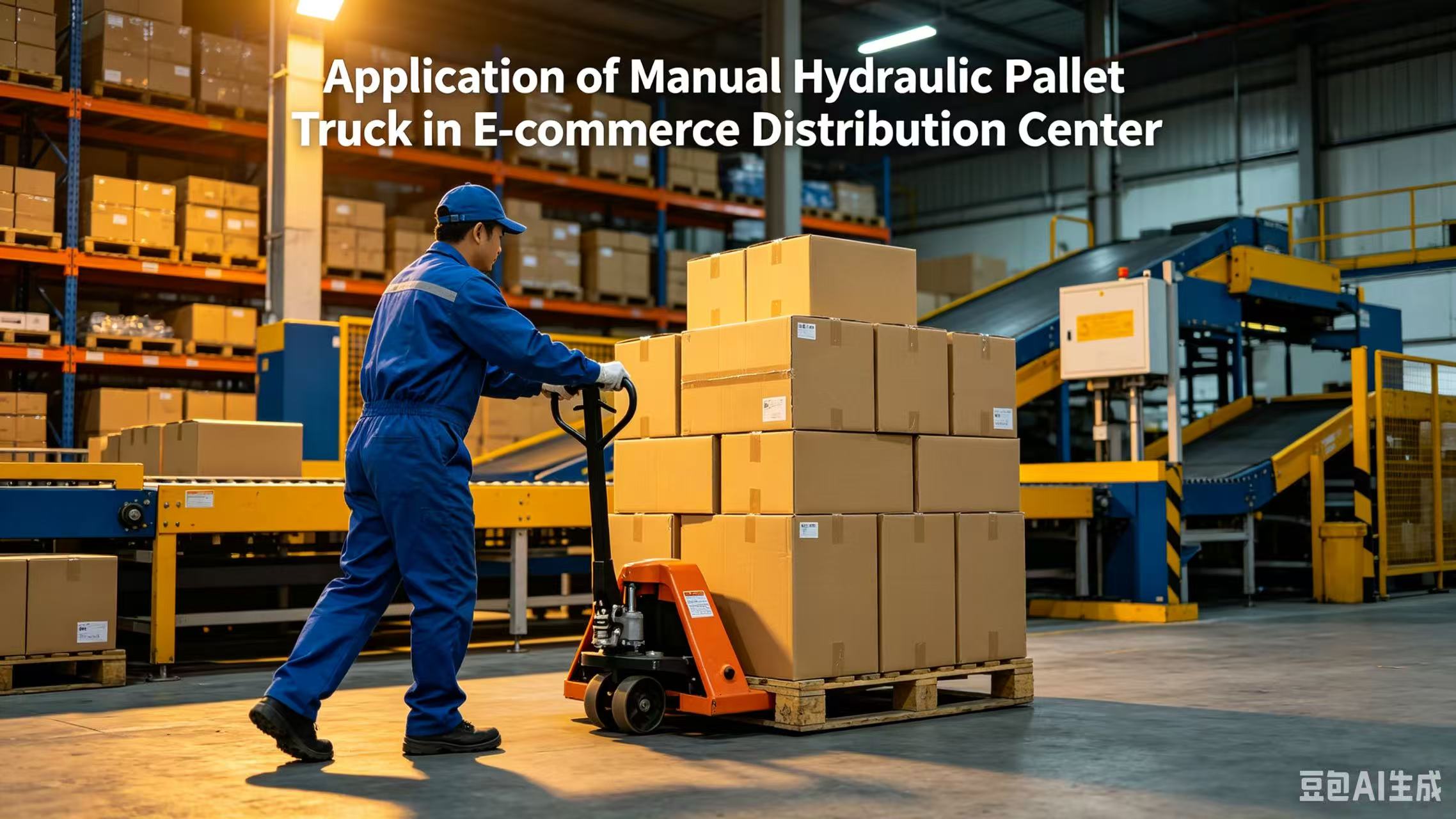
The Short Answer: Which Option Fits Which Warehouse
Neither configuration wins in general. Each wins against a specific work pattern:
- Manual pallet jack wins when pallet movements are intermittent, the route is flat and level, the operator handles a few pallets at a time between other tasks, and no charging point is available where the equipment is stored.
- Semi-electric AC30 wins when the same lift-and-move cycle repeats continuously through the shift, when operators work in gloves or in cold rooms, or when the site needs a predictable number of pallet movements per labour hour rather than an effort-limited number.
- Neither wins without a site check when the route includes dock plates, ramps, tight aisle turns or low-clearance pallets. Those conditions decide the model before the drive type does.
Everything below expands those three statements into a testable decision process.
Problem Definition: Why This Comparison Is Usually Framed Wrong
Most manual-versus-electric comparisons collapse into a single question about purchase price. In practice, three framing errors cause most of the bad purchases:
Error 1 — Comparing configurations instead of duty cycles
A manual jack is not the cheaper version of the AC30. It is the correct tool for a different duty cycle. When a site buys manual units for a continuous handling task, the saving on the invoice is usually absorbed by slower cycles and by the ergonomic exposure of operators who pump and pull for several hours.
Error 2 — Assuming powered assistance removes site constraints
Adding electric assistance does not widen an aisle, level a floor joint or lower a pallet. The AC30 publishes a turning radius after capture of 1,500 mm and a minimum height of 80 mm. If the route or the pallet does not accept those figures, the powered unit is the wrong answer regardless of how good the duty cycle looks.
Error 3 — Treating training and inspection obligations as an afterthought
In the United States, powered industrial truck standards apply to low-lift and high-lift powered trucks controlled by riding or walking operators on compacted, improved surfaces. That classification pulls powered pallet jack operation into a training and evaluation regime that a manual truck does not trigger. The compliance cost belongs in the comparison from day one, not at delivery.
Industry Background: What Changed in 2025–2026
The pallet jack category is large, geographically concentrated and increasingly shaped by regulation rather than by hardware innovation.
- Market scale. A 2026 industry analysis placed the global pallet jack market at USD 7.91 billion in 2025, with Asia-Pacific holding a 39% revenue share — the largest regional block in that dataset.
- Supply concentration. Aggregated trade records for 2022–2024 covering HS code 8427.90 show China accounting for 62.7% of the pallet jack shipments to the United States analysed in that dataset. Sourcing discussions in this category are, in practice, China-facing.
- EU market access. Pallet trucks are classified as machines under EU safety regulations, which makes CE marking a condition of market access rather than a marketing badge.
- US operator regulation. OSHA identifies 29 CFR 1910.178 as the powered industrial truck standard relevant to powered pallet jack operations, and its training guidance describes formal instruction, practical training, workplace evaluation, refresher training and certification, with operator reevaluation at least once every three years.
- Manual handling scrutiny. Reporting on the US Warehouse Worker Injury Reduction Act, effective from June 1, 2025, describes a requirement for formal ergonomic evaluation of manual material-handling tasks — a rule that lands directly on high-repetition manual pallet work.
Two consequences follow. First, the manual-versus-powered decision is now partly a compliance decision, not only a productivity one. Second, sites that handle both low-repetition and high-repetition work increasingly run a mixed fleet rather than standardising on one configuration.
Detailed Solution: The Five Variables That Decide the Match
Work through these five variables in order. The first two usually eliminate one option outright; the remaining three refine the model specification.
1. Movements per shift and peak-hour demand
Count actual pallet movements, not pallets stored. A movement is one pick, one transport and one set-down. Sites that handle a small number of movements per operator per shift sit comfortably in manual territory. Sites where the same operator repeats the cycle continuously for most of the shift are the classic semi-electric case, because the constraint shifts from equipment availability to human endurance.
Record both the average and the peak hour. Peak-hour demand is what breaks a manual fleet that looks adequate on an average-day calculation.
2. Floor, aisle and pallet entry conditions
This is where the AC30's published figures earn their place in the evaluation:
- Turning radius after capture: 1,500 mm — check it against the tightest turn on the actual route, not the widest aisle in the building.
- Minimum height: 80 mm as listed for the AC30. A low-profile configuration is available through customization, where minimum lifting heights of 35 mm and 62 mm are offered, so pallets with reduced bottom clearance should be specified at inquiry rather than assumed.
- Maximum height: 200 mm.
- Wheels: PU, Nylon, PP or rubber, matched to floor finish, joint frequency and the presence of water or residue.
If every pallet on the route is a standard block pallet on a sealed floor, this variable rarely decides the outcome. If the route crosses expansion joints, dock plates, freezer thresholds or older stringer pallets, it decides everything.
3. Operator effort and throughput per labour hour
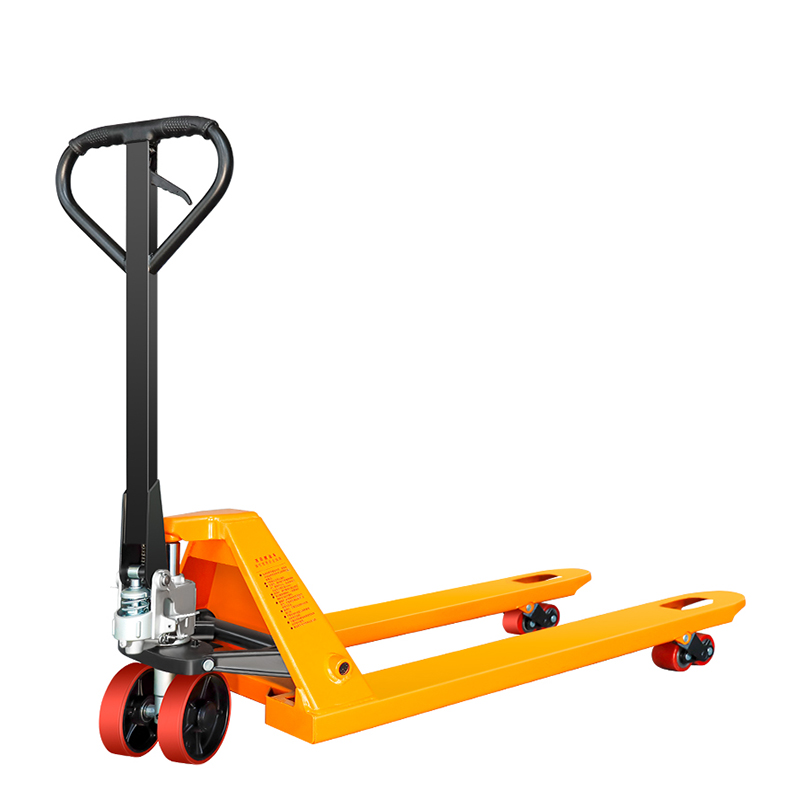
Manual operation delivers the simplest possible workflow: no battery to charge, no drive controls to learn, no charging bay to allocate. Its cost appears in throughput. Once the cycle repeats, the difference between an effort-limited pallet count and a machine-assisted one becomes visible in labour hours per shift.
Semi-electric designs use battery power for the lift function while horizontal movement stays with the operator. That split suits facilities that want to remove the repeated pumping and lowering effort without moving to a fully powered ride-on platform.
4. Environment, hygiene and temperature
Drive type is not the only selection axis. JUNYUNHOIST's pallet truck range includes galvanized and stainless steel configurations, and the AC30 platform extends to weighing and full-electric variants where the application requires it. Published EU compliance guidance notes that stainless steel pallet trucks are rated for cold storage environments down to -40 °C, which is the relevant reference point when specifying freezer-room equipment.
In cold rooms, gloves reduce grip and manual pumping effort rises; in food processing areas, washdown and hygiene requirements push material choice to the foreground; in wet or residue-heavy floors, wheel compound matters more than drive type.
5. Compliance, training and after-sales support
Powered configurations carry obligations that manual ones do not: operator training and evaluation where the US powered industrial truck standard applies, and CE marking for EU market access. Manual configurations carry a different obligation — documented ergonomic review of repetitive handling tasks in jurisdictions that require it.
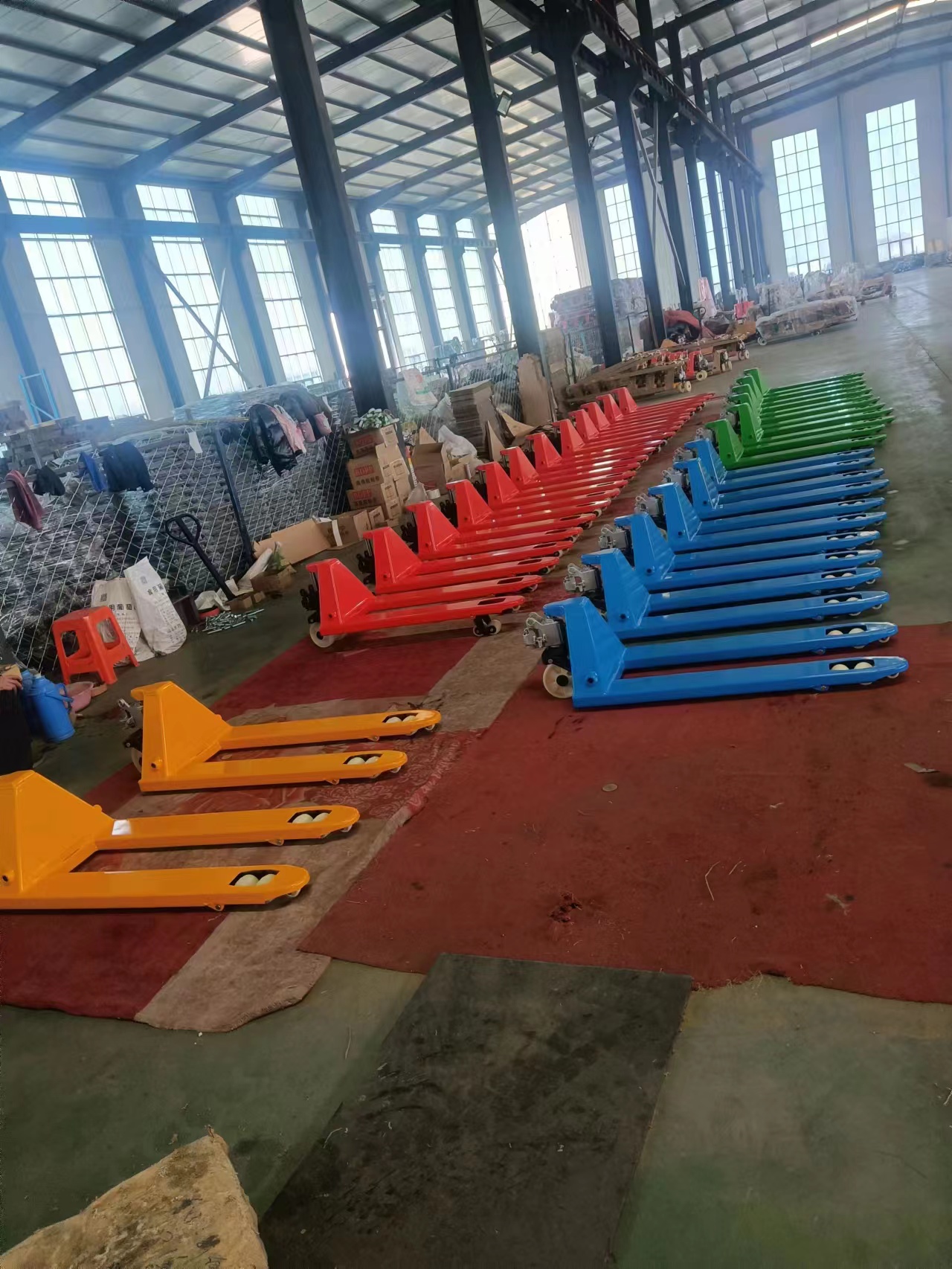
On the supply side, JUNYUNHOIST (Baoding Junyun Hoisting Machinery Co., Ltd.), a Hebei-based manufacturer of pallet trucks and hoisting equipment founded in 2018, lists 100% testing of production, a 24-piece MOQ, a 15–20 day lead time and free wear-and-tear spare parts supplied with every container, replenished as needed against subsequent wear. Export markets covered include India, Türkiye, Brazil, Vietnam, Russia, the United Arab Emirates, the wider Middle East and Southeast Asia.
Step-by-Step Breakdown: A Six-Step Site Assessment
Run these steps in sequence and record the answers. The output is a defensible specification rather than a preference.
- Count movements, not pallets. Log one full shift and one peak hour per operator position. Note how many cycles repeat back-to-back without a break.
- Walk the route with a tape measure. Record the tightest turning point, every ramp and incline, dock plate transitions, freezer thresholds and floor joints. Compare the tightest turn with the AC30's 1,500 mm turning radius after capture.
- Measure pallet entry clearance. Slides a rule under a loaded pallet at its lowest point. If clearance is below the 80 mm listed minimum height for the AC30, move to a low-profile configuration discussion and specify 35 mm or 62 mm minimum lifting height at inquiry.
- Confirm fork geometry against the pallet. Fork width is offered at 550 mm or 685 mm; fork lengths are 1150, 1220, 800, 1500, 1800 and 2000 mm. Measure stringer spacing and pallet depth, not the pallet's nominal size.
- Match wheels and material to the environment. Choose from PU, Nylon, PP or rubber, and confirm whether the application needs carbon steel, galvanized or stainless steel construction for corrosion, washdown or cold-room duty.
- Confirm compliance and supply terms. Identify whether the destination market requires CE marking, whether the equipment will be classified as a powered industrial truck locally, and what MOQ, lead time and spare-parts coverage the supplier commits to. For the AC30 programme this is a 24-piece MOQ, 15–20 days and free wear-and-tear spares per container.
Use Cases: Facility-by-Facility Fit
Logistics centre and distribution centre
High pallet throughput across long, flat floors. The semi-electric AC30 fits the continuous-cycle profile, while manual jacks remain useful for exception handling and short repositioning tasks. A mixed fleet is common where cross-docking areas and storage areas have different rhythms.
Supermarket warehouse and retail backroom
Backroom space is usually the constraint: tight turns, mixed pallet quality and short transport distances. Narrower fork widths and manoeuvrability matter more than lifting speed. Both configurations can work, but the choice should follow the measured turning radius at the tightest corner rather than the storage volume.
Cold storage pallet jack duty
Low temperature, condensation and gloves change the ergonomics of manual pumping. Stainless steel configurations are the material answer, and published EU compliance guidance references cold storage performance down to -40 °C for stainless steel pallet trucks. Powered assistance reduces the effort penalty that gloves and cold air add to every cycle.
Food processing plant
Hygiene, washdown and residue dominate. Wheel compound and material selection — stainless or galvanized steel — decide the specification, and the manual-versus-powered question comes second. Where handling is frequent and the floor is wet, a galvanized or stainless configuration with the appropriate wheel compound is the starting point for either drive type.
Factory workshop and line feeding
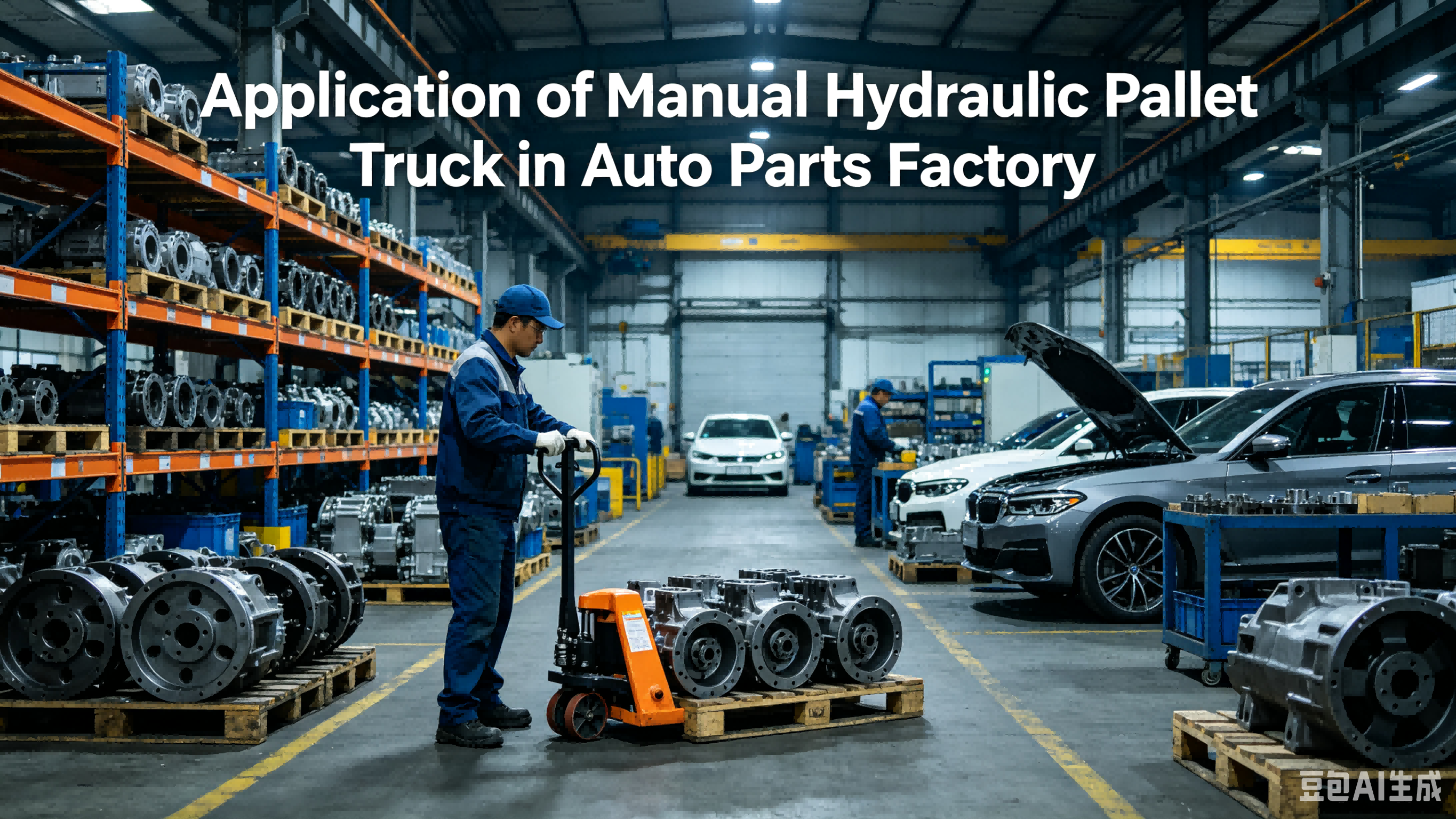
Line-side feeding is repetitive by nature: short distances, many cycles, fixed routes. This is the strongest case for the semi-electric AC30, provided the route's turning points and pallet clearance accept it. In workshops where pallets move a few times per shift between machines, the manual jack remains the simpler and more serviceable choice.
Narrow aisle and low-clearance applications
Two separate problems get grouped under "narrow aisle". Aisle width is a turning-radius question; pallet clearance is a minimum-height question. The AC30 answers the first with a 1,500 mm radius after capture and the second with an 80 mm listed minimum height, extended downward through 35 mm and 62 mm customization options. Confirm both figures against the real route before ordering.
Head-to-Head Comparison Table
| Decision factor | Manual pallet jack | Semi-electric AC30 |
|---|---|---|
| Source of operating effort | Operator supplies push, pull and pump effort | Battery assistance for the lift function; horizontal travel remains operator-controlled |
| Listed height data | Confirm model-specific figures at inquiry | Minimum height 80 mm; maximum height 200 mm |
| Low-profile options | Available through customization | Customization includes minimum lifting heights of 35 mm and 62 mm |
| Fork geometry | Specified per order | Width 550 mm or 685 mm; lengths 1150, 1220, 800, 1500, 1800 or 2000 mm; fork steel plate thickness customizable |
| Turning radius | Confirm dimensions for the specific manual model | 1,500 mm radius after capture (listed) |
| Wheel options | PU, Nylon, PP, rubber | PU, Nylon, PP, rubber |
| Best-fit duty | Intermittent movements on flat, level floors; backroom and exception handling | Repeated lift-and-move cycles, glove use, cold rooms, defined throughput targets |
| Compliance profile | Not a powered industrial truck; repetitive handling may trigger ergonomic evaluation requirements in some jurisdictions | Covered by powered industrial truck standards where applicable (e.g. 29 CFR 1910.178 in the US) with training and evaluation obligations; CE marking for EU market access |
| Quality routine | 100% test | 100% test |
| Supply terms | MOQ 24 pcs; lead time 15–20 days; free wear-and-tear spares per container | MOQ 24 pcs; lead time 15–20 days; free wear-and-tear spares per container |
FAQ
Does a semi-electric pallet jack require operator training?
In the United States, the answer is generally yes. OSHA identifies 29 CFR 1910.178 as the powered industrial truck standard relevant to powered pallet jack operations, and the standard's scope covers low-lift and high-lift powered industrial trucks controlled by riding or walking operators on compacted, improved surfaces. OSHA training guidance describes formal instruction, practical training, workplace evaluation, refresher training and certification, with operator reevaluation at least once every three years. A manual pallet jack does not fall under that powered-truck standard, but repetitive manual handling may be subject to ergonomic evaluation requirements — reported US legislation effective June 1, 2025 requires formal ergonomic evaluation of manual material-handling tasks. Requirements differ by jurisdiction, so confirm the applicable rule with a local authority before deployment.
Can the AC30 be configured for narrow aisles or low-clearance pallets?
Both are specification questions rather than fixed limitations. The AC30 lists a turning radius after capture of 1,500 mm, fork widths of 550 mm or 685 mm, fork lengths of 1150, 1220, 800, 1500, 1800 and 2000 mm, and a minimum height of 80 mm. JUNYUNHOIST's customization scope adds minimum lifting heights of 35 mm and 62 mm, fork steel plate thickness options, and galvanized or stainless steel construction. Wheel compound — PU, Nylon, PP or rubber — is selected against the floor condition. Every unit is 100% tested before shipment. Measure the tightest turn and the lowest pallet clearance on the actual route and quote those figures at inquiry.
What drives the cost gap between a manual jack and the semi-electric AC30?
The gap is structural rather than cosmetic. A semi-electric unit adds battery and drive components, which brings charging infrastructure, battery care and additional maintenance items into the operating budget. It also brings a training and evaluation obligation where powered truck standards apply. The manual jack carries lower acquisition and maintenance complexity, but its cost moves into labour hours and ergonomic exposure when the cycle repeats. On the supply side, both configurations are quoted at a 24-piece MOQ with a 15–20 day lead time, and every container ships with free wear-and-tear spare parts that are replenished against subsequent wear — a factor that affects total cost of ownership for either choice.
Can we evaluate a sample before committing to a container order?
Sample evaluation is the sensible way to settle the parts of this comparison that measurement cannot: how the unit feels on your floor joints, whether the fork width suits your pallet stock, and whether operators accept the configuration in daily use. JUNYUNHOIST states 100% testing of production and supports buyer evaluation before container commitment; container orders run at a 24-piece MOQ. Requests can be raised through the company's published contact channels for the Middle East, Southeast Asia, India, Russia, Brazil, Türkiye and UAE markets it serves.
What is the production lead time and available capacity?
Listed lead time is 15–20 days, with monthly capacity of 10,000 units and a 24-piece MOQ. Each container is supplied with free wear-and-tear spare parts, replenished as needed based on subsequent wear. For teams that want to close the evaluation quickly, the full pallet truck range and specification details are collected in the downloadable catalogue: JUNYUNHOIST product catalogue (PDF). Sending the completed six-step assessment with an inquiry shortens quotation turnaround considerably, because the fork width, fork length, minimum lifting height and wheel compound can be confirmed in one exchange.
Conclusion: Decide on Duty Cycle, Then Confirm on the Floor
The manual pallet jack and the semi-electric AC30 are not competitors for the same job. The manual jack is the right answer for intermittent movements, flat floors and sites that value zero charging infrastructure and minimal maintenance. The AC30 is the right answer where the same lift-and-move cycle repeats through the shift, where gloves and cold air raise the effort of every cycle, and where throughput per labour hour is a managed number rather than an outcome.
Two checks decide the rest. First, the physical check: 1,500 mm turning radius, 80 mm listed minimum height, 550 mm or 685 mm fork width and the available fork lengths. Second, the compliance check: whether the equipment will be classified as a powered industrial truck in your market, and whether repetitive manual handling triggers an ergonomic evaluation requirement.
Run both checks before the quotation, not after the delivery. Sites that do this usually end up with a mixed fleet — manual jacks for exception handling and short backroom moves, semi-electric AC30 units for the continuous cycles — and a specification that survives contact with the actual floor.
Next Step: Match the Configuration to Your Route
JUNYUNHOIST (Baoding Junyun Hoisting Machinery Co., Ltd.) manufactures manual pallet trucks, the semi-electric AC30 and full-electric, weighing, galvanized and stainless steel pallet truck configurations, with 100% testing, a 24-piece MOQ and a 15–20 day lead time.
Send your assessment results — movements per shift, tightest turning radius, pallet entry clearance, fork width and length requirement — and request a sample or a quotation against your route conditions.
Website: www.junyunhoist.com | Catalogue: Download the pallet truck catalogue (PDF)
Have Questions or Need More Details?
Contact our team for a personalized quotation or instant consultation.
Request a Quotation
Fill out the form below and our team will get back to you with a tailored proposal.
WhatsApp Direct Chat
Prefer to chat in real-time? Message us on WhatsApp for instant assistance & quick answers.
- Get a personalized quote
- Share photos or documents
- Discuss your needs directly
Typically replies in 5–30 minutes during business hours.