
Pallet Jack Compliance FAQ: Middle East, India & Brazil
Pallet Jack Compliance FAQ: Middle East, India & Brazil
Short answer: no single certificate makes a pallet jack sellable in the Middle East, India or Brazil. What clears a consignment is a document set that matches the exact configuration being shipped — manual or electric, fork length and width, minimum lifting height, fork steel plate thickness, material and any weighing function — plus a factory that can reproduce the same evidence on the next order. This FAQ answers the questions distributors actually raise, in the order they arise.

Pallet jack production at Baoding Junyun Hoisting Machinery Co., Ltd. (JUNYUNHOIST), Hebei, China.
Compliance is rarely the reason a pallet jack order fails outright. It is very often the reason an order stops between quotation and shipment: the units are ready, the price is agreed, and then an importer, a broker or a site inspector asks for documentation that describes a model the factory does not recognise on the invoice. The delay is almost never caused by a missing certificate. It is caused by a mismatch between what was tested, what was built, and what is written on the shipping documents.
This article deliberately does not name specific certificates. The requirement set differs by destination, by product configuration and by how the goods are declared, and a wrong certificate claim in a brochure is worse than no claim. What follows instead is a repeatable framework for reading regional requirements, deciding which evidence to request from a manufacturer, and keeping that evidence aligned with the units on the pallet.
Why pallet jack compliance questions stall orders
The word “compliance” hides three separate obligations, and most sourcing delays come from treating them as one.
- Product conformity. Whether the design and build of a specific configuration meet the destination’s safety expectations. This is partially controlled by the manufacturer, through design, component choice and testing.
- Consignment documentation. Whether the paperwork describing this shipment matches the goods actually inside the container. This is controlled jointly by the exporter and the importer of record.
- Operator and site obligations. Whether the end user trains operators, inspects equipment and uses it in the conditions it was specified for. This sits with the buyer’s customer, not the factory.
A distributor who asks “which certificate do I need?” usually receives a vague answer, because the real question is narrower: for this configuration, for this destination, who signs which document, and does the document name the model that is actually being shipped? Once the question is phrased that way, the answers become obtainable, and the order moves.
Where the Middle East, India and Brazil differ — and where they do not
The three regions differ less in what they ask for than in when they ask for it. Some markets expect evidence before goods ship, some at clearance, and some when an inspector visits the end user’s premises. Distributors should not assume that a document set accepted in one market will be accepted unexamined in another, and should not assume the reverse either — the only reliable method is to have the importer of record confirm the applicable requirement in writing before production starts.
The common ground is more useful than the differences. Across all three regions, the questions that decide an inspection are consistent: does the documentation name the model being shipped, does it cover the configuration actually built, is it current, and is it in a language the local reader accepts. Those four questions can be answered by any disciplined manufacturer, regardless of region.
Two structural facts shape the sourcing side of the discussion. First, demand is large and geographically concentrated: commercial research values the global pallet jack market at USD 7.91 billion in 2025, with Asia-Pacific accounting for a 39% revenue share that year. Second, China remains the dominant origin — one analysis of 2022–2024 shipment records found China accounted for 62.7% of pallet jack shipments to the United States, and the same sourcing base serves Middle East, Indian and Brazilian buyers.
Baoding Junyun Hoisting Machinery Co., Ltd. (JUNYUNHOIST) is a manufacturer and trading company based in Hebei, China, founded in 2018, producing hand pallet trucks, pallet jacks, manual and electric stackers, lift tables and hoisting equipment. About 80% of its sales are exports, with established markets including India, Brazil, Russia, Vietnam, Türkiye, the UAE and the wider Middle East — which is precisely the combination of destinations where documentation questions tend to appear.
A four-layer framework for interpreting regional requirements
Requirements should be read in four layers, in this order. Skipping straight to paperwork is what produces rework.
Layer 1 — Classify the configuration before discussing documents
Documentation is configuration-bound. A manual pallet jack, an electric pallet truck, a stainless steel unit and a weighing pallet truck are not one item with one file. In the JUNYUNHOIST range, the reference pallet truck runs from a minimum height of 80 mm to a maximum height of 200 mm, with fork widths of 550 mm and 685 mm, fork lengths including 1150, 1220, 1500, 1800 and 2000 mm, a turning radius of 1500 mm, and wheel options in PU, nylon, PP and rubber. Customization covers fork length and width, fork steel plate thickness, minimum lifting heights of 35 mm and 62 mm, electric pallet trucks, galvanized and stainless steel pallet trucks, and pallet trucks with a scale.
Each of those choices changes what has to be proven. A weighing pallet truck involves a measuring function that many markets treat separately from the truck itself. A stainless steel unit sold into a food processing plant involves surface and hygiene documentation that a carbon steel unit does not. A 35 mm low-profile entry fork used in a narrow aisle involves a different drawing, and therefore a different approval, from a standard 80 mm fork.
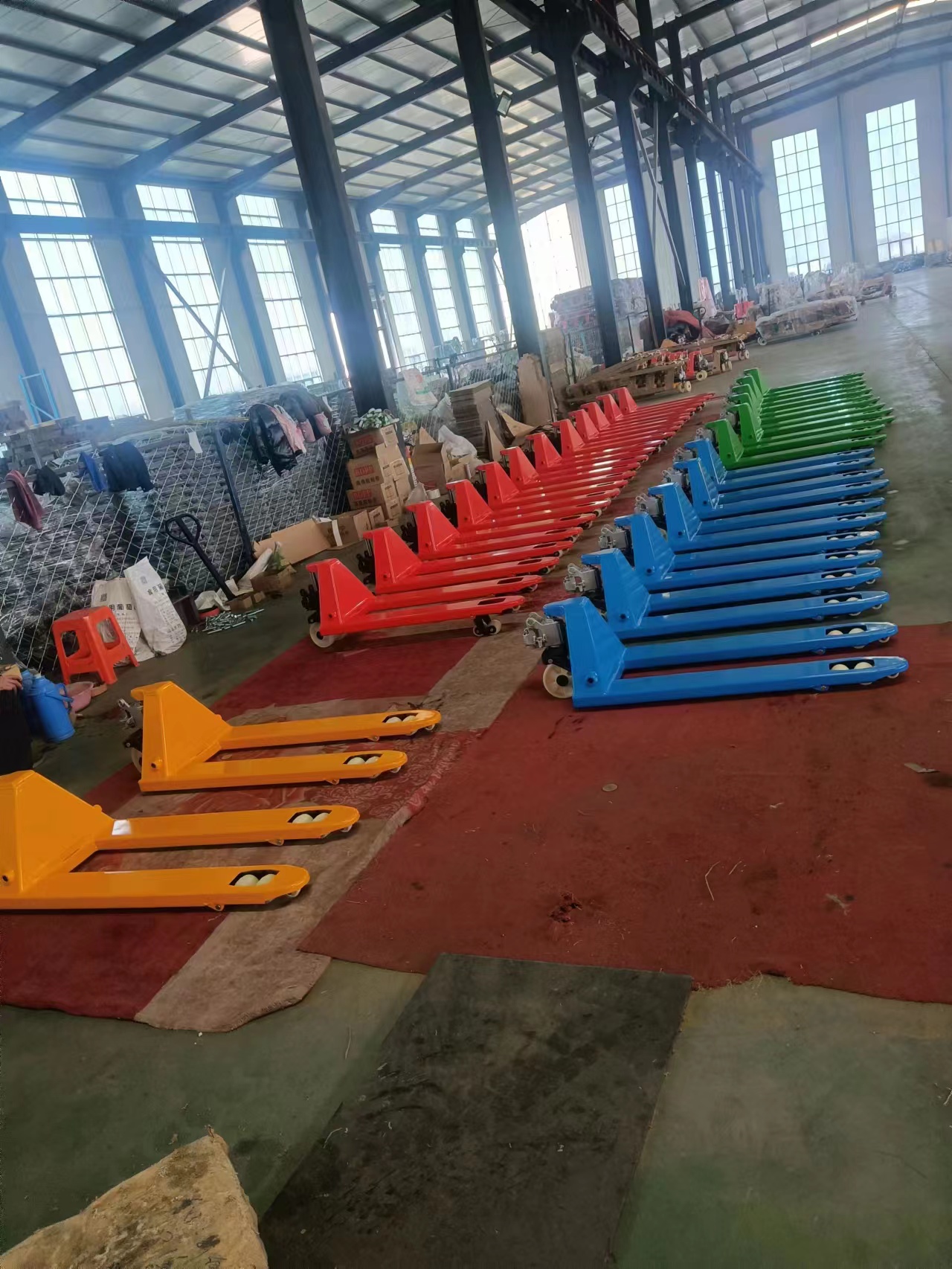
Every unit is tested before packing; test records are the evidence base a distributor forwards to an importer.
Layer 2 — Get the destination requirement in writing, from the party who owns it
The applicable requirement belongs to the importer of record, not to the factory and not to the distributor’s assumption. Four questions, asked in writing, resolve most uncertainty:
- Which authority or body will review the goods, and at which point — pre-shipment, clearance, or site inspection?
- Must the product be registered or notified before shipment, or can it be cleared per consignment?
- Which document types are accepted, and in which language?
- Can you send a copy of a document set accepted for a previous shipment of similar equipment, as a format reference?
That fourth question is the highest-value one. A previously accepted package shows the expected structure, the level of detail and the language, without anyone guessing at regulation text.
Layer 3 — Build the evidence package against the configuration
Once the requirement is written down, the package is assembled document by document, each one traceable to a specification. The table below shows the layers a distributor should request, and the question that exposes whether a supplier actually holds them.
Table 1 — Documentation layers and the question that tests them
| Document layer | What it should let the importer verify | Normally held by | Question to ask the supplier |
|---|---|---|---|
| Product test / conformity evidence | That the tested unit matches the ordered configuration | Manufacturer or testing body | “Does the report name our model, fork length and lifting height?” |
| Material and surface documentation | That fork steel plate thickness and finish are as specified | Manufacturer | “Which material record covers this batch?” |
| Electrical and battery documentation (electric models) | That the electrical system and charger match the destination supply | Manufacturer | “Which charger variant ships with this model?” |
| Weighing and calibration records (weighing pallet trucks) | That the measuring function is calibrated and traceable | Manufacturer or calibration provider | “Is calibration documentation issued per unit?” |
| Hygiene and food-contact documentation (stainless units) | That materials and finishes suit food handling areas | Manufacturer | “Which finish and documents apply to our food area?” |
| Commercial and shipping documents | That invoice, packing list and technical file describe the same goods | Exporter and importer | “Is the invoice description identical to the nameplate model?” |
| Operator and maintenance information | That the end user receives instructions in the required language | Manufacturer or distributor | “Which language versions are supplied as standard?” |
Framework table. The applicable document types for a given destination should be confirmed with the importer of record.
Layer 4 — Lock the evidence to product identity
Most rejections are identity failures, not technical failures. The model on the nameplate, the model on the test record, the model on the drawing and the description on the invoice must be the same string. Four habits prevent this class of problem: use one model designation across all documents; reference fork dimensions and lifting height in the description rather than a family name; keep a photograph record of the nameplate and the packed unit; and re-issue documents whenever a specification changes, rather than editing an old file.
How JUNYUNHOIST supports the framework on the factory side
A framework only works if the manufacturing process can feed it. At JUNYUNHOIST, quality control is implemented as 100% testing of all units, which means an individual test record exists per machine rather than a single batch statement. OEM and ODM production services are available, so a distributor’s own model designation can sit on the drawing, the nameplate and the document set — the identity alignment described above, rather than a family name the buyer has to explain.
Customization is where documentation risk usually enters, and it is also where a manufacturer can absorb it. Fork length and width, fork steel plate thickness, minimum lifting heights of 35 mm and 62 mm, galvanized and stainless steel pallet trucks, electric pallet trucks and pallet trucks with a scale are all offered as configured options, which means the specification is defined before production instead of being improvised afterwards. Monthly production capacity is 10,000 units, the minimum order quantity is 24 PCS, and the typical production lead time is 15–20 days.
Verification is not limited to the factory floor. Pre-shipment testing is available, and third-party inspection (for example, SGS) can be arranged where the importer requires an external opinion. Commercial terms commonly used are FOB, EXW, CIF and CFR, with payment at 30% T/T in advance and 70% T/T against a copy of the bill of lading — terms that let a distributor inspect documents before releasing the balance.
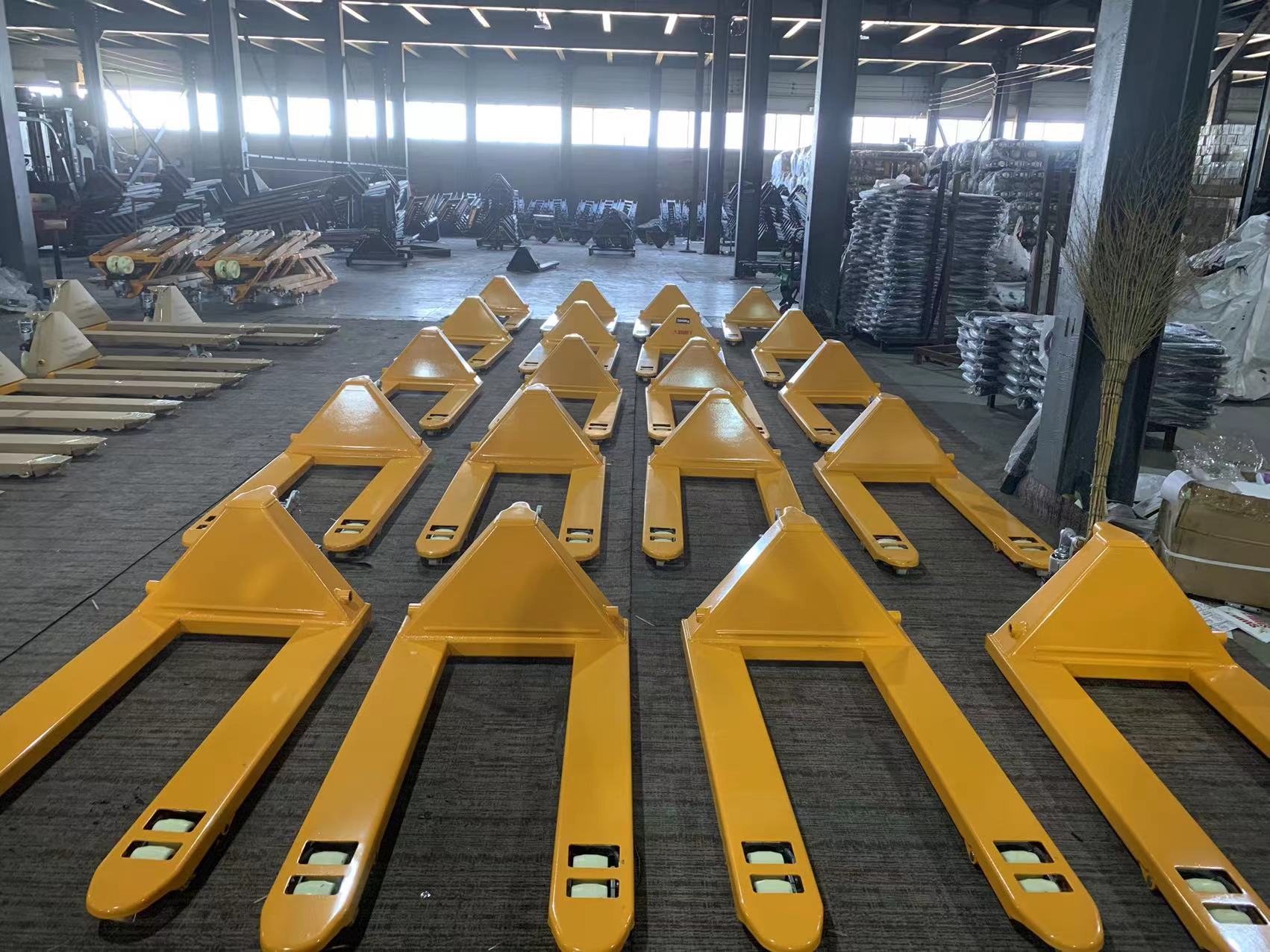
Manual pallet jack: the configuration — fork dimensions, wheel material, lifting height — defines which documents apply.
Step-by-step: from enquiry to a cleared shipment
- Fix the configuration in writing. Record load requirement, fork length and width, minimum lifting height (for example 35 mm or 62 mm versus the standard 80 mm), wheel material, and whether the unit is manual, electric, stainless steel, galvanized or a weighing model.
- Obtain the destination requirement from the importer of record. Ask for the authority, the review point, the accepted document types and the required language.
- Request a reference document set. A previously accepted package from a similar shipment defines the expected format better than any general description.
- Test the factory’s evidence capability. Ask how units are tested, whether records are per unit, and whether third-party inspection can be added to the order.
- Approve a sample and freeze the specification. Sign off the drawing with fork dimensions and lifting height before mass production begins; post-approval changes are the leading cause of document re-issue.
- Place the order on clear commercial terms. MOQ 24 PCS, lead time 15–20 days, delivery under FOB, EXW, CIF or CFR, payment 30% T/T in advance with 70% against the bill of lading copy.
- Verify before shipment. Combine the pre-shipment test, any third-party inspection, and a document-to-invoice cross-check on model designation, quantity and fork specification.
- Plan the after-sales loop. Each container is equipped with free spare parts for wear and tear, replenished as needed according to subsequent wear — a point worth writing into the distributor’s own service commitments.
Use cases: three distributor scenarios
1. Gulf-based distributor re-exporting across the region
When goods are re-exported, the document set has to survive a second border. The practical answer is to standardise the model designation across every document and to specify wheel material deliberately: PU, nylon, PP and rubber behave differently in high-temperature warehouses and yards, and a specification that matches the site reduces both claims and re-documentation. Manual pallet jacks for loading docks and retail backrooms, plus a proportion of electric pallet trucks for logistics centres, is a common split.
2. Indian importer serving food processing and retail
Food processing plants and supermarket warehouses pull in two different specifications: stainless steel or galvanized units for wash-down and hygiene-sensitive areas, and weighing pallet trucks where intake weight is captured at the receiving bay. Because weighing introduces a measuring function, the calibration record becomes part of the compliance conversation and should be requested at quotation stage, not after production. Stainless steel pallet jacks are also the configuration published specifications rate for cold storage environments down to −40 °C, which matters for frozen and chilled distribution.
3. Brazilian importer running a multi-year programme
Long transit times reward planning rather than urgency. A two-year programme delivering 400 units of the AC30 pallet truck for distribution to local stores, with importer clients across India, Brazil, Russia, Belarus, Turkey, the UAE and Vietnam, shows the operating model: consistent specification, container-level spare parts, and documents that do not change between shipments. Where the same truck is used across retail logistics and manufacturing sites, keeping one configuration avoids rebuilding the document set for every order.
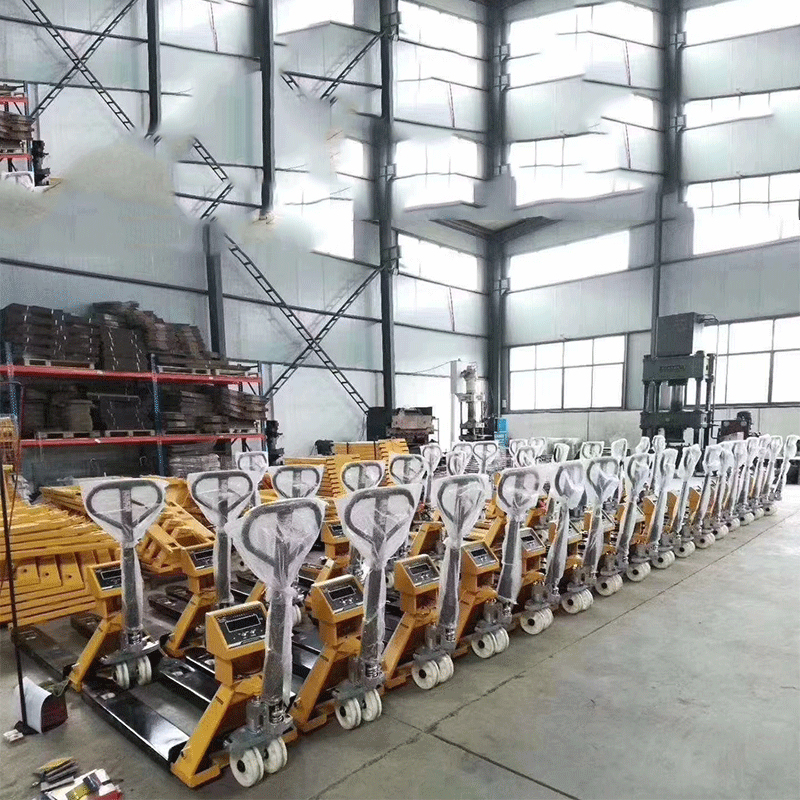
A weighing pallet truck adds a measuring function — and therefore a calibration record — to the standard document set.
Comparison table: configuration versus evidence to request
The table below compares configurations available from JUNYUNHOIST against the specification facts and the evidence emphasis each one creates. It is a buying aid, not a regulatory statement; the applicable requirement for a given destination must still be confirmed with the importer of record.
| Configuration | Specification reference | Evidence emphasis | Typical application |
|---|---|---|---|
| Manual pallet jack (hand pallet truck) | Minimum height 80 mm, maximum height 200 mm; fork widths 550 / 685 mm; fork lengths 1150–2000 mm | Per-unit test record, fork and pump inspection, load capacity confirmation | Warehouse, loading dock, retail backroom |
| Electric pallet truck | Battery-powered configuration within the same fork range | Electrical and charger documentation, operator instructions, battery handling information | Logistics centre, cross-docking, heavy-duty flows |
| Stainless steel / galvanized | Corrosion-resistant finish; stainless steel rated for cold storage down to −40 °C in published specifications | Material record, surface finish, hygiene and food-contact documentation | Food processing plant, cold storage pallet jack duty |
| Weighing pallet truck | Integrated scale on the pallet truck platform | Calibration and traceability records; separate metrology review in some markets | Supermarket warehouse, goods receiving, distribution centre |
| Low-profile / custom lifting height | Minimum lifting heights of 35 mm and 62 mm; fork length and width customization | Approved drawing, re-test after specification change | Narrow aisle pallet jack work, low-clearance entry |
Configuration data from JUNYUNHOIST product and capability records; cold storage rating as published in third-party specification sources.
Frequently asked questions
Which certifications does a pallet jack need for the Middle East, India or Brazil?
There is no single list. The applicable requirement depends on the configuration — manual or electric, lifting height, material, weighing function — on the destination country, and on how the goods are declared. Distributors should ask the importer of record to name the applicable regime and authority in writing, then request a document package whose scope covers that exact model. This article deliberately does not name certificates, because a mismatched claim is worse than no claim.
Can fork length, fork width and lifting height be customized without breaking the documentation?
Yes, provided the change is documented before production. JUNYUNHOIST offers OEM and ODM production with customization of fork length and width, fork steel plate thickness, and minimum lifting heights including 35 mm and 62 mm. Each change must be reflected in the drawing, the model designation and any test record, so the document set still describes the unit actually shipped. Changes approved after testing usually require re-testing or a new document version.
What drives the cost of compliance documentation on a pallet jack order?
The main driver is the number of distinct configurations, not the number of units. One manual pallet jack model with one document set involves far less administrative effort than five variants — electric, stainless steel, weighing, two fork lengths. Additional effort comes from third-party inspection, translation, calibration of weighing units, and re-testing after a specification change. Because JUNYUNHOIST accepts orders from 24 PCS with a 15–20 day production lead time, a mixed trial order is a practical way to test both product and paperwork before scaling.
Can a distributor validate compliance on a sample before mass production?
A sample confirms fit, finish and specification; it does not by itself confirm conformity for a consignment. The workable sequence is sample approval, written specification freeze, production with 100% testing, then pre-shipment testing and, where the importer requires it, third-party inspection. JUNYUNHOIST implements 100% testing on all units and supports pre-shipment testing and third-party inspection such as SGS.
How long do production and documentation take, and how do I start?
Typical production lead time is 15–20 days, with monthly capacity of 10,000 units. Documentation is prepared in parallel, so the binding constraint is usually how quickly the importer confirms the required document list, not the factory schedule. To start, send the destination market, the configuration and the document list your importer requires, and request a sample and quotation at Junyunsteven@163.com or +86 134 8345 2631 (WhatsApp +86 134-8345-2631). The full catalogue can be downloaded here: JUNYUNHOIST product catalogue (PDF).
Conclusion
Compliance questions become manageable once they are reframed. Instead of hunting for one certificate, a distributor fixes the configuration, gets the destination requirement in writing from the importer of record, builds a document package layer by layer, and locks every document to the model actually being shipped. That sequence works in the Middle East, in India and in Brazil, because it addresses the four questions every inspection asks: does the file name the model, does it cover the configuration, is it current, and is it readable by the local reviewer.
The factory side of that sequence is a capability question, not a paperwork question: per-unit testing, configurable fork and lifting dimensions, OEM and ODM model designation, inspection access, and spare parts supplied with each container. JUNYUNHOIST builds pallet jacks for exactly these export conditions, with about 80% of sales going to markets that include India, Brazil, Russia, Vietnam, Türkiye, the UAE and the wider Middle East, and ships from a 10,000-unit monthly capacity with a 24 PCS minimum order and a 15–20 day lead time.
Request a sample, quotation or the full catalogue
Send your destination market, required configuration (fork length and width, lifting height, manual or electric, stainless steel or weighing) and the document list your importer requires. You will receive a configuration confirmation, a quotation and a sample proposal.
Email: Junyunsteven@163.com | Tel / WhatsApp: +86 134-8345-2631 | Website: www.junyunhoist.com
Catalogue download: JUNYUNHOIST product catalogue (PDF)
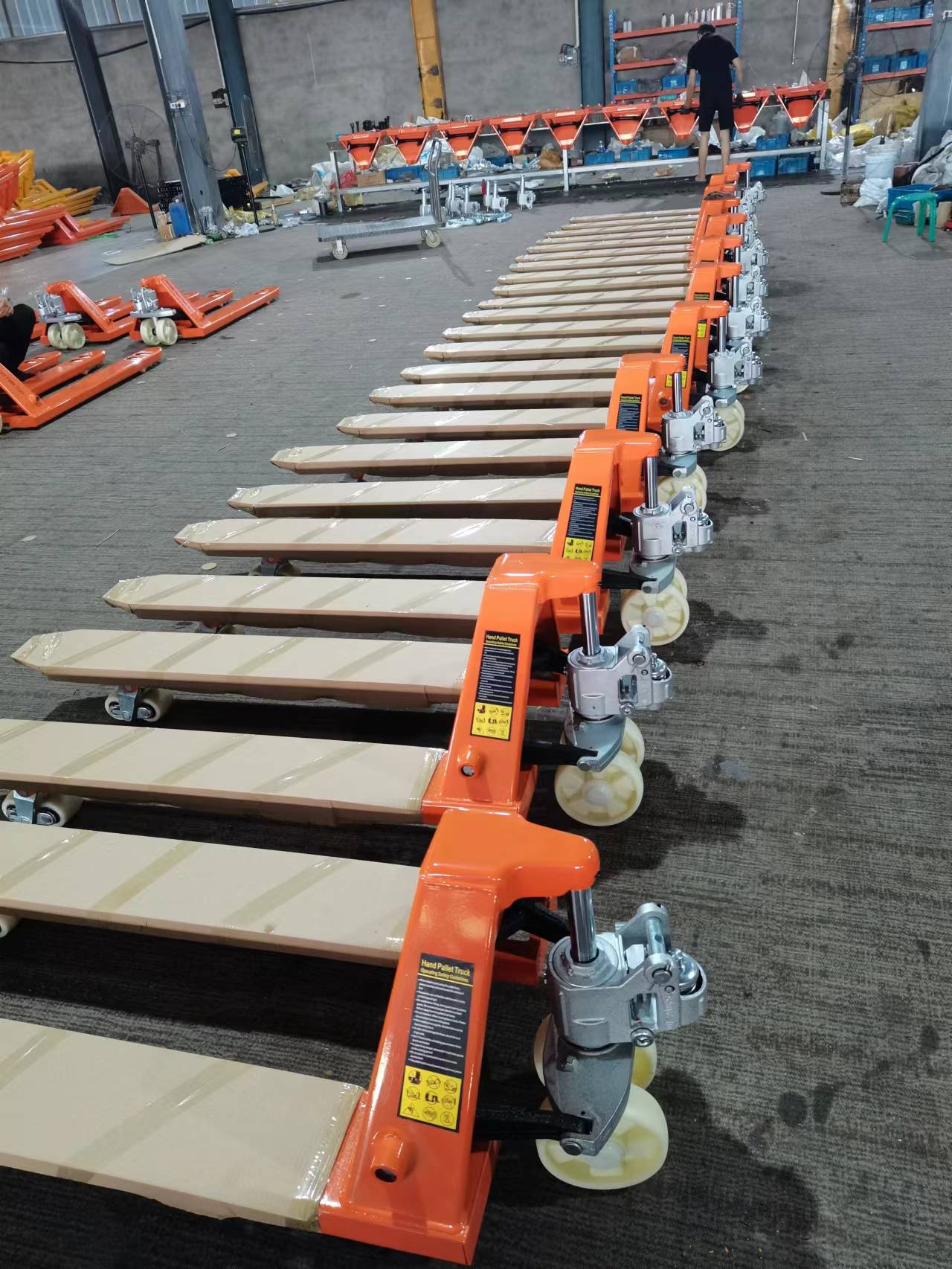
Container loading: pre-shipment testing, document cross-checks and spare parts are completed before dispatch.
Baoding Junyun Hoisting Machinery Co., Ltd. (JUNYUNHOIST) — Donglu Village, Qingyuan District, Baoding City, Hebei Province, China. Manufacturer and trading company, founded 2018. Products include hand pallet trucks, pallet jacks, manual and electric stackers, lift tables, galvanized and stainless steel pallet trucks, and pallet trucks with scale.
Have Questions or Need More Details?
Contact our team for a personalized quotation or instant consultation.
Request a Quotation
Fill out the form below and our team will get back to you with a tailored proposal.
WhatsApp Direct Chat
Prefer to chat in real-time? Message us on WhatsApp for instant assistance & quick answers.
- Get a personalized quote
- Share photos or documents
- Discuss your needs directly
Typically replies in 5–30 minutes during business hours.