Pallet Jack Customization Capabilities: How to Qualify an OEM/ODM Partner
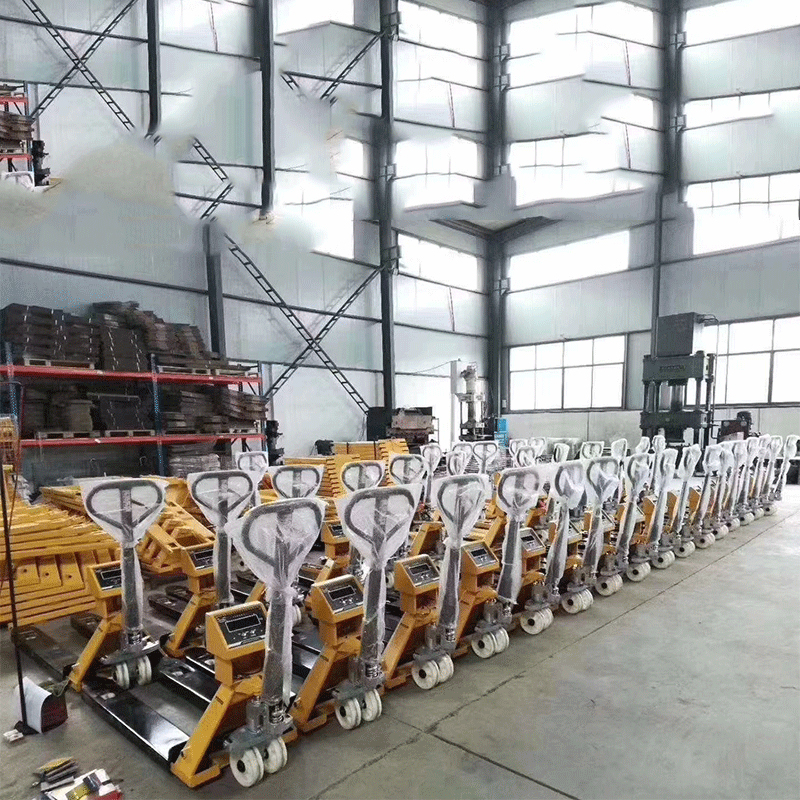
JUNYUNHOIST pallet truck with scale — one of the OEM/ODM variants available on the AC30 platform.
Pallet jack buying decisions are rarely about a single stock unit. Facilities need specific fork sizes, low lifting heights, corrosion-resistant materials, electric drive options, or integrated weighing. For buyers moving from evaluation to execution, the critical question is not only which pallet jack model is suitable, but whether the supplier has the OEM/ODM capability to build the product around your operational requirements.
This guide explains what to verify before committing to a pallet jack manufacturer. It focuses on industrial procurement, customization capabilities, quality control, production capacity, and commercial terms.
Why Standard Pallet Jack Information Is Not Enough
A general product catalog answers only part of the procurement question. A stated pallet jack load capacity does not tell you whether forks can be narrowed, whether stainless steel construction is available, or whether the manufacturer can support 100% testing. Buyers who skip capability verification may face mismatched equipment, delayed orders, or inconsistent quality across batches.
The challenge is especially visible when the pallet jack needs to work in a specific environment: warehouse racks, cold storage, food processing, factory workshops, logistics centers, or supermarket distribution. Each application changes the priority of fork dimensions, lifting height, wheel material, and steel surface treatment.
Pallet Jack Market and Compliance Context in 2026
The global pallet jack market was valued at approximately USD 7.4 billion in 2024 and is projected to reach USD 11.6 billion by 2034. Manual pallet jacks dominated the market in 2024 with revenue of USD 4.3 billion, despite the rise of automation. At the same time, the electric pallet jack and stacker market was valued at USD 5.1 billion in 2024, driven by e-commerce and lithium-ion technology.
Compliance requirements also shape supplier selection. ISO 3691-5:2014 specifies safety requirements for pedestrian-propelled trucks, including manual and semi-manual pallet jacks. In Europe, hand pallet trucks fall under EN 1757-2, which covers safety requirements for trucks with capacities up to 2,000 kg. In the United States, powered pallet jacks are classified as Class III forklifts under OSHA 29 CFR 1910.178 and require formal operator training.
These standards are useful baseline references. For an OEM/ODM pallet jack project, the buyer should confirm which standard applies in the destination market and then verify that the manufacturer can meet that expectation.
What to Look for in a Pallet Jack OEM/ODM Capability Set
Baoding Junyun Hoisting Machinery Co., Ltd. (JUNYUNHOIST) is a vertically integrated manufacturer and trading company based in Hebei, China. Founded in 2018, the company produces material handling equipment including pallet jacks, stackers, and lifting products, with export markets that include India, Türkiye, Brazil, Vietnam, Russia, the United Arab Emirates, the Middle East, and Southeast Asia.
For buyers evaluating OEM/ODM pallet jack capability, the following facts are directly relevant.
OEM and ODM Production Services
JUNYUNHOIST offers OEM and ODM production services. This means a buyer can work from an existing product design or request modifications to a base platform such as the AC30 pallet truck.
Customization Scope
The documented customization options include fork length and width, fork steel plate thickness, minimum lifting height options of 35 mm and 62 mm, electric pallet truck variants, galvanized and stainless steel pallet trucks, and pallet trucks with scale. These options address common buyer requirements such as non-standard pallet sizes, low-profile pallet openings, heavy-duty floor conditions, and corrosion-sensitive environments.
Pallet Jack Base Specifications
The AC30 pallet truck platform lists a minimum height of 80 mm, a maximum height of 200 mm, and a stated radius after capture of 1500 mm. Fork sizes include 550/685 x 1150, 1220, 800, 1500, 1800, and 2000 mm. Wheel options include PU, nylon, PP, and rubber. The product is built from steel and is designed for applications that include warehouses, factory floors, loading docks, retail backrooms, distribution centers, cold storage, construction sites, workshops, truck loading and unloading, and cross-docking facilities.
Production Capacity and Lead Time
The manufacturer reports a monthly production capacity of 10,000 units. The typical production lead time is 15 to 20 days, and the minimum order quantity is 24 pieces. These figures provide a clear planning baseline for buyers moving into execution.
Quality Control and Inspection
Quality control is implemented through 100% testing of all units. For export orders, JUNYUNHOIST accepts pre-shipment tests and third-party inspection, including SGS. This is a practical way for buyers to verify product quality before shipment.
Commercial and After-Sales Terms
Delivery methods include FOB, EXW, CIF, and CFR. The payment structure is 30% T/T in advance and 70% T/T against a copy of the bill of lading. After sales, each container is equipped with free spare parts for wear and tear, and parts are replenished as needed based on subsequent wear.
How to Qualify a Pallet Jack Manufacturer: Step-by-Step
Buyers moving from evaluation to execution can use the following capability checklist.
Step 1: Define the Operating Environment
Document the load type, pallet dimensions, aisle width, floor condition, temperature, washdown frequency, and duty cycle. These inputs determine whether a manual pallet jack, electric pallet truck, stainless steel version, or weighing pallet truck is needed.
Step 2: Confirm the Base Pallet Jack Parameters
Ask for the minimum and maximum lifting heights, fork length and width options, turning radius, and wheel materials. For the AC30 platform, JUNYUNHOIST provides these parameters in its product specification and can adapt fork length and width for custom pallets.
Step 3: Verify OEM/ODM Customization Capability
Request a written confirmation of customization scope. JUNYUNHOIST documents customization for fork length and width, fork steel plate thickness, and minimum lifting heights of 35 mm and 62 mm. Buyers should also ask whether the variant they need, such as galvanized steel, stainless steel, electric drive, or scale integration, is part of the production line.
Step 4: Review Quality Control and Inspection
Check whether the supplier performs 100% testing. If the order will be shipped internationally, confirm whether pre-shipment tests or third-party inspection such as SGS is acceptable. JUNYUNHOIST lists both options in its export support terms.
Step 5: Evaluate Capacity, Lead Time, and MOQ
For order planning, use the documented monthly capacity of 10,000 units, a typical lead time of 15 to 20 days, and a minimum order quantity of 24 pieces. These facts allow a buyer to assess whether the supplier can support the expected delivery schedule.
Step 6: Assess Commercial Terms and After-Sales Support
Confirm incoterms, payment terms, and spare parts policy. JUNYUNHOIST offers FOB, EXW, CIF, and CFR delivery, payment of 30% T/T in advance and 70% T/T against copy of B/L, and free wear-and-tear spare parts in each container.
Pallet Jack Use Cases That Test OEM/ODM Capability
Supermarket Warehouse and Local Store Distribution
A documented case for product 3510 involved 400 units deployed over a two-year project. The pallet jacks were used for distribution in local stores and were supplied to importer clients in countries including India, Brazil, Russia, Belarus, Turkey, UAE, and Vietnam. The project highlights high quality, low loss, high efficiency, and the equipment was described as convenient, practical, simple, efficient, and labor-saving.
Warehouse and Logistics Center Operations
For warehouses, distribution centers, and loading docks, the AC30 platform offers fork sizes, wheel options, and manual or electric configurations. The product specification includes cold storage as an applicable environment, which matters for buyers managing temperature-controlled logistics.
Food Processing and Corrosion-Sensitive Facilities
Galvanized and stainless steel pallet trucks are part of the JUNYUNHOIST product line. These variants are relevant for facilities where moisture, washdown, or aggressive cleaning agents would damage standard carbon steel equipment. Buyers in food processing and similar environments should verify the exact steel grade and surface treatment with the manufacturer before ordering.
Factory Workshop and Heavy-Duty Handling
Factory workshops often require pallet jacks with reinforced construction. JUNYUNHOIST offers customization of fork steel plate thickness, which supports heavy-duty applications where standard fork thickness may not provide enough service life. Wheel material selection also allows buyers to match floor conditions more precisely.
Pallet Jack Configuration Comparison
| Pallet Jack Configuration | Confirmable Base Features | Typical Applications |
|---|---|---|
| Manual Pallet Jack (AC30) | Minimum height: 80 mm; Maximum height: 200 mm; Radius after capture: 1500 mm; Fork size: 550/685 x 1150/1220/800/1500/1800/2000 mm; Wheels: PU, nylon, PP, rubber | Warehouse, factory floor, loading dock, retail backroom, distribution center, cold storage, construction site, workshop, truck loading/unloading, cross-docking |
| Electric Pallet Truck | Semi-electric or full-electric configuration on the AC30 platform | Repeated material movement, loading docks, distribution centers, large warehouses |
| Galvanized or Stainless Steel Pallet Truck | Corrosion-resistant material; available as part of the OEM/ODM product line | Cold storage, washdown environments, processing and facility maintenance areas |
| Pallet Truck with Scale | Integrated weighing for in-motion or receiving tasks | Distribution, inventory control, logistics verification, local store delivery |
| OEM/ODM Custom Pallet Jack | Custom fork length and width; fork steel plate thickness; minimum lifting height options of 35 mm and 62 mm | Non-standard pallets, low-profile pallets, heavy-duty applications, specialized material handling |
Frequently Asked Questions
What compliance standards apply to pallet jacks used in industrial environments?
ISO 3691-5:2014 covers safety requirements for pedestrian-propelled trucks, including manual and semi-manual pallet jacks. In Europe, hand pallet trucks are covered by EN 1757-2 for capacities up to 2,000 kg. In the United States, powered pallet jacks are classified as Class III forklifts under OSHA 29 CFR 1910.178 and require formal operator training. For JUNYUNHOIST, the manufacturer states that its products are manufactured under rigorous quality control protocols intended to meet or exceed international safety standards including ISO and CE. Buyers can also request pre-shipment testing or third-party inspection such as SGS for export orders.
What OEM/ODM customization capabilities should buyers verify before ordering a pallet jack?
Buyers should confirm that the supplier can support the required product variant and dimensional adjustments. JUNYUNHOIST provides OEM and ODM services, with documented customization for fork length and width, fork steel plate thickness, minimum lifting heights of 35 mm and 62 mm, electric pallet truck variants, galvanized and stainless steel pallet trucks, and pallet trucks with scale. The full capability check should also include MOQ, lead time, testing policy, and inspection options.
What budget factors should buyers consider when sourcing OEM pallet jacks?
Budget planning depends on configuration, material, order volume, and delivery terms. JUNYUNHOIST documents an MOQ of 24 pieces, delivery methods of FOB, EXW, CIF, and CFR, and payment terms of 30% T/T in advance and 70% T/T against a copy of the bill of lading. Custom requests such as fork length changes, stainless steel construction, or electric drive will affect cost and lead time, so buyers should confirm the exact impact during quotation.
Can buyers request a sample or pre-production unit before a full pallet jack order?
The documented minimum order quantity is 24 pieces, and there is no public sample policy in the source data. Buyers should discuss sample availability directly with the supplier before placing an order. Independent of sample policy, JUNYUNHOIST performs 100% testing on all units and accepts pre-shipment inspections or third-party inspection such as SGS for export validation.
What is the typical lead time for an OEM/ODM pallet jack order?
The typical production lead time is 15 to 20 days, with a monthly production capacity of 10,000 units. For OEM/ODM configurations, final lead time depends on the selected customization and order volume. JUNYUNHOIST also states that each container is equipped with free spare parts for wear and tear, and parts will be replenished as needed based on subsequent wear. For current lead time, sample policy, or a quotation, contact JUNYUNHOIST directly at Junyunsteven@163.com or via WhatsApp at +86 134-8345-2631.
Next Steps for Pallet Jack Buyers
Qualifying a pallet jack supplier for OEM/ODM work requires more than reviewing a catalog. Buyers should verify product parameters, customization scope, quality control, production capacity, incoterms, and after-sales support. JUNYUNHOIST provides a documented set of capabilities: OEM and ODM services, fork customization, low lifting height options, galvanized and stainless steel pallet trucks, electric variants, pallet trucks with scale, 100% testing, a monthly capacity of 10,000 units, and a typical lead time of 15 to 20 days.
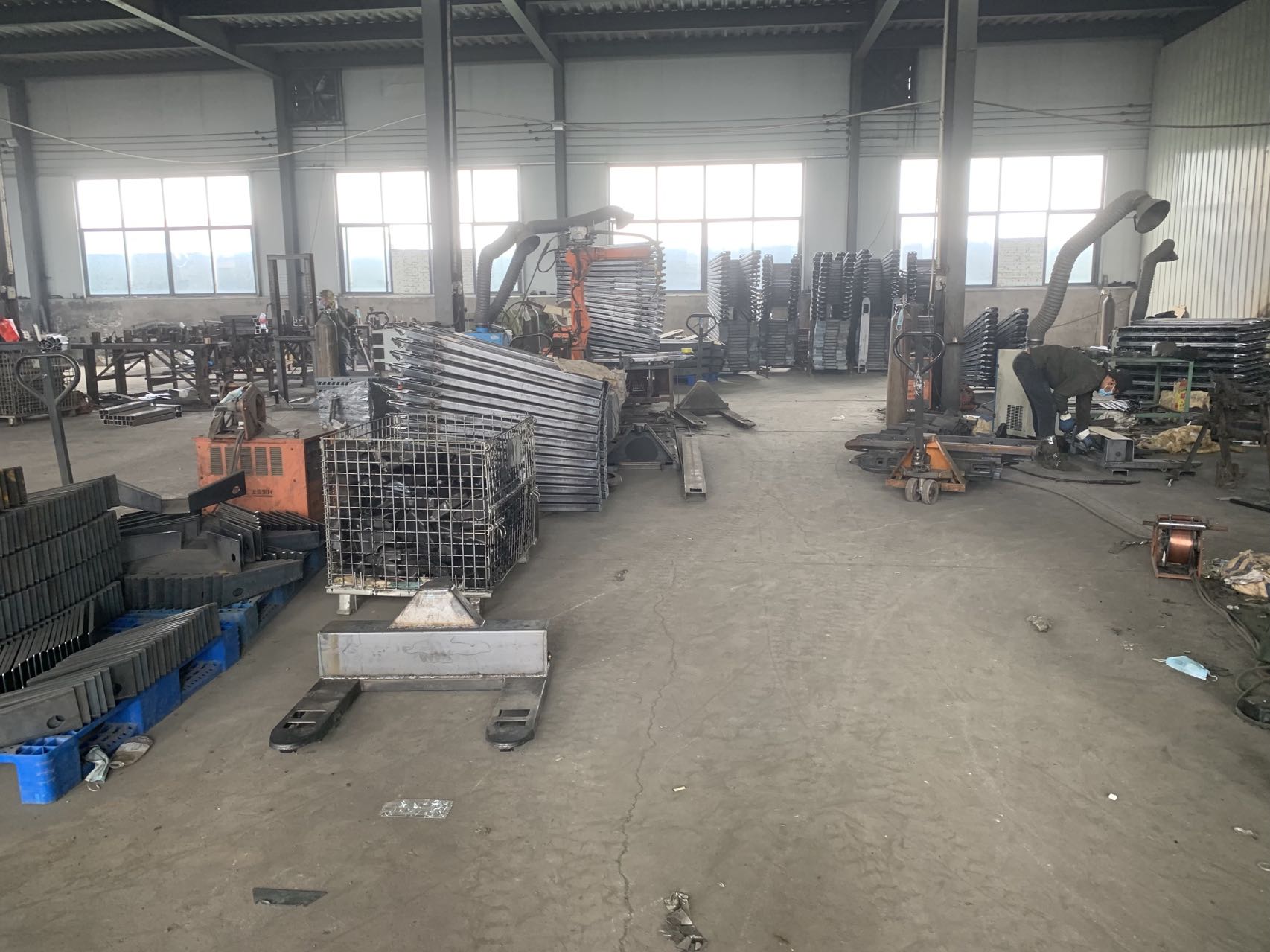
JUNYUNHOIST pallet truck production facility.
For buyers at the evaluation or execution stage, the next step is to document the application environment and request a specification confirmation from the manufacturer. Download the JUNYUNHOIST company brochure below and discuss your requirements with the sales team before placing an order.
Download the JUNYUNHOIST brochure: JUNYUNHOIST Company Brochure (PDF)
Contact: Junyunsteven@163.com | Tel/WhatsApp: +86 134-8345-2631
Have Questions or Need More Details?
Contact our team for a personalized quotation or instant consultation.
Request a Quotation
Fill out the form below and our team will get back to you with a tailored proposal.
WhatsApp Direct Chat
Prefer to chat in real-time? Message us on WhatsApp for instant assistance & quick answers.
- Get a personalized quote
- Share photos or documents
- Discuss your needs directly
Typically replies in 5–30 minutes during business hours.