
Pallet Jack Fundamentals: Manual, Electric, Automated Operation
A pallet jack is a low-lift truck that carries a unitized load — goods stacked on a pallet — on two forks, raises it a few centimetres off the floor, moves it a short distance and sets it down. The mechanics are simple. The differences that shape a purchasing decision sit in how force reaches the forks: a person pushes and pumps, a battery-driven motor drives and lifts, or onboard navigation moves the truck with nobody standing on it.
This explainer follows those three operating principles in the order most facilities meet them, then connects the jack to the equipment it depends on — pallets, shelving, storage cages, chargers and fleet management. JUNYUNHOIST's listed range, which includes hand pallet trucks, manual stackers, electric stackers, lift tables and galvanized or stainless steel pallet trucks, is used throughout as a concrete reference for how each family behaves in service.
What a pallet jack does in the material flow
A pallet jack is best understood as a unitized transport carrier rather than a lifting device. It does not handle cases or individual items; it moves a pallet as one unit, which is why the pallet and the truck have to be specified together.
Four actions repeat in every cycle. Fork entry slides the forks into the pallet's entry openings, so fork thickness, width and length must match the pallet, and the lowered fork height must clear its bottom board. Lift raises the fork carriage hydraulically: a pump pushes oil into a cylinder, and releasing that pressure lets the forks descend under load. Transport covers the short distances that connect a dock, a storage position and a production line. Set-down returns the pallet and withdraws the forks.
Those four actions explain most of the vocabulary buyers meet. A low profile model exists to reach a low lowered fork height for pallets with shallow entry; a narrow fork version matches a pallet with narrow openings; a high lift model extends the lift range so a load can be raised towards a low shelf rather than only lifted off the floor. None of these changes the operating principle — they change the fork geometry and the lift range.
Operating mode also changes classification. In the United States, OSHA identifies 29 CFR 1910.178 as the powered industrial truck standard relevant to powered pallet jack operation, and describes its scope for low-lift and high-lift powered industrial trucks controlled by riding or walking operators on compacted, improved surfaces. A manual hand pallet truck has neither powered drive nor powered lift, so the operator-training obligations attached to powered trucks become relevant at the point where a facility moves to electric or automated equipment.
Manual, electric and automated operation side by side
The three modes differ in what moves the truck, what the operator does, and what the surrounding operation has to provide.
| Operating mode | What moves the truck | Operator role | Where it fits | Main constraint | What it adds to the system |
|---|---|---|---|---|---|
| Manual hand pallet truck | Operator push and pull; handle pump for lift | Walks with the load, pumps to lift, steers | Short trips, mixed loads, low-throughput areas, backup capacity | Operator effort and fatigue; floor and gradient | Very little: no charger, no battery, no powered-truck training cycle |
| Electric pallet truck | Battery-powered traction motor and powered lift pump | Walks or rides, controls travel and lift from the handle | Repeated trips, dock-to-storage movement, higher throughput | Charging routine and battery care; powered-truck training | Charger, charging position, battery replacement, evaluated operators |
| Automated pallet jack | Onboard navigation and drive system; no operator on the truck | Supervises the flow and handles exceptions | Repetitive mapped routes in a stable layout | Site discipline: consistent pallet positions, clear lanes, integration | Mapping, traffic rules, charging schedule, fleet management, exception process |
Read the last column first. For a manual truck, the purchase price is almost the whole cost of ownership apart from wheels and seals. An electric truck brings a charger, a battery, an energy cost and a training programme. An automated unit brings mapping, traffic rules and integration work. A fair comparison between modes accounts for those additions.
Manual operation: pushing, pumping and lowering
In manual operation the operator supplies both the traction and the lift. Pushing or pulling moves the loaded truck on its load rollers and steer wheels; pumping the handle actuates the hydraulic pump that raises the forks; a release lever or pedal opens the valve that lowers them.
Effort is not constant. It rises with load weight, with wheel condition, with floor roughness and with any gradient, and it accumulates across a shift. That is why manual trucks stay efficient on short, frequent trips inside a compact area and become inefficient as trip distance or throughput grows.
Build quality changes how that effort feels over years rather than days. JUNYUNHOIST describes its pallet truck build with a 4 mm steel plate, an AC hydraulic pump, a forged rocker arm, forged A/B plates and double-chain plates, a cast steel wheel frame, ribbed reinforcement and a 2.75 mm handle, and states that units are tested at 1.2 times the rated load. These are construction facts rather than operating rules; their practical value is durability under repeated heavy cycles and a lower rate of the failures described further down — pump seal loss, handle deformation and wheel wear.
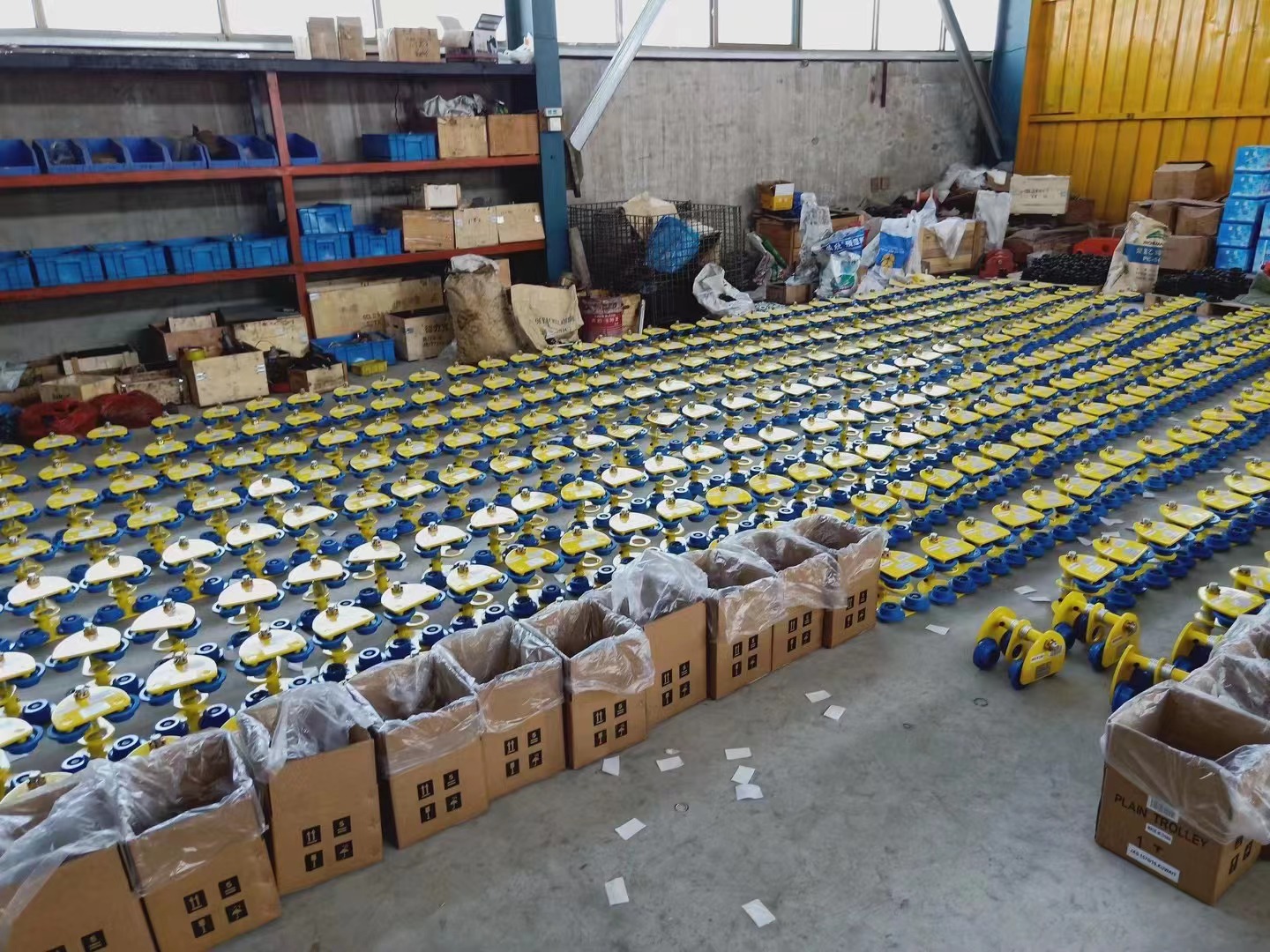
Manual operation also sets the maintenance model. With no battery, motor or control electronics, inspection concentrates on the hydraulic circuit, the wheels and the handle assembly, and a spare-parts stock of seals, wheels and handles covers most interruptions.
Electric operation: drive motor, battery and control
A battery-powered pallet truck replaces operator effort with a traction motor and a powered lift pump. The operator still walks or rides with the truck, but travel, lift and braking are managed from the control handle rather than from the operator's legs.
What the buyer gains is throughput and a lower physical load on the operator. What the buyer takes on is an energy routine: a charger, a charging position, a charging window that fits the shift pattern, and a battery whose capacity and replacement interval enter the maintenance budget. Cold-room use, long shifts and multi-shift operations turn that routine into a design question rather than an afterthought.
Electric operation also changes obligations. OSHA's training guidance for powered industrial truck operators describes formal instruction, practical training, workplace evaluation, refresher training and certification, with operators reevaluated at least once every three years. Floor condition matters more once a truck is powered: the standard's scope description refers to compacted, improved surfaces, and dock plates, expansion joints and broken concrete affect a powered truck differently from a hand truck.
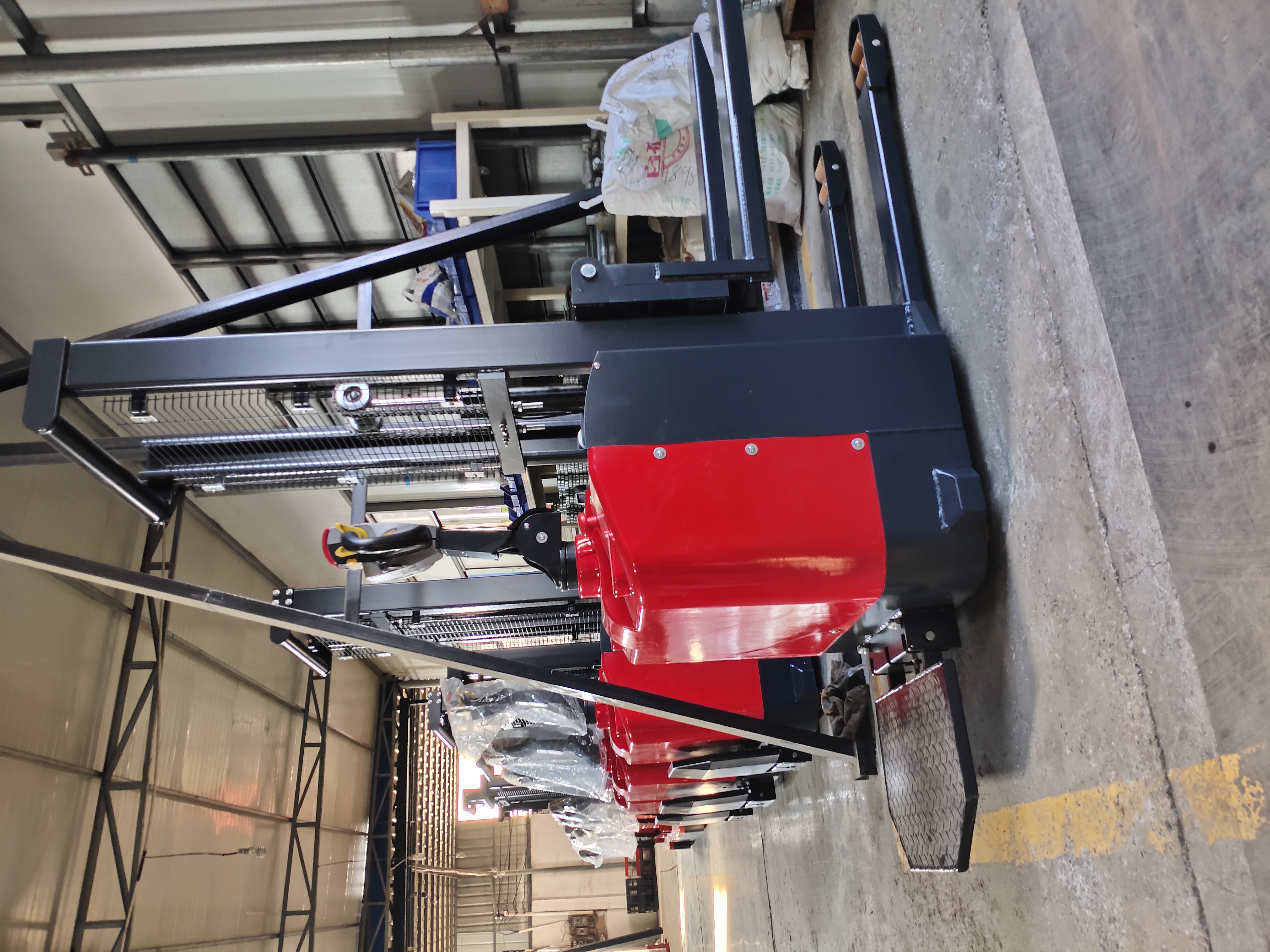
Automated operation: navigation, routes and exceptions
An automated pallet jack keeps the forks and the hydraulic lift but removes the operator from the truck. Onboard navigation follows a mapped route, and the site supplies the consistency the truck needs to complete a pick-up and a drop-off without intervention.
Application evidence for automated pallet jacks concentrates in repetitive, route-based environments: retail logistics, food and beverage distribution, automotive and parts logistics, and manufacturing plants. Those are settings where pallet positions repeat, lanes are defined and the same movement happens many times per shift.
For the buyer, automation shifts the constraint. Operator effort stops being the limit; layout discipline becomes the limit. A pallet left outside its marked position, a blocked lane, an unplanned obstacle or a charger placed across the route each turns into a stop. Integration with a fleet management or warehouse system is part of the project rather than an accessory, and the practical pilot question is not whether the truck can navigate but whether the site can keep its pallet positions consistent for a full shift.
The supporting equipment that decides whether the jack works
A pallet jack is one component in a handling system, and most operating problems originate in the components around it.
- Pallets. Entry openings, bottom-board condition and dimensional consistency determine whether the forks enter cleanly. A mixed pallet pool produces the same symptom in all three operating modes: damaged pallets, jammed forks and loads that shift in transit.
- Shelving and racking. A pallet jack lifts to a limited height, so shelf levels meant to be served by a jack must sit inside its lift range. Higher levels need a stacker or a different truck class.
- Storage cages. The cage base must accept the forks and stay stable during transport; a cage that flexes on the forks is a load-integrity issue, not a truck fault.
- Chargers. For electric fleets, the charger location, the number of charging points and the charging window decide how much of the fleet is available at the start of a shift.
- Fleet management. A register of units, battery age, inspection dates, maintenance history and utilisation turns a group of trucks into a managed fleet, and it is the only reliable basis for replacement planning.
JUNYUNHOIST's range as a working example
Baoding Junyun Hoisting Machinery Co., Ltd. (JUNYUNHOIST) is a Hebei, China-based manufacturer and trading company, founded in 2018, whose listed range covers hand pallet trucks, pallet jacks, manual stackers, electric stackers, oil stackers, lift tables, galvanized and stainless steel pallet trucks, weighing pallet trucks and electric pallet trucks. The range maps onto the operating modes described above, with one distinction worth keeping clear.
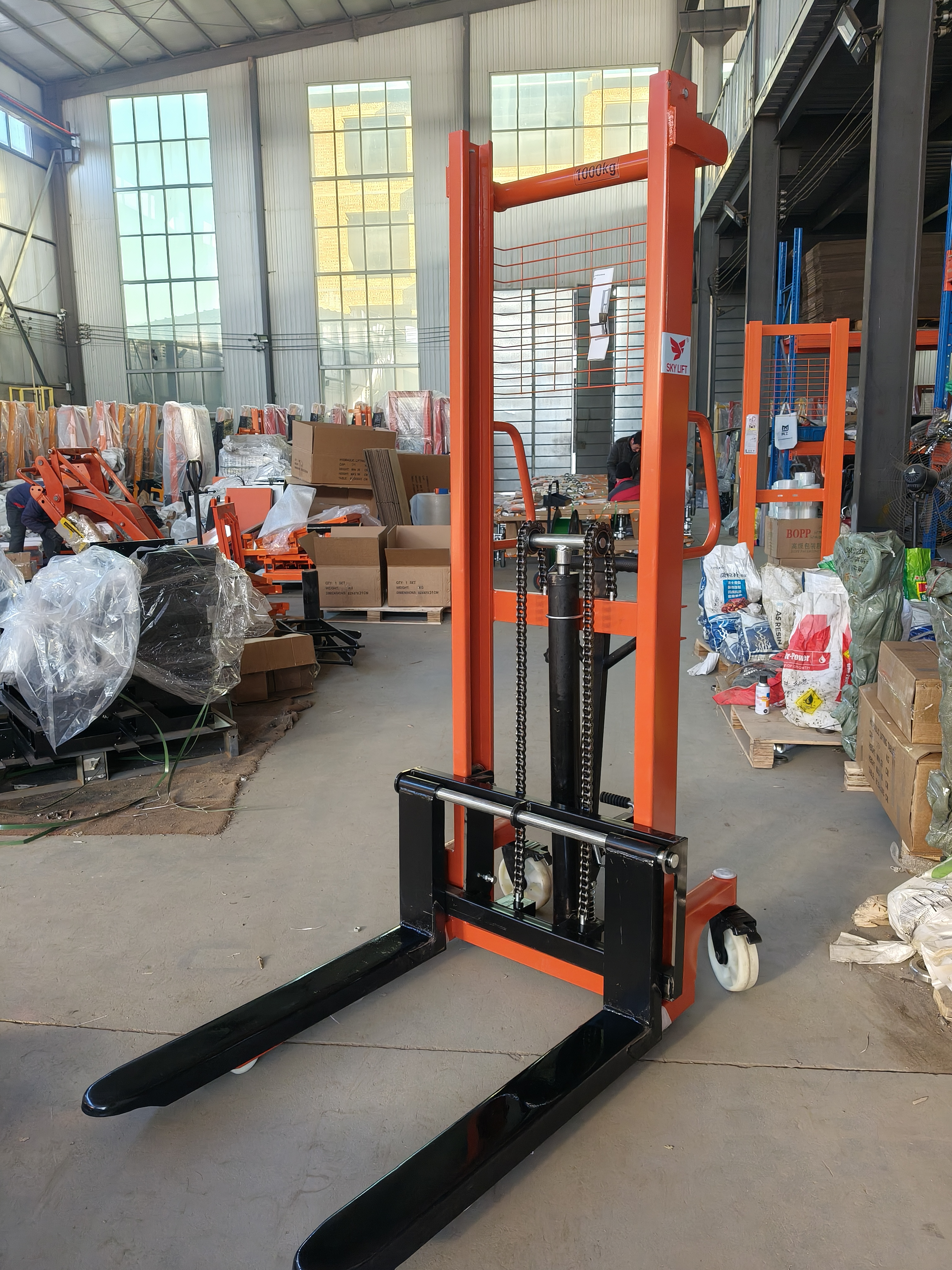
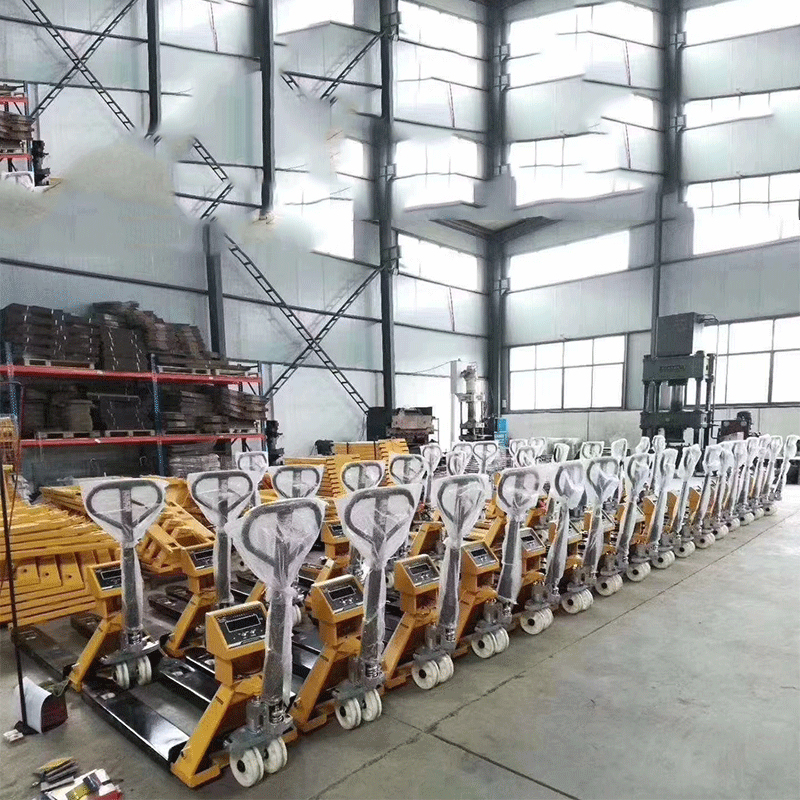
Hand pallet trucks and manual pallet jacks are the manual mode. Manual stackers add a mast and raise a load higher than a pallet jack can, still with manual effort. Electric stackers power that lift. Lift tables change the height of a load at a work position and are not transport equipment — they solve an ergonomic or line-side handling problem rather than a movement problem. Galvanized and stainless steel pallet trucks address corrosion and washdown, and a weighing pallet truck captures weight while the load is being moved, which removes a separate weighing step at goods-in.

Matching the operating mode to the working environment
Environment, not preference, usually decides both the mode and the material.
Factory workshops and manufacturing plants combine mixed floor conditions with steady internal movement. Carbon steel manual trucks cover short internal trips; where trips lengthen or loads repeat, electric trucks reduce the physical load on operators.
Logistics centres and supermarket warehouses are trip-frequency environments. Aisle width and fork length decide how much of the aisle the truck occupies, a narrow aisle layout rewards a shorter or narrower truck, and a low profile model resolves low-clearance pallets. Where inbound verification matters, a weighing pallet truck removes a separate weighing step.
Food processing plants and food and beverage warehouses add washdown and hygiene. Stainless steel or galvanized construction, a rust-proof finish and food-grade material contact are specification items to confirm in writing rather than assume from a product name.
Pharmaceutical and electronics operations usually involve lighter loads, clean floors and frequent short moves between defined points, which favours manoeuvrability and cleanable surfaces over load capacity.
Chemical plants add corrosion and, in some areas, hazardous-atmosphere requirements. An explosion-proof execution is a separate specification category from a standard truck, and the classification documentation for the specific zone has to be confirmed for the exact model before an order is placed.
Cold storage is the clearest case where material decides. Stainless steel pallet trucks are the variant associated with cold rooms, and one EU compliance guide rates stainless steel pallet jacks for cold storage environments down to −40 °C. Where a cold room is served from a general warehouse, the charger location and battery behaviour at low temperature need to be settled at specification stage.
From load analysis to fleet continuity: an eight-step path
- Unitize the load. Record pallet type, load weight, stack height and load stability. Every later decision depends on this record.
- Measure the interface. Aisle width, door widths, dock plates, threshold ramps, rack beam heights and floor condition define what the truck must fit through and lift to.
- Choose the mode from the trip profile. Combine distance, trips per shift, load weight and gradient. Short and infrequent trips favour manual operation; long, repeated or heavy movement favours electric; fixed repetitive routes in a disciplined layout make automation worth evaluating.
- Specify material and finish. Carbon steel for dry internal use, galvanized or stainless steel for washdown, corrosion and cold rooms.
- Verify compliance for the destination market. Pallet trucks are classified as machines under EU safety regulations, and CE marking is mandatory for EU market access; in the United States, the powered-truck training components apply to powered equipment. Request documentation for the exact model and market rather than a general certificate image.
- Plan the support layer. Chargers and charging positions for electric fleets, a spare-parts stock for all fleets, and an inspection interval that matches the duty cycle.
- Validate before scaling. Run the truck on your own floor with your own pallets, and use the stated acceptance checks — a pre-shipment test and third-party inspection — before releasing a fleet order.
- Secure continuity. Confirm production lead time, capacity, trade terms and payment terms in the order documentation so that the second and third batches arrive on the same specification.
Failure patterns and what they indicate
Three failures dominate manual truck maintenance, and each points back to operation as much as to parts. A pump that leaks oil or draws air indicates a seal or oil-level problem. A deformed or damaged handle usually follows impact or use beyond the load the truck was built for. Wheel wear follows floor condition, load and distance.
The controls are procedural: do not overload the truck, and keep the forks balanced under the load when lifting, so that one roller does not carry the whole weight. JUNYUNHOIST's stated after-sales measure is to supply commonly damaged spare parts — seals, handles and wheel frames — free of charge, which shortens the interruption when one of these failures occurs.
Lifecycle cost and long-term supply continuity
The purchase price is one line in a longer ledger. A manual truck's lifecycle cost is dominated by wheels, seals and inspection labour. An electric truck adds energy, charger maintenance, battery replacement and the training and evaluation cycle for its operators. An automated unit adds mapping, integration and the site discipline needed to keep routes clear.
Build specification moves cost between those lines rather than removing it. JUNYUNHOIST's own comparison with a lower-specification build cites a 2% higher initial cost alongside better durability and lower long-term maintenance; that is a manufacturer comparison rather than an independent benchmark, so the useful step is to ask for its basis and to compare like-for-like duty cycles. A fleet standardised on one or two configurations carries fewer part numbers, trains operators once and simplifies replacement.
For repeat orders, supply terms belong in the same decision. The stated typical production lead time is 15–20 days with a monthly production capacity of 10,000 units; delivery terms are FOB, EXW, CIF and CFR; payment terms are 30% T/T in advance with 70% against a copy of the bill of lading. Those terms let a buyer plan a phased rollout — a first batch for the pilot area and later batches on the same specification — instead of replacing a fleet in a single purchase.
Frequently asked questions about pallet jack operation
Does a pallet jack need CE marking and operator training?
They are separate obligations. CE marking concerns market access: pallet trucks are classified as machines under EU safety regulations, and CE marking is mandatory for placing them on the EU market. Operator training concerns use: in the United States, OSHA identifies 29 CFR 1910.178 as the powered industrial truck standard relevant to powered pallet jack operation, and its training components are formal instruction, practical training, workplace evaluation, refresher training and certification, with operators reevaluated at least every three years. A manual hand pallet truck has no powered drive or powered lift, so the powered-truck training requirement attaches to powered variants; applicability for a specific model and jurisdiction should be confirmed before deployment.
Can one pallet truck serve both a general warehouse and a cold room?
Only if the material and specification suit both duties. Stainless steel pallet trucks are the variant associated with cold rooms and washdown, and one EU compliance guide rates stainless steel pallet jacks for cold storage down to −40 °C. A carbon steel truck used where condensation and washdown occur will corrode, while a stainless truck used for dry general duties costs more than the task requires. Where both duties exist, keeping a dedicated cold-room unit usually protects both hygiene and truck life.
What drives the total cost of a pallet jack fleet?
Five cost lines: purchase price, energy and charging, spare parts and maintenance labour, operator training, and downtime. Manual trucks concentrate cost in wheels, seals and inspection; electric trucks add battery replacement and charger maintenance; automated units add mapping and integration. Build specification shifts cost between these lines rather than removing it — JUNYUNHOIST's own comparison with a lower-specification build cites a 2% higher initial cost alongside better durability and lower long-term maintenance, which is a manufacturer comparison rather than an independent benchmark.
How can a buyer validate a unit before committing to a fleet order?
Test the truck against your own pallets and floor rather than a specification sheet alone: fork entry, lift height and aisle width are decided by the interface, not by the model name. For documented verification, the stated acceptance criteria are a pre-shipment test and third-party inspection (SGS), and those records should be requested for the exact configuration ordered. Compliance documents for the destination market belong in the same check.
What lead time and production capacity should a buyer plan around?
The stated typical production lead time is 15–20 days, with a monthly production capacity of 10,000 units and delivery terms of FOB, EXW, CIF and CFR; payment terms are 30% T/T in advance with 70% against a copy of the bill of lading. A phased rollout — pilot batch first, repeat batches on the same specification — fits that pattern better than a single large delivery. The full product range, including pallet trucks, stackers, lift tables and electric models, is documented in the JUNYUNHOIST product brochure (PDF).
Conclusion
Manual, electric and automated pallet jacks perform the same four actions — fork entry, lift, transport and set-down — and differ in who or what supplies the force. That single distinction determines operator effort, training obligations, charging infrastructure, layout discipline and the shape of the maintenance budget. The equipment around the truck matters just as much: pallet quality, shelf height, cage stability, charger position and a fleet register decide whether the operating mode performs as planned.
Specify from the load and the interface first, verify compliance and acceptance for the destination market, then secure repeat supply on the same configuration. That sequence produces a fleet that can be maintained, trained for and replaced in phases rather than rebuilt from scratch.
Planning a fleet rather than a single truck? The JUNYUNHOIST product brochure (PDF) covers the pallet truck, stacker, lift table and electric ranges in one document. For specification questions, contact Junyunsteven@163.com or +86 13483452631, or visit www.junyunhoist.com.
Have Questions or Need More Details?
Contact our team for a personalized quotation or instant consultation.
Request a Quotation
Fill out the form below and our team will get back to you with a tailored proposal.
WhatsApp Direct Chat
Prefer to chat in real-time? Message us on WhatsApp for instant assistance & quick answers.
- Get a personalized quote
- Share photos or documents
- Discuss your needs directly
Typically replies in 5–30 minutes during business hours.