
Pallet Jack Minimum Lifting Height: How to Specify 35mm vs 62mm for Your Application
If a pallet jack fork cannot slide under the pallet, no other line on the datasheet matters. Minimum lifting height - the lowest position the fork reaches when the truck is fully lowered - is the measurement that decides whether a truck can engage a load at all.
On the JUNYUNHOIST AC30 pallet truck platform, the standard specified minimum height is 80 mm, with a maximum height of 200 mm. For facilities that handle low-profile pallets, double-deck pallets, skids or floor transitions, 80 mm can be too high. For those projects, JUNYUNHOIST builds custom fork assemblies with minimum lifting heights of 35 mm or 62 mm.
This guide is written for buyers, facility engineers and operations managers who are specifying a pallet jack for a defined project. It explains how to choose between the two custom heights and the standard configuration, how fork length and width, wheel material and fork steel plate thickness interact with that choice, and how to validate a specification before an order is placed.
Why Minimum Lifting Height Is a Fit Problem, Not a Spec-Sheet Detail
A pallet jack only works when the fork enters the pallet's entry openings. Two conditions have to be true at the same time: the fork must be low enough to pass under the top deck, and the load wheels must still be able to roll on the floor underneath.
When the fork's lowest position sits higher than the pallet's entry clearance, the failure is immediate and visible:
- The fork tip strikes the pallet. Instead of sliding in, the fork hits the bottom board or the deck board. Operators often force the truck, which damages pallet boards and, over time, deforms fork tips.
- The work moves back to manual handling. Staff lift and drag loads by hand, which slows throughput and increases injury risk.
- Floor transitions make it worse. Dock plates, drainage channels, expansion joints, ramp edges and worn concrete change the effective floor level exactly where the fork needs to slide in.
Minimum lifting height is therefore not chosen by preference. It is controlled by three inputs, and the lowest of them sets the specification: the pallet's entry clearance, the effective floor level at the point of entry, and the fork and chassis geometry of the truck. Change any one of the three - a new pallet supplier, a resurfaced floor, a different dock - and the original specification may no longer fit.
The commercial cost of getting this wrong is quiet rather than dramatic. A truck that will not enter a pallet is rarely returned; it is worked around. Loads get broken down by hand at the pallet, throughput drops, and the pallet fleet absorbs damage that shortens its service life. Facilities seldom trace the loss back to the entry height, which is why the same specification mistake repeats from site to site.
Industry Background: High-Volume Demand, Fixed Entry Heights
Pallet jacks are a high-volume category, and most units in service still leave the factory with a fixed fork entry height.
- The global pallet jacks market was valued at approximately USD 7.4 billion in 2024 and is projected to reach USD 11.6 billion by 2034 (Vertex AI Search / Industry Report 2025-2034).
- Manual pallet jacks dominated the market in 2024 with revenue of USD 4.3 billion, despite the rise of automation (Industry Forecasts Report 2025-2034).
- The electric pallet jack and stacker market was valued at USD 5.1 billion in 2024, driven by e-commerce growth and lithium-ion technology (Electric Pallet Jack Market Size 2032 Report).
Published estimates vary noticeably depending on scope - some studies count only hand pallet trucks, while others include stackers and related handling equipment - so these figures are best read as directional rather than exact. What they show clearly is that manual trucks remain the largest installed base, which makes fork-entry clearance an everyday operating issue rather than a niche one.
E-commerce and express delivery networks have also increased the number of handling points where goods cross a change in floor level: dock levelers, trailer lips, cross-dock plates and ramp edges. These transitions are exactly where minimum lifting height becomes the limiting factor, and the same trend has widened the variety of pallets and containers entering warehouses, which makes a single fixed entry height harder to justify across an entire operation.
Three published standards frame the safety side of the specification:
- ISO 3691-5:2014 specifies safety requirements for pedestrian-propelled trucks, which covers manual and semi-manual pallet jacks.
- EN 1757-2 covers hand pallet trucks in Europe, with safety requirements for trucks with capacities up to 2,000 kg.
- In the United States, OSHA 29 CFR 1910.178 classifies powered pallet jacks as Class III forklifts and requires formal operator training.
None of these standards prescribes a single minimum lifting height - the correct number comes from the pallet and the floor. What they establish is that a truck must be safe to operate at the height it was designed for, which is why a custom entry height should be a specified and verified engineering decision rather than an afterthought.
The Solution: 35 mm, 62 mm, or the Standard Configuration
Baoding Junyun Hoisting Machinery Co., Ltd. (JUNYUNHOIST) was founded in 2018 in Baoding, Hebei, China, employs 138 people, and operates with an 8-person R&D team and an annual output of 70,000 units. Around 80% of production is exported, with main markets in India, Russia, Vietnam, Brazil, Türkiye, the United Arab Emirates, and across the Middle East and Southeast Asia.
Choosing a minimum lifting height is a process of elimination. Start with the standard configuration, and only move to a custom height when the pallet or the floor proves that the standard entry will not clear.
Standard configuration - 80 mm on the AC30 platform
The AC30 pallet truck platform is specified with a minimum height of 80 mm and a maximum height of 200 mm. For standard pallets handled on flat, well-maintained concrete, this is the reference point. If your pallets and floor clear it, stop here: a standard truck is faster to ship, easier to service and uses the most widely available spare parts.
62 mm minimum lifting height
A 62 mm minimum lifting height is a custom build that sits between the standard configuration and the lowest available option. Projects generally move to 62 mm when the measured entry clearance on their pallets falls just below what a standard truck clears, or when the floor is only moderately irregular - concrete joints, small level changes, older slab surfaces. It resolves the clearance problem while keeping the fork assembly as close to standard geometry as the application allows.
35 mm minimum lifting height
35 mm is the lowest custom minimum lifting height offered. It is generally specified for low-profile pallets, double-deck pallets, skids, and floor situations involving ramps, dock levelers, drainage channels or similar transitions. Because a lower fork assembly reduces clearance under the chassis as well, these trucks are usually specified together with a wheel material matched to the floor and a defined routine for keeping floor debris under control. The trade-off is deliberate: the truck gains entry capability, and the facility accepts a cleaning and maintenance routine in return.
Decision rule: specify the lowest height your pallets and floors actually require, and no lower. Going below the requirement adds cost and complexity without adding capability.
Customization that travels with the height decision
Minimum lifting height is rarely specified on its own. JUNYUNHOIST builds pallet trucks under an OEM/ODM model, and the customization scope covers:
- Fork length and width - fork widths of 550 mm and 685 mm, and fork lengths of 800, 1150, 1220, 1500, 1800 and 2000 mm.
- Fork steel plate thickness - adjusted to the load profile and duty cycle.
- Wheel material - PU, Nylon, PP and rubber options.
- Material and finish - steel construction, with galvanized and stainless steel pallet truck versions for wet, wash-down and corrosion-sensitive areas.
- Platform variants - semi electric pallet truck, full electric pallet truck, and pallet truck with scale.
- Testing - 100% test on units before shipment.
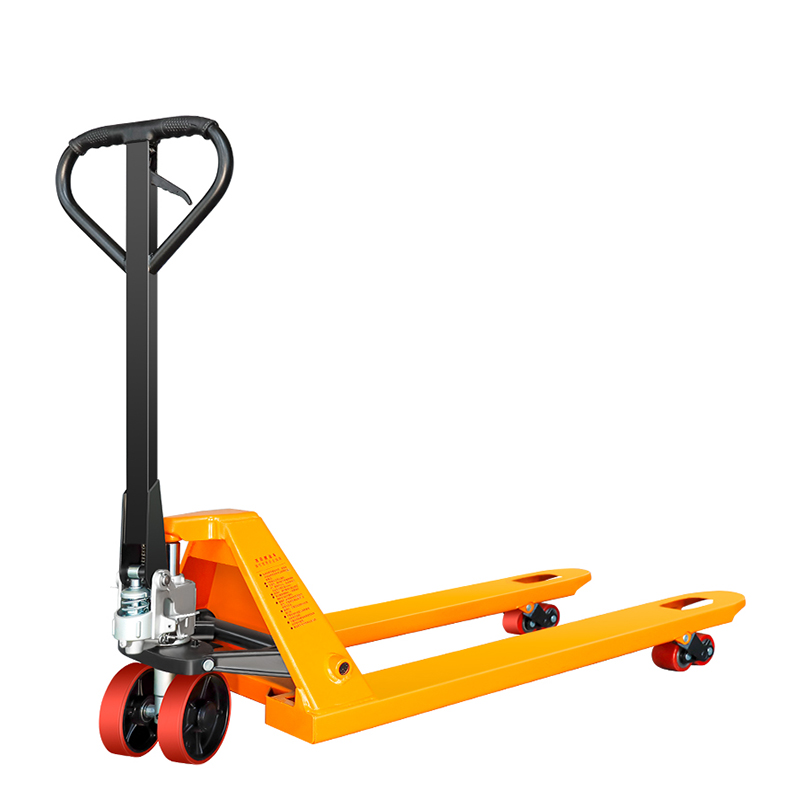 The AC30 platform is available in standard and custom fork configurations, including minimum lifting heights of 35 mm and 62 mm.
Step-by-Step: How to Specify Minimum Lifting Height for a Project
- Measure the pallet, not the truck. Record the entry clearance on every pallet type in the flow - standard pallets, low-profile pallets, double-deck pallets, skids and any rented or customer-supplied pallets. Use the lowest value you find, not the average.
- Measure the floor at its worst point. Check concrete joints, dock plates, drainage channels, ramp edges, thresholds and damaged slab sections along the actual travel route. The controlling measurement is the worst combination of pallet height and floor condition on the same path.
- Choose the entry height by elimination. If the standard configuration clears, keep it. If it does not, move to 62 mm. If the pallet or the floor transitions still interfere, specify 35 mm.
- Match fork length and width to the pallet and the aisle. Fork lengths from 800 mm to 2000 mm and widths of 550 mm and 685 mm are available. Forks that are too long reduce maneuverability in confined spaces; forks that are too short reduce load stability.
- Select the wheel material for the floor and the environment. PU, Nylon, PP and rubber wheels behave differently on smooth concrete, coated floors, wet areas and cold rooms. This selection belongs with the entry-height decision, not after it.
- Confirm the environment classification. JUNYUNHOIST pallet trucks are used in the manufacturing, food and beverage, pharmaceuticals, chemical and electronics industries, and specialized models are available for cold storage, explosion-proof and other special working conditions. Cold-resistant, explosion-proof and silent operation are treated as dedicated requirements rather than options.
- Validate with a sample, then confirm commercial terms. Test the specified height on your own pallets and floor before committing to a full order. MOQ is 24 PCS and lead time is 15-20 days.
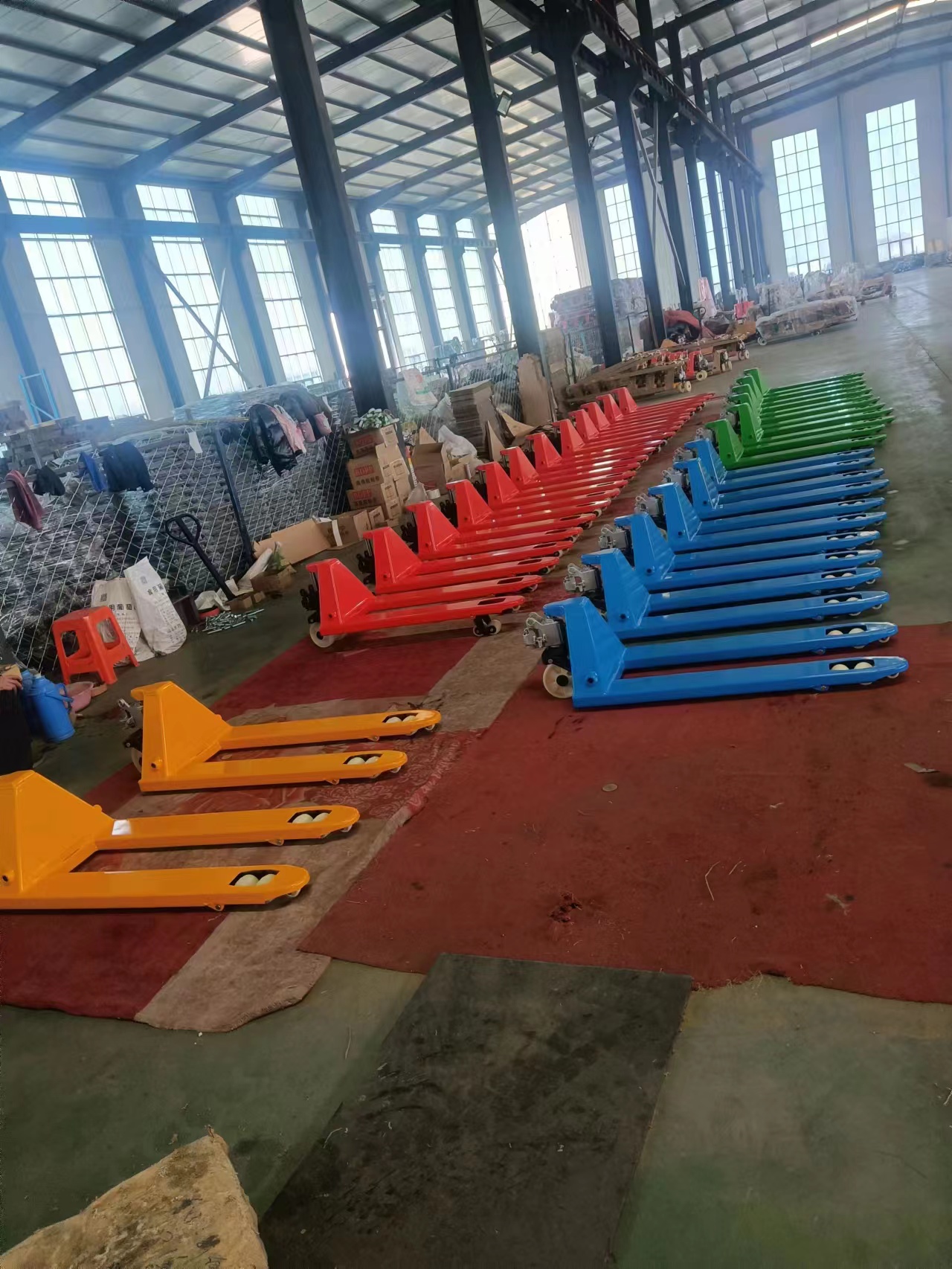 Fork assemblies are built to the specified entry height, and each unit is 100% tested before shipment.
Application Fit: Which Entry Height Suits Which Environment
JUNYUNHOIST pallet trucks are applied across logistics and warehousing, manufacturing, retail and wholesale, cold chain, food and beverage, pharmaceuticals and healthcare, chemical, electronics and electrical appliances, automobile manufacturing, construction materials, e-commerce, express delivery, tobacco, paper and printing, textiles and apparel, and agriculture and agricultural product processing. In these settings, the entry-height decision usually follows the pallet and the floor.
Warehousing and distribution centers
Standard pallets on flat concrete usually clear the standard configuration. Facilities that mix vendor-supplied low-profile pallets into the same flow often specify 62 mm so that one truck type can handle both.
Cold storage and cold chain
Cold rooms combine low temperatures with condensation and, frequently, pallets that have absorbed moisture. Cold-resistant configurations are available, and the fork entry height should be confirmed against the lowest pallet in the flow. Cold storage is one of the special working conditions covered by the specialized model range.
Food processing plants
Wash-down areas favor galvanized and stainless steel pallet trucks, and the floor is often sloped or channelled for drainage - a situation where a 35 mm or 62 mm entry height is commonly specified together with the appropriate wheel material.
Factory workshops
Factory floors typically combine new and older slab sections, machine bases and cable covers. Where floor level changes cross the travel path, a lower custom entry height resolves the recurring fork-strike problem.
Supermarkets and retail backrooms
Backroom storage relies on standard pallets and roll cages in limited space. Shorter fork lengths combined with a defined minimum lifting height keep the truck usable in tight aisles.
Logistics centers and cross-docking
Cross-docking involves dock plates, trailer floors and yard-to-dock transitions. This is one of the most common situations where a 35 mm entry height is specified, because the fork has to enter the pallet at floor-level changes that a standard truck does not clear.
Narrow aisle and manual handling
Narrow aisles and manual pallet jacks put the priority on fork width, fork length and maneuverability. Minimum lifting height still has to be correct, because a truck that cannot enter the pallet is unusable no matter how well it fits the aisle.
A distribution project in practice
One importer project covering India, Brazil, Russia, Belarus, Türkiye, the UAE and Vietnam supplied 400 pcs of pallet trucks over a two-year period, primarily for distribution to local stores. The reported outcomes were convenient, practical, simple and efficient operation with low loss and high efficiency - results that depend on the trucks matching the pallets and floors in each destination market.
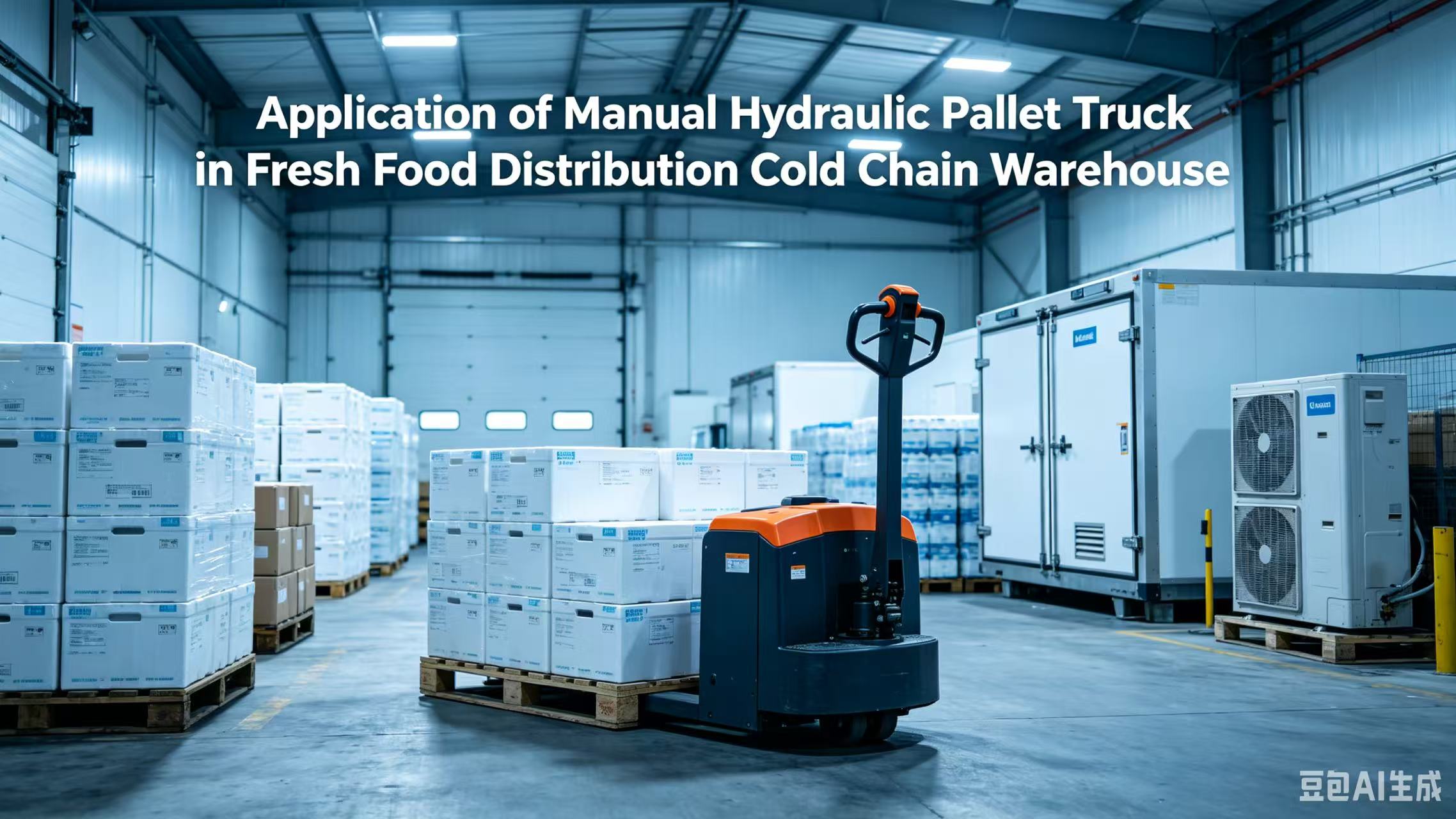 Cold chain and fresh food distribution: entry height, wheel material and cold-resistant configuration are specified together.
Comparison: 35 mm vs 62 mm Minimum Lifting Height
The table below compares the two custom minimum lifting heights on the criteria that actually change a purchasing decision. Where an attribute is identical for both, it is shown as shared.
| Decision point | 35 mm minimum lifting height | 62 mm minimum lifting height |
|---|---|---|
| Position in the range | Lowest custom option offered | Intermediate custom option, between 35 mm and the standard configuration |
| Standard configuration reference | Custom build; AC30 standard minimum height is 80 mm | Custom build; AC30 standard minimum height is 80 mm |
| Typically specified when | Low-profile or double-deck pallets, skids, dock plates, drainage channels and ramp transitions are in the flow | Pallet entry clearance falls just below the standard configuration, or the floor is only moderately irregular |
| Fork length options | 800 / 1150 / 1220 / 1500 / 1800 / 2000 mm | 800 / 1150 / 1220 / 1500 / 1800 / 2000 mm |
| Fork width options | 550 mm / 685 mm | 550 mm / 685 mm |
| Fork steel plate thickness | Customizable | Customizable |
| Wheel materials | PU, Nylon, PP, Rubber | PU, Nylon, PP, Rubber |
| Material and finish | Steel; galvanized and stainless steel versions available | Steel; galvanized and stainless steel versions available |
| Platform variants | Semi electric, full electric, pallet truck with scale | Semi electric, full electric, pallet truck with scale |
| Quality control | 100% test | 100% test |
| MOQ | 24 PCS | 24 PCS |
| Lead time | 15-20 days | 15-20 days |
How to read this table: the two custom heights differ in one meaningful way - how much clearance the fork creates at floor level. Everything around them (fork lengths, widths, thickness, wheels, materials, testing and commercial terms) is specified project by project.
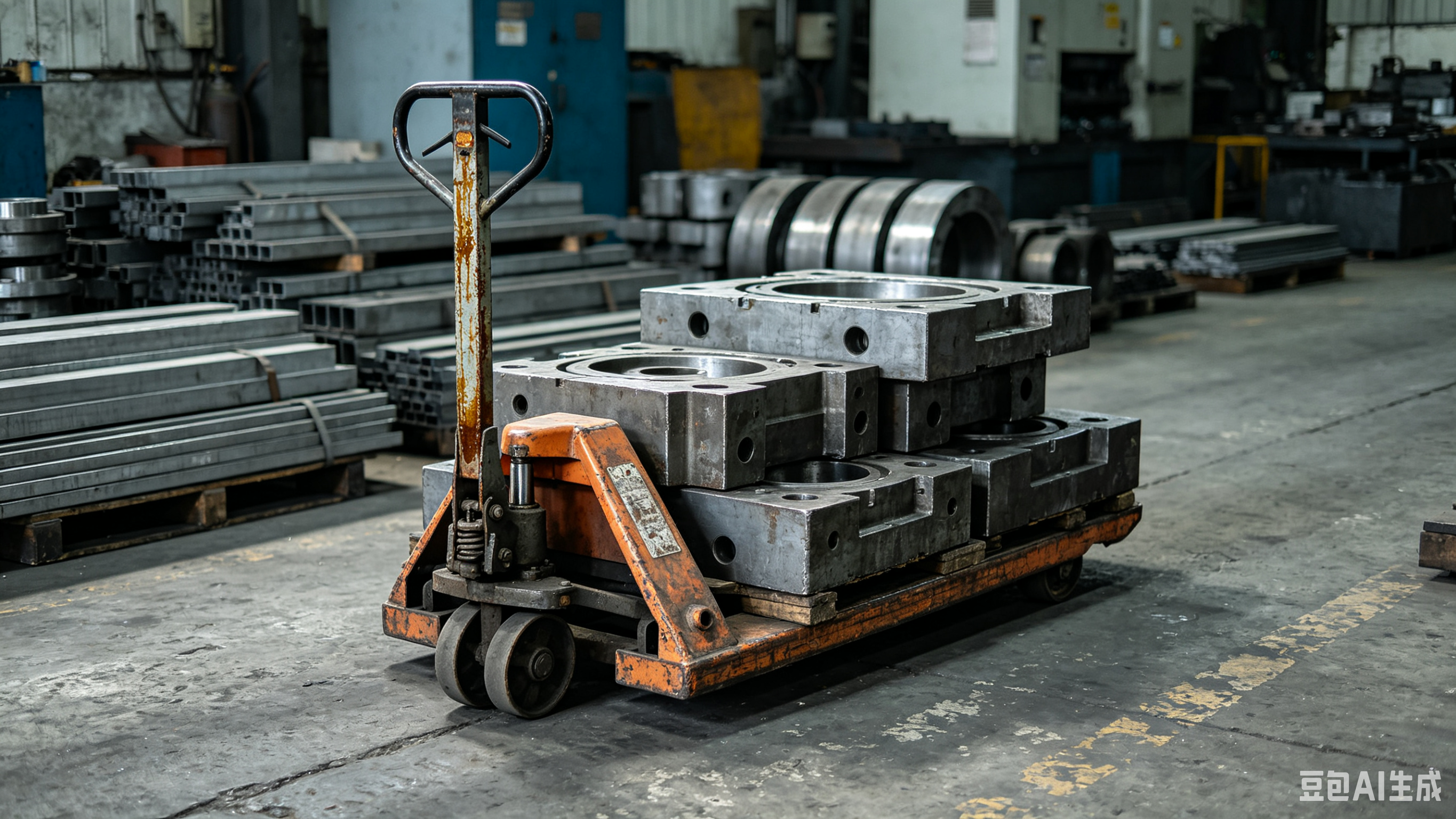 Entry height is verified against the actual pallets and floor in the destination facility, not against a catalogue average.
Reference Specification: JUNYUNHOIST AC30 Pallet Truck Platform
| Parameter | Specification |
|---|---|
| Model | AC30 |
| Product family | Pallet truck / pallet jack / hand pallet truck / manual pallet truck / manual pallet jack |
| Types available | Semi electric pallet truck; full electric pallet truck; pallet truck with scale; galvanized and stainless steel pallet trucks |
| Minimum height (standard configuration) | 80 mm |
| Custom minimum lifting height | 35 mm / 62 mm |
| Maximum height | 200 mm |
| Radius after capture | 1,500 mm |
| Fork width | 550 mm / 685 mm |
| Fork length | 800 / 1150 / 1220 / 1500 / 1800 / 2000 mm |
| Wheel materials | PU, Nylon, PP, Rubber |
| Material | Steel |
| Typical applications | Warehouse; factory floor; loading dock; retail backroom; distribution center; cold storage; construction site; workshop; truck loading/unloading; cross-docking facility |
Supply and Procurement Reference
| Item | Detail |
|---|---|
| Production mode | OEM / ODM |
| Monthly capacity | 10,000 units |
| MOQ | 24 PCS |
| Lead time | 15-20 days |
| Quality control | 100% test |
| After-sales | Each container is equipped with free spare parts for wear and tear, replenished as needed based on subsequent wear |
| Export markets | India, Türkiye, Brazil, Vietnam, Russia, United Arab Emirates, the Middle East and Southeast Asia |
| Manufacturer | Baoding Junyun Hoisting Machinery Co., Ltd. (JUNYUNHOIST), Baoding, Hebei, China |
Frequently Asked Questions
Do custom minimum lifting heights have to meet any safety standard?
ISO 3691-5:2014 specifies safety requirements for pedestrian-propelled trucks, which covers manual and semi-manual pallet jacks, and EN 1757-2 covers hand pallet trucks in Europe for capacities up to 2,000 kg. In the United States, OSHA 29 CFR 1910.178 classifies powered pallet jacks as Class III forklifts, which requires formal operator training. These standards do not dictate one minimum lifting height - the number is set by the pallet and the floor. JUNYUNHOIST manufactures pallet trucks under quality control protocols meeting international safety standards including ISO and CE, and every unit is 100% tested before shipment.
Can the minimum lifting height be customized, and what else can change at the same time?
Yes. JUNYUNHOIST operates an OEM/ODM production model with a customization scope covering fork length and width, minimum lifting height (35 mm and 62 mm), fork steel plate thickness, electric pallet truck configuration, galvanized and stainless steel pallet trucks, and pallet truck with scale. Fork widths are available in 550 mm and 685 mm, and fork lengths from 800 mm to 2000 mm.
What drives the cost of a custom minimum lifting height?
The cost follows the changes the specification requires: the custom fork assembly itself, fork steel plate thickness, the material and finish selected (steel, galvanized or stainless), wheel material, and any platform variant such as semi electric, full electric or a pallet truck with scale. Order quantity relative to the 24 PCS MOQ also affects the commercial terms. Because every configuration is built to order, pricing is quoted per project rather than published as a fixed list price.
Can I test the fork entry with a sample before placing a full order?
Sample requests are supported so that the specified minimum lifting height can be checked against your own pallets and floor conditions before a full order is placed. This is the recommended way to validate the 35 mm versus 62 mm choice, because the controlling measurement is the worst combination of pallet type and floor condition on the actual travel route. Sample and quotation requests can be sent through the JUNYUNHOIST website, by email or by WhatsApp.
What is the MOQ and the lead time for a custom pallet truck order?
MOQ is 24 PCS and lead time is 15-20 days, with a monthly production capacity of 10,000 units. Each container is equipped with free spare parts for wear and tear, replenished as needed based on subsequent wear. To start a specification, send your pallet entry measurement, floor conditions and target application to Junyunsteven@163.com.
Conclusion: Specify the Entry Height First
Minimum lifting height is the first specification to settle and the last one to compromise on. The decision follows a simple order of operations: measure the lowest pallet entry clearance and the worst floor transition along the route, then choose the lowest height that clears both - the standard 80 mm configuration on the AC30 platform, a 62 mm custom build, or the 35 mm option for genuinely low-clearance applications.
Everything else - fork length and width, fork steel plate thickness, wheel material, steel or stainless construction, and the choice between manual, semi electric, full electric and weighing platforms - should be specified around that number, not before it. 100% testing, a 24 PCS MOQ and a 15-20 day lead time make it practical to build and validate a project-specific configuration rather than accept a stock truck that almost fits.
Next Step
Send your pallet entry measurement, floor conditions and application to JUNYUNHOIST, and we will confirm whether 35 mm, 62 mm or the standard AC30 configuration is the right build for your project.
- Website: www.junyunhoist.com
- Email: Junyunsteven@163.com
- Tel / WhatsApp: +86 134-8345-2631
- Product catalogue (download): JUNYUNHOIST product brochure PDF
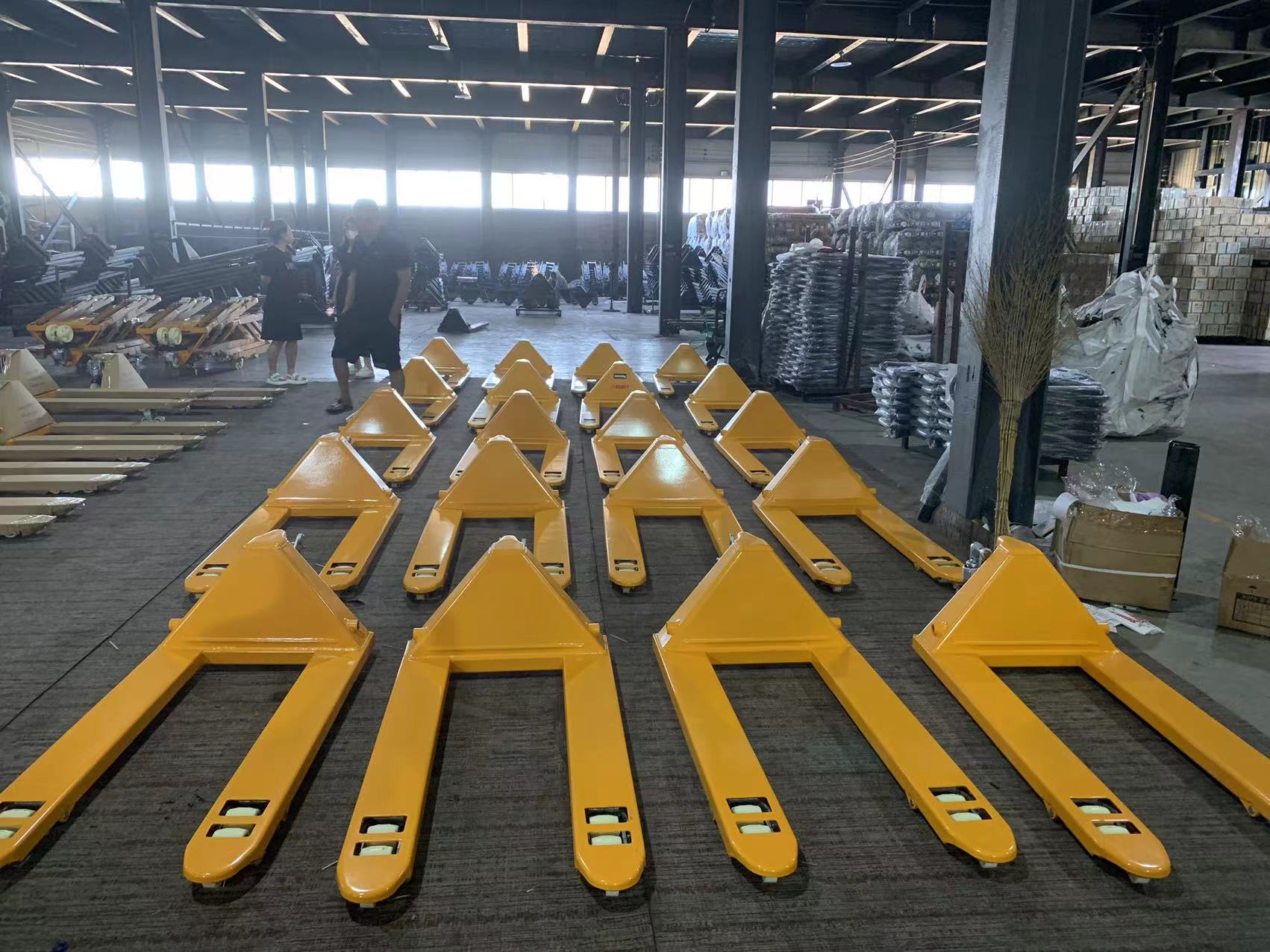
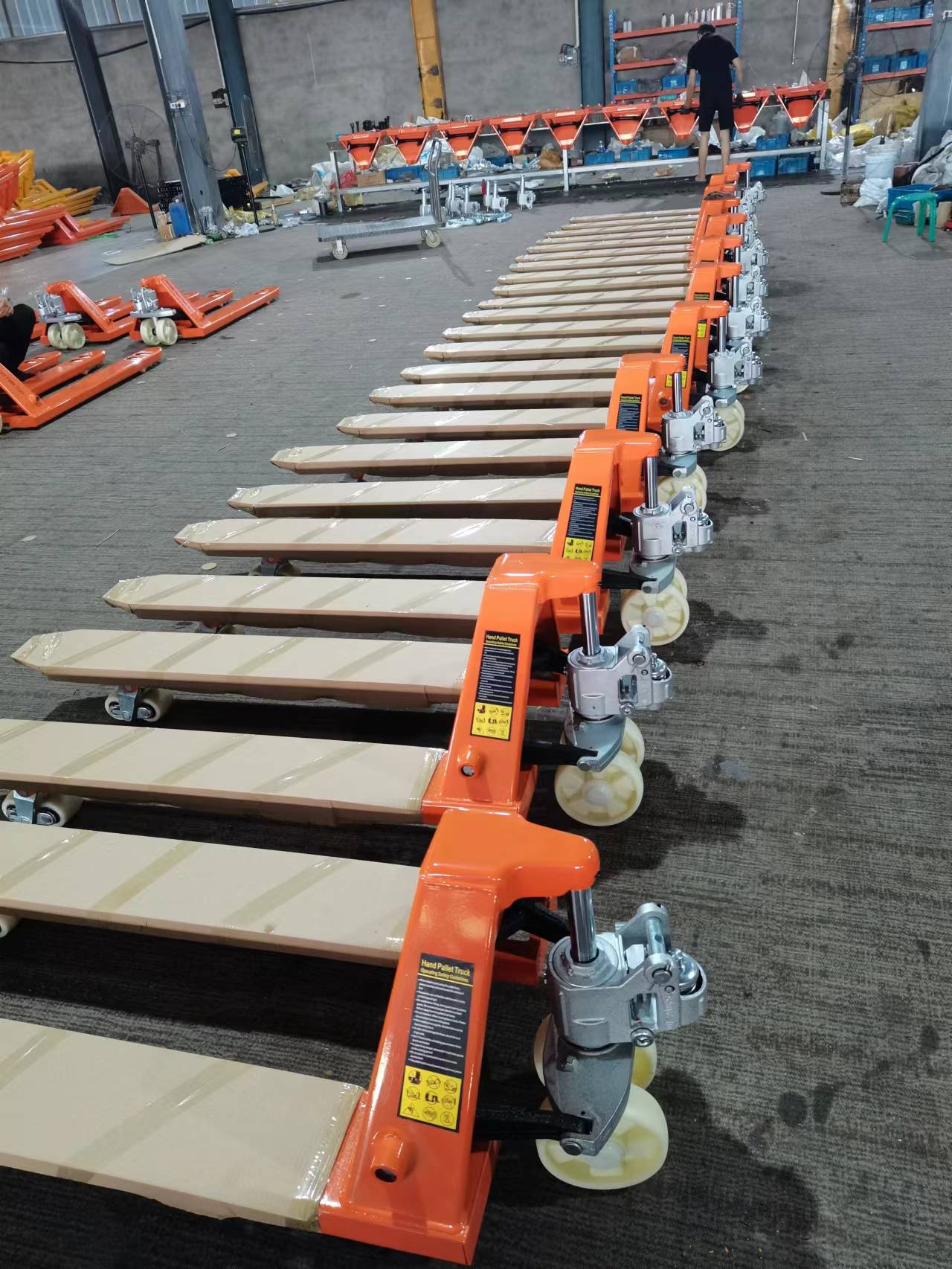 Custom-entry pallet trucks are built to order at the JUNYUNHOIST facility in Baoding, Hebei, China.
Have Questions or Need More Details?
Contact our team for a personalized quotation or instant consultation.
Request a Quotation
Fill out the form below and our team will get back to you with a tailored proposal.
WhatsApp Direct Chat
Prefer to chat in real-time? Message us on WhatsApp for instant assistance & quick answers.
- Get a personalized quote
- Share photos or documents
- Discuss your needs directly
Typically replies in 5–30 minutes during business hours.