
Pallet Jack Quality Standards: Testing & Certifications That Guarantee Safety
Pallet Jack Quality Standards: Testing & Certifications That Guarantee Safety
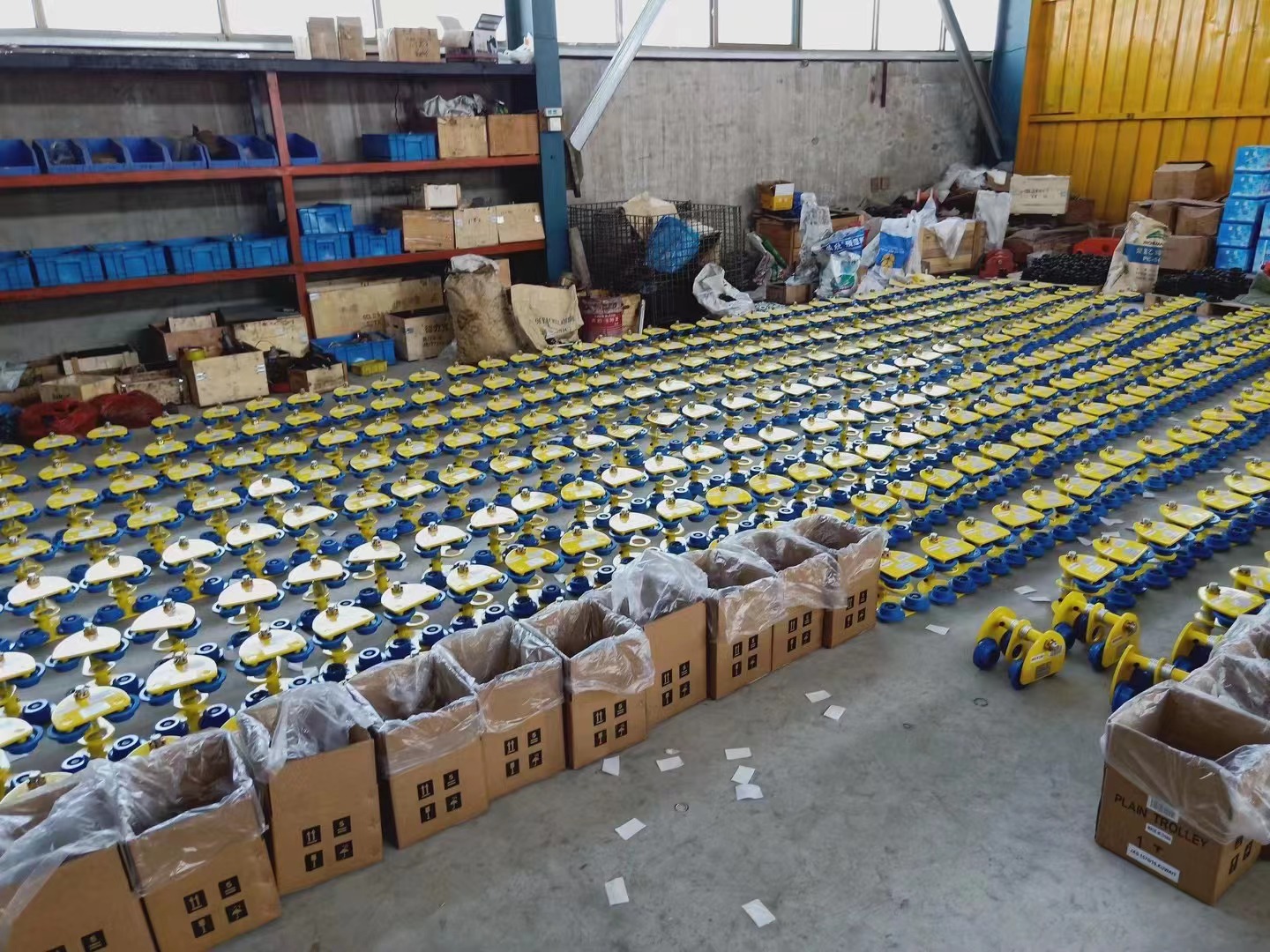
A pallet jack is safe when three things are documented rather than claimed: the unit was load-tested before dispatch, the certification matches the truck's propulsion type, and the frame keeps its geometry after repeated lift cycles. In JUNYUNHOIST's production protocol, load capacity is verified at 1.2 times the load under factory-level 100% testing, and the frame is built on a 4mm steel plate with a forged rocker arm rather than a welded or cast substitute. A buyer who cannot verify those three points is not purchasing a certified pallet jack — they are purchasing an unverified promise.
This guide is written for buyers who are already at the decision stage: comparing two or three suppliers, holding quotations, and trying to work out which quality claims are checkable and which are marketing. It explains what factory testing and certification actually guarantee, where those guarantees stop, and which measurements to request before a purchase order is issued.
The Problem: A Pallet Jack Specification Sheet Cannot Prove Safety
A specification sheet describes what a pallet jack is designed to do. It does not record what was measured, at what load, on how many units, or against which standard revision. That gap is where most pallet jack purchasing errors begin.
Three gaps show up repeatedly in supplier documentation:
- Certification without scope. The requirements behind a CE mark on a hand pallet truck are not the same as those behind a CE mark on a battery powered pallet jack. Without a standard number and revision year, a certificate image says very little about the truck that will actually arrive.
- Quality control without a test record. The phrase “strict quality control” does not say whether the factory tests every unit or samples a production batch. A sample result describes the batch; a 100% test describes your truck.
- Structural claims without measurements. “Thick steel” is not a number. A 4mm steel plate is a number a receiving team can measure on arrival.
At the decision stage these gaps are usually resolved by comparing prices, which is the wrong variable. An underbuilt pallet jack does not fail on the invoice — it fails in the aisle, mid-shift, with a load on the forks and an operator standing beside it. The cost that matters is downtime, replacement labour and the safety exposure created by a mechanical failure.
Pallet Jack Quality in the 2024–2034 Market Context
Verification matters more, not less, as the category grows. The global pallet jacks market was valued at approximately USD 7.4 billion in 2024 and is projected to reach USD 11.6 billion by 2034 (Vertex AI Search / Industry Report 2025–2034). Manual pallet jacks accounted for USD 4.3 billion of that 2024 revenue, while the electric pallet jack and stacker segment reached USD 5.1 billion, driven by e-commerce volumes and lithium-ion technology.
Manual trucks remain the largest single category, and that has a direct safety consequence: on a human-propelled pallet jack there is no controller, no battery management system and no diagnostic display to compensate for a weak frame, a leaking pump or a binding wheel. Reliability is structural and mechanical, which is exactly what factory testing and material specification are meant to control.
Reading market figures honestly. Published estimates of the pallet jack market differ widely because the scope of the category differs. Fact.MR publishes a global figure of USD 1.7 billion; broader industry reports place it at USD 7.4 billion; Fortune Business Insights values the 2025 market at USD 7.91 billion. That is a scope difference rather than a contradiction, and it is a useful reminder: market size is context for category importance, not evidence of any individual manufacturer's quality.
Three published standards frame what a pallet jack is expected to satisfy:
| Standard or regulation | What it covers | Region |
|---|---|---|
| ISO 3691-5:2014 | Safety requirements for pedestrian-propelled trucks, including manual and semi-manual pallet jacks | International |
| EN 1757-2 | Safety requirements for hand pallet trucks with capacities up to 2,000 kg | Europe |
| OSHA 29 CFR 1910.178 | Powered pallet jacks are classified as Class III forklifts and require formal operator training | USA |
On the supply side, the powered pallet equipment category is led by established global manufacturers including Toyota Material Handling, Jungheinrich AG, Crown Equipment, Hyster-Yale and Mitsubishi Logisnext (Arizton, Electric Pallet Jack Market Outlook 2023–2028). JUNYUNHOIST is the brand of Baoding Junyun Hoisting Machinery Co., Ltd., a lifting and material handling equipment manufacturer and trading company based in Baoding, Hebei Province, China, founded in 2018. The company operates a 24,000 m² facility with 138 employees and an 8-person R&D team, reports an annual output of 70,000, and exports around 80% of its output to markets including India, Russia, Vietnam, Brazil, Türkiye, Dubai and the wider Middle East and Southeast Asia. Its portfolio covers hand pallet trucks, pallet jacks, manual stackers, electric stackers, oil stackers, lift tables, galvanized and stainless steel pallet trucks, pallet trucks with scale and electric pallet trucks.
The Protocol: What Is Tested Before a Pallet Jack Leaves the Factory
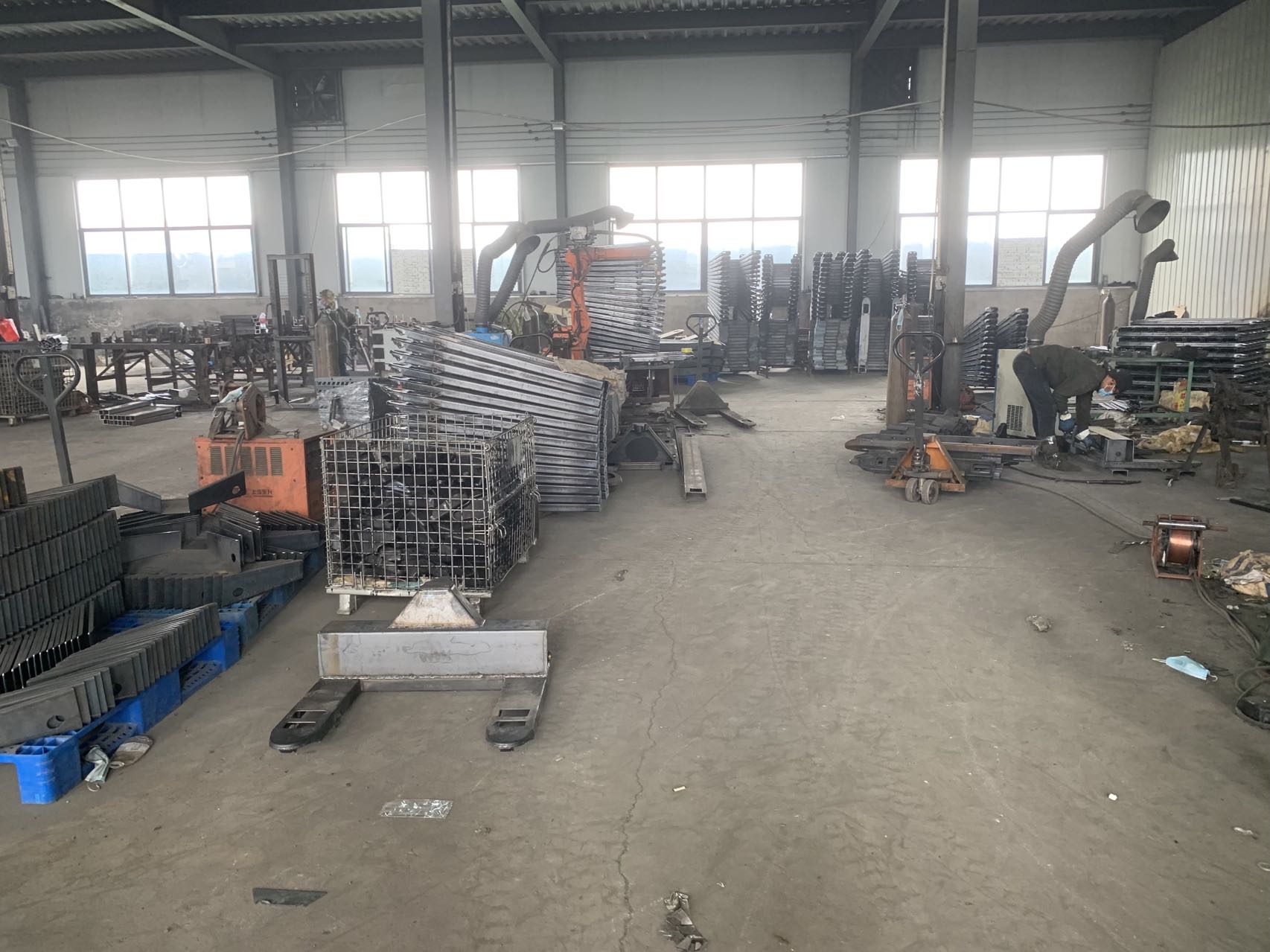
Factory-Level 100% Testing, Not Batch Sampling
JUNYUNHOIST applies 100% testing at the factory: each pallet jack passes through the test station as an individual unit rather than being represented by a sample from the production run. For a buyer, this changes the useful question. Instead of “what is your defect rate?”, ask “what is the test procedure, and what record accompanies the unit?”
A 100% test station can cover lifting and lowering under load, pump response and oil tightness, wheel rotation and alignment, handle release and return, and fork level. Those are the checks that address the failures an operator meets first.
Load Capacity Verification at 1.2 Times the Load
Load capacity is verified by testing at 1.2 times the load rather than at the nominal rating alone. Testing above the working load exposes weaknesses that a nominal-load lift will not reveal — frame deflection, pump seal behaviour under pressure, and load transfer through the wheel assemblies.
The 1.2 times figure also defines the boundary of the guarantee. The test confirms the condition of the unit at dispatch. It does not certify the same behaviour after years of service, which is precisely why wear items — seals, wheels and handles — are designed and supplied as replaceable components.
Frame Integrity: 4mm Steel Plate, Forged Rocker Arm, Ribbed Structure
Frame integrity determines whether a pallet jack still tracks straight after thousands of cycles. In JUNYUNHOIST's documented build, the frame structure is specified as follows:
- 4mm steel plate thickness on the main structure
- Reinforcement at 4mm thickness and 89cm length
- 4mm thickness on the triangle ruler bracing plate
- A forged rocker arm rather than a welded or cast arm
- Forged AB plates and forged double-chain plates
- A cast steel wheel frame
- A ribbed frame structure that resists twisting
- A thickened handle at 2.75mm
- High-quality bearings in the wheel assemblies
- An AC pump
These components are specified because stress concentrates at specific points on a pallet jack: the rocker arm where the lift linkage pivots, the plates that transfer pump force into the fork, and the wheel frame that carries the load to the floor. Forgings are used at those points because the material is worked into shape instead of cast or welded — the usual engineering choice where a part must survive repeated cycling rather than a single static load. The ribbing addresses a different failure mode: the twisting that appears when a loaded truck is pulled at an angle instead of straight.
What the Testing Protocol Does Not Cover
Three field risks account for most pallet jack failures: pump oil leakage or air ingress, handle deformation or damage, and wheel wear. Factory testing cannot prevent any of them, because all three are consequences of use. JUNYUNHOIST's stated control method is operational — do not exceed the rated load, and keep the forks balanced when lifting. For the wear that still occurs, the company supplies commonly damaged spare parts free of charge, including seals, handles and wheel frames, so that a truck is not pulled out of service for a serviceable part.
How to Verify Pallet Jack Quality Standards Before You Order
The following sequence works at the decision stage, whether you are shortlisting a CE certified pallet jack or an ISO certified pallet jack.
- Match the standard to the truck type. A manual pallet jack falls under ISO 3691-5:2014 and, in Europe, EN 1757-2 for hand pallet trucks with capacities up to 2,000 kg. A powered pallet jack falls under OSHA 29 CFR 1910.178 in the United States as a Class III forklift and requires formal operator training. Verify against the type you are actually buying.
- Request certification scope, not a certificate image. Ask for the standard number, the revision year and the product family the certificate covers. A certificate that cannot name its standard is not evidence.
- Establish whether testing is 100% or sampled. Ask the supplier to state it in writing. A 100% test record refers to the unit you receive.
- Ask for the load test figure. JUNYUNHOIST tests at 1.2 times the load. If a supplier cannot state a test load, treat the load rating as untested.
- Measure the steel and the reinforcement. Confirm plate thickness in millimetres, the length and thickness of frame reinforcement, and the bracing plate thickness. On JUNYUNHOIST builds these are documented at a 4mm steel plate, 4mm reinforcement across an 89cm length, and a 4mm triangle ruler bracing plate — measurable values rather than adjectives.
- Inspect the load path components. Check whether the rocker arm, AB plates and double-chain plates are forged, whether the wheel frame is cast steel, and what bearings are fitted.
- Check the pump, handle and wheels at acceptance. Test a lift for pump oil leakage or air ingress. Inspect the handle for deformation; JUNYUNHOIST builds use a 2.75mm thickened handle. Rotate the wheels and check for wear and alignment.
- Confirm the wear-part plan. Ask which parts are supplied as spares — seals, handles and wheel frames are the items most often replaced — and how quickly they can be shipped.
- Compare total cost of ownership, not unit price. In JUNYUNHOIST's documented comparison, the build carries a 2% higher initial cost with better durability and lower long-term maintenance, including 90% less maintenance required.
Where Verified Quality Standards Change the Outcome
The environments where pallet jack build quality has the clearest operational effect are the ones that combine load, repetition and a difficult floor or atmosphere. The applications below reflect the environments JUNYUNHOIST builds for.
- Warehouse and distribution center. High cycle counts and long travel distances keep the frame, bearings and wheels under continuous load. Wheel smoothness and climbing effort become practical differences across a full shift.
- Loading dock and truck loading/unloading. Dock plates and trailer lips create uneven surfaces where frame twisting resistance and wheel grip matter more than on a flat floor.
- Cross-docking facility. Short, fast moves with a loaded truck reward low rolling resistance and predictable steering.
- Cold storage. Condensation and temperature swings are hard on seals and wheels; JUNYUNHOIST supplies galvanized and stainless steel pallet trucks for moisture-exposed operations.
- Food processing plant. Washdown and hygiene requirements push buyers toward stainless steel and galvanized construction rather than painted carbon steel, and wear-part availability matters because sanitation schedules are fixed.
- Narrow aisle. A narrow fork pallet jack combined with accurate wheel alignment reduces contact with racking.
- Factory workshop and construction site. Debris, thresholds and rough concrete load the wheel frame and rocker arm continuously.
- Retail backroom and supermarket warehouse. Mixed pallet sizes and tight turns, where a compact manual pallet jack is usually the primary tool.
- Weighing applications. Where loads must be captured in place, a pallet truck with scale removes a handling step — but only if the load-bearing structure stays sound enough to keep weighing repeatable.
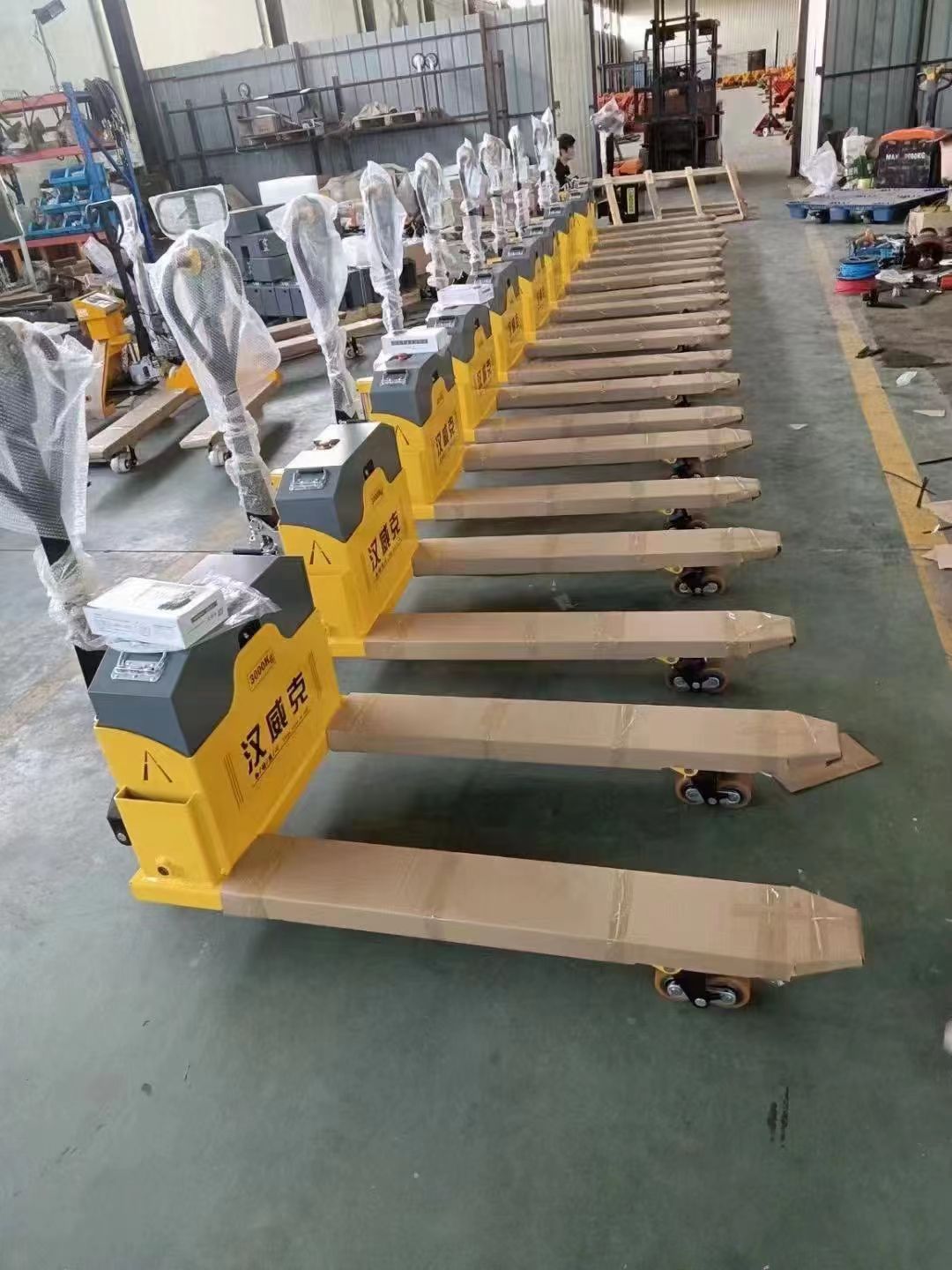
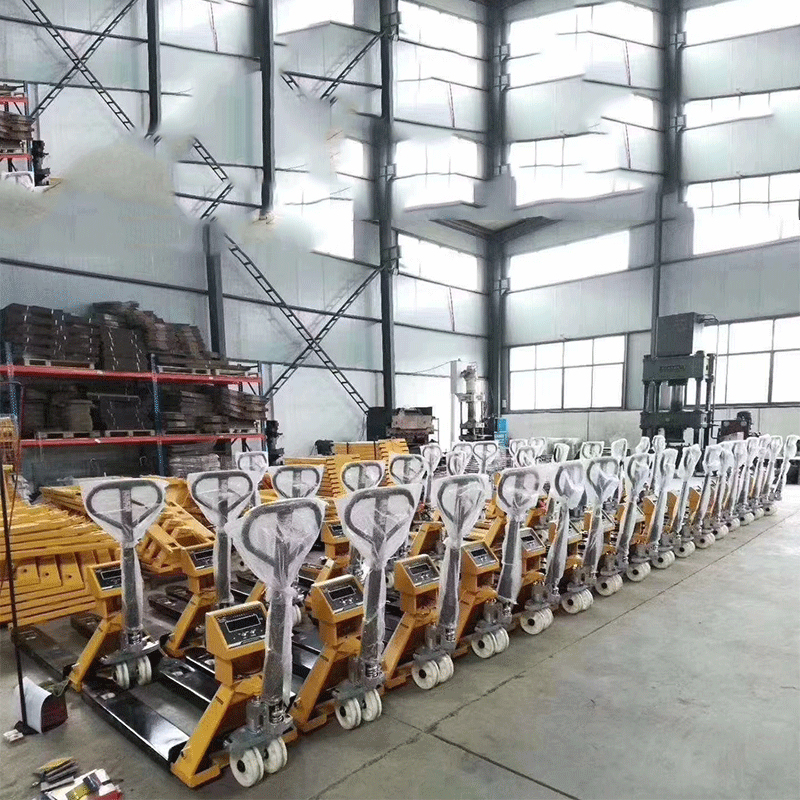
Comparison Table: JUNYUNHOIST Build vs. a Standard Factory Build
The comparison below is drawn from JUNYUNHOIST's documented build comparison against another factory's product. It is not a ranking of brands; it is a checklist of measurable points where a pallet jack build either does or does not carry evidence.
| Verification point | JUNYUNHOIST documented build | What to confirm with any alternative supplier |
|---|---|---|
| Steel plate thickness | 4mm | Plate thickness stated in millimetres and verifiable on arrival |
| Frame reinforcement | 4mm thickness, 89cm length | Whether reinforcement exists, and where it is placed |
| Bracing plate (triangle ruler) | 4mm thickness | Bracing thickness and position |
| Handle | 2.75mm thickened handle | Handle gauge and deformation resistance |
| Rocker arm | Forged | Forged, cast or welded construction |
| AB plates and double-chain plates | Forged | Manufacturing method of the force-transfer plates |
| Wheel frame | Cast steel | Frame material and how load reaches the floor |
| Frame structure | Ribbed construction | Presence of ribs against twisting |
| Bearings | High-quality bearings | Bearing grade and replacement availability |
| Pump | AC pump | Pump type, seal quality and leak behaviour |
| Load testing | Testing at 1.2 times the load | Test load, and whether testing is 100% or sampled |
| Commercial metric | Documented difference | Decision implication |
|---|---|---|
| Initial cost | 2% higher than the comparison factory build | The premium is small relative to a single unplanned breakdown |
| Maintenance requirement | 90% less maintenance required | Lower service load across a fleet and fewer downtime events |
| Load behaviour | Stronger load-bearing capacity; smoother wheels requiring less effort; less effort climbing | Operator fatigue and cycle time are affected across a full shift |
| Wear parts | Free supply of commonly damaged parts: seals, handles and wheel frames | Faster recovery when a truck is taken out of service |
Frequently Asked Questions
Which standards and certifications should a pallet jack meet before it enters an industrial facility?
For pedestrian-propelled trucks, including manual and semi-manual pallet jacks, ISO 3691-5:2014 defines the safety requirements. In Europe, EN 1757-2 covers hand pallet trucks with capacities up to 2,000 kg. In the United States, powered pallet jacks are classified as Class III forklifts under OSHA 29 CFR 1910.178 and require formal operator training. Beyond the standard itself, verify the certificate's scope: the standard number, the revision year and the product family covered. JUNYUNHOIST states that its products are manufactured under quality control protocols meeting ISO and CE requirements, and documents build details such as 4mm steel plate thickness for buyers who need to verify structure as well as paperwork.
How is pallet jack load capacity verified before shipping?
JUNYUNHOIST verifies load capacity by testing at 1.2 times the load under factory-level 100% testing, so each unit is tested individually rather than by batch sampling. The test covers lifting and lowering under load, pump response and oil tightness, wheel rotation, and handle function. The purpose of testing above the rated load is to expose frame deflection, seal behaviour under pressure and load-path weaknesses that a nominal load would not reveal.
What structural details separate a durable pallet jack frame from a weak one?
Look at thickness, manufacturing method and load path. JUNYUNHOIST's documented build uses a 4mm steel plate, 4mm reinforcement across an 89cm length, a 4mm triangle ruler bracing plate, a forged rocker arm, forged AB plates and forged double-chain plates, a cast steel wheel frame, a ribbed frame structure, a 2.75mm thickened handle, high-quality bearings and an AC pump. Components that are forged or cast at high-stress points behave differently from welded assemblies in the same position, which is why build detail matters more than a general durability claim.
Is a better-built pallet jack more expensive up front?
In JUNYUNHOIST's documented comparison with another factory's product, the initial cost is 2% higher, with better durability and lower long-term maintenance costs; the same comparison records 90% less maintenance required. The decision point is not the 2% — it is whether a lower unit price is being achieved through thinner plate, welded force-transfer components or unverified load testing. A buyer comparing on price alone is comparing the one variable a supplier can change most easily.
What support is available when a pump, handle or wheel needs replacement?
The three field risks that dominate pallet jack failures are pump oil leakage or air ingress, handle deformation or damage, and wheel wear — all consequences of use rather than of manufacture. JUNYUNHOIST's stated control method is operational: do not exceed the rated load, and keep the forks balanced when lifting. For wear that occurs anyway, the company supplies commonly damaged spare parts free of charge, including seals, handles and wheel frames, which keeps a truck in service instead of waiting on a component. Buyers who want the full specification set can download the pallet truck brochure or send their facility requirements for a quotation.
Conclusion: What Testing and Certifications Actually Guarantee
Testing and certification guarantee two things: that a unit met a defined requirement at a defined moment, and that a buyer can check the requirement instead of trusting a description. Everything beyond that point depends on structure and maintenance.
JUNYUNHOIST's answer to that boundary is specific. Load capacity is verified at 1.2 times the load under factory-level 100% testing. The frame is built on a 4mm steel plate with 4mm reinforcement across 89cm, a 4mm bracing plate, a forged rocker arm, forged AB and double-chain plates, a cast steel wheel frame and a ribbed structure. The handle is 2.75mm. The documented trade-off is a 2% higher initial cost against 90% less maintenance required, plus free supply of seals, handles and wheel frames.
For a buyer at the decision stage, the practical next step is to turn that list into questions for every supplier on the shortlist. The supplier that answers with numbers, test procedures and certificate scope is the one whose certification means something.
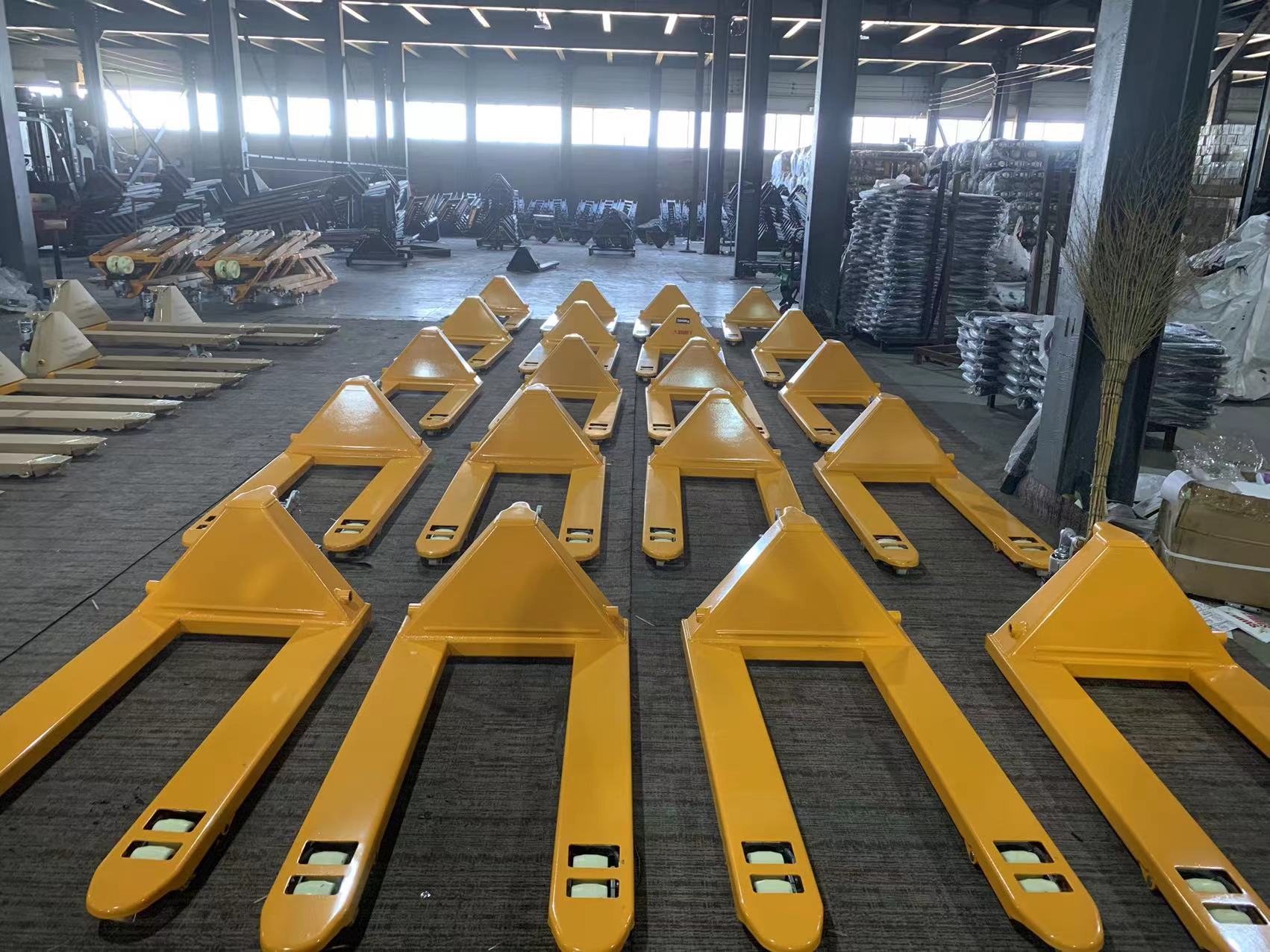
Next step: verify the build, then compare the quote
Download the JUNYUNHOIST pallet truck brochure for the full specification set, or send your facility details — load, aisle width, floor surface, temperature and hygiene requirements — for a configuration and quotation.
Brochure: JUNYUNHOIST Pallet Truck Product Brochure (PDF)
Website: www.junyunhoist.com
Email: Junyunsteven@163.com
WhatsApp: +86 134-8345-2631
Have Questions or Need More Details?
Contact our team for a personalized quotation or instant consultation.
Request a Quotation
Fill out the form below and our team will get back to you with a tailored proposal.
WhatsApp Direct Chat
Prefer to chat in real-time? Message us on WhatsApp for instant assistance & quick answers.
- Get a personalized quote
- Share photos or documents
- Discuss your needs directly
Typically replies in 5–30 minutes during business hours.