Pallet Jack Supplier Audit: Verifying Capability, Quality Control, and Delivery Guarantees
A pallet jack supplier audit is a documented check of four things before a purchase order is signed: production capability, quality control, commercial terms, and delivery and after-sales support. Importers and distributors run it because catalogues look alike while factories do not. Two suppliers can quote the same hand pallet truck and still differ in plate thickness, pump construction, monthly output and spare-part support.
This guide sets out a five-layer audit framework and a step-by-step process you can run in two to three weeks. Baoding Junyun Hoisting Machinery Co., Ltd., which trades as JUNYUNHOIST, is used throughout as a documented working example. JUNYUNHOIST is a manufacturer and trading company based in Qingyuan District, Baoding, Hebei, China, producing pallet trucks, stackers, lift tables and hoisting equipment for export markets.
Why Pallet Jack Supplier Audits Fail in Practice
Most failed audits are not caused by dishonest suppliers. They are caused by buyers auditing the wrong variables. Price and product photography are easy to compare; steel thickness, pump construction, load-test practice and spare-part commitments are not, so they get skipped.
Three failure patterns repeat across import and distribution programmes:
- No written baseline. The buyer never defines the specification, so the delivered units cannot be measured against anything. Thickness, handle gauge and pump type become opinions rather than acceptance criteria.
- Capability assumed, not verified. A supplier that can ship 24 units may not be able to ship 1,000 on schedule. Monthly output, staffing and export workload need to be evidenced, not inferred from a brochure.
- After-sales treated as an afterthought. Wear parts are where fleet cost accumulates. JUNYUNHOIST identifies the recurring field risks for pallet jacks as pump oil leakage or air ingress, handle deformation or damage, and wheel wear — all items that should be mapped to a spare-part commitment before the first container ships.
Two operating practices reduce those failures: avoid overloading the unit beyond its rated capacity, and keep the forks level when lifting so the load stays balanced. A supplier audit should confirm that the factory documents and communicates the same controls, not only that the product exists.
Industry Background: What a 2026 Pallet Jack Buyer Is Actually Buying
Pallet jacks sit inside a large and geographically concentrated supply base. The global pallet jack market reached USD 7.91 billion in 2025, with Asia-Pacific accounting for a 39% revenue share in the same year. China's export position is equally concentrated: it accounted for 62.7% of pallet jack shipments to the United States in the 2022–2024 records analysed by trade-data sources.
Demand is spread across sectors rather than one vertical. Published application analysis identifies retail logistics, food and beverage distribution, automotive and parts logistics, and manufacturing plants as core environments, with industrial pallet jacks, carts and hand trucks moving materials across multiple sectors. That breadth is precisely why a single supplier specification rarely fits every buyer: a cold storage pallet jack, a narrow aisle pallet jack and a loading dock pallet jack are the same product family with different requirements.
Compliance has also become part of the buying decision. In the European Union, pallet trucks are classified as machines and require CE marking for market access. In the United States, powered equipment falls under OSHA 29 CFR 1910.178, which covers low-lift and high-lift powered industrial trucks operated by riding or walking operators; OSHA describes operator training as a combination of formal instruction, practical training, workplace evaluation, refresher training and certification, with re-evaluation at least every three years. For cold-chain buyers, stainless steel pallet jacks are rated for cold storage environments down to -40°C.
A supplier audit therefore has two jobs: protect the order commercially, and produce the documents your own customers and regulators will ask for later.
The Five-Layer Pallet Jack Supplier Audit Framework
Layer 1 — Capability and Factory Scale
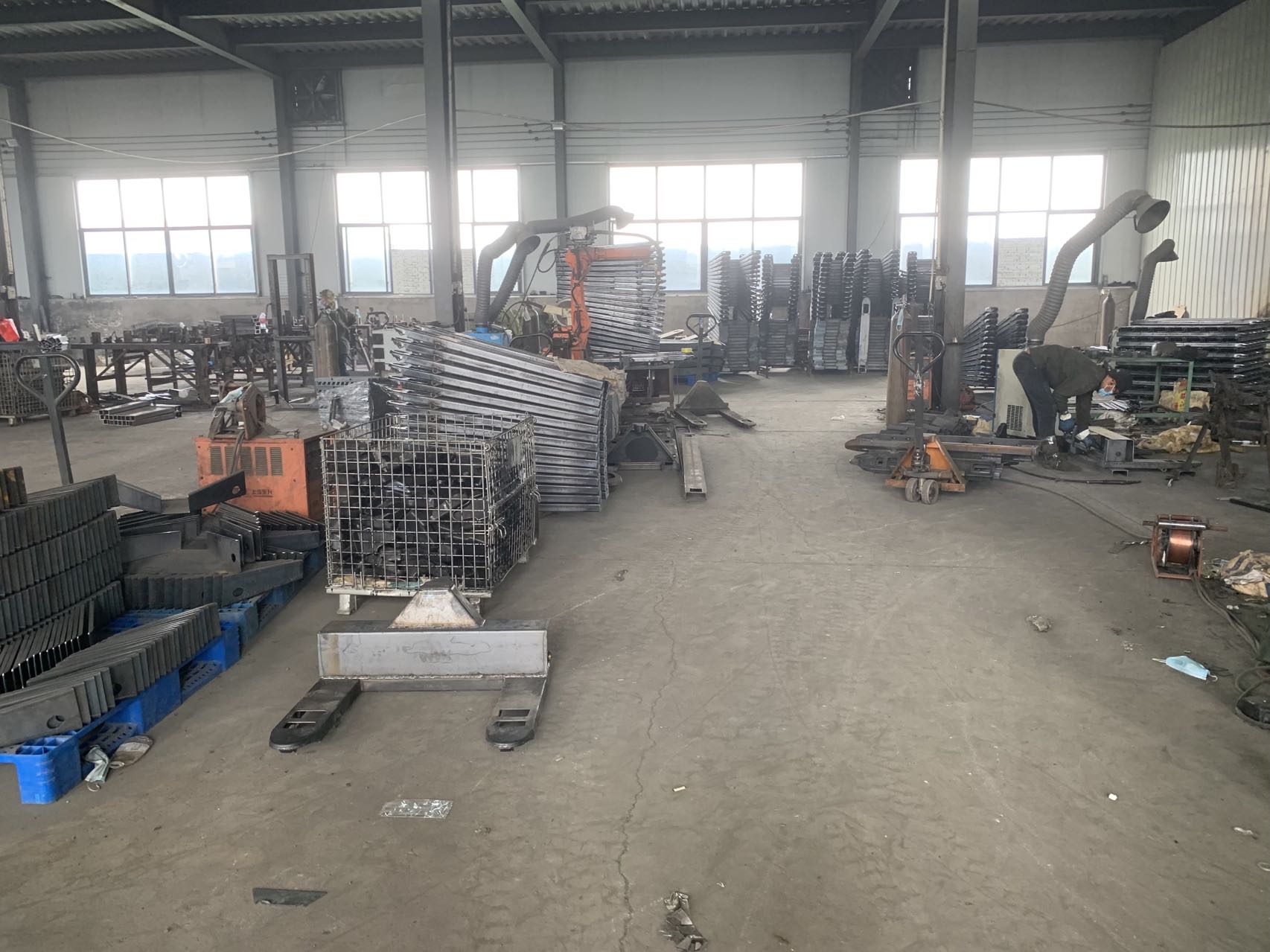
Start with scale, because scale determines whether your order is a scheduled production run or an interruption. JUNYUNHOIST was founded in 2018 and operates a 24,000-square-metre facility with approximately 138 staff, including an R&D team of 8 engineers. Documented monthly production capacity is around 10,000 units, and the company reports an export ratio of 80%, with main markets including India, Russia, Vietnam, Brazil, Türkiye and Dubai.
What to request: a facility floor plan, headcount by function (production, quality, engineering, sales), monthly output records for recent months, and export documentation that matches the markets the supplier claims. Capacity that cannot be traced to shipment records is a planning assumption, not evidence.
Layer 2 — Quality Control and Component Verification
Quality control at pallet jack level is component-level. The differences that show up after twelve months in a distribution centre are plate gauge, pump construction, forging versus casting in load-bearing parts, and wheel quality — not paint finish.
JUNYUNHOIST documents the following build specification for its pallet trucks: 4mm steel plate; reinforcement 4mm thick and 89cm long; a 4mm triangle ruler; a 2.75mm handle; an AC pump; a forged rocker arm; forged AB plates and double-chain plates; a cast steel wheel frame; full rib reinforcement; and high-quality bearings. Load testing is carried out at 1.2 times the rated load.
What to request: material and thickness verification for a production sample, welding and inspection records, pump test records, the load-test report, and confirmation of whether load testing applies to every unit or only to samples. Ask who performs final inspection and whether a third-party pre-shipment inspection is permitted — a supplier that restricts access to the line is telling you something.
Layer 3 — OEM/ODM Support and Configuration Capability
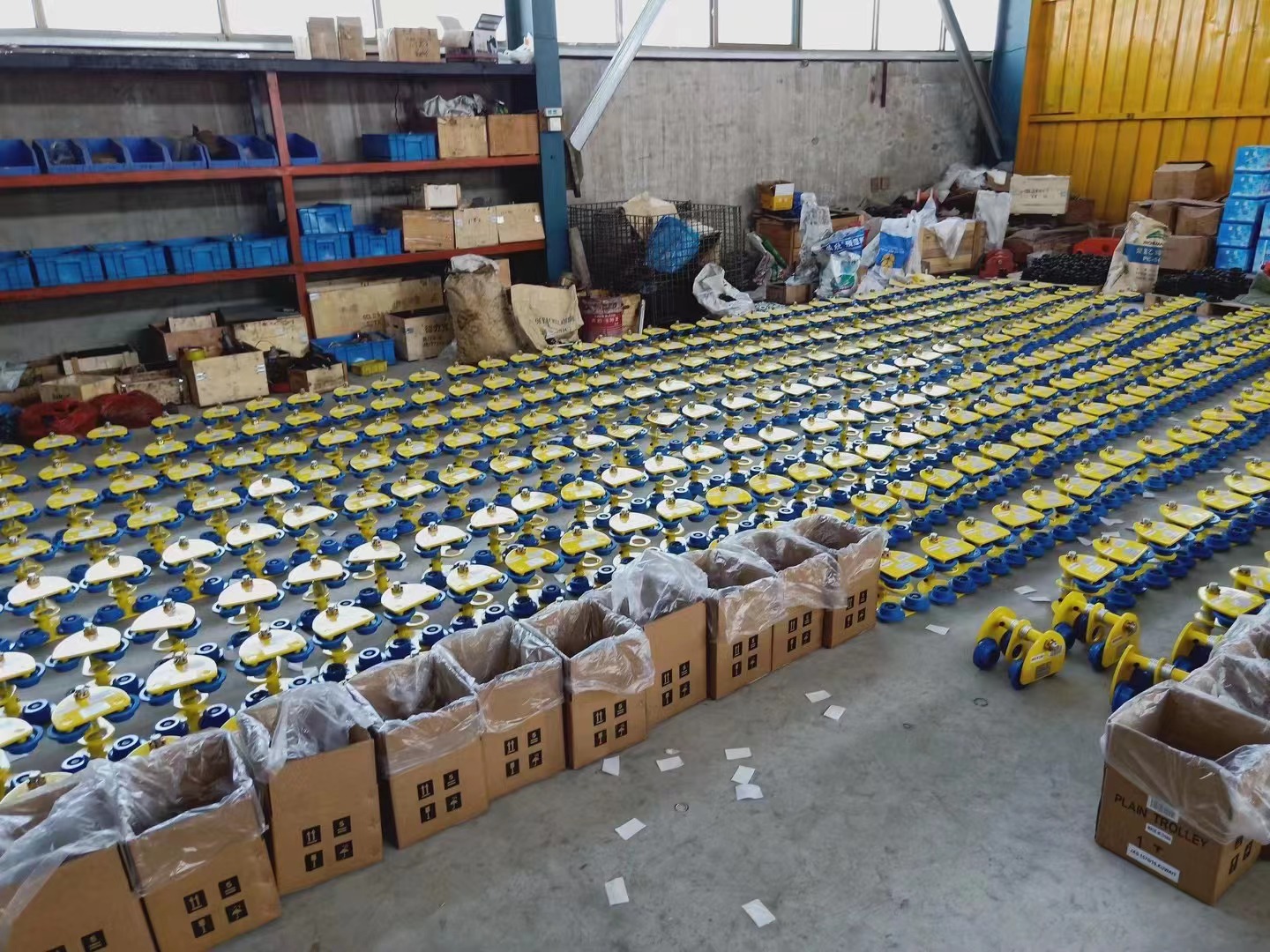
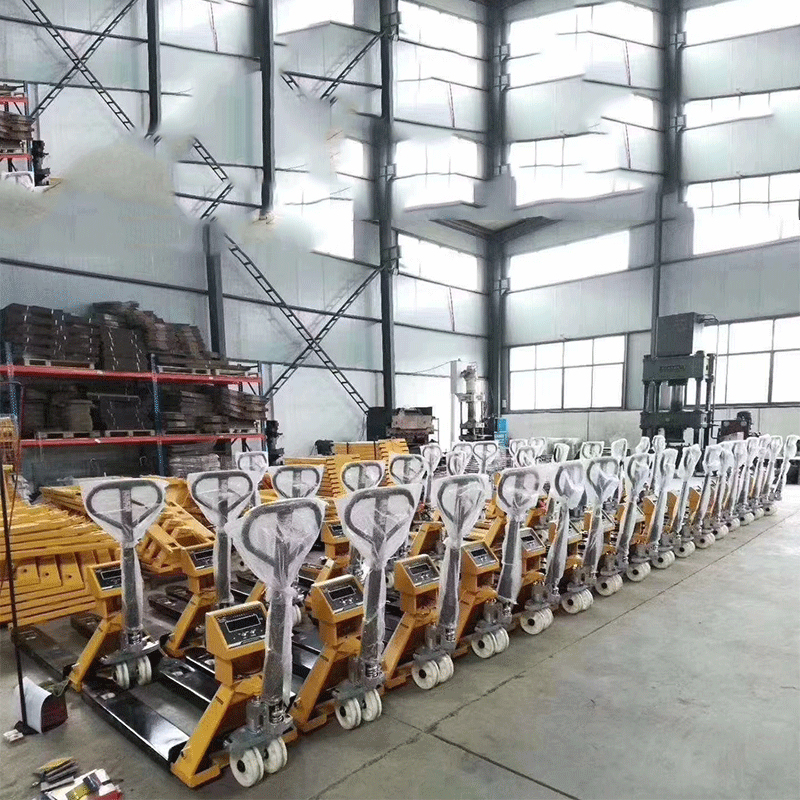
Configuration capability decides whether the supplier can stay with you as the range grows. JUNYUNHOIST's product scope covers hand pallet trucks, pallet jacks, manual stackers, electric stackers, oil stackers, lift tables, galvanized and stainless steel pallet trucks, pallet trucks with scale, and electric pallet trucks, with OEM/ODM customization supported by the 8-engineer R&D team.
For a distributor, this matters in practical terms. A stainless steel pallet jack for a food processing plant, a weighing pallet truck for a logistics centre that needs load capture at the point of handling, or a high lift pallet jack for a workshop all require engineering input before quotation. Audit question: who signs off a custom configuration, how long does the change take, and does customization change the minimum order quantity or the lead time? Get the answer in writing.
Layer 4 — Commercial Terms: MOQ, Cost and Maintenance
The minimum order quantity sets the size of your first commitment and therefore the size of your first mistake. JUNYUNHOIST's MOQ is 24 PCS, which allows a pilot or sample-based evaluation to be structured within a normal production quantity rather than as a special run.
On cost, heavier build is not free. JUNYUNHOIST documents approximately 2% higher initial cost against a lighter-build alternative, with the difference carried by thicker plate, forged load-bearing parts, a cast steel wheel frame and full rib reinforcement. The company reports 90% less maintenance required as a result, with smoother wheel operation and easier movement under load.
The audit question is not whether 2% matters, but what the cheaper unit costs to keep running. A pallet jack whose pump, handle or wheel frame has to be replaced in the field carries a labour and downtime cost that a 2% purchase premium does not.
Layer 5 — Delivery Guarantees and After-Sales Spare Parts
Delivery assurance has two parts: the production window, and what arrives with the goods. JUNYUNHOIST quotes a production lead time of 15–20 days and includes free wear-and-tear spare parts with each container, covering seals, handles and wheel frames — the exact items named in its own risk assessment of pump leakage, handle damage and wheel wear.
Put both commitments into the purchase order: the lead time measured from deposit and artwork approval, and the spare-part list per container. A verbal promise of spare parts is not a delivery guarantee; a packing list is.
Step-by-Step Audit Breakdown
Run the audit in this order. Each step produces a document you can attach to the purchase order.
- Define the application first. Facility type, load profile, floor condition and environment. A cold storage pallet jack and a factory workshop pallet jack are not interchangeable specifications.
- Write a one-page RFQ. Fix capacity, fork dimensions, material, wheel type, quantity and destination. A vague RFQ produces quotes that cannot be compared.
- Run the desk audit. Confirm legal entity, product range fit, export markets and whether the supplier manufactures or only trades. JUNYUNHOIST's registered identity, facility location and export footprint are verifiable through its website, www.junyunhoist.com.
- Request capability evidence. Floor plan, headcount, monthly output, equipment list. Compare against the 24,000-square-metre, 138-staff, 10,000-unit-per-month benchmark.
- Request quality evidence. Component specification sheet, load-test report at 1.2 times rated load, inspection records, and certification scope for the exact model you are buying.
- Verify market compliance. CE documentation for EU-bound shipments; powered-unit training and evaluation obligations for US operations under OSHA 29 CFR 1910.178.
- Place a pilot order within the MOQ. At 24 PCS, a pilot is a normal production lot. Inspect plate thickness, handle rigidity, pump operation and wheel performance against the specification sheet.
- Lock delivery terms in the PO. 15–20 day lead time, spare-part list per container, and the inspection standard that defines acceptance.
Use Cases: Matching the Audited Pallet Jack to the Facility
A supplier audit should end with a configuration decision, not just a supplier decision. The environments JUNYUNHOIST lists for its pallet trucks are warehouses, factory floors, loading docks, retail backrooms, distribution centres, cold storage, construction sites, workshops, truck loading and unloading, and cross-docking facilities.
- Warehouse and distribution centre: standard carbon steel manual pallet jack or electric pallet truck, selected on duty cycle and aisle width rather than price alone.
- Cold storage: stainless steel pallet jack configurations, with the -40°C cold-storage rating used as the reference point for material selection.
- Food processing plant and supermarket warehouse: galvanized or stainless steel pallet trucks, with corrosion and cleaning documentation requested at audit stage rather than assumed.
- Narrow aisle and low profile applications: configuration changes to fork dimensions and chassis clearance, which is exactly why Layer 3 (customization capability) belongs in the audit.
- Loading dock and cross-docking: high-cycle manual or battery powered units, where wheel quality and handle durability determine service life.
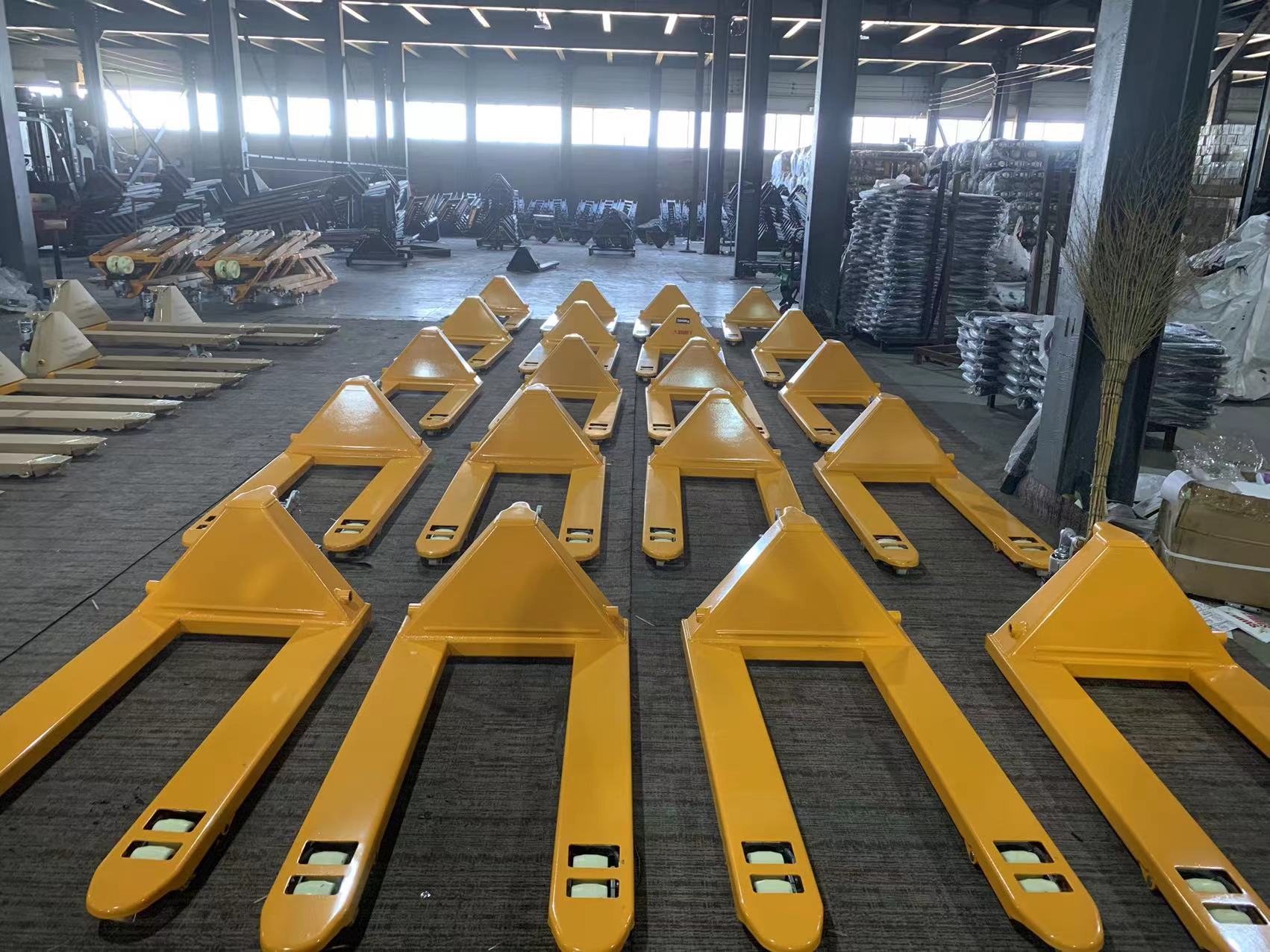
Comparison Table: Audit Points and Documented Specifications
Use this table as an audit checklist. The right-hand column shows the specification documented by JUNYUNHOIST for its pallet trucks; the same questions apply to any supplier you evaluate.
| Audit point | What to verify | JUNYUNHOIST documented specification |
|---|---|---|
| Steel plate thickness | Measure on a production sample, not a catalogue | 4mm steel plate |
| Fork reinforcement | Check reinforcement length and rib coverage | 4mm thick, 89cm long reinforcement; full rib design |
| Pump type | Ask for pump test records and leakage controls | AC pump |
| Load-bearing parts | Forged versus cast — ask for the process, not the word | Forged rocker arm; forged AB plates and double-chain plates |
| Wheel frame and handle | Confirm material gauge and replacement availability | Cast steel wheel frame; 2.75mm handle; 4mm triangle ruler |
| Load testing | Confirm test load and whether every unit is tested | Tested at 1.2 times the rated load |
| Maintenance profile | Ask which parts fail first and what ships as spares | 90% less maintenance required; free wear-and-tear spares per container (seals, handles, wheel frames) |
| Initial cost | Compare total cost of ownership, not unit price | Approximately 2% higher initial cost, positioned against better durability and lower long-term maintenance |
| Commercial and delivery terms | Fix in the PO before deposit | 24 PCS MOQ; 15–20 day production lead time; ~10,000 units monthly capacity |
Note: the cost and maintenance comparison above reflects JUNYUNHOIST's own comparison documentation against a lighter-build alternative and should be validated against your own fleet data and application.
FAQ
What certification and compliance documents should a pallet jack supplier provide?
In the European Union, pallet trucks are classified as machines and require CE marking for market access, so the supplier should provide the CE declaration and the applicable conformity documentation for the exact model. For powered units used in the United States, operations fall under OSHA 29 CFR 1910.178, which covers low-lift and high-lift powered industrial trucks; buyers should request documentation that supports operator training, workplace evaluation and re-evaluation obligations. Request the certificate scope rather than a logo. JUNYUNHOIST states that production follows quality-control protocols aligned with ISO and CE requirements; the scope should be confirmed against the model and material you intend to import.
How can I verify that a pallet jack factory's stated capacity is real?
Ask for three items: facility footprint and layout, headcount by function, and monthly output records for recent months. JUNYUNHOIST documents a 24,000-square-metre facility, approximately 138 employees including 8 R&D engineers, and roughly 10,000 units of monthly capacity, with an export ratio of 80% across markets including India, Russia, Vietnam, Brazil, Türkiye and Dubai. Cross-check those numbers against order history and export documentation; capacity that cannot be traced to shipments is a planning risk rather than a verified fact.
Is a heavier-built pallet jack worth the higher unit price?
JUNYUNHOIST documents approximately 2% higher initial cost against a lighter-build alternative, offset by 90% less maintenance required and better durability. The build difference sits in 4mm steel plate, full rib reinforcement, a forged rocker arm, forged AB plates and double-chain plates, a cast steel wheel frame and a 2.75mm handle. A 2% purchase premium is small relative to the field cost of replacing pumps, handles or wheel frames during the service life of a fleet.
Can I evaluate a sample before committing to a container order?
Yes. Sampling and pilot orders are the standard way to validate a supplier before scaling. JUNYUNHOIST's minimum order quantity is 24 PCS, so a pilot can be placed as a normal production lot rather than as a special run. Use the sample to check plate thickness, handle rigidity, pump operation and wheel performance under load, and attach the same specification sheet to the pilot order so that delivered units match what was evaluated. Sample and specification requests can be sent through the company's contact channels.
What is the production lead time, and what can extend it?
JUNYUNHOIST quotes 15–20 days production lead time. What usually extends it is configuration rather than capacity: non-standard fork or material specifications, galvanized or stainless steel builds, weighing pallet truck configurations, and order volumes that exceed the scheduled monthly run of roughly 10,000 units. Write the lead time into the purchase order alongside the spare-part commitment — JUNYUNHOIST includes free wear-and-tear spare parts with each container, covering seals, handles and wheel frames. For a current quotation, the full catalogue or a supplier audit questionnaire, contact the JUNYUNHOIST team via www.junyunhoist.com, email Junyunsteven@163.com, or download the product brochure.
Conclusion
A pallet jack supplier audit is a document exercise with a commercial outcome. Capability is verified through floor space, headcount and monthly output. Quality control is verified through plate gauge, pump type, forging processes, wheel frame construction and load testing at 1.2 times the rated load. Commercial terms are verified through MOQ and a realistic total-cost comparison. Delivery is verified through a stated 15–20 day lead time and a spare-part list that names the parts which actually fail — seals, handles and wheel frames.
Applied to JUNYUNHOIST, the audit produces a checkable picture: a 24,000-square-metre facility, approximately 138 staff including 8 R&D engineers, around 10,000 units of monthly capacity, 24 PCS MOQ, 15–20 day lead time, and free wear-and-tear spares with every container. Applied to any other supplier, the same eight steps produce the same comparable evidence — which is the point of running the audit before the deposit rather than after the first failure.
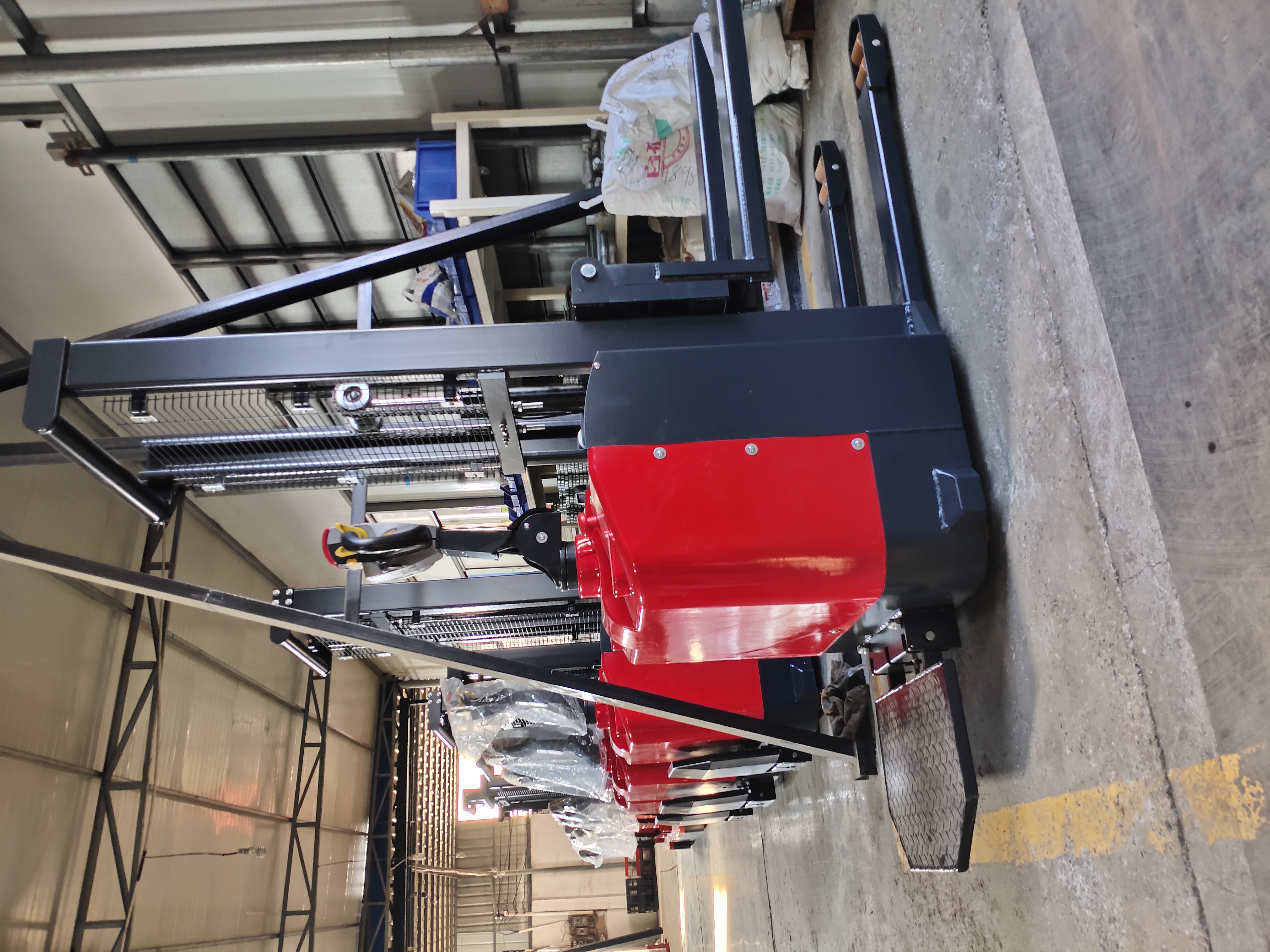
Next step: send your specification sheet for quotation, or request a pilot order at the 24 PCS minimum so the audit can be completed on delivered units. Contact: Junyunsteven@163.com | Tel/WhatsApp: +86 13483452631 | Baoding Junyun Hoisting Machinery Co., Ltd., Donglu Village, Qingyuan District, Baoding City, Hebei Province, China.
Have Questions or Need More Details?
Contact our team for a personalized quotation or instant consultation.
Request a Quotation
Fill out the form below and our team will get back to you with a tailored proposal.
WhatsApp Direct Chat
Prefer to chat in real-time? Message us on WhatsApp for instant assistance & quick answers.
- Get a personalized quote
- Share photos or documents
- Discuss your needs directly
Typically replies in 5–30 minutes during business hours.