
Ranking the Top Pallet Jack Trends for 2026: A Buyer’s Recommendation Guide
2026 Buyer’s Recommendation Guide
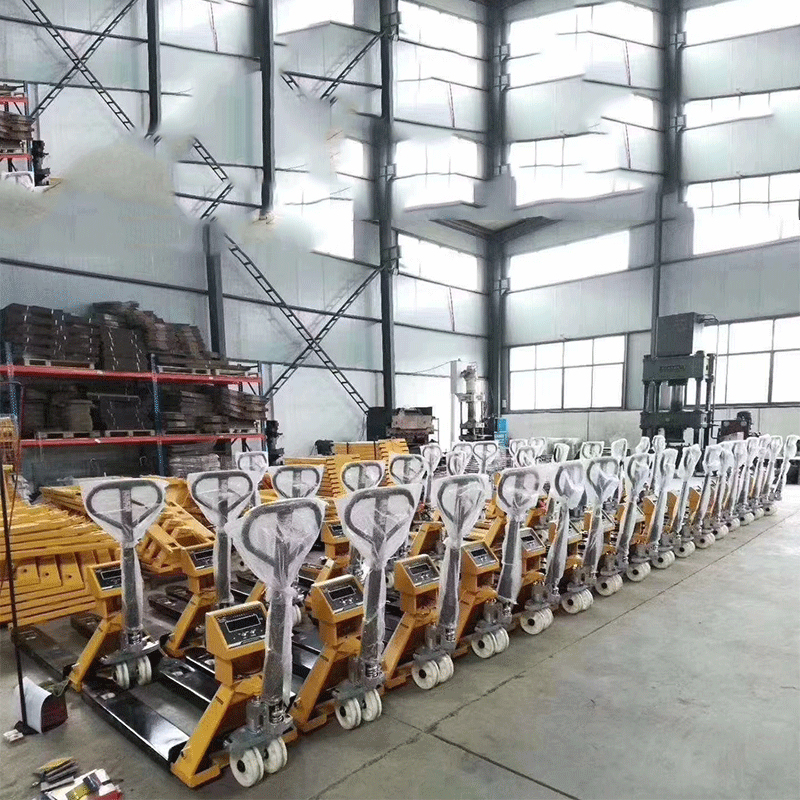
Seven pallet jack trends will shape 2026 procurement decisions, and this guide ranks them in the order that changes what a buyer should specify, verify and budget for. The ranking opens with specification-level customization, because it redefines the product itself, and closes with after-sales spare parts, because that is what decides whether the equipment stays in service after delivery.
The list is a buying recommendation, not a market-share table. Each trend is judged on three criteria: how directly it affects whether a pallet jack fits the task, how much demand-side momentum is visible in 2026, and how easily a buyer can verify the claim before releasing a purchase order.
Ranked summary for evaluation-stage buyers: 1) specification-level customization of forks and lifting heights, 2) application-specific builds for cold storage and controlled environments, 3) electrification and battery-powered models, 4) weighing and data-capture pallet trucks, 5) OEM/ODM supply partnerships, 6) verified quality control and compliance documentation, and 7) after-sales spare parts and supply continuity.
Problem Definition: Availability Is Rarely the Problem — Fit Is
Pallet jacks are not difficult to buy. A unit that matches a specific pallet footprint, a specific aisle and a specific operating environment is harder to source, and that gap is where most 2026 procurement problems begin.
Four mismatches account for a large share of avoidable re-orders and claims:
- Fork geometry. Fork length and width that do not match the pallet or the aisle force manual repositioning, or transfer load stress into goods and racking.
- Lifting height. A minimum lifting height above the pallet entry clearance slows every cycle; a maximum height below the working level limits where the unit can be used at all.
- Environment. A standard unit in a cold room, a humid washdown area or an outdoor dock ages faster than the same unit in a dry, conditioned warehouse.
- After-sales. A fleet with no planned wear-part supply loses hours each time a wheel or a pump component fails.
Buyers who reach the evaluation stage respond to those risks by shifting comparison away from unit price alone and toward specification flexibility, test documentation and post-delivery support. That shift is exactly what makes the seven trends below decision-relevant rather than decorative.
Industry Background: What the 2026 Market Data Actually Shows
The global pallet jacks market was valued at approximately USD 7.4 billion in 2024 and is projected to reach USD 11.6 billion by 2034, according to an industry report covering 2025–2034 (Vertex AI Search / Industry Report). Within that market, manual pallet jacks remained the largest single segment in 2024 with revenue of USD 4.3 billion, despite the continued spread of automation (Industry Forecasts Report 2025–2034).
The powered side is growing on a different driver. The electric pallet jack and stacker market was valued at USD 5.1 billion in 2024, with demand linked to e-commerce fulfilment volumes and lithium-ion battery technology (Electric Pallet Jack Market Size 2032 Report).
| Segment or estimate | Published value | Year | Source |
|---|---|---|---|
| Global pallet jack market | Approx. USD 7.4 billion, projected to reach USD 11.6 billion by 2034 | 2024 | Vertex AI Search / Industry Report 2025–2034 |
| Manual pallet jacks | USD 4.3 billion revenue | 2024 | Industry Forecasts Report 2025–2034 |
| Electric pallet jacks and stackers | USD 5.1 billion | 2024 | Electric Pallet Jack Market Size 2032 Report |
| Alternative global estimate | USD 1.7 billion | Not stated | Fact.MR |
| Alternative global estimate | USD 7.91 billion | 2025 | Fortune Business Insights |
How to read these numbers: published estimates use different scope definitions — some include related stackers, conveyors and adjacent handling equipment, others do not. That is why one source reports USD 1.7 billion and another reports USD 7.91 billion for what sounds like the same market. Treat the figures as directional evidence of demand, and do not add segment values from different reports together when building a budget.
On the supply side, documented top global manufacturers include Toyota Material Handling, Jungheinrich AG, Crown Equipment, Hyster-Yale and Mitsubishi Logisnext (Electric Pallet Jack Market Outlook 2023–2028, Arizton). This article does not rank those companies, because no comparable, verified, like-for-like specification set is publicly available for the configurations discussed below.
Baoding Junyun Hoisting Machinery Co., Ltd., which trades under the brand JUNYUNHOIST, is a Hebei-based manufacturer and exporter of hand pallet trucks, pallet jacks, manual and electric stackers, lift tables and related lifting equipment. The company was founded in 2018 and serves markets including India, Türkiye, Brazil, Vietnam, Russia, the United Arab Emirates, the Middle East and Southeast Asia.
How These Seven Trends Were Ranked
Ranking trends is a judgment exercise, so the criteria should be explicit before the list begins. Each trend was scored against three tests:
- Task fit. Does the trend change whether the equipment physically and functionally matches the job it has to do?
- Market momentum. Is there published or first-party evidence that demand is moving in this direction?
- Verifiability. Can a buyer confirm the claim with a drawing, a test record, a certificate or a sample before ordering?
Trends that score high on all three rank first. A trend that is widely discussed but cannot be verified before purchase ranks lower, no matter how often it appears in supplier material. That is why compliance documentation and spare-part provisioning appear at six and seven rather than at the top: they matter enormously, but they are conditions of a good order rather than the thing that defines the product.
The Top Pallet Jack Trends for 2026, Ranked
Trend 1 — Specification-Level Customization: Fork Length, Fork Width and Lifting Height
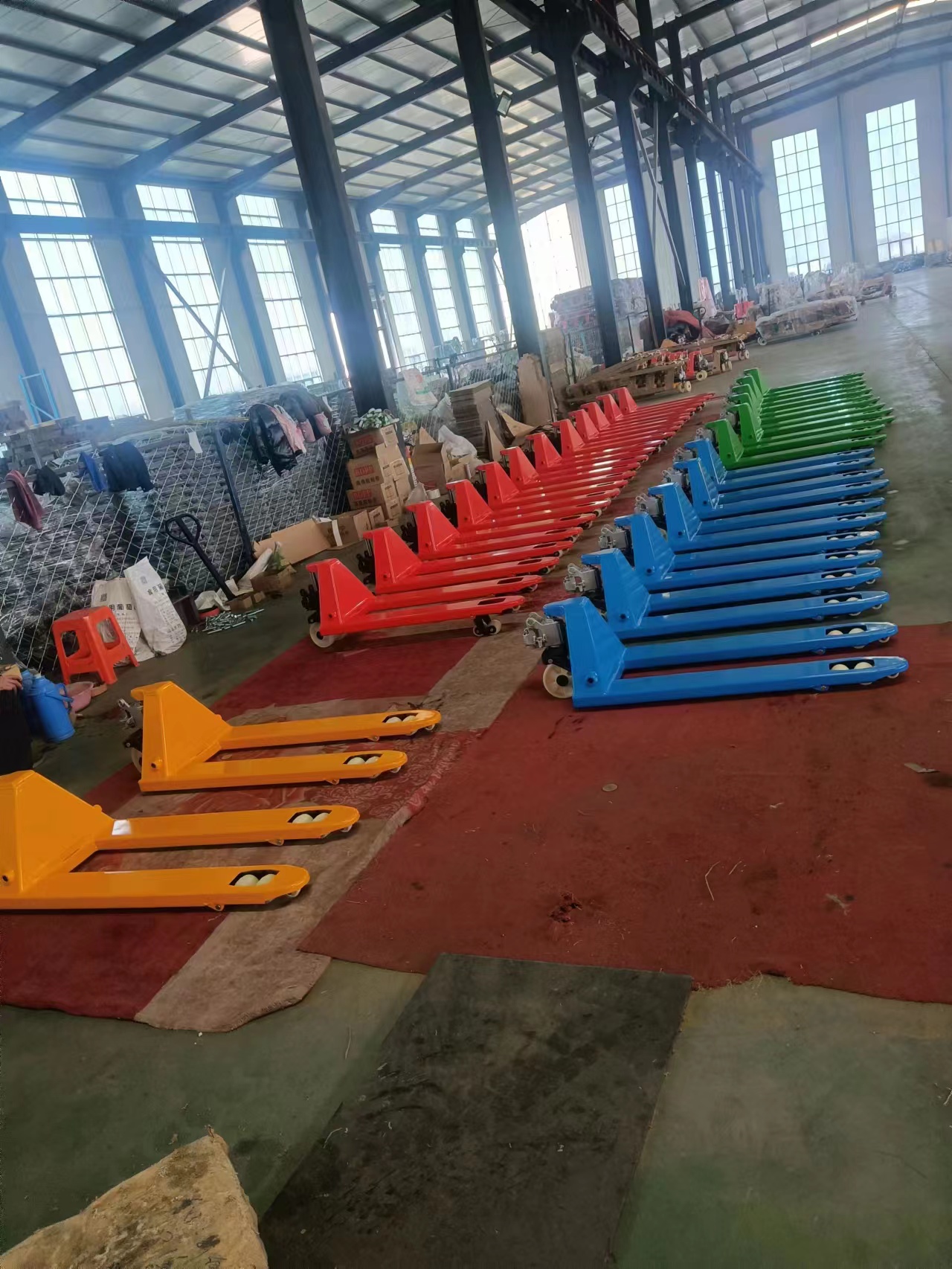
The single most consequential 2026 trend is that fork geometry is now treated as a specification to be engineered rather than a catalogue size to be selected. Documented customization options include fork length and fork width, minimum lifting heights of 35 mm and 62 mm, and fork steel plate thickness, alongside broader configuration choices such as electric pallet trucks, galvanized and stainless steel pallet trucks, and pallet trucks fitted with a scale.
For reference, the published parameters of the AC30 pallet truck list a minimum height of 80 mm, a maximum height of 200 mm, a radius after capture of 1,500 mm, wheel options in PU, nylon, PP and rubber, and fork sizes covering 550 mm and 685 mm widths with lengths ranging from 800 mm to 2,000 mm.
Buyer implication: request a dimensional drawing before confirming any order, and check the minimum lifting height against the actual pallet entry point and floor condition on site. Where a low profile pallet jack or a narrow fork pallet jack is the goal, the 35 mm and 62 mm minimum lifting heights are the numbers to anchor the discussion — not a model name.
Trend 2 — Application-Specific Builds: Cold Storage, Food Handling and Controlled Environments
Environment-driven configuration is the second trend because it determines material choice, and material choice determines service life. Cold storage is listed among the applicable industries for the AC30 pallet truck, together with warehouses, factory floors, loading docks, retail backrooms, distribution centers, construction sites, workshops, truck loading and unloading areas, and cross-docking facilities.
Galvanized and stainless steel pallet trucks are listed as product variants, which are the two build options that food processing plants, humid warehouses and washdown areas typically ask about. Buyers should treat terms such as “food grade” and “rust proof” as questions rather than as descriptions: ask for the material grade and the surface treatment statement in writing.
Wheel material also belongs in this conversation. The listed options are PU, nylon, PP and rubber, and each behaves differently under condensation, temperature cycling and washdown. Ask which option is specified for the target temperature range and floor surface, because a wheel chosen for a dry warehouse will not automatically suit a freezer aisle or a wet processing floor.
Where a facility handles combustible dust or solvent vapour, the 2026 trend is a documentation requirement rather than a product label. Ask any supplier for the specific rating certificate and component-level evidence. None of the facts in this article establish a hazardous-area rating for a specific model, so that item must be verified directly with the supplier before it is written into a purchase order.
Trend 3 — Electrification: Powered and Battery-Operated Pallet Trucks
Electrification continues to expand because the economics of powered handling keep improving. The electric pallet jack and stacker market reached USD 5.1 billion in 2024, driven by e-commerce fulfilment and lithium-ion technology (Electric Pallet Jack Market Size 2032 Report). The range reflects that shift with semi-electric and full-electric pallet trucks sitting alongside manual pallet jacks.
The compliance consequence of this trend is easy to underestimate. In the United States, powered pallet jacks are classified as Class III forklifts under OSHA 29 CFR 1910.178 and require formal operator training. That training obligation belongs in the total cost of ownership calculation, not in a footnote added after the purchase order is signed.
Buyer implication: decide the power source against duty cycle, aisle width, floor condition and available charging infrastructure — and confirm the operator training requirement for the destination market before the fleet specification is frozen.
Trend 4 — Weighing and Data-Capture Pallet Trucks
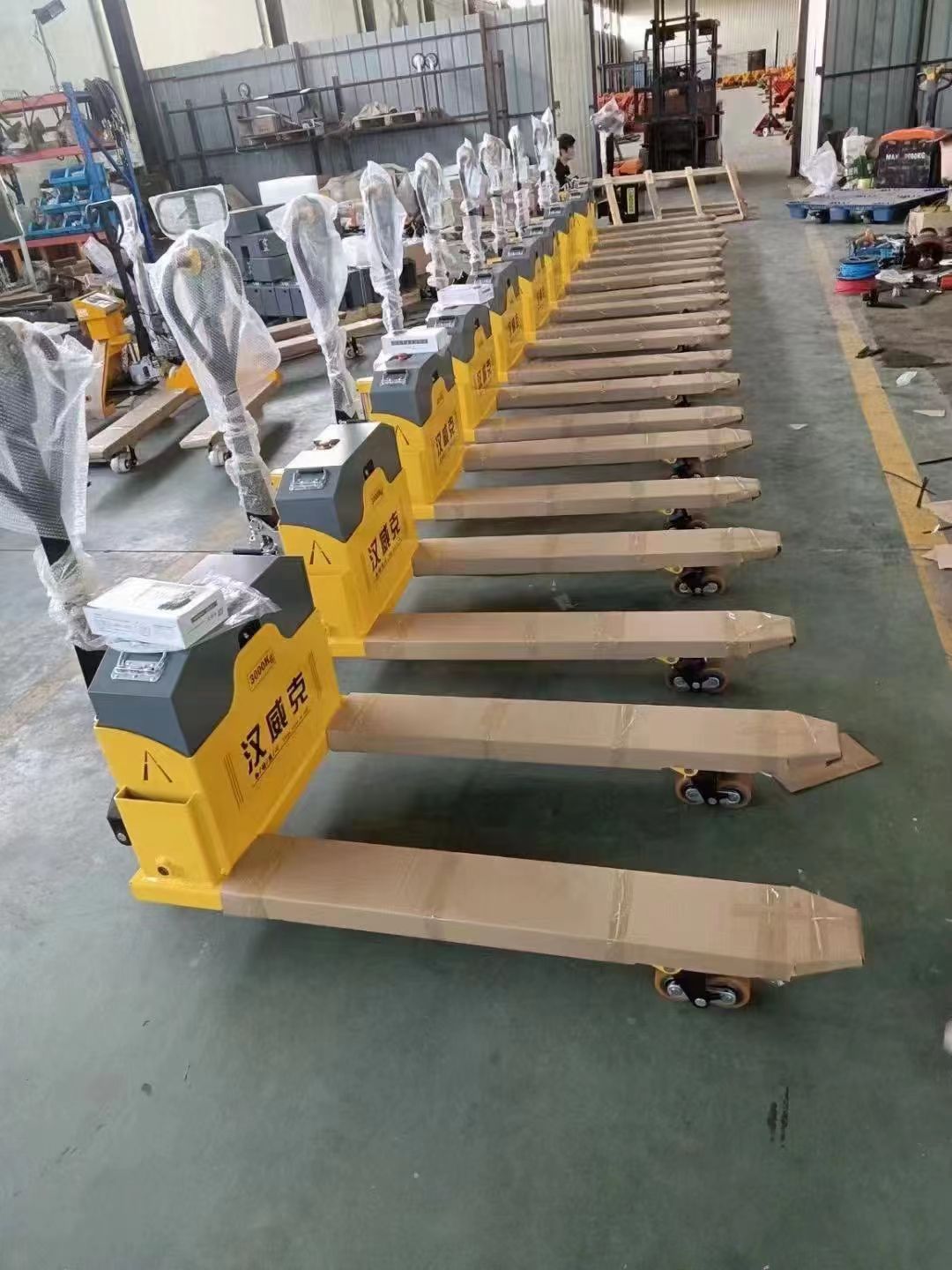
A pallet truck with a scale is listed as a first-party product variant, and inbound weighing is the clearest example of a trend that removes an entire handling step. Instead of moving a pallet to a floor scale, the load is weighed as it moves, which is useful in receiving checks, order verification and freight disputes.
What this trend changes for buyers is the number of questions attached to the unit. Before ordering a weighing pallet jack, confirm the weighing tolerance required by the application, the calibration documentation the supplier can provide, how the scale is powered, and whether the display stays readable in a cold, wet or dusty environment. A weighing function that cannot be verified in the buyer’s own conditions is a risk, not a feature.
Trend 5 — OEM/ODM Partnerships Move From Optional to Standard
OEM/ODM is stated as the production model behind the configurations above, and for many distributors and brand owners it has moved from an occasional request to the normal way of sourcing. The reason is commercial rather than technical: private-label plates, region-specific packaging, and mixed-model containers all come from the same production relationship.
The questions to resolve early are the ones that cause problems later. Who owns the tooling and drawings for a customized fork? How are engineering revisions version-controlled between the buyer and the supplier? How is first-article approval handled before mass production starts? A clear answer on these three points is a stronger quality signal than any general capability claim.
Trend 6 — Verified Quality Control and Compliance Documentation
Testing and documentation moved from a back-office detail to a purchasing criterion because markets are enforcing it. Three frameworks matter most in 2026:
- ISO 3691-5:2014 specifies safety requirements for pedestrian-propelled trucks, including manual and semi-manual pallet jacks.
- EN 1757-2 covers hand pallet trucks in Europe, including trucks with capacities up to 2,000 kg.
- OSHA 29 CFR 1910.178 classifies powered pallet jacks as Class III forklifts in the United States and requires formal operator training.
On the production side, JUNYUNHOIST states a 100% testing protocol and states that its products are manufactured under quality-control protocols aligned with international safety standards such as ISO and CE. What a buyer should convert that into is paperwork: the test record for the ordered batch, the scope and validity of any certificate, and confirmation that the exact model being purchased — not a similar one — appears on it.
Trend 7 — After-Sales Spare Parts and Supply Continuity
The seventh trend is the one that determines whether a good purchase stays a good purchase. The stated support model is a per-container provision: each container is equipped with free spare parts for wear and tear, replenished as needed based on subsequent wear. Around that sits stated supply capability of 10,000 units per month, a lead time of 15–20 days, and a minimum order quantity of 24 pieces.
It ranks seventh because it does not change what the equipment is, only how long it keeps working. For a distributor carrying a fleet or a plant running three shifts, that distinction collapses quickly: a pallet jack with no wear-part supply is a stopped pallet jack, and the cost of that stop is usually larger than the price difference that won the order.
The Seven Trends at a Glance
| Rank | Trend | What it changes for the buyer | Evidence that can be checked before ordering |
|---|---|---|---|
| 1 | Specification-level customization | Fork length, fork width, minimum lifting heights of 35 mm and 62 mm, fork steel plate thickness | Dimensional drawing and customization list |
| 2 | Application-specific builds | Material and build choice for cold storage, food handling and humid environments | Applicable-industry list; galvanized and stainless steel variants; wheel options (PU, nylon, PP, rubber) |
| 3 | Electrification | Power source, charging, and operator training obligations | Segment market data; OSHA 29 CFR 1910.178 training requirement |
| 4 | Weighing and data capture | Removes a separate weighing step; adds calibration and readability questions | Pallet truck with scale as a listed variant; calibration documentation request |
| 5 | OEM/ODM partnership | Branding, packaging, drawing control and mixed-model containers | Stated OEM/ODM production model; first-article approval process |
| 6 | Quality control and compliance | Market access, audit readiness and claim defensibility | 100% test protocol; ISO 3691-5:2014; EN 1757-2; OSHA 29 CFR 1910.178 |
| 7 | After-sales spare parts | Fleet uptime after delivery | Per-container wear-part provision; 10,000 units monthly capacity; 15–20 day lead time; MOQ 24 pcs |
Step-by-Step: Converting These Trends Into a Purchase Decision
- Define the load and the environment first. Record pallet type, maximum load, floor condition, aisle width, temperature range and hygiene requirements before looking at any catalogue. Every trend above depends on this input.
- Fix fork geometry and lifting heights. Convert the environment data into fork length, fork width, and a required minimum lifting height — the 35 mm and 62 mm options are the reference points for low-clearance entry.
- Choose the power source against duty cycle. Manual pallet jacks remain the dominant segment for good reason, but frequent long-distance movement or heavy duty cycles usually justify a semi-electric or full-electric unit.
- Confirm material and hygiene requirements. Decide whether galvanized steel, stainless steel or a standard finish is appropriate, and record the wheel material selected for the operating temperature and floor surface.
- Decide whether weighing is required. If inbound or outbound weight verification is part of the process, add the pallet truck with scale to the specification and settle the calibration question at the same time.
- Verify compliance and testing documentation. Match the model being purchased to the relevant framework — ISO 3691-5:2014, EN 1757-2 or OSHA 29 CFR 1910.178 — and request the batch test record.
- Agree supply terms and validate with a sample. Confirm monthly capacity, lead time and MOQ, agree the wear-part provision per container, and test a sample against the written specification before releasing the full order.
Use Cases: Which Trend Dominates in Which Facility
Cold Storage and Frozen Distribution
Trend 2 leads here. Cold storage is an explicitly listed application, and the decisions that matter are material finish, wheel material and lubricant behaviour at the operating temperature. Ask for written confirmation of performance at the specific temperature range rather than accepting a general cold-store claim.
Food Processing Plants
Food processing plant pallet jack requirements sit at the intersection of hygiene and durability. Galvanized and stainless steel pallet trucks are the relevant variants, and the questions to settle are surface treatment, cleanability and corrosion resistance in a washdown cycle.
Factory Workshops and Narrow Aisle Warehouses
Trend 1 leads. Narrow aisle pallet jack selection is a geometry problem: fork width and length, turning behaviour — the AC30 lists a radius after capture of 1,500 mm — and entry clearance determine whether the unit actually speeds up the route or blocks it.
Logistics Centers and Supermarket Warehouses
Trends 3 and 4 lead. High-throughput logistics center pallet jack fleets and supermarket warehouse pallet jack operations usually combine powered handling with a weighing requirement at the receiving door, plus a training obligation for every powered unit.
Distributor and Importer Programs
Trends 5 and 7 lead. In distribution, the product is only half the order; the other half is branding, packaging, mixed containers and the spare-part plan that keeps end customers running.
One importer program purchased 400 units over two years for resale through local stores across several markets. The reported result was handling that the customer described as convenient, practical, simple, efficient and labor-saving, with the relationship credited to high quality, low loss and high efficiency. That is the outcome distributors are buying when they select a supplier on supply continuity rather than on unit price alone.
Comparison Table: Environment, Priority Trend and What to Fix First
| Facility or environment | Priority trend | Specification to fix first | Documentation to request |
|---|---|---|---|
| Cold storage and frozen distribution | Trend 2 | Material finish, wheel material, behaviour at operating temperature | Written temperature-range confirmation |
| Food processing plant | Trend 2 | Stainless steel or galvanized build; cleanable surfaces | Material grade and surface treatment statement |
| Factory workshop and narrow aisle warehouse | Trend 1 | Fork length, fork width, minimum lifting height, turning behaviour | Dimensional drawing |
| Logistics center and supermarket warehouse | Trends 3 and 4 | Power source, duty cycle, weighing requirement | Operator training requirement; calibration documentation |
| Distributor and importer program | Trends 5 and 7 | MOQ, mixed-model container, spare-parts plan | Capacity commitment, lead time and wear-part provision |
FAQ: Pallet Jack Trends and Buying Decisions for 2026
Which safety standards apply to pallet jacks in 2026?
ISO 3691-5:2014 specifies safety requirements for pedestrian-propelled trucks, which includes manual and semi-manual pallet jacks. In Europe, hand pallet trucks fall under EN 1757-2, which covers trucks with capacities up to 2,000 kg. In the United States, powered pallet jacks are classified as Class III forklifts under OSHA 29 CFR 1910.178 and require formal operator training. The same model can fall under different frameworks in different regions, so confirm the requirement for the destination market before ordering.
How much customization is realistic on a pallet jack order?
Documented customization covers fork length and fork width, minimum lifting heights of 35 mm and 62 mm, and fork steel plate thickness. Beyond geometry, the range includes electric pallet trucks, galvanized and stainless steel pallet trucks, and pallet trucks with a scale, produced under an OEM/ODM model. The practical limit is not the option list but the documentation: if a configuration cannot be shown on a drawing and tested against that drawing, it should not go into the order.
What order economics should a procurement manager plan for?
The stated minimum order quantity is 24 pieces, and the stated supply capability is 10,000 units per month with a 15–20 day lead time. Order economics in this category are driven by configuration rather than by list price: fork geometry, material choice, power source and weighing requirements all change what is being built, and container-level ordering carries the per-container wear-part provision. Buyers should ask for a written quotation against their own specification instead of comparing headline unit prices for different configurations.
How should a buyer validate a pallet jack before committing to a full order?
Use a sample, and make the sample test the written specification: fork dimensions, minimum and maximum heights, wheel material, material finish and — where weighing is included — the weighing function. Alongside the sample, request the batch test record from the stated 100% testing protocol, and confirm that any certificate names the exact model being ordered. Validation is complete only when the drawing, the sample and the certificate describe the same product.
What lead time and monthly capacity should buyers expect in 2026?
For this range, the stated figures are a monthly production capacity of 10,000 units, a lead time of 15–20 days and a minimum order quantity of 24 pieces, with export coverage across India, Türkiye, Brazil, Vietnam, Russia, the United Arab Emirates, the Middle East and Southeast Asia. Buyers planning a launch or a seasonal peak should place the lead time and the capacity figure next to their own sales forecast before confirming volumes. To test the numbers against your own specification, request a sample or a written quotation at Junyunsteven@163.com or on WhatsApp at +86 134-8345-2631, and download the full product brochure from the link below.
Conclusion: A Ranking Is Only Useful If It Changes the Order
The 2026 pallet jack ranking runs from specification-level customization at the top to after-sales spare parts at the bottom, with application-specific builds, electrification, weighing, OEM/ODM partnership and verified quality control in between. The order reflects one idea: trends matter to a buyer only when they change a specification, a document or a delivery term.
The most useful way to apply this list is to work through it as a checklist before the next purchase order. Fix the fork geometry. Match the material to the environment. Decide the power source and the training obligation. Resolve whether the load needs to be weighed. Confirm the compliance framework and the test record. Agree the capacity, the lead time and the spare-part provision. Then validate everything with a sample.
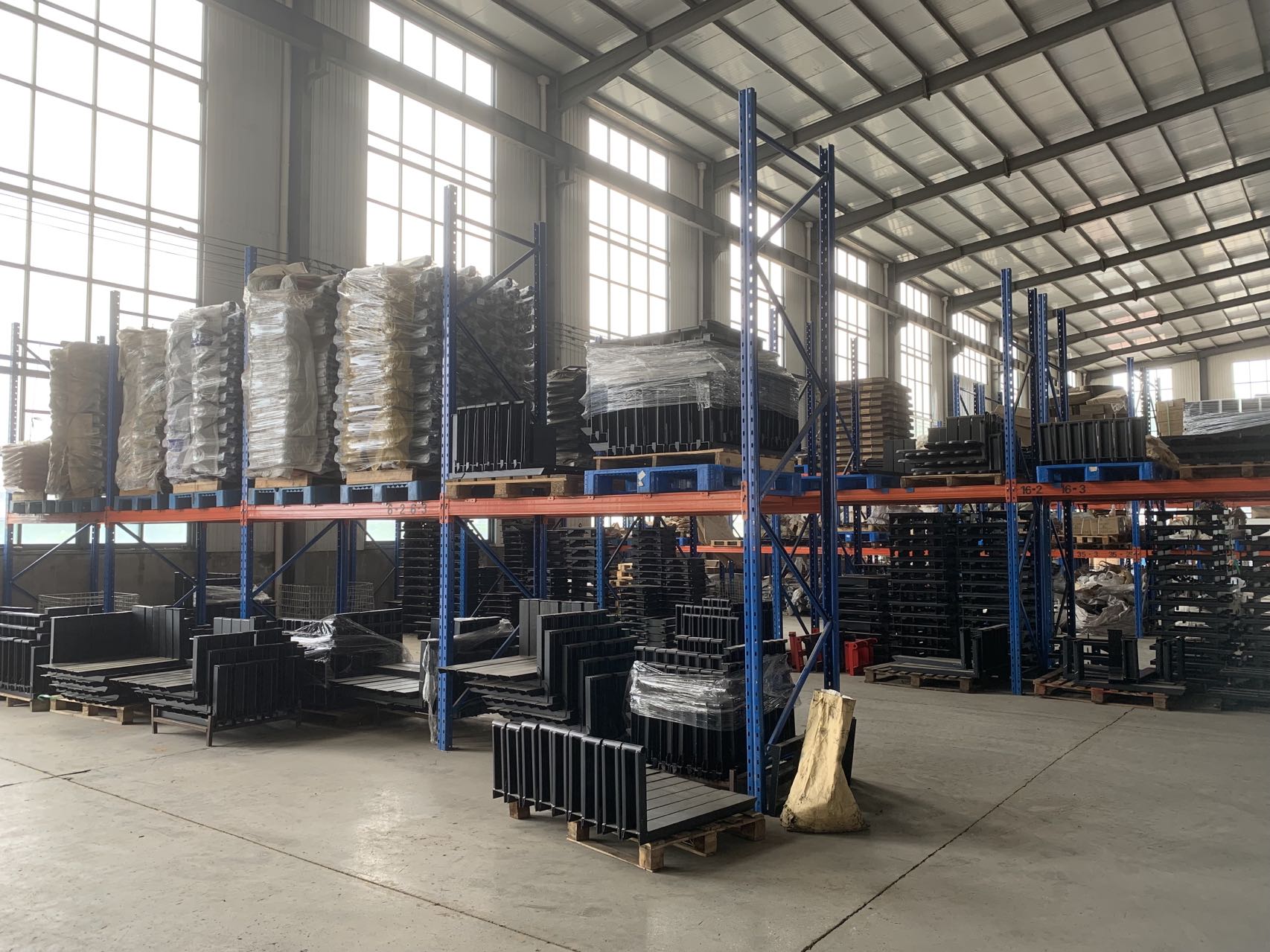
Next Step: Test the 2026 Trends Against Your Own Specification
If the trends above change your specification, the fastest way to check them is with a sample or a written quotation. JUNYUNHOIST supports sample validation, OEM/ODM configuration and container-level orders with a minimum order quantity of 24 pieces.
Download the product brochure: JUNYUNHOIST product brochure (PDF)
Email: Junyunsteven@163.com | WhatsApp: +86 134-8345-2631 | Website: www.junyunhoist.com
Address: Donglu Village, Qingyuan District, Baoding City, Hebei Province, China.
Have Questions or Need More Details?
Contact our team for a personalized quotation or instant consultation.
Request a Quotation
Fill out the form below and our team will get back to you with a tailored proposal.
WhatsApp Direct Chat
Prefer to chat in real-time? Message us on WhatsApp for instant assistance & quick answers.
- Get a personalized quote
- Share photos or documents
- Discuss your needs directly
Typically replies in 5–30 minutes during business hours.