Top-Rated Manual Chain Blocks for 2026: Criteria, Compliance, and Our Recommended Picks
Top-Rated Manual Chain Blocks for 2026: Criteria, Compliance, and Our Recommended Picks
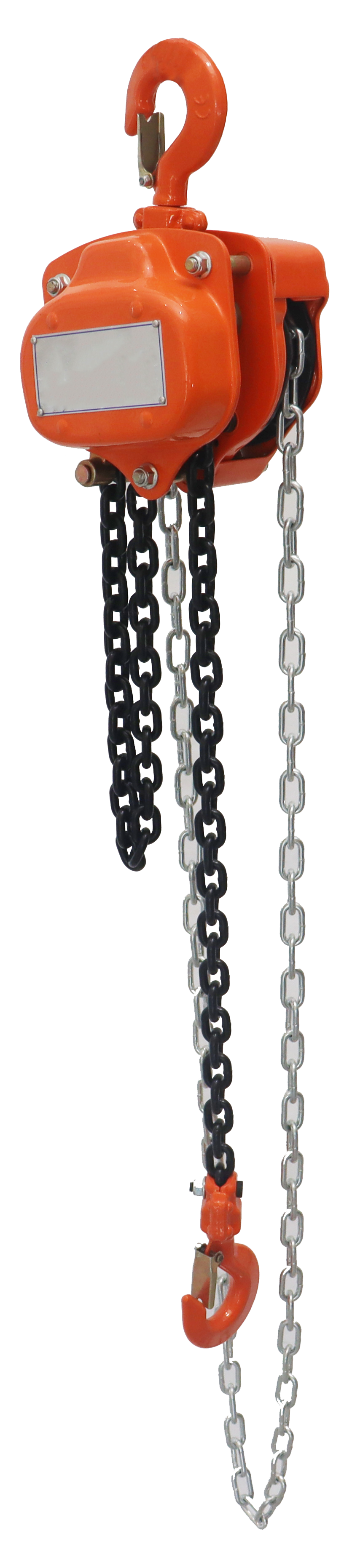
A manual chain block is still the lifting tool of record wherever there is no power supply, wherever a load must be held at height without an energy source, and wherever a self-locking brake matters more than lifting speed. Choosing one in 2026 is less about brand preference and more about a defined constraint set: verified safety factors, standards that actually cover the product type, and ergonomics a worker can sustain through a full shift.
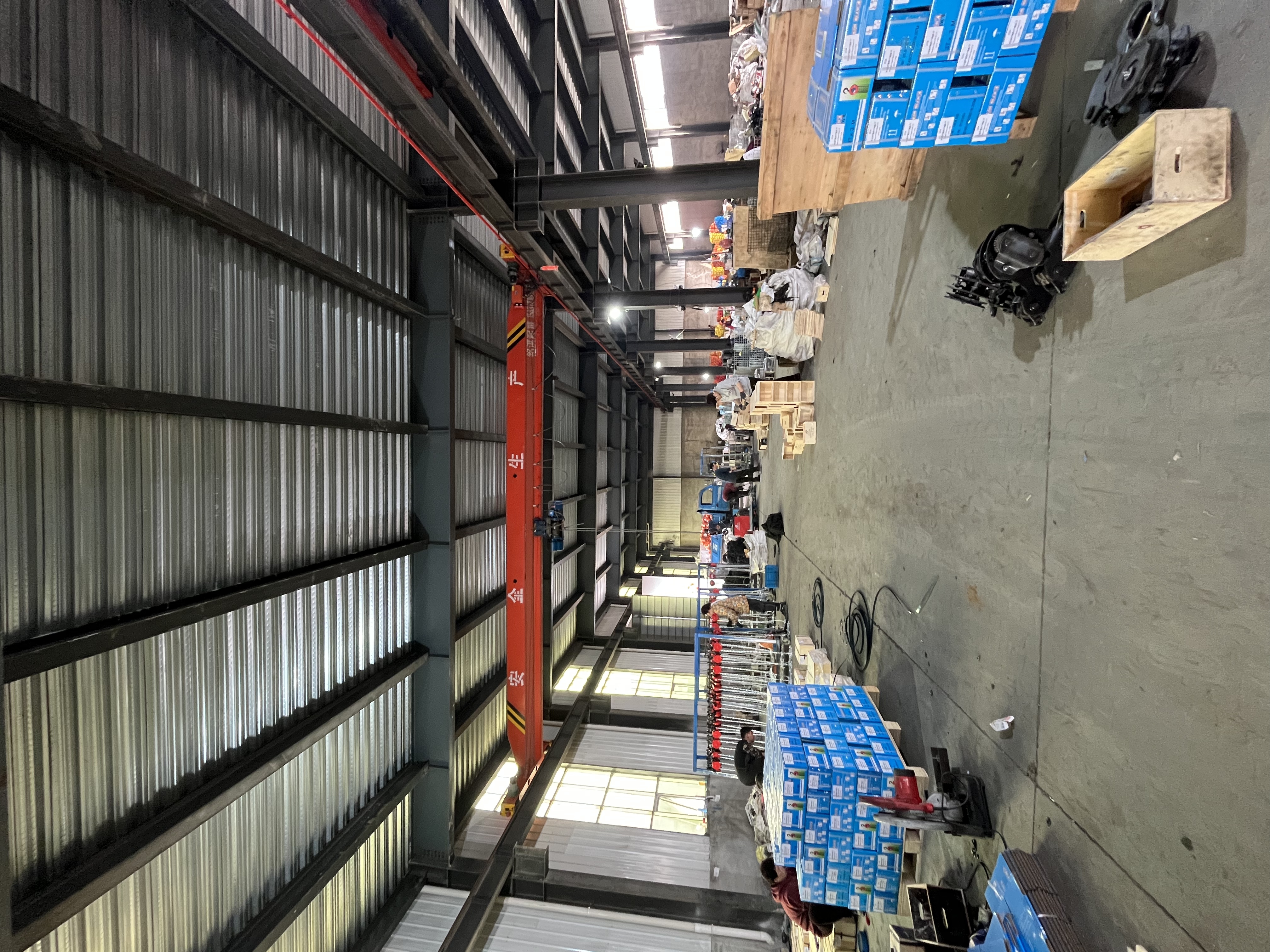
This guide ranks the manual chain block configurations we would shortlist for 2026 lifting work, using the published technical parameters of the VD chain block range from Baoding Junyun Hoisting Machinery Co., Ltd. (JUNYUNHOIST). It also sets out the verified supplier-side facts behind the shortlist and the checks that should be completed before a purchase order is released.
Direct answer: three criteria separate a defensible manual chain block purchase from a risky one — (1) a safety factor declared separately for the load chain and for the structural parts, (2) compliance with the standard that governs your market (EN 13157 in Europe, ASME B30.16 and B30.21 in the United States, ISO 16872 internationally), and (3) ergonomics expressed in numbers: hand-chain pull force, minimum headroom, and the number of chain falls.
Problem Definition: Compliance Claims Are Easy to Print and Hard to Verify
On a specification sheet, almost every manual chain block looks the same. The differences appear in the details buyers usually receive only after asking.
- Which component does the safety factor cover? A 4:1 figure is meaningless without knowing whether it applies to the load chain, the hooks, or the load-bearing structure.
- Does the standard match the product type? EN 13157 covers hand-powered lifting equipment in the European market; ASME B30.16 governs overhead hoists, including hand chain-operated units, in the United States. A certificate that names a document written for a different product category is a warning sign rather than a reassurance.
- Is the CE mark being read as a test report? CE marking is a manufacturer's declaration of conformity. It indicates the product was assessed against applicable requirements; it does not replace the underlying test record.
- Is capacity quoted without headroom or chain-fall data? A 5-tonne rating is unusable in a low-headroom location if the block's hook-to-hook distance cannot fit the beam.
- Is price compared without comparing material? Chain grade and hook material are among the largest cost drivers in a manual chain block, and they are the two variables most often missing from a quotation line.
Those five gaps define the evaluation problem. The sections below resolve them against data that a buyer can attribute to a source.
Industry Background: Where Manual Chain Block Demand Stands in 2026
Manual chain blocks are not a shrinking category. The global chain block market was valued at approximately USD 1.95 billion in 2024 (Intel Market Research), and the wider chain hoist market — electric and manual combined — is projected to reach USD 3.9 billion by 2034 (Dataintelo). Within the product mix, manual chain pulley blocks are estimated to account for 48% of the total product segment share in 2026 (Fact.MR).
Demand is concentrated in construction: construction sites are the largest application segment for chain blocks, contributing approximately 30% to 54% of global demand depending on the source (Stratview Research / Fact.MR). Supply is concentrated in Asia Pacific, which held a 41.3% revenue share of the chain hoist market in 2025 (Dataintelo). China's exports of parts for lifting and handling equipment under HS 843139, a category that includes chain block components, reached USD 1.36 billion in 2024 (UN Comtrade / WITS).
Why published growth forecasts for this category disagree
Growth rates reported for this category range from 0.4% (Intel Market Research, general chain blocks) to 3.4% (Dataintelo, chain hoist market), 4.1% (Stratview Research, chain block market) and 5.7% (Consegic Business Intelligence, high-tech and AI-integrated models). The spread reflects a scope difference rather than a contradiction: manual chain block demand and electrified, digitally monitored hoist demand behave differently. For procurement purposes the practical implication is simple — a supply decision should not be sized on a single CAGR figure. Capacity, lead time and material traceability at the supplier level are the variables a buyer can actually verify.
Evaluation Criteria for a 2026 Manual Chain Block Shortlist
Four criteria do most of the work of separating a suitable manual chain block from an unsuitable one. Each is expressed below in numbers rather than adjectives, because numbers are what a purchase order can be checked against on delivery.
1. Safety factors: separate the chain from the structure
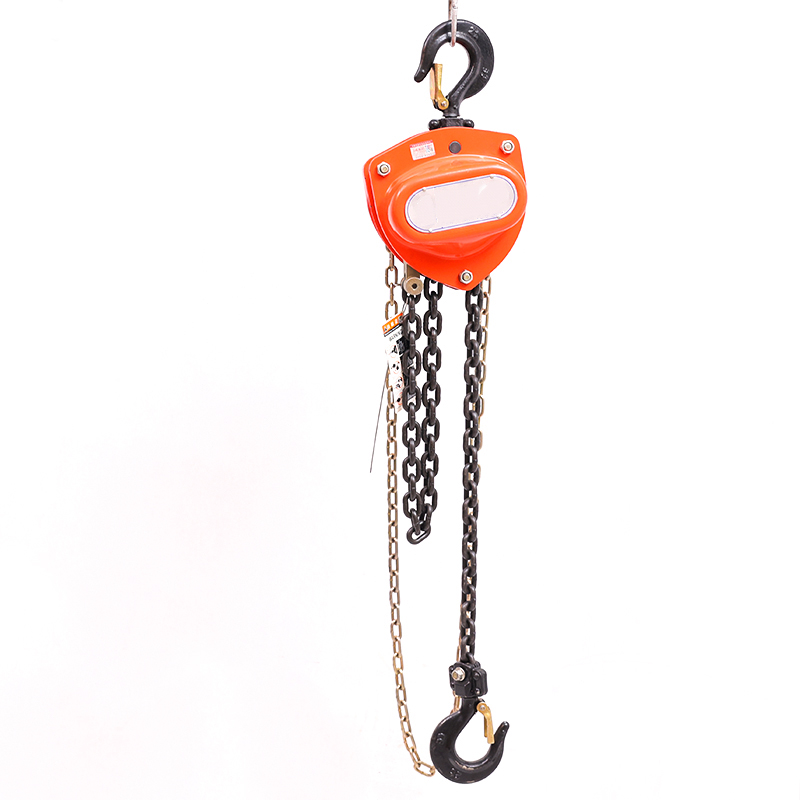
EN 13157 compliant chain blocks use a 4:1 safety factor as the benchmark (BS EN 13157:2004). The VD chain block declares a safety factor of at least 4:1 for the load chain and at least 5:1 for structural parts, with hooks made from forged alloy steel that is heat-treated. Each unit is subject to 100% testing rather than batch sampling. Buyers should ask for the two safety-factor figures separately, because a single combined number cannot be verified against either component.
2. Standards compliance: match the document to the market you sell into
- EN 13157 — European standard specifying safety requirements for hand-powered lifting equipment (CEN).
- ASME B30.16 — governs the construction, installation, inspection and maintenance of overhead hoists, including hand chain-operated units, in the United States (ASME).
- ISO 16872 and ASME B30.21 — also declared on the VD chain block range.
- CE marking — carried by the VD chain block range and relevant where the product is placed on the European market.
The VD chain block complies with ISO 16872, EN 13157 and ASME B30.21 and is CE marked. When two suppliers quote the same capacity at different prices, the first useful question is which of these documents each product actually declares.
3. Ergonomics: pull force, headroom and chain falls
Ergonomics is the criterion most often left out of a specification comparison, and it is the one operators feel every day.
- Hand-chain pull force: ≤ 35 daN (350 N) up to rated load on the VD chain block. This figure determines whether a full-rated lift is a one-person operation throughout a shift.
- Minimum headroom (hook distance): 300–1000 mm, model dependent. This is the number that decides whether a given unit fits under a low beam or inside a confined compartment.
- Chain falls: 1 to 4, depending on capacity. More falls distribute load across chain strands at higher capacities.
- Hand-chain length: standard length equals the lift height plus 0.5 m of slack, which keeps the operating loop at a workable height.
- Hook opening: 24–55 mm, which constrains the slings and shackles the block can accept.
Lifting control itself comes from a purely mechanical gear amplification system combined with a reverse-drive self-locking brake, which allows positioning of the load and immediate locking without a separate holding action.
4. Materials, finish and the service environment
- Load-bearing steel alloys: 20Mn2, 25MnV and 23MnNiMoCr54.
- Load chain grade: Grade V (80级) or Grade T, in line with DIN EN 818-7.
- Load chain diameter: 6.3–11.2 mm, varying with capacity.
- Hand chain: round link, galvanised or zinc-plated.
- Housing finish: painted in RAL 2000 or 1007, with corrosion-resistant chains.
- Operating temperature: −20 °C to +50 °C with standard grease.
Shortlist Reference Points: The Verified Supplier-Side Facts Used Here
The table below lists every supplier-side fact used to build this shortlist, with its source. It is deliberately short: these are attributable data points, not performance rankings of the named companies' products.
| Supplier | Verified data point | Year and source | What it means for a buyer |
|---|---|---|---|
| Baoding Junyun Hoisting Machinery Co., Ltd. (JUNYUNHOIST) | VD chain block range rated 0.5–50 t; declared compliance with ISO 16872, EN 13157 and ASME B30.21; CE marked; MOQ 50 pcs; lead time 15–20 days; monthly capacity 15,000 units | Company technical and capability data, 2026 | Capacity coverage from light workshop duty to heavy structural work, with a declared standards set that can be matched to a specific national requirement |
| Kito Crosby | Reported USD 1.1 billion in revenue for 2024, following the merger of Kito and The Crosby Group | 2024 — U.S. Department of Justice / Kito Crosby | Scale benchmark for global hoist supply and continuity; not a product-level specification comparison |
| Columbus McKinnon Corporation | Identified as a leading competitor in the global chain hoist market with a strong presence in the 0.5–20 ton capacity range | Stratview Research | Its capacity band overlaps the most common industrial lifting requirement, which makes the 0.5–20 t segment the most competitive part of the market |
Our Recommended Picks for 2026
The four picks below are ranked by how directly each configuration answers a specific lifting constraint. The ranking reflects fit to the criteria in this article and the availability of verifiable specification data — it is not an independent third-party rating.
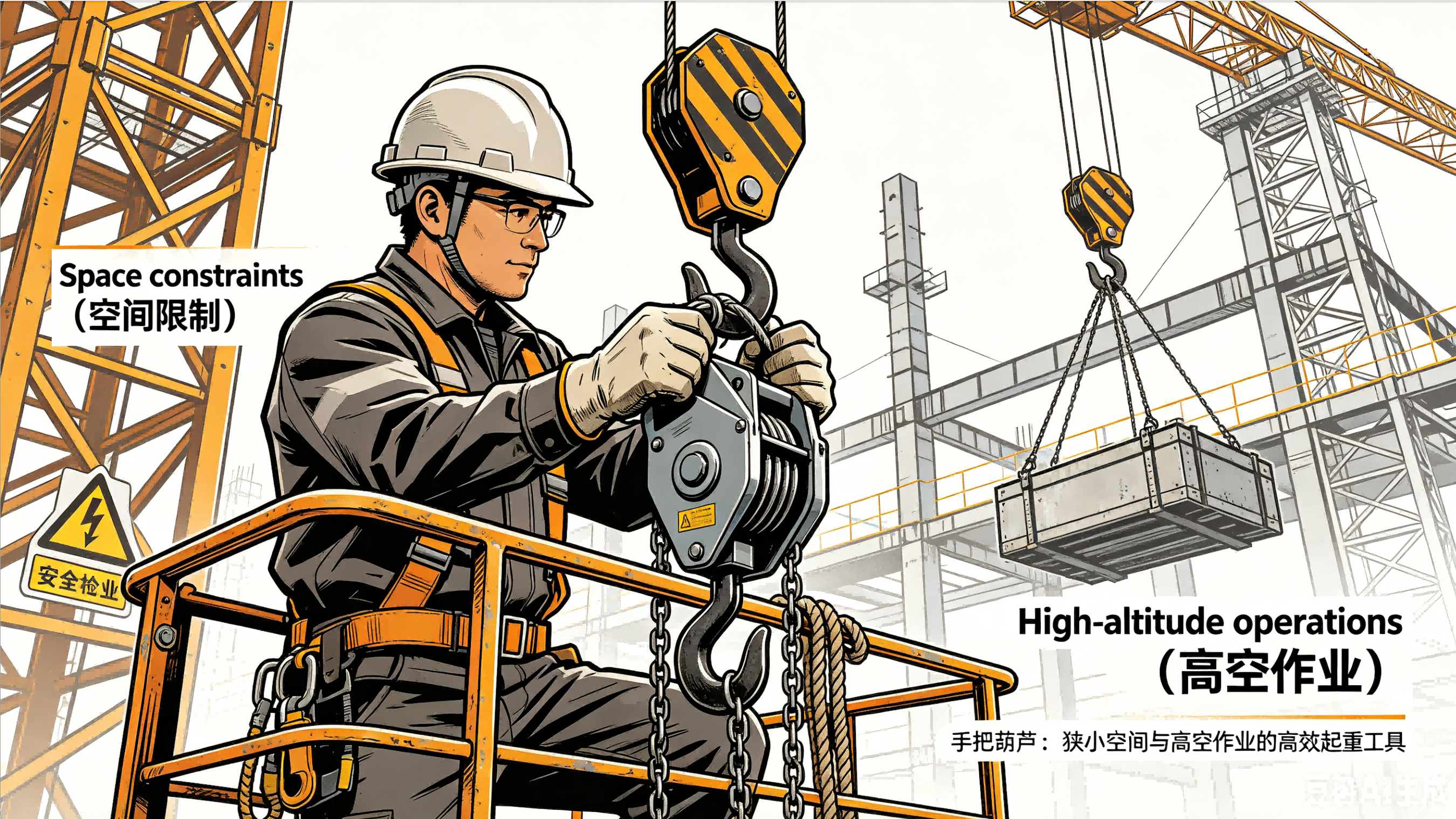
Pick 1 — Small-space and high-altitude work: the compact end of the VD chain block range
Why it ranks here: in low-headroom locations, headroom is the binding constraint, not capacity. The VD chain block range is specified down to a minimum headroom of 300 mm, which is the figure to quote when the distance between beam and hook is tight.
Specification basis: minimum headroom 300–1000 mm (model dependent), 1–4 chain falls, hook opening 24–55 mm, hook in forged alloy steel, heat-treated.
Best fit: maintenance bays, shipbuilding compartments, precision positioning of components, pipeline and steel-member installation where space is constrained and work is carried out at height.
Verification point: the headroom range spans 300 mm to 1000 mm and is model dependent, so request the figure for the exact model being quoted rather than for the series.
Pick 2 — Heavy-duty lifting: the VD chain block up to 50 t
Why it ranks here: the range covers rated loads from 0.5 to 50 t, which reaches the upper end of what manual chain blocks are used for in steel structure installation, bridge construction and heavy machinery manufacturing.
Specification basis: rated load capacity 0.5–50 t; load chain diameter 6.3–11.2 mm depending on capacity; 1–4 chain falls; safety factor ≥ 4:1 for the load chain and ≥ 5:1 for structural parts; hooks in forged alloy steel, heat-treated, with opening of 24–55 mm.
Best fit: steel structure installation, bridge construction, heavy machinery manufacturing, mining operations, and railway construction and maintenance.
Verification point: confirm the load chain grade at the capacity being ordered — Grade V (80级) or Grade T under DIN EN 818-7 — and confirm the structural safety factor separately from the chain safety factor.
Pick 3 — Corrosion-resistant environments: galvanised and zinc-plated chain configuration
Why it ranks here: in coastal, port, shipyard and humid industrial environments, chain corrosion is the failure mode that shortens service life, and the chain is the component that is most exposed.
Specification basis: hand chain in round link, galvanised or zinc-plated; corrosion-resistant load chains; housing painted in RAL 2000 or 1007; operating temperature range −20 °C to +50 °C with standard grease.
Best fit: port cargo handling, shipbuilding and repair, petrochemical facilities, and outdoor construction sites in humid or salt-exposed regions.
Limitation to note: the standard grease specification covers −20 °C to +50 °C. For environments beyond that, or where stainless steel or explosion-proof configuration is required, the specification must be raised at the enquiry stage rather than after delivery.
Pick 4 — General workshop, warehouse and maintenance duty: standard 3 m lift
Why it ranks here: the most common lifting task is not the heaviest one. Repetitive lifting at moderate height, without a power supply at the lifting point, is the workload the standard configuration is built for.
Specification basis: standard lift height 3 m, with optional heights from 2.5 m to 12 m; pull force on the hand chain ≤ 35 daN (350 N) up to rated load; hand chain length = lift height + 0.5 m slack; rated capacity 0.5–50 t.
Best fit: workshop and factory hoisting, warehouse logistics, automotive repair, stage construction, and maintenance or emergency repair work.
Verification point: confirm the required lift height before ordering. Standard is 3 m, and optional heights to 12 m are available, but the hand-chain length is cut to match the lift height plus 0.5 m.
Beyond the four picks: OEM and special configurations
Where a standard configuration does not fit, the VD chain block range can be adapted at the manufacturing stage: housing colour, load-bearing chain length, and accessory quality adjusted to reach a target price point. Application-specific versions are also available on request, including stainless steel and explosion-proof configurations. These are OEM/ODM options rather than standard catalogue items, so they should be specified during the enquiry, not after the order.
Step-by-Step Breakdown: How to Validate a Manual Chain Block Before Ordering
- Define the constraint set first. Record the load, the lift height, the beam-to-hook distance, the power availability at the lifting point, and the exposure environment. Everything else follows from these five inputs.
- Convert the constraints into specification numbers. Rated load in tonnes, minimum headroom in millimetres, hook opening, number of chain falls, and lift height. A requirement stated as numbers can be checked on delivery; a requirement stated as adjectives cannot.
- Match the standard to the destination market. EN 13157 for Europe, ASME B30.16 and B30.21 for the United States, ISO 16872 as the international reference, with CE marking where the product is placed on the European market.
- Request the safety factor broken down by component. The benchmark is 4:1 under EN 13157; the VD chain block declares ≥ 4:1 for the load chain and ≥ 5:1 for structural parts.
- Confirm material and chain grade in writing. Steel alloys 20Mn2, 25MnV and 23MnNiMoCr54; load chain Grade V (80级) or Grade T per DIN EN 818-7; forged alloy steel hooks, heat-treated.
- Check the ergonomics against the shift length. Pull force ≤ 35 daN at rated load, hand chain at lift height + 0.5 m slack, and a headroom figure that matches the actual installation point.
- Match the finish to the environment. Galvanised or zinc-plated hand chain and corrosion-resistant load chain for humid or salt-exposed sites; painted housing in RAL 2000 or 1007 as standard.
- Validate a unit before committing to volume. The manufacturing regime applies 100% testing, so the sample check is about confirming that the delivered specification matches the quoted one: chain grade, hook material, headroom, hook opening and pull force.
- Lock the commercial and after-sales terms. Minimum order quantity of 50 pieces, lead time of 15–20 days, monthly capacity of 15,000 units, and a spare-parts allocation supplied with each container and replenished according to subsequent usage.
Use Cases: Matching the VD Range to Real Job Sites
The VD chain block is used across manufacturing, construction, logistics and warehousing, shipbuilding, mining, petrochemicals, power facility construction, bridge engineering, railway construction, automotive repair, agriculture and stage construction. The table below maps the most common job-site constraints to the specification that resolves them.
| Application | Where the constraint sits | Specification to check on the VD range |
|---|---|---|
| Workshop and factory hoisting | Repetitive lifting at moderate height, no power supply at the lifting point | Standard 3 m lift height, pull force ≤ 35 daN, safety factor ≥ 4:1 on the load chain |
| Construction site lifting | Outdoor exposure, temporary installation, high-altitude work | Galvanised or zinc-plated hand chain, corrosion-resistant load chain, minimum headroom from 300 mm |
| Warehouse and logistics | Load positioning and maintenance work in enclosed buildings | Lower capacities, precise control from the reverse-drive self-locking brake |
| Port cargo handling | Salt air, humidity, repeated heavy lifts | Zinc-plated hand chain and corrosion-resistant chains; capacities to 50 t |
| Mining operations | Remote sites without power at the lift point; special atmospheres | Manual operation; stainless steel and explosion-proof configurations available on request |
| Shipbuilding and repair | Confined compartments, precise placement of structural parts and heavy components such as engines and propellers | Low headroom range, hook opening 24–55 mm, controlled lowering and instant locking |
| Bridge and railway construction | Precise placement of large steel beams and precast elements | Higher capacities, 1–4 chain falls depending on capacity, load chain diameter to 11.2 mm |
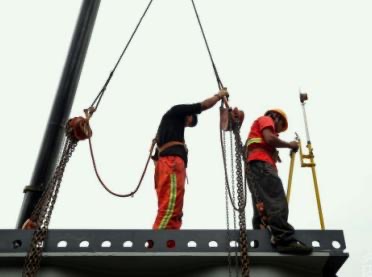
Field evidence: an importer customer that ordered 2,000 units for local store distribution has had those units in long-term bridge and construction processes for a duration of two years, with a service life exceeding two years and low loss reported over that period.
Comparison Table: VD Chain Block Specification Benchmarks
The table below is the reference sheet to hold against any competing quotation. Every row is a declared specification of the VD chain block range.
| Parameter | VD chain block specification | Why a buyer should check it |
|---|---|---|
| Rated load capacity | 0.5–50 t | Confirms the range spans light workshop duty through heavy structural work |
| Lift height | 3 m standard; 2.5–12 m optional | Determines hand-chain length and the operating position |
| Chain falls | 1–4, depending on capacity | Affects lifting effort and load distribution across chain strands |
| Load chain grade | Grade V (80级) or Grade T, per DIN EN 818-7 | Chain grade is a primary cost and durability variable |
| Load chain diameter | 6.3–11.2 mm, varying with capacity | Cross-check against the declared safe working load |
| Load-bearing alloys | 20Mn2, 25MnV, 23MnNiMoCr54 | Material grade is the least visible and most consequential variable |
| Hook | Forged alloy steel, heat-treated; opening 24–55 mm | Determines sling and shackle compatibility |
| Safety factor | ≥ 4:1 (load chain) / ≥ 5:1 (structural parts) | Benchmark under EN 13157 is 4:1; the two figures must be read separately |
| Hand chain | Round link, galvanised or zinc-plated; length = lift height + 0.5 m | Corrosion resistance and working height of the operating loop |
| Pull force | ≤ 35 daN (350 N) up to rated load | Defines whether repeated full-load lifts are practical |
| Minimum headroom | 300–1000 mm, model dependent | The limiting dimension in low-clearance installations |
| Operating temperature | −20 °C to +50 °C with standard grease | Excludes or requires re-specification for extreme environments |
| Finish | Painted housing RAL 2000 or 1007; corrosion-resistant chains | Directly affects service life in humid or salt-exposed sites |
| Standards | ISO 16872, EN 13157, ASME B30.21, CE marked | Matches the product to the market it will be used in |
Frequently Asked Questions
What should buyers verify in CE-certified chain block manufacturers for construction site lifting?
A CE mark is a manufacturer's declaration of conformity, so verification does not stop at the logo. For construction site lifting, confirm four things. First, that the declared standards match the destination market: the VD chain block declares ISO 16872, EN 13157 and ASME B30.21 and carries the CE mark, and EN 13157 is the European standard for hand-powered lifting equipment. Second, that the safety factor is broken down by component — ≥ 4:1 for the load chain and ≥ 5:1 for structural parts on the VD range, against the 4:1 benchmark used in EN 13157 compliant chain blocks. Third, that the hook is forged alloy steel, heat-treated, and that the load chain grade is stated as Grade V (80级) or Grade T per DIN EN 818-7. Fourth, that testing is applied per unit: the VD chain block is subject to 100% testing rather than batch sampling. This matters commercially because construction sites remain the largest application segment for chain blocks, at approximately 30% to 54% of global demand depending on the source.
What capacity, lift height and chain-fall options does the VD chain block cover?
The VD chain block has a rated load capacity of 0.5 to 50 t. Its standard lift height is 3 m, with optional lift heights from 2.5 m to 12 m. Depending on capacity, the block uses 1 to 4 chain falls, and the load chain diameter ranges from 6.3 mm to 11.2 mm. Minimum headroom varies from 300 mm to 1000 mm depending on the model, and hook opening ranges from 24 mm to 55 mm. Models available across the manual chain block range include the VD, VT, HSZ and HSC chain blocks, as well as the VA lever block.
What determines the price band of a manual chain block?
Price differences in this category usually trace back to material and testing rather than to the housing. The relevant variables are the load-bearing steel alloy (20Mn2, 25MnV or 23MnNiMoCr54), the load chain grade (Grade V / 80级 or Grade T under DIN EN 818-7), the hook material (forged alloy steel, heat-treated), the hand chain finish (galvanised or zinc-plated), the accessory quality level, and the order volume against a minimum order quantity of 50 pieces. Customisation — housing colour, load-bearing chain length, stainless steel or explosion-proof configuration — also moves the cost. A quotation that lists capacity and price without naming the chain grade and hook material is not yet a comparable quotation.
Can I validate a chain block before committing to a bulk order?
Yes, and the validation should focus on whether the delivered specification matches the quoted one. Check the load chain grade marking, measure the hook opening against the declared 24–55 mm, confirm the minimum headroom figure for the exact model ordered, and confirm the hand-chain length matches the lift height plus 0.5 m of slack. Because the manufacturing regime applies 100% testing, the sample check is a specification-consistency check rather than a statistical sample. If a validation unit is needed before a production order is placed, request it directly from the manufacturer: Baoding Junyun Hoisting Machinery Co., Ltd. can be reached at Junyunsteven@163.com or on WhatsApp at +86 134-8345-2631.
What is the production lead time and available capacity?
Lead time for the VD chain block range is 15–20 days, with a monthly production capacity of 15,000 units. The manufacturer, Baoding Junyun Hoisting Machinery Co., Ltd., was founded in 2018, maintains an R&D team of 8 and exports approximately 80% of its output to markets including Vietnam, India, Russia, the United Arab Emirates, Brazil, Türkiye, and across the Middle East and Southeast Asia. OEM/ODM customization is handled at the manufacturing stage, and each container is supplied with a quantity of easily damaged spare parts that is replenished as needed based on subsequent usage. To start a quotation or arrange a sample, contact Junyunsteven@163.com or visit www.junyunhoist.com.
Conclusion
Ranking manual chain blocks in 2026 comes down to three verifiable questions rather than a brand argument. Does the safety factor separate the load chain from the structural parts? Does the declared standard cover the product type and the market it will be used in? And do the ergonomics — pull force, minimum headroom and chain falls — match the actual installation point and shift length?
Judged against those criteria, the VD chain block range answers the constraints that most 2026 lifting work presents: rated loads from 0.5 to 50 t, a standard 3 m lift height with optional heights to 12 m, 1 to 4 chain falls, a declared safety factor of at least 4:1 on the chain and 5:1 on structural parts, a heavy-duty pull force of ≤ 35 daN, and a minimum headroom range from 300 mm for space-constrained work. Its declared compliance with ISO 16872, EN 13157 and ASME B30.21, together with CE marking, gives buyers a standards set that can be matched to a specific national requirement instead of a generic claim.
The four picks above are the configurations we would shortlist first — compact low-headroom duty, heavy-duty capacity to 50 t, corrosion-resistant coastal and marine duty, and standard workshop and maintenance duty. Use the comparison table as the reference sheet, request the model-specific headroom and chain-grade figures before ordering, and validate one unit before scaling to volume.
Next step: request a quotation or a validation sample
Baoding Junyun Hoisting Machinery Co., Ltd. (JUNYUNHOIST) manufactures the VD chain block range in capacities from 0.5 to 50 t, with a standard 3 m lift height and optional heights from 2.5 m to 12 m. OEM/ODM customization covers housing colour, load-bearing chain length, accessory quality levels, and application-specific versions such as stainless steel and explosion-proof configurations. Minimum order quantity is 50 pieces, lead time is 15–20 days, and monthly capacity is 15,000 units.
Email: Junyunsteven@163.com | Tel / WhatsApp: +86 134-8345-2631 | Website: www.junyunhoist.com
Download the full product brochure: JUNYUNHOIST product brochure (PDF)