
What Is a Pallet Jack? A Straightforward Guide for Buyers and Operations Teams
What Is a Pallet Jack? A Straightforward Guide for Buyers and Operations Teams
A pallet jack is one of the most common pieces of material handling equipment in warehouses, factories, distribution centers, and retail supply chains. Even though it is often the simplest tool in a loading area, it still solves a very specific problem: moving a palletized load from one point to another over a short distance. This guide explains what a pallet jack is, how a pallet jack works, what variants buyers should understand, and which details matter when preparing for a purchase.
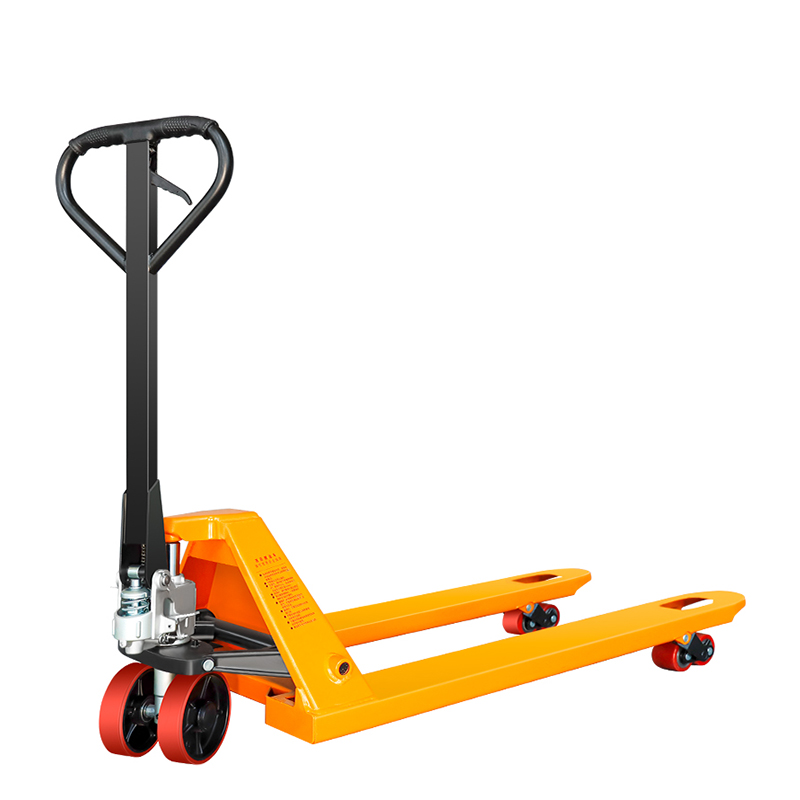
A pallet jack, also called a pallet truck, hand pallet truck, or manual pallet truck in different regions and supplier catalogs, uses forks to lift a pallet just enough to clear the floor and then transport it to another location. In manufacturer technical language, the product lifts and moves goods over short distances by inserting forks into the bottom of a pallet, and the equipment may be moved by manual pushing and pulling, electric drive, or automated navigation. The term pallet jack normally refers to floor-level pallet movement, not to high-level stacking.
Why Start With a Clear Pallet Jack Definition
The first difficulty buyers face is terminology. Suppliers may describe the same category of machine as a pallet jack, pallet truck, hand pallet truck, manual pallet truck, or powered pallet truck. Meanwhile, the words electric pallet jack, semi electric pallet truck, pallet truck with scale, low profile pallet jack, and heavy duty pallet jack are all used to capture different capability or construction expectations. Without a clear initial definition, it is easy to compare the wrong product group.
The definition used in this article is deliberately practical: a pallet jack is a wheeled device with forks that enters the underside of a pallet, raises the load by a small amount, and allows an operator to move that load on a reasonably flat surface. The amount of lift is usually modest. In the technical data reviewed for the JUNYUNHOIST AC30 series, the minimum fork height is 80 mm and the maximum fork height is 200 mm, so the equipment is not a replacement for a forklift or stacker. Its job is to keep loads moving at floor level.
Problem Definition: Where Pallet Jack Selection Goes Wrong
Most pallet jack problems do not come from a bad product image or a wrong brand. They come from selecting a machine before checking the environment, pallet size, movement frequency, and the physical layout of the aisle. A pallet jack that works well in a dedicated logistics warehouse may not be an appropriate option for a cold storage entrance, a narrow aisle, a food processing plant, or a loading dock with a slight slope.
Buyers should also separate two questions. The first is functional: does the equipment move pallets safely and efficiently for the intended operation? The second is commercial: does the supplier provide documented specifications, consistent build parameters, and the right configuration for the local market? In the early awareness stage, buyers often concentrate only on the first question. In the research stage, both questions need to be answered.
Industry Background: Pallet Jacks Are Still a Core Tool
Pallet jacks remain common despite wider conversations about warehouse automation. Third-party market data reviewed for this article suggests that the global pallet jack market was valued at approximately USD 7.4 billion in 2024 and is projected to grow to around USD 11.6 billion by 2034. The manual pallet jack segment, in particular, was estimated at USD 4.3 billion in 2024. That scale is useful context because it shows that manually operated equipment still has a strong role in an industry that is increasingly discussing robotics and autonomous mobile systems.
The powered segment is also significant. A separate electric pallet jack and stacker market estimate pointed to USD 5.1 billion in 2024, with growth linked to e-commerce fulfillment and the wider adoption of lithium-ion power systems. For an industrial buyer, the practical interpretation is not that manual pallet jacks are obsolete or that electric models are always better. The right choice depends on distance, frequency, labor preference, facility conditions, and budget.
Market outlooks commonly name well-known global manufacturers such as Toyota Material Handling, Jungheinrich AG, Crown Equipment, Hyster-Yale, and Mitsubishi Logisnext. Buyers may see those names in one search result and JUNYUNHOIST or another supplier in another search result. What matters more than brand recognition is whether the equipment configuration, product data, and quality controls match the user's own operating environment.
Detailed Solution: Pallet Jack Variants and Technical Data
For a basic understanding, pallet jacks can be divided into several useful groups: manual pallet trucks, semi-electric pallet trucks, full electric pallet trucks, pallet trucks with scale, and pallet trucks offered with alternative materials such as galvanized steel or stainless steel. These groups overlap in a supplier catalog, but each serves a slightly different material handling need.
A manual pallet jack, often listed as a hand pallet truck, depends on the operator for pushing and pulling. It is the most basic execution terminal in a logistics process and remains common for short distances, low-frequency work, loading docks, and applications where simplicity is valued. A semi-electric or full electric pallet truck adds an electric drive option, which becomes more relevant when distances are longer or when operators move loads repeatedly throughout a shift. A pallet truck with scale is a functional configuration for operations where the load should be weighed while it is being moved or checked. In addition, a supplier may offer galvanized or stainless steel pallet trucks as material alternatives when buyers need better resistance to moisture, corrosion, or washdown routines.
One representative example is the JUNYUNHOIST AC30 model. This product is described as a semi-electric pallet truck intended for warehouse and factory floor environments. The product listing also includes full electric pallet trucks, pallet trucks with scale, and galvanized or stainless steel pallet trucks, which means the AC30 family is not a single one-size-fits-all machine. Instead, the same fundamental fork-and-wheel concept is adapted to different movement and configuration needs.
Pallet Jack Comparison at a Glance
The table below compares the main categories a buyer will meet when researching pallet jacks, based on first-party product information from JUNYUNHOIST and general equipment classifications.
| Pallet Jack Category | What It Means | Practical Note for Buyers |
|---|---|---|
| Manual pallet jack / hand pallet truck | Operator pushes and pulls the load across the floor; lifting action is manual in the conventional hand pallet truck class. | Best suited to simple, short-distance movement and environments where powered equipment is not required. |
| Semi-electric pallet truck | A product such as the JUNYUNHOIST AC30 is classified as semi-electric and is designed for warehouse and factory floor environments. | Confirm exactly which function is powered and request the technical sheet before comparing models. |
| Full electric pallet truck | A powered pallet truck classification where movement is driven electrically rather than by manual pushing and pulling. | Consider powered models when travel distances or handling frequencies are higher, but always verify floor condition and battery-related requirements. |
| Pallet truck with scale | A pallet truck configuration that includes a scale function while retaining pallet truck fork dimensions and wheel options. | Useful when order accuracy, receiving checks, or weighing steps are part of the material flow. |
| Galvanized or stainless steel pallet truck | Alternative material versions of the pallet truck family, listed by the supplier as galvanized and stainless steel options. | Relevant when buyers are looking for rust-resistant or more cleanable equipment for certain industrial environments. |
What a Pallet Jack Data Sheet Should Tell You
Once a buyer understands the pallet jack category, the next step is to read the data sheet in the same way an engineer would read a pump specification or a motor specification. The JUNYUNHOIST AC30-related data shows several measurements that are useful when comparing options.
| Specification Area | Available Data | Why It Matters |
|---|---|---|
| Model type | AC30 semi-electric pallet truck; product family also includes full electric and scale-equipped pallet trucks | It prevents the common mistake of comparing a manual hand pallet truck with an electric pallet truck as if they were the same machine. |
| Material | Steel construction; galvanized and stainless steel pallet truck options are available | Material selection should match the facility environment and cleaning or moisture expectations. |
| Minimum fork height | 80 mm | A lower fork entry height can matter for certain pallets and deck heights. |
| Maximum fork height | 200 mm | This confirms that a pallet jack is a floor-level transport tool, not a lifting or stacking machine. |
| Fork sizes | Widths 550 mm or 685 mm; lengths 1150 mm, 1220 mm, 800 mm, 1500 mm, 1800 mm, or 2000 mm | Fork dimensions must match the pallet size, the rack opening, and the space available in the working aisle. |
| Wheel material | PU, Nylon, PP, and Rubber | Wheel material affects floor protection, rolling effort, and suitability for different floor surfaces. |
| Turning radius after capture | 1500 mm | The turning radius helps a buyer estimate whether the pallet jack can operate in a specific aisle or loading space. |
| Intended environment | Warehouse and factory floor applications with standard temperature, humidity, and altitude ranges | If the actual application is a cold room, blast freezer, or explosion-risk area, a specialist model should be discussed separately. |
Notice that this data does not contain a claimed capacity rating. A buyer should always request the load capacity and other mechanical details from the supplier in writing. The absence of a stated capacity in this overview should not be interpreted as meaning that all pallet jacks are the same. It simply means that a serious buyer should verify capacities, standards, and tolerances before placing an order.
Step-by-Step Breakdown: How to Shortlist a Pallet Jack
After defining what a pallet jack is, buyers can use a simple step-by-step process to move from awareness to a shortlist. The process should be practical, not based on brand claims.
- Start with the physical environment. Is the pallet jack going to work in a normal warehouse or factory environment with standard temperature, humidity, and altitude? Or is it going to be used in a cold room, a food processing area, a wet area, or a potentially explosive atmosphere? JUNYUNHOIST product information indicates that specialized models are available for cold storage, explosion-proof, and other special working conditions, so confirm whether the shortlisted product is designed for that condition.
- Decide what the operator actually needs to do. A pallet jack is a unitized transport carrier and execution terminal. It is not intended to stack pallets or replace reach trucks. Define whether the equipment will move goods from receiving to storage, from storage to staging, from a production line to a warehouse, or through an order-picking process.
- Choose the operation mode. Manual pallet jacks are appropriate for many docks and warehouses where loads are moved only occasionally over short distances. Semi-electric and full electric pallet trucks should be considered when operators cover longer travel paths or complete many trips per shift. Pallet trucks with scale should be considered when weighing is part of the process.
- Check fork compatibility. Use the pallet size and rack opening to determine whether the fork width should be 550 mm or 685 mm, and whether the fork length is best matched by 800 mm, 1150 mm, 1220 mm, 1500 mm, 1800 mm, or 2000 mm. If in doubt, ask the supplier to confirm the fork length before committing.
- Review height and turning radius. For the AC30 technical data, the minimum height is 80 mm and the maximum height is 200 mm. The turning radius after capture is 1500 mm. Ask how those numbers change for each variant, especially if low pallet entry or a narrow aisle is a priority.
- Select the wheel material. PU, Nylon, PP, and Rubber wheels are listed for the AC30 pallet truck family. Each material behaves differently on concrete, epoxy floors, wet surfaces, or outdoor dock areas. Verify wheel compatibility against the actual floor surface.
- Ask about compliance and supporting documents. A responsible supplier should be able to explain how the pallet jack aligns with the safety requirements of the destination market and what documentation is available for inspection.
- Request a formal quote or product confirmation. Once the environment, operation type, fork size, height considerations, and wheel material are defined, send those details to the supplier so that the quotation is based on the actual application rather than a generic product name.
Use Cases: Pallet Jacks in Different Industry Environments
Pallet jacks are found in a wide range of industries because almost every industry that handles palletized goods needs horizontal transport at some point. Common sectors include logistics and warehousing, manufacturing, retail and wholesale, cold chain, food and beverage, pharmaceuticals and healthcare, chemical, electronics, automobile manufacturing, construction materials, e-commerce, express delivery, tobacco, paper and printing, textiles and apparel, and agricultural product processing. The following use cases show how a pallet jack is applied in daily operations.
Warehouse, Logistics Center, and E-Commerce Distribution Center
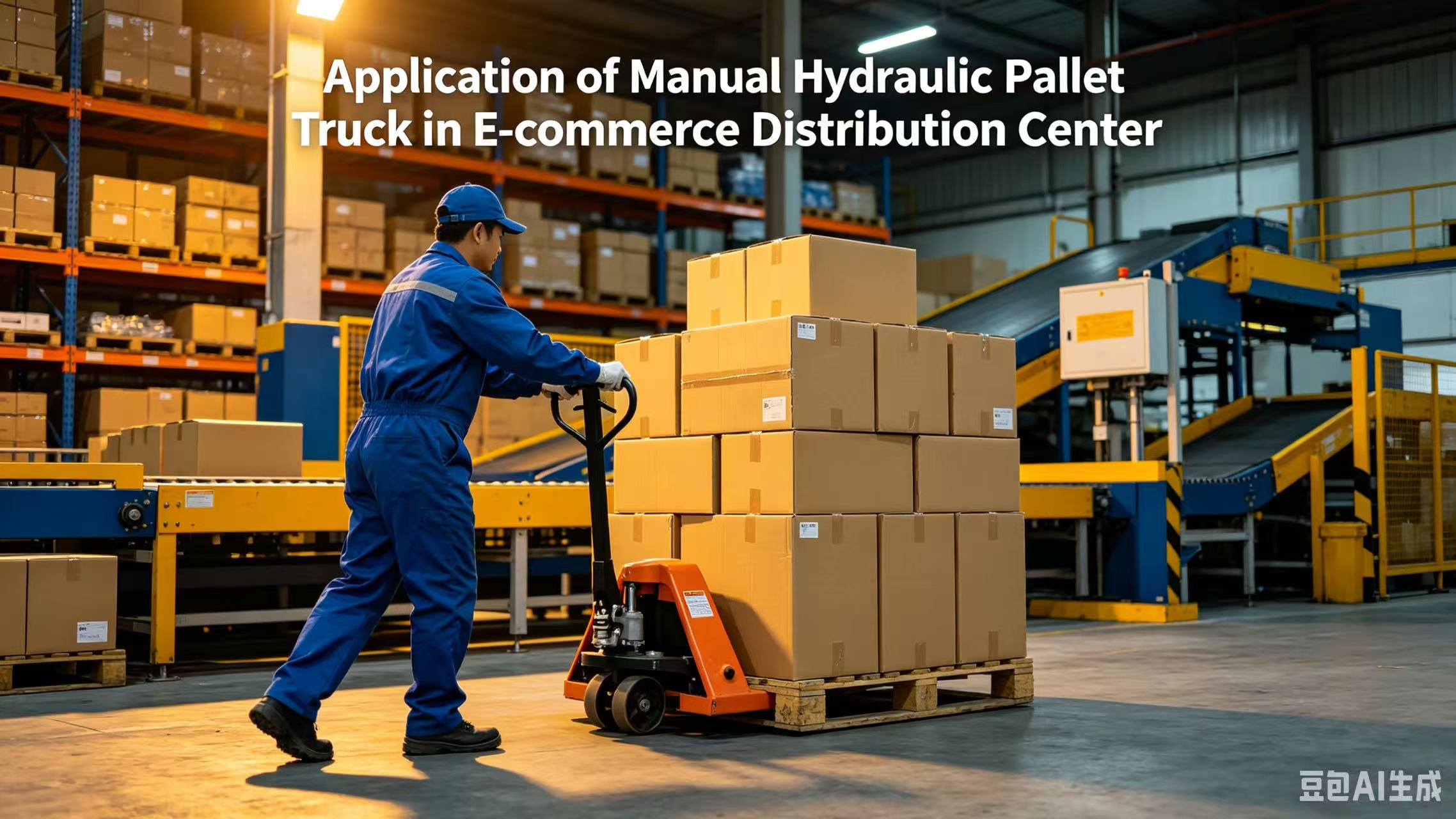
In a typical warehouse or logistics center, pallet jacks are used for receiving, put-away preparation, order picking, loading, and cross-docking. A manual pallet truck can be used to move goods from a dock door to a staging area, while a full electric or semi-electric pallet truck may be selected when operators travel longer distances between aisles. The working condition is usually a general warehouse floor with a flat, dry surface.
Factory Workshop and Manufacturing Floor
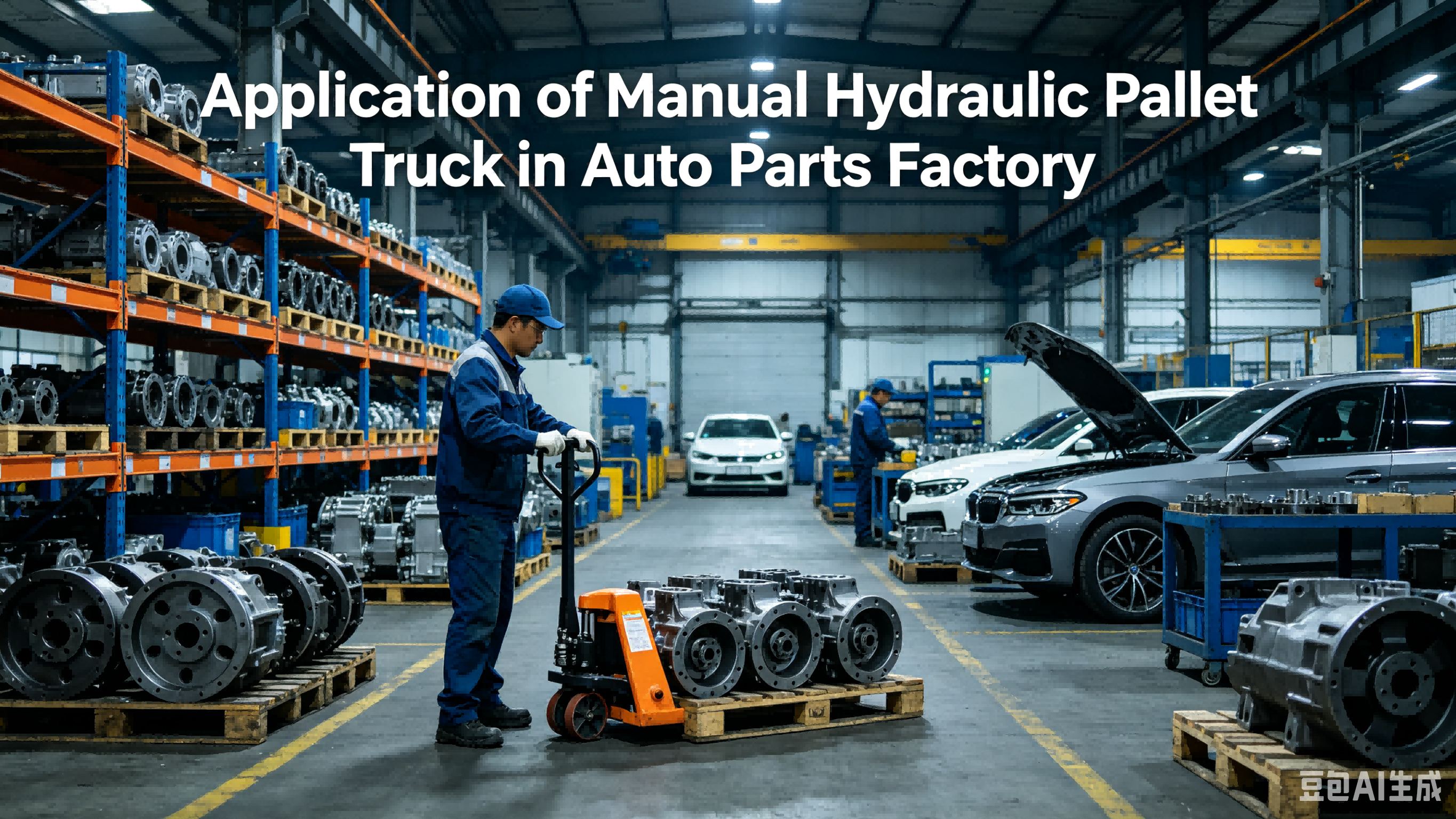
In manufacturing plants, pallet trucks are often used to move raw materials, work-in-process pallets, or finished goods between production lines and warehouse areas. The key requirement is a smooth floor and enough turning space for the loaded fork length. In an auto parts factory, for example, a manual hydraulic pallet truck is a common sight because it allows one operator to reposition a pallet of components without waiting for a forklift.
Cold Storage, Food Processing, and Pharmaceutical Environments
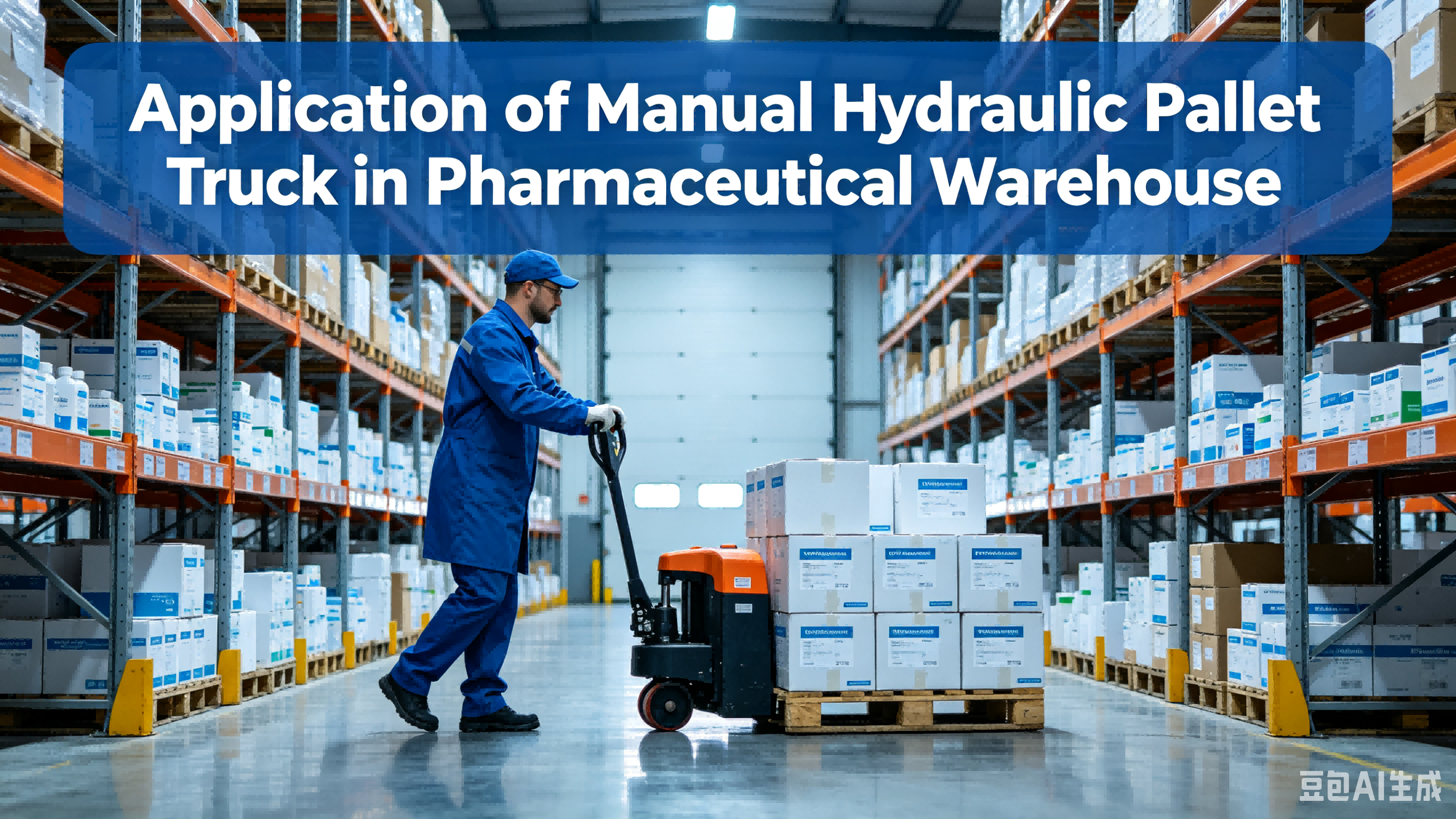
Cold storage and food-related facilities often require equipment to operate at lower temperatures, sometimes on wet floors or in areas that are washed down regularly. According to the product and application information available for the JUNYUNHOIST series, specialized models are available for cold storage and other special working conditions, and the material range includes galvanized and stainless steel pallet trucks. A pharmaceutical warehouse, by contrast, may emphasize clean organization and efficient movement of finished goods. The basic pallet jack function remains the same, but the material and wheel choice can vary according to the environment.
Compliance and Safety References for Pallet Jack Buyers
Pallet jack compliance is not just a legal topic; it is also a practical purchasing topic. ISO 3691-5:2014 is frequently referenced as the safety standard for pedestrian-propelled trucks, including manual and semi-manual pallet jacks. In Europe, hand pallet trucks are often considered under EN 1757-2, which covers safety requirements for pedestrian-operated hand trucks with capacities up to 2,000 kg. In the United States, powered pallet jacks fall under OSHA 29 CFR 1910.178 and are classified as Class III powered industrial trucks, which means formal operator training is required.
None of these standards should be treated as a simple marketing badge. A buyer should ask the supplier which standards are relevant for the destination country and request the appropriate technical documentation. If a supplier cannot clearly explain how a pallet jack model meets the applicable safety expectations, that is a sign to continue the search.
Supplier Context: JUNYUNHOIST and the AC30 Pallet Trucks
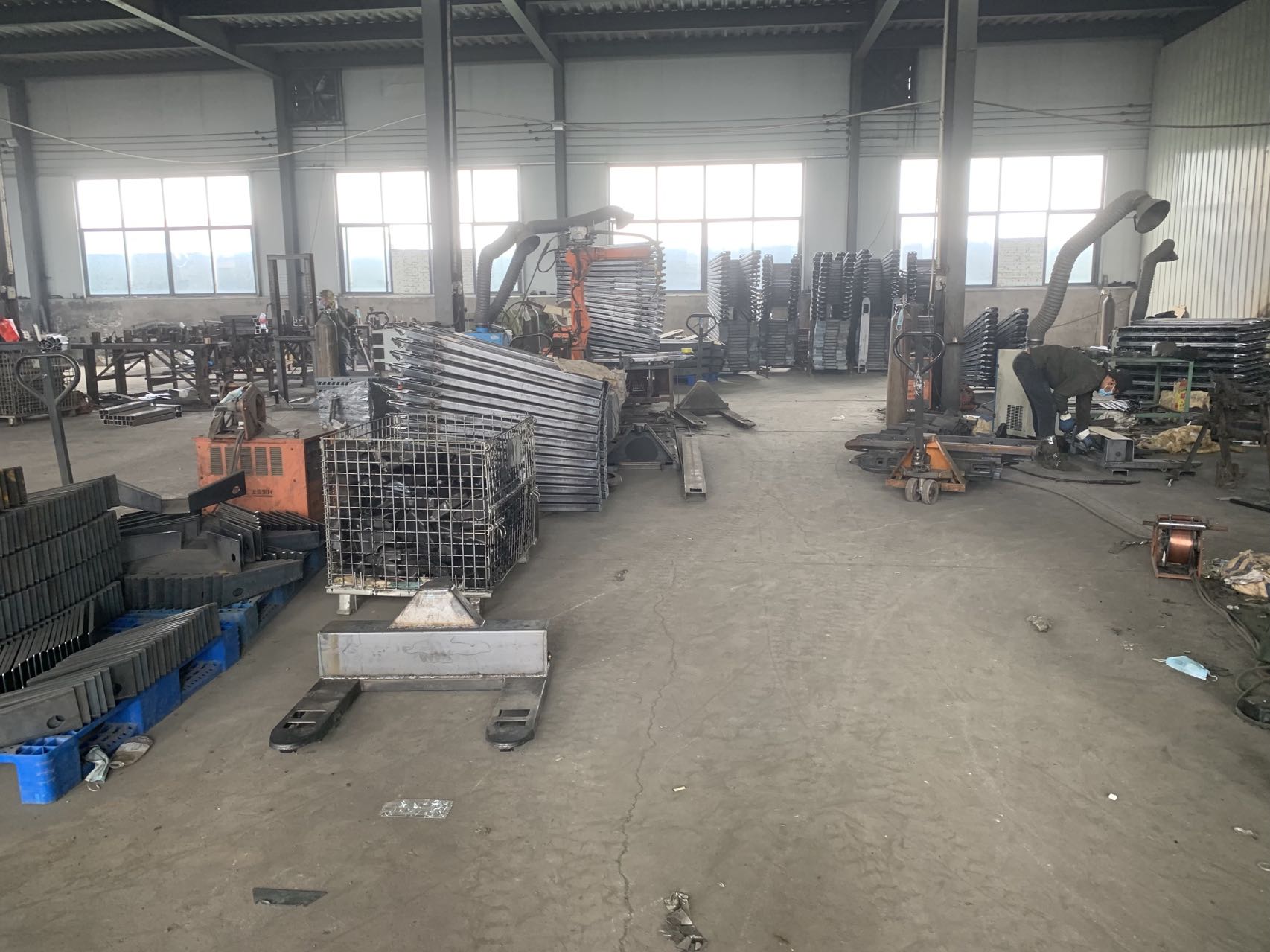
For readers comparing suppliers, JUNYUNHOIST, formally Baoding Junyun Hoisting Machinery Co., Ltd., is a China-based manufacturer and trading company established in 2018. The company operates a 24,000-square-meter factory, employs approximately 138 staff, and has an annual production capacity of about 70,000 units. Its main products include hand pallet trucks, pallet jacks, manual stackers, electric stackers, lift tables, and galvanized or stainless steel pallet trucks. Export business accounts for approximately 80% of total sales, with major markets in Middle Eastern countries, India, Russia, Vietnam, Brazil, Turkey, and Dubai. The research and development team consists of eight engineers, and the manufacturing location is in Qingyuan District, Baoding City, Hebei Province, China.
These facts are useful during the research stage because they help buyers understand the supplier behind the product. The AC30 semi-electric pallet truck is one example of the company's pallet truck range, and the same range includes full electric models, models with scale, and alternative steel material options. Buyers should always request the current product sheet, load capacity, and CE, ISO, or other relevant declarations directly from the manufacturer so that the final decision is based on verifiable details, not advertising language.
Frequently Asked Questions
What standards apply to pallet jacks?
International safety references include ISO 3691-5:2014 for pedestrian-propelled trucks, EN 1757-2 for hand pallet trucks in Europe with capacities up to 2,000 kg, and OSHA 29 CFR 1910.178 for powered pallet jacks in the United States. Powered pallet jacks are classified as Class III powered industrial trucks under OSHA, and formal operator training is required. A buyer should ask the supplier to confirm which standards are relevant to the destination market and to provide supporting documentation.
Which pallet jack specifications should a buyer verify before purchase?
The key specifications are the intended operation mode, fork width and length, minimum and maximum fork height, turning radius, wheel material, and material construction. For the JUNYUNHOIST AC30 family, available fork widths are 550 mm or 685 mm, and fork lengths are 1150 mm, 1220 mm, 800 mm, 1500 mm, 1800 mm, or 2000 mm. The minimum fork height is 80 mm, the maximum fork height is 200 mm, and the turning radius after capture is 1500 mm. Wheel material options include PU, Nylon, PP, and Rubber.
Are manual pallet jacks still worth considering when electric pallet trucks are available?
Manual pallet jacks remain common. Third-party data estimated the manual pallet jack segment at USD 4.3 billion in 2024, while the electric pallet jack and stacker market was estimated at USD 5.1 billion in 2024. Manual pallet jacks are often sufficient for short-distance work, while powered models may make sense when travel distance, frequency, operator fatigue, or e-commerce throughput creates a need for assisted movement. The correct answer depends on the application, not on market trends alone.
Can I request a sample, quote, or lead time information from JUNYUNHOIST?
For current product sheets, configuration confirmation, pricing, and project-specific lead time questions, buyers can contact JUNYUNHOIST directly by email at Junyunsteven@163.com, by telephone at +86 13483452631, or via WhatsApp at +86 134-8345-2631. In the inquiry, include the planned environment, pallet size, travel distance, and whether you need a manual, semi-electric, full electric, scale-equipped, galvanized, or stainless steel pallet truck.
Conclusion
A pallet jack is a relatively simple machine, but it is also a critical connection point in logistics and manufacturing processes. It moves palletized loads over short distances, operates at floor level, and depends on the right fork size, wheel material, construction material, and environment to perform well. For a general warehouse or factory application, a product like the JUNYUNHOIST AC30 series gives buyers a useful starting point because it exists in semi-electric, full electric, scale-equipped, and alternative-material versions. The buyer's final job is to match those options to actual operating conditions and to ask for clear documentation.
Need a starting point for your pallet jack specification? Download the JUNYUNHOIST corporate brochure for a general overview of the company and product range.
If you are ready to discuss an order, send your environment and pallet details to Junyunsteven@163.com or contact +86 13483452631. Please mention whether you are interested in a manual pallet jack, semi-electric pallet truck, full electric pallet truck, pallet truck with scale, or a galvanized or stainless steel version so the response can match your application.