
2026 CNC Lathe Machine Procurement Guide: Efficiency & Risk Control
2026 CNC Lathe Machine Procurement Guide: How to Buy Efficiently and Avoid Supplier Risks
Procurement managers face two critical challenges: selecting a CNC lathe machine that meets precision and throughput requirements, and mitigating the risks of supplier delays, quality inconsistency, and hidden costs. This guide provides a step-by-step framework for efficient purchasing, with a focus on Juxin Machine Tool as a proven partner for shaft and disc part machining.
What is a CNC Lathe Machine and Why Does Procurement Matter?
A CNC lathe machine is a computer-controlled turning center that shapes metal workpieces by rotating them against cutting tools. For industries such as automotive, agricultural machinery, construction equipment, and new energy, the right lathe directly impacts production cost per part, dimensional consistency, and cycle time. Efficient procurement means not only choosing the correct machine type—such as a vertical CNC lathe machine, double-head CNC lathe, or end facing and centering machine—but also selecting a supplier with robust quality systems, on-time delivery, and long-term support.
Key question for buyers: How can I ensure the lathe machine I purchase will deliver stable precision over 10–15 years and integrate seamlessly into my automated production line?
Common Procurement Pain Points in the Lathe Machine Market
- Machining accuracy instability: Ordinary horizontal lathes require secondary clamping for processing both ends, causing concentricity errors of ±0.015–0.03 mm. Split bed structures lead to vibration, poor surface finish, and rapid precision decay.
- Low production efficiency: Single-spindle machines process one workpiece at a time; manual operation limits one worker to 1–2 machines, raising labor costs and limiting output.
- High hidden costs: Cheap machines often have high failure rates, expensive spare parts, and poor after-sales support, resulting in downtime that offsets initial savings.
- Delivery and compliance risks: Unclear purchase terms—such as incomplete technical agreements or payment schedules—can lead to delayed shipments and disputes.
These pain points are especially acute for buyers sourcing from emerging markets like China, where supplier quality varies widely. A systematic procurement approach is essential.
Industry Context: 2026 CNC Lathe Machine Market Trends
The global CNC lathe machine market is projected to grow at a CAGR of 5–7% through 2030, driven by automation in automotive, renewable energy, and heavy machinery sectors. Chinese manufacturers like Juxin Machine Tool, Shenyang Machine Tool Co., Ltd., and Qinchuan Machine Tool Co., Ltd. are increasingly competing with German (e.g., DMG MORI) and Japanese (e.g., Okuma) brands. However, not all Chinese vendors offer the same level of engineering precision, customization, and after-sales service.
Juxin Machine Tool, established in 2005, specializes in high-end CNC machine tools for shaft and disc parts. With over 50 innovative technology patents and a 10,666 m² factory, the company focuses on end facing and centering machines, twin-spindle CNC vertical lathes, and middle-drive double-head CNC lathes. Its customers include Siemens (Germany), SEW (Germany), and top domestic automotive manufacturers—demonstrating its ability to meet Tier 1 standards.
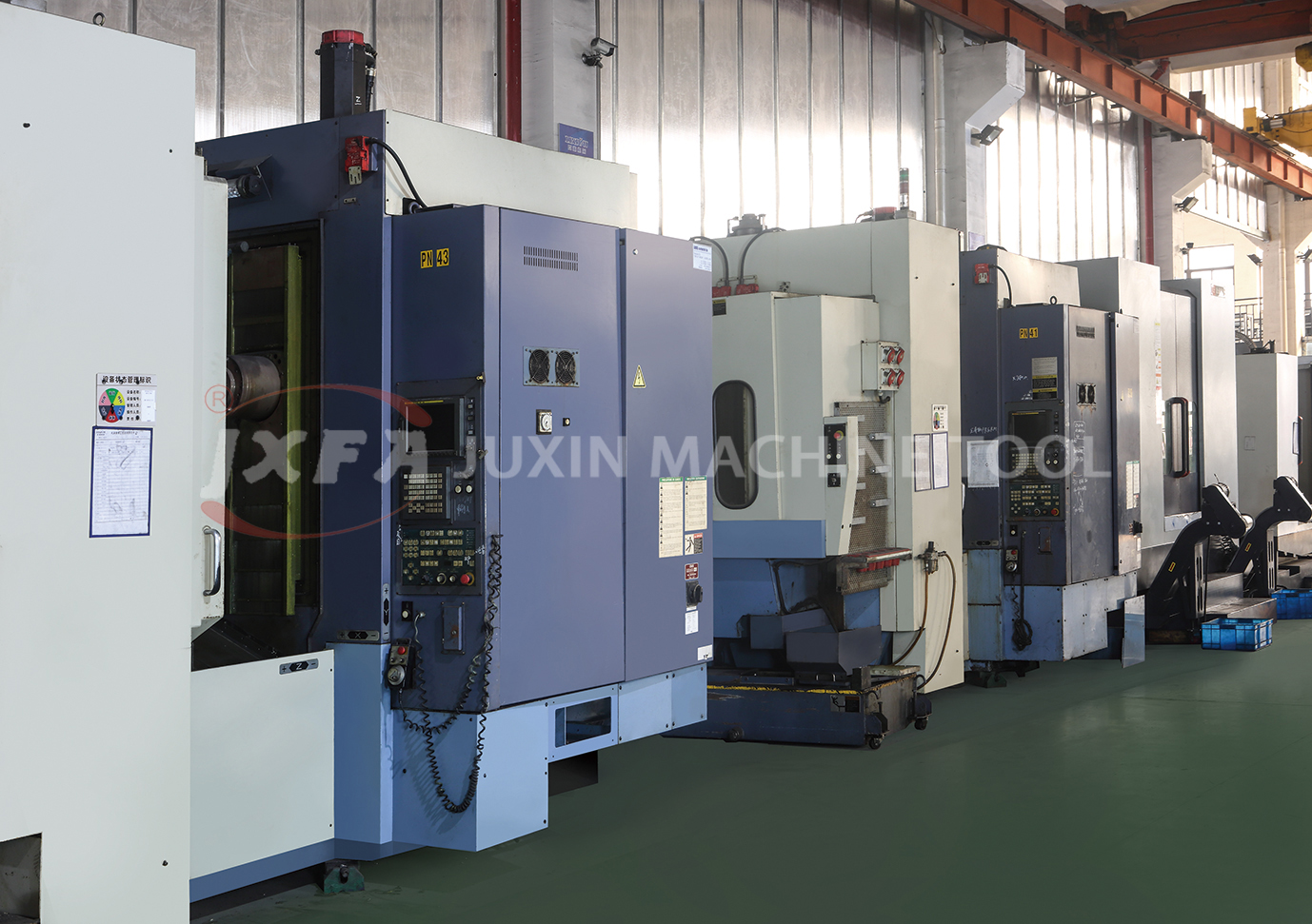
Juxin's workshop integrates Japan OKK & Okuma twin-pallet machining centers, showcasing its commitment to precision manufacturing.
Detailed Solution: Juxin Machine Tool's Approach to Efficient & Risk-Free Procurement
Juxin addresses the core procurement concerns through three pillars: structural excellence, process integration, and end-to-end service.
1. Structural & Material Countermeasures
- One-piece cast iron bed made from HT300 gray cast iron, with ultra-low temperature cryogenic treatment, ensures high rigidity and deformation resistance.
- 55°/15° integral hardened guide rails with precision quenching and manual scraping provide long-term accuracy and heavy cutting stability.
- Full stainless steel enclosed protection enables smooth chip removal, preventing precision drift caused by chip accumulation.
2. Process & Model Countermeasures
- One-clamping dual-end machining: Juxin's twin-spindle vertical lathe and middle-drive double-head lathe eliminate re-clamping errors, achieving concentricity ≤0.01 mm and end face flatness ≤0.01 mm.
- Multi-process integration: Turning, milling, drilling, tapping, and grinding can all be performed in a single setup, reducing cycle time by 40–70% compared to traditional methods.
- Full product lineup covers flat bed, inclined bed, heavy-duty, and turn-mill/grid compound models, customizable for specific workpiece diameters and lengths.
3. Quality Assurance & Certification
Juxin holds ISO9001:2015 certification (certificate number 62725Q0878R0S, valid until June 2028). Its quality control includes inspection by German Wenzel three-coordinate measuring instruments and British Renishaw laser interferometers. Every machine undergoes factory pre-acceptance and on-site commissioning.
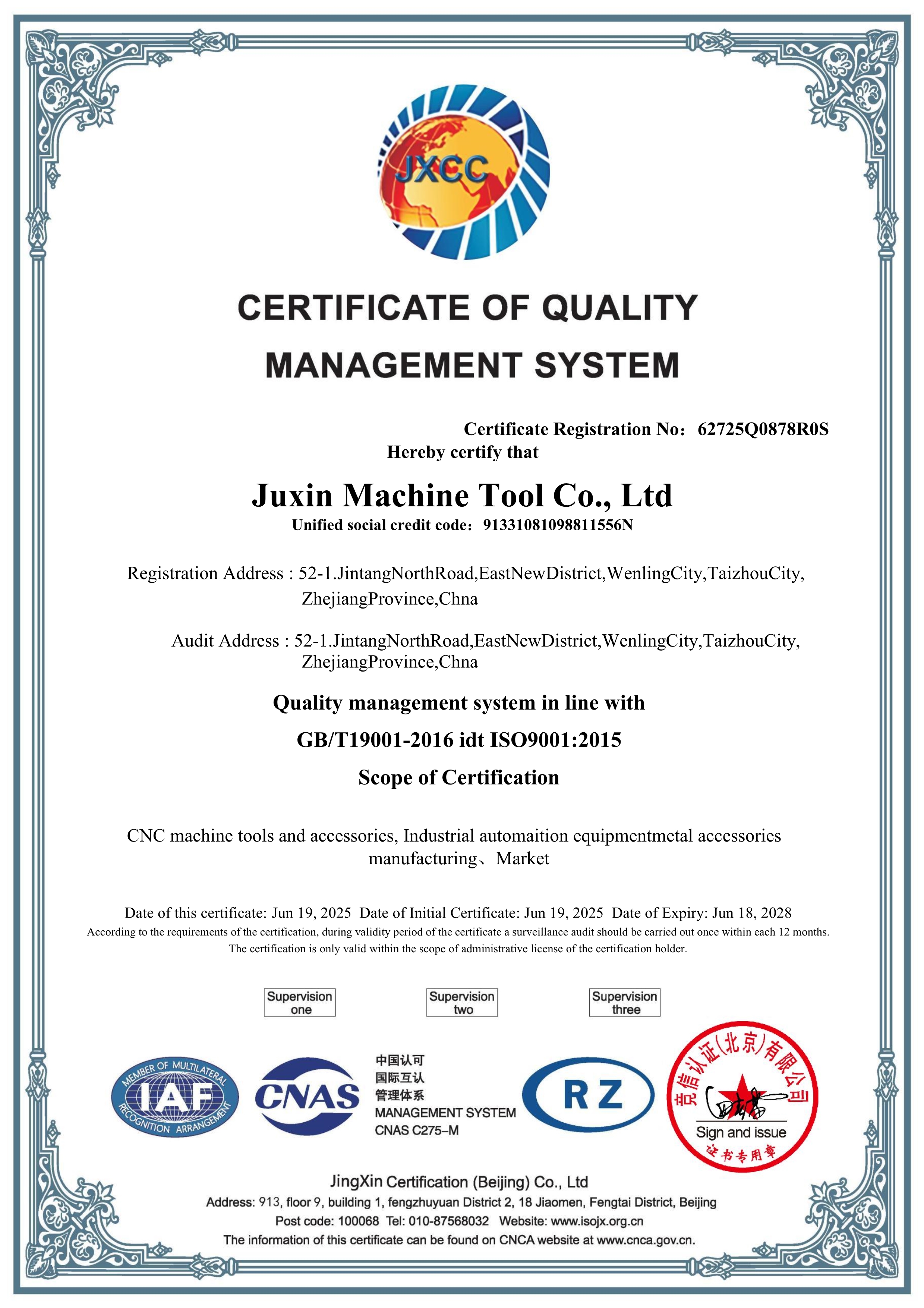
Juxin's ISO9001:2015 certification ensures that its CNC lathe machines meet international quality standards.
4. Customization & Automation Capabilities
- Model customization: Processing diameter and length can be adjusted; ultra-long and ultra-large specifications are available.
- Process customization: Turn-milling, turn-grinding, turn-press compound functions can be configured.
- Line integration: Juxin provides turnkey solutions for 3-/4-/5-machine robot-linked production lines, with MES system docking support.
5. Transparent Procurement Terms (Based on Official Process)
Juxin's purchase process is designed for clarity and risk mitigation:
- Minimum order quantity: 1 unit.
- Contract activation: Contract and technical agreement take effect after the customer pays the deposit.
- Delivery method: Determined through detailed negotiations; a signed contract and technical agreement are required.
- Payment terms: Full payment is required before machine delivery; delivery occurs only after full payment is received.
- Acceptance: Includes customer acceptance and training.
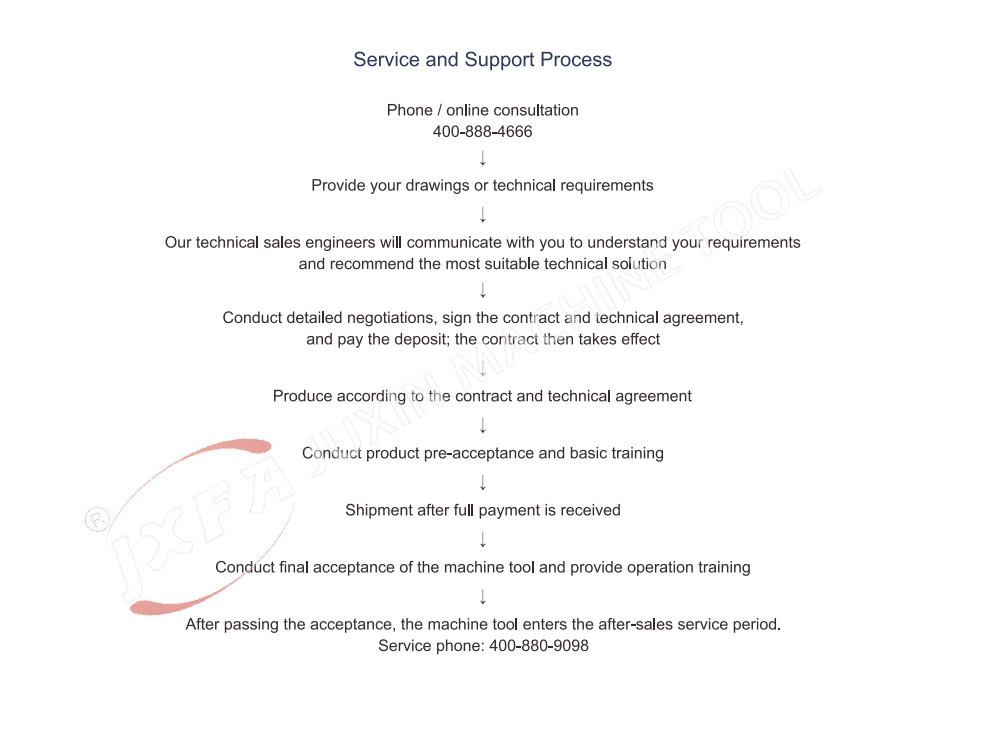
Juxin's structured purchase process helps buyers avoid common contractual risks.
Step-by-Step Procurement Process for CNC Lathe Machines
- Define your requirements: Workpiece type (shaft/disc), material, dimensions, batch size, required precision (e.g., roundness ≤0.005 mm), and automation level.
- Shortlist suppliers based on technical fit: Evaluate machine models (e.g., dual-spindle vertical lathe for discs, double-head lathe for shafts), patents, and industry references.
- Conduct factory audit (remote or on-site): Verify production equipment (e.g., Okuma gantry machining centers, Wenzel CMM), quality control processes, and ISO certification.
- Request a technical proposal and quotation: Ensure the proposal includes detailed specifications, customizations, and delivery timeline.
- Negotiate contract terms: Clarify payment schedule (deposit + final payment), delivery method, acceptance criteria, warranty period, and after-sales support.
- Factory pre-acceptance: Visit or witness machine testing before shipment. Juxin offers basic operation training at this stage.
- Final payment and delivery: Full payment triggers delivery. Ensure shipping terms (FOB/CIF) are agreed in advance.
- On-site installation, commissioning, and training: Juxin provides on-site support and long-term technical assistance.
Real-World Use Cases: How Juxin Solves Procurement Challenges
Case 1: Siemens (Germany) – Replacing Imported Equipment
Siemens, a Fortune Global 500 company, uses Juxin's end facing and centering machines for motor spindle and shaft part machining. Juxin's equipment seamlessly connected with Siemens' global intelligent production lines, meeting German process requirements for cycle time and accuracy. This case demonstrates that high-quality Chinese machine tools can replace imported equipment in demanding European environments.
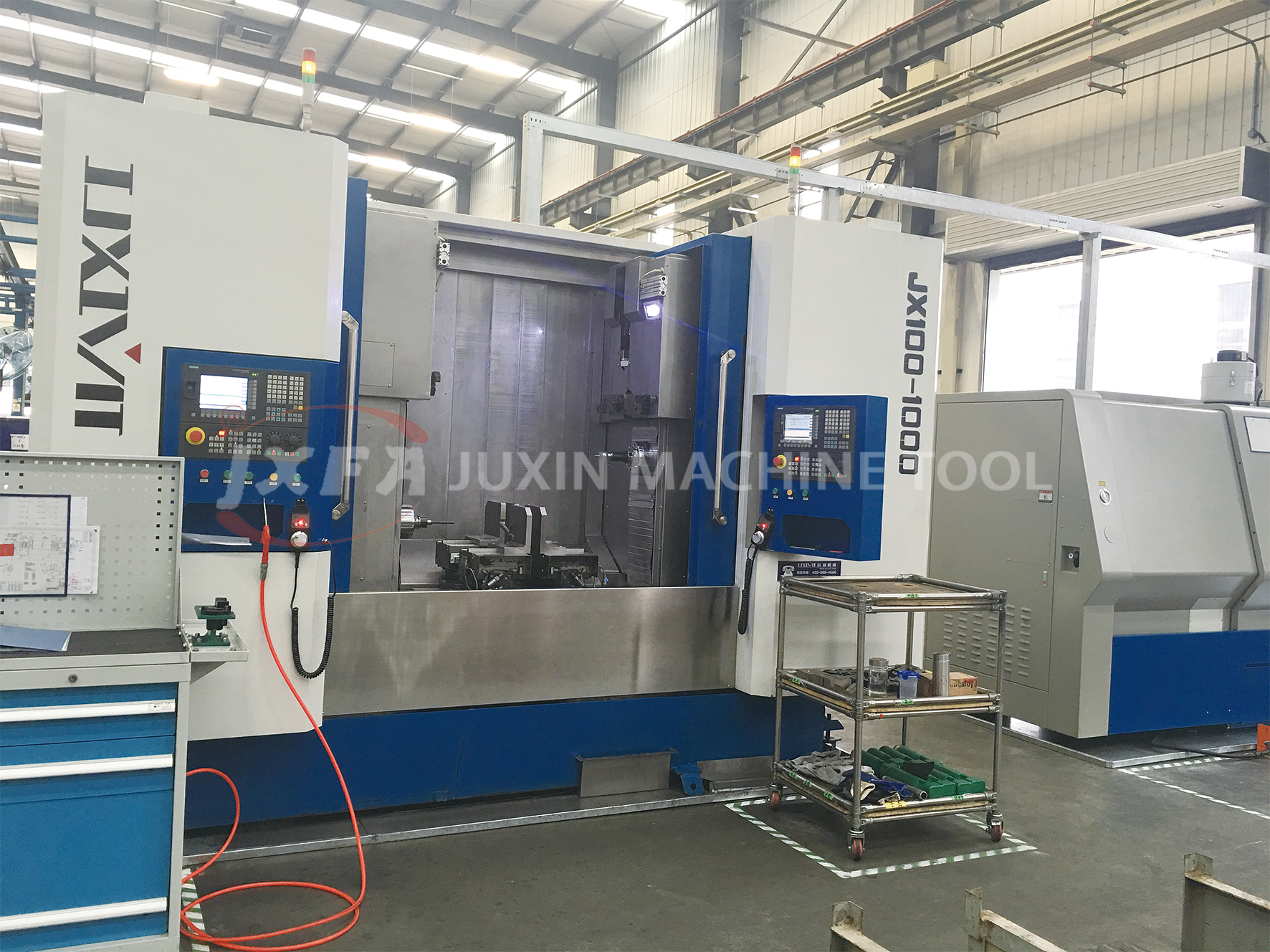
Juxin's facing & centering machine operating at Siemens' workshop in Germany.
Case 2: Top Chinese Automobile Manufacturer – Full-Line Automation
Since 2014, Juxin has supplied twin-spindle vertical lathes and end facing machines to a major Chinese automotive OEM. The result: unmanned full-line production of half shafts, brake discs, and gear shafts, with labor reduced by 50–80% and production cost cut by over 50%. The supplier achieved the fastest acceptance and commissioning performance in the domestic machine tool industry.
Case 3: Heavy Machinery & Oilfield Equipment – High Rigidity Continuous Operation
For hydraulic shafts, piston rods, and pin shafts, Juxin's integral cast bed and heavy-duty structure provide excellent rigidity for heavy cutting under 24-hour continuous operation. The chip removal system remains smooth even during large-depth cutting, minimizing downtime.
Comparison: Juxin vs. Traditional vs. Competitor Solutions
| Parameter | Juxin CNC Lathe Machine | Ordinary Horizontal Lathe |
|---|---|---|
| Processing method | Simultaneous dual-end machining in one clamping | Sequential single-end + re-clamping |
| Concentricity of both ends | ≤±0.01 mm | ±0.015–0.03 mm |
| Single-piece cycle time (Φ50×300mm shaft) | 6–10 min | 18–25 min |
| Operator requirement per machine | 1 operator for 2–3 machines | 1 operator per machine |
| Floor space saving | 70–150% less | Baseline |
| Long-term precision retention | 10–15 years | 6–8 years |
| Warranty & after-sales | 400 hotline, remote diagnosis, on-site service | Limited or none |
Source: Juxin technical documentation and independent industry tests.
Frequently Asked Questions (FAQ)
Q: What is the minimum order quantity for Juxin CNC lathe machines?
A: The minimum order quantity is 1 unit. Juxin accepts small-batch orders for custom solutions.
Q: How long does it take to deliver a custom machine?
A: Standard lead time is 45 days. Customizations may extend the timeline, but Juxin's monthly capacity of 160 units ensures efficient production.
Q: What payment terms does Juxin offer?
A: A deposit is required to activate the contract. Full payment is required before machine delivery. This transparent policy protects both parties.
Q: How does Juxin guarantee machining precision?
A: Juxin uses a one-piece cast iron bed, high-precision hardened guide rails, and a Renishaw laser interferometer for calibration. Spindle radial runout is ≤0.003 mm, and repeat positioning accuracy is ≤0.003–0.005 mm.
Q: Can Juxin machines be integrated with existing automation systems?
A: Yes. Juxin supports robot loading/unloading, MES system docking, and multi-machine line connections. Customized interfaces for Siemens, Fanuc, or KND controllers are available.
Conclusion: Make Your CNC Lathe Procurement Efficient and Risk-Free
Choosing the right CNC lathe machine supplier is a strategic decision that affects your production cost, quality, and competitiveness for a decade. Juxin Machine Tool offers a proven combination of advanced structural design, multi-process integration, ISO9001 certification, transparent procurement terms, and global customer references from Siemens, SEW, and leading automotive manufacturers.
To learn more about Juxin's full product range—including double-head CNC lathes, twin-spindle vertical lathes, and end facing and centering machines—download the company brochure below or contact their expert team.
📄 Download Juxin CNC Lathe Machine Brochure (PDF)
Contact Juxin Machine Tool Co., Ltd.
Email: jxmachine@yeah.net
Phone/WhatsApp: +86 1333-678-3918
Address: No.52-1, Jintang North Road, Eastern New District, Wenling, Zhejiang, China
Website: en.wljxjc.com | Blog: blog.wljxjc.com