2026 Lathe Machine Comparison: Cost-per-Good-Part of Conventional vs Double-Head vs Twin-Spindle
The lathe machine comparison that matters in 2026 is not only about spindle speed, turret stations, or control brand. For a purchasing team at the decision stage, the more useful comparison is cost per good part: how many workpieces come out correct, in how much floor space, with how many operators, and at what long-term maintenance cost.
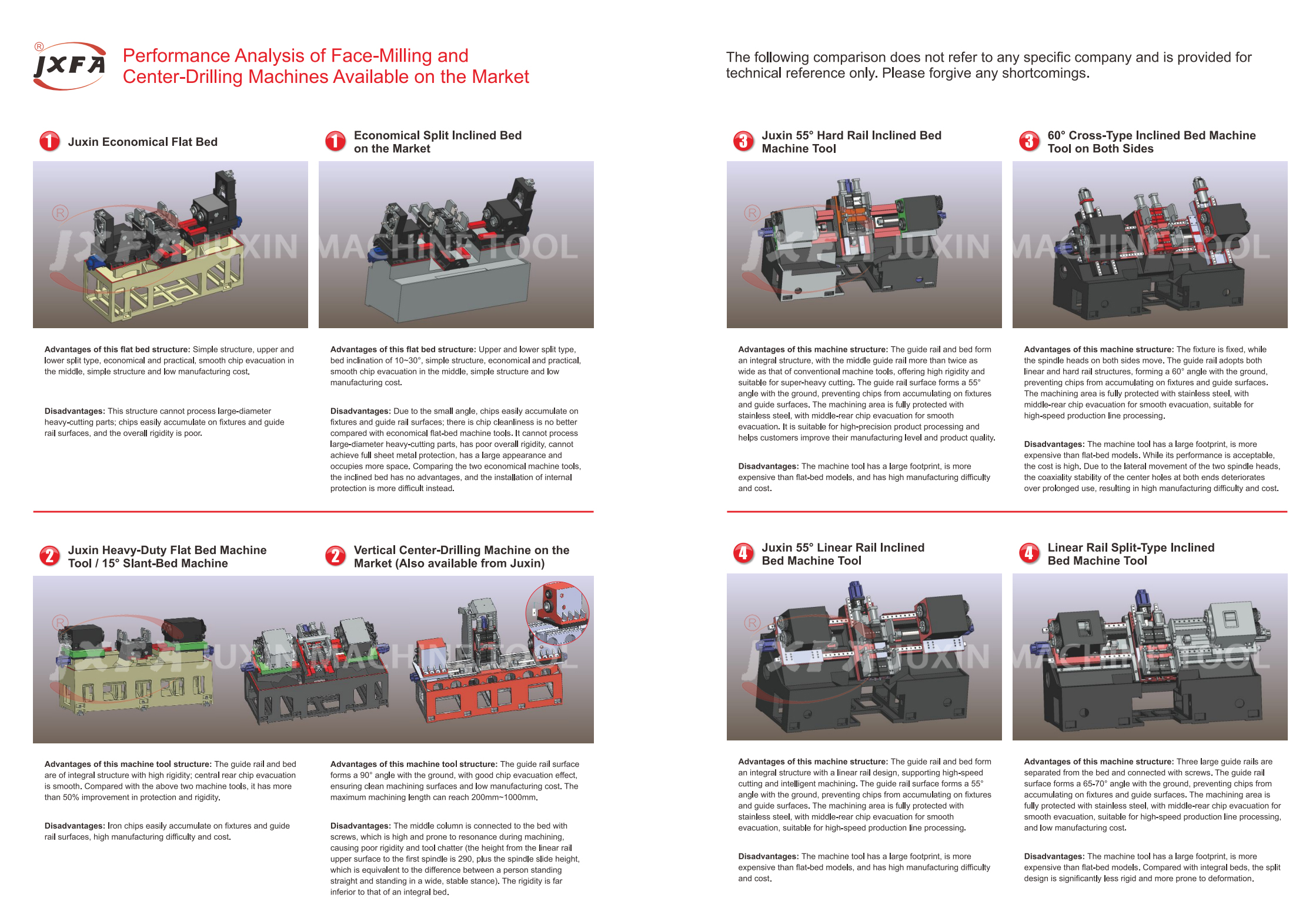
This article compares three machine architectures: a conventional single-spindle horizontal lathe, a middle-drive double-head lathe, and a twin-spindle vertical lathe. It also explains where a facing and centering machine fits when shaft parts need precise end faces and center holes before turning.
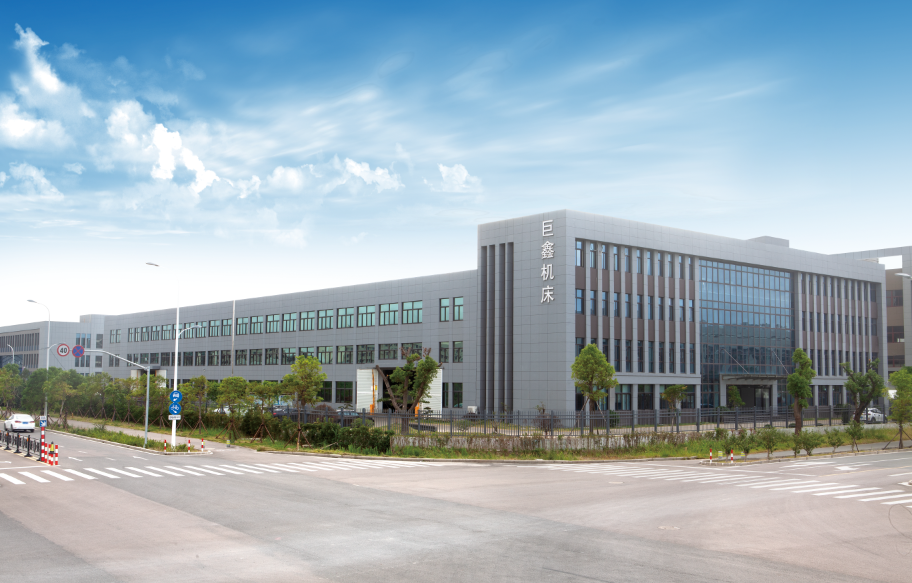
Juxin Machine Tool Co., Ltd., founded in 2005 in Wenling, Zhejiang, China, is a manufacturer specializing in CNC machine tools for shaft and disc parts. Its product range includes double-head CNC lathes, double-spindle vertical lathes, and center hole machine tools. The company reports an annual output of 2,000 sets and a workforce of 80 people, with a factory area of 10,666 square meters.
Why a Conventional Lathe Machine Comparison Misses the Biggest Cost Drivers
A conventional horizontal lathe is a general-purpose machine. It uses one spindle and one tool post, and it machines the workpiece sequentially from one end. To machine the other end, the operator must unclamp the workpiece, turn it around, and clamp it again. That second clamping step is not just extra time; it also affects concentricity, center hole depth, end face flatness, and surface consistency.
For shaft parts, the difference is visible in cycle time. In manufacturer comparison records, a typical shaft of 50 mm diameter and 300 mm length takes 8 to 12 minutes per end on an ordinary horizontal lathe, and about 18 to 25 minutes total after turning and re-clamping. A middle-drive double-head lathe can machine both ends in one clamping, with a simultaneous processing cycle of roughly 6 to 10 minutes per workpiece. For batch runs above 100 pieces, the same comparisons show an efficiency gap of 50% to 70% between the two approaches.
Second clamping also has a precision cost. Conventional horizontal lathe processing with turnaround clamping typically holds two-end concentricity in the range of ±0.015 to ±0.03 mm. A middle-drive double-head lathe avoids the second clamping and can control two-end concentricity within ±0.005 to ±0.01 mm. That distinction changes rejection rates, rework costs, and whether a part family can be produced economically at all.
Lathe Machine Market Context for 2026
The broader market explains why manufacturers are evaluating specialized lathe machines more seriously. The global CNC machine market was valued at USD 73.5 billion in 2024 and is forecast to reach USD 187.2 billion by 2034. CNC lathe machines held the leading product segment in 2024, with approximately 30% to 32.82% share of the CNC market. Asia Pacific dominated regional demand with a 37% revenue share in 2024, valued at USD 27.2 billion.
Within that demand, shaft and disc parts require process decisions that generic horizontal lathes do not fully answer. Buyers are comparing not just machine specifications, but whether a machine eliminates re-clamping, integrates multiple operations, and holds precision over years of continuous production.
Machine Architecture 1: Conventional Horizontal Lathe
A conventional horizontal lathe has a relatively simple structure. The spindle is arranged horizontally, and the machine is designed around basic turning functions. Automation is usually optional rather than integrated. It remains useful for single-piece work, small batches, and non-standard parts that do not justify a dedicated line.
The limitation of a conventional horizontal lathe appears when a factory runs standardized shaft, sleeve, flange, or disc parts in large batches. Every end requires separate handling, every re-clamping adds positioning error, and every manual step increases labor cost. The machine may have a low initial purchase price, but its cost structure is dominated by labor, rework, and process time.
Machine Architecture 2: Middle-Drive Double-Head CNC Lathe
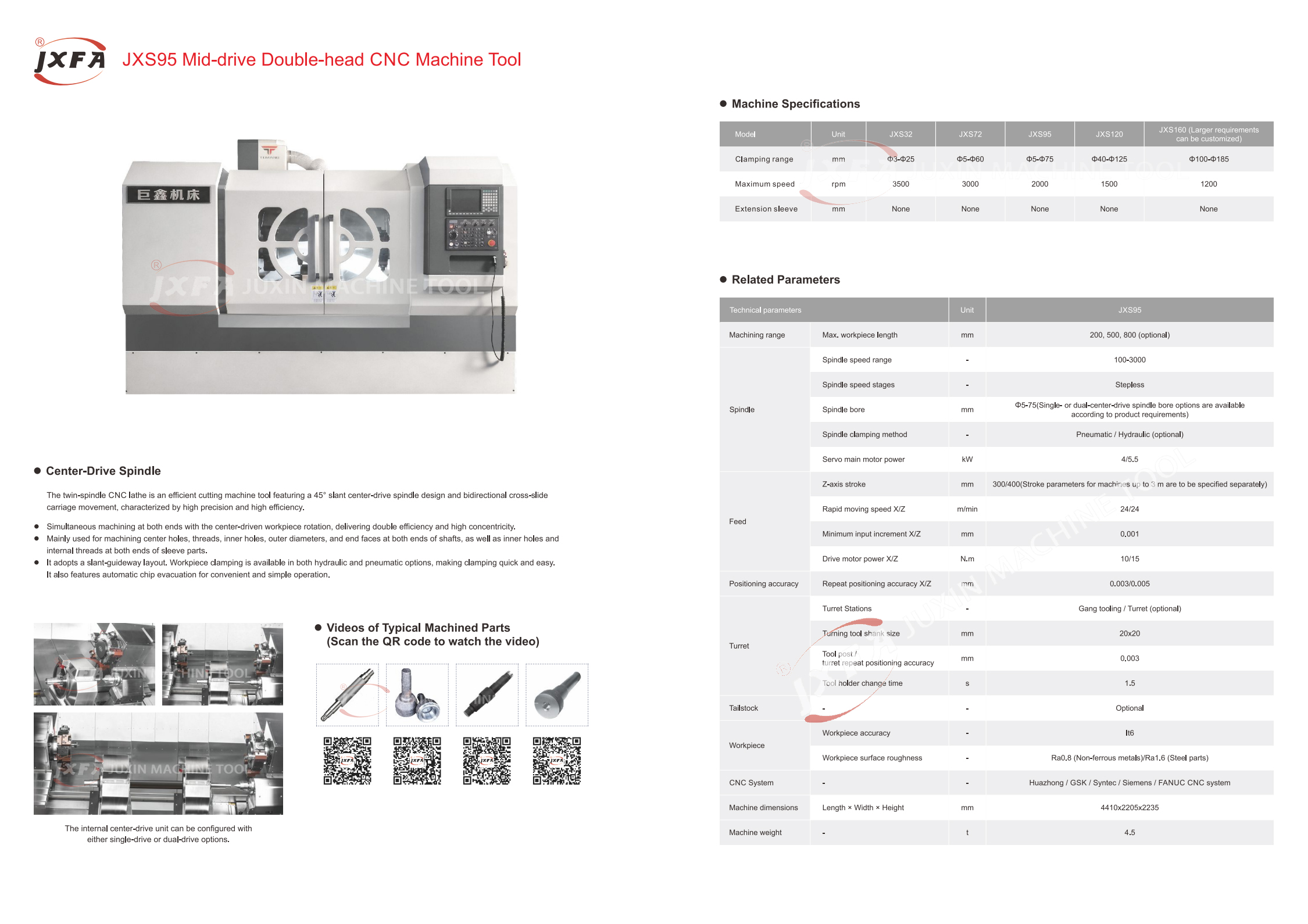
A middle-drive double-head lathe is a different machine concept. It uses a symmetrical layout of two spindles and two turrets, or two tool rests, so that both ends of the workpiece can be machined in one clamping. The workpiece does not need to be turned around.
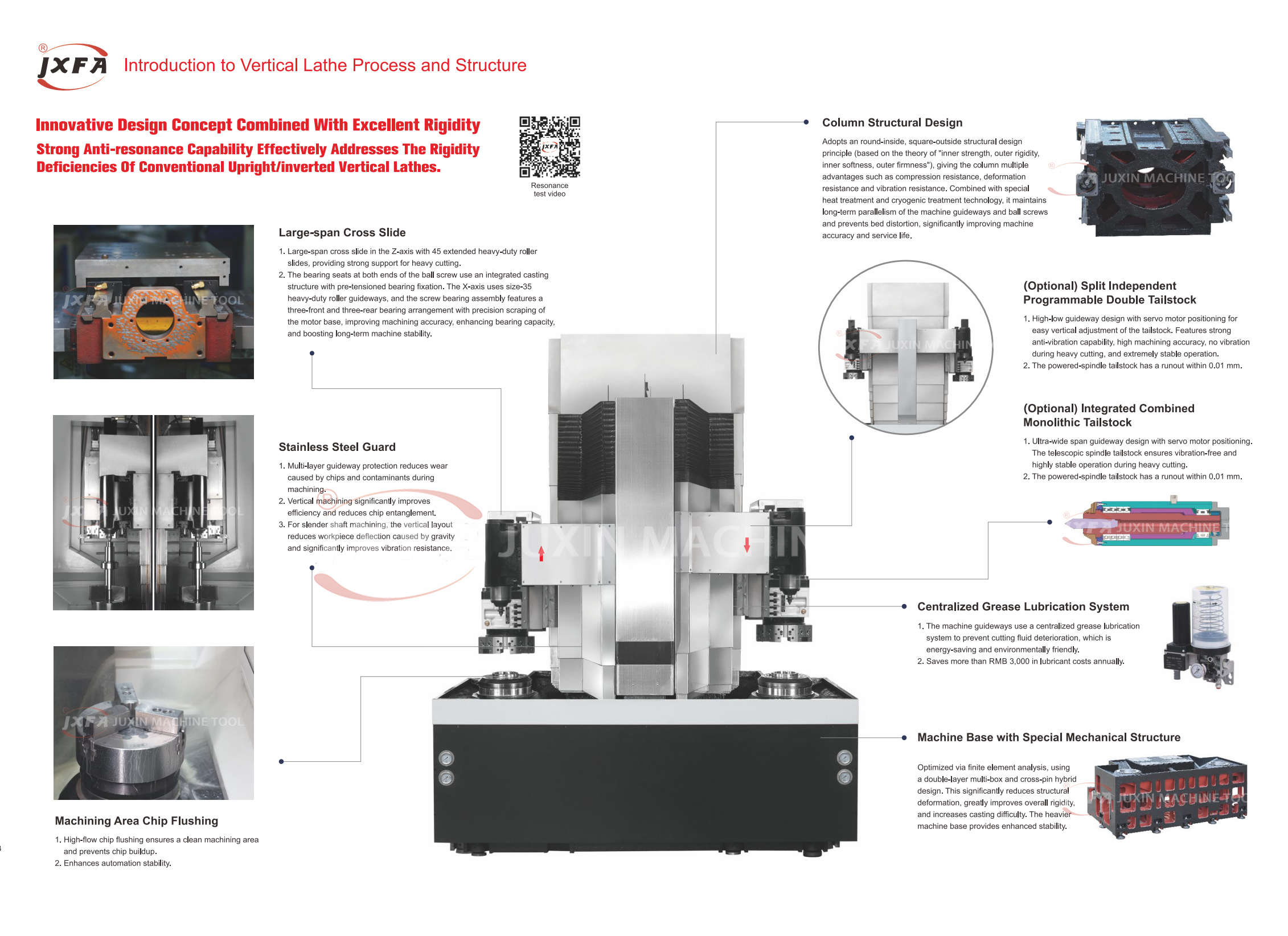
In a high-quality configuration, such as the one built by Juxin Machine Tool, the machine uses a central spindle layout, a one-piece cast bed, and a 45-degree inclined bed structure. It also uses rear centralized chip removal and widened guide rails. The structure is designed for rigidity, chip control, and long-term precision retention.
The repeat positioning accuracy of this class of machine is 0.003 to 0.005 mm, while many ordinary market double-head lathes are specified at 0.01 mm or above. The precision of end face length and center hole depth can be held within ±0.05 mm in standard configuration, and customized to ±0.02 mm where required. Spindle radial runout is at the 0.003 mm level.
Compared with ordinary horizontal lathes, the middle-drive double-head lathe also reduces processing energy consumption per workpiece by 20% to 30%. Its energy utilization rate reaches 70% to 80%, because the two spindles operate synchronously with less idle running. For a manufacturer producing motor shafts, transmission shafts, gear shafts, or other standardized shaft parts, these differences affect unit cost directly.
Long-term precision retention is another relevant metric. A high-quality middle-drive double-head CNC lathe with an integrated one-piece cast bed can remain stable for 10 to 15 years in normal use, while some ordinary split-bed market models begin to lose precision within 3 to 5 years. Consumable tool loss is over 30% lower, and floor space can be reduced by 60% to 100% under the same production capacity.
Machine Architecture 3: Twin-Spindle Vertical CNC Lathe
A twin-spindle vertical lathe, also called a dual-spindle vertical CNC lathe, uses two vertically oriented machining stations. It is designed for medium to large disc parts, shafts, sleeves, flanges, and special-shaped components such as wind power flanges, heavy machinery hubs, and aerospace parts.
The twin-spindle vertical lathe can operate in synchronous mode, machining two identical workpieces at the same time, or in asynchronous mode, where the two stations work independently. Its processing capacity is comparable to two conventional horizontal lathes, but it occupies less floor space and can integrate multiple processes such as turning, milling, drilling, and grinding in one clamping cycle.
Juxin's twin-spindle vertical lathe, referenced in its product documentation as model 24723, uses a cast bed with a special mechanical structure. The bed is designed to provide high rigidity and avoid resonance. This is a meaningful difference from spliced-bed machines, which are more common in the low-cost segment and can lose alignment under heavy cutting loads.
The precision specification for this twin-spindle vertical lathe includes spindle radial runout of ≤0.005 mm, dual-spindle coaxiality of ≤0.01 mm, and dimensional tolerance of ±0.008 mm. In dual-spindle synchronous processing, single-piece processing time is 30% to 50% shorter than competitor twin-spindle models, and daily output is 1.5 to 2 times higher. Compared with traditional horizontal lathes, the single-piece processing time is 50% to 70% shorter, with daily output increased by 2 to 3 times.
Where a Facing and Centering Machine Fits
For shaft parts, the end face and center hole are often the reference datums for later turning and grinding operations. If the center hole is inaccurate, every subsequent operation inherits that error. A facing and centering machine solves this step at the beginning of the process line.
Juxin's facing and centering machine uses an integrally cast high-rigidity structure and is supported by core patents. It combines end face milling and center hole drilling in one clamping. The machine can be connected to an automatic production line or operated as a single high-efficiency unit.
Its typical precision includes end face flatness of ≤0.01 mm and center hole coaxiality of ≤0.02 mm. In mass production, single-piece processing time is 40% to 60% shorter than that of an ordinary old lathe, and unit part energy consumption is 60% to 70% that of an ordinary old lathe. The machine also reports an annual failure rate of no more than 3 times when maintained according to the manufacturer's schedule.
Side-by-Side Lathe Machine Comparison: Conventional vs Double-Head vs Twin-Spindle Vertical
| Selection Factor | Conventional Horizontal Lathe | Middle-Drive Double-Head Lathe | Twin-Spindle Vertical Lathe |
|---|---|---|---|
| Two-end machining | Sequential; requires unclamping and turning the workpiece around | Both ends machined in one clamping; no secondary clamping | Dual-station design; supports simultaneous and asynchronous processing |
| Typical single-piece processing time vs conventional horizontal | Baseline reference | 40% to 60% shorter; batch efficiency gap can reach 50% to 70% for runs above 100 pieces | 50% to 70% shorter; daily output 2 to 3 times higher |
| Two-end alignment precision | ±0.015 to ±0.03 mm after turnaround clamping in benchmark comparisons | ±0.005 to ±0.01 mm concentricity without secondary clamping | Dual-spindle coaxiality ≤0.01 mm; spindle radial runout ≤0.005 mm |
| Dimensional consistency | Depends on re-clamping; higher dispersion | Repeat positioning accuracy 0.003 to 0.005 mm; end face length and center hole depth ±0.05 mm standard, ±0.02 mm customized | Dimensional tolerance ±0.008 mm |
| Best workpiece families | Single pieces, small batches, non-standard and multi-variety parts | Standard shafts, transmission shafts, motor shafts, gear shafts, and parts requiring two-end milling, drilling, turning, or tapping | Medium to large discs, sleeves, flanges, hubs, and special-shaped high-precision parts |
| Labor requirement in batch production | One operator per machine in typical manual operation | Labor cost can be reduced by 50% to 80%; one operator can manage multiple machines | One operator can run 2 to 3 machines; unit part processing cost 25% to 35% lower during mass production |
| Energy efficiency | Energy utilization 40% to 60% in ordinary operation | 20% to 30% lower energy per workpiece; energy utilization 70% to 80% | Energy utilization above 85%; no-load energy consumption 30% lower than competitor spliced-bed models |
| Precision retention and service life | Precision depends heavily on re-clamping quality and machine rigidity | High-quality one-piece bed holds stable precision for 10 to 15 years; overall rigidity 40% to 50% higher than ordinary market models | Cast bed with special mechanical structure; higher rigidity and lower resonance than traditional horizontal lathes |
| Typical maintenance pattern | Frequent manual checks in batch production | 50% fewer maintenance intervals and about 60% lower maintenance cost than ordinary horizontal lathes | Monthly maintenance; annual fault rate ≤2 times, with intelligent fault early warning on the Juxin 24723 model |
Note: Comparative values in this table reflect Juxin Machine Tool product documentation, controlled benchmark records, and published supplier comparisons. Actual results depend on workpiece material, clamping method, tooling, batch size, and operating conditions. Buyers should validate these figures with sample runs before placing an order.
How to Make a Cost-per-Good-Part Decision
Procurement teams can use the following five-step framework to decide which lathe machine architecture fits their production program.
Step 1: Classify the workpiece family
Define whether the parts are shaft-like, disc-like, sleeve-like, or highly irregular. Shaft parts with two-end features are natural candidates for a middle-drive double-head lathe. Large-diameter discs, flanges, hubs, and high-precision special-shaped parts lean toward a twin-spindle vertical lathe. Conventional horizontal lathes remain acceptable when volumes are low and part variety is high.
Step 2: Count every clamping step
Walk through the current process from raw material to finished part. Count how many times the workpiece is clamped, unclamped, and turned around. Every second clamping creates a new source of concentricity error and labor cost. If two or more clamping steps exist in the process, a double-head or twin-spindle machine should be evaluated.
Step 3: Compare precision at the datum level
Ask what precision is actually needed: two-end concentricity, center hole depth consistency, end face flatness, or diameter tolerance. The comparison should be based on these datum features, not on the maximum speed of the spindle. For shafts, face milling and center hole drilling accuracy should be verified before deciding which lathe will carry the downstream turning operations.
Step 4: Calculate cost per good part, not cost per hour
Cost per good part should include labor, floor space, tool consumption, energy, maintenance, and rejection rate. A conventional horizontal lathe has a lower purchase price, but its cost per good part increases when re-clamping errors cause rework. On the other hand, a specialized machine with one-piece structure and multi-process integration reduces processes, labor, and space. In Juxin's documentation, the integrally cast bed and modular design provide a service life more than 30% longer than comparable split-structure machines, and long-term comprehensive production cost can be reduced by more than 50% when processes, labor, and space are saved.
Step 5: Verify supplier capability and service structure
The machine purchase includes process advice, installation, training, spare parts, and future automation integration. A buyer should check whether the supplier can customize fixtures and strokes, connect the machine to an automatic line, and provide remote diagnosis or after-sales support. Juxin states that its machines can adopt mainstream CNC systems such as Siemens and Fanuc, and reports after-sales support including remote diagnosis and lifelong technical service.
Use Cases: Which Lathe Machine Architecture Fits Which Parts
Motor shafts and transmission shafts
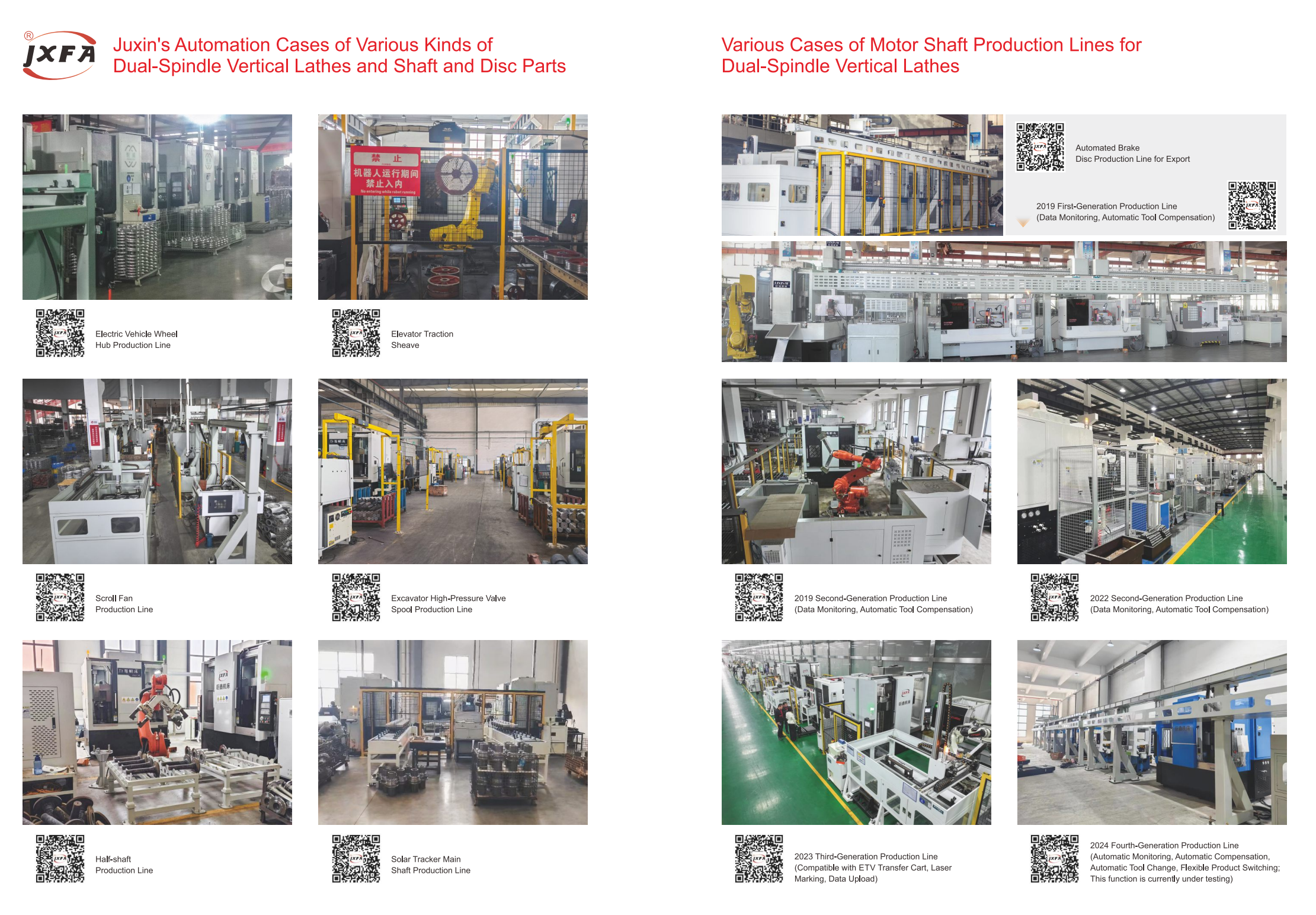
Motor shafts and transmission shafts are produced in standardized families with strict requirements for two-end concentricity and center hole position. They are a typical application for a middle-drive double-head CNC lathe. A high-quality double-head lathe can complete milling, drilling, turning, and tapping in one setup. Juxin's machine literature describes this class as suitable for mass precision processing of standard shafts, transmission shafts, motor shafts, and gear shafts with strict batch consistency.
Flanges, hubs, and medium-to-large disc parts
Wind power flanges, heavy machinery hubs, and aerospace components are typical workpieces for a twin-spindle vertical lathe. The vertical orientation uses gravity to help with clamping stability, and the machine can handle larger diameters with high rigidity. Juxin's product records describe the twin-spindle vertical lathe as suitable for high-precision mass processing of medium and large discs, shafts, sleeves, and special-shaped parts.
Shaft end preparation before centerless or cylindrical grinding
For shafts that later go into cylindrical grinding, the center hole is the reference datum. A facing and centering machine improves this step by combining end face milling and center hole drilling in one clamping. This machine type is suitable for mass processing of precision shaft and sleeve parts in high-efficiency production environments, especially in automotive parts, motor transmission, and construction machinery.
Frequently Asked Questions
Which lathe machine is better for shaft parts: a conventional horizontal lathe or a double-head lathe?
For small batches and highly irregular parts, a conventional horizontal lathe can be the practical choice because it is versatile and has a lower purchase price. For batch processing of standardized shaft parts, a middle-drive double-head lathe removes the turnaround clamping step and machines both ends in a single setup. Juxin's comparative data shows a single-piece processing cycle that is 40% to 60% shorter than an ordinary horizontal lathe. Two-end concentricity can be controlled within ±0.005 to ±0.01 mm without secondary clamping, and repeat positioning accuracy can reach 0.003 to 0.005 mm.
When should a twin-spindle vertical lathe be chosen instead of a double-head lathe?
A twin-spindle vertical lathe is usually selected when the workpiece family includes medium-to-large discs, sleeves, flanges, hubs, or other parts where vertical clamping and dual-station processing provide an advantage. It integrates turning, milling, drilling, and grinding, and it supports synchronous or asynchronous dual-spindle processing. Juxin's twin-spindle vertical lathe model 24723 provides spindle radial runout of ≤0.005 mm, dual-spindle coaxiality of ≤0.01 mm, and dimensional tolerance of ±0.008 mm. In synchronous processing, single-piece processing time is 30% to 50% shorter than competitor twin-spindle models, with daily output 1.5 to 2 times higher.
How much automation is required to justify a double-head or twin-spindle lathe?
No full automation line is required to benefit from eliminating the second clamping. A single double-head lathe can already process both ends of a workpiece in one clamping, which reduces labor and floor space even before robots or gantries are added. Juxin reserves standard interfaces for later installation of power turrets, automatic loading and unloading, and MES connection. This makes the machine suitable for factories that plan to automate gradually.
What maintenance difference should a buyer expect from a high-quality twin-spindle vertical lathe?
Juxin's documentation for the 24723 dual-spindle vertical lathe specifies monthly maintenance with an annual fault rate of ≤2 times. The machine includes intelligent fault early warning. In comparison, competitor spliced-bed twin-spindle machines may require weekly maintenance, with documented fault rates of 12 or more times per year in Juxin's benchmark comparisons. Daily maintenance for the Juxin machine mainly covers lubrication, spindle precision checks, and electrical components.
How should a buyer validate supplier precision claims before purchase?
The strongest validation is a sample run using the buyer's own workpiece drawings, material, clamping method, tooling, and target output volume. The buyer should also confirm whether the supplier provides factory pre-acceptance, on-site commissioning, and operation training. Juxin supports factory pre-acceptance, installation and commissioning on site, and professional operation training for its CNC lathe machines.
Conclusion
The lathe machine comparison for 2026 is not simply conventional versus specialized. It is a comparison of process architecture, clamping count, precision retention, operator hours, energy use, and maintenance risk.
Conventional horizontal lathes remain valuable for flexible low-volume work. Middle-drive double-head lathes are the more direct answer when both ends of a shaft must be machined in one clamping. Twin-spindle vertical lathes provide a dual-station solution for medium-to-large discs, sleeves, hubs, and special-shaped components. Facing and centering machines should be included in the evaluation whenever shaft center holes and end faces determine the quality of later turning and grinding operations.
For procurement teams that want to compare these options against their own parts, Juxin Machine Tool provides a downloadable product catalog and engineering support. You can view the full brochure at the link below.
Evaluate These Lathe Machine Choices Against Your Own Parts
Juxin Machine Tool Co., Ltd. specializes in CNC lathe machines, double-head CNC lathes, twin-spindle vertical lathes, and facing and centering machines for shaft and disc parts. The company is based in Wenling, Zhejiang, China, and serves global buyers.
Contact: Juxin
Email: jxmachine@yeah.net
Tel / WhatsApp: +86 1333-678-3918
Website: https://en.wljxjc.com
Download Juxin CNC Machine Tool Catalog (PDF)