
Dual-Spindle Vertical Lathe Explained: A CNC Lathe Machine Category Primer
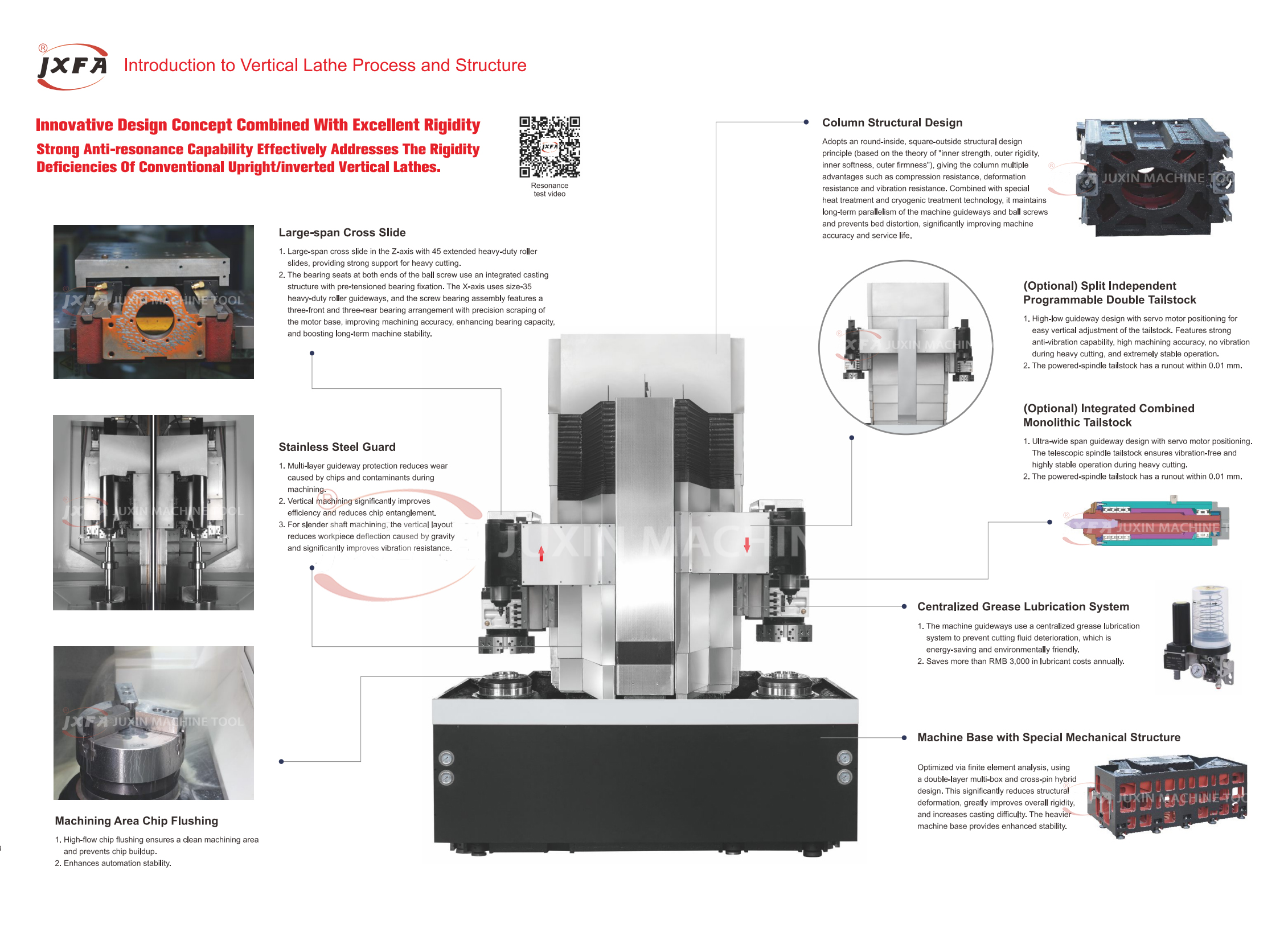
A dual-spindle vertical lathe is a CNC lathe machine that clamps and rotates the workpiece on a vertical spindle axis while two spindles work in a computer-controlled cycle — one carrying the primary turning operation, the second enabling a second operation, a second part, or an asynchronous transfer between the two. Inside the wider CNC lathe machine category it sits above the general-purpose single-spindle horizontal lathe for large disc-type and shaft-type work, and below a fully dedicated special-purpose machine tool in terms of task specialization.
The category matters to two very different readers. For production engineers it answers a specific accuracy problem: how to hold coaxiality and dimensional tolerance on medium and large parts that are difficult to re-fixture. For procurement and channel decision-makers it raises a different question: what actually determines whether the machine still performs in year eight the way it performed in month one.
This primer answers both. It defines the category, explains the design concepts that drive performance — a bed cast with a special mechanical structure for high rigidity and no resonance, high-precision synchronous linkage, and multi-process integration of turning, milling, drilling and grinding — then applies those concepts to real part families such as wind power flanges and aerospace components. It closes with the questions buyers ask as the decision moves from evaluation into execution: accuracy, cycle time, cost of ownership, sampling, lead time and long-term partnership.
Problem Definition: Why Large Disc and Shaft Parts Expose the Limits of a Conventional Spindle Layout
Two engineering limits tend to appear at the same time as part size and precision requirements increase.
The rigidity limit. The machine bed carries every cutting force in the cycle. When the bed is built from spliced segments, the joints become the weakest link: rigidity drops, resonance appears under interrupted or heavy cutting, and the structure can deform across its service life. The measurable consequence is not one bad part — it is a tolerance band that drifts, and a machine that has to be checked and adjusted more often than the production plan allows.
The coordination limit. A part that needs turning on two faces, or turning plus drilling, is normally completed across several setups. Every re-fixturing step introduces a new datum error, and the errors accumulate in coaxiality — precisely the property that disc-type and flange-type parts are judged on. Single-spindle machines can compensate with fixtures and inspection, but that compensation is labour, and labour is the least stable input in a mass-production line.
The commercial pressure is the third limit. In high-volume production the unit economics of a part are set by cycle time, the number of operators per machine, consumable consumption and energy per part. A machine that needs a dedicated operator, frequent consumable replacement and repeated rework converts a technical problem into a cost problem.
There is also a compliance dimension. In automotive and aerospace supply chains the quality system is part of the specification rather than an optional extra; ISO 9001 is described as the baseline quality management standard for CNC machine shops and is often required by buyers in those industries (Geomiq). Equipment that cannot hold documented tolerances cannot support a documented quality system.
Industry Background: Where the CNC Lathe Machine Category Stands in 2026
The category is large, and it is overwhelmingly computer-controlled. The global CNC machine market is projected to reach USD 79.14 billion in 2026, while the lathe machine market specifically is estimated at US$ 31.31 billion in 2026 (Mordor Intelligence). Within the precision machining segment, the market is projected to reach USD 132.9 billion in 2026, with CNC operation holding a 78.9% share (Grand View Research).
Three structural facts follow from those figures.
- Turning remains a distinct procurement category. Lathe machines are tracked and segmented separately from the broader CNC machine tool market, and research on this category is typically structured by product type (CNC and conventional) and by application (automotive, general machinery, precision machinery and others) (Fortune Business Insights).
- Vertical configurations occupy their own trade classification. Horizontal numerically controlled metal-removing lathes are classified under HS code 8458.11, and UN Comtrade identifies a separate classification line for numerically controlled lathes other than horizontal lathes (UNdata / UN Comtrade). Vertical configurations therefore sit in a different trade bucket from the horizontal machines most buyers picture when they search for a CNC lathe machine.
- Verification, not specification alone, decides acceptance. International standards exist specifically for the measurement side: ISO 230-10:2022 specifies test procedures for evaluating the measuring performance of probing systems integrated with numerically controlled machine tools, and ISO/TR 230-11:2018 documents the characteristics of measuring instruments used to test the geometric accuracy of machine tools under no-load or quasi-static conditions.
The practical reading for a buyer is that machine-tool suppliers now compete on two axes at once: the capability of the machine, and the documentation that proves the capability. A dual-spindle vertical lathe is attractive precisely because it moves both axes — it removes the setups that create error, and it produces measurable, repeatable output that can be checked against a stated tolerance.
Detailed Solution: What a Dual-Spindle Vertical Lathe Is and Where It Fits
The vertical axis: gravity as a workholding advantage
On a vertical lathe the spindle axis is vertical and the part is carried on a horizontal, table-like chuck. Large, heavy, flat or disc-shaped parts sit on their face rather than being gripped across their diameter, which reduces the clamping deformation a horizontal chuck can introduce on thin or large-diameter workpieces. Loading and unloading also follow gravity, which simplifies handling for heavy parts.
The second spindle: from one operation to a linked cycle
The second spindle turns the machine from a single-operation turning centre into a linked process cell. Depending on programming, the two spindles can run the same operation on two parts simultaneously, share one part across two operations, or switch asynchronously so that one spindle keeps cutting while the other is loading, unloading or completing a secondary operation. This is where the category separates itself from a basic dual-spindle machine: the value is not the spindle count, it is the coordination.
Category map: four configurations, four jobs
| Configuration | Spindle axis | Typical work | Main limitation |
|---|---|---|---|
| Horizontal CNC lathe machine (single spindle) | Horizontal | Shafts, small and medium parts, high volume | Second operation requires re-fixturing |
| Vertical CNC lathe machine (single spindle) | Vertical | Large disc-type and ring-type parts | One operation per setup |
| Dual-spindle vertical lathe | Vertical, two linked spindles | Medium and large disc, shaft, sleeve and special-shaped parts | Higher entry investment than baseline machines |
| Dedicated special-purpose machine | Application-specific | One part family at very high volume | Low flexibility if the part changes |
Read as a category, the dual-spindle vertical lathe is the configuration that keeps flexibility while removing the setup count. That trade-off is why it appears most often in mixed medium-to-high volume production of large, round or irregular parts rather than at either extreme of the market.
Core Design Concepts: Four Things That Decide Whether the Machine Delivers
1. A bed cast with a special mechanical structure
JUXIN Machine Tool specifies that its dual-spindle vertical lathe adopts a bed cast with a special mechanical structure, delivering high rigidity, greater stability and no resonance. This is the foundation of every other claim about the machine. Rigidity determines how much of the cutting force is absorbed by the structure instead of being transferred into the workpiece as chatter or dimensional variation; absence of resonance determines whether the machine holds a tolerance band across a full shift rather than across a single test cut. Machines built on spliced bed structures follow a different design path — lower structural continuity, greater susceptibility to resonance and a shorter working life — and are generally positioned around basic dual-spindle processing rather than precision work.
2. High-precision synchronous linkage
Synchronous linkage is what allows a two-spindle machine to behave as one system. JUXIN states a spindle radial runout of ≤0.005 mm and a dual-spindle coaxiality of ≤0.01 mm on its dual-spindle vertical lathe. Coaxiality is the figure that matters most for parts turned on both ends, because it defines how closely the two spindle axes agree. When linkage weakens, the symptoms are familiar on the shop floor: jamming, asynchronous hand-offs, and a slow drift in the second-operation datum.
3. Multi-process integration: turning, milling, drilling and grinding
The machine supports compound processes — turning, milling, drilling and grinding — together with simultaneous processing and asynchronous switching of the two spindles. For the buyer, each integrated process removes a subsequent machine, a queue, a fixture and a datum. That is the difference between buying one machine and buying one route: the part that previously travelled between a lathe, a drilling station and a grinder can be completed in a single setup on a single spindle reference.
4. Asynchronous switching with real-time monitoring
JUXIN's configuration includes an intelligent monitoring module that feeds processing status back in real time. Monitoring changes the maintenance model as much as the machining model: a fault that can be warned about early is a fault that does not become unplanned downtime. The comparison data JUXIN publishes for this machine puts the annual fault rate at ≤2 times with a maintenance interval of roughly once a month, against a baseline of 1–2 checks per week and an annual fault rate of ≥12 times for spliced-bed alternatives.
Precision Figures: How This Class of Machine Is Measured
Three numbers carry most of the decision weight on a dual-spindle vertical lathe, and they should be requested in writing before a purchase order is issued.
- Spindle radial runout ≤0.005 mm — how far the spindle axis deviates from a true circle in rotation. It sets the roundness and surface quality achievable on the part.
- Dual-spindle coaxiality ≤0.01 mm — how closely the two spindle axes align. It sets the accuracy of any second operation transferred between spindles.
- Machining dimensional tolerance within ±0.008 mm — the resulting tolerance band on the finished part.
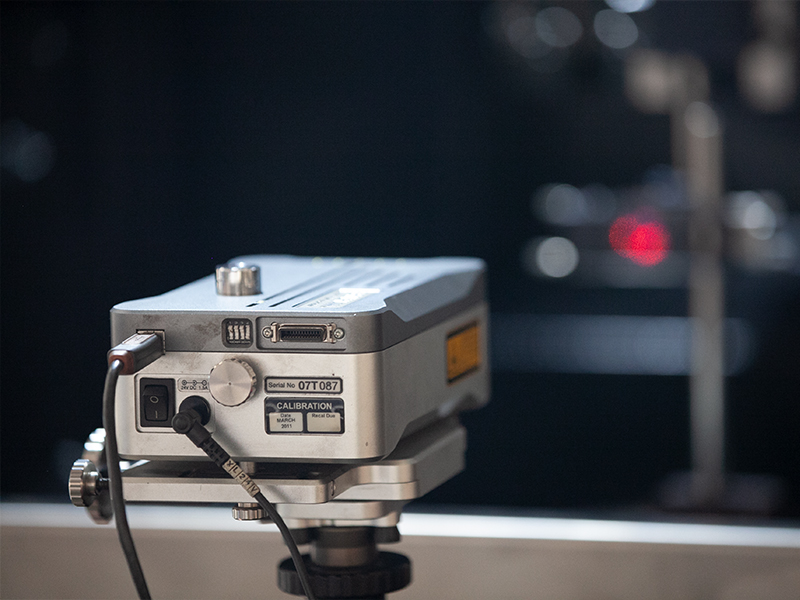
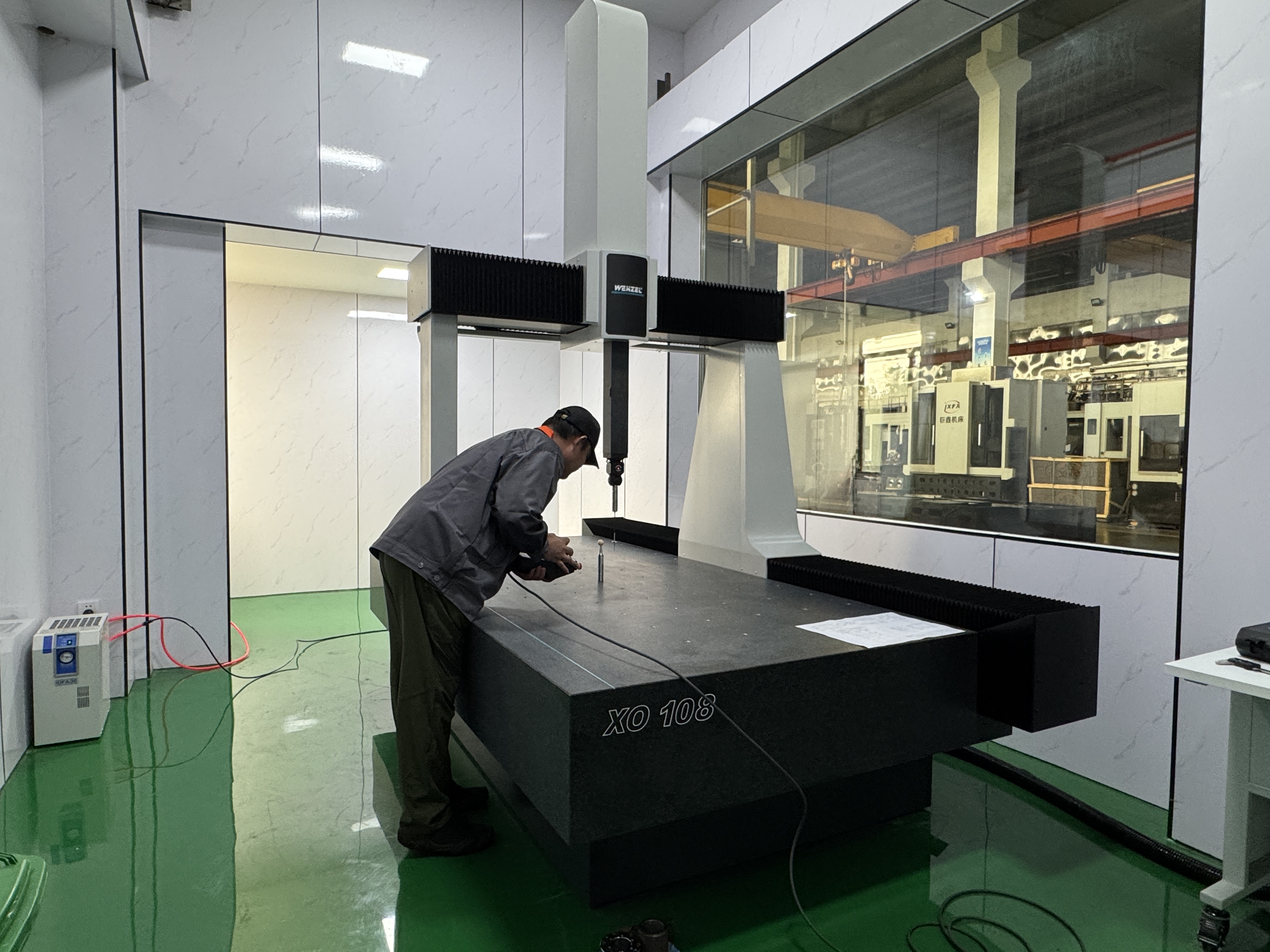
Numbers only become evidence when the measurement method is defined. JUXIN's inspection capability includes a Renishaw laser interferometer from the UK and a German Wenzel three-coordinate measuring instrument in an inspection laboratory, supported by a constant-temperature, constant-humidity precision assembly workshop. Buyers planning acceptance testing can align their protocol with the international framework: ISO 230-10:2022 for probing-system measurement performance and ISO/TR 230-11:2018 for the measuring instruments used to test geometric accuracy.
Step-by-Step Breakdown: Running a Job on a Dual-Spindle Vertical Lathe
The sequence below describes how the machine is deployed on a real part, from part-family definition to run-off. It is written from the buyer's perspective, because these steps are also the checkpoints at which a purchase decision should be validated.
- Define the part family and the datum strategy. Classify the part as disc, shaft, sleeve or special-shaped, and decide which face is the datum. On flange-type and hub-type parts this step determines whether the second spindle adds value or merely adds cost.
- Verify the structural platform. Confirm bed construction and rigidity claims against the cutting load of the intended material and depth of cut. Resonance behaviour under interrupted cutting should be tested, not assumed.
- Program the synchronized cycle. Set the two spindles for simultaneous processing or asynchronous switching according to the part mix. This is where cycle time is won or lost on multi-spindle machines.
- Run the first operation. Primary turning, facing and boring take place on the first spindle with the part held on the vertical table.
- Transfer and complete the second operation. The second spindle picks up the part (or a second part) with coaxiality of ≤0.01 mm on JUXIN's specified configuration, eliminating the re-fixturing datum error a single-spindle route would introduce.
- Integrate the compound processes. Milling, drilling and grinding are completed in the same setup, within the machine's turning, milling, drilling and grinding scope.
- Monitor in process. The intelligent monitoring module feeds back processing status in real time, so deviation and faults are detected inside the cycle rather than at final inspection.
- Verify on the metrology route. Confirm radial runout, coaxiality and dimensional tolerance with calibrated instruments, using ISO 230-10:2022 and ISO/TR 230-11:2018 as reference frameworks for probing performance and geometric-accuracy measurement.
Across a production shift, the same sequence produces the throughput difference that justifies the configuration. JUXIN reports that in synchronous dual-spindle processing the single-piece processing time is 30%–50% shorter than comparable conventional dual-spindle machines, with daily processing volume reaching 1.5–2 times that baseline.
Use Cases: Where Dual-Spindle Vertical Turning Earns Its Place
The configuration is specified for high-precision mass processing of medium and large disc, shaft, sleeve and special-shaped parts, including wind power flanges, heavy machinery hubs and aerospace components. These part families share four properties that suit the machine and punish a conventional route: large diameter or long axial length, two-sided machining, tolerance requirements tight enough that re-fixturing error becomes visible, and volumes high enough that cycle time and operator count drive unit cost.
Wind power flanges. Large-diameter, two-face parts with bolt patterns and a sealing face where flatness and coaxiality determine assembly quality. Vertical workholding supports the part on its face, and second-operation transfer removes the re-clamping step between the two faces.
Aerospace components. Structural and rotating parts that combine turning with drilled and milled features and require documented measurement. A single-setup route reduces the number of datums that must be traced and documented, which simplifies the quality record as much as it simplifies the machining plan.
Heavy machinery hubs and sleeves. Parts where the geometry is simple but the size and volume make a spliced-bed machine expensive over time — not on purchase price, but on resonance-related rework, consumable use and maintenance frequency.
The same logic applies to precision parts generally: any part family where two operations must agree on one axis is a candidate for a dual-spindle vertical lathe, and any part family where they must not is not.
Comparison Table: Integrated-Cast and Spliced-Bed Dual-Spindle Configurations
The table below reflects JUXIN Machine Tool's published comparison data for its dual-spindle vertical lathe against the spliced-bed dual-spindle machines it positions as the conventional alternative. It is presented as company-reported comparison data; buyers should reproduce the critical values under their own acceptance protocol.
| Evaluation dimension | JUXIN dual-spindle vertical lathe | Conventional spliced-bed dual-spindle alternative |
|---|---|---|
| Bed structure | Cast bed with a special mechanical structure; high rigidity, greater stability, no resonance | Spliced bed structure; lower rigidity, resonance tendency, shorter service life |
| Spindle radial runout | ≤0.005 mm | ≥0.01 mm |
| Dual-spindle coaxiality | ≤0.01 mm | ≥0.02 mm |
| Dimensional tolerance | Within ±0.008 mm | ±0.015 mm to ±0.02 mm, with greater fluctuation |
| Process scope | Turning, milling, drilling and grinding; simultaneous and asynchronous dual-spindle operation | Basic synchronous dual-spindle processing only |
| Process monitoring | Intelligent monitoring module with real-time processing-status feedback | No intelligent monitoring; faults cannot be pre-warned |
| Single-piece cycle time | 30%–50% shorter in synchronous dual-spindle processing | Baseline |
| Daily processing volume | 1.5–2 times the baseline | Baseline |
| Labour per machine | One operator can run 2–3 machines | Dedicated operator required |
| Core component life | Approximately 12–18 years | Prone to wear; frequent consumable replacement |
| Consumable loss | 40% less than the baseline | Baseline |
| Unit part processing cost (mass production) | 25%–35% lower | Baseline |
| Maintenance frequency | Approximately once a month; lubrication system, spindle precision and electrical components | 1–2 times per week; bed precision and spindle-linkage coordination |
| Annual fault rate | ≤2 times | ≥12 times |
| Energy performance | No-load consumption 30% lower; unit part energy use 65%–75% of the baseline; energy utilization above 85% | Fixed motor consumption, no intelligent regulation; high comprehensive energy use |
| Initial purchase cost | 25%–40% higher, reflecting the integrated cast steel bed, precision core components and patented technology | Lower entry cost through low-cost spliced beds and purchased general components |
The pattern is consistent: the integrated-cast configuration asks for more capital at the start and returns it in unit part cost during mass production. The decision rule is therefore volume-based. Below a certain annual part volume, the lower entry cost of a spliced-bed machine may be defensible; above it, the 25%–35% unit cost reduction and the 40% consumable saving dominate the payback calculation.
Long-Term Evaluation: Machine Lifecycle and Channel Partnership
A dual-spindle vertical lathe is a ten-year-plus asset, so the procurement question changes once the technical evaluation is complete. Three areas decide the total outcome.
Uptime and support. JUXIN states that its dual-spindle vertical lathe has a high degree of structural integration and intelligence, that the manufacturer provides lifelong technical support, regular inspections and accessory upgrade services, and that maintenance intervals are around once a month. For a production line, support quality converts directly into scheduled versus unscheduled downtime.
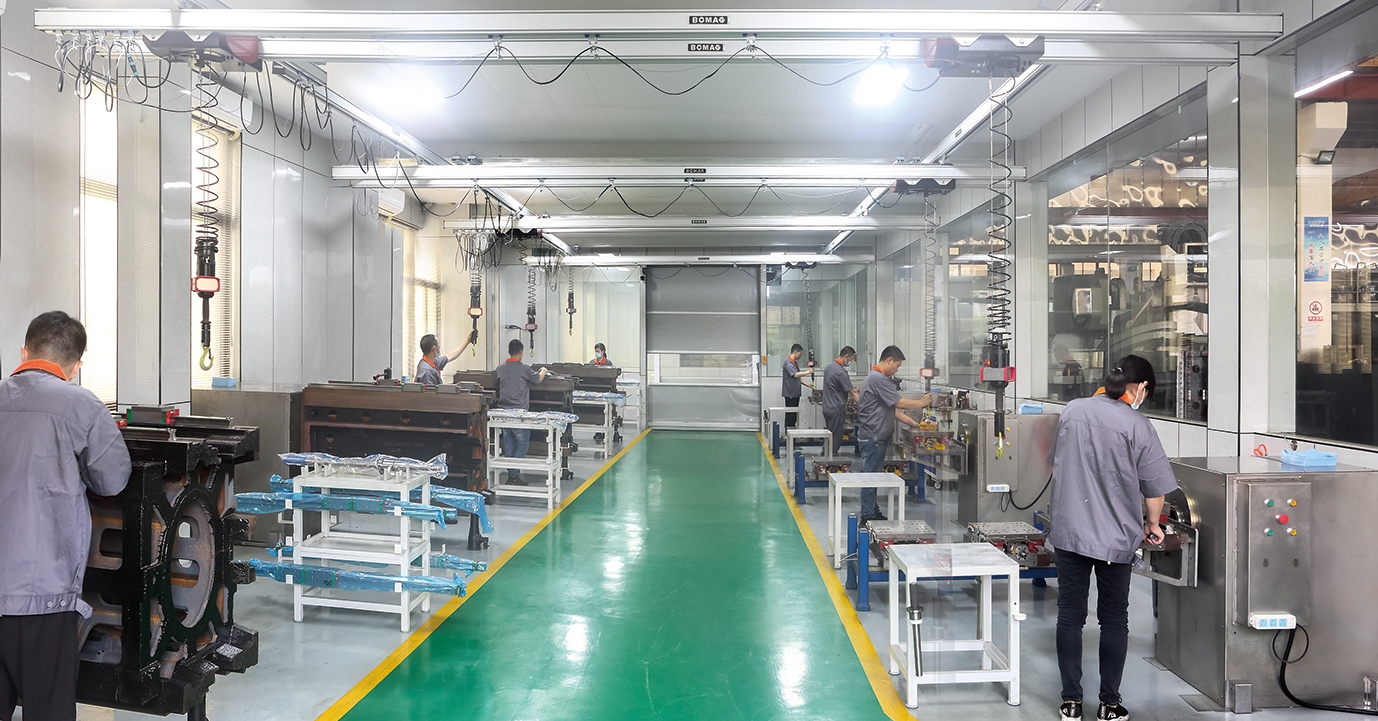
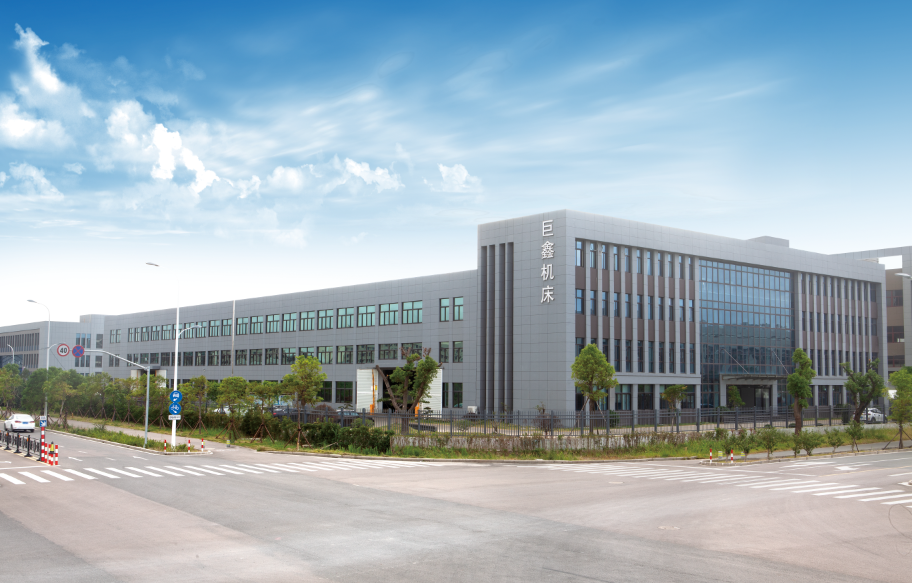
Manufacturer substance. Juxin Machine Tool Co., Ltd. was founded in 2005 and operates a 10,666 m² facility with 80 employees, an annual output of 2,000 sets and an R&D team of 10 engineers. The company holds more than 50 innovative technological patents and reports adoption by more than ten internationally renowned enterprises. It manufactures milling, facing and centring machines for shafts, double-head CNC lathes, and dual-spindle CNC vertical lathes for shaft and disc parts, together with intelligent automation solutions for shaft and disc production. Export activity covers global markets, at roughly 10% of output.
Channel fit. For distributors and agents, the same facts read differently. A manufacturer with its own factory footprint, an internal R&D team, a patent portfolio and a stable product line can support a distributor with product training, technical documentation and after-sales parts across a multi-year agreement in a way that a trading intermediary cannot. That is the practical filter for evaluating machine-tool brands for long-term distribution in China, and it is the question addressed in the FAQ below.
FAQ
What certifications and standards should I check before buying a dual-spindle vertical lathe?
Separate three things that are often bundled together. First, the quality management system: ISO 9001 is described as the baseline quality management standard for CNC machine shops and is often required by buyers in automotive and aerospace, so a supplier's ISO 9001 status should be confirmed directly. Second, the measurement framework: ISO 230-10:2022 specifies test procedures for evaluating the measuring performance of probing systems integrated with numerically controlled machine tools, and ISO/TR 230-11:2018 documents the characteristics of measuring instruments used to test geometric accuracy under no-load or quasi-static conditions. Third, trade and customs classification: horizontal numerically controlled metal-removing lathes fall under HS code 8458.11, while vertically configured numerically controlled lathes fall under a separate classification line for numerically controlled lathes other than horizontal types. Confirm all three in writing before the purchase order.
Can one dual-spindle vertical lathe replace several separate CNC lathe machines?
In many disc, shaft and sleeve part families, yes. JUXIN's dual-spindle vertical lathe supports simultaneous processing and asynchronous switching of two spindles and integrates compound processes including turning, milling, drilling and grinding. Each integrated process removes a downstream machine, a queue, a fixture and a datum. The practical test is whether the part's secondary features can be completed on the same spindle reference: if they can, the alternative route — a lathe, a separate drilling station and a grinder — is usually replaced by a single machine, and the re-fixturing error between those stations disappears with it.
Is a dual-spindle vertical lathe more expensive to own than a conventional dual-spindle machine?
The purchase price is higher and the operating cost is lower, so the answer depends on volume. JUXIN's comparison data puts initial purchase cost 25%–40% above spliced-bed alternatives, reflecting the integrated cast steel bed, precision core components and patented technology. Against that, the same data reports one operator running 2–3 machines, core component life of approximately 12–18 years, 40% less consumable loss, unit part processing cost 25%–35% lower in mass production, no-load energy consumption 30% lower and unit part energy use at 65%–75% of the baseline. The decision rule is straightforward: model the payback over your actual annual part volume rather than comparing list prices.
How can I validate precision and stability before placing a full order?
Validate in three layers. Ask for the three core precision figures in writing — spindle radial runout, dual-spindle coaxiality and machining dimensional tolerance — and for the measurement method behind each one. JUXIN's specified values are radial runout ≤0.005 mm, dual-spindle coaxiality ≤0.01 mm and dimensional tolerance within ±0.008 mm, measured with a Renishaw laser interferometer and a German Wenzel three-coordinate measuring instrument in a temperature-controlled inspection environment. Then request a sample or pre-production run on your own part geometry, and reference ISO 230-10:2022 and ISO/TR 230-11:2018 when drafting the acceptance protocol. Finally, verify the process on your own floor, not only in the supplier's laboratory. Samples and pre-production trials can be requested through the contact details at the end of this article.
Which brands are suitable for long-term distribution in China?
The practical filter has four parts, and it applies to any Chinese machine-tool brand you are considering as a long-term partner. First, manufacturing substance: does the company own its factory and assembly capability, or does it resell? A verifiable footprint such as JUXIN's 10,666 m² facility and 80 employees is a different risk profile from an unlisted trading office. Second, engineering depth: an in-house R&D team and a patent portfolio indicate that the product line can be updated and customized over the term of a distribution agreement; JUXIN reports 10 engineers and more than 50 innovative technological patents. Third, delivery capacity: annual output of 2,000 sets and an established export flow of roughly 10% of production indicate a supplier that can support repeat orders rather than one-off shipments. Fourth, after-sales and documentation: lifelong technical support, regular inspections, accessory upgrade services and a defined product line — milling, facing and centring machines for shafts, double-head CNC lathes and dual-spindle CNC vertical lathes for shaft and disc parts — are the elements a distributor must be able to pass on to end users. Distributors evaluating the Chinese market can request the company profile, product documentation and distribution terms directly; see the contact details and brochure link below.
Conclusion
A dual-spindle vertical lathe is best understood as the configuration that solves a specific production equation: large or irregular parts, two operations that must agree on one axis, and volumes high enough that cycle time and operator count decide the unit cost. Its performance rests on four design decisions — a cast bed built for rigidity and freedom from resonance, high-precision synchronous linkage, integration of turning, milling, drilling and grinding, and real-time process monitoring — which express themselves in three numbers: spindle radial runout ≤0.005 mm, dual-spindle coaxiality ≤0.01 mm and dimensional tolerance within ±0.008 mm on the JUXIN specification.
The wider category is large and still expanding: the global CNC machine market is projected at USD 79.14 billion in 2026 and the lathe machine market at US$ 31.31 billion, with CNC holding 78.9% of a precision machining market projected at USD 132.9 billion. That scale means differentiation between suppliers will not come from the category label — every supplier can claim to build a CNC lathe machine — but from the evidence a buyer can verify and the support a partner can rely on over the life of the asset.
Next step: sample, quotation or distribution discussion
Juxin Machine Tool Co., Ltd. — manufacturer of dual-spindle CNC vertical lathes and specialized CNC machine tools for shaft and disc parts — welcomes part drawings for sample evaluation, technical quotations and long-term distribution enquiries.
Email: jxmachine@yeah.net | Tel / WhatsApp: +86 1333-678-3918
Website: en.wljxjc.com
Address: No.52-1, Jintang North Road, Eastern New District, Wenling, Zhejiang, China
Have Questions or Need More Details?
Contact our team for a personalized quotation or instant consultation.
Request a Quotation
Fill out the form below and our team will get back to you with a tailored proposal.
WhatsApp Direct Chat
Prefer to chat in real-time? Message us on WhatsApp for instant assistance & quick answers.
- Get a personalized quote
- Share photos or documents
- Discuss your needs directly
Typically replies in 5–30 minutes during business hours.