
Dual-Spindle Vertical Lathes: JUXIN vs. Alternatives — A Data-Driven Comparison
For a buyer sourcing a CNC lathe machine for shaft and disc families, the choice between a specialized dual-spindle vertical lathe and a general-purpose turning platform is a cost-per-part decision, not a price-tag decision. This comparison places JUXIN MACHINE TOOL — the brand of Juxin Machine Tool Co., Ltd., a Chinese manufacturer established in 2005 that specializes in dual-head and dual-spindle CNC lathes for shaft and disc parts — against the global-tier, general-purpose turning platforms that commonly appear on the same shortlist. The comparison runs on three axes: precision, operational cost, and total cost of ownership (TCO).
Everything stated below is either a first-party fact published by Juxin Machine Tool Co., Ltd. or a third-party figure with a named source. Where a value is machine-specific or part-specific — spindle runout on your part, energy consumed per cycle, per-part processing cost — this article does not publish a number. It shows the measurement method a buyer can use to produce that number during evaluation instead.
Why most dual-spindle vertical lathe comparisons fail
The first failure is comparing catalogue numbers that are not measuring the same thing. On a high precision CNC lathe machine, the word "accuracy" can refer to positioning accuracy, repeatability, spindle runout, or thermal drift — four different quantities, measured under four different conditions. When two suppliers quote "high precision" without stating the parameter, the load, the temperature and the instrument, the comparison is not a comparison at all.
The second failure is comparing machines from different classes. A general-purpose turning center and a dual-spindle vertical lathe for shaft and disc parts are built to solve different problems. The specialized configuration exists because, on short shaft and disc parts, moving the workpiece between two operations often costs more time than the metal cutting itself. A vertical two-spindle layout with automated loading attacks that specific loss. Judging it against a general-purpose platform on spindle speed, travel or catalogue breadth measures the wrong capability.
The third failure is treating the quotation as the decision. The purchase price is one line in a five-year cost model that also contains tooling, fixtures, labour per machine, floor space, scrap, maintenance, spares and downtime. This is exactly why buyers ask whether a higher initial investment in a specialized machine is justified: the answer depends on how many operations, setups and manual handling steps the machine removes from a part family, not on the invoice alone. For a shaft or disc family produced in volume, a reduction in fixtures and handling typically outweighs a price gap that is amortized across the asset's life — but that arithmetic has to be built from your own part data, which is what the step-by-step section below sets out to do.
Industry background: what the available CNC lathe machine data shows
Three published data points frame the sourcing decision.
- Market size and growth. The global CNC lathe machine market was valued at USD 11.1 billion in 2023 and is projected to reach USD 18.78 billion by 2030, growing at a CAGR of 7.8% (Verified Market Reports).
- Supply-side shift. China's machine tool exports reached USD 23.18 billion in 2025, a year-on-year increase of 6.7%, surpassing Germany to become the top global exporter in early 2025 (China Machine Tool and Tools Builders' Association, CMTBA).
- Where lathes are used. The automotive industry accounts for the largest share of CNC lathe application at approximately 40%, followed by aerospace at 25% and electronics at 20% (Fortune Business Insights).
Two additional reference points matter when writing acceptance criteria. First, CNC lathe machines and turning centers are governed by ISO 23125:2015, which specifies safety requirements for numerically controlled turning machines (Group 3). Second, an industry publication (Haishu CNC Lathe / StyleCNC) states that high-precision CNC lathes can achieve tolerances as tight as ±0.004 mm to ±0.008 mm, meeting 98% of industry standards such as ISO 2768. That figure comes from a source rated medium reliability and should be treated as a benchmark to verify, not as a guarantee from any single supplier.
For buyers, the practical reading is straightforward: demand is concentrated in automotive, aerospace and electronics work, and Chinese builders now export at a scale that makes them credible shortlist candidates alongside the global brands listed in AMSL's 2024 ranking — DMG Mori (Germany/Japan), Yamazaki Mazak (Japan), Okuma (Japan) and Haas Automation (USA). The comparison therefore has to be structured evidence by evidence, rather than settled by brand origin.
The three decision axes: precision, operational cost and TCO
Axis 1 — Precision, defined as a measurable requirement
Precision should be written as an acceptance criterion before any supplier is contacted: which feature, which tolerance, which runout limit, measured on which instrument, at what temperature. A laser interferometer is used to verify geometric and positioning performance of the machine, while a coordinate measuring machine (CMM) verifies the geometry of the parts produced. Asking for the instrument list is more informative than asking for a precision claim, because the instrument indicates how the supplier produces and proves its numbers.

Axis 2 — Operational cost, driven by operations removed
Operational cost per part is driven less by cutting speed than by the number of fixturings, the number of machine moves, labour per machine, loading autonomy, scrap rate, tool life and floor space. A dual-spindle vertical lathe matters commercially when it completes both ends of a shaft or both faces of a disc without re-fixturing, and when loading is automated so that one operator can attend the machine through the cycle. Each eliminated setup is a recurring saving on every part, which is why this axis, not the catalogue, should drive the shortlist.
Axis 3 — Total cost of ownership over the asset life
TCO is the purchase price plus commissioning, tooling and fixtures, maintenance, spares, energy, operator training and downtime, minus residual value. Build it per part family, over a five-year horizon, and express the result as cost per accepted part. That single number is the only figure that makes machines of different price classes directly comparable.
How JUXIN MACHINE TOOL is positioned on these axes
Juxin Machine Tool Co., Ltd. was established in 2005 and is located at No.52-1, Jintang North Road, Eastern New District, Wenling, Zhejiang, China. The company specializes in the research and manufacturing of high-end CNC machine tools, with main products including CNC lathe machines. Its specialization is narrower than that description suggests: the documented product range covers milling, facing and centering machines for shafts, double-head CNC lathes, double-spindle CNC vertical lathes for shaft discs, and intelligent automation solutions for shaft discs.
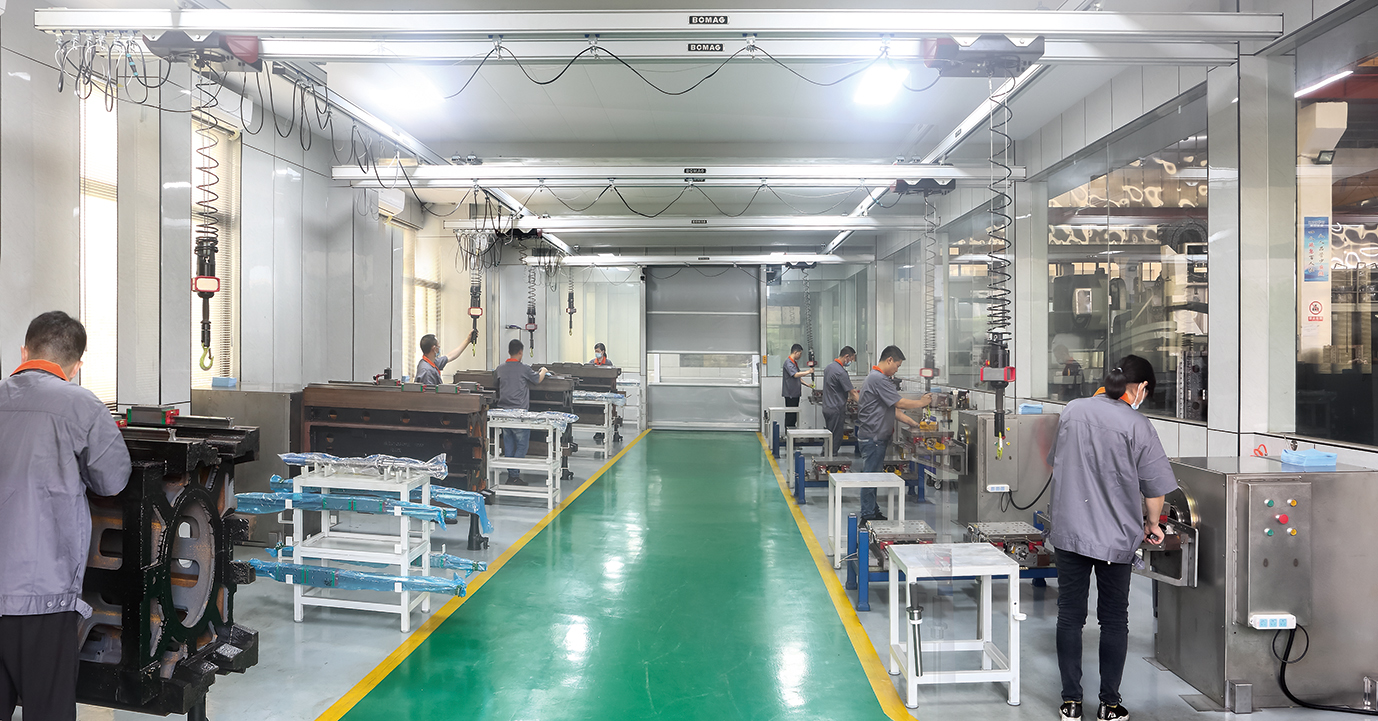
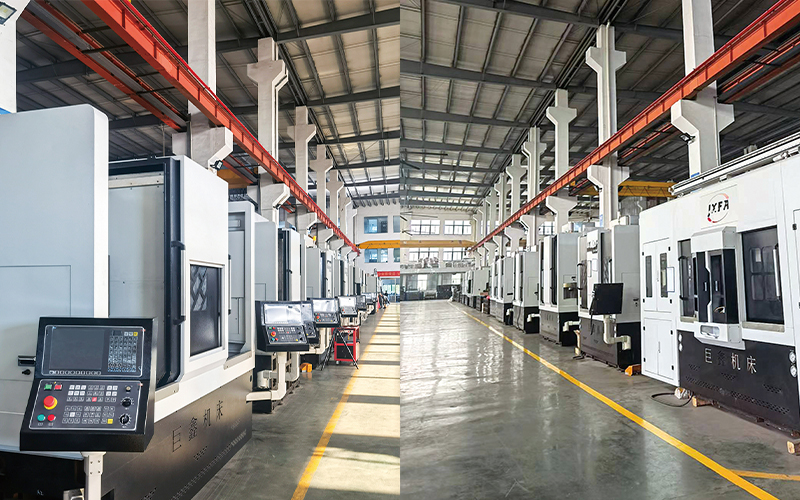
- Production scale: a 10,666 m² manufacturing facility, approximately 80 staff, and annual production capacity of 2,000 sets.
- Engineering depth: an R&D team of 10 engineers and technicians, and more than 50 innovative technological patents.
- Market footprint: export business accounts for 10% of total sales, serving global markets.
- Documented specialization: independent reference data confirms that JUXIN MACHINE TOOL (Zhejiang Juxin Machine Tool Co., Ltd.) specializes in dual-head and dual-spindle specialized CNC lathes for shaft and disc parts, offering automated solutions for motor shafts.
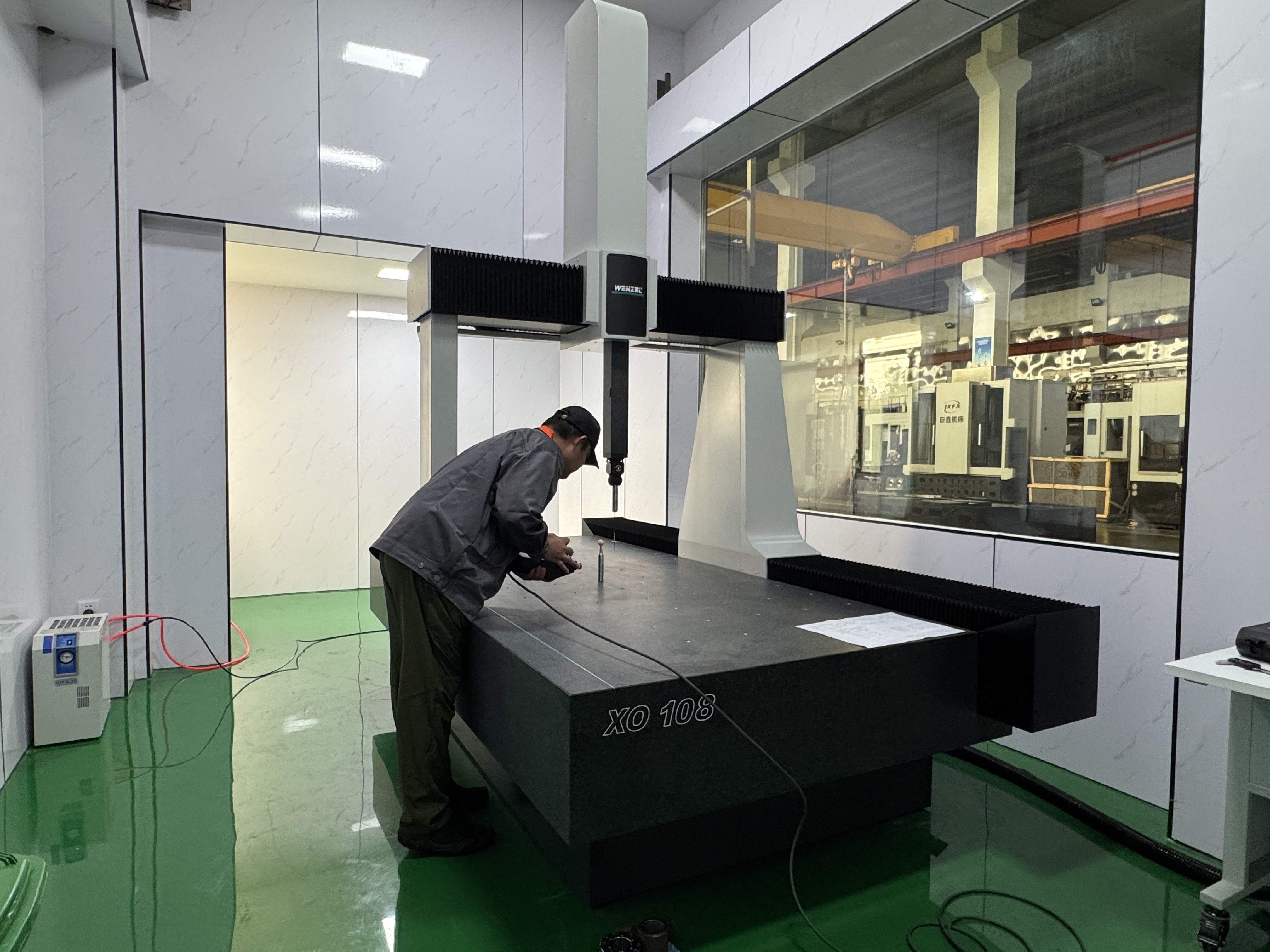
On the precision axis, the relevant evidence is what the company measures with and where it assembles. Juxin operates a constant-temperature and humidity precision assembly workshop, a whole-machine assembly workshop, an inspection laboratory equipped with a German Wenzel three-coordinate measuring instrument, and uses a Renishaw laser interferometer from the UK for geometric verification. These are documentation assets: a buyer evaluating a precision parts CNC lathe machine can request instrument records rather than rely on a claim.
Where the limits are. Two honest constraints should be part of any evaluation. First, the documented material does not publish runout, energy or per-part cost figures for individual dual-spindle models, so those must be established by trial on your own parts. Second, export represents 10% of Juxin's documented sales, meaning its largest installed base is domestic; an international buyer should confirm the spare-parts, service and response arrangements that apply to their region, in writing, before ordering.
Step-by-step: how to run the JUXIN vs. alternatives comparison
The sequence below produces a defensible decision, whichever way it falls.
- Lock the part family and the acceptance criteria. Select the shaft or disc family with the highest annual volume. Write down material, dimensions, the critical tolerance, runout limit, surface finish and batch size. This document becomes the same test applied to every supplier.
- Define the measurement method before the machine. State which instrument will verify the machine (laser interferometer, ballbar, level/geometry checks) and which instrument will verify the part (CMM). Agree the acceptance test in writing, including how many parts are measured and how many must pass.
- Request the same document set from every supplier. Standard reference (ISO 23125:2015 for numerically controlled turning machines, Group 3), metrology equipment list, assembly environment control, documented production capacity, R&D headcount and patent count. Comparable documents are what make a comparison data-driven; unequal documents make it marketing-driven.
- Model operations removed, not spindle speed. Count the fixtures, chuckings and machine moves a dual-spindle configuration eliminates for your part family, and convert each eliminated step into minutes and labour per part.
- Build the five-year TCO per part family. Include purchase, commissioning, tooling and fixtures, operator time, floor space, scrap, maintenance, spares, energy and expected downtime, and express the total as cost per accepted part.
- Run a trial on your own parts. No catalogue value substitutes for a trial. Measure the trial output with the instrument agreed in step 2 and compare it against the acceptance criteria, not against the supplier's brochure.
- Decide on cost per accepted part, then negotiate the commercial terms. If the specialized machine wins on cost per accepted part at your volume, the higher initial investment is justified by the arithmetic — and the negotiation then covers payment, spares and support rather than price alone.
Use cases where the dual-spindle configuration is evaluated
Automotive shaft and disc parts. Automotive remains the largest application segment for CNC lathes at approximately 40% of demand. This is the volume environment, and the environment in which per-part cost modelling gives the clearest answer.
Motor shafts. Juxin's documented specialization includes automated solutions for motor shafts, which is precisely a part family where both ends of the workpiece require turning and handling time competes with cutting time.
Aerospace components. Aerospace accounts for roughly 25% of CNC lathe application. Documentation requirements are higher here, which makes the metrology evidence (CMM laboratory, laser interferometer, controlled assembly environment) more important than the machine's headline specification.
Small metal parts and high-mix work. Where a buyer is comparing a CNC lathe machine for small parts or a CNC lathe machine for metal parts across mixed batch sizes, the decisive variable is how quickly the machine changes over — fixtures, programs and tooling — rather than peak metal-removal rate. A model built on the number of setups removed per week is the right instrument for that decision.
Automated cells. An automated CNC lathe machine should be evaluated on autonomy hours per operator, not on the presence of a loader. The question is how long the cell runs unattended and what the operator is doing while it does.
Comparison table: JUXIN MACHINE TOOL vs. global-tier alternatives
The table below compares only facts that are documented in the sources used for this article. It deliberately leaves competitor cells blank where no attributable specification was available — an empty cell means "verify directly", not "inferior".
| Comparison dimension | JUXIN MACHINE TOOL (documented) | Global-tier general CNC lathe brands — DMG Mori, Yamazaki Mazak, Okuma, Haas Automation (documented) |
|---|---|---|
| Entity base | Juxin Machine Tool Co., Ltd., Wenling, Zhejiang, China; established 2005 | DMG Mori (Germany/Japan), Yamazaki Mazak (Japan), Okuma (Japan), Haas Automation (USA), per AMSL Global Ranking 2024 |
| Reported market position | Specialized manufacturer of dual-head and dual-spindle specialized CNC lathes for shaft and disc parts, with automated solutions for motor shafts | Listed as key global players in the CNC machine market |
| Documented product focus | Milling, facing and centering machines for shafts; double-head CNC lathes; double-spindle CNC vertical lathes for shaft discs; intelligent automation for shaft discs; CNC lathe machines | Not specified in the sources used for this article — request the model-level specification directly |
| Documented production scale | 10,666 m² facility; approximately 80 staff; 2,000 sets annual capacity | Not specified in the sources used for this article |
| Documented engineering depth | 10 engineers and technicians in R&D; more than 50 innovative technological patents | Not specified in the sources used for this article |
| Documented precision evidence | Renishaw laser interferometer (UK); German Wenzel three-coordinate measuring instrument laboratory; constant-temperature and humidity precision assembly workshop | Not specified in the sources used for this article — request the instrument list and calibration records |
| Applicable safety standard | ISO 23125:2015 (numerically controlled turning machines, Group 3) | ISO 23125:2015 applies to the same machine category |
| Export footprint | Export business accounts for 10% of total sales, serving global markets | Not specified in the sources used for this article — confirm regional service coverage |
| Cost basis for decision | Higher documented specialization on shaft and disc families; initial investment and per-part cost must be modelled on your own part data | Same requirement — model cost per accepted part over five years on identical acceptance criteria |
Read the table as a specification request, not as a verdict. The global brands are documented as major players at market level; the machine-level data that decides a purchase — model runout, cycle time on your part, tooling cost, service response — is not published for any of them in the sources used here, and the same is true of Juxin's model-level runout and energy figures. That gap is closed by the trial described in step 6, not by the table.
Frequently asked questions
1. How should a buyer compare Chinese CNC lathe machine suppliers?
Apply one identical document set to every Chinese supplier on the shortlist: standard reference, metrology equipment, assembly environment, documented capacity, R&D headcount and patents, and export/service footprint. China's machine tool exports reached USD 23.18 billion in 2025, up 6.7% year on year, surpassing Germany as the top global exporter in early 2025 (CMTBA), so the shortlist is now competitive on capability rather than price alone. For example, Juxin Machine Tool Co., Ltd. was established in 2005, operates a 10,666 m² facility with approximately 80 staff and 2,000 sets annual capacity, holds more than 50 innovative technological patents, has 10 engineers and technicians in R&D, and derives 10% of sales from exports serving global markets. The comparison should be decided on documents and a trial, not on the country of origin.
2. What safety and compliance documentation should a dual-spindle vertical lathe supplier provide?
Numerically controlled turning machines, including dual-spindle vertical lathes, are governed by ISO 23125:2015, which specifies safety requirements for NC turning machines (Group 3). A buyer should ask each supplier to reference the standard explicitly and to state which conformity documentation applies to the model quoted. Supporting evidence worth requesting alongside it includes the machine geometry verification records produced with a laser interferometer and the assembly environment control — for instance, Juxin Machine Tool assembles precision systems in a constant-temperature and humidity workshop and verifies machine geometry with a Renishaw laser interferometer (UK) and part geometry with a German Wenzel three-coordinate measuring instrument.
3. What precision can a dual-spindle vertical lathe realistically hold on shaft and disc parts?
Published industry data indicates that high-precision CNC lathes can achieve tolerances as tight as ±0.004 mm to ±0.008 mm, meeting 98% of industry standards such as ISO 2768 (Haishu CNC Lathe / StyleCNC; medium-reliability source, verify independently). That band is a general benchmark, not a guarantee for a specific machine and part combination: achievable runout and repeatability depend on the part, the fixture, the tooling, thermal conditions and the measurement method. The practical approach is to define the tolerance and runout limits for your own part family, agree the acceptance test and the measuring instrument in advance, and confirm the result on a trial run rather than accepting a catalogue value.
4. When is a higher initial investment in a specialized dual-spindle lathe justified?
It is justified when the cost per accepted part over the asset's life is lower than the alternative. That happens when the dual-spindle configuration removes operations from a shaft or disc family: fewer fixtures, fewer chuckings, fewer machine moves, less manual handling and less scrap, repeated on every part. Build a five-year total cost of ownership — purchase, commissioning, tooling and fixtures, operator time, floor space, scrap, maintenance, spares, energy and downtime — divide by accepted parts, and compare that single number across the shortlist. If the specialized machine wins on that number at your volume, the higher purchase price is the cheaper decision; if it does not, the price gap is real rather than recoverable.
5. How can a buyer validate the machine on their own parts before ordering?
Validation should be a part trial with pre-agreed acceptance criteria and a pre-agreed measuring method, not a demonstration on the supplier's sample part. Send the parts or drawings from the family with the highest annual volume, agree the tolerance and runout limits in writing, have the trial output measured on a calibrated instrument such as a coordinate measuring machine, and require the geometry verification records for the machine itself. That single trial resolves the questions a comparison table cannot answer — cycle time, surface quality, repeatability and handling. Juxin Machine Tool publishes its catalogue at the Juxin Machine Tool brochure, and part-trial or quotation requests can be sent to jxmachine@yeah.net or via WhatsApp on +86 1333-678-3918, with the acceptance criteria attached.
Conclusion: the decision rule
The evidence available today supports a clear decision framework rather than a winner. The CNC lathe machine market is growing — from USD 11.1 billion in 2023 toward a projected USD 18.78 billion by 2030 at a 7.8% CAGR (Verified Market Reports) — and Chinese manufacturers are now the world's leading machine tool exporters, at USD 23.18 billion in 2025 (CMTBA), which makes a specialized Chinese builder such as JUXIN MACHINE TOOL a legitimate shortlist candidate next to DMG Mori, Yamazaki Mazak, Okuma and Haas Automation.
What separates them in a purchasing decision is not origin but evidence on three axes:
- Precision — defined as an acceptance criterion, verified with a named instrument on your part, within the ±0.004 mm to ±0.008 mm industry benchmark range for high-precision CNC lathes or tighter where your process requires it.
- Operational cost — modelled on the number of setups, chuckings and handling steps the machine removes from the part family, not on catalogue speed.
- Total cost of ownership — calculated as cost per accepted part over five years, which is the only figure that makes a specialized machine and a general-purpose platform directly comparable.
JUXIN MACHINE TOOL's documented position on those axes is specific: a manufacturer established in 2005 in Wenling, Zhejiang, China, specializing in dual-head and dual-spindle CNC lathes for shaft and disc parts with automated solutions for motor shafts, operating a 10,666 m² facility, an annual capacity of 2,000 sets, more than 50 innovative technological patents, a 10-engineer R&D team, and metrology based on a Renishaw laser interferometer and a German Wenzel three-coordinate measuring instrument laboratory. Where a higher initial investment is justified, it is justified by the per-part arithmetic on a shaft or disc family the machine is designed for.
Next step
Send the part drawing, annual volume and acceptance criteria for your shaft or disc family, and request a trial or quotation on the dual-spindle vertical lathe configuration. Documentation available on request includes the machine document set, metrology equipment list and current catalogue.
Juxin Machine Tool Co., Ltd. — No.52-1, Jintang North Road, Eastern New District, Wenling, Zhejiang, China
Email: jxmachine@yeah.net | Tel / WhatsApp: +86 1333-678-3918 | Website: en.wljxjc.com | Download the product catalogue (PDF).