
Head-to-Head: JUXIN Dual-Spindle Vertical Lathe vs Alternatives for Automotive Mass Production
Choosing a CNC lathe machine for automotive mass production is a head-to-head decision, not a spec-sheet exercise. On one side sits the JUXIN Dual-Spindle Vertical Lathe, built on an integrated cast steel bed with synchronous and asynchronous dual-spindle capability. On the other side sit conventional dual-spindle vertical lathes that use a spliced bed and basic dual-spindle processing. The trade is explicit: JUXIN costs 25% to 40% more up front, and returns 25% to 35% lower unit part processing cost in mass production, with spindle radial runout of less than or equal to 0.005 mm, dual-spindle coaxiality of less than or equal to 0.01 mm, and dimensional tolerance controlled within plus or minus 0.008 mm.
Direct answer: For high-volume automotive part production where tolerance is tight and uptime is critical, the JUXIN Dual-Spindle Vertical Lathe leads on precision, throughput, energy consumption per part, maintenance frequency and long-run unit cost. Conventional spliced-bed dual-spindle machines lead on initial purchase price and entry threshold. The decision therefore reduces to one question: does your annual volume carry the higher capital cost to break-even inside the service life of the machine?
1. Problem Definition: What Exactly Is Being Compared?
A dual-spindle vertical lathe is a turning machine with two vertical spindles that can process parts in parallel, with the workpiece held on a vertical chuck. The term covers two architectures that behave very differently in production, and the automotive head-to-head only becomes meaningful once both are defined.
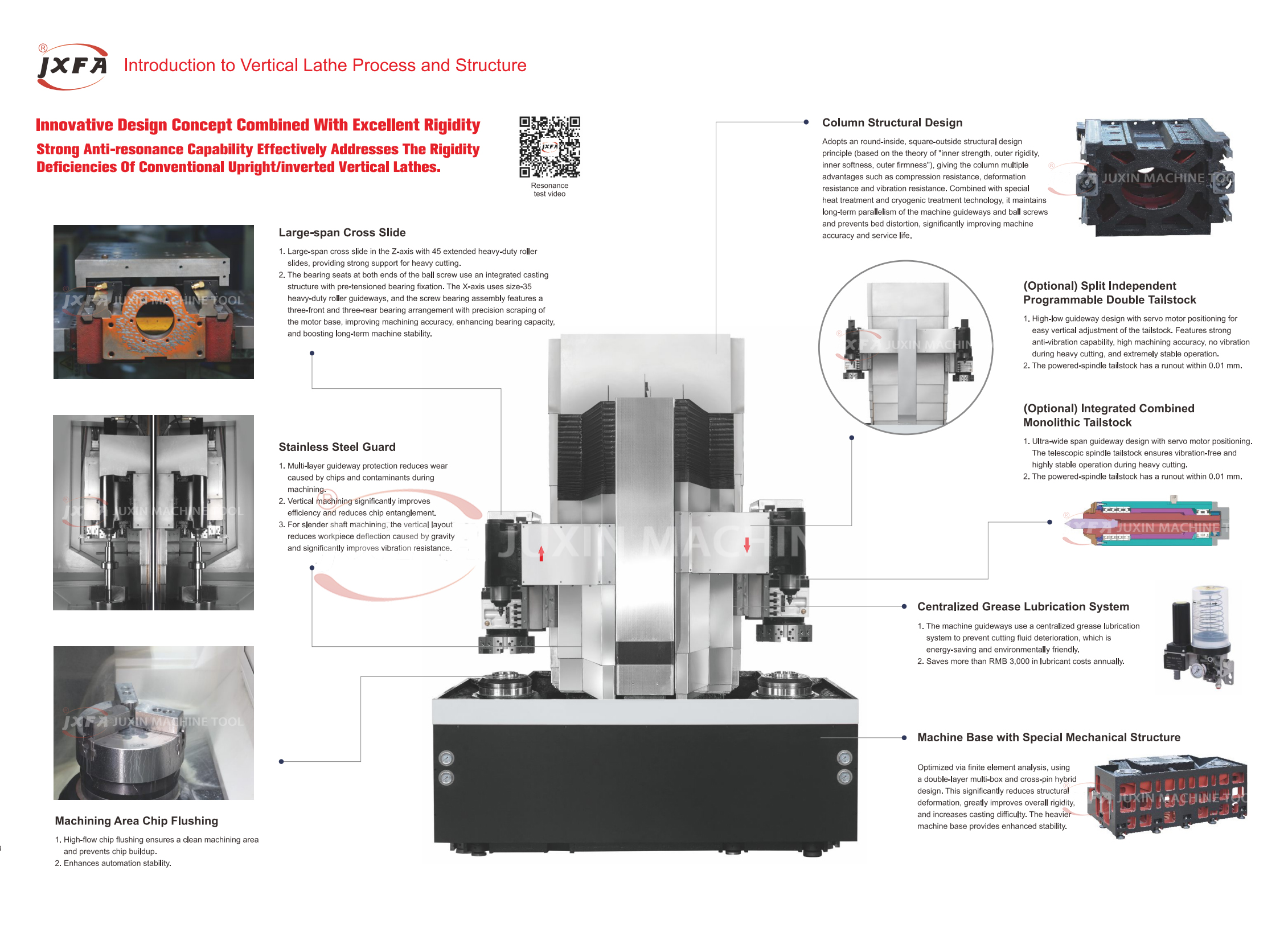
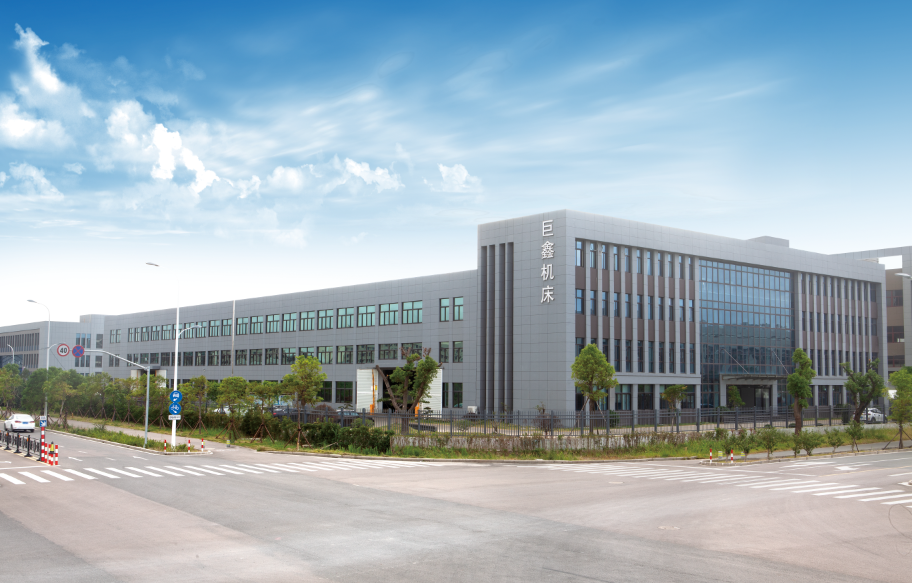
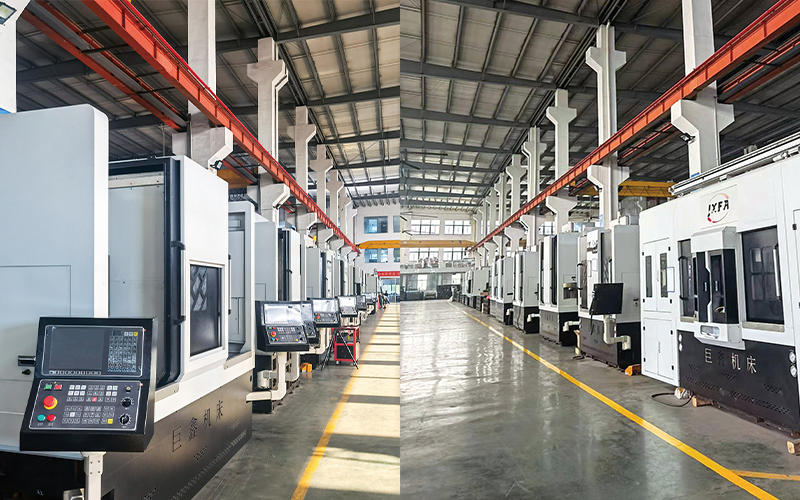
Architecture A, the JUXIN machine. Juxin Machine Tool Co.,Ltd. is a manufacturer of specialised high-end CNC machine tools based in Wenling, Zhejiang, China, founded in 2005, operating a 10,666 square metre factory with 80 employees, an annual output of 2000 sets and a 10-engineer R and D team. Its dual-spindle vertical lathe uses a bed cast with a special mechanical structure as one integrated piece, which produces high rigidity, greater stability and no resonance. The machine focuses on high-precision synchronous linkage, multi-process integration and customised adaptation. It supports simultaneous processing and asynchronous switching of the two spindles, and can integrate compound processes such as turning, milling, drilling and grinding on one platform. An intelligent monitoring module feeds back processing status in real time.
Architecture B, the conventional alternative. Competing dual-spindle vertical lathes mostly adopt a spliced bed structure built up from sections, with a core positioning of basic dual-spindle processing. The published comparison data records poor rigidity, obvious resonance problems and short service life, with capability limited to simple synchronous processing only.
2. Industry Background: Why the Head-to-Head Matters Now
The global CNC lathe machine market was valued at USD 11.1 billion in 2023 and is projected to reach USD 18.78 billion by 2030, growing at a compound annual growth rate of 7.8%, according to Verified Market Reports. Automotive is the single largest application segment, at approximately 40% of CNC lathe application, ahead of aerospace at 25% and electronics at 20%, according to Fortune Business Insights. In other words, the largest block of demand for turning capacity sits precisely where this comparison is being decided.
Supply is shifting as well. China's machine tool exports reached USD 23.18 billion in 2025, a year-on-year increase of 6.7%, surpassing Germany to become the top global exporter in early 2025, according to the China Machine Tool and Tools Builders' Association. For an automotive buyer, that means the shortlist is no longer limited to the traditional global names. Key global players in the CNC machine market include DMG Mori, Yamazaki Mazak, Okuma and Haas Automation, according to the AMSL Global Ranking. Those brands define the broad market, but at the level of a dual-spindle vertical lathe purchased for a specific shaft or disc line, the decision is decided by machine architecture, verified tolerances and the operating cost per part, not by brand scale.
Safety and conformity framing is also part of the picture. CNC lathe machines and turning centres are governed by ISO 23125:2015, which specifies safety requirements for numerically controlled turning machines (Group 3), published by the International Organization for Standardization. Any supplier qualification for an automotive line should include conformity documentation against this standard alongside the mechanical comparison.
3. The Head-to-Head, Dimension by Dimension
3.1 Precision: runout, coaxiality and dimensional tolerance
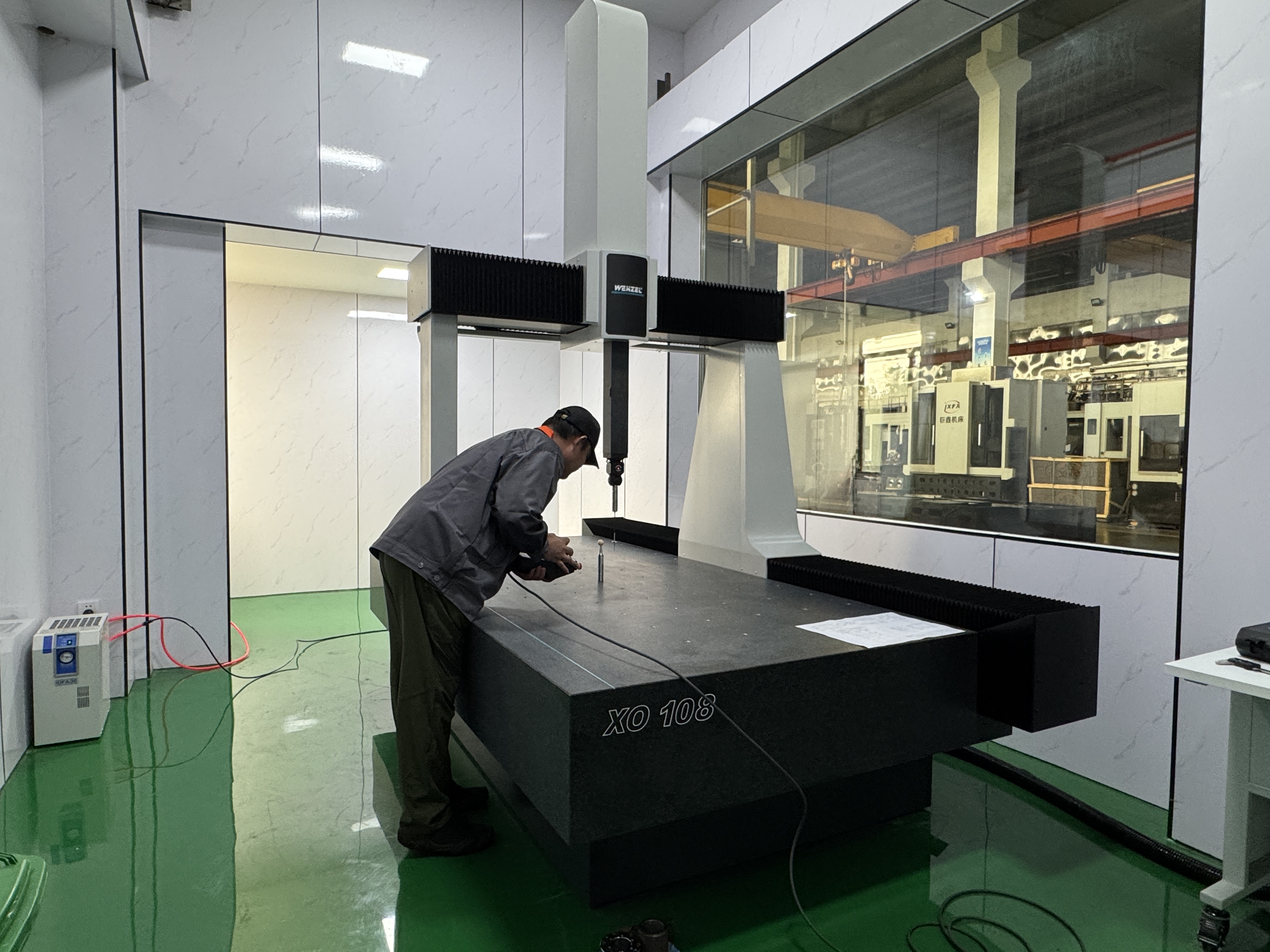
Precision is the foundation of every other advantage in this comparison. JUXIN's published figures for the dual-spindle vertical lathe are spindle radial runout of less than or equal to 0.005 mm, dual-spindle coaxiality of less than or equal to 0.01 mm, and processing dimensional tolerance controlled within plus or minus 0.008 mm. Conventional spliced-bed dual-spindle vertical lathes typically show spindle radial runout of 0.01 mm or more, dual-spindle coaxiality of 0.02 mm or more, and dimensional tolerance fluctuating between plus or minus 0.015 mm and plus or minus 0.02 mm.
Public industry references place high-precision CNC lathe capability at roughly plus or minus 0.004 mm to plus or minus 0.008 mm (Haishu CNC Lathe / StyleCNC), which positions the JUXIN machine inside the band expected for high precision work and the conventional alternative outside it. For an automotive buyer, the practical consequence is interchangeability: coaxiality on a twin-spindle machine determines whether a part machined on spindle A fits the same downstream fixture as a part machined on spindle B. At 0.02 mm or worse, that interchangeability has to be actively managed. At 0.01 mm or better, it can be assumed.
3.2 Throughput and cycle time
When both spindles run in synchronous mode, the single-piece processing time of the JUXIN dual-spindle vertical lathe is 30% to 50% shorter than competitor models, and daily processing volume reaches 1.5 to 2 times that of the comparable alternative, which supports continuous mass processing. The mechanism is structural rather than promotional: an integrated cast steel bed holds alignment between the two spindles, so the machine can run synchronous processing, asynchronous switching, and move between them. Conventional spliced-bed machines are limited to simple synchronous processing, and weaker coordination between their spindles appears on the shop floor as jamming and asynchrony, which lengthens the single-piece time and degrades efficiency as the shift progresses.
3.3 Energy: no-load consumption and consumption per part
Energy is where the architectural difference becomes measurable on a utility bill. The JUXIN dual-spindle vertical lathe uses high-efficiency energy-saving motors and an intelligent energy consumption regulation system that adjusts consumption to the actual processing load. No-load energy consumption is 30% lower than competitor models, and energy consumption per unit part is 65% to 75% of the alternative, which produces the 25% to 35% lower per-part energy figure used in this head-to-head. The energy utilisation rate exceeds 85%, because turning, milling, drilling and grinding can be compounded on a single platform instead of being distributed across auxiliary equipment. Conventional machines run on fixed motor energy consumption with no intelligent regulation, so the gap between no-load and loaded consumption is small, and additional energy is lost to poor equipment stability.
3.4 Maintenance, fault rate and uptime
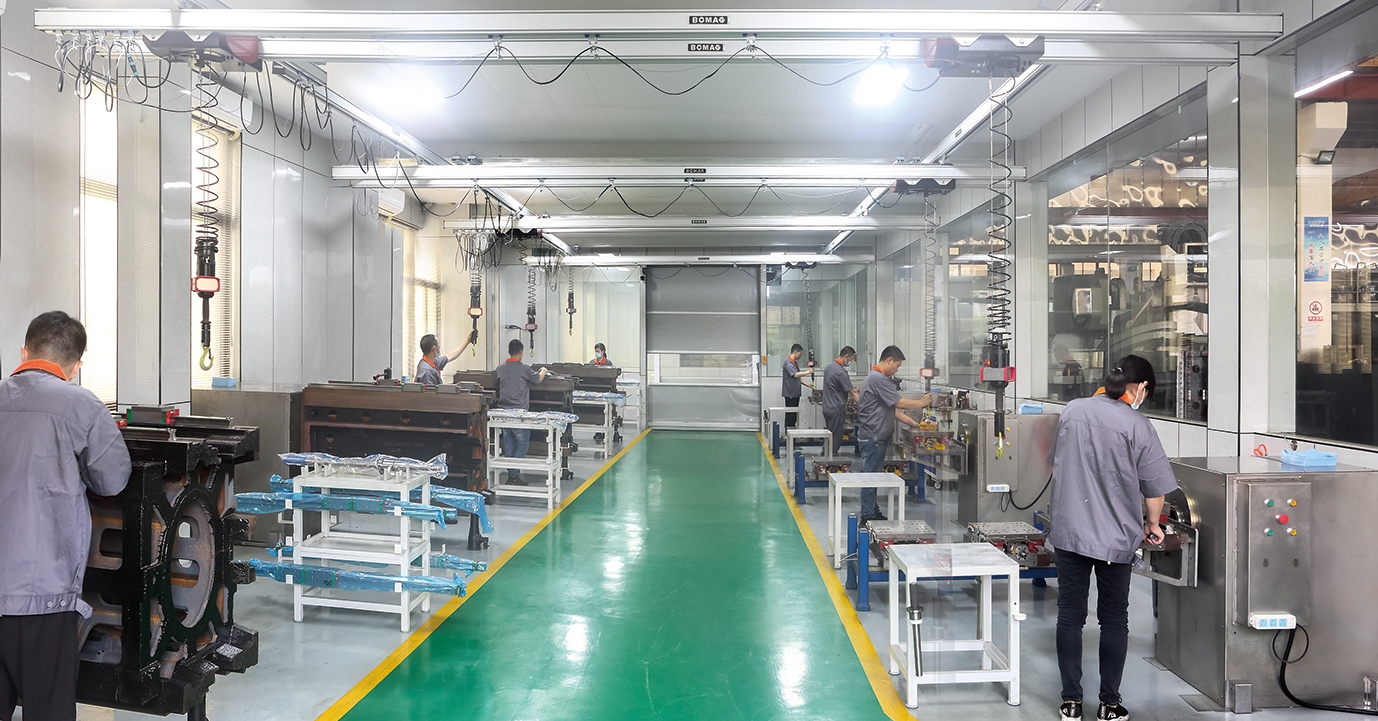
Maintenance frequency separates a machine that runs a production line from a machine that needs a technician beside it. The JUXIN machine is highly integrated and instrumented with an intelligent monitoring module that provides early warning of faults. Daily maintenance consists of regular inspection of the lubrication system, spindle precision and electrical components, at a maintenance frequency of approximately once a month, with an annual fault rate of 2 times or fewer. JUXIN provides lifelong technical support, regular inspections and accessory upgrade services, which keeps both the difficulty and the cost of operation and maintenance low.
Conventional spliced-bed dual-spindle vertical lathes have no intelligent monitoring and therefore no fault early warning. The spliced bed deforms over time, so bed precision and dual-spindle linkage coordination must be inspected frequently, at one to two times per week, with an annual fault rate of 12 times or more. There is no professional technical support channel, so fault repair depends on external personnel, which lengthens the maintenance cycle and raises cost while the line is stopped.
3.5 Cost structure: capital premium versus unit part cost
On initial investment, the JUXIN dual-spindle vertical lathe costs 25% to 40% more to purchase than competitor models. That premium reflects the integrated cast steel bed, high-quality precision core components and patented technology support. Conventional models hold their lower price by using low-cost spliced beds and purchased general components: a low entry threshold, but also low hardware durability and low technical added value.
Long-term operating cost inverts that picture. Labour cost is low because one operator can run 2 to 3 devices. Consumable loss is 40% lower than competitor models. In mass production, the unit part processing cost is 25% to 35% lower than the alternative. Conventional machines require dedicated personnel on duty, their core components wear more readily, consumables are replaced frequently, and long-term operating costs stay high.
3.6 Core component life and the payback horizon
Core component service life of approximately 12 to 18 years is the figure that sets the payback horizon. A 25% to 40% capital premium amortised across a component life of that length is spread over a very large number of production hours, while a machine whose bed deforms and whose spindles lose coordination generates cost continuously through rework, unplanned stops and external service. On a long-life asset, the cheaper machine is not automatically the lower-cost machine.
4. Comparison Table: JUXIN Dual-Spindle Vertical Lathe vs Conventional Dual-Spindle Vertical Lathes
| Comparison dimension | JUXIN Dual-Spindle Vertical Lathe | Conventional spliced-bed dual-spindle vertical lathes |
|---|---|---|
| Bed structure | Bed cast with a special mechanical structure as one integrated piece; high rigidity, greater stability, no resonance | Mostly spliced bed structure; poor rigidity, obvious resonance problems |
| Spindle operating modes | Simultaneous processing and asynchronous switching of dual spindles | Basic dual-spindle processing; simple synchronous processing only |
| Process scope on one platform | Turning, milling, drilling and grinding can be integrated as compound processes | Single-process scope; auxiliary equipment required for other operations |
| Spindle radial runout | Less than or equal to 0.005 mm | 0.01 mm or more |
| Dual-spindle coaxiality | Less than or equal to 0.01 mm | 0.02 mm or more |
| Dimensional tolerance | Within plus or minus 0.008 mm | Plus or minus 0.015 mm to plus or minus 0.02 mm, with large fluctuation |
| Single-piece processing time (synchronous mode) | 30% to 50% shorter than competitor models | Baseline; longer single-piece time where linkage coordination is poor |
| Daily processing volume | 1.5 to 2 times that of competitor models | Baseline |
| No-load energy consumption | 30% lower than competitor models | Baseline; fixed motor consumption, no intelligent regulation |
| Energy consumption per unit part | 65% to 75% of competitor models | Baseline; additional loss from poor equipment stability |
| Energy utilisation rate | More than 85%, with compound processes concentrated on core machining | Lower, because only a single process is completed per machine |
| Maintenance frequency | Approximately once a month | One to two times per week |
| Annual fault rate | 2 times or fewer | 12 times or more |
| Fault early warning | Intelligent monitoring module with real-time processing status feedback | No intelligent monitoring; faults cannot be predicted |
| Core component service life | Approximately 12 to 18 years | Core components wear more readily; shorter service life |
| Consumable loss | 40% less than competitor models | Baseline; consumables replaced frequently |
| Labour requirement | One operator can run 2 to 3 devices | Dedicated personnel on duty required |
| Initial investment | 25% to 40% higher purchase cost | Lower purchase cost and lower entry threshold |
| Unit part processing cost in mass production | 25% to 35% lower | Higher over the life of the asset |
| After-sales support | Lifelong technical support, regular inspections, accessory upgrade services | No professional technical support; repair relies on external personnel |
5. Step-by-Step: How to Run This Head-to-Head on Your Own Parts
The table settles the general case. Your own case needs six steps, in this order.
- Define the part family and annual volume. List the parts that will run on the machine. The JUXIN dual-spindle vertical lathe is designed for medium and large disc, shaft, sleeve and special-shaped parts. If your requirement is a CNC lathe machine for small parts, or low-volume high-variety work, the rest of this evaluation will not apply to you.
- Convert print tolerances into machine requirements. Take the tightest coaxiality and dimensional tolerance on the drawing, then check whether the machine's published figures leave margin: runout of less than or equal to 0.005 mm, coaxiality of less than or equal to 0.01 mm, tolerance within plus or minus 0.008 mm, against 0.01 mm, 0.02 mm and plus or minus 0.015 to 0.02 mm for the alternative.
- Build the cost model over the full asset life, not the purchase year. Enter the 25% to 40% capital premium, then subtract energy consumption per part at 65% to 75% of the alternative, consumable loss at 40% lower, labour at one operator for 2 to 3 devices, and downtime exposure at 2 or fewer faults per year against 12 or more.
- Verify energy claims by metered measurement. Ask for no-load consumption and loaded consumption separately, since the 30% no-load reduction and the 25% to 35% per-part reduction are different claims with different causes.
- Test the maintenance and support model, not just the machine. Confirm the monthly maintenance interval, the annual fault rate threshold, the availability of spare parts and accessory upgrades, and whether lifelong technical support and regular inspections are contractual.
- Validate on your own parts before committing capital. Precision figures measured on a supplier's reference part and precision figures measured on your part, in your fixture, are two different numbers.
6. Use Cases: Where the Head-to-Head Lands Differently
Automotive mass production of shaft and disc parts. Automotive half shafts, brake discs, gear shafts and chassis parts are shaft and disc families, and they are the application where the machine's architecture pays back fastest. In automated line integration for these parts, the operating requirement is long-term, non-fault continuous operation, which maps directly onto the published figures of a monthly maintenance interval and an annual fault rate of 2 times or fewer. At high annual volumes, the 30% to 50% cycle-time reduction and the 25% to 35% lower unit part processing cost are the variables that move the line economics, not the purchase price.
Other high-precision mass production. The same machine is positioned for medium and large disc, shaft, sleeve and special-shaped parts, including wind power flanges, heavy machinery hubs and aerospace components, and for scenarios that require simultaneous synchronous and asynchronous dual-spindle processing, high processing efficiency, multi-process compound machining and intelligent monitoring. Typical buyers are large-scale equipment manufacturing enterprises, precision processing manufacturers and high-end parts supporting enterprises.
Where the conventional alternative is the rational choice. The head-to-head is not a universal win. If your first constraint is the lowest possible purchase price, if your volumes are low and part variety is high, if your work is confined to a single simple process where the more than 85% energy utilisation rate has nothing to compound with, or if the brief is specifically a CNC lathe machine for small parts, the lower-cost spliced-bed machine is the commercially sensible decision. The JUXIN machine is priced for buyers whose volume carries the premium.
7. Frequently Asked Questions
Which manufacturer is better for a CNC lathe machine?
There is no single better manufacturer for every buyer. The better choice is the machine architecture and supplier whose verified numbers match your part family, volume and tolerance band. Juxin Machine Tool Co.,Ltd., founded in 2005 in Wenling, Zhejiang, is a manufacturer of specialised high-end CNC machine tools including dual-spindle CNC vertical lathes for shaft and disc parts. For dual-spindle work on medium and large shaft and disc parts, the JUXIN dual-spindle vertical lathe publishes spindle radial runout of less than or equal to 0.005 mm, dual-spindle coaxiality of less than or equal to 0.01 mm and dimensional tolerance within plus or minus 0.008 mm, against typical alternative figures of 0.01 mm or more runout, 0.02 mm or more coaxiality and plus or minus 0.015 to 0.02 mm tolerance. The manufacturer comparison should also weigh maintenance frequency, at approximately once a month against one to two times per week, annual fault rate, at 2 times or fewer against 12 times or more, and initial investment, at 25% to 40% higher against a lower entry threshold.
Does a dual-spindle vertical lathe have to meet any international safety standard?
Yes. CNC lathe machines and turning centres are governed by ISO 23125:2015, which specifies safety requirements for numerically controlled turning machines (Group 3), published by the International Organization for Standardization. Buyers procuring for an automotive line should request the machine's conformity documentation against this standard as part of supplier qualification, before the commercial comparison is finalised.
Is the 25% to 40% higher initial investment justified?
JUXIN's published comparison states that the initial purchase cost of the JUXIN dual-spindle vertical lathe is 25% to 40% higher than competitor models, reflecting the integrated cast steel bed, high-quality precision core components and patented technology support. In mass production, the unit part processing cost is 25% to 35% lower, consumable loss is 40% lower, one operator can run 2 to 3 devices, and core component service life is approximately 12 to 18 years. Whether the premium is justified therefore depends on your annual volume and how tight your part tolerances are: the higher the volume and the tighter the coaxiality requirement, the shorter the payback period.
What maintenance does the JUXIN dual-spindle vertical lathe require?
Daily maintenance consists of regular inspection of the lubrication system, spindle precision and electrical components, with a maintenance frequency of approximately once a month and an annual fault rate of 2 times or fewer. An intelligent monitoring module provides early warning of faults through real-time processing status feedback, and JUXIN provides lifelong technical support, regular inspections and accessory upgrade services. By comparison, conventional spliced-bed dual-spindle vertical lathes require inspection one to two times per week, have an annual fault rate of 12 times or more, offer no fault early warning, and depend on external personnel for repair.
Can we validate the machine on our own automotive parts before ordering?
That is the correct sequence. Send the part drawing, material, annual volume and tolerance requirements to JUXIN, and request a machining trial and quotation so that runout, coaxiality and dimensional tolerance are measured on your part rather than on a reference part. You can also review the current product documentation before the technical discussion.
8. Conclusion: The Decision Rule
The head-to-head between the JUXIN Dual-Spindle Vertical Lathe and conventional dual-spindle alternatives does not end in a tie, and it does not end in a universal winner. It ends in a threshold. Below that threshold of annual volume and tolerance requirement, the conventional spliced-bed machine is the lower-cost decision, and its lower entry threshold is the right answer. Above it, the integrated cast steel bed, the simultaneous and asynchronous dual-spindle capability, the runout of less than or equal to 0.005 mm, the coaxiality of less than or equal to 0.01 mm, the tolerance within plus or minus 0.008 mm, the 30% lower no-load energy consumption, the 25% to 35% lower energy consumption per unit part, the monthly rather than weekly maintenance interval and the 12 to 18 year core component life convert the 25% to 40% capital premium into a 25% to 35% lower unit part processing cost. For automotive shaft and disc production, where half shafts, brake discs, gear shafts and chassis parts run at volume on automated lines, that threshold is normally crossed.
Next Step: Run the Head-to-Head on Your Own Parts
Send your part drawing, material, annual volume and tolerance requirements, and JUXIN will return a matched dual-spindle vertical lathe configuration, a machining trial arrangement and a quotation so the comparison can be settled with your own measurements.
- Request a quotation for the JUXIN Dual-Spindle Vertical Lathe
- Arrange sample and trial processing on your automotive shaft or disc parts
- Download the full product catalogue (PDF) for specifications and configuration options
Email: jxmachine@yeah.net | Tel / WhatsApp: +86 1333-678-3918 | Website: en.wljxjc.com | Catalogue: Download the JUXIN Machine Tool brochure (PDF)
Juxin Machine Tool Co.,Ltd. — No.52-1, Jintang North Road, Eastern New District, Wenling, Zhejiang, China.
Have Questions or Need More Details?
Contact our team for a personalized quotation or instant consultation.
Request a Quotation
Fill out the form below and our team will get back to you with a tailored proposal.
WhatsApp Direct Chat
Prefer to chat in real-time? Message us on WhatsApp for instant assistance & quick answers.
- Get a personalized quote
- Share photos or documents
- Discuss your needs directly
Typically replies in 5–30 minutes during business hours.