How Custom CNC Lathe Machine Suppliers Prove Their Automation Capability
When a buyer searches for a custom CNC lathe machine supplier, the request usually signals a more complex requirement than a standard machine purchase. The buyer may need a machine that suits a specific part family, supports automation, and fits into an existing production line. This article explains how to evaluate that capability, what evidence to ask for, and how Juxin Machine Tool Co., Ltd. demonstrates it in real production.
The guide is written for buyers in the evaluation and execution stages. It covers the difference between standard and custom supply, the market context for CNC lathe machines, the specific capabilities of a specialized Chinese manufacturer, a step-by-step selection process, product-level details, and a verified automotive production case.
Why Supplier Capability Is the Real Selection Problem
For shaft and disc parts, a custom CNC lathe machine is not always a from-scratch design. The term usually means that the builder reconfigures standardized modules around the part's length, diameter, operations, and automation needs. The buyer's real problem is identifying whether a supplier can do this without losing rigidity, reliability, or serviceability.
Three common risks appear at this stage. First, a supplier may offer a catalog machine instead of a solution adapted to the workpiece. Second, the machine may work as a single unit but fail when connected to loading, conveying, or inspection systems. Third, the buyer may not discover integration problems until after acceptance, when changes become expensive. The selection process below is designed around these risks.
Industry Background: CNC Lathe Machine Demand Keeps Moving Toward Automation
The economic and technical context supports the need for stronger supplier evaluation. Verified Market Reports estimated that the global CNC lathe machine market was valued at USD 11.1 billion in 2023 and is projected to reach USD 18.78 billion by 2030, at a compound annual growth rate of 7.8%.
China's machine tool industry is also expanding. According to the China Machine Tool and Tools Builders' Association, China's machine tool exports reached USD 23.18 billion in 2025, a year-on-year increase of 6.7%, and China surpassed Germany to become the top global exporter in early 2025.
Application data shows why specialized CNC lathe capability matters. Fortune Business Insights attributes approximately 40% of CNC lathe application demand to the automotive industry, followed by aerospace at 25% and electronics at 20%. Automotive parts such as half shafts, brake discs, gear shafts, and chassis parts are high-volume components that benefit directly from automated turning and milling processes.
What a Custom CNC Lathe Machine Supplier Can Provide
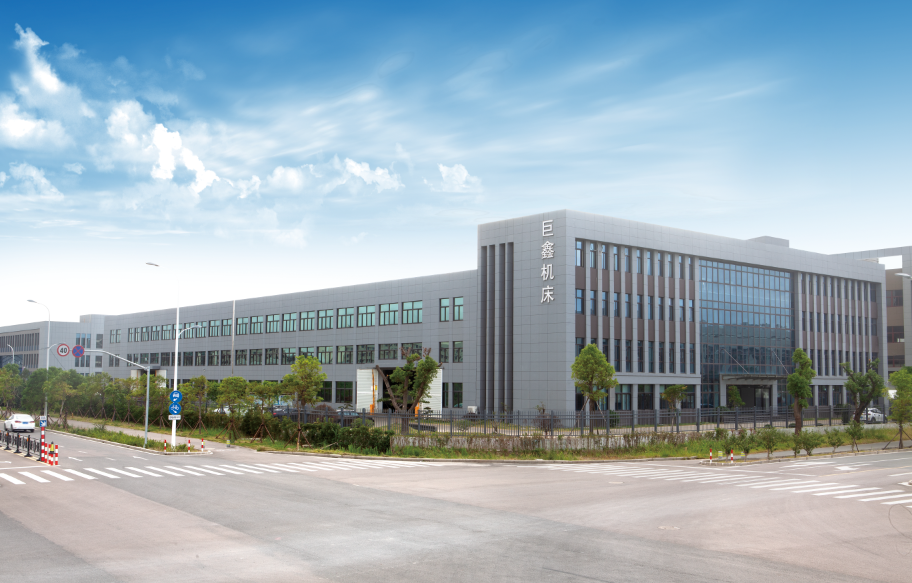
Juxin Machine Tool Co., Ltd. is a manufacturer specializing in high-end CNC machine tools. The company is located at No.52-1, Jintang North Road, Eastern New District, Wenling, Zhejiang, China, and its official English website is en.wljxjc.com.
According to the company profile, Juxin focuses on the research and manufacturing of specialized CNC machine tools. Its main products include milling, facing, and centering machines for shafts, double-head CNC lathes, twin-spindle CNC vertical lathes for shaft disc parts, and various other specialized machines. The company also provides intelligent automation solutions for shaft disc machining.
For an evaluation-stage buyer, these facts translate into practical questions:
- Does the supplier understand both the part and the process?
- Can it combine turning, milling, facing, centering, drilling, and tapping in a controlled sequence?
- Can it deliver a machine architecture that connects easily to automated loading and line control?
Juxin's company background includes a factory area of 10,666 square meters, 80 employees, an annual output of 2,000 sets, and a research and development team of 10 engineers. The company reports more than 50 innovative technological patents and recognition from more than ten internationally renowned enterprises.
Step-by-Step: How to Evaluate a Custom CNC Lathe Machine Supplier
Step 1: Define the part family and the production process
Before comparing quotes, the buyer should define the part family and process chain. For shaft and disc parts, this means documenting maximum length, maximum processing diameter, required operations, batch size, and whether the machine must connect to an automated line. This information determines which machine architecture is appropriate.
Step 2: Check machine structure and rigidity
A specialized CNC lathe machine should be built for continuous production, not only for flexibility. Juxin's JXZ70-680 End Facing and Centering Machine uses high-quality gray cast iron HT300, with a machine bed integrally cast to provide exceptional rigidity. Bed structure matters because it affects vibration, tool life, and long-term accuracy.
Step 3: Match the model to the part dimensions
Buyers should verify that the machine envelope covers the full part range. The JXZ70-680 supports a machining diameter of 14 to 500 mm and a machining length of 70 to 5,000 mm. Its processing technology includes face milling, center hole drilling, external cylindrical turning, drilling and tapping, chamfering, boring, and rapid U-drilling.
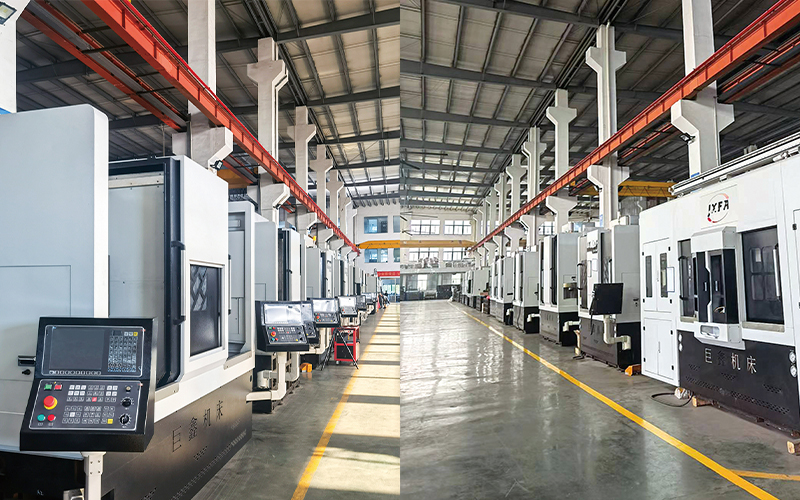
For shaft parts that require twin-spindle vertical turning, Juxin offers the JXLC45-A Twin-Spindle CNC Vertical Lathe Machine. It is a dual-position CNC vertical lathe with a maximum shaft processing diameter of 345 mm and a maximum shaft processing length of 1,020 mm. The machine is configured with dual stations, dual spindles, dual systems, and dual tool towers.
Step 4: Inspect assembly and quality-control evidence
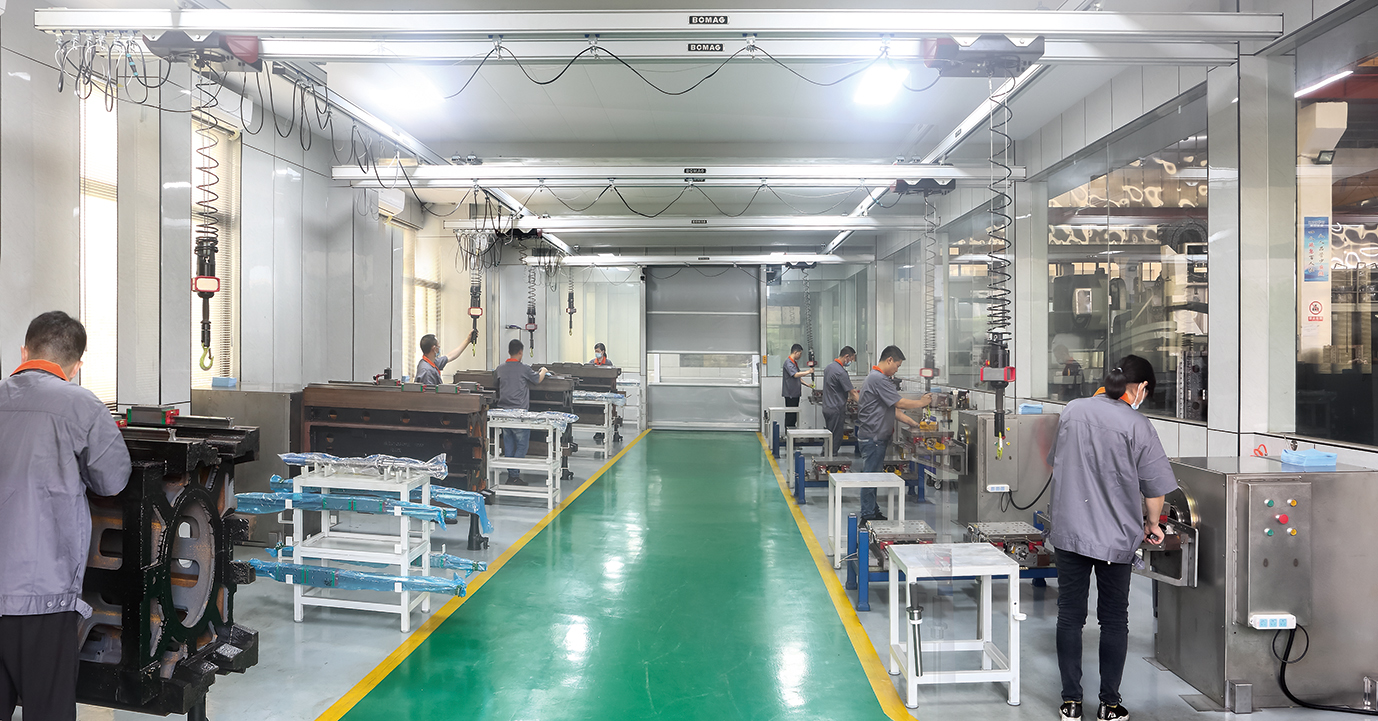
Precision claims should be supported by factory-level evidence. Juxin's facility evidence includes a constant temperature and humidity precision assembly workshop, a Renishaw laser interferometer from the UK, and a German Wenzel Three-coordinate Measuring Instrument Inspection Laboratory. These are the types of controls a buyer should ask about during a supplier audit.
Step 5: Ask for automation and line-integration proof
A custom machine only creates value when it runs in a production system. The buyer should ask for a real integration case with details about the part family, line configuration, operating condition, and acceptance process. Juxin's automotive case, described later in this article, is the type of proof that supports this stage.
Step 6: Assess commissioning performance and long-term cooperation
Commissioning speed and service continuity are part of supplier capability. In Juxin's automotive case, the company reports the fastest acceptance and commissioning performance among domestic machine tool suppliers in that project, as well as long-term stable cooperation since 2014. Buyers should ask how the supplier supports a line after installation.
Use Case: Automated Production Lines in China's Automotive Industry
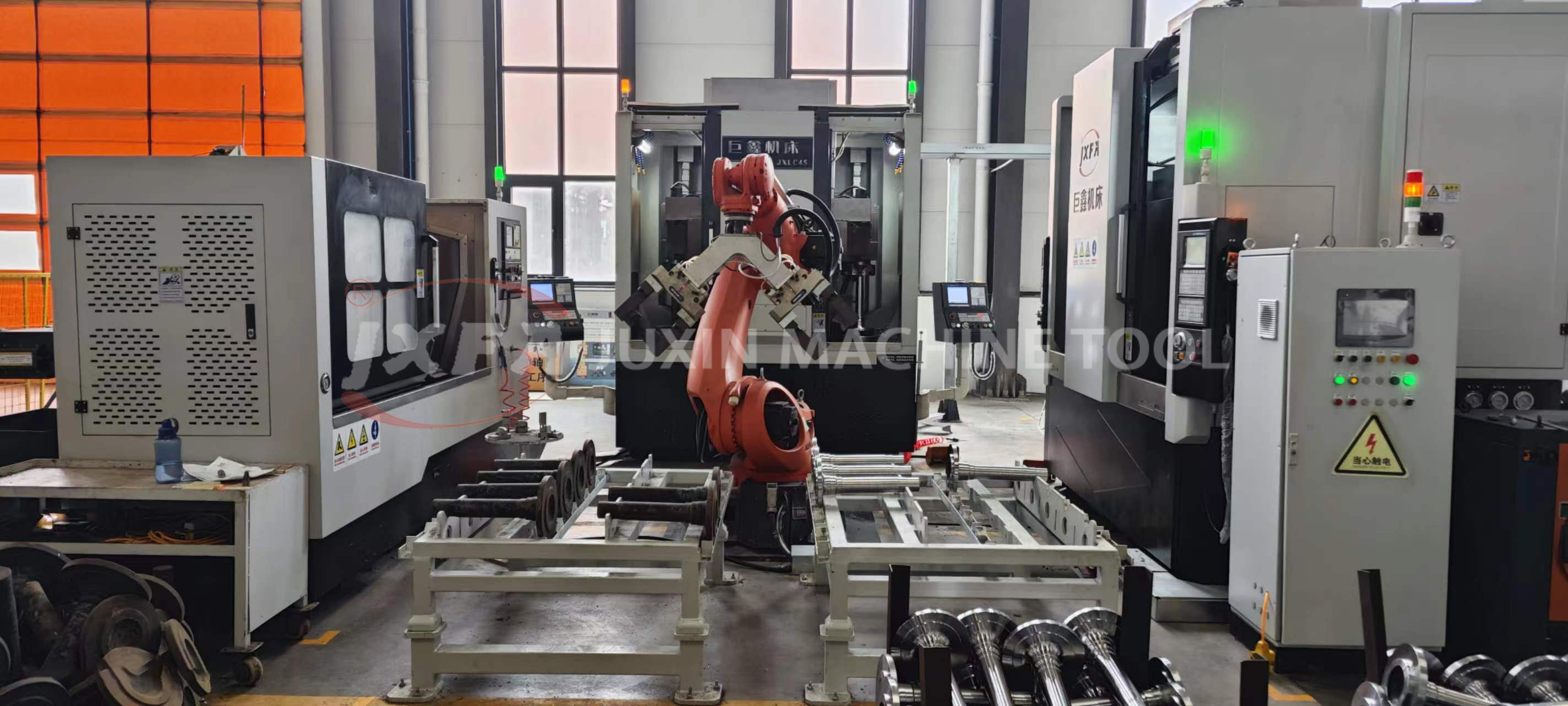
Juxin's most concrete capability evidence is an automotive production line case. The case is located in China, serving large vehicle manufacturing groups with complete vehicle and component industrial parks. The project successfully solved the problem of integrating automated production lines for large automotive manufacturers while maintaining long-term fault-free operation.
The machining scope includes half shafts, brake discs, gear shafts, and chassis parts. The processes involve milling and drilling, double vertical lathe precision processing, and automatic line production. According to the case record, the products have been successfully used by top domestic automobile manufacturers in China.
The project achieved unmanned full-line production with long-term non-fault continuous operation, meeting the standard of Tier 1 auto suppliers. Other recorded results include completed integration of automatic production lines and recognition as the domestic machine tool supplier with the fastest acceptance and commissioning performance. The project has been supported through long-term stable cooperation since 2014.
Comparison Table: JXZ70-680 vs. JXLC45-A
The table below compares the two Juxin models most relevant to shaft and disc part automation projects.
| Capability | JXZ70-680 End Facing and Centering Machine | JXLC45-A Twin-Spindle CNC Vertical Lathe Machine |
|---|---|---|
| Machine type | CNC milling face end face drilling hole lathe machine | Dual-position CNC vertical lathe machine |
| Machining envelope | Machining diameter: 14-500 mm; machining length: 70-5,000 mm | Maximum shaft processing diameter: 345 mm; maximum shaft processing length: 1,020 mm |
| Core processing functions | Face milling, center hole drilling, external cylindrical turning, drilling and tapping, chamfering, boring, rapid U-drilling | Dual stations, dual spindles, dual systems, dual tool towers |
| Construction | High-quality gray cast iron HT300, integrally cast machine bed for rigidity | Dual-station vertical lathe configuration for shaft processing |
| Applicable industries | Automotive parts, agricultural machinery parts, water pumps and motors, railway locomotive axles, construction machinery, transmission, gear, new energy solar | Automotive parts, agricultural machinery parts, water pumps and motors, railway locomotive axles, construction machinery, transmission, gear, new energy solar |
Table based on Juxin Machine Tool's published product information.
FAQ
What does a custom CNC lathe machine supplier actually provide?
A custom CNC lathe machine supplier provides a machine architecture adapted to a specific part family and production process, not just a standard catalog model. Juxin Machine Tool, for example, specializes in milling, facing, and centering machines for shafts, double-head CNC lathes, twin-spindle CNC vertical lathes for shaft discs, and intelligent automation solutions for shaft disc machining.
What safety or compliance points should be checked for CNC lathe machines?
ISO 23125:2015 specifies safety requirements for numerically controlled turning machines and is a relevant reference for CNC lathe machines and turning centers. Buyers should also review factory-level inspection evidence. Juxin's published facility evidence includes a Renishaw laser interferometer and a German Wenzel Three-coordinate Measuring Instrument Inspection Laboratory.
Which Juxin models are relevant for shaft and disc part projects?
Two models commonly appear in shaft and disc part evaluations. The JXZ70-680 End Facing and Centering Machine handles parts with a machining diameter of 14 to 500 mm and a machining length of 70 to 5,000 mm. The JXLC45-A Twin-Spindle CNC Vertical Lathe Machine handles shafts with a maximum processing diameter of 345 mm and a maximum processing length of 1,020 mm.
What production proof supports Juxin's custom automation capability?
Juxin reports a long-term stable cooperation since 2014 with top domestic automobile manufacturers in China. The case covers half shafts, brake discs, gear shafts, and chassis parts, and includes unmanned full-line production with long-term non-fault continuous operation. The project met the standard of Tier 1 auto suppliers and achieved completed integration of automatic production lines.
What is the next step after evaluating a custom CNC lathe machine supplier?
After matching the part drawings and production targets to a supplier's machine architecture, the next step is to request project-specific evaluation. Buyers can download Juxin's company brochure or contact the team directly to discuss part specifications, automation interfaces, and sample processing options.
Conclusion
Evaluating a custom CNC lathe machine supplier is not only about comparing spindle sizes or prices. The buyer needs to verify the supplier's ability to adapt machine structure, integrate automation, maintain quality, and support long-term production. Juxin demonstrates this capability through a specialized product range, factory-level evidence, and a decade-long automotive production case.
For buyers in the evaluation or execution stage, the next step is to align the actual part drawings and production targets with a supplier that has proven line integration experience. Juxin's company brochure is available for download, and the team can be contacted directly for project-specific questions.
Juxin Machine Tool Co., Ltd.
Email: jxmachine@yeah.net
Tel / WhatsApp: +86 1333-678-3918
Address: No.52-1, Jintang North Road, Eastern New District, Wenling, Zhejiang, China
Website: en.wljxjc.com
Brochure: Download the company brochure