
How to Choose a CNC Lathe Machine for Automotive Shaft and Disc Parts Projects
Selecting a CNC lathe machine for automotive shaft and disc parts is not a single-product decision. It is a process-matching decision that connects part geometry, production volume, automation level, and the manufacturer's ability to deliver a working line rather than just a standalone unit. For buyers moving from research into evaluation, this article explains what to verify, how to compare suppliers, and which machine configurations matter for precision shaft and disc machining.
The Real Question: Why Precision Parts Projects Fail Without the Right Lathe Configuration
Most precision machining problems do not start at the spindle. They start when a project is planned around a general-purpose CNC lathe that cannot handle the full cycle of a shaft or disc part—face milling, center drilling, turning, drilling, tapping, chamfering, and boring. A buyer may purchase a capable machine and still struggle with cycle time, accuracy, and automation integration.
For shaft and disc work, the practical issue is often the number of setups. Every re-fixturing step introduces positioning error and increases labor. A machine that combines multiple operations in one clamping cycle directly reduces that risk. That is why specialized configurations—such as end facing and centering machines or twin-spindle vertical lathes—have become increasingly common in automotive parts production.
What "Precision" Actually Means for CNC Turning in Automotive Projects
The automotive industry is the largest application area for CNC lathe machines, accounting for approximately 40% of CNC lathe application globally, followed by aerospace (25%) and electronics (20%), according to Fortune Business Insights. Within automotive, the parts that demand the most from a CNC lathe are shafts and discs: half shafts, brake discs, gear shafts, and chassis components.
Precision in these parts is not only about final tolerance. It also means:
- Consistent machining across long production runs;
- Concentricity between features machined in different operations;
- Surface quality that supports subsequent heat treatment or grinding;
- Repeatability sufficient for unattended or lightly attended operation.
High-precision CNC lathes can achieve tolerances as tight as ±0.004 mm to ±0.008 mm, covering roughly 98% of industrial tolerance classes such as those in ISO 2768. This is a useful benchmark when verifying a supplier's claimed capability, but the number itself matters less than how it is achieved in a production environment—through machine rigidity, thermal stability, and process design.
Machine Configuration as a Project Strategy
For shaft and disc parts, three machine configurations are relevant:
- End facing and centering machines—used for shaft preparation: face milling, center hole drilling, external cylindrical turning, drilling & tapping, chamfering, boring, and rapid U-drilling.
- Twin-spindle CNC vertical lathe machines—designed for shaft and disc components with dual stations, dual spindles, dual systems, and dual tool towers, enabling simultaneous machining.
- Automated production lines—where these machines are linked with loading, unloading, and transfer systems to run continuous production.
The strategic point is that a lathe selected for a single operation may lock a project into a slow, labor-heavy process. A lathe selected as part of a process route—from shaft preparation to final turning—becomes the foundation of a scalable line.
Matching the Machine to the Part Family: Shafts, Discs, and Complex Components
Different part families place different demands on a CNC lathe. A useful approach is to map your part list against machine capabilities before contacting suppliers.
| Part Family | Typical Operations | Recommended Configuration |
|---|---|---|
| Half shafts | Milling & drilling, facing, centering, turning, drilling & tapping, chamfering | End facing and centering machine + twin-spindle vertical lathe |
| Brake discs | Rough turning, finish turning on both faces, chamfering | Twin-spindle vertical lathe with dual tool towers |
| Gear shafts | Facing, centering, external turning, drilling, keyway preparation | End facing and centering machine with milling and drilling capability |
| Chassis parts | Multiple turning and drilling operations in one clamping | Automated line combining facing/centering + vertical turning |
Case in Point: Machining Automotive Components with a Twin-Spindle Vertical Lathe
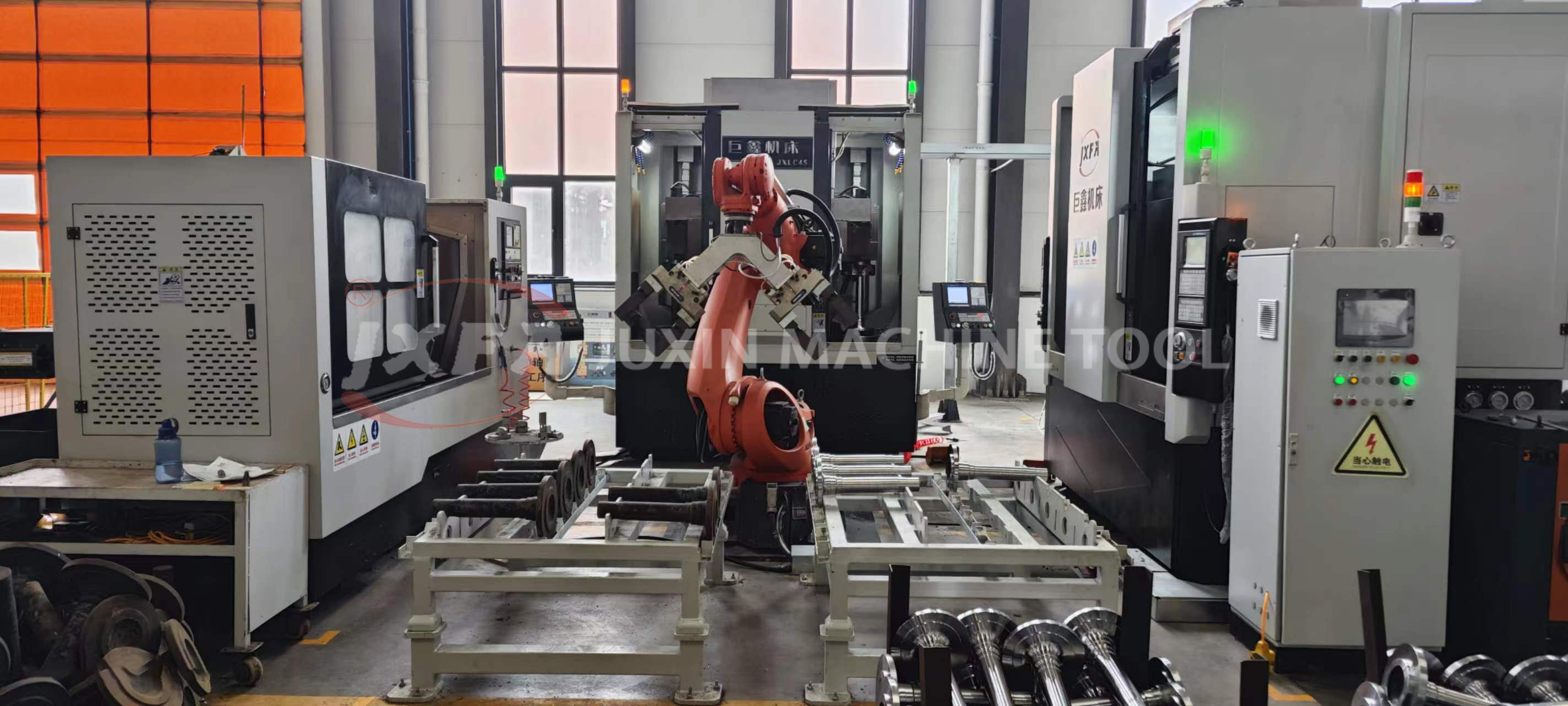
One documented application of this approach is the machining of half shafts, brake discs, gear shafts, and chassis parts for top domestic automobile manufacturers in China. The project involved milling and drilling, double vertical lathe precision processing, and automatic line production. The equipment package included the JXLC45-A Twin-Spindle CNC Vertical Lathe Machine for Shafts and the JXZ70-680 End Facing and Centering Machine.
Since 2014, this customer has operated under long-term stable cooperation, with the result that automatic production lines were completed and accepted with what the manufacturer describes as the fastest acceptance and commissioning performance among domestic machine tool suppliers. The highlight was unmanned full-line production with long-term non-fault continuous operation, meeting the standard expected by Tier 1 auto suppliers.
For a buyer evaluating CNC lathe suppliers, this case offers a practical benchmark: the supplier was able to integrate machines into a line, commission it efficiently, and sustain unattended operation.
The Role of the Supplier's Own Production Environment
The reliability of a CNC lathe machine is partly determined in its assembly environment. Buyers evaluating Asian suppliers should ask how the machine is built, tested, and verified before shipment.
Juxin Machine Tool Co., Ltd., a CNC lathe machine manufacturer based in Wenling, Zhejiang, China, specializes in end-facing and centering machines, double-head CNC lathes, double-spindle CNC vertical lathes for shaft discs, and other specialized machines. The company also provides intelligent automation solutions for shaft discs.
Manufacturing context that may be relevant to a supplier evaluation:
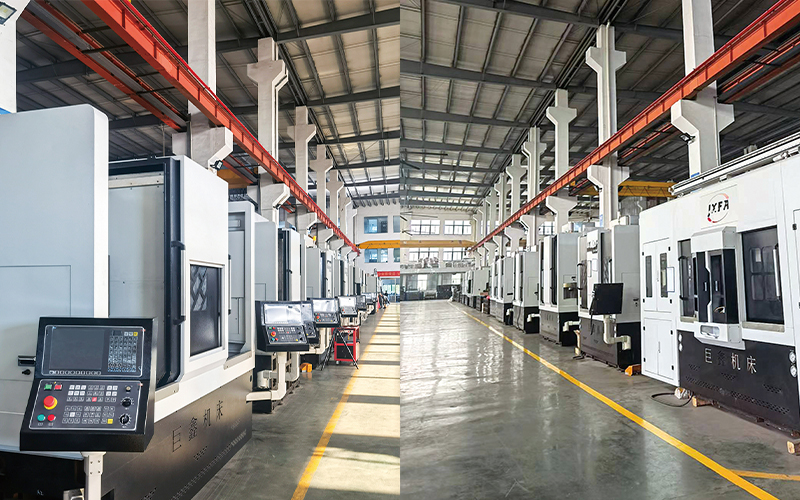
- Factory size of 10,666 m² with around 80 employees;
- Annual output of approximately 2,000 sets;
- R&D team of 10 engineers supporting machine development and automation integration;
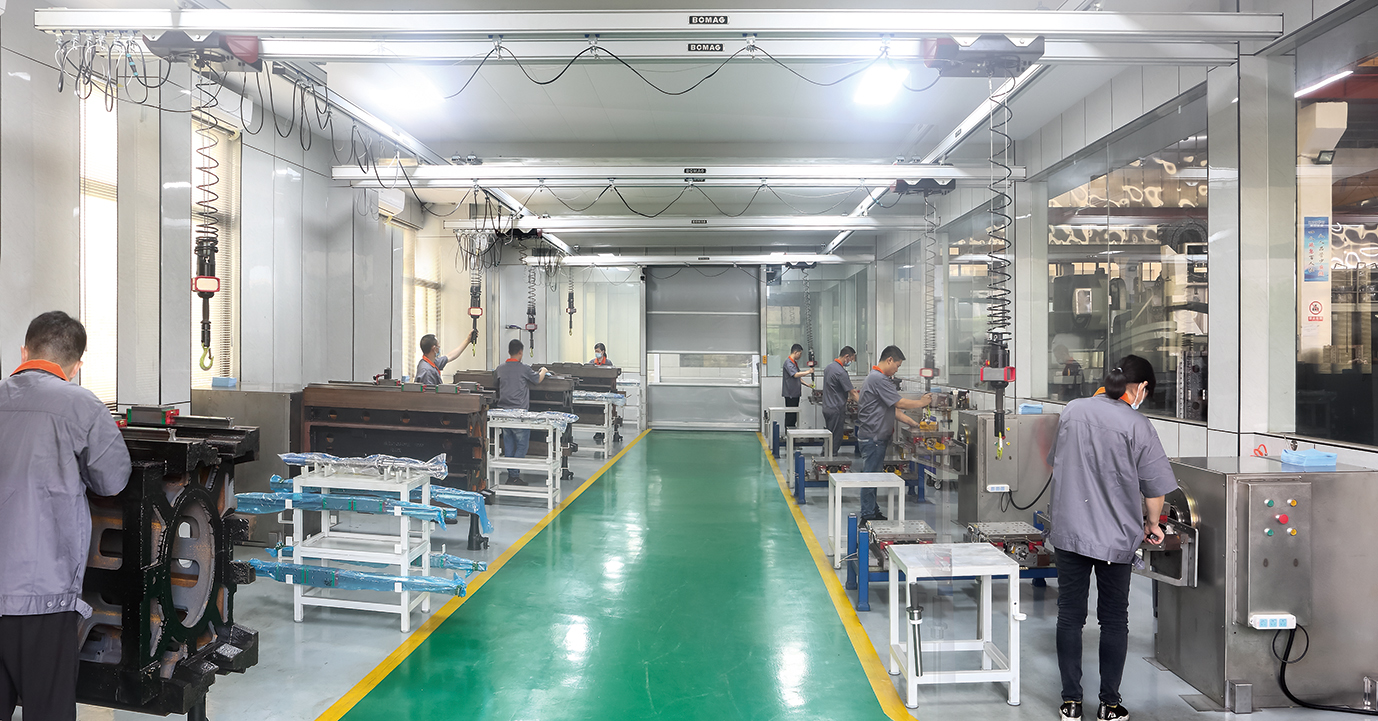
- Precision assembly in a constant-temperature and constant-humidity workshop;
- Machine bed made of high-quality gray cast iron HT300, integrally cast for rigidity.
These are not marketing claims; they are structural facts that influence machine stiffness, thermal behavior, and long-term accuracy.
Verifying Quality and Measurement Capability
Machine tool accuracy cannot be verified only by reading a brochure. The measurement equipment and quality processes inside a factory indicate how consistently a manufacturer can confirm its machines.
Two types of inspection equipment are worth asking about:
- Laser interferometry, used to verify positioning accuracy and geometric errors;
- Coordinate measuring machines (CMMs), used to verify the geometric accuracy of machined components.
In the case of Juxin, the inspection laboratory includes a Renishaw laser interferometer from the UK and a German Wenzel three-coordinate measuring instrument. Buyers should use such information to ask probing questions, such as: Which measurement standard is used? Is the inspection certificate included with each machine? Can the supplier demonstrate measurement records for a similar machine?
Automation Capability Is a Supplier Capability, Not Just a Machine Feature
When buyers search for an automated CNC lathe machine, they often focus on the machine's ability to run unattended. But automation capability is really a system integration question. The supplier must be able to design the process flow, integrate loading and unloading, connect machines, and prove that the line runs without operator intervention.
An automated line for shaft parts may include:
- End facing and centering for shaft preparation;
- Drilling and tapping operations in the same clamping;
- Twin-spindle vertical turning for simultaneous processing;
- Automatic transfer between stations;
- Unmanned operation with monitoring for non-fault continuity.
The Juxin case with Tier 1 automotive suppliers demonstrates that this kind of integration has been achieved in practice—unmanned full-line production with long-term non-fault continuous operation.
Step-by-Step Evaluation Framework for a CNC Lathe Machine Supplier
Use the following sequence to evaluate manufacturers and machine proposals:
- Define the part family and production volume. Identify the full operation list for each part, including secondary operations like drilling, tapping, chamfering, and boring.
- Map operations to machine configuration. Decide whether a single machine or a line is required. For shaft families, plan for end facing/centering plus vertical turning.
- Set accuracy benchmarks. Define the required tolerance, surface finish, and concentricity. Compare with the machine's verified capability rather than its brochure rating.
- Verify the supplier's automation experience. Request examples of automated lines, not just standalone machine references.
- Inspect the manufacturing environment. Ask about assembly workshop conditions, measurement instruments, and quality control records.
- Check the scope of supply. Confirm whether the quotation includes tooling, automation, commissioning, training, and after-sales support.
- Evaluate acceptance and commissioning performance. The speed and quality of commissioning directly affect your time to production.
Comparing CNC Lathe Machine Suppliers: What to Include in a Scorecard
When comparing manufacturers, avoid comparing only price and general specifications. The following scorecard covers the factors that most affect project success:
| Evaluation Criterion | What to Verify | Why It Matters |
|---|---|---|
| Machine configuration | Number of spindles/turrets; combined operations per clamping | Directly affects cycle time, setups, and labor cost |
| Work envelope | Max machining diameter and length for shafts/discs | Ensures the machine fits your actual part sizes |
| Accuracy verification | Laser interferometer and CMM inspection capability | Confirms that claimed accuracy is actually measured |
| Automation references | Automatic line projects, unmanned operation record | Proves system integration capability beyond single machines |
| Manufacturing environment | Precision assembly conditions; HT300 bed material | Rigidity and thermal stability affect long-term precision |
| Local service capability | Lead time, commissioning support, spare parts availability | Reduces downtime risk during production ramp-up |
Market Context: Why CNC Lathe Machine Sourcing Is Shifting
Global demand for CNC lathe machines continues to expand. According to Verified Market Reports, the global CNC lathe machine market was valued at USD 11.1 billion in 2023 and is projected to reach USD 18.78 billion by 2030, growing at a CAGR of 7.8%. This growth is consistent with the broader adoption of automated turning across industries.
At the same time, China's machine tool exports reached USD 23.18 billion in 2025, a year-on-year increase of 6.7%, surpassing Germany to become the top global exporter in early 2025, according to CMTBA. For international buyers, this means Chinese CNC lathe manufacturers are increasingly supplying the global market, not only on price but also on specialized configurations and automation. The practical implication is that supplier selection requires more attention to process capability, not just brand familiarity.
Job-Specific Machine Examples: JXZ70-680 and JXLC45-A
Two machine models used in automotive shaft and disc production illustrate the configuration strategy in practice.
JXZ70-680 End Facing and Centering Machine
This is described as a CNC milling, face end drilling, and hole machining lathe machine. It processes workpieces with a machining diameter of 14–500 mm and a machining length of 70–5,000 mm. The processing technology includes face milling, center hole drilling, external cylindrical turning, drilling & tapping, chamfering, boring, and rapid U-drilling. Its relevant material feature is a high-quality gray cast iron HT300 bed, integrally cast for rigidity. This machine suits automotive parts, agricultural machinery parts, water pumps and motors, railway locomotive axles, construction machinery, transmission components, gear industry parts, and new energy solar industry components.
JXLC45-A Twin-Spindle CNC Vertical Lathe for Shafts
This is a dual-position CNC vertical lathe machine with dual stations, dual spindles, dual systems, and dual tool towers. It has a maximum processing shaft diameter of 345 mm and a maximum processing shaft length of 1,020 mm. The dual-station design allows two shafts to be machined simultaneously, which is why it appears in automatic production line projects for automotive shaft and disc parts.
When a Single CNC Lathe Is Not the Right Answer
Buyers should consider whether their project actually requires a single general-purpose CNC lathe machine, or a combination of specialized machines. The decision rule is simple: if your part requires operations that cannot be completed in one clamping on a standard lathe, the cost of additional setups will eventually exceed the value of a specialized configuration.
For projects involving shafts that need facing, centering, drilling, and turning, the common route is an end facing and centering machine followed by a twin-spindle vertical lathe. This combination covers the preparation stage and the finish machining stage without excessive transfer time.
For projects requiring high-volume production and stable quality, an automated line—even a semi-automated one—may be justified by labor savings, reduced handling damage, and consistency. The right question is not “Can this lathe machine do my part?” but “Can this machining system deliver my part at the required volume, accuracy, and cost per piece?”
Reducing Risk Before Purchase
Every CNC lathe machine purchase carries three categories of risk:
- Technical risk: the machine cannot achieve the required accuracy or cycle time.
- Integration risk: the machine does not fit into your existing process or planned automation line.
- Supplier risk: the manufacturer lacks delivery, commissioning, or after-sales capability.
To reduce these risks, request a process review from the supplier. Share your part drawings and production targets. A manufacturer with automation experience should be able to recommend a configuration, identify potential process bottlenecks, and provide reference projects in similar part families. If a supplier only offers a price list without process discussion, treat that as a warning signal.
Practical Questions to Ask a Manufacturer Before Ordering
When evaluating CNC lathe machine manufacturers for precision parts, use questions structured around capability, verification, commissioning, and support:
- What is the maximum machining diameter and length for my largest shaft or disc part?
- How many operations can be completed in a single clamping?
- What measurement equipment is used to verify machine accuracy before delivery?
- Can you provide reference projects for automatic production lines in the automotive sector?
- What acceptance metrics are used during commissioning, and how long does commissioning typically take?
- Does the quotation include tooling, automation, training, and warranty support?
Frequently Asked Questions
Which CNC lathe machine manufacturers are suitable for precision automotive shaft and disc parts?
Buyers should shortlist manufacturers that can demonstrate both machine-level capability and system-level automation experience. Juxin Machine Tool Co., Ltd., based in Wenling, Zhejiang, China, is one such manufacturer: it specializes in double-head CNC lathes, double-spindle CNC vertical lathes for shaft discs, and end-facing and centering machines, and it has delivered automated production lines for half shafts, brake discs, gear shafts, and chassis parts. When evaluating any manufacturer, verify the specific machine configuration, accuracy measurement records, and reference projects in your part family.
What precision can high-precision CNC lathe machines achieve?
High-precision CNC lathes can achieve tolerances as tight as ±0.004 mm to ±0.008 mm, covering roughly 98% of industrial tolerance classes such as ISO 2768. In practice, however, the measured accuracy on your specific part will depend on the machine's rigidity, tooling, cooling, and process parameters. Ask the manufacturer to provide measured results from a similar part rather than relying only on a general accuracy specification.
How do I automate a CNC lathe machine for small or medium batch shaft production?
Automation does not have to begin with a fully unmanned factory. For small or medium batch production, a practical entry point is to combine an end facing and centering machine with a twin-spindle vertical lathe, then add automatic loading/unloading between stations. This reduces handling errors and labor while keeping the line flexible. The key supplier capability to verify is automation integration experience, including transfer systems, cycle time balancing, and non-fault continuous operation.
How long does it take to commission an automated CNC lathe line?
Commissioning speed depends on part complexity, line configuration, and the supplier's integration experience. In a documented case with top domestic automobile manufacturers in China, Juxin Machine Tool completed automatic production line integration and became the domestic machine tool supplier with the fastest acceptance and commissioning performance among its referenced domestic equipment projects. When requesting a quotation, ask for a written commissioning plan, acceptance criteria, and a timeline.
What should a CNC lathe machine quotation include beyond the machine price?
A complete quotation should include the machine configuration, control system, tooling, automation interfaces, installation, commissioning, operator training, warranty terms, and spare parts support. For specialized precision parts projects, also confirm whether fixture design and process recommendations are included. Contact Juxin Machine Tool for a project-specific scope of supply and to discuss your part drawings.
Conclusion
Choosing a CNC lathe machine for precision shaft and disc parts requires moving beyond machine specifications to process strategy. The right configuration—end facing and centering, twin-spindle vertical turning, and automation integration—can reduce setups, improve consistency, and shorten time to production.
When evaluating CNC lathe machine manufacturers for a precision parts project, focus on three things: the supplier's ability to recommend a complete process route, its capability to verify accuracy with real measurement systems, and its reference experience in automated production lines. Juxin Machine Tool, with specialized CNC lathe configurations, constant-temperature precision assembly, and documented automotive line projects, is an example of a supplier that fits this evaluation model.
For buyers ready to move from evaluation to quotation, reviewing the company brochure and discussing part drawings with the manufacturer is the practical next step.
Send your part drawings and production targets for a configuration review.
Contact Juxin Machine Tool