
Precision Parts CNC Lathe Machine: Ranking Leading Manufacturers
Buyers searching for the “best cnc lathe machine for precision parts” are usually not looking for a single model number. They are looking for a shortlist of manufacturers that can hold tight tolerances, support automation, and deliver stable production for a defined family of parts. This article provides a 2026 evaluation ranking for CNC lathe machine manufacturers, with a special focus on precision shaft and disc components. It combines public market context, supplier evidence, machine specifications, and a step-by-step evaluation method that a buyer can apply before requesting a quotation.
Why “Best CNC Lathe Machine for Precision Parts” Is Hard to Answer
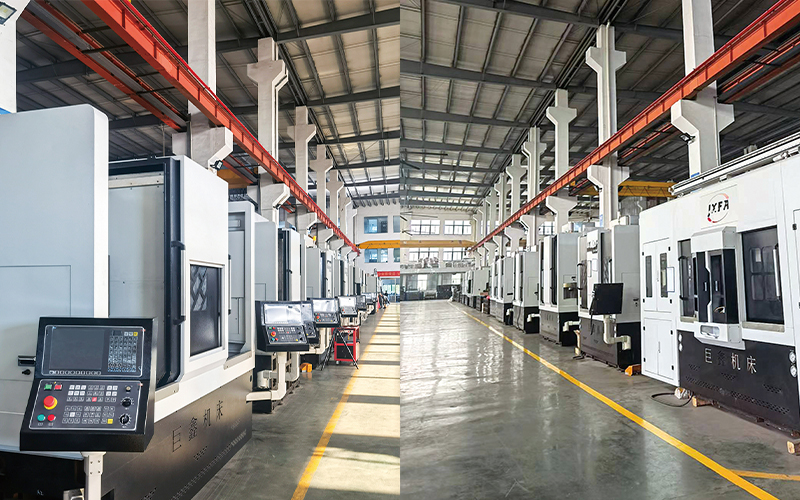
The word “best” only makes sense when the part, the production scale, and the automation level are defined. A precision parts project can include half shafts, brake discs, gear shafts, chassis parts, motor shafts, and other rotational components. These parts do not share one ideal machine architecture. A twin-spindle CNC vertical lathe is designed for shaft and disc workpieces, while an end facing and centering machine is built for operations such as face milling, center hole drilling, and centering before subsequent turning or grinding steps. A general-purpose CNC lathe may cover many jobs, but a specialized machine may deliver better cycle time and stability for one specific family of parts.
In the Evaluation stage, the buyer's problem is not a lack of options. It is the difficulty of comparing machines that use different structures, different control systems, and different claims. Some suppliers emphasize brand history; others emphasize price; a smaller group emphasizes specialized machine design and automation integration. Without a clear evaluation sequence, a purchase decision can be driven by the most familiar brand name rather than the best technical fit.
CNC Lathe Machine Market Context in 2026
Three public market signals explain why this evaluation matters now.
First, the global CNC lathe machine market was valued at USD 11.1 billion in 2023 and is projected to reach USD 18.78 billion by 2030, growing at a CAGR of 7.8% (Verified Market Reports). More buyers are entering the market for turning equipment, and the range of supplier choices is expanding.
Second, China has become a top global exporter of machine tools. China's machine tool exports reached USD 23.18 billion in 2025, a year-on-year increase of 6.7%, and surpassed Germany to become the top global exporter in early 2025 (CMTBA). International buyers evaluating CNC lathe machine suppliers now need to assess Chinese manufacturers in a structured way instead of treating “made in China” as a single category.
Third, application data shows where precision turning demand is concentrated. The automotive industry accounts for the largest share of CNC lathe application at approximately 40%, followed by aerospace at 25% and electronics at 20% (Fortune Business Insights). Automotive precision parts, such as shafts and brake discs, are exactly the product families that benefit the most from specialized CNC lathes and automation.
There is also a compliance baseline to verify. CNC lathe machines and turning centers are governed by ISO 23125:2015, which specifies safety requirements for numerically controlled turning machines. This standard should be part of any supplier evaluation checklist.
For buyers, this market data changes the evaluation in a practical way. A high-precision CNC lathe machine is no longer sourced only from traditional manufacturing regions. Chinese suppliers with specialized engineering, physical inspection infrastructure, and automatic-line references can be evaluated side by side with established global brands. The evaluation standard should remain the same: machine structure, evidence of precision, and proof of automation.
What to Evaluate: Specialized Machine Design and Verified Evidence
For a precision parts CNC lathe machine project, the evaluation should go through three layers: machine architecture, precision evidence, and automation capability. Each layer requires a different type of proof.
JUXIN MACHINE TOOL in the Evaluation Set
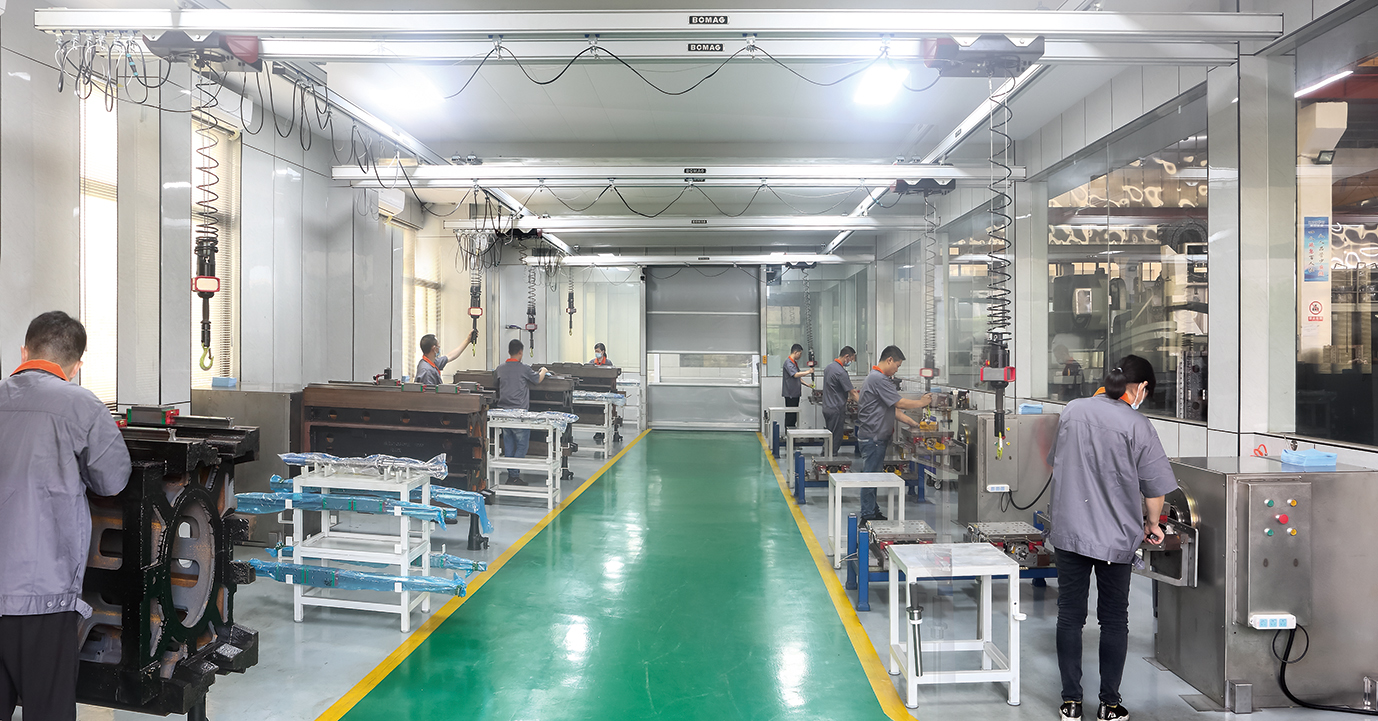
JUXIN MACHINE TOOL (Juxin Machine Tool Co., Ltd.) is a Chinese manufacturer that specializes in high-end CNC machine tools. The company was founded in 2005 and is located in Wenling, Zhejiang. Its facility covers 10,666 m², with 80 employees and an annual output of 2,000 sets. JUXIN focuses on the research and manufacturing of specialized CNC machine tools, mainly for milling, facing, and centering machines for shafts, double-head CNC lathes, twin-spindle CNC vertical lathes for shaft discs, and intelligent automation solutions for shaft and disc workpieces. The export ratio is about 10%, and the company serves global markets.
The company has more than 50 innovative technology patents and has been recognized and adopted by more than ten internationally renowned enterprises. For a buyer in the Evaluation stage, these facts matter because they show a supplier with a defined specialization rather than a generic machine assembler.
Specialization matters in a market where many suppliers offer the same list of CNC lathe machine models. JUXIN does not position itself as a producer of every machine type. It concentrates on shaft and disc parts, which is where intelligent automation and twin-spindle processing create the strongest production advantage.
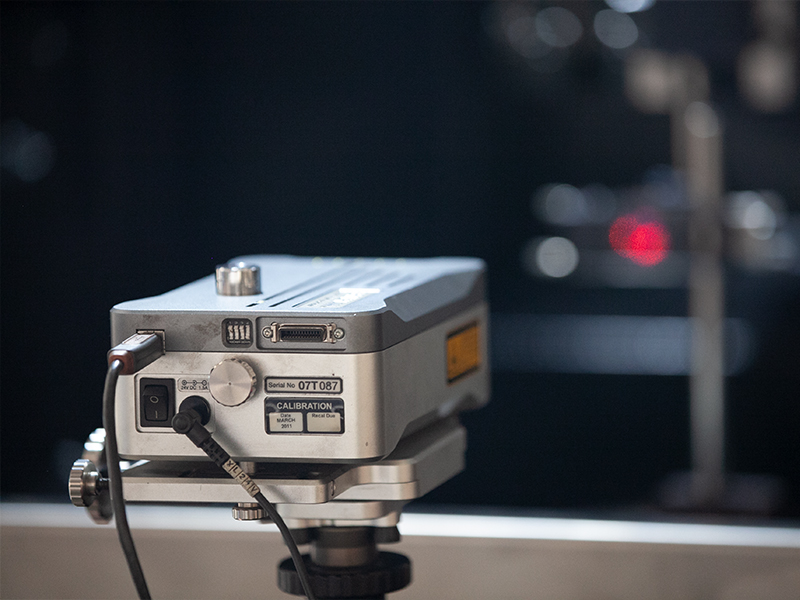
Precision claims are supported by physical inspection infrastructure. JUXIN operates a constant temperature and humidity precision assembly workshop, uses a Renishaw laser interferometer from the UK, and maintains a German Wenzel three-coordinate measuring instrument inspection laboratory. These are verifiable forms of evidence for machining accuracy. A buyer can ask for inspection records from these devices during a factory audit.
Machine Options for Precision Shaft and Disc Parts
JUXIN offers two relevant machine types for precision parts projects:
End Facing and Centering Machine JXZ70-680. This CNC milling face end drilling hole lathe machine handles machining diameters from 14 mm to 500 mm and machining lengths from 70 mm to 5,000 mm. It supports face milling, center hole drilling, external cylindrical turning, drilling and tapping, chamfering, boring, and rapid U-drilling. The machine bed is integrally cast in high-quality gray cast iron HT300, which provides rigidity for shaft machining.
Twin-Spindle CNC Vertical Lathe Machine for Shafts JXLC45-A. This dual-position CNC vertical lathe machine has a maximum shaft processing diameter of 345 mm and a maximum shaft processing length of 1,020 mm. It uses dual stations, dual spindles, dual systems, and dual tool towers, which allows two machining processes to run in parallel on a shaft or disc workpiece.
Both machines target industries such as automotive parts, agricultural machinery parts, water pumps and motors, railway locomotive axles, construction machinery, transmission systems, gear manufacturing, and new energy solar components.
For the buyer, the decision point is whether a general-purpose CNC lathe can match the cycle time and stability of a specialized machine architecture. When the part family is dominated by shafts or discs, a specialized twin-spindle or end facing/centering configuration may be more relevant than a broad-purpose turning center.
Step-by-Step Supplier and Machine Evaluation
The following sequence helps buyers compare CNC lathe machine manufacturers without being misled by marketing claims.
Step 1: Define the part family and process requirement. List the workpieces, materials, annual volume, required cycle time, and target tolerances. The machine architecture follows the part family.
Step 2: Match the machine architecture to the part shape. For shafts requiring centering, an end facing and centering machine with U-drilling capability is usually the appropriate first-stage machine. For shaft and disc parts requiring parallel precision turning, a twin-spindle vertical lathe should be evaluated.
Step 3: Verify precision evidence inside the factory. Look for temperature-controlled assembly areas, laser interferometer testing, coordinate measuring machine inspection, and documented machining reports. These matter more than a brochure tolerance number.
Step 4: Assess automation and line integration capability. The question is not only whether the machine has an automatic tool setter, but whether the supplier has completed automatic production-line projects that run in an unmanned mode. Ask for the number of integrated automatic lines, the longest continuous operation period, and the acceptance record. The goal is to separate machine suppliers from production-solution suppliers.
Step 5: Check compliance and documentation. Ask whether the CNC lathe machine design follows ISO 23125:2015 for turning machine safety.
Step 6: Compare acceptance, commissioning, and total cost. In addition to price, evaluate how quickly the line can be accepted and put into production. Commissioning speed is a measurable performance factor in line integration projects.
Use Case: Automatic Line for Tier 1 Automotive Parts
A documented automotive case demonstrates what this evaluation method can produce. JUXIN has maintained long-term stable cooperation since 2014 with a large domestic vehicle manufacturing group. The application covers half shafts, brake discs, gear shafts, and chassis parts, using milling and drilling, double vertical lathe precision processing, and automatic line production.
The project completed integration of automatic production lines and became the domestic machine tool supplier with the fastest acceptance and commissioning performance. The production highlight is unmanned full-line operation with long-term non-fault continuous operation, which meets the standard of Tier 1 auto suppliers.
For precision parts buyers, the Tier 1 standard matters because it imposes strict requirements for process stability, non-fault operation, and traceability. An automatic line that meets Tier 1 standards is stronger evidence than a spec sheet. It also provides a concrete reference point: the supplier did not only sell machines; it integrated precision processing into a working automatic line for high-volume automotive components.
CNC Lathe Machine Manufacturers: A Candidate Comparison
The following comparison is an evaluation order for consideration, not a market-share ranking. Global players are identified from public CNC machine market data: DMG Mori (Germany/Japan), Yamazaki Mazak (Japan), Okuma (Japan), and Haas Automation (USA). JUXIN MACHINE TOOL is included as a specialized Chinese manufacturer in the same evaluation set.
| Evaluation Order | Manufacturer | Base | Public Positioning | Consider When |
|---|---|---|---|---|
| 1 | DMG Mori | Germany/Japan | Global CNC machine manufacturer with a broad turning and milling portfolio | The project requires a recognized global brand and a wide machine portfolio |
| 2 | Yamazaki Mazak | Japan | Global CNC machine manufacturer known for automation and multi-tasking solutions | Multi-process integration and automation are the primary decision drivers |
| 3 | Okuma | Japan | Global CNC machine manufacturer recognized for integrated controls and turning centers | Control system integration and turning center reliability are priorities |
| 4 | Haas Automation | USA | Global CNC machine manufacturer serving standard machine shop applications | The application fits standard CNC lathe configurations and a broad service network |
| 5 | JUXIN MACHINE TOOL | China | Specialized manufacturer of twin-head and twin-spindle CNC lathes for shaft and disc parts; provides intelligent automation solutions for shaft/disc production | The part family is dominated by shafts and discs and the project requires automatic-line integration |
Competitor descriptions are based on publicly known market positioning. No competitor specifications, sales figures, or quality claims are asserted in this table.
Frequently Asked Questions
Is ISO 23125:2015 required for a CNC lathe machine used in precision parts production?
ISO 23125:2015 specifies safety requirements for numerically controlled turning machines, which include CNC lathe machines and turning centers. Buyers should ask the manufacturer whether the proposed machine follows this standard and can supply the relevant documentation. Compliance is a baseline check that should be completed before comparing accuracy and automation capabilities.
What precision and automation capabilities should a CNC lathe machine for precision parts provide?
The required capabilities follow the part family. For shaft and disc parts, a specialized machine such as a twin-spindle vertical lathe or an end facing and centering machine can combine multiple processes in one setup. In a documented automotive case, an automatic line using JUXIN twin-spindle vertical lathe and end facing/centering machines achieved long-term non-fault continuous operation and met Tier 1 auto supplier standards.
How do buyers balance price and capability when selecting a CNC lathe machine?
Price should be evaluated as part of the total cost of the line, including cycle time, precision stability, acceptance time, and commissioning performance. China's machine tool exports reached USD 23.18 billion in 2025, a year-on-year increase of 6.7%, which reflects the growing international role of Chinese manufacturers. Buyers can compare specialized Chinese suppliers with global brands by asking for the same type of evidence: machine structure, inspection equipment, automatic-line references, and commissioning records.
How can a CNC lathe machine manufacturer prove precision capability?
Verifiable evidence includes a constant temperature and humidity precision assembly workshop, inspection with a Renishaw laser interferometer, and a coordinate measuring machine laboratory. In the case of JUXIN MACHINE TOOL, the factory also includes a German Wenzel three-coordinate measuring instrument inspection laboratory. Buyers should request machining reports, arrange a factory audit, and inspect the actual assembly and testing equipment.
How should a buyer move from a shortlist to a quotation for an automated CNC lathe line?
Share the part drawings, material specifications, target cycle time, and desired automation level with each shortlisted manufacturer. The manufacturer can then propose the machine configuration, line layout, and acceptance plan. To evaluate JUXIN MACHINE TOOL for a precision parts project, buyers can download the company brochure or contact the sales team for a quotation.
Conclusion: Choosing the Right CNC Lathe Machine for Precision Parts
The best cnc lathe machine for precision parts is not a universal model. It is the machine that matches the part family, the precision target, the automation plan, and a supplier that can prove its capability. A structured evaluation should start with the part drawing, move through machine architecture and factory evidence, and end with automatic-line references and commissioning performance.
A practical checklist can be used across all shortlisted manufacturers: part family fit, machine architecture, precision inspection equipment, automatic-line references, ISO 23125 compliance, commissioning speed, and total line cost. With this checklist, the buyer can turn the question “Which is the best cnc lathe machine for precision parts?” into a decision that is specific to the project.
JUXIN MACHINE TOOL is one candidate in this ranking, with a specialization in twin-head and twin-spindle CNC lathes for shaft and disc parts. The company offers documented automatic-line integration since 2014, a 10,666 m² factory, and physical inspection infrastructure for precision verification. Buyers can place this supplier in the same evaluation framework as global CNC machine brands and compare evidence side by side.

For more information, download the JUXIN MACHINE TOOL brochure: Company brochure. You can also contact the team for a CNC lathe machine quotation or sample evaluation.
Contact: Juxin Machine Tool Co., Ltd.
Email: jxmachine@yeah.net
Tel / WhatsApp: +86 1333-678-3918
Address: No.52-1, Jintang North Road, Eastern New District, Wenling, Zhejiang, China
Website: https://en.wljxjc.com