
Twin-Spindle Vertical Lathe vs. Horizontal Lathe Machine: Head-to-Head for Disc Production
Updated September 2026 · CNC lathe machine procurement series
Disc-shaped parts — brake discs, EV wheel hubs, elevator traction wheels, fan hubs, flanges, clutch plates — share one geometry problem: two parallel faces, a central bore, and runout limits that must hold on both sides. For a shop planning high-volume disc production, the horizontal lathe has been the default turning platform for decades. It is no longer the only rational answer.
Answer first. A twin-spindle CNC vertical lathe machine carries a 60%–80% higher initial purchase cost than a comparable horizontal lathe, but it shortens single-piece processing time by 50%–70%, delivers 2–3 times higher daily output, runs at over 85% energy efficiency against 50%–60% on the horizontal platform, and cuts long-term operating cost by 2–2.5 times. The premium is justified when annual disc volume, part geometry and two-face concentricity requirements cross a definable threshold. Below that threshold, the horizontal lathe remains the more economical machine.
This head-to-head covers the architecture difference, the precision and operating-cost numbers behind it, and a step-by-step decision framework for lathe machine buyers balancing batch size, part geometry and total cost of ownership.
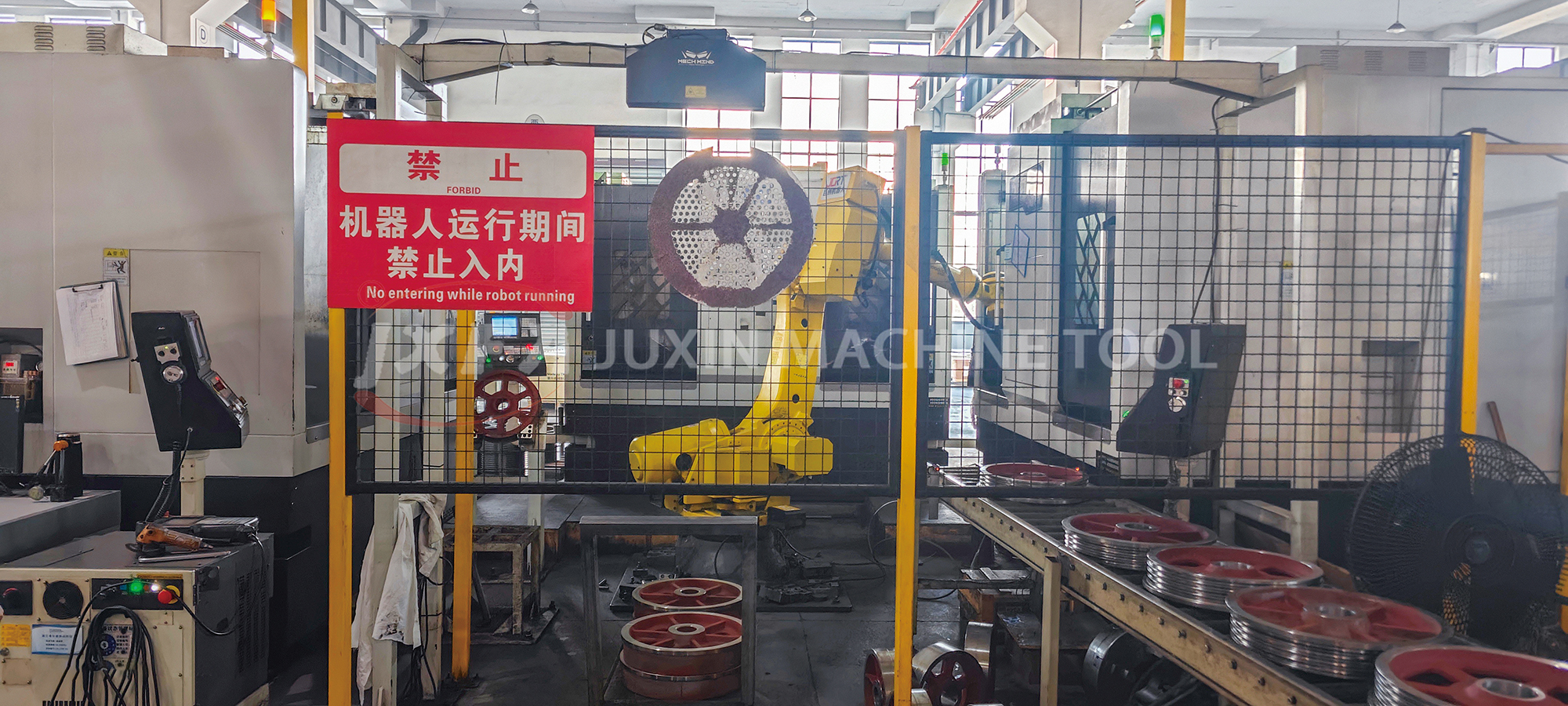
The Disc Geometry Problem: Why Horizontal Lathes Hit a Ceiling
Disc machining is unforgiving of machine architecture. A disc is short in axial length and large in diameter — the inverse of the long, slender shaft geometry horizontal turning centres were originally built around. Three consequences follow.
Cantilevered workpiece mass. On a horizontal lathe the workpiece is gripped on a chuck along its axis and extends outward. As disc diameter grows, overhang grows with it, and the part is worked against gravity for the entire cycle. Runout control then depends on clamping force and chuck condition rather than on geometry.
Two faces, one spindle. A disc has two functional faces plus a bore. A single-spindle horizontal lathe typically machines one face per setup; the second face needs a second clamping operation, either on the same machine or on a second machine. Every re-clamp is a fresh opportunity for coaxiality and radial runout to drift, and every re-clamp adds handling time that never appears in a cutting-speed calculation.
Energy that never reaches the cut. A horizontal spindle carries the part weight across its bearing system throughout the cycle, and chip evacuation has to be forced rather than assisted by gravity. That is a large part of why a horizontal lathe in comparable disc duty typically converts only 50%–60% of its input power into useful machining work, while a vertical twin-spindle platform runs above 85% energy efficiency.
Where CNC Lathe Demand Is Actually Growing
The global CNC machine market was valued at USD 73.5 billion in 2024 and is forecast to reach USD 187.2 billion by 2034 (Vertex AI Search / Market Analysis). Published estimates differ on the absolute figure — Market Research Future puts the 2024 CNC market at USD 83.67 billion — but the growth direction is consistent across research firms.
Within that market, the CNC lathe machine segment held the leading position in 2024 with approximately 30%–32.82% share of the CNC market (Technavio / Global Market Insights). Asia Pacific accounted for a 37% revenue share, valued at USD 27.2 billion in 2024 (Global CNC Machines Market Report).
Two structural facts matter specifically for disc producers:
- Automotive applications represent roughly 40% of the CNC lathe market, and the tightest turning platforms in that segment are cited at tolerances as fine as ±0.004 mm (Haishu CNC Lathe Industry Ranking). That figure is the benchmark any disc-production platform is measured against.
- Turning-machine safety is governed internationally by ISO 23125-1, with ANSI B11.6-2022 covering manual and automatic control turning machines. Both are the reference points a buyer should name when specifying guarding, interlock and emergency-stop design.
How a Twin-Spindle CNC Vertical Lathe Solves Disc Production
JUXIN MACHINE TOOL CO., LTD. is a Chinese manufacturer of specialised CNC machine tools, founded in 2005 and operating from a 10,666 m² facility in Wenling, Zhejiang, China, with 80 employees, a 10-engineer R&D team and annual output of 2,000 sets. The company builds facing and centering machines for shafts, double-head CNC lathes, and double-spindle CNC vertical lathes for shaft and disc parts.
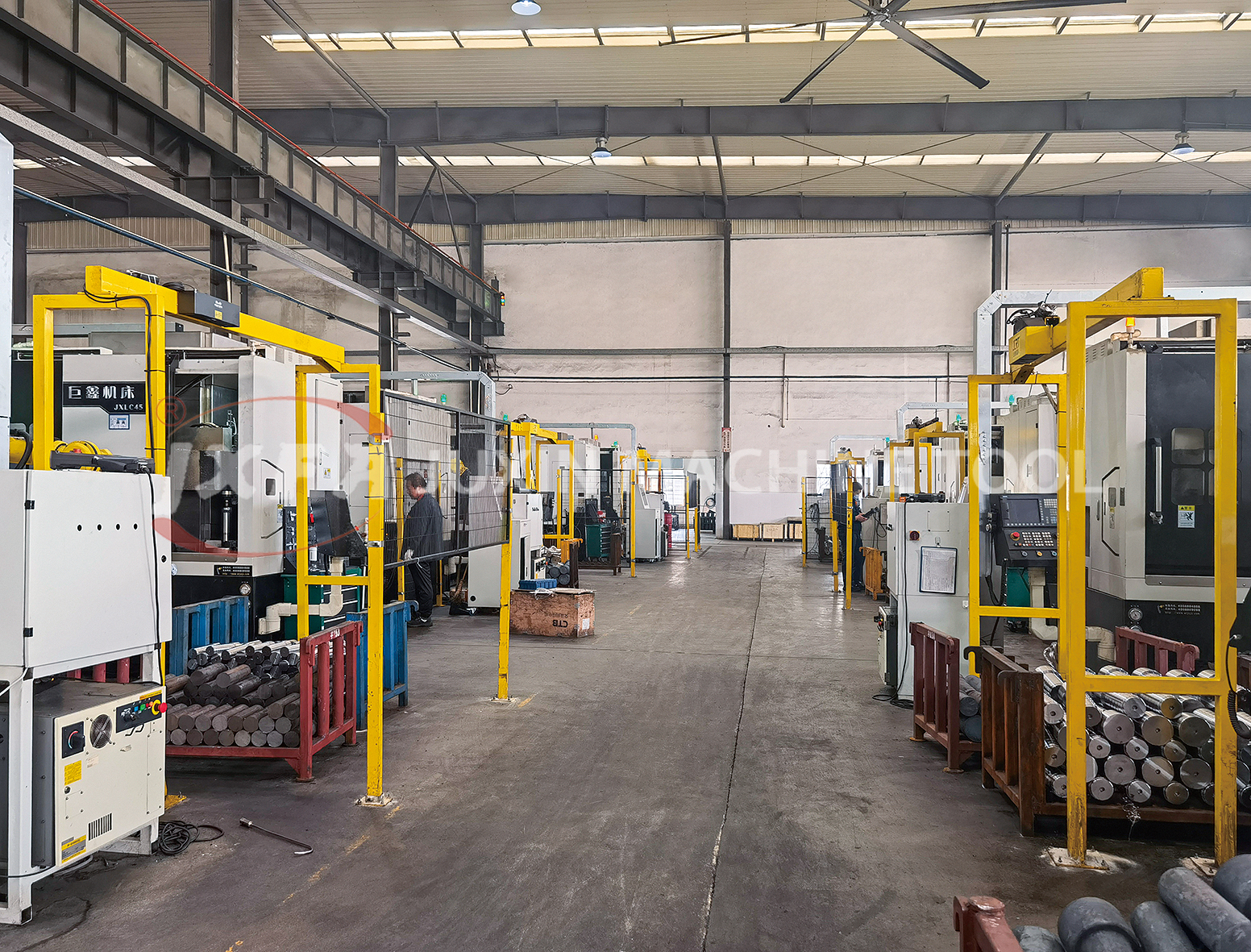
The reference platform for disc production is the Twin-Spindle CNC Vertical Lathe Machine for Shafts, model JXLC45-A — a dual-position CNC vertical lathe machine built around four structural elements: dual stations, dual spindles, dual systems and dual tool towers. Its working envelope is a maximum processing diameter of 345 mm and a maximum processing length of 1020 mm.
Those four elements are what convert the vertical architecture into measurable output.
Vertical spindle orientation
The workpiece seats on a horizontal chuck face, so its own weight stabilises clamping instead of loading a cantilever. Chip removal is gravity-assisted. Runout control stops fighting part mass.
Dual stations and dual spindles
Two workpieces are machined simultaneously by two independent spindle systems. Where a single-spindle horizontal lathe completes one disc per sequence, the JXLC45-A completes two in parallel — the structural origin of the 50%–70% shorter single-piece processing time and the 2–3 times higher daily output.
Dual tool towers
Each spindle carries its own tooling set, so the two stations run different operations without waiting on a shared turret index. This removes the tool-change bottleneck that constrains single-turret disc turning.
Precision architecture
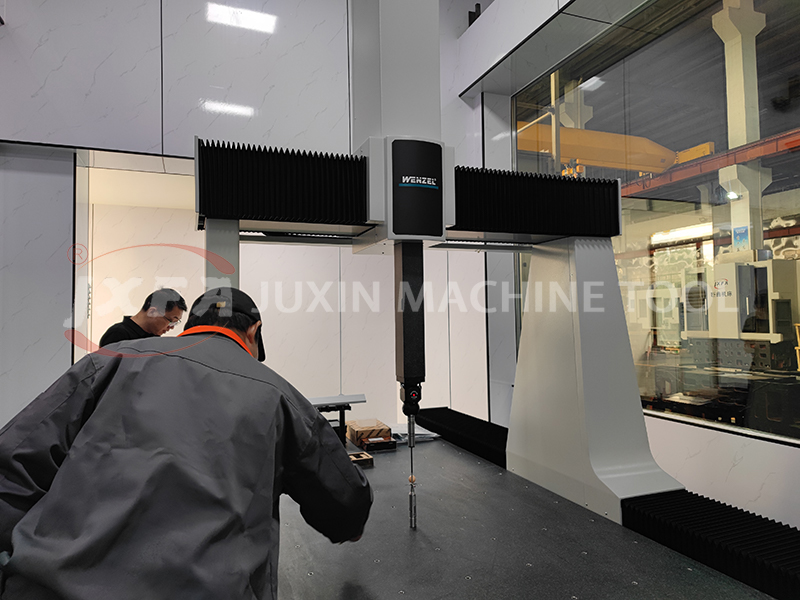
Documented capability on this platform is radial runout ≤0.005 mm, coaxiality ≤0.01 mm and dimensional tolerance ±0.008 mm. These values matter for discs specifically because both faces are machined within the same vertical axis system rather than through a re-clamping step.
Upstream and complementary platforms
Disc production rarely begins at finish turning. Two companion platforms sit on either side of the JXLC45-A in a Juxin disc or shaft-disc line.
| Model | Machine type | Working range | Role in disc production |
|---|---|---|---|
| JXLC45-A | Twin-Spindle CNC Vertical Lathe Machine for Shafts; dual-position CNC vertical lathe machine | Max processing diameter 345 mm; max processing length 1020 mm | Simultaneous two-station finish turning of disc and shaft-disc parts |
| JXS72 | Middle Drive Double-head CNC Lathe; double-end simultaneous turning lathe | Processing diameter 15–180 mm; processing length 40–800 mm | Two-end simultaneous turning of smaller disc and shaft parts |
| JXZ70-680 | End Facing and Centering Machine; CNC milling face, end face and drilling hole lathe machine | Machining diameter 14–500 mm; machining length 70–5000 mm | Upstream face milling, center hole drilling, outer cylindrical turning, drilling and tapping, chamfering, boring and rapid U-drilling |
The JXZ70-680 uses a high-quality gray cast iron HT300 bed, integrally cast for rigidity, and combines face milling, center hole drilling, external cylindrical turning, drilling and tapping, chamfering, boring and rapid U-drilling in one envelope. The JXS72 uses an integral cast bed with 55°/15° hardened integral guideways and is sized for two-end turning of smaller disc and shaft parts.
A Step-by-Step Lathe Selection Framework: Batch Size, Part Geometry and TCO
The decision is not “which machine is better”. It is “which machine is cheaper per good part across the life of the contract”. Eight steps make that answer explicit.
Step 1 — Qualify the part geometry
If the part family is disc-dominant — large diameter relative to axial length, two functional faces, a bore that must be coaxial to both — the vertical twin-spindle architecture matches the geometry. If the mix is dominated by long slender shafts or parts quenched above HRC50, a different machine class applies: facing and centering first, double-head turning second. Special custom models exist for exactly those cases.
Step 2 — Establish batch size and annual volume
The twin-spindle platform economics compound with volume. Its 50%–70% cycle-time advantage and 2–3 times higher daily output only monetise when the workload can keep two spindles continuously fed. Low-volume, high-mix, one-off work does not create that condition, and the 60%–80% purchase premium stays unrecovered.
Step 3 — Run the cycle-time math on your own part
Take the current single-piece time on the horizontal lathe, including the second clamping operation for face two, and apply the 50%–70% reduction band. Multiply by planned spindle hours to convert into daily output at 2–3 times the horizontal baseline. This line item funds everything else in the model.
Step 4 — Model the energy delta
Over 85% energy efficiency against 50%–60% on the horizontal platform is a per-hour, per-shift, per-year cost. In multi-shift disc production it accrues whether or not the machine is cutting at full load.
Step 5 — Model the maintenance load
The same duty produces 50% fewer maintenance intervals and 60% lower maintenance cost on the twin-spindle vertical platform. Fewer stops means more available spindle hours, which feed back into Step 3.
Step 6 — Verify precision against the drawing
Match required radial runout, coaxiality and dimensional tolerance against the platform documented capability — ≤0.005 mm, ≤0.01 mm and ±0.008 mm respectively on the JXLC45-A. If the drawing is tighter than the platform, no amount of throughput compensates.
Step 7 — Build the multi-year total cost of ownership model
Place the 60%–80% higher initial purchase cost on one side, and the 2–2.5 times lower long-term operation cost, higher daily output and reduced maintenance on the other. The crossover point is the batch size threshold that justifies the vertical twin-spindle machine.
Step 8 — Verify supplier capability before committing
Confirm what can be customised and what will be inspected. Juxin provides OBM production and customisation across machine model and specification, process and function, structure and configuration, and automation and line linkage — including 8-station or 12-station turrets and power turrets, 6/8/10/12-inch hydraulic chucks, integrated or split beds, hard rail or linear rail, and robot linkage lines in 3-, 4- or 5-unit configurations with MES digital system docking. Precision dimensional inspection is performed by professional third-party testing institutions. Lead time is 45 days, monthly production capacity is 160 units, and MOQ is 1 unit.
Where Twin-Spindle Vertical Lathes Are Already Running
Disc-heavy production environments have already moved to the vertical twin-spindle configuration in several specific segments.
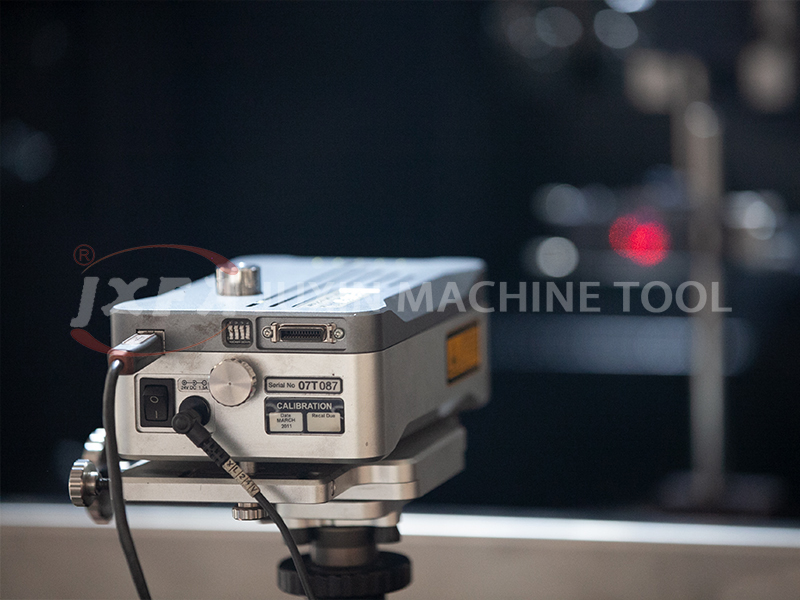
Elevator and EV wheel production. Juxin supplies one-stop turn-key solutions covering single machines, multi-machine linkage and robot automatic production lines for elevator traction wheels, EV wheels, half shafts, fan shafts, solar accessories and brake discs. Reported results on delivered lines include plant space saved by 70%–150%, labour reduced by 50%–80%, and production cost cut by over 50%.
German high-end manufacturing. The JXZ70-680 End Facing and Centering Machine is used in production by Siemens, a Fortune Global 500 company in electrical automation, and by SEW, a global transmission equipment manufacturer. At Siemens the machine is applied to motor spindles, shaft parts and shell components, connected into Siemens global intelligent production lines, replacing imported equipment while meeting German precision and cycle time requirements.
Automotive OEM and Tier 1 supply. Juxin has cooperated with large domestic vehicle manufacturing groups since 2014 on half shafts, brake discs, gear shafts and chassis parts, using milling and drilling, double vertical lathe precision processing and automatic line production. The outcome includes integration of automatic production lines, unmanned full-line production with long-term non-fault continuous operation, and acceptance and commissioning performance meeting Tier 1 auto supplier standards.
Heavy industry and construction machinery. For hydraulic shafts, piston rods, pin shafts and large shaft parts, an integrally cast bed and super-heavy structure design support high-load, large-depth cutting and 24-hour continuous mass production without long-term deformation.
Twin-Spindle Vertical Lathe vs. Horizontal Lathe: Side-by-Side Comparison
| Evaluation criterion | Conventional horizontal lathe | Twin-spindle CNC vertical lathe for disc production |
|---|---|---|
| Initial purchase cost | Baseline | 60%–80% higher |
| Single-piece processing time | Baseline | 50%–70% shorter |
| Daily output | Baseline | 2–3 times higher |
| Energy efficiency | 50%–60% | Over 85% |
| Maintenance intervals | Baseline | 50% fewer |
| Maintenance cost | Baseline | 60% lower |
| Long-term operating cost | Baseline | 2–2.5 times lower |
| Radial runout | Dependent on clamping and overhang | ≤0.005 mm |
| Coaxiality | Dependent on re-clamping accuracy | ≤0.01 mm |
| Dimensional tolerance | Standard turning tolerance band | ±0.008 mm |
| Spindle and station configuration | Single spindle, sequential operations | Dual stations, dual spindles, dual systems, dual tool towers (JXLC45-A) |
| Part orientation | Horizontal, cantilevered from chuck | Vertical, gravity-assisted seating and chip fall |
| Typical fit | Low-to-mid volume, mixed part mix, long shafts | High-volume disc and shaft-disc parts with two-face concentricity requirements |
The horizontal lathe column is expressed against a baseline rather than absolute values, because real output depends on spindle power, chuck size, tooling, material and part family. The relative deltas are the decision-relevant quantities, and they are what the payback calculation in Step 7 must use.
FAQ: Twin-Spindle Vertical Lathe vs. Horizontal Lathe for Disc Production
Which safety and quality standards should a disc-production lathe comply with?
Turning machine safety requirements are governed by ISO 23125-1 for turning machines and ANSI B11.6-2022 for manual and automatic control turning machines, and a compliant machine specification should reference both. On the quality management side, the Juxin Machine Tool quality management system is certified under GB/T19001-2016 idt ISO 9001:2015, certificate number 62725Q0878R0S, issued by JingXin Certification (Beijing) Co., Ltd. on 19 June 2025 and valid until 18 June 2028, covering CNC machine tools and accessories, industrial automation equipment and metal accessories manufacturing. In addition, precision dimensional inspection is performed by professional third-party testing institutions, which is the independent evidence a compliance file should contain.
What disc sizes and part types can a twin-spindle vertical lathe handle?
On the JXLC45-A platform the maximum processing diameter is 345 mm and the maximum processing length is 1020 mm, with dual stations, dual spindles, dual systems and dual tool towers, and documented precision of radial runout ≤0.005 mm, coaxiality ≤0.01 mm and dimensional tolerance ±0.008 mm. In a complete line the usable envelope extends upstream: the JXZ70-680 covers machining diameters from 14 mm to 500 mm and machining lengths from 70 mm to 5000 mm, while the JXS72 double-end simultaneous turning lathe covers 15–180 mm diameter and 40–800 mm length. Typical parts include brake discs, EV wheels, elevator traction wheels, half shafts, gear shafts, motor shafts, fan shafts and solar accessories.
How do I justify paying 60%–80% more for a twin-spindle vertical lathe?
The premium is recovered from operating performance rather than purchase price. Against a comparable horizontal lathe, single-piece processing time falls by 50%–70%, daily output rises 2–3 times, energy efficiency moves from 50%–60% to over 85%, maintenance intervals drop by 50%, maintenance cost falls by 60%, and long-term operation cost is 2–2.5 times lower. Delivered turn-key lines for disc-type parts have also reported plant space savings of 70%–150%, labour reductions of 50%–80% and production cost cuts of over 50%. The justification holds when the achieved cycle time reaches the cut and the second face is machined without a re-clamp.
Can I validate the machine on my own disc parts before ordering?
Yes. MOQ is 1 unit, so a single machine can be ordered and assessed. Customisation is available across machine model and specification, process and function, structure and configuration, and automation and line linkage, which allows the test configuration to be matched to your part drawing, material and tolerance band. The in-production stage includes manufacturing in accordance with the contract, factory pre-acceptance and basic operation training, and precision dimensional inspection is carried out by professional third-party testing institutions. Acceptance criteria are customer acceptance plus operator training.
What is the lead time, production capacity and delivery process?
Lead time is 45 days and monthly production capacity is 160 units, with MOQ of 1 unit. Delivery terms are subject to detailed negotiation: the signed contract and technical agreement take effect after the customer pays the deposit, and machine delivery follows receipt of full payment. After-sales coverage includes dedicated sales and service hotlines, pre-sales consultation with drawings and technical solutions, in-production pre-acceptance, and after-sales installation, commissioning, operation guidance, daily maintenance training, complete machine warranty, remote technical guidance, on-site support and spare parts supply, plus lifelong technical support for upgrades and process optimisation. Export markets cover Europe, Southeast Asia, Middle East & South Asia, America, Australia and Africa. To start a disc-production assessment, send your part drawing and annual volume to jxmachine@yeah.net or contact WhatsApp +86 1333-678-3918.
Conclusion: When the Higher Price Actually Pays Back
The horizontal lathe is not obsolete, and the twin-spindle vertical lathe is not automatically the better purchase. The two machines answer different production problems. A horizontal lathe is the economical answer for low-to-mid volume disc and shaft work, for a wide mixed part mix, and for one-off or short-run production where the second spindle has nothing to feed.
The twin-spindle CNC vertical lathe becomes the correct answer once volume is continuous and the part geometry is disc-dominant: two parallel faces, a bore that must stay coaxial, and runout that must hold on both sides. At that point the 60%–80% higher initial purchase cost is paid back through 50%–70% shorter single-piece processing time, 2–3 times higher daily output, over 85% energy efficiency against 50%–60%, 50% fewer maintenance intervals with 60% lower maintenance cost, and a long-term operating cost 2–2.5 times lower. The documented precision envelope — radial runout ≤0.005 mm, coaxiality ≤0.01 mm, dimensional tolerance ±0.008 mm — is what makes that throughput usable rather than theoretical.
Apply the eight-step framework in order: geometry first, volume second, then cycle time, energy, maintenance, precision and total cost of ownership. Verify supplier capability last, because customisation range, third-party inspection, lead time and after-sales support determine whether the machine delivers the numbers in your plant rather than on a specification sheet.
Next step: size a twin-spindle disc-production line against your own part
Send your disc part drawing, material, annual volume and current cycle time. Juxin Machine Tool will respond with a machine configuration recommendation, an output estimate and a payback comparison against your existing horizontal lathe.
Download the product brochureVisit en.wljxjc.com
Email: jxmachine@yeah.net | Tel / WhatsApp: +86 1333-678-3918 | No.52-1, Jintang North Road, Eastern New District, Wenling, Zhejiang, China