
Twin-Spindle vs. Turret Lathe: A Data-Driven Comparison for High-Mix Shaft Production
A twin-spindle vertical lathe and a turret lathe are not separated by opinion — they are separated by numbers. Documented comparisons of dual-spindle vertical turning against traditional horizontal turning architecture show energy utilization above 85% versus 50–60%, single-piece processing time 50–70% shorter, and a maintenance routine measured monthly instead of weekly. Against those gains, the twin-spindle machine carries an initial purchase price 60–80% higher than the traditional horizontal lathe it replaces.
For shaft production that runs many part numbers rather than one, that trade-off is arithmetic, not philosophy. The real question is which architecture reaches a lower cost per good part at your annual volume, your tolerance band, and your part-family width — not which machine looks more advanced on a specification sheet.
This comparison is written for procurement managers, manufacturing engineers, and importers who are past the research stage and moving into decision and execution. Every quantitative claim below is tied to a documented comparison figure. Where only a qualitative statement is available, it is presented as such.
Problem Definition: What a Turret Lathe and a Twin-Spindle Vertical Lathe Actually Do
A turret lathe is a single-spindle turning machine in which a rotating turret indexes a sequence of tools into one cutting position. The workpiece is clamped once, machined from one end, released, turned around, and re-clamped to machine the second end. Turret lathes sit inside the broader family of traditional horizontal turning architecture, and that is the reference architecture used in the documented comparisons below.
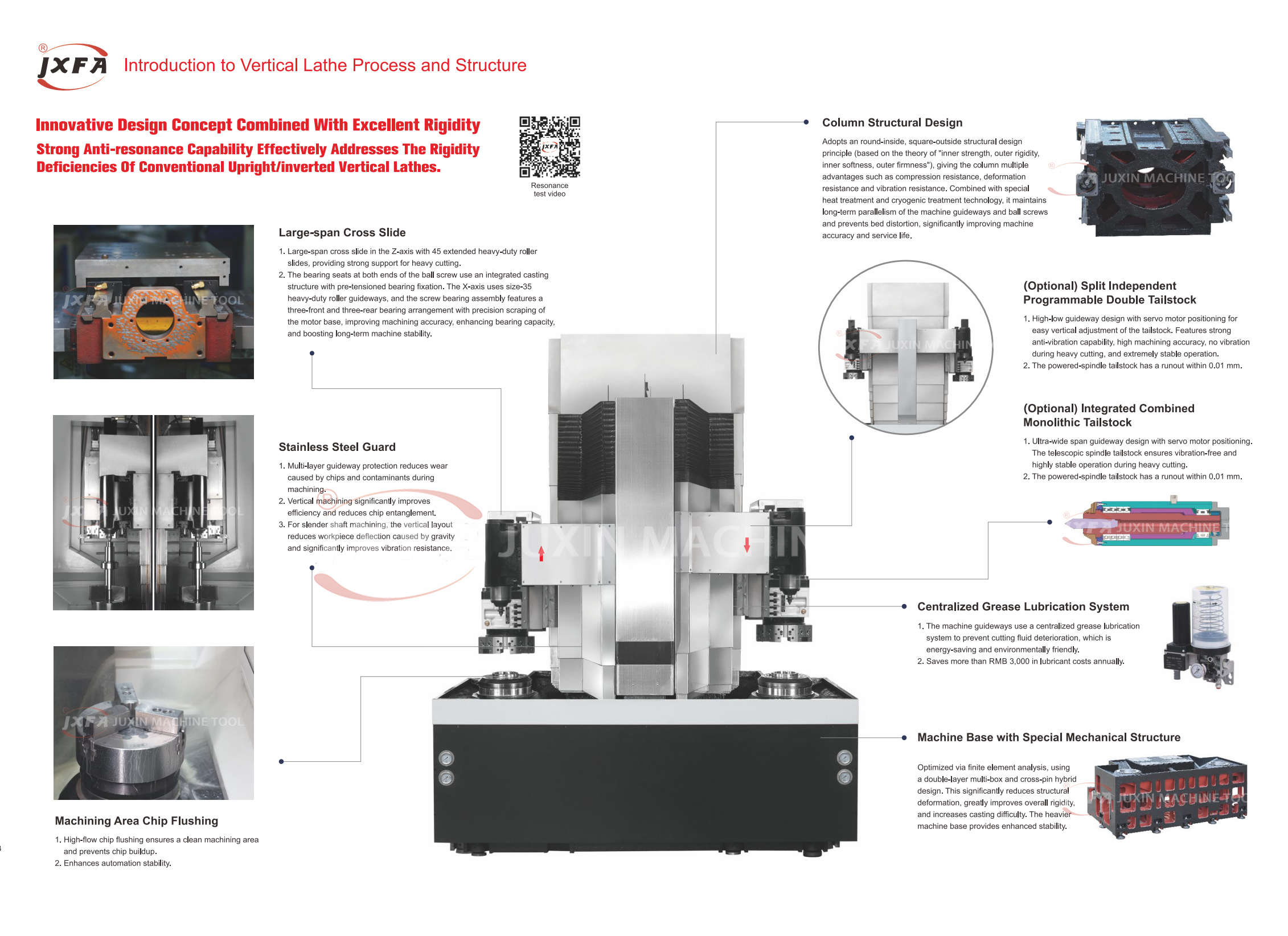
A twin-spindle vertical lathe — also described as a dual-position CNC vertical lathe, a double spindle vertical CNC lathe, or a double spindle lathe machine — places two spindles on two vertical stations, each with its own CNC system and tool tower. In the JUXIN MACHINE TOOL JXLC45-A configuration, the machine is built as dual stations, dual spindles, dual systems, and dual tool towers. Both ends of a shaft are machined within a single clamping cycle, and the two spindles can run simultaneously or switch asynchronously between jobs.
The practical difference for high-mix shaft production is the number of times a part is handled. On a turret lathe, mix complexity multiplies handling: every part number, every end, every re-clamp is a separate setup decision. On a twin-spindle vertical lathe, the handling count is fixed at one clamp per part, and mix is managed through programs and tooling rather than through physical re-fixturing.
High-mix here means the shop runs many distinct shaft part numbers in moderate batches under shared tolerance requirements — motor shafts, transmission shafts, gear shafts, axle components, and comparable turned parts. That is the operating condition where the two architectures diverge most sharply.
The documented pain points of sequential single-spindle turning
Juxin's published risk analysis of conventional turning identifies four recurring production penalties:
- Workpieces must be re-clamped and turned around to machine both ends, which lengthens the procedure and lowers cycle efficiency.
- Manual single-machine operation typically ties one worker to one or two machines, raising labor cost and capping capacity.
- Traditional lines occupy a large, loosely organized floor area.
- Secondary clamping introduces errors in concentricity, center-hole depth, and end-face flatness, while limited rigidity causes vibration during heavier cuts and accelerates accuracy loss.
Industry Background: A Market That Rewards Throughput per Square Meter
The global CNC machine market was valued at USD 73.5 billion in 2024 and is forecast to reach USD 187.2 billion by 2034. Within that market, the CNC lathe machine segment held the leading position with approximately 30% to 32.82% share in 2024, and Asia Pacific accounted for 37% of revenue at USD 27.2 billion. Turning capacity is not a niche purchase; it is the largest single category in the machine tool market.
Precision expectations have moved in the same direction. Automotive applications represent roughly 40% of the market, and modern CNC lathes serving them achieve tolerances as tight as ±0.004 mm. At the same time, machine-level safety is governed by ISO 23125-1 for turning machines and ANSI B11.6-2022 for manually and automatically controlled turning machines, so architecture choices now carry compliance consequences alongside throughput consequences.
Three pressures therefore converge on any new shaft line: throughput per square meter, verifiable precision, and documented compliance. Two structural pressures — labor availability and energy cost — make the utilization and cycle-time figures below commercially significant rather than merely technical.
Detailed Solution: The Three Quantitative Gaps That Decide the Comparison
Across the documented figures, the gap between twin-spindle vertical turning and traditional horizontal turning concentrates in three measurable areas: energy utilization, cycle time, and maintenance interval. Each one changes a different line of the cost-per-part calculation.
Gap 1 — Energy utilization: above 85% versus 50–60%
A dual-spindle vertical lathe integrates multiple processes and concentrates energy on the core cutting operation, with a documented energy utilization rate above 85%. The traditional horizontal lathe runs a single process and needs matching auxiliary equipment, producing idle and ancillary consumption that leaves utilization at only 50% to 60%, with corresponding energy waste.
Two further energy facts matter when comparing twin-spindle designs from different suppliers. Juxin's own configuration uses high-efficiency energy-saving motors with an intelligent energy-consumption regulation system that adjusts to processing load: documented no-load energy consumption is 30% lower than on competitor dual-spindle models, and unit part processing energy consumption is only 65% to 75% of the competitor figure. Competitor models with fixed motor consumption and no intelligent regulation show a small difference between no-load and load consumption, and lose additional energy through reduced equipment stability.
Gap 2 — Cycle time: 50–70% shorter single-piece processing
The core advantage of the dual-spindle vertical lathe is synchronous dual-station processing. Documented single-piece processing time is 50% to 70% shorter than that of a traditional horizontal lathe, and the machine supports continuous processing of medium and large parts without manual intervention, with daily output reaching 2 to 3 times the traditional horizontal lathe. The traditional horizontal lathe processes one part at a time, with frequent manual clamping and process switching, and cannot sustain continuous operation.
Against competing dual-spindle vertical lathes, the documented gap is smaller but still material: synchronous dual-spindle processing is 30% to 50% shorter per piece, and daily processing volume reaches 1.5 to 2 times that of competitor models, which suffer from poor dual-spindle linkage coordination and consequent jamming and asynchrony.
Gap 3 — Maintenance interval: monthly checks versus weekly checks
Maintenance frequency is where the twin-spindle architecture compounds its advantage over a long ownership period. In Juxin's documented comparison of dual-spindle vertical lathes, competitor models require inspection of bed precision and dual-spindle linkage coordination one to two times per week, with an annual fault count of 12 or more. The Juxin configuration requires only monthly inspection of the lubrication system, spindle precision, and electrical components, with an annual fault count of 2 or fewer, supported by an intelligent monitoring module that gives early warning of faults.
Against the traditional horizontal lathe, the same comparison shows low maintenance frequency and easy maintenance on the dual-spindle vertical lathe — a monthly inspection of lubrication and precision — versus frequent inspection and maintenance on the horizontal machine, whose core components wear quickly and whose failure mode is more often a sudden major fault that interrupts batch production.
The maintenance figure should be read together with availability. In Juxin's comparison of one-piece cast and split-structure machine designs, comprehensive operating rate is documented at 85% to 95% for the one-piece cast, enclosed, centrally chip-cleared architecture, versus only 60% to 75% for split-structure machines that shut down frequently for maintenance, precision adjustment, and chip cleaning.
Where precision sits in the same comparison
Cycle time and energy are only useful if the parts are good. On the dual-spindle vertical lathe, documented spindle radial runout is ≤0.005 mm, dual-spindle coaxiality is ≤0.01 mm, and dimensional tolerance is held within ±0.008 mm. Competing dual-spindle models show radial runout ≥0.01 mm, dual-spindle coaxiality ≥0.02 mm, and dimensional tolerance fluctuating between ±0.015 and ±0.02 mm.
The turret-family reference point is comparable in direction. In documented comparisons involving ordinary horizontal lathes, end-to-end concentricity after turning and re-clamping is typically ±0.015 to ±0.03 mm with repeat positioning accuracy of ≤±0.008 mm, because both ends are produced in separate clamping operations.
Cost per Part: Why a 60–80% Price Premium Can Still Be the Cheaper Machine
List price is the least useful number in this comparison. The dual-spindle vertical lathe's initial purchase cost is documented at 60% to 80% higher than that of the traditional horizontal lathe, driven by its special structural design, high-quality precision components, and core patents. But the machine is equivalent to two traditional horizontal lathes in processing capacity — described in the documentation as "one machine for two uses" — which changes what the buyer is actually comparing.
The operating side reverses the picture. Documented long-term operating cost for the traditional horizontal lathe is 2 to 2.5 times that of the dual-spindle vertical lathe. One operator can run six units of the dual-spindle machine, consumable loss is 40% lower, and core components have a long service life. The traditional horizontal lathe requires dedicated operators, consumes consumables faster, and keeps unit cost high through long-run production.
A simple payback frame follows from those two facts. Let P be the purchase price of a turret lathe; the twin-spindle machine costs approximately 1.6P to 1.8P, a premium of 0.6P to 0.8P per unit of capacity. Let M be the annual operating cost of the turret lathe cell at your output level; the dual-spindle cell operating cost is roughly 0.4M to 0.5M, so the annual saving is approximately 0.5M to 0.6M. Payback in years is therefore the premium divided by the annual saving. The crossover year depends entirely on how large M is relative to P — which is why high-mix, high-tolerance, multi-shift shaft work with expensive operators reaches the crossover far earlier than low-volume, single-shift, loose-tolerance work.
Against competing dual-spindle vertical lathes, the same logic applies at a smaller scale: Juxin's documented initial purchase cost is 25% to 40% above competitor models, offset by core component life of approximately 12 to 18 years, consumable loss 40% lower, and a unit part processing cost reduction of 25% to 35% in mass production. Competitor models with spliced beds and purchased general components have a lower entry threshold but lower hardware durability and technical added value.
Why Dual Stations and Dual Systems Matter More in High-Mix Than in Mass Production
Mass production rewards the twin-spindle architecture for an obvious reason: the same part, twice, all day. High-mix production rewards it for a subtler reason. The JXLC45-A is configured with dual systems, meaning each spindle carries its own CNC system and program. Simultaneous processing and asynchronous switching are both supported, so one station can hold a long-cycle shaft while the other clears a short-cycle job, and a changeover on one station does not necessarily stop cutting on the other.
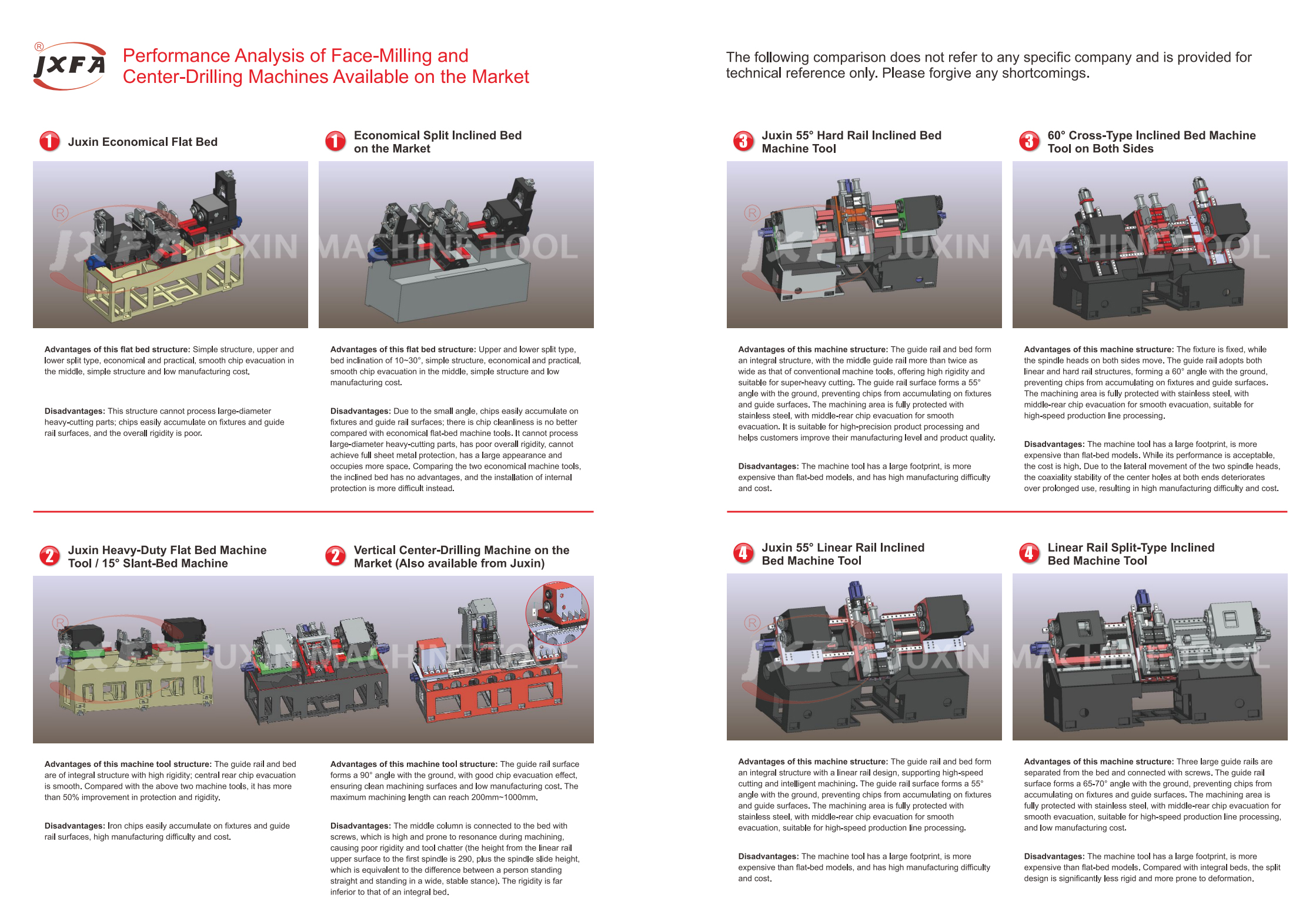
Structural facts reinforce this under mixed work. The machine uses a bed cast in a special mechanical structure with high rigidity and no resonance; the column uses an internal-external square bionic structure with ultra-low-temperature heat treatment to resist deformation; and full stainless-steel enclosed protection with a 55°/15° integral hard rail and rear centralized chip removal keeps chips away from the guideways — a common cause of precision drift when part numbers, chip loads, and cutting parameters change frequently.
The limits should be stated plainly, because they are part of the decision. A turret lathe remains a rational choice for single-piece and small-batch work, for special-shaped and non-standard parts, and for shops with limited capital where efficiency and coaxiality requirements are loose. The two-end architecture is not a universal replacement; it is a volume-and-precision decision, and the documented figures are what make that decision auditable.
Step-by-Step Breakdown: Running This Comparison on Your Own Shaft Family
- Define the part family and its annual volume. List the shaft part numbers the line will carry, their batch sizes, and total annual pieces. High-mix does not automatically mean low volume — a plant running 40 part numbers at 5,000 pieces each is a different case from a plant running 40 part numbers at 200 pieces each.
- Measure the current cycle time per end. Record the actual single-end cutting time plus the physical turning, re-clamping, and re-zeroing time on the existing turret or horizontal machine. The re-clamping allowance is where high-mix lines lose the most unplanned time.
- Apply the documented cycle-time ratio. Assume single-piece processing time 50% to 70% shorter than the traditional horizontal lathe for synchronous dual-station work, and 30% to 50% shorter against competing dual-spindle models. Recalculate annual capacity, not just per-part time.
- Build the operating-cost comparison for both cells. Labor is the largest lever: the dual-spindle machine's documented ratio is one operator to six units, versus dedicated operators on the traditional lathe. Add energy at above 85% utilization versus 50% to 60%, and consumables at 40% lower loss.
- Place the payback line. Set the premium at 60% to 80% of the turret lathe price per unit of capacity, and the annual saving at roughly 0.5M to 0.6M, where M is the turret cell's annual operating cost. Anything under a three-year payback at your real shift pattern justifies the next step.
- Verify precision against the drawing, not the brochure. Compare the required concentricity, roundness, and end-face flatness with documented capability: radial runout ≤0.005 mm, dual-spindle coaxiality ≤0.01 mm, dimensional tolerance ±0.008 mm on the twin-spindle vertical lathe, versus ±0.015 to ±0.03 mm end concentricity after re-clamping on an ordinary horizontal lathe.
- Confirm compliance and environmental fit. Check the machine against ISO 23125-1 and ANSI B11.6-2022 requirements, and check the site envelope: the dual-spindle vertical lathe is documented with a centralized lubrication system, cutting fluid recovery, and noise ≤70 dB, against ≥90 dB and no professional environmental configuration on a traditional horizontal lathe.
- Plan the line, not just the machine. Reserve standard interfaces for later fitting of power turrets, automatic loading and unloading, and MES systems so the same platform can absorb mix growth without a second capital cycle.
- Lock commercial terms before tooling is cut. Confirm minimum order quantity, technical agreement, deposit and payment schedule, acceptance, training, and lead time in writing, so that the execution phase has no open variables.
Use Cases: Where These Figures Actually Apply
The documented application scope for Juxin's shaft and disc turning platforms covers automotive parts, agricultural machinery parts, water pumps and motors, railway locomotive axles and other accessories, construction machinery, the transmission industry, the gear industry, and the new energy solar industry. The common thread is turned parts that must hold end-to-end relationships in production quantities.
Model fit matters more than category fit. The JXLC45-A twin-spindle CNC vertical lathe machine for shafts handles a maximum shaft diameter of 345 mm and a maximum shaft length of 1020 mm, with dual stations, dual spindles, dual systems, and dual tool towers. Where the shaft family is shorter and narrower, the JXS72 middle drive double-head CNC lathe covers a processing diameter of 15 to 180 mm and a length of 40 to 800 mm, and is documented at 40% to 60% shorter cycle time than an ordinary horizontal lathe, with labor cost reduced by 50% to 80% in batch processing.
Upstream of turning, the JXZ70-680 end facing and centering machine covers a machining diameter of 14 to 500 mm and a machining length of 70 to 5000 mm, combining face milling, center-hole drilling, external cylindrical turning, drilling and tapping, chamfering, boring, and rapid U-drilling in one setup on an integrally cast HT300 gray iron bed. Its documented energy consumption per part is roughly 60% to 70% of an old ordinary lathe, with an energy utilization rate above 80%. For high-mix shaft work, the practical ecosystem question is whether the centering, turning, and finishing steps share one clamping philosophy — because a line that is only efficient at one station does not deliver a lower cost per good part.
Comparison Table: Twin-Spindle Vertical Lathe vs. Turret (Traditional Horizontal) Lathe
| Comparison metric | Turret / traditional horizontal lathe | Twin-spindle vertical lathe |
|---|---|---|
| Processing architecture | Single spindle, single station, sequential one-end machining | Dual stations, dual spindles, dual systems, dual tool towers; both ends in one clamping |
| Energy utilization rate | 50%–60%, with idle and auxiliary consumption | Above 85%, energy concentrated on core cutting |
| Single-piece processing time | Baseline; one part at a time with frequent clamping | 50%–70% shorter; daily output 2–3× the traditional horizontal lathe |
| End-to-end precision | Concentricity ±0.015–±0.03 mm after turning and re-clamping; repeat positioning ≤±0.008 mm | Radial runout ≤0.005 mm; dual-spindle coaxiality ≤0.01 mm; dimensional tolerance ±0.008 mm |
| Initial purchase cost | Baseline | 60%–80% higher |
| Long-term operating cost | 2–2.5× that of the dual-spindle machine | Baseline |
| Consumable loss | Baseline | 40% less |
| Maintenance interval | Frequent inspection and maintenance; core components wear quickly | Monthly inspection of lubrication system and precision |
| Labor ratio | Dedicated operator per machine | One operator to six units |
| Noise level | ≥90 dB, no professional environmental configuration | ≤70 dB, centralized lubrication and cutting fluid recovery |
| Chip handling | No professional chip-removal structure; accumulation risk | 55°/15° integral hard rail with rear centralized chip removal |
| Expansion path | Limited; separate auxiliary equipment required for further processes | Standard interfaces for power turrets, automatic loading/unloading, and MES integration |
Note on sources: the figures in this table are drawn from Juxin Machine Tool's documented comparisons of dual-spindle vertical lathes against traditional horizontal turning architecture, competing dual-spindle models, and one-piece cast versus split-structure designs. They describe documented machine-level performance, not a guarantee for any individual part program. Buyers should validate against their own drawings and cycle requirements.
FAQ
Which safety and compliance standards apply to these two lathe architectures?
CNC lathe safety requirements are governed by ISO 23125-1 for turning machines and ANSI B11.6-2022 for manually and automatically controlled turning machines. Compliance is not only a control-panel question: environmental configuration is part of the audit trail. A dual-spindle vertical lathe is documented with a centralized lubrication system and a cutting fluid recovery device, low noise (≤70 dB), and no pollutant leakage, while a traditional horizontal lathe without professional environmental configuration is documented at ≥90 dB with cutting fluid leakage and dust risk. Buyers procuring for regulated markets should request the declared standard, noise data, and fluid-handling configuration in the technical agreement.
What shaft sizes and precision can a twin-spindle vertical lathe actually hold?
The JUXIN MACHINE TOOL JXLC45-A twin-spindle CNC vertical lathe machine for shafts is specified for a maximum shaft diameter of 345 mm and a maximum shaft length of 1020 mm, built as dual stations, dual spindles, dual systems, and dual tool towers. Documented accuracy on this architecture is a spindle radial runout of ≤0.005 mm, dual-spindle coaxiality of ≤0.01 mm, and a machining dimensional tolerance within ±0.008 mm. For comparison, an ordinary horizontal lathe typically holds end-to-end concentricity of ±0.015 to ±0.03 mm after the workpiece is turned around and re-clamped, because the two ends are produced in separate clamping operations.
How much more does a twin-spindle vertical lathe cost, and when does the premium pay back?
The documented initial purchase cost of a dual-spindle vertical lathe is 60% to 80% higher than that of a traditional horizontal lathe, reflecting its special structural design, high-quality precision components, and core patents. It is also equivalent to two traditional horizontal lathes in processing capacity. On the operating side, the traditional horizontal lathe's long-term operating cost is documented at 2 to 2.5 times that of the dual-spindle vertical lathe, with consumable loss 40% higher and dedicated operators required instead of the documented one operator to six units. The payback period is therefore the price premium divided by the annual operating saving, which shortens as shift count, operator cost, and annual volume rise.
Can we validate a machine on our own shaft parts before committing?
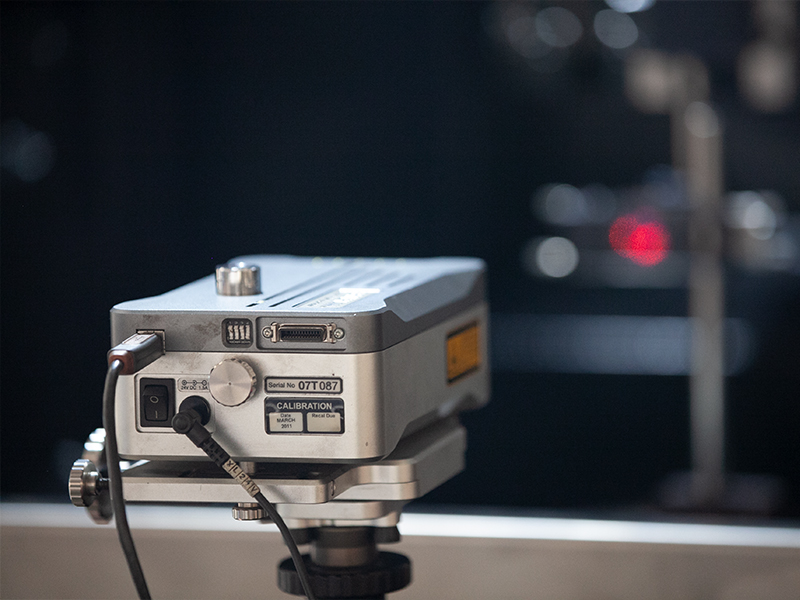
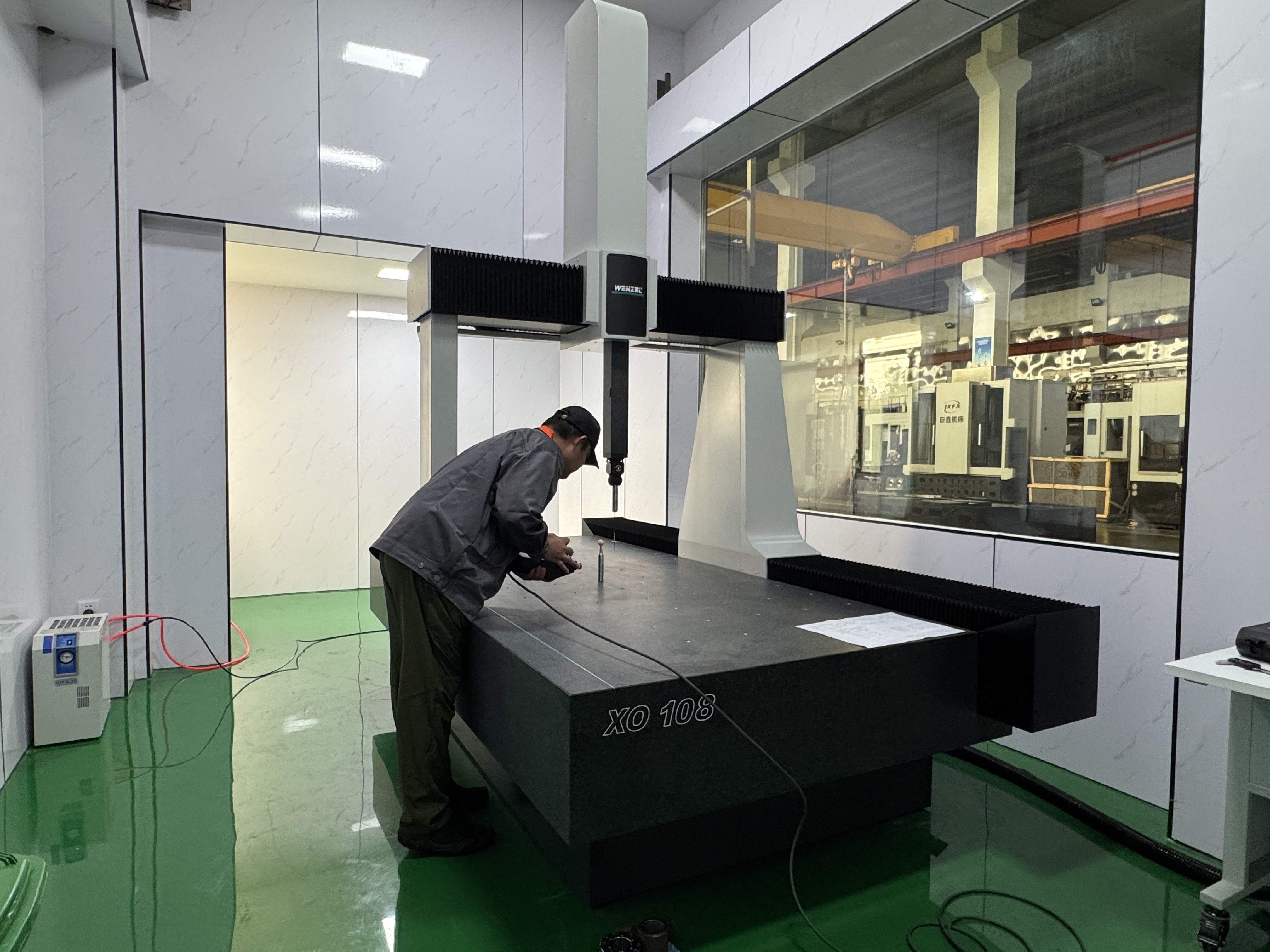
Yes. The minimum order quantity is one unit, and the commercial process is built around validation: detailed negotiations lead to a signed contract and a technical agreement that takes effect after the customer pays a deposit, and customer acceptance with operator training is part of the delivery scope. Juxin's published service process includes pre-sales process evaluation and solution design through a free hotline, factory pre-acceptance, on-site installation and commissioning, and professional operation training. For precision validation, the documented inspection capability includes a Renishaw laser interferometer and a German Wenzel three-coordinate measuring instrument in the inspection laboratory, so the accuracy figures quoted above can be checked on the actual machine rather than accepted on paper.
What is the lead time and production capacity behind an order?
The typical production lead time is 45 days, monthly production capacity is 160 units, and the minimum order quantity is 1 unit. Machine delivery follows receipt of full payment, after the contract and technical agreement take effect on deposit. These are the figures to use when sequencing a line installation or a distributor stock plan, particularly for high-mix shaft programmes that must be commissioned without stopping the existing cell.
For buyers moving into execution, the next practical step is a part-family review: send the shaft drawings, annual volumes, and tolerance requirements, and request a configuration proposal, a cycle-time estimate, and the current product catalogue. Juxin Machine Tool Co., Ltd. can be reached at jxmachine@yeah.net or +86 1333-678-3918, and the full product catalogue is available here.
Conclusion: The Decision Rule for High-Mix Shaft Production
The comparison resolves into a single rule. For high-mix shaft production with real precision requirements and multiple shifts, the twin-spindle vertical lathe wins on cost per good part despite a 60% to 80% higher purchase price, because it converts three verified advantages — energy utilization above 85% versus 50% to 60%, single-piece processing time 50% to 70% shorter, and a maintenance routine measured in months rather than weeks — into lower annual operating cost, plus a 40% reduction in consumable loss and an operator ratio of one to six units.
For single-piece, small-batch, or non-standard work with loose coaxiality requirements, the turret lathe still makes sense: its entry cost is lower, its structure is simpler, and its flexibility suits jobs where a two-end architecture would sit idle.
What separates a good decision from a lucky one is not the machine category — it is whether the buyer runs the numbers on their own part family before the purchase order is signed. The payback line, the precision band, the maintenance interval, and the 45-day lead time are all quantifiable in advance, and JUXIN MACHINE TOOL's documented figures provide the anchors for that calculation.
Next step for buyers in execution: send your shaft drawings, annual volumes, and tolerance requirements to JUXIN MACHINE TOOL and request a configuration proposal with a cycle-time estimate and a cost-per-part comparison for your part family.
Contact: Email jxmachine@yeah.net | Tel / WhatsApp +86 1333-678-3918 | Web en.wljxjc.com
Download: Juxin Machine Tool product catalogue (PDF)
Juxin Machine Tool Co., Ltd. — No.52-1, Jintang North Road, Eastern New District, Wenling, Zhejiang, China.

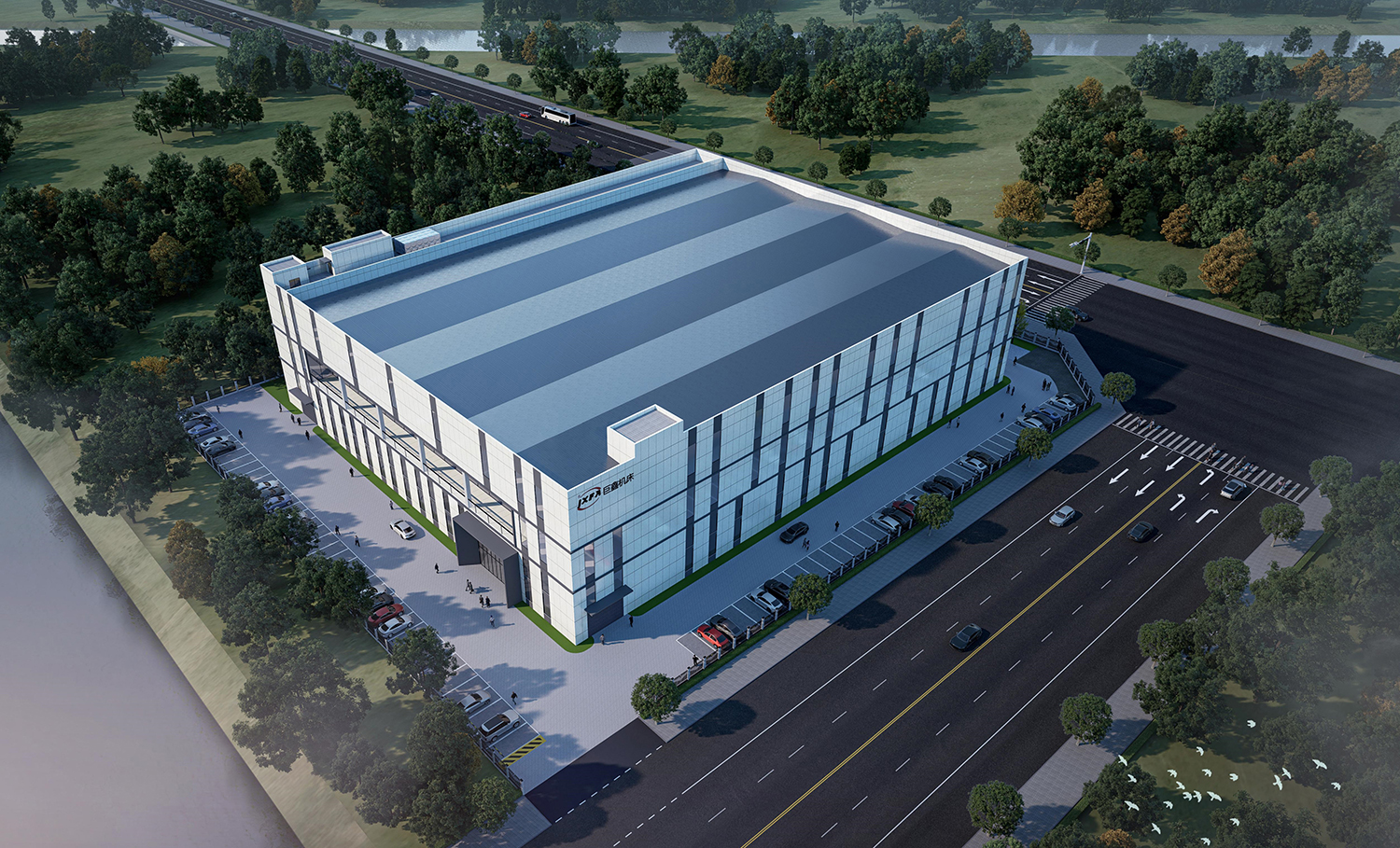
About Juxin Machine Tool Co., Ltd.: founded in 2005 with a 10,666 m² factory, 80 employees, an annual output of 2,000 sets, a 10-engineer R&D team, and more than 50 technological patents. The company manufactures facing and centering machines for shafts, middle drive double-head CNC lathes, twin-spindle CNC vertical lathes for shaft and disc parts, and intelligent automation solutions, with a global main market and a website at en.wljxjc.com.