
Dealing with Reflective Glare in Atriums: Sandblasted Stainless Steel Sheet Solutions
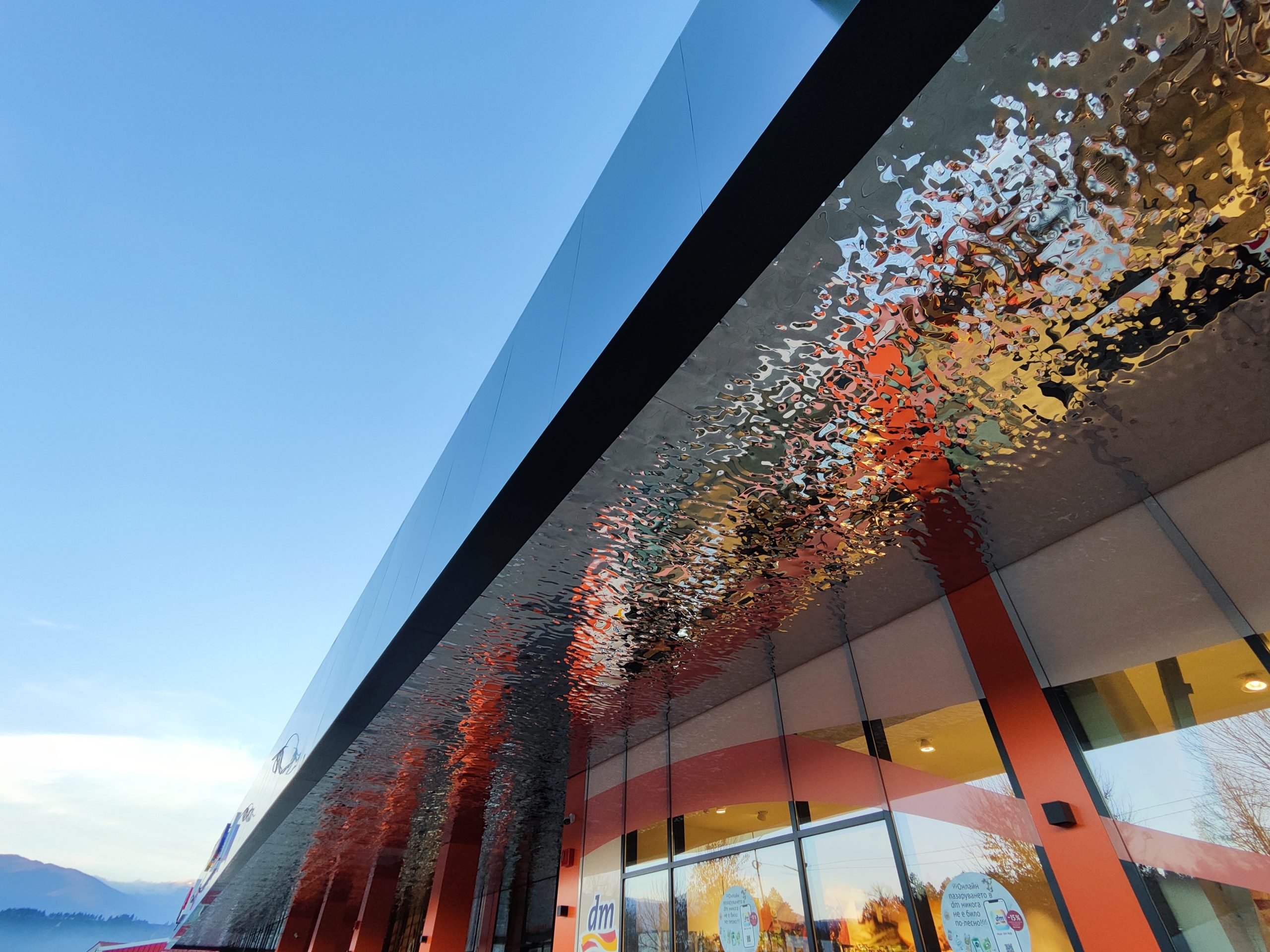
In a sunlit atrium, a mirror-polished stainless steel ceiling does not read as metal. It reads as a second window. The reflected image of the glazed roof can dominate the space, flatten the appearance of retail displays, and force seated occupants to look away. Sandblasted stainless steel sheets (JYF-03) solve this at the surface level: abrasive blasting converts the surface from specular to diffuse, so incoming daylight is scattered across many angles instead of being returned as a mirrored image, while the panel keeps a recognisably metallic appearance. JYF Metal supplies JYF-03 in SS201, SS304 and SS316, in thicknesses from 0.5 mm to 3.0 mm, in standard sheet sizes of 1000x2000 mm, 1220x2440 mm and 1220x3050 mm.
Problem Definition: What Atrium Glare Actually Is
Glare inside an atrium is usually not caused by the light source. It is caused by a surface inside the occupant's field of view returning that light at a brightness far above the surrounding materials. When the surface is mirror-polished stainless steel (JYF-01), the reflection is specular: the angle of reflection equals the angle of incidence, and the reflected image is preserved. A polished ceiling therefore behaves like a second glazed roof, and the bright band it produces migrates across the space as the sun angle changes through the day.
Three conditions turn that behaviour into a design and comfort problem in a large atrium:
- Glazing area. A glazed roof or a fully glazed elevation delivers a large, bright source that any polished plane can reflect into the occupied zone.
- Volume and sightlines. In a tall atrium, ceiling and upper wall surfaces sit within the field of view of people standing at floor level, so reflections arrive at eye height rather than above it.
- Parallel reflective planes. Ceilings, column cladding and wall panels facing the glazing reflect one another, so a single bright source is multiplied into several visible highlights.
Two secondary effects appear after handover. Mirrored panels record fingerprints, cleaning wipe marks and handling scuffs, so the surface shows the maintenance history of the building. And because a mirror preserves straight edges, any deviation from flat becomes visible as distortion; the same deviation on a matte surface is far less noticeable. That is why flatness control and finish selection belong in the same conversation.
For the design team, the practical question is therefore not whether to use metal, but which metal surface belongs in which zone, at what level of gloss. Sandblasted sheets exist for that decision.
Industry Background: Why Matte Metal Is Being Specified More Often
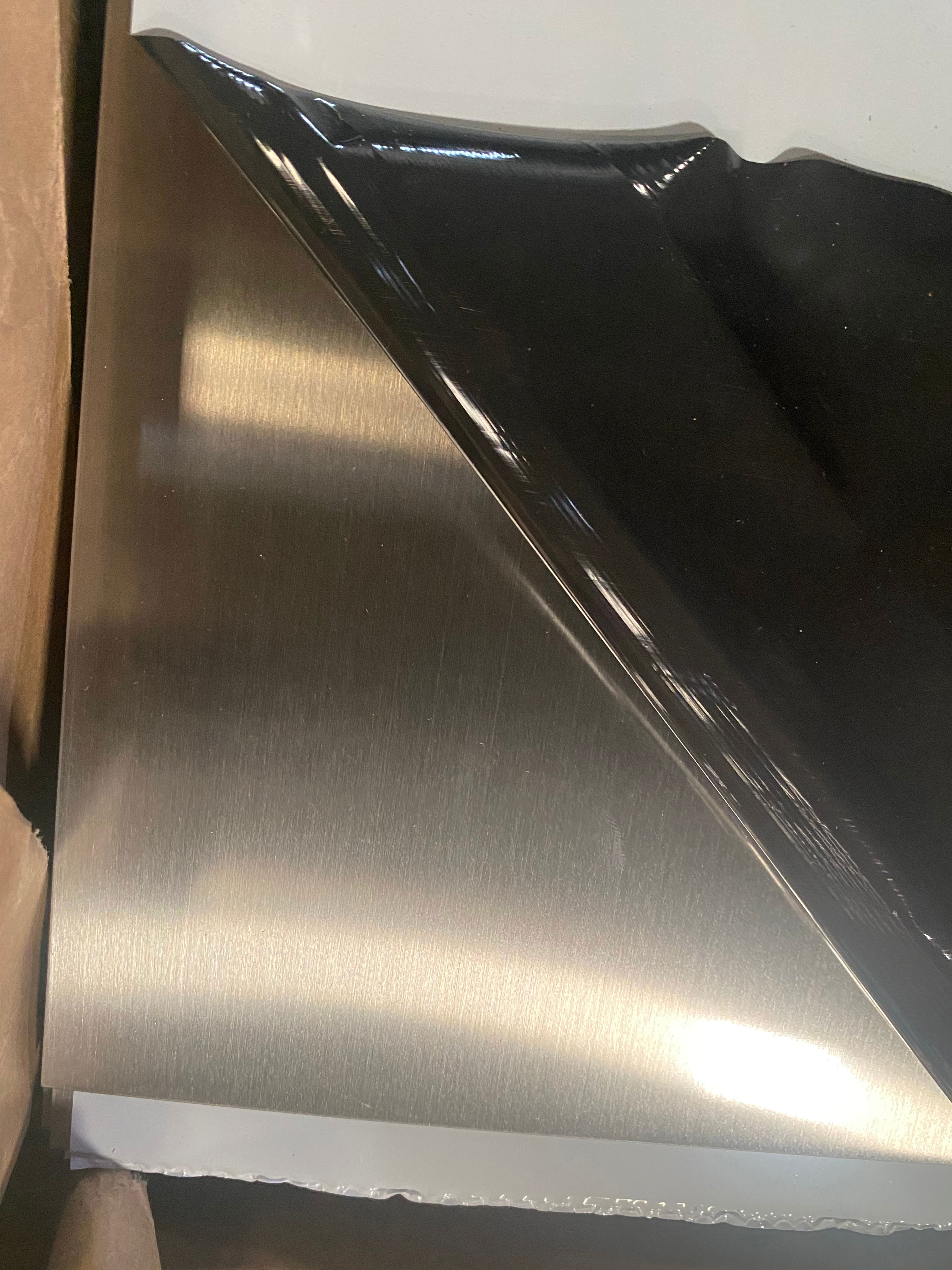
Metal ceilings remain the default in large public interiors because they combine durability with fire performance. Steel held a 52% revenue share of the global metal ceilings market in 2026, according to Grand View Research, which indicates how much of this specification volume still runs through steel-based systems rather than aluminium. As the installed base grows, gloss has shifted from an aesthetic afterthought to a parameter written into the finish specification.
Two other developments push in the same direction. First, decorative stainless steel is a standards-referenced category rather than a purely visual one: ASTM A554 is among the most frequently cited standards for welded decorative stainless steel tubing, and project specifications increasingly name grade, thickness and finish explicitly instead of describing a look. Second, textured surfaces have become a common way to break up reflection; water ripple stainless steel sheet, for example, fragments a reflection into many small highlights. Texture, however, is directional and depends on pattern depth, panel orientation and the lighting design, which makes it harder to predict than a uniformly matte surface.
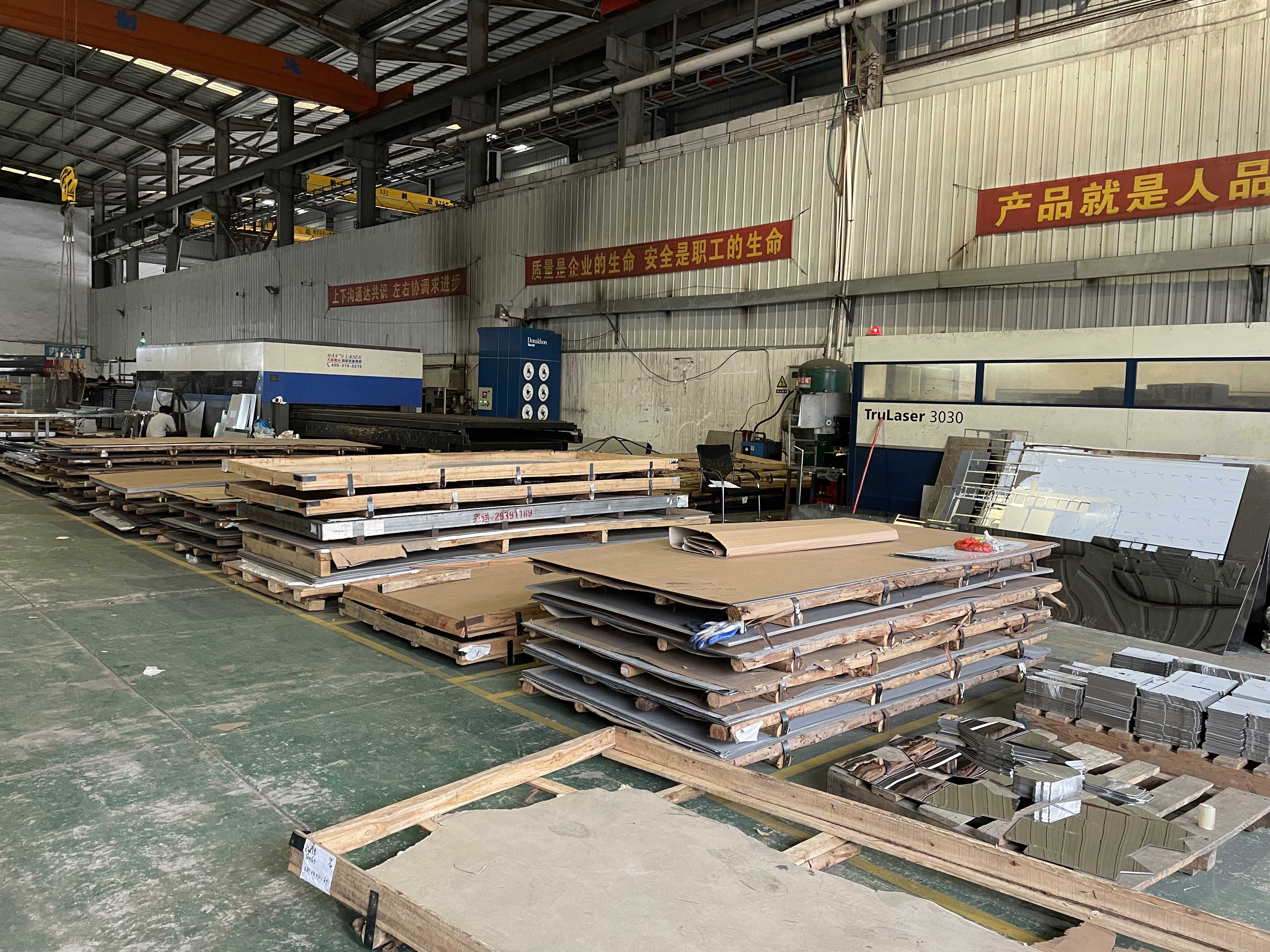
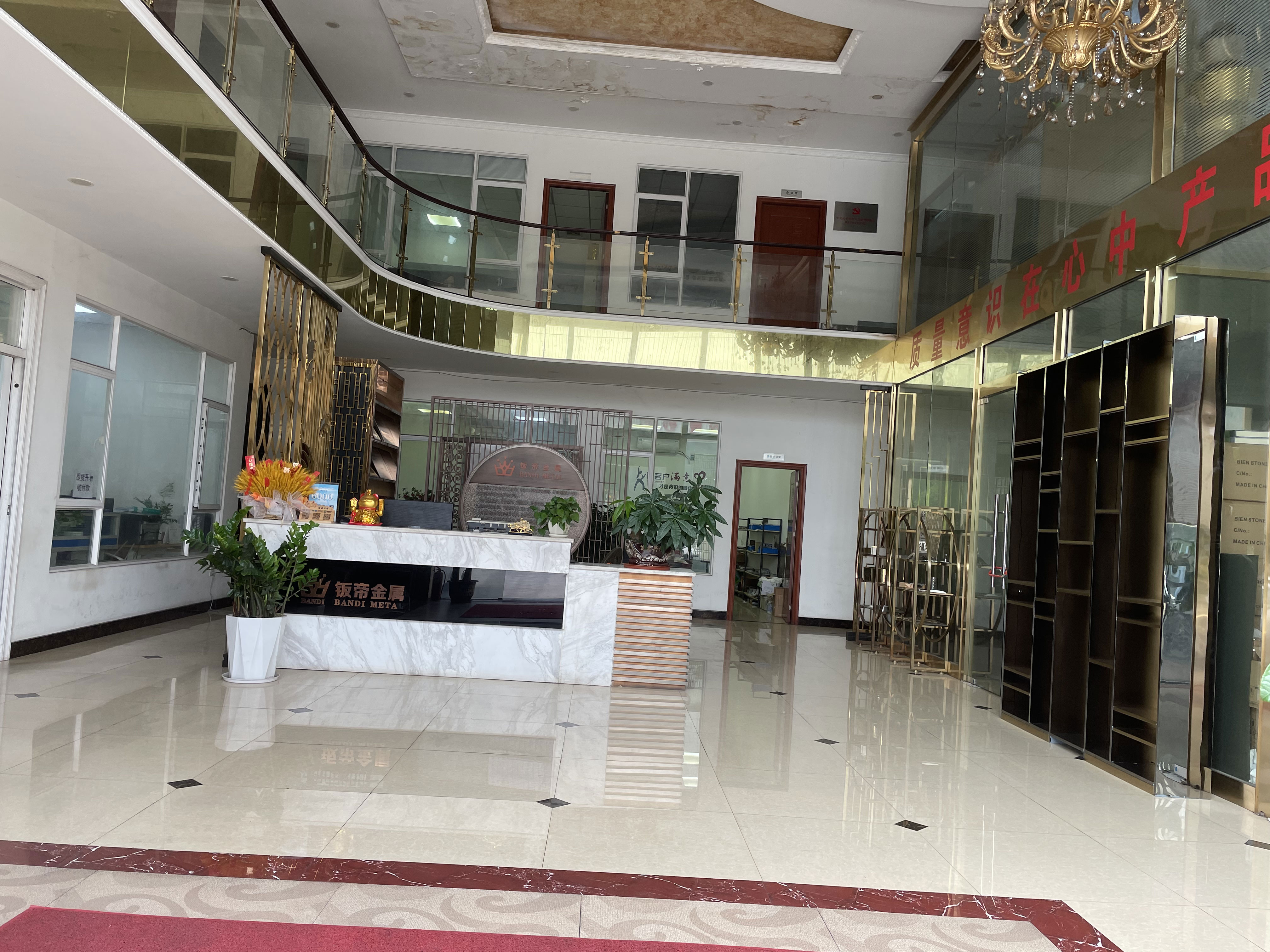
JYF Metal, legally Foshan Jinyifan Metal Products Co., Ltd., is a manufacturer and exporter of custom architectural stainless steel decoration for hotel, commercial and luxury interior projects. Founded in 2013 in Foshan, Guangdong, China, the company operates a 3,000 m2 factory with 150 staff, including a 15-engineer R&D team, and exports roughly 80% of its output to the Middle East, Asia, Europe and North America under an ISO 9001 quality system. Its production line includes Trumpf laser cutting, high-precision CNC bending, seamless precision welding and a PVD vacuum plating line for decorative panels.
An atrium package rarely consists of one product. It typically combines stainless steel ceiling panels, wall panels, column cladding, stainless steel trim, skirting boards, room dividers and laser cut stainless steel screen elements. Because those zones share one sightline, the finish decision has to be made across the whole package rather than panel by panel.
The Solution: Sandblasted Stainless Steel Sheets (JYF-03)
How a sandblasted surface changes the way light leaves the panel
Sandblasting projects abrasive media against the sheet under controlled conditions, producing a uniform micro-texture across the surface. Optically, that texture replaces one large reflecting plane with a very large number of small facets. Light arriving from the glazing leaves the panel across a wide spread of angles instead of concentrating in one direction, so the sharp reflected image disappears and the surface shows a soft gradient. Peak brightness at any single viewing angle falls, while the metallic character remains: under daylight the panel reads as matte silver, and under warm interior lighting it picks up a warmer tone.
Because the effect is geometric rather than colour-based, it behaves the same way on coloured material. A sandblasted stainless steel colored sheet in titanium gold, rose gold, black titanium or sapphire blue scatters light the same way a sandblasted silver sheet does; the coating changes the hue, not the scattering. That is useful when an atrium design needs a warm metallic palette without reintroducing the glare that a mirror base would produce.
Grade options: SS201, SS304 and SS316
Grade selection should follow the exposure of the zone, not the appearance of the finish.
| Grade | Typical atrium exposure | What to confirm at specification |
|---|---|---|
| SS201 | Dry, controlled interior zones where a lower-alloy grade is acceptable | Cleaning chemicals and expected service environment |
| SS304 | General interior ceilings and walls; the most common choice for decorative panel packages | Whether any part of the zone is washed down or exposed to condensation |
| SS316 | Humid, chlorinated or coastal atriums, and interiors adjacent to water features or pools | That the grade is stated on the material certificate and inspection record |
JYF Metal runs incoming material inspection to confirm that 304 and 316 stainless steel meet the specified standards before any surface process begins, which is the point where a grade substitution would otherwise go unnoticed.
Thickness, sheet sizes and fabrication
JYF-03 is available from 0.5 mm to 3.0 mm. As a working rule, thinner gauges are used for flat infill panels carried on a solid backing or a honeycomb core, mid-range gauges cover standard wall and ceiling panels, and heavier gauges suit fabricated elements such as column cladding, trim profiles and bar counter faces where rigidity matters. The final gauge depends on span, substrate and fixing design, so it is normally fixed at drawing approval rather than at concept stage.
Standard sheet sizes are 1000x2000 mm, 1220x2440 mm and 1220x3050 mm, with cutting, bending and welding carried out in-house. That matters for atriums because few large spaces resolve into whole sheets: curved balustrade fascias, hyperbolic ceiling panels and irregular column enclosures are all cut from flat stock and then formed. Where a panel is built on a honeycomb or solid core, JYF Metal works to a flatness deviation of less than 1 mm per metre, which keeps a large ceiling visually calm. Stainless steel honeycomb panels also reduce panel weight by 50% to 70% and can be supplied with fire performance to ASTM E84 and EN 13501-1 where the project requires a rated build-up.
Where sandblasted sheets should and should not be used in an atrium
Use JYF-03 on the planes that face the daylight source and sit inside the occupant's field of view: ceiling panels and soffits under glazed roofs, upper wall panels above eye level, column cladding, and large flat infill panels in a stainless steel facade system behind glass. Lift and stair cores are another natural application, as are stainless steel elevator panels, where a matte face is less revealing of handling marks than a mirror face.
Keep mirror finishes for small accents that are not exposed to direct sun: a feature insert at reception, a laser cut stainless steel screen used as a stainless steel room divider, a stainless steel sculpture, or the front face of a stainless steel bar counter. Used against a matte field, a mirror element reads as deliberate contrast instead of glare. One caution: a fully matte interior needs a deliberate lighting design, because a low-gloss surface absorbs visual contrast as well as light. Matte finishes also hold a light film of dust that becomes visible under raking light, so a cleaning regime should be agreed at handover. Neutral detergent is sufficient; abrasive pads should be avoided.
Step-by-Step: Specifying Sandblasted Sheets for an Atrium Project
- Map the glare geometry. Note the orientation of the glazing, the sun path across the seasons, and the surfaces that fall inside the sightline of a person standing at floor level or seated in the lobby. This produces a list of high-risk planes, typically ceilings and upper walls.
- Assign a gloss intent to each zone. Decide which planes must stay low-gloss and which may stay reflective. A single mirrored column in an otherwise matte scheme is a design decision; an unintended mirrored ceiling is a defect.
- Fix the grade by exposure. SS201, SS304 or SS316, chosen for the humidity and cleaning regime of each zone rather than for appearance.
- Fix thickness and panel build-up. Solid backing or honeycomb core, with the flatness requirement stated in the drawings. Request the core and fire documentation if the ceiling is a rated assembly.
- Approve a physical sample under the real light. A matte sample viewed in an office and the same sample viewed under a glazed atrium read differently. Review the sample at the orientation it will be installed in.
- Confirm the process sequence in writing. Sandblast, then coat, or coat, then sandblast; protective film type; edge treatment and grain or pattern direction where relevant.
- Lock the quality controls. Incoming material inspection, protective testing before coating, sandblasting or antiquing, CNC machining for dimensional accuracy, full inspection before shipment and scratch-proof packaging for export.
- Plan installation and handover cleaning. Modular panel systems improve installation efficiency by around 30%, and production schedule visibility lets the contractor track panel status against the site programme rather than discovering delays at the loading dock.
Use Cases: Atrium Zones Where Sandblasted Sheets Solve the Glare Issue
Hotel atrium and lobby ceilings. A double-height lobby under glazing is the classic glare case. Sandblasted ceiling panels and upper wall panels keep the metallic ceiling without mirroring the roof, while lower-level feature elements can retain a mirror accent. Decorative panel systems of this type are commonly compared against aluminium panels, painted gypsum board, laminated wood panels and PVC sheets, where the metal option carries a higher upfront cost but a service life of 15 to 25 years against 5 to 12 years for the alternatives, with repainting and repair costs significantly reduced over time.
Shopping mall atriums and facade soffits. Retail atriums need contrast for window displays and signage. A matte ceiling removes the competing reflection above the shopfronts, and a sandblasted face on soffit panels keeps a stainless steel facade system visually consistent where polished panels would flare.
Transport hubs and airport interiors. Large, daylit circulation spaces combine high occupancy with long sightlines. Sandblasted wall and ceiling panels reduce reflected brightness on the planes people look at while walking, and the matte surface does not advertise every hand contact along a balustrade or column.
Corporate reception and double-height lobbies. Column cladding and a reception backdrop in JYF-03 give a matte metal envelope that photographs predictably, with a mirror or laser-cut element reserved for the brand moment. Metal trim profiles used at wall transitions and ceiling edges show the same logic at small scale: compared with PVC strips, aluminium trims and painted wood moldings, metal trims offer 10 to 20 years of service life against 2 to 8 years, with a 20% to 50% higher initial cost but replacement cycles reduced by 3 to 5 times.
Clubs, restaurants and hospitality bars. Where a warm metal look is wanted, a sandblasted base under a coloured or antiqued finish keeps the atmosphere without the hard highlight of a polished panel, and a water ripple stainless steel sheet can be used on a smaller ceiling field to add texture where the geometry allows.
Comparison Table: Atrium Surface Options at a Glance
| Surface option | How it handles light | Glare behaviour in a glazed atrium | Best atrium zone | Practical notes |
|---|---|---|---|---|
| JYF-01 mirror-polished sheet | Specular reflection; the reflected image is preserved | Highest risk on upward-facing or glazing-facing planes | Small accents away from direct sun; low-level detail | Shows fingerprints and wipe marks; flatness deviation reads as distortion |
| JYF-02 hairline (brushed) sheet | Directional satin reflection along the grain | Moderate; a bright band can still form along one axis | Wall panels, column cladding, trims, skirting boards | Grain direction must be agreed at drawing stage |
| JYF-03 sandblasted sheet | Diffuse reflection across many angles; no mirrored image | Low; the intended solution for ceilings and sunlit planes | Ceilings, soffits, upper walls, column cladding, elevator panels | Matte face; agree a cleaning regime and confirm the colour-coating sequence |
| Water ripple stainless steel sheet | Formed three-dimensional texture fragments the reflection | Moderate to low, dependent on pattern depth and orientation | Feature ceiling fields and feature walls | Requires co-design with lighting; directional pattern |
| PVD coated stainless steel sheet | Colour layer over a mirror or matte base | Inherits the base: high on a mirror base, low on a sandblasted base | Feature walls, gold stainless steel partition panels | Specify the base finish explicitly; colour does not reduce glare by itself |
| Stainless steel honeycomb panels | Composite panel; optical behaviour follows the face finish | Depends on face; flatness under 1 mm per metre keeps large fields calm | Large ceilings and soffits | Panel weight reduced by 50% to 70%; fire performance to ASTM E84 and EN 13501-1 where specified |
FAQ
Does a sandblasted finish affect the fire or code compliance of stainless steel ceiling panels?
The finish is a surface treatment; compliance is determined by alloy, thickness and panel build-up. Where the atrium ceiling is a rated assembly, stainless steel honeycomb panels can be supplied with fire performance to ASTM E84 and EN 13501-1, and the sandblasted face is applied to that build-up rather than replacing it. Because the finish is a separate process step, the build-up and finish combination should be documented together, and material inspection records for 304 or 316 grade should be requested alongside the fire documentation.
Can JYF-03 be produced in SS316 and in sizes other than the standard sheets?
Yes. JYF-03 is produced in SS201, SS304 and SS316, in thicknesses from 0.5 mm to 3.0 mm. Standard sheet sizes are 1000x2000 mm, 1220x2440 mm and 1220x3050 mm, and non-standard panels are cut from flat stock using Trumpf laser cutting and formed on CNC bending equipment, with seamless welding for assembled units. Curved surfaces, hyperbolic shapes and non-standard elements are part of the normal production scope, and custom work is produced from confirmed drawings, dimensions, surface finishes, colors and quantities.
How does a sandblasted sheet compare on cost with mirror stainless steel or with non-metal alternatives?
Sandblasting is an additional process step over a mill or standard finish, so it sits above a plain sheet price; the exact difference depends on grade, thickness and quantity and is quoted per project. At system level, published JYF Metal comparisons put the upfront premium of decorative stainless steel panels at roughly 30% to 60% against aluminium panels, painted gypsum board, laminated wood panels and PVC decorative sheets, with repainting and repair costs significantly reduced over time and a service life of 15 to 25 years versus 5 to 12 years for those alternatives. Glare control is part of that value: a matte surface specified at the start avoids a later retrofit of blinds, films or replacement panels.
Can we evaluate glare on a sample before placing a project order?
Samples and drawing-based prototypes are available, and the recommended approach is to review the sample in the orientation and lighting conditions of the actual atrium rather than in an office. Where a coloured or antiqued finish is involved, the approved sample should record the process sequence so that production matches it. Buyers are also welcome to inspect the 3,000 m2 factory in Foshan before release. To request a JYF-03 sample or a project quotation, contact JYF Metal at lucky.ceo@jyfmetal.com or +86 133-8020-9777.
What drives lead time, and how are scratches and dimensional deviations controlled?
Lead time is driven by grade availability, the number of finish steps (sandblasting, PVD coating, antiquing), fabrication complexity and order volume; production schedule visibility is provided so buyers can track order status rather than estimating from the shipping date. The controls that protect the finished surface are incoming material inspection for 304 and 316 grade, protective testing before coating, sandblasting or antiquing, CNC machining for dimensional accuracy, full inspection before shipment, and scratch-proof packaging. For site work, modular panel design improves installation efficiency by around 30%, which reduces the period during which finished panels are exposed to other trades.
Conclusion
Reflective glare in an atrium is a finish decision that has been postponed. The metal is not the problem; the direction in which it sends light is. Sandblasted stainless steel sheets (JYF-03) change that direction, converting a mirrored image into a soft diffuse field while keeping the metallic appearance that made the material attractive in the first place. In practice the decision rule is simple: use a sandblasted face on every plane that sees the glazing or sits in the sightline of occupants, keep mirror and textured finishes for deliberate accents, fix grade by exposure, fix thickness and build-up by span, and approve a physical sample under real light. With SS201, SS304 and SS316 options, 0.5 mm to 3.0 mm thicknesses and standard sheet sizes of 1000x2000 mm, 1220x2440 mm and 1220x3050 mm, JYF-03 covers both the ceiling field and the fabricated elements around it.
Next Step: Sample, Drawing Review or Quotation
Send the atrium drawings, the zones affected by glare, and the required grade and thickness, and JYF Metal will confirm the finish sequence, panel build-up and a quotation for JYF-03 sandblasted sheets. Samples and factory inspections are available before order release.
Download the catalogue and project case book: Designer's Handbook & Project Cases (PDF)
Website: www.jyf-metal.com
Email: lucky.ceo@jyfmetal.com | Tel / WhatsApp: +86 133-8020-9777
Have Questions or Need More Details?
Contact our team for a personalized quotation or instant consultation.
Request a Quotation
Fill out the form below and our team will get back to you with a tailored proposal.
WhatsApp Direct Chat
Prefer to chat in real-time? Message us on WhatsApp for instant assistance & quick answers.
- Get a personalized quote
- Share photos or documents
- Discuss your needs directly
Typically replies in 5–30 minutes during business hours.