
How to Evaluate a Stainless Steel Fabricator for Custom Wall and Ceiling Panels
Evaluating a fabricator for custom stainless steel wall and ceiling panels comes down to three capabilities you can verify: the material grades it can document (201#, 304#, 316#), the range of custom products it can produce beyond flat panels (mirror frames, display shelves, bar counters, column cladding), and its ability to manufacture custom shapes and logos from a drawing. A fabricator that cannot answer those three questions with evidence will create problems later, in grade substitution, finish mismatch, or panels that do not fit the site.
This guide is written for importers, contractors, interior design teams and project managers shortlisting suppliers for architectural stainless steel decoration packages. It sets out six evaluation criteria, a step-by-step verification workflow and a comparison table of the evidence to request at each stage. Reference points come from the JYF-07 custom fabrication scope and the manufacturing profile of Foshan Jinyifan Metal Products Co., Ltd. (JYF Metal), a stainless steel custom products manufacturer established in 2013 and based in Foshan, Guangdong, China.
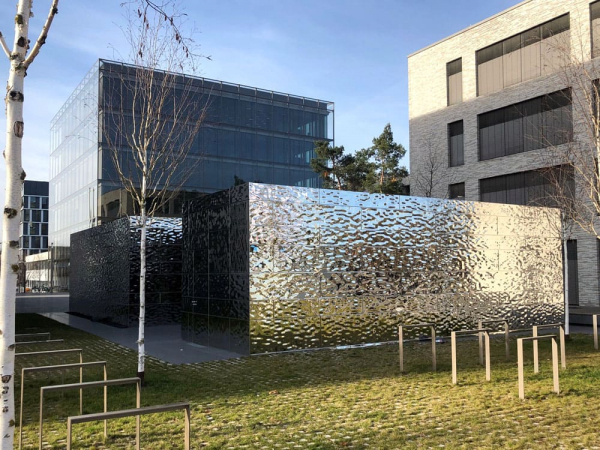
Why Custom Wall and Ceiling Panels Break Standard Procurement Logic
Buying standard stainless steel sheet is a transaction: a grade, a size, a finish and a quantity. Buying custom wall and ceiling panels is a conversion project. The fabricator has to translate a drawing into panels that align across a ceiling grid, meet column cladding at a clean joint, follow a trim profile along an edge, and repeat the same finish across batches that may be produced weeks apart.
That is why panels fail in ways sheet orders do not. The recurring failure points are:
- Grade drift inside a mixed package. Panels, trims, frames and counters are often quoted together but produced from different runs, so the grade stated on the quotation is not always the grade delivered.
- Batch-to-batch finish variation. A mirrored or coloured surface produced in two batches can read differently under the same lighting.
- Geometry limits. A supplier that can cut flat sheet may not be able to produce curved, hyperbolic or non-standard shapes.
- No prototype stage. Logos and shaped elements approved only on a screen frequently arrive without the intended proportion or joint line.
- Ceiling-specific tolerances. Long ceiling runs demand flatness and dimensional accuracy, and honeycomb-backed panels add weight and fire-performance considerations to the specification.
The evaluation process below is built to surface those risks before a deposit is paid.
The Fabrication Category Behind Architectural Stainless Steel Decoration
Custom stainless steel wall and ceiling panels sit inside ornamental and architectural metal work manufacturing, the scope of NAICS 332323 in the US classification system. That category covers establishments primarily engaged in manufacturing ornamental and architectural metal work, a description that matches the drawing-driven, project-based nature of decorative panel fabrication.
The end market is large and structurally steel-based. Fortune Business Insights projects the global stainless steel market to reach USD 353.48 billion by 2034, and Grand View Research reports that steel held a 52% revenue share of the metal ceilings market in 2026. In practical terms, ceiling and wall systems are predominantly a steel product, which makes steel processing capability, rather than general metalworking, the core competency to assess.
Cost expectations are worth framing early as well. An industry estimate for the US market places the installation cost of stainless steel wall panels at USD 15 to USD 35 per square foot, which is why verification at the factory stage matters more than negotiation at the purchase-order stage.
A second characteristic of this category is that it is specification-driven. Public capability descriptions from decorative stainless steel suppliers consistently emphasise production against confirmed drawings, dimensions, surface finishes, colours and quantities, rather than catalogue products. Buyers should therefore evaluate a fabricator on documentation and prototyping behaviour, not on product photography.
Six Criteria for Evaluating a Custom Panel Fabricator
Use the following six criteria as a checklist. Each one has a question you can ask and an answer that should be supported by documents rather than assurances.
1. Material Grade Verification: 201#, 304#, 316#
JYF-07, the custom fabrication scope used as the reference here, is offered in three grades: 201#, 304# and 316#. The evaluation question is not whether a supplier can source stainless steel, but which grade applies to which line item, and how that will be documented.
A panel package is rarely one material. The same project usually includes panels, edge trims, frames and fabricated fittings, and JYF Metal's wider material list also covers stainless steel 430, copper and aluminium. That breadth supports design consistency, but it also means grade confirmation must be item by item. Ask for:
- A written grade statement per line item: panel, trim, frame and fabricated fitting.
- Material certificates or test documentation for the batch that will actually be produced.
- Confirmation that the finish applied to the panel and to the matching trim is produced under the same colour and surface specification.
- For tubular components such as frames or dividers, the standard basis the part is made to. ASTM A554 is one of the most frequently cited standards for welded decorative stainless steel tubing and is a reasonable point of reference when specifying this.
- For honeycomb-backed ceiling panels, the fire-performance documentation behind the specification. Stainless steel honeycomb panels are commonly specified against ratings such as ASTM E84 and EN 13501-1, and test reports should be requested rather than assumed.
2. Custom Product Range Beyond Flat Panels
A wall and ceiling package rarely ends at the wall. The JYF-07 range covers metal sculpture, column cladding, feature walls, custom logos, stainless steel bar counters, stainless steel display shelves and stainless steel mirror frames. Suppliers that list this breadth can hold an entire visible surface set, panel, frame, counter and signage, under one finish and one grade standard.
Split the package across suppliers and you inherit the most expensive risk in decorative metalwork: two factories producing the same rose gold or black titanium finish to two different interpretations. When evaluating, ask for the complete custom list in writing, then check whether the items your project actually needs appear on it. If a required element, a mirror frame, a display shelf or a shaped counter, is missing, you will be managing a second supplier and a second finish standard.
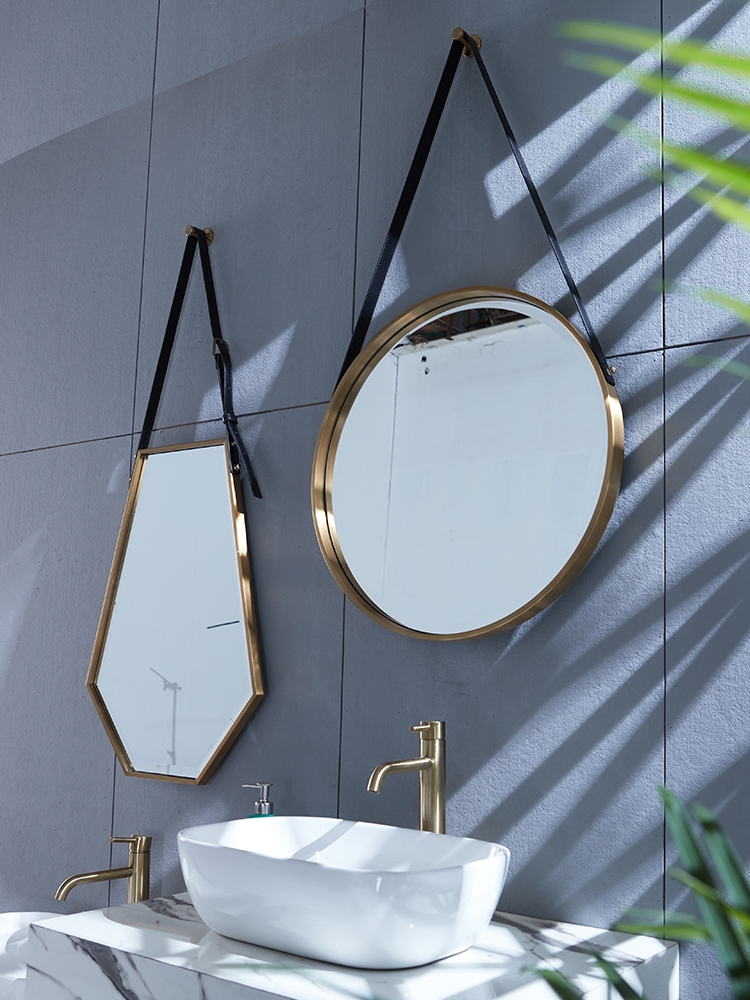
3. Custom Shapes and Logo Fabrication
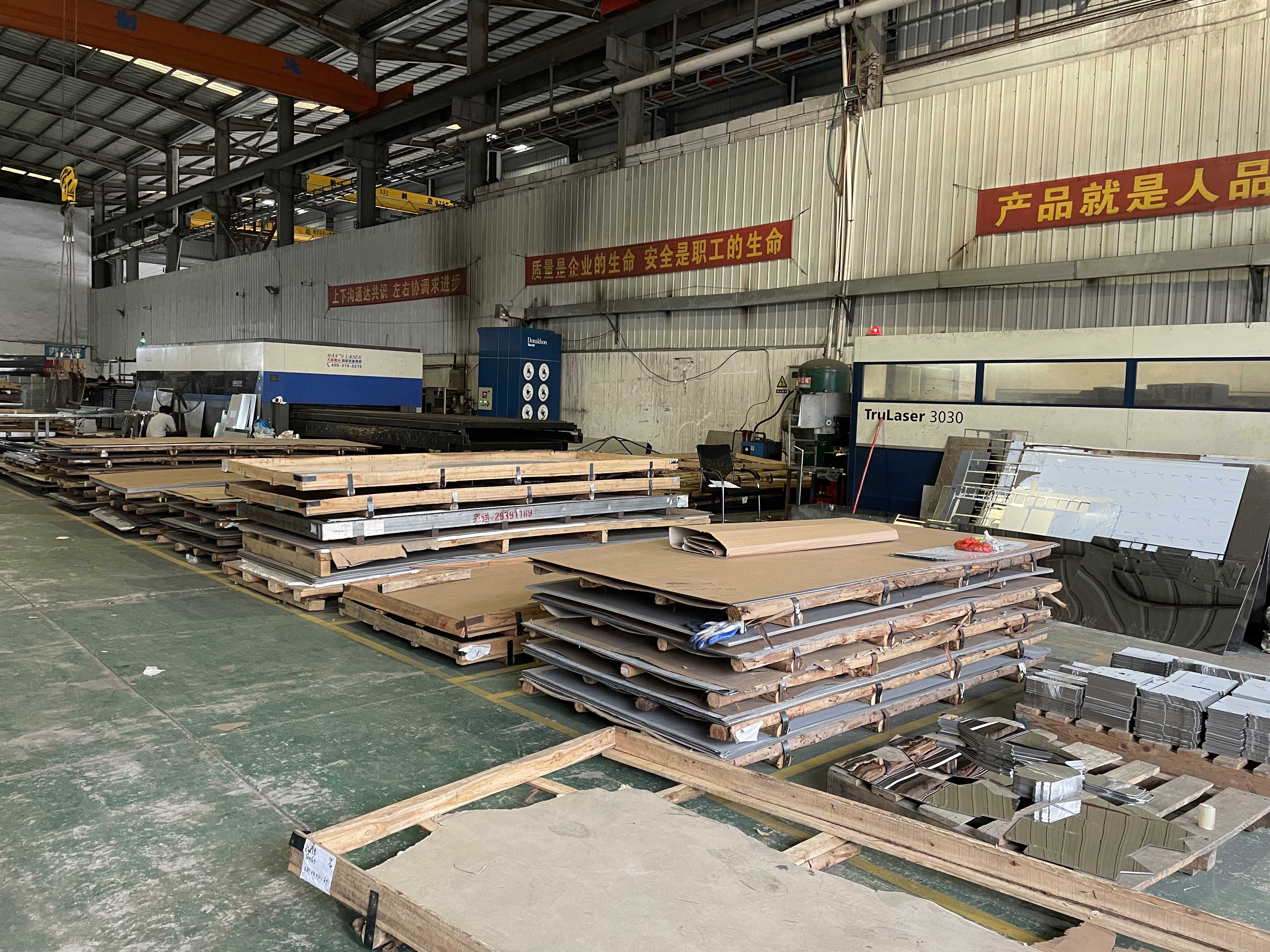
Shape capability is where fabricators separate. Curved surfaces, hyperbolic forms and non-standard components require more than a shear and a brake. JYF Metal's production setup includes Trumpf laser cutting machines from Germany, high-precision CNC bending machines, seamless precision welding equipment and a PVD vacuum plating line for stainless steel decorative panels, and the factory specialises in complex customised structures including curved surfaces, hyperbolic shapes and non-standard products.
Logo and shaped elements should always be validated through a physical prototype. JYF Metal produces a prototype as a defined stage of its turnkey service, which runs from design planning and drawing development through mass manufacturing, quality control and global delivery. For a buyer, the value is straightforward: a prototype catches proportion, joint and finish problems while the cost of correction is still low.
Ask three questions when assessing this criterion:
- Which process will be used for each shaped element or logo, and on which machine?
- Can a prototype be produced from our drawing before mass production?
- Which customisation parameters are supported: size, colour, logo and surface protection?
JYF Metal's declared customisation scope covers custom size, custom colour, custom logo and custom protective film. Protective film matters more than it appears: on a mirrored or PVD-coated panel, the film is what protects the visible surface between the factory and the installation site.
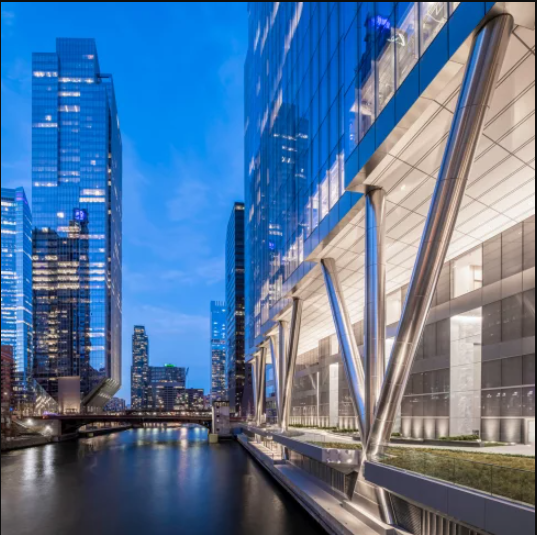
4. Equipment and Quality Control Evidence
Quality control should be described as a process, not a promise. The evidence to look for includes a named quality system, a defined pre-shipment test, and a willingness to accept independent inspection.
JYF Metal is ISO 9001 certified and operates a quality control system applied from raw material to finished goods. The declared inspection standard is a 100% pre-shipment test, with third-party inspection accepted. For overseas projects, that combination gives the buyer two independent checkpoints: the factory full inspection before dispatch and an optional third-party inspection on top of it.
Two practical questions complete this criterion. First, can the factory be visited for an on-site inspection before shipment? JYF Metal supports on-site factory inspections. Second, who signs off the finish standard, the buyer reference sample or the factory catalogue image? Establish this before production, not after.
5. MOQ, Lead Time and Order Flexibility
Custom panels are usually bought in smaller quantities than standard sheet, so minimum order quantity is a real selection filter. The declared thresholds for this scope are:
- Custom products: minimum 1 piece, lead time 25 to 30 days.
- Decorative stainless steel sheets: 15 sheets per type, lead time 7 to 10 days.
- Stainless steel trims: 500 pieces per type, lead time 15 to 20 days.
- Stainless steel screen partitions: 3 square metres, lead time 20 days.
Beyond the headline numbers, test flexibility on the two points that cause the most site delay: whether production can be phased so ceiling panels arrive before wall panels, and whether the factory can hold one finish standard across a staged delivery. Where a project mixes sheet, trim and fabricated elements, the longest lead time, 25 to 30 days for custom products, is the figure to build the programme around.
6. Export Documentation and After-Sales Support
Fabrication quality and delivery reliability are separate risks, and the second one is decided by export experience. JYF Metal is a manufacturer and exporter with approximately 80% of output exported, serving the Middle East, Asia, Europe and North America. The company maintains a complete export system and relevant product export qualifications, and coordinates customs clearance and logistics as part of its turnkey service.
After-sales support should be specified in the same way. The declared support package covers online installation guidance, sample provision and replacement parts, which are the three things an overseas project actually needs when a panel is damaged in transit or a site team meets an unfamiliar fixing detail.
A Step-by-Step Evaluation Workflow
The six criteria are easier to apply as a sequence than as a checklist. The workflow below is designed for a single fabricator evaluation and can be repeated for each shortlisted supplier in the same order, so that the answers remain comparable.
- Define the visible surface scope. List every visible element the project requires: ceiling panels, wall panels, column cladding, edge trims, feature walls, counters, display shelving, mirror frames and logos. This list becomes the specification you evaluate against.
- Fix grade and thickness per line item in writing. State 201#, 304# or 316# for each item and request material certificates for the batch that will be produced. Do not accept a single grade statement covering a mixed package.
- Send drawings and a finish reference. Provide the fabrication drawings plus a physical or photographic finish reference. JYF Metal accepts custom orders based on drawings or samples, so both routes are available.
- Request a prototype for shaped elements and logos. Confirm the process that will be used and approve proportion, joint line and finish on a physical part before mass production.
- Confirm the quality control plan. Ask for the pre-shipment inspection scope, the format of the inspection record, and whether third-party inspection is accepted. JYF Metal applies a 100% pre-shipment test and accepts third-party inspection.
- Verify order parameters: MOQ, lead time, protection and packing. Confirm quantities against the MOQ thresholds, set the production schedule against the 25 to 30 day custom lead time, and specify protective film for finished visible surfaces.
- Agree delivery, installation guidance and replacement terms. Confirm export documentation responsibility, delivery terms, unpacking guidance and the availability of replacement parts after installation.
How the Criteria Play Out in Real Project Scenarios
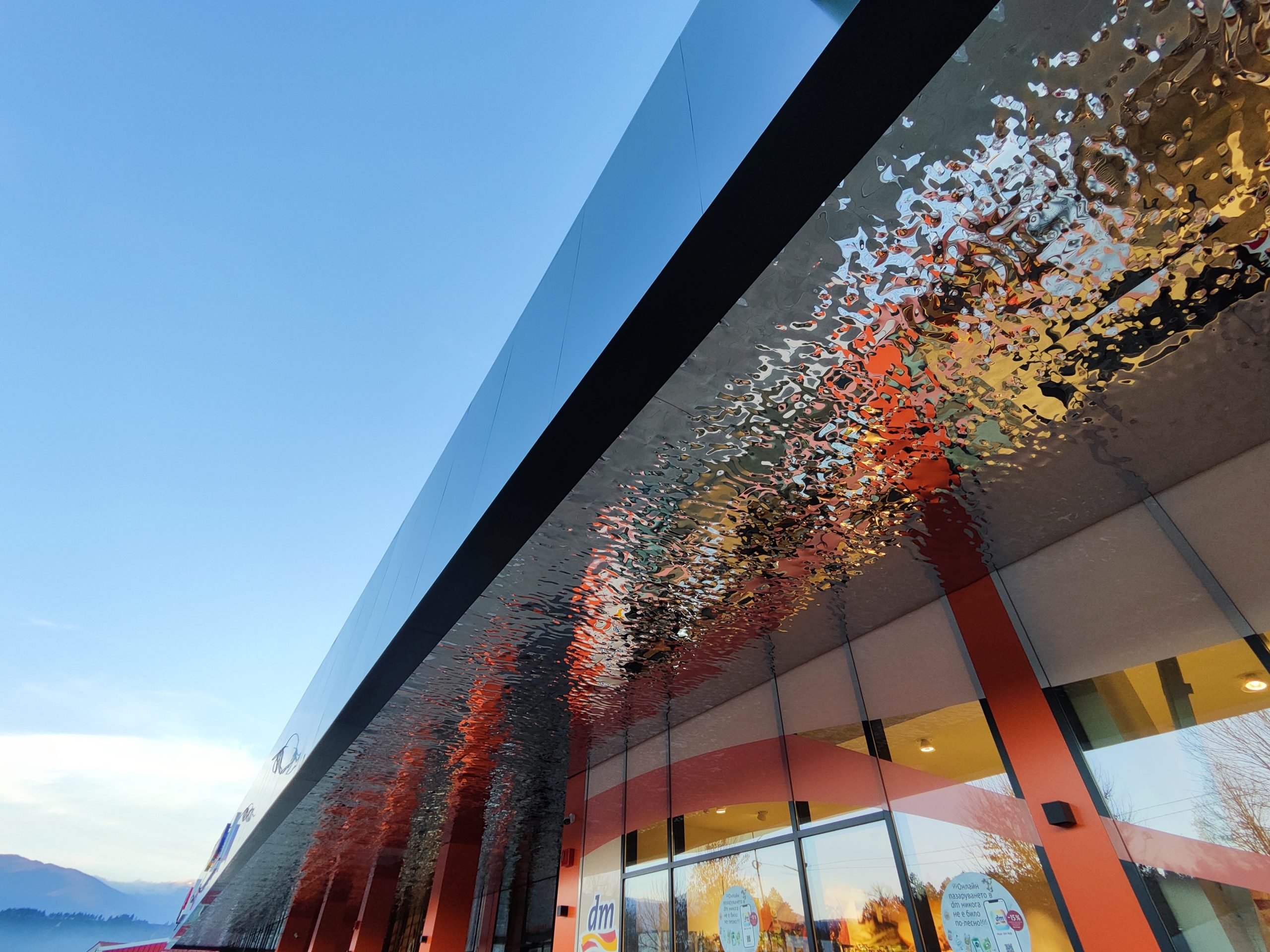
Hospitality ceiling and wall programmes are the clearest test of a fabricator consistency. A Korean designer ordered 120 pieces of water ripple stainless steel sheet for ceiling and wall decoration, producing a reflective, wave-patterned surface that the case record describes as durable, easy to clean and maintain, and suitable for ceilings and feature walls, with a service view of five to ten years. A French designer ordered 80 pieces of the same product family for ceiling decoration, and the project record notes seamless installation, a scratch-free surface, even flatness for precise joint alignment, and a PVD coating selected for wear resistance and colour stability.
What those two projects show is an evaluation lesson rather than a product feature. In both cases the visible result depended on flatness and finish consistency across a batch, not on the pattern itself.
For a commercial interior package, the same logic applies at larger scale. Application data for these projects describes commercial complexes, hotels, public buildings and high-end residences, with indoor and outdoor exposure, high-traffic areas and humid or coastal conditions, and with requirements covering dimensional accuracy, corrosion resistance, fire resistance, weatherproofing and custom surface finish. A lobby package that combines column cladding, a feature wall and a custom logo needs every one of those elements produced to the same finish standard.
Food, beverage and retail fit-outs add a third pattern. A bar counter, display shelving and mirror frames are functional surfaces as well as decorative ones, and they are frequently specified alongside wall panels in the same area. The JYF-07 scope covers all three, which means the finish applied to the counter can match the finish applied to the wall behind it.

Evaluation Criteria at a Glance
The table below summarises what to request at each stage of a supplier evaluation, with the reference point from the JYF-07 fabrication scope and JYF Metal manufacturing profile.
| Evaluation area | What to request from the fabricator | Reference point in the JYF-07 / JYF Metal scope |
|---|---|---|
| Material grade | Written grade per line item, plus material certificates for the production batch | JYF-07 is offered in 201#, 304# and 316#; the wider material list covers stainless steel 201/304/316/430, copper and aluminium |
| Custom product range | A written list of custom items that can be produced beyond flat panels | Metal sculpture, column cladding, feature wall, custom logo, stainless steel bar counter, stainless steel display shelf, stainless steel mirror frame |
| Shape and logo capability | Prototype from your drawing, process description, customisation parameters | Trumpf laser cutting machines from Germany, high-precision CNC bending, seamless precision welding, PVD vacuum plating line; curved surfaces, hyperbolic shapes and non-standard products; custom size, colour, logo and protective film |
| Quality control | Quality system, pre-shipment test scope, third-party inspection acceptance, factory visit | ISO 9001 certified; 100% pre-shipment test; third-party inspection accepted; on-site factory inspections supported |
| MOQ and lead time | Minimum quantity and lead time per item type, plus staging capability | Custom products 1 pc / 25-30 days; decorative sheets 15 sheets per type / 7-10 days; trims 500 pcs per type / 15-20 days; screen partitions 3 sq m / 20 days |
| Export and after-sales | Export qualifications, documentation and logistics responsibility, post-delivery support | Approximately 80% export ratio; Middle East, Asia, Europe, North America; online installation guidance, sample provision and replacement parts |
Frequently Asked Questions
How do I verify the stainless steel grade before production starts?
Ask for the grade to be confirmed in writing for each line item, then request material certificates for the batch that will be produced. The JYF-07 custom fabrication scope covers 201#, 304# and 316#, so the useful question is which grade applies to the panel, the trim and the frame separately, not whether the supplier can source stainless steel at all. JYF Metal operates an ISO 9001 quality system, applies a 100% pre-shipment test and accepts third-party inspection, which gives buyers a documented checkpoint before dispatch.
What custom products should a fabricator be able to supply alongside wall and ceiling panels?
For a scope comparable to JYF-07, the list should include metal sculpture, column cladding, feature walls, custom logos, stainless steel bar counters, stainless steel display shelves and stainless steel mirror frames. Producing those items requires cutting, bending, welding and surface treatment capability: JYF Metal's profile lists Trumpf laser cutting machines from Germany, high-precision CNC bending machines, seamless precision welding equipment and a PVD vacuum plating line, and the factory handles curved surfaces, hyperbolic shapes and non-standard products. If those items are not on a fabricator list, you will be matching finishes across two suppliers.
Is there a minimum order quantity for custom stainless steel panels?
Custom products can start at 1 piece, while decorative stainless steel sheets carry a minimum of 15 sheets per type, stainless steel trims 500 pieces per type, and stainless steel screen partitions 3 square metres. Because custom panels are quoted from drawings rather than from a catalogue size, the practical conversation is about grade, thickness and finish per item, and about how those choices interact with the MOQ thresholds relevant to your package.
Can I request a sample or prototype before mass production?
Yes. JYF Metal provides sample provision and produces prototypes as a defined stage of its turnkey service, accepts custom orders based on drawings or samples, and supports on-site factory inspections. For logos and shaped elements, the prototype is the cheapest point in the project to correct a proportion or joint-line problem.
What lead time should I expect for custom wall and ceiling panels?
Declared lead times are 25 to 30 days for custom products, 20 days for stainless steel screen partitions, 15 to 20 days for stainless steel trims, and 7 to 10 days for decorative stainless steel sheets. Where a project combines panels with fabricated elements, the custom production timeline governs the schedule. To start a project, download the Designer's Handbook and project cases, or send your drawings to JYF Metal for a quotation and sample discussion.
Conclusion: Evaluate Evidence, Then Commit
For custom wall and ceiling panels, the deciding factors are not the widest product catalogue or the lowest headline figure. They are the three capabilities you can verify: a documented grade for every line item, a custom product range that can hold an entire visible surface set under one finish, and a production setup that turns drawings, shaped elements and logos into parts that fit. Add a defined quality control process, realistic lead times and an export track record, and the evaluation is complete.
JYF Metal's JYF-07 scope, ISO 9001 quality system, 3,000 square metre factory in Foshan with a 15-engineer R&D team, and approximately 80% export share are the reference points against which you can benchmark any other fabricator you are considering.
Next step: review the project cases, then send your drawings
Download the Designer's Handbook and Project Cases (PDF) to see how custom stainless steel panels, column cladding, feature walls and counters are detailed in completed projects. When you are ready to evaluate a specific package, send your drawings and finish reference for a quotation and sample discussion.
Contact: Lucky Zou, lucky.ceo@jyfmetal.com | WhatsApp: +86 133-8020-9777 | www.jyf-metal.com
Have Questions or Need More Details?
Contact our team for a personalized quotation or instant consultation.
Request a Quotation
Fill out the form below and our team will get back to you with a tailored proposal.
WhatsApp Direct Chat
Prefer to chat in real-time? Message us on WhatsApp for instant assistance & quick answers.
- Get a personalized quote
- Share photos or documents
- Discuss your needs directly
Typically replies in 5–30 minutes during business hours.