
Mirror vs. Sandblasted Stainless Steel Sheets: Head-to-Head for Upscale Retail Facades
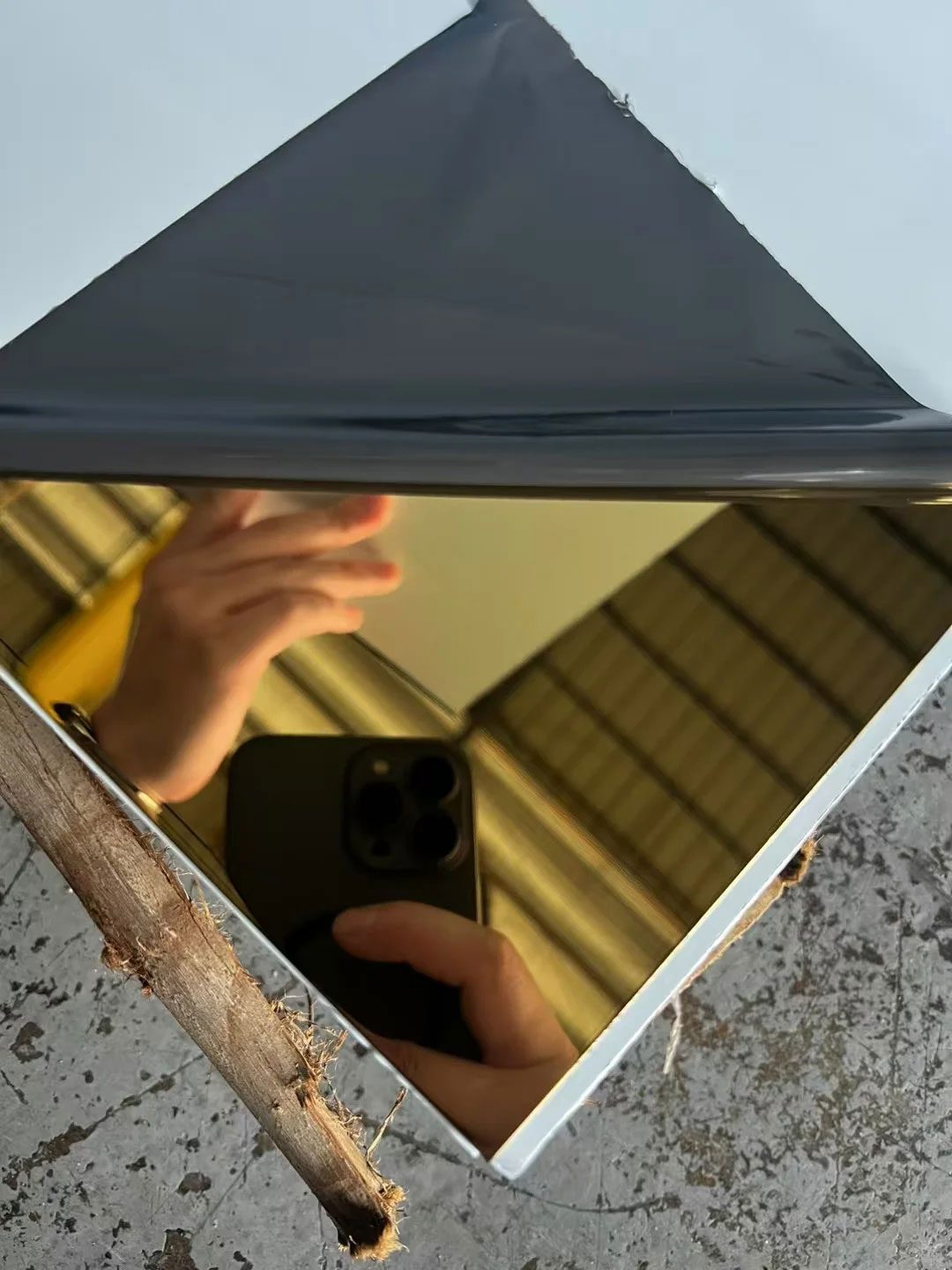
Mirror-finish decorative stainless steel sheet (JYF-01) — a high-reflectance surface specified for upscale retail storefronts and interior feature walls.
An upscale retail facade has to do three jobs at the same time: signal the brand from across a mall concourse, survive daily contact at arm's length, and stay visually consistent panel after panel for years. The finish you specify decides how well it does all three. Mirror-finish stainless steel sheet (JYF-01) and sandblasted stainless steel sheet (JYF-03) sit at the two ends of the reflectivity range in architectural stainless steel decoration, and they solve opposite problems.
The short answer: specify mirror when the facade must create depth, brightness and a display-case look, and specify sandblasted when the facade must stay visually calm under heavy footfall, direct spot lighting and long cleaning intervals. Both finishes are produced in SS201, SS304 and SS316, both run from 0.5 mm to 3.0 mm in thickness, and both are supplied in the standard sheet sizes of 1000x2000 mm, 1220x2440 mm and 1220x3050 mm.
Problem Definition: What Actually Goes Wrong on a Retail Facade
The finish decision is usually framed as a style question, but on retail projects it is a failure-mode question. Each finish fails in a different way, and the buyer needs to know which failure the project can tolerate.
- Mirror failure mode: a reflective face records everything that touches it. Fine scratches, fingerprints, dust film and cleaning streaks stay visible, and a single replaced panel can read as a tone difference next to its neighbours.
- Sandblasted failure mode: a diffused matte face loses the deep reflected image. If blasting pressure, grit and dwell time are not held constant across a production run, panels can differ in sheen and the wall can look patchy under grazing light.
A second, quieter problem is zoning. Few retail projects need one finish throughout. An entrance surround, a merchandising feature wall, a column cladding run and a soffit ceiling are exposed to different levels of contact, glare and cleaning, so the practical question is usually where to place mirror and where to place sandblasted on the same elevation, using the same grade, thickness and base colour so the two behave as one design language.
Industry Background: Why This Is a Specification Decision, Not a Taste Decision
Stainless steel is a mainstream architectural material rather than a niche option. According to Fortune Business Insights, the global stainless steel market was valued at USD 225.13 billion in 2025 and is projected to reach USD 353.48 billion by 2034. In the adjacent metal ceilings segment, Grand View Research reported that steel held a 52% revenue share in 2026, ahead of aluminium. In the United States, ornamental and architectural metal work manufacturing is classified under NAICS 332323 by the U.S. Census Bureau classification system.
Within that broad market, decorative stainless steel is a specification-driven niche. Product and process pages published by suppliers such as HENGINOX, Aoxing Metal and Xinye Metal describe the same competitive pattern: cutting, bending, welding, etching, mirror finishing, water ripple texturing and PVD colour coating, delivered against confirmed drawings, dimensions, finishes, colours and quantities. In other words, buyers in this category screen suppliers by their finishing stack and their drawing-based fabrication depth, not by generic metalworking claims.
For a retail facade, that has a direct consequence. The finish is not an isolated material choice — it is tied to who can hold a consistent polish or a consistent blast across a whole elevation, in the grade and thickness the project needs, and in the colour the brand book calls for.
Detailed Solution: JYF-01 Mirror and JYF-03 Sandblasted, Side by Side
JYF Metal (Foshan Jinyifan Metal Products Co., Ltd.), established in 2013 in Foshan, Guangdong, manufactures and exports customised architectural stainless steel decoration for commercial, hospitality and luxury interior projects. The company operates a 3,000 m² manufacturing facility with approximately 150 staff, a 15-engineer R&D team, a PVD vacuum plating line for stainless steel decorative panels and laser cutting equipment, and reports ISO 9001 certification. Around 80% of its sales are export, across the Middle East, Asia, Europe and North America.
JYF-01 — Mirror Finish Stainless Steel Sheet
The JYF-01 is a decorative stainless steel sheet classified as a mirror finish stainless steel sheet, intended for the architecture industry. It is available in SS201, SS304 and SS316. Thickness ranges from 0.5 mm to 3.0 mm. Regular sheet sizes are 1000x2000 mm, 1220x2440 mm and 1220x3050 mm. Available colours include silver, gold, rose gold, black, blue, copper and custom shades.
In application, this sheet family is used in wall panels, column wrapping, elevator decoration and ceiling projects. It is installed in dry-hanging and adhesive modes, and it typically requires supporting elements such as frameworks, honeycomb substrates and lighting systems. Project requirements commonly listed for this product include corrosion resistance, scratch resistance, colour stability and custom textures. JYF-01 applications are documented across markets including Australia, Bulgaria, Canada, France, Iran, Jordan, Cambodia, South Korea, Malaysia, Poland, Thailand and the United States.
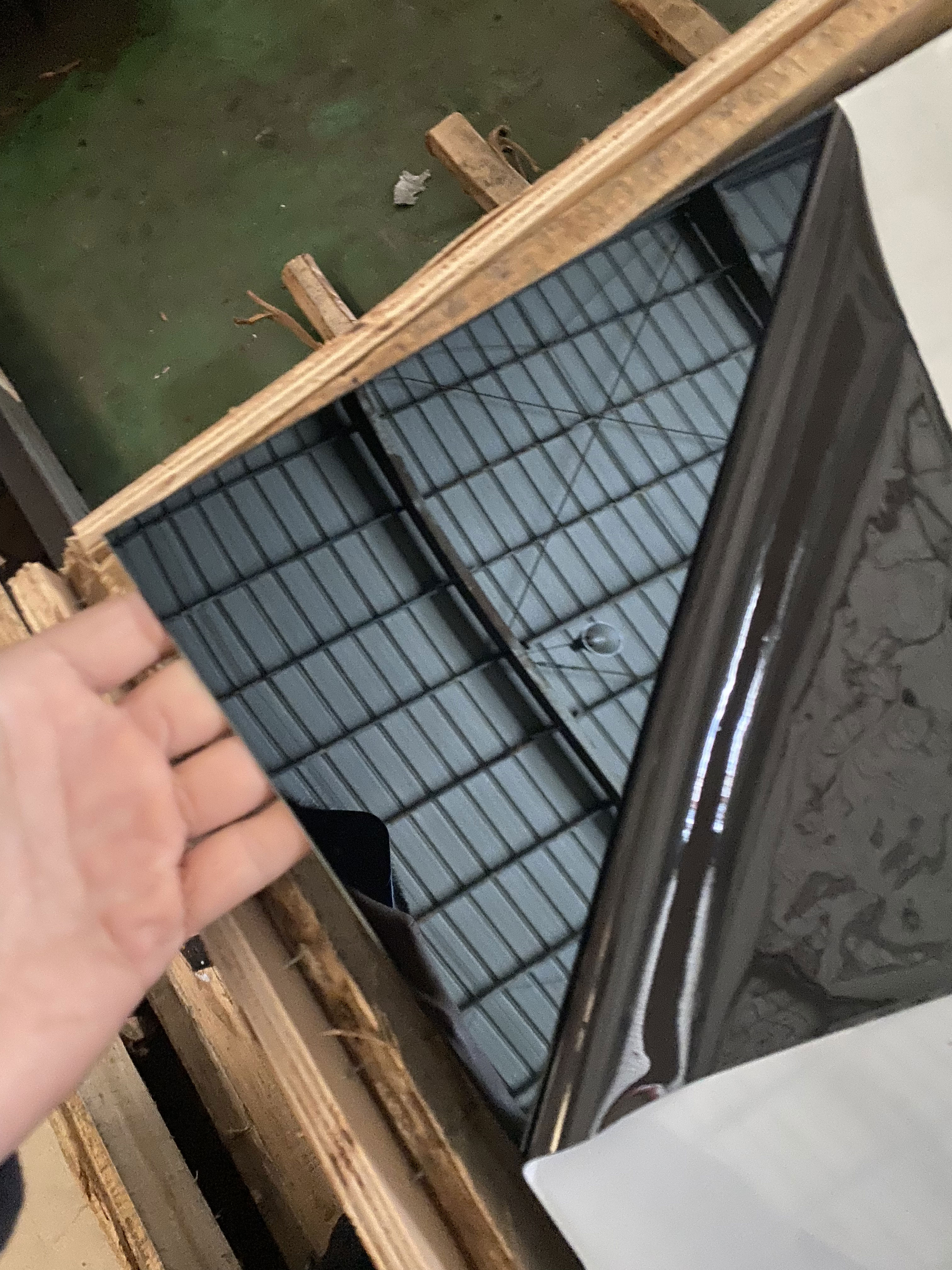
Black mirror stainless steel sheet (JYF-01) — a high-reflectance option for luxury retail storefront framing and back-of-counter feature walls.
JYF-03 — Sandblasted Stainless Steel Sheet
The JYF-03 is a decorative stainless steel sheet classified as a sandblasted stainless steel sheet, also intended for architectural decoration scenarios. It is made of SS201, SS304 or SS316. The thickness range is 0.5 mm to 3.0 mm. Regular sizes are 1000x2000 mm, 1220x2440 mm and 1220x3050 mm. Available colours include silver, gold, rose gold, black, blue, copper and custom finishes.
Sandblasted sheet belongs to the same architectural sheet family as the mirror, brushed and water ripple products, and shares the same project logic: it is applied in wall panels and column wrapping work, installed by dry-hanging or adhesive fixing, and it depends on frameworks, honeycomb substrates and lighting systems in the same way. Colour and texture consistency across the run is the main quality requirement to lock down in the purchase specification.
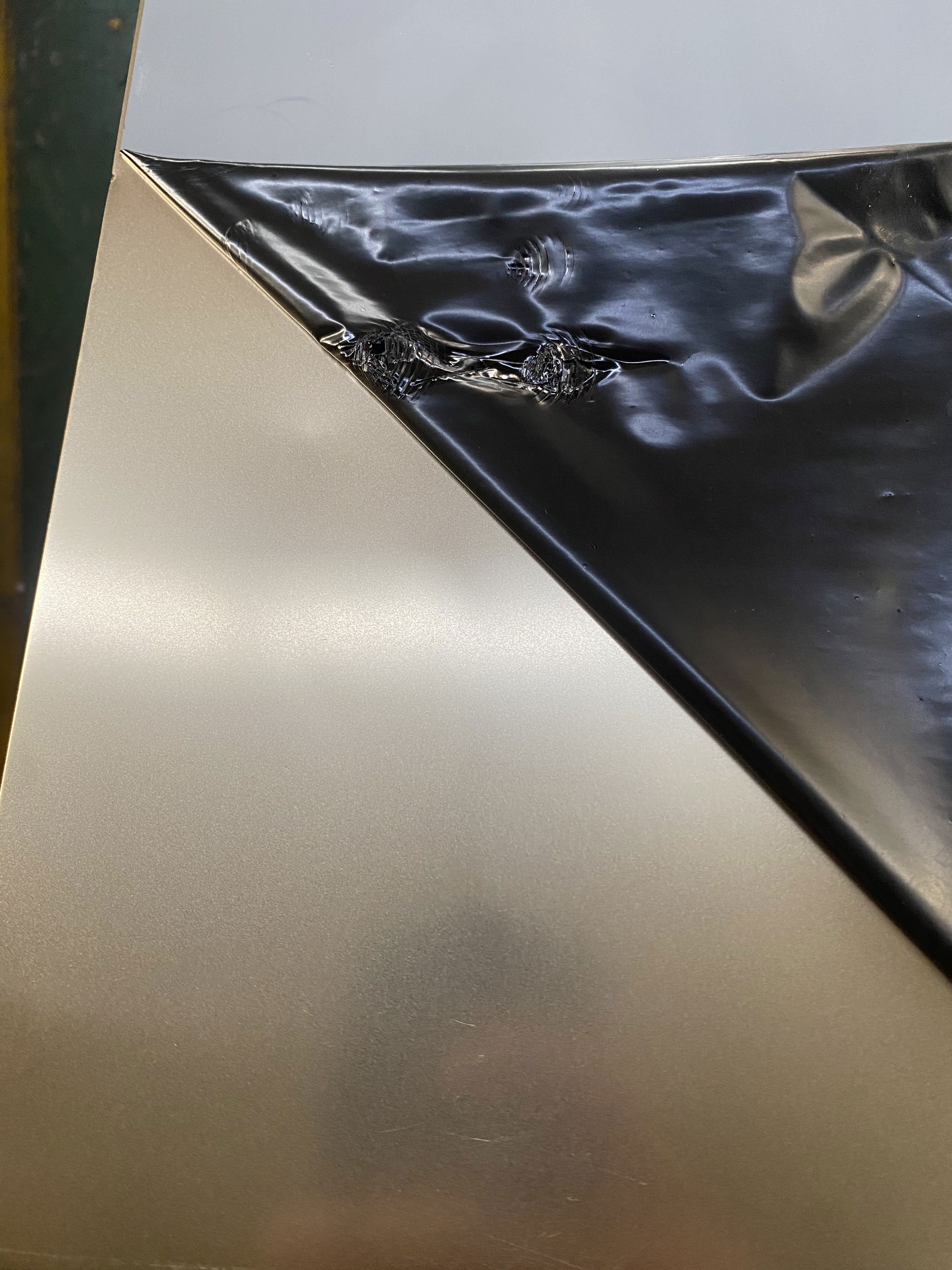
Sandblasted champagne gold stainless steel sheet (JYF-03) — a diffused, low-glare face used where reflections must be controlled across a large retail wall.
What Separates Them on a Storefront
Mirror works by reflection, so the perceived depth of the facade is created by what the surface throws back. On a retail elevation this is often the point: a mirror band beside a window display pulls light and merchandise imagery across the wall, and a mirror column reads thinner and lighter than its actual dimensions. The cost of that behaviour is maintenance sensitivity and glare management, because track spots and window reflections can produce bright hot spots if the geometry is not planned.
Sandblasted works by diffusion. The surface scatters light instead of returning an image, which flattens glare, reduces the visual impact of incidental marks, and holds a consistent appearance under uneven site lighting. The trade-off is that the finish is quieter: it will not deliver the depth or brightness of mirror, and it needs a controlled blasting process to avoid panel-to-panel sheen variation.
Step-by-Step Breakdown: Specifying the Right Finish for a Retail Project
Step 1 — Map the facade by contact level, not by drawing order
Divide the elevation into high-contact zones (door surrounds, hand-adjacent panels, low column bases) and low-contact zones (upper facade band, soffits, high level column cladding). High-contact zones generally favour sandblasted; low-contact zones can carry mirror without exposing it to constant handling.
Step 2 — Check how the lighting will hit the surface
Retail schemes use concentrated spot lighting and large glazed openings. Mirror surfaces amplify both; sandblasted surfaces absorb them. Where the client wants a bright, deep facade, place mirror perpendicular to the display lighting rather than directly under it, and use sandblasted for the ceiling or soffit plane above it.
Step 3 — Match the grade to exposure
Both JYF-01 and JYF-03 are available in SS201, SS304 and SS316. Grade choice normally follows environment and budget: SS304 is the common default for architectural interior work, SS316 is frequently specified where chloride exposure or coastal humidity is a factor, and SS201 is a cost-driven option for controlled indoor conditions. Grade selection should be confirmed against the project specification before the finish is finalised.
Step 4 — Fix thickness and sheet size against the substrate
Both finishes run from 0.5 mm to 3.0 mm, with standard sheet sizes of 1000x2000 mm, 1220x2440 mm and 1220x3050 mm. Panel module, joint layout and the supporting frame or honeycomb substrate determine the practical thickness. Thin sheet over an uneven frame will telegraph distortion on a mirror face far more visibly than on a sandblasted face, so the substrate specification matters more with mirror.
Step 5 — Decide colour and coating route
Silver, gold, rose gold, black, blue, copper and custom shades are available on both finishes. Colour is applied through the PVD route on JYF Metal's vacuum plating line, which means the finish and the colour are two separate specifications and both have to be stated on the purchase order.
Step 6 — Detail the transitions and the surrounding systems
Retail elevations are rarely a single sheet plane. Matching profiles, stainless steel trims (JYF-06, available in L, U, T, V, curved, corner, flat strip and skirting board shapes, in mirror, brushed, vibration and sandblasted finishes), screen partitions, column cladding and ceiling panels all sit in the same visual field. Specifying the transition trims in the same finish family prevents a facade that reads as several unrelated materials.
Step 7 — Validate with a sample before mass production
Mirror and sandblasted behave differently under the exact site lighting, and colour batches vary by coating run. Physical samples are the standard way to confirm sheen, colour and surface quality before a large retail order is released.
Use Cases: Where Each Finish Earns Its Place in Retail
Storefront band and entrance surround — mirror
The entry frame is the highest-visibility, usually lowest-contact-adjacent element, apart from the door handle itself. A mirror band around the glazing pulls daylight into the facade and makes the opening read wider. Keep the mirror above handle height and pair it with sandblasted or brushed returns where hands and trolleys pass.
Interior merchandising feature wall — sandblasted base, mirror accent
A large sandblasted wall gives a matte, even background for displays, while a narrower mirror strip or logo panel adds the reflective accent. This is the most common retail combination because it separates the high-traffic surface from the focal surface.
Column cladding at mall frontage — sandblasted
Columns take repeated contact from shoppers, cleaning equipment and trolleys. Column cladding in sandblasted sheet keeps the architectural stainless steel decoration intent while limiting the visibility of marks. Mirror column cladding remains suitable where the column is protected or where the mirror is set above reach.
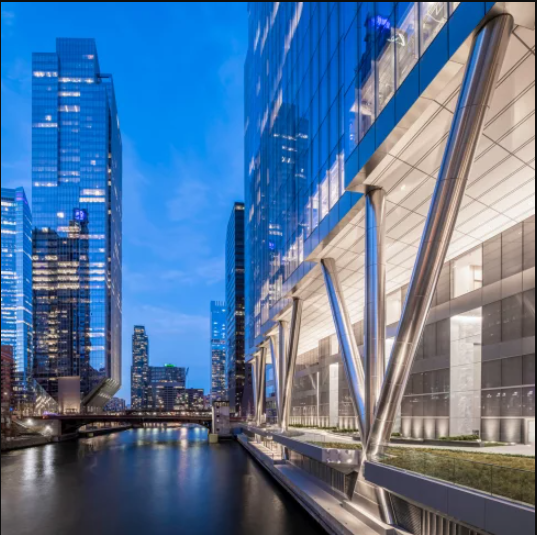
Custom stainless steel column cladding fabricated to project drawings — a typical retail facade element where finish choice is split by height and contact level.
Ceiling and soffit panels — sandblasted
Stainless steel ceiling panels under concentrated downlights are where mirror glare becomes a design problem. Sandblasted and ripple surfaces diffuse the light and keep the ceiling plane visually quiet, which is why they are frequently paired with mirror vertical elements in the same scheme.
Cash wrap, bar counter and display joinery — mixed
Counter fronts, display shelves, mirror frames and custom bar counters in the same project usually combine finishes: a mirror front panel with sandblasted sides, or the reverse. Because both finishes come from the same sheet family in the same grades and thicknesses, the fabrication drawings can treat them as one material with two surface states.
Comparison Table: Mirror (JYF-01) vs. Sandblasted (JYF-03)
| Comparison dimension | Mirror finish — JYF-01 | Sandblasted finish — JYF-03 |
|---|---|---|
| Finish classification | Mirror finish stainless steel sheet | Sandblasted stainless steel sheet |
| Surface behaviour | Reflective; returns a specular image | Diffused; scatters light, no reflected image |
| Visual effect on a facade | Depth, brightness, display-case look | Matte, uniform, low-glare plane |
| Glare under spot lighting | High — requires lighting and geometry planning | Low — preferred for ceilings and soffits |
| Visible marks and scratches | Fine scratches, fingerprints and dust film read clearly | Incidental marks are visually softened |
| Cleaning routine | Frequent, streak-free wiping expected | Less frequent; surface tolerates routine cleaning |
| Best retail position | Entrance surrounds, accent bands, protected focal panels | High-contact walls, columns, ceilings, large background planes |
| Material grades | SS201, SS304, SS316 | SS201, SS304, SS316 |
| Thickness range | 0.5–3.0 mm | 0.5–3.0 mm |
| Standard sheet sizes | 1000x2000 mm, 1220x2440 mm, 1220x3050 mm | 1000x2000 mm, 1220x2440 mm, 1220x3050 mm |
| Colour options | Silver, gold, rose gold, black, blue, copper, custom | Silver, gold, rose gold, black, blue, copper, custom |
| Installation modes | Dry-hanging and adhesive installation | Dry-hanging and adhesive installation |
| Supporting elements | Frameworks, honeycomb substrate, lighting systems | Frameworks, honeycomb substrate, lighting systems |
| Project requirements to list | Corrosion resistance, scratch resistance, colour stability, custom textures | Colour and texture consistency across the run, scratch resistance |
Specification rows reflect the published JYF-01 and JYF-03 product parameters. Surface-behaviour and cleaning rows describe general finishing practice rather than measured test results.
FAQ: Mirror vs. Sandblasted Stainless Steel Sheets for Retail Facades
Which stainless steel grade should a retail facade specify — SS201, SS304 or SS316?
Both the mirror finish JYF-01 and the sandblasted JYF-03 are available in SS201, SS304 and SS316, so the grade is a separate decision from the finish. In common architectural practice, SS304 is the standard interior default, SS316 is frequently specified where chloride exposure or coastal humidity applies, and SS201 is used as a cost-driven option in controlled indoor conditions. Because the finish, the grade and the thickness are three independent line items, all three should appear on the purchase order. JYF Metal operates under ISO 9001 certification.
What thicknesses, sheet sizes and colours can JYF Metal supply in these two finishes?
Both the JYF-01 mirror finish sheet and the JYF-03 sandblasted sheet are supplied in thicknesses from 0.5 mm to 3.0 mm, in the standard sheet sizes of 1000x2000 mm, 1220x2440 mm and 1220x3050 mm. Colour options for both include silver, gold, rose gold, black, blue, copper and custom shades, produced through the PVD vacuum plating line for stainless steel decorative panels. Beyond flat sheet, JYF Metal fabricates related systems from the same material family, including wall and ceiling panels, column cladding, screen partitions, trims, bar counters and custom metal components, supported by a 15-engineer R&D team working from project drawings.
What drives the cost difference between a mirror and a sandblasted specification?
The two finishes start from the same base material in the same grades and thicknesses, so the spread comes from processing, not from the raw sheet. Mirror requires a polishing sequence, sandblasted requires a controlled blasting step, and a coloured version of either adds PVD coating on top. Panel module and yield, edge treatment, joint detailing and order quantity all move the number further. Publicly available cost references rarely separate base sheet price from project-specific customization surcharges; for reference on the installed side, secondary US market data places stainless steel wall panel installation in the range of USD 15 to USD 35 per square foot, which covers installation rather than material. A quoted project figure should always be based on drawings, finish, grade, thickness and quantity.
Can we validate the finish before releasing a full production order?
Yes. Finish validation normally starts with a physical sample in the specified grade, thickness, colour and surface so that sheen, reflection level and colour can be checked under the actual site lighting. JYF Metal supports custom orders based on drawings or samples and welcomes on-site factory inspections, which allows a retail project team to confirm surface quality, colour consistency and fabrication detail before mass production is released.
How should lead time be planned for a retail facade order?
Lead time for mirror and sandblasted sheet is driven by the finishing sequence, the PVD colour batch, the order quantity and the export and logistics schedule rather than by a single fixed figure. Because mirror and sandblasted require different processing steps and coloured versions add a coating stage, the schedule should be confirmed at quotation stage against the project programme. JYF Metal exports roughly 80% of its output to the Middle East, Asia, Europe and North America and coordinates compliant export clearance and logistics for overseas projects, so delivery planning should be built into the facade programme from the start rather than added at the end.
Conclusion: Choosing Between Reflection and Diffusion
Mirror and sandblasted stainless steel sheets are not competing versions of the same surface — they are two different design tools that happen to share the same material, grades, thicknesses, sheet sizes and colour range. Mirror-finish JYF-01 buys depth, brightness and a high-end reflected image, and it asks the project to manage glare, cleaning and handling in return. Sandblasted JYF-03 buys a calm, uniform, low-glare plane that holds its appearance under traffic, and it asks the supplier to hold blasting consistency across the full production run.
The practical specification method is to zone the facade first, assign each zone to the finish whose failure mode the project can live with, keep both finishes in the same grade, thickness and colour family so the elevation stays coherent, and validate the result with a physical sample before releasing production. For upscale retail work, the strongest facades are usually the ones that use both finishes deliberately rather than picking one for the whole elevation.
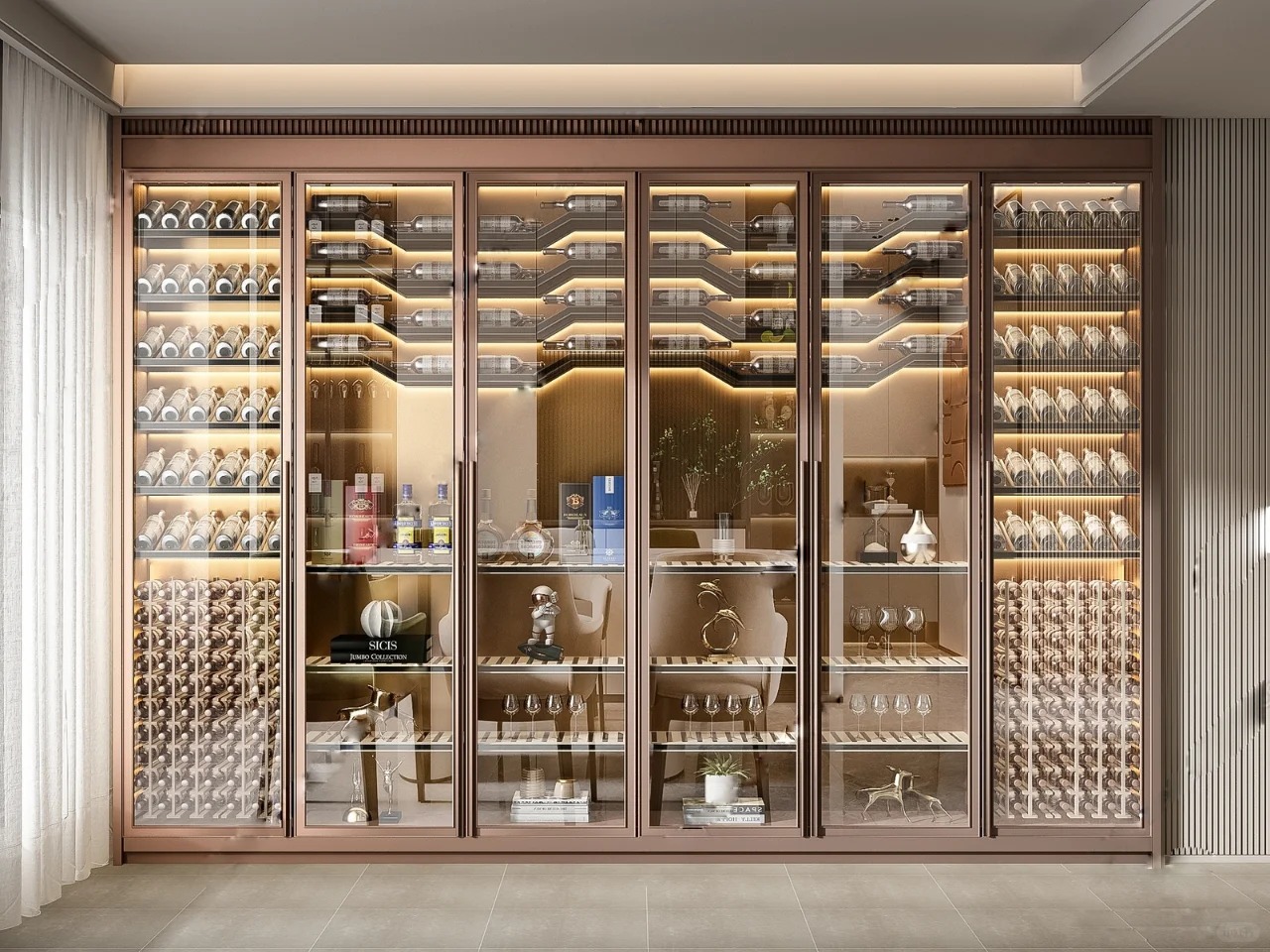
Custom stainless steel display and cabinet fabrication — retail interiors where mirror and sandblasted surfaces are combined within one joinery package.
Request Mirror and Sandblasted Samples for Your Retail Project
JYF Metal supplies mirror finish (JYF-01) and sandblasted (JYF-03) decorative stainless steel sheets in SS201, SS304 and SS316, from 0.5 mm to 3.0 mm, with custom PVD colours and fabrication to project drawings. Send your facade drawings or the finish, grade and colour you are evaluating, and the team will prepare a sample and a project-specific quotation.
Email: lucky.ceo@jyfmetal.com | Tel / WhatsApp: +86 133-8020-9777 | Website: www.jyf-metal.com | Blog: blog.jyf-metal.com
Download the Designer's Handbook with project cases: Designer's Handbook & Project Cases (PDF)
Have Questions or Need More Details?
Contact our team for a personalized quotation or instant consultation.
Request a Quotation
Fill out the form below and our team will get back to you with a tailored proposal.
WhatsApp Direct Chat
Prefer to chat in real-time? Message us on WhatsApp for instant assistance & quick answers.
- Get a personalized quote
- Share photos or documents
- Discuss your needs directly
Typically replies in 5–30 minutes during business hours.