Selecting Stainless Steel Material Grade and Thickness: A Technical Guide for Architects
Selecting Stainless Steel Material Grade and Thickness: A Technical Guide for Architects
Grade and thickness decide whether an architectural stainless steel surface still reads as intended after years of cleaning, traffic and weather. They are also the two decisions most often postponed to shop-drawing stage, by which point the finish has already been fixed and the panel module has already been set out.
The working rule for this guide is simple: the environment selects the grade, and the substrate and span select the thickness. Exposure to chlorides, humidity and airborne pollutants drives the choice between SS201, SS304 and SS316. Substrate type, panel span, joint layout and the forming process drive the choice between thin decorative gauges and heavier ones. Standard sheet sizes then convert both decisions into a buildable panel layout.
The material, thickness and size data referenced below comes from the decorative stainless steel sheet ranges JYF-01 (mirror), JYF-02 (brushed), JYF-03 (sandblasted) and JYF-04 (water ripple), and from the decorative profile range JYF-06 used for trims and skirting, all manufactured by Foshan Jinyifan Metal Products Co., Ltd. (JYF Metal), a metal decoration manufacturer established in 2013 with a 3,000 m² facility and approximately 150 staff.
Problem Definition: Why Grade and Thickness Are Decided Too Late
Three recurring patterns cause avoidable rework on stainless steel decorative packages.
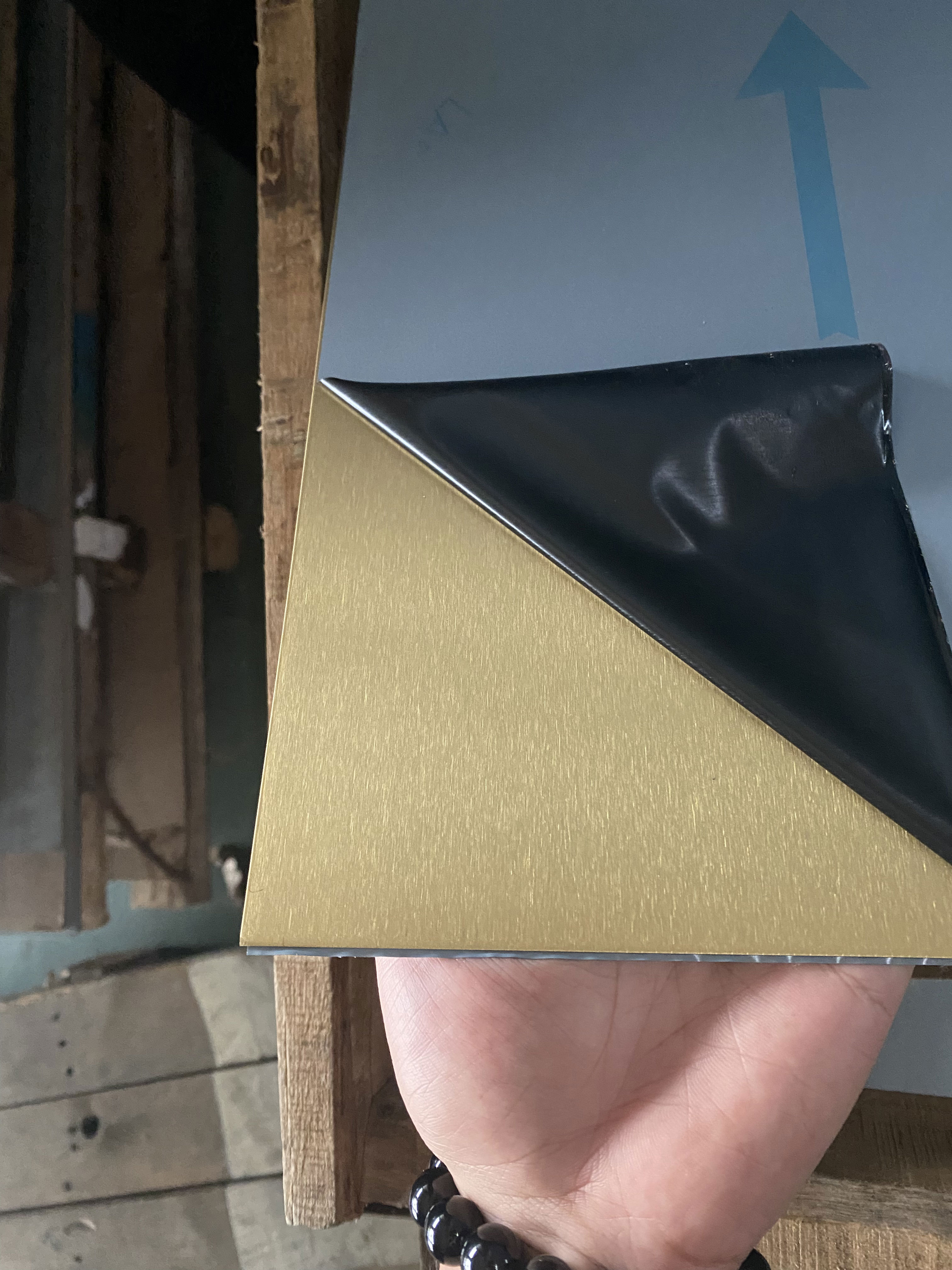
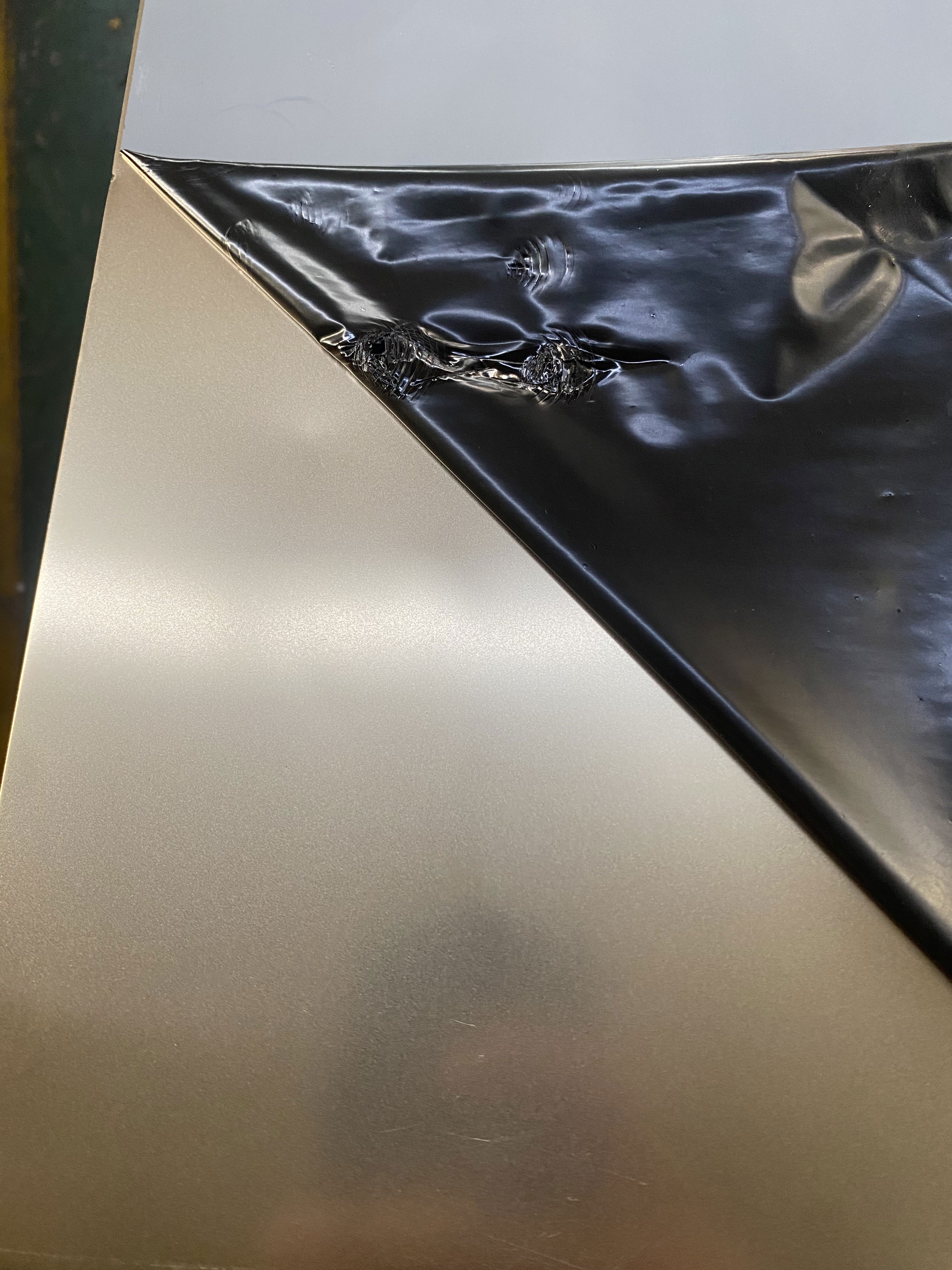
Finish specified first, grade left open. Drawings usually fix the appearance — mirror, brushed, sandblasted, water ripple, and a colour such as gold, rose gold, black or copper — while the base grade is written simply as “stainless steel”. This reverses the technical order. The finish is applied to a grade; the grade determines how the surface behaves in the installed environment. Colour on a decorative sheet is normally produced by a PVD (Physical Vapor Deposition) coating, described by the International Stainless Steel Forum (worldstainless) as the industry standard for coloured stainless steel sheets. A coating protects a surface; it does not change the corrosion behaviour of the substrate underneath it.
Thickness copied from a previous project. A gauge that performed acceptably on a small interior feature wall is frequently carried over into a coastal curtain wall, a long column cladding run or a large ceiling field. Flatness under raking light, deflection across a span, and the ability to form a clean trim profile are all thickness-dependent.
Grade and thickness chosen independently. In practice the two interact. Thin gauges bend and V-groove more readily for trim profiles; heavier gauges hold flat and resist visual distortion but demand more from forming equipment. Water ripple sheets add a further constraint, because the thickness range published for the patterned product is narrower than the range published for flat decorative sheets.
The practical consequences of getting either decision wrong are visible rather than theoretical: surface staining or rust bloom on exposed work in humid or coastal conditions, ripples and oil-canning on large flat panels, distorted or cracked coatings at tight bends, and budget overrun when a higher grade is specified where the exposure zone did not require it.
A defensible specification answers five questions before the order is placed: what is the exposure zone; what substrate carries the panel; what span must the panel cross; how is the profile formed and finished; and what cleaning regime will the surface actually receive.
Industry Background: Material Specification Has Become a Design Decision
The global metal decorative panel market was valued at USD 3.5 billion in 2024 and is projected to reach USD 5.8 billion by 2032, according to SMR / Metal Decorative Panel Market Outlook. Demand growth of this scale pushes specification decisions earlier in the design process, because decorative metal is no longer a late-stage trim item on many commercial projects.
Architectural cladding and facades are identified by Market Research Future as a primary driver of stainless steel demand in construction, specifically for 300-series grades. That is precisely the family that contains SS304 and SS316, and it is the reason grade selection sits at the centre of facade and cladding specification rather than at the finish-selection stage. Regionally, Grand View Research reports that Asia-Pacific held a revenue share of approximately 69% of the global stainless steel market in 2025, driven by rapid urbanisation — a relevant supply-chain fact for specifiers buying decorative sheet and profile products from the region.
Two technical developments matter for architects. First, PVD coating has become the standard route for coloured stainless steel in architectural use, which means colour is a coating decision layered onto a grade decision. Second, water ripple stainless steel sheets are increasingly used in luxury retail and hospitality, with production hubs centred in Foshan, China, according to Stainless Steel World Asia. Patterned surfaces are less forgiving of gauge variation than flat ones, so the thickness band matters more, not less, on textured work.
On the standards side, ASTM International publishes ASTM A554 for mechanical tubing and ASTM A480 for the general requirements of flat-rolled stainless steel products. These are the reference documents commonly cited when flat and tubular decorative stainless elements must be declared against a recognised standard. SNS Insider also notes that metal honeycomb boards hold a significant market share because of their strength-to-weight ratio in facade and interior applications — a structural point that directly affects how thin a decorative face sheet can be, since the composite substrate carries stiffness rather than the skin.
JYF Metal operates inside this environment as a metal decoration manufacturer working across stainless steel 201, 304, 316 and 430, copper and aluminium, with wall, ceiling, commercial space and floor systems, and with engineering customisation for hotel and commercial projects. The company exports to the Middle East, Asia, Europe and North America, with export business representing 80% of sales, and holds ISO 9001:2015 certification (certificate number 120526Q00119R000, issued by Guangdong Jingwel International Certification Ltd.).
Detailed Solution: Matching SS201, SS304 and SS316 to Exposure
All three grades are available in the decorative sheet ranges JYF-01 to JYF-04 and in the trim range JYF-06, so the selection is never a question of availability. It is a question of how much corrosion resistance the installed environment actually demands, balanced against cost.
SS201 — the economical grade for controlled interior conditions
SS201 is the most economical of the three grades and is generally selected for interior decorative work in dry, controlled environments, where cost pressure is the dominant constraint and the surface will not be exposed to chlorides, persistent condensation or aggressive cleaning chemicals. Its appearance retention in humid or chloride-bearing conditions is more limited than that of the 300-series grades, so SS201 is generally not the default choice for coastal work, exteriors or wet areas. Used correctly — on interior feature walls, ceilings and joinery in climate-controlled commercial interiors — it delivers the same visual finish set as the higher grades, because the mirror, brushed, sandblasted or PVD-coloured surface is produced on the sheet regardless of grade.
SS304 — the default architectural grade
SS304 is the grade most frequently specified for architectural stainless steel decoration, and it is the sensible default for most interior work and for sheltered exterior conditions. It offers a balanced combination of corrosion performance and formability, which is why it appears across the widest set of applications: interior wall panels, ceiling panels, elevator decorative panels, screens and partitions, and decorative trims and skirting profiles. Where a project has no specific chloride exposure and no unusual cleaning regime, specifying SS304 across sheets and trims keeps the visual appearance consistent between large panels and the small profiles that sit beside them.
SS316 — for chlorides, humidity and demanding exteriors
SS316 contains molybdenum, which improves resistance to chloride-induced corrosion, and is therefore generally specified for coastal and marine environments, humid or heavily washed interiors, and exterior cladding in aggressive atmospheres. It carries the highest cost position of the three grades, which is why over-specifying SS316 on every interior element is an avoidable budget decision — and why under-specifying it on a coastal facade is an avoidable maintenance decision. SS316 is available across the same JYF sheet and trim models as the other two grades.
Grade decision rule: Interior, dry, low traffic, cost-driven → SS201 is generally acceptable. Interior high-traffic or humid; sheltered exterior; general architectural work → SS304. Coastal, marine, chloride-bearing, high-humidity or heavily washed exterior → SS316.
One caveat applies to all three grades. Grade selection does not replace correct detailing. Drainage paths, ventilation behind panels, avoidance of trapped moisture at joints, and a realistic cleaning regime remain decisive for long-term appearance on any stainless steel surface.
Detailed Solution: Thickness Ranges and What They Control
Thickness controls three things at once: how flat a panel stays, how much support it needs, and how easily it can be formed into the shapes a design calls for. The published ranges for JYF decorative sheets separate into two bands.
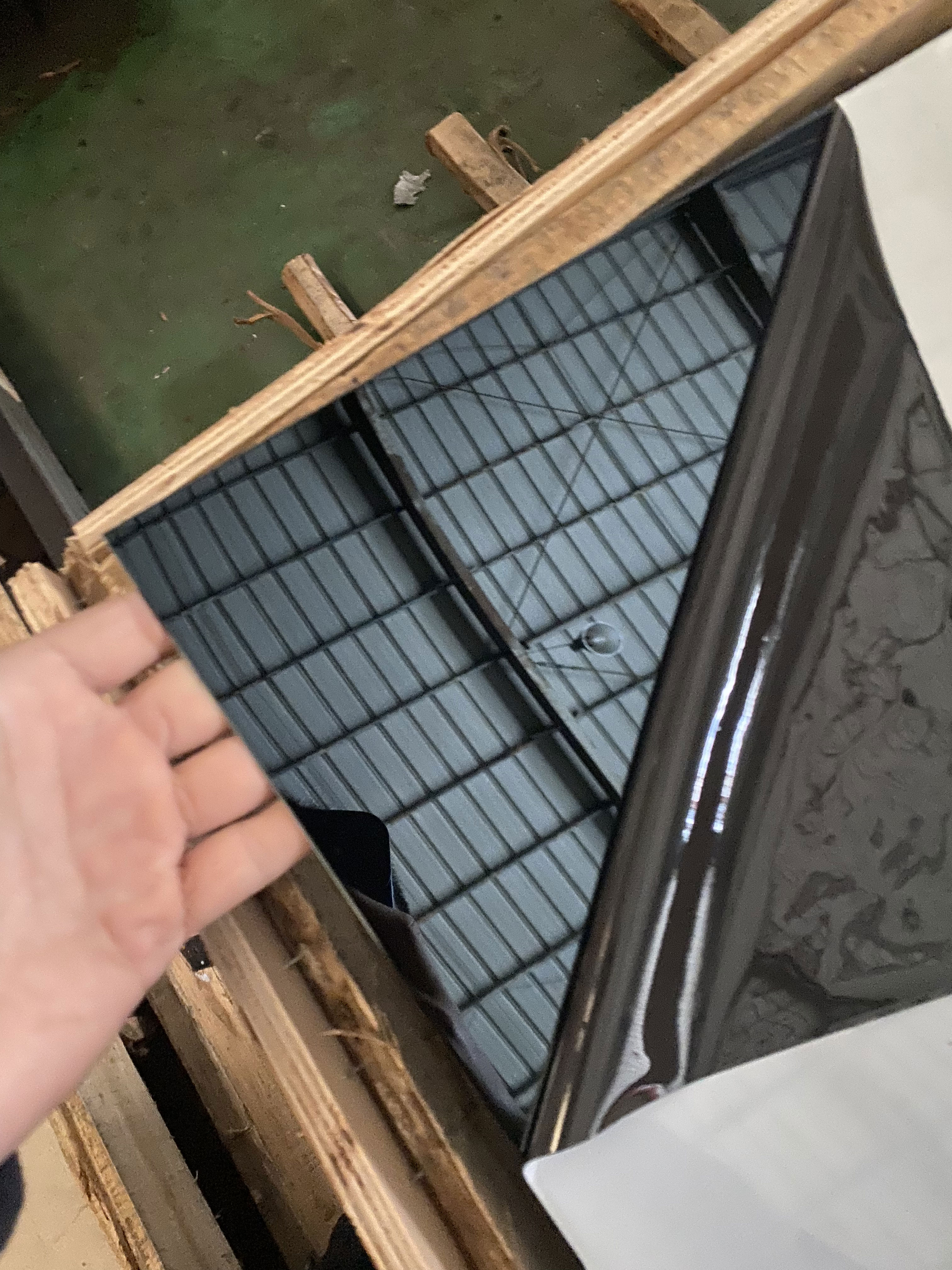
Flat decorative sheets — JYF-01, JYF-02 and JYF-03: 0.5 to 3.0 mm. The mirror finish range (JYF-01), the brushed range with hairline, satin, No.4 and vibration finishes (JYF-02), and the sandblasted range (JYF-03) are all produced in SS201, SS304 or SS316 at thicknesses from 0.5 mm to 3.0 mm. The lower end of the band is naturally suited to smaller panels, adhesive-fixed surfaces and work where the sheet is continuously supported by a substrate. The upper end is used where the panel must hold its own flatness across a wider span or where the surface must resist handling and impact in a high-traffic location.
Water ripple sheets — JYF-04: 0.5 to 2.0 mm. The water ripple range is published from 0.5 mm to 2.0 mm, with ripple sizes available as small, medium, large and flow, and in silver, gold, rose gold, black, blue, copper and custom colours. The narrower band reflects the fact that a patterned surface behaves differently from a flat one: pattern depth and sheet gauge interact, and consistency of the ripple across a panel field is more sensitive to gauge variation than a flat sheet is. For a specifier, the practical implication is to confirm the ripple pattern together with the grade and thickness at sample stage rather than treating them as separate choices.
Formability implications
Thinner gauges form more easily. They allow tighter bends, cleaner V-grooves and gentler radii, which matters for the decorative profile range JYF-06, where shapes include L, U, T, V, curved, corner, flat strip and skirting board profiles, and where the production processes are shearing, V-grooving and bending. Custom shapes are also available in this range. Where a design depends on a tight radius or a deep V-groove, thickness and forming route need to be settled together rather than sequentially.
Structural integrity implications
Thicker gauges resist visual distortion better, but on most architectural installations the decorative sheet is not carrying the load. The supporting equipment documented for these applications includes frameworks, honeycomb substrate, backing panels and lighting systems, with installation carried out by dry-hanging or adhesive methods. That is why a thin face sheet over a properly engineered substrate frequently outperforms a heavier unsupported panel: the substrate provides stiffness, the skin provides the surface. Honeycomb composite boards, identified by SNS Insider as a significant segment on the strength of their strength-to-weight ratio, are one of the substrates used for exactly this reason.
Thickness decision rule: small or fully supported panels → lower end of the 0.5–3.0 mm sheet band. Large unsupported or high-traffic panels → upper end of the band, or a thin face over a composite substrate. Water ripple surfaces → work within 0.5–2.0 mm and confirm the ripple size against the selected gauge. Profiles and trims → confirm thickness against the chosen shape and forming process before finalising.
Detailed Solution: Regular Sheet Sizes and Joint Planning
The regular sheet sizes published for the JYF sheet ranges are 1000x2000 mm, 1220x2440 mm and 1220x3050 mm. These three formats are not interchangeable from a design point of view, because the sheet format determines where the joints fall.
- 1220x3050 mm reduces the number of horizontal joints on full-height wall runs and column cladding, which is usually the deciding factor where a continuous reflective or patterned surface is intended. Fewer joints means fewer visible interruptions in a mirror or ripple pattern.
- 1220x2440 mm is the general-purpose format for wall and ceiling fields where a standard module is adequate.
- 1000x2000 mm suits smaller rooms, reduced panel modules, and work where handling access or cut yield favours a smaller blank.
Two planning habits prevent most size-related problems. First, set out the panel module against the available sheet formats before fixing the joint layout, so that cut yield and joint positions reflect the material that will actually arrive. Second, check the physical route the panels must travel — service lifts, stair cores and door openings constrain usable panel size as firmly as any drawing dimension does.
Step-by-Step Breakdown: A Six-Step Specification Workflow
- Classify the exposure zone. Assign each element to one of: interior dry and controlled; interior high-traffic or humid; exterior sheltered; exterior fully exposed; coastal or marine. Colour and finish decisions should follow this classification, not precede it.
- Select the grade against that zone. SS201 for controlled interior work, SS304 as the general architectural default, SS316 where chlorides, humidity or aggressive exposure are present.
- Select the thickness band against the substrate and span. Use 0.5–3.0 mm for JYF-01, JYF-02 and JYF-03 flat sheets; 0.5–2.0 mm for JYF-04 water ripple sheets; confirm thickness per profile for JYF-06 trims.
- Confirm the finish and colour route. Decide between mirror, brushed (hairline, satin, No.4, vibration), sandblasted or water ripple, and specify the colour — silver, gold, rose gold, black, blue, copper, bronze or custom — recognising that coloured architectural sheets are normally PVD coated onto the selected grade.
- Fix the sheet format and joint layout. Choose between 1000x2000 mm, 1220x2440 mm and 1220x3050 mm against the panel module, joint positions, cut yield and site access.
- Validate with a sample or mock-up. Confirm grade, thickness, finish, colour consistency and ripple pattern on a physical sample before mass production, and check that adjacent trim profiles in JYF-06 match the sheet colour and finish.
Use Cases: Grade and Thickness Applied
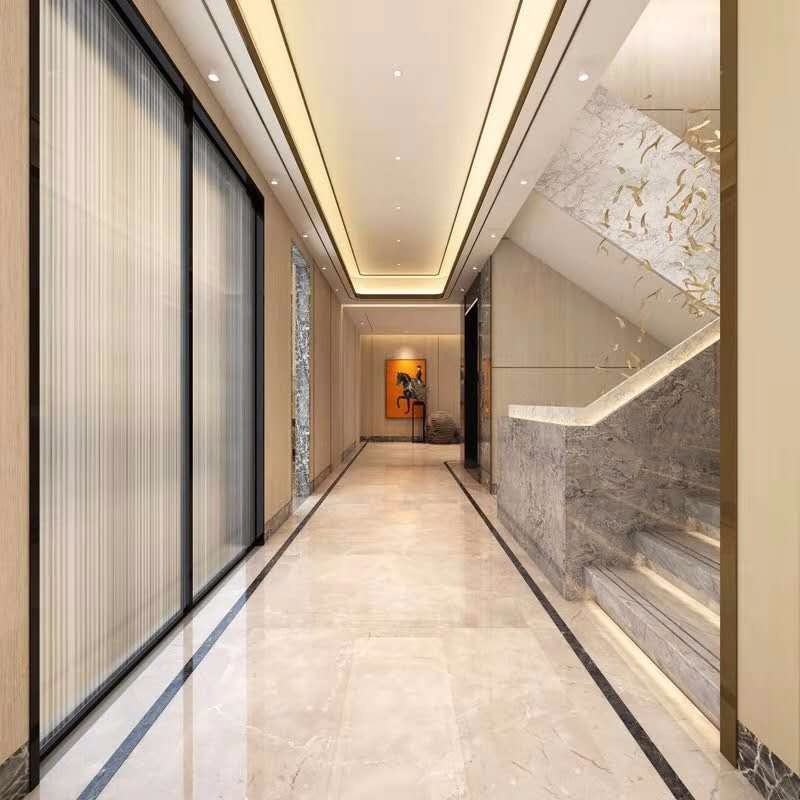
Hotel lobby feature wall. A mirror-finish JYF-01 sheet in SS304, specified in the mid to upper part of the 0.5–3.0 mm band and installed over a framework by dry-hanging or adhesive fixing. The documented requirements for this application are corrosion resistance, scratch resistance, colour stability and custom textures.
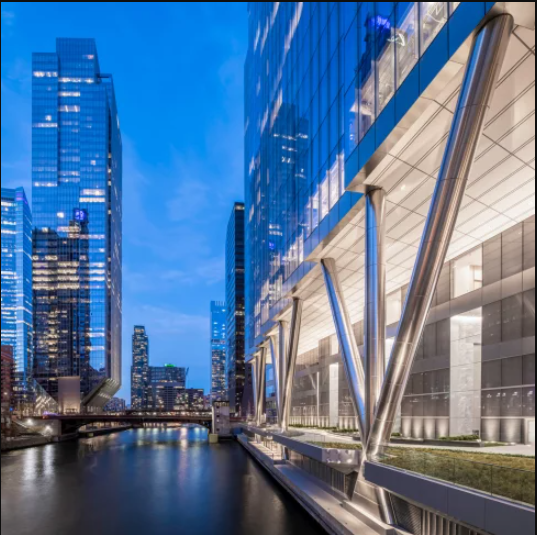
Coastal or fully exposed exterior cladding and curtain wall. SS316 is the appropriate grade where chlorides are present. Weatherproofing and corrosion resistance are explicit requirements for exterior cladding and curtain wall work, and the panel is normally carried on a framework or honeycomb substrate rather than relying on skin thickness alone.
Ceiling fields in water ripple. JYF-04 in SS304 or SS316 within the 0.5–2.0 mm band, with ripple size selected as small, medium, large or flow, and with ripples matched across panels for pattern continuity. Ceiling installations typically require precise dimensions and colour consistency, and commonly coordinate with LED light strips and backing panels. Water ripple is increasingly used in luxury retail and hospitality interiors.
Elevator decorative panels. JYF-02 brushed sheets in hairline, satin, No.4 or vibration finishes are a practical choice for high-contact surfaces, where brushed and textured finishes generally maintain visual consistency better than high-gloss mirror. Elevator decoration and column wrapping are documented application types for the flat decorative sheet ranges.
Full-height column cladding. A 1220x3050 mm format reduces horizontal joints across a tall column run, with the sheet fixed over a framework or honeycomb substrate. Column cladding sits within the custom fabrication scope of the JYF product range.
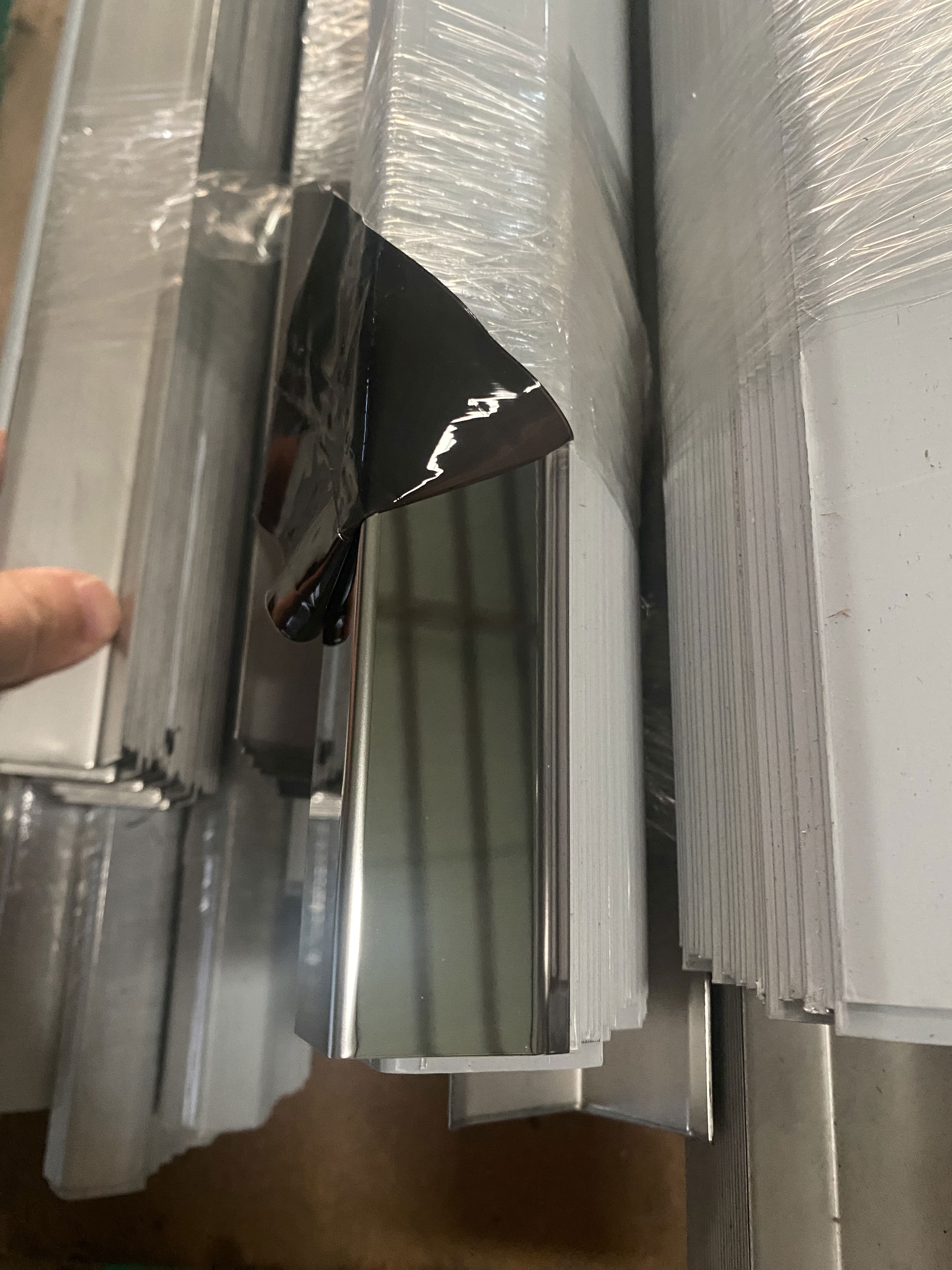
Trim, edge and skirting transitions. JYF-06 profiles in SS201, SS304 or SS316, in shapes including L, U, T, V, curved, corner, flat strip and skirting board, with custom shapes available. Finishes are mirror, brushed, vibration and sandblasted, and colours match the sheet range, so trims and skirting can be specified to the same colour and finish as the adjacent wall panel. Production uses shearing, V-grooving and bending, and the thickness must be confirmed against the profile shape.
Comparison Table: Grade and Product Reference
The tables below summarise the two decisions in one view. Grade characteristics in the first table reflect general industry guidance on the three austenitic grades; the model data in the second table is the published product specification for the JYF ranges.
| Grade | Corrosion behaviour in humid or chloride-bearing exposure (general guidance) | Typical architectural use | Relative cost position | Availability in JYF sheet and trim models |
|---|---|---|---|---|
| SS201 | Lower resistance of the three; appearance retention more limited in humid or chloride-bearing conditions | Interior decorative work in dry, controlled environments; cost-driven fit-outs | Generally the most economical | JYF-01, JYF-02, JYF-03, JYF-04, JYF-06 |
| SS304 | Good general resistance; the standard architectural choice for interiors and sheltered exteriors | Wall and ceiling panels, elevator panels, screens and partitions, trims and skirting | Mid-range | JYF-01, JYF-02, JYF-03, JYF-04, JYF-06 |
| SS316 | Higher resistance to chloride-induced corrosion due to molybdenum content; preferred for coastal and humid exposure | Coastal and marine exteriors, curtain walls, humid or heavily washed interiors | Highest of the three | JYF-01, JYF-02, JYF-03, JYF-04, JYF-06 |
| Model | Product type | Material | Thickness range | Regular sizes | Colour / finish options |
|---|---|---|---|---|---|
| JYF-01 | Mirror finish decorative stainless steel sheet | SS201 / SS304 / SS316 | 0.5–3.0 mm | 1000x2000 mm, 1220x2440 mm, 1220x3050 mm | Silver, gold, rose gold, black, blue, copper, custom; mirror finish |
| JYF-02 | Brushed decorative stainless steel sheet | SS201 / SS304 / SS316 | 0.5–3.0 mm | 1000x2000 mm, 1220x2440 mm, 1220x3050 mm | Hairline, satin, No.4, vibration; silver, gold, rose gold, black, blue, copper, bronze, custom |
| JYF-03 | Sandblasted decorative stainless steel sheet | SS201 / SS304 / SS316 | 0.5–3.0 mm | 1000x2000 mm, 1220x2440 mm, 1220x3050 mm | Silver, gold, rose gold, black, blue, copper, custom |
| JYF-04 | Water ripple decorative stainless steel sheet | SS201 / SS304 / SS316 | 0.5–2.0 mm | 1000x2000 mm, 1220x2440 mm, 1220x3050 mm | Ripple sizes small, medium, large, flow; silver, gold, rose gold, black, blue, copper, custom |
| JYF-06 | Stainless steel trim / decorative profile | SS201 / SS304 / SS316 | Confirmed per profile shape and forming process | Not published as a fixed sheet format; profiles produced by shearing, V-grooving and bending | Mirror, brushed, vibration, sandblasted; silver, gold, rose gold, black, copper, bronze, custom; L, U, T, V, curved, corner, flat strip, skirting board, custom shapes |
FAQ
Does the choice between SS201, SS304 and SS316 affect compliance and documentation on an architectural project?
Yes, in the sense that the grade and product form determine which standard the material is declared against. ASTM International publishes ASTM A554 for mechanical tubing and ASTM A480 for the general requirements of flat-rolled stainless steel products, and these are the reference documents commonly cited for flat and tubular decorative stainless elements. On the supplier side, JYF Metal holds ISO 9001:2015 certification (certificate number 120526Q00119R000, issued by Guangdong Jingwel International Certification Ltd.). Grade selection itself remains an exposure decision: SS201 is generally limited to controlled interior conditions, SS304 is the general architectural default, and SS316 is generally specified where chlorides and humidity are present.
Can one supplier provide the same grade and thickness across sheets and trims?
Yes. JYF-01 mirror sheets, JYF-02 brushed sheets, JYF-03 sandblasted sheets and JYF-04 water ripple sheets are all produced in SS201, SS304 or SS316, and the JYF-06 decorative profile range is produced in the same three grades. Thickness bands differ by product, however: the flat sheet ranges are published from 0.5 mm to 3.0 mm, while the water ripple range is published from 0.5 mm to 2.0 mm. For JYF-06 profiles, thickness is confirmed against the selected shape and the shearing, V-grooving and bending process rather than against a single published sheet band. All three grades share the same colour and finish offering, so trims and skirting can be matched to adjacent panels.
How does grade selection affect the project budget?
Grade is one of the clearest cost levers in a decorative stainless steel package. SS201 is generally the most economical of the three grades and is typically used for interior work in dry, controlled conditions; SS304 sits in the middle and covers most architectural interiors and sheltered exteriors; SS316 carries the highest cost position and is generally reserved for coastal, humid or other chloride-bearing exposure. Colour adds a separate cost layer, because coloured architectural sheets are produced by PVD coating, described by the International Stainless Steel Forum (worldstainless) as the industry standard for coloured stainless steel sheets. Specifying a higher grade than the exposure zone requires, or a weathered exterior element in a lower grade than it requires, both produce avoidable cost over the life of the project.
What thickness should be specified for wall and ceiling panels?
For the JYF flat decorative sheet ranges — JYF-01, JYF-02 and JYF-03 — the published thickness range is 0.5 mm to 3.0 mm. For water ripple JYF-04 sheets it is 0.5 mm to 2.0 mm. Thinner gauges form more easily and suit smaller or fully supported panels; heavier gauges hold flatness across wider spans and better resist handling damage in high-traffic locations. Because most architectural installations carry the sheet over frameworks, honeycomb substrate, backing panels or lighting systems using dry-hanging or adhesive fixing, a thin face over a properly engineered substrate is often the more stable solution than an unsupported heavier panel. Regular sheet formats are 1000x2000 mm, 1220x2440 mm and 1220x3050 mm.
How should grade and thickness be validated before placing a full order?
Validate them together on a physical sample, not on a data sheet alone. Grade, thickness, finish and colour interact — and for water ripple sheets the ripple pattern must be checked against the selected gauge as well. JYF Metal supports custom orders based on drawings or samples and welcomes on-site factory inspections, which allows a specifier to review grade, thickness, finish and colour consistency before mass production. A practical next step for architects and specifiers is to request a sample of the intended grade and finish combination and download the Designer's Handbook & Project Cases to compare the material against real project applications.
Conclusion: Two Decisions, Taken in the Right Order
Grade selection follows exposure. SS201 fits controlled interior conditions where cost drives the decision; SS304 is the general architectural default for interiors and sheltered exteriors; SS316 is the appropriate answer where chlorides, humidity or aggressive exposure are present. Thickness selection follows substrate, span and forming route: 0.5–3.0 mm for the JYF-01, JYF-02 and JYF-03 flat sheet ranges, 0.5–2.0 mm for JYF-04 water ripple sheets, and profile-specific confirmation for JYF-06 trims. Sheet format then converts both decisions into a buildable layout using 1000x2000 mm, 1220x2440 mm or 1220x3050 mm panels, with the 3050 mm format reducing horizontal joints on tall column and wall runs.
Taking these two decisions before the finish is locked avoids the most common specification failures — staining on under-graded exterior work, visual distortion on under-thickened flat panels, and budget spent on higher grade material in environments that did not require it.
Next Step: Validate Grade and Thickness on a Sample
Foshan Jinyifan Metal Products Co., Ltd. (JYF Metal) manufactures decorative stainless steel sheets, trims, screens and custom metal fabrication for hotel and commercial projects, and supports custom orders based on drawings or samples with on-site factory inspection.
Request a sample in your specified grade and finish, or send your drawings for a technical review. Download the Designer's Handbook & Project Cases, visit www.jyf-metal.com, or contact us at lucky.ceo@jyfmetal.com / WhatsApp +86 133-8020-9777.