
Stainless Steel in Architectural Interiors: A Visual Material Guide for Designers, Architects, and Buyers
Stainless Steel in Architectural Interiors: A Visual Material Guide for Designers, Architects, and Buyers
Answer first: Architectural stainless steel decoration is the use of 200-, 300-, and 400-series stainless steel sheets, panels, profiles, screens, and custom fabrications to shape interior and exterior building surfaces. In modern commercial projects, these products appear as wall panels, ceiling panels, column cladding, elevator panels, room dividers, laser-cut screens, bar counters, skirting boards, and sculptures. Stainless steel is chosen not only for its corrosion resistance and durability, but also for its ability to carry mirror, brushed, sandblasted, water-ripple, and PVD-colored finishes that define the visual language of luxury hotels, clubs, sales centers, and large-scale commercial spaces.
This guide focuses on the visual and material role of stainless steel in architecture: how different sheet types, partitions, trims, and custom fabrications change the way a space looks and performs. It is written for interior designers, architects, hotel investors, contractors, and procurement teams comparing options at the awareness and research stage.
Why Stainless Steel Is a First-Name Material in Architectural Decoration
Stainless steel has moved from industrial utility to a primary decorative material in commercial architecture. The global metal decorative panel market was valued at USD 3.5 billion in 2024 and is projected to reach USD 5.8 billion by 2032, which reflects a continuing shift toward metal surfaces in building design.
In the construction sector, the architectural cladding and facade segment is a primary driver for stainless steel demand, specifically for 300-series grades. These grades are valued for their balance of corrosion resistance, formability, and finish stability. PVD (Physical Vapor Deposition) coating has become the industry standard for producing colored stainless steel sheets such as gold, rose gold, and black; the process gives the metal a durable, uniform color layer that performs well in architectural use.
For designers, the material offers a rare combination: a highly reflective or textured surface, a long service life, and the ability to be fabricated into almost any shape. For buyers, stainless steel reduces lifecycle cost pressure because it does not require frequent refinishing in high-traffic interior environments.
The Material System: Grades, Colors, and Finishes that Define the Look
Most architectural stainless steel decoration starts with flat-rolled sheets that are then formed, cut, or coated. The choice of grade, finish, and color determines how light behaves on the surface and how the material performs in a specific environment.
JYF Metal, a fully integrated metal decoration factory based in Foshan, Guangdong, lists stainless steel 201#, 304#, and 316# as its primary material range. The company has operated since 2013, employs approximately 150 people, and works from a 3,000 m² manufacturing facility. Its main systems cover wall decoration, ceiling systems, commercial space systems, and floor systems.
For an architect or buyer, the grade choice usually comes down to environment and budget:
- 304 stainless steel is the standard choice for most interior architectural decoration, offering strong corrosion resistance and consistent finishing results.
- 316 stainless steel contains molybdenum and is preferred for humid, coastal, or chemically aggressive environments.
- 201 stainless steel is a cost-oriented option for interior applications where the visual effect is the priority and exposure is limited.
The Core Visual Surfaces
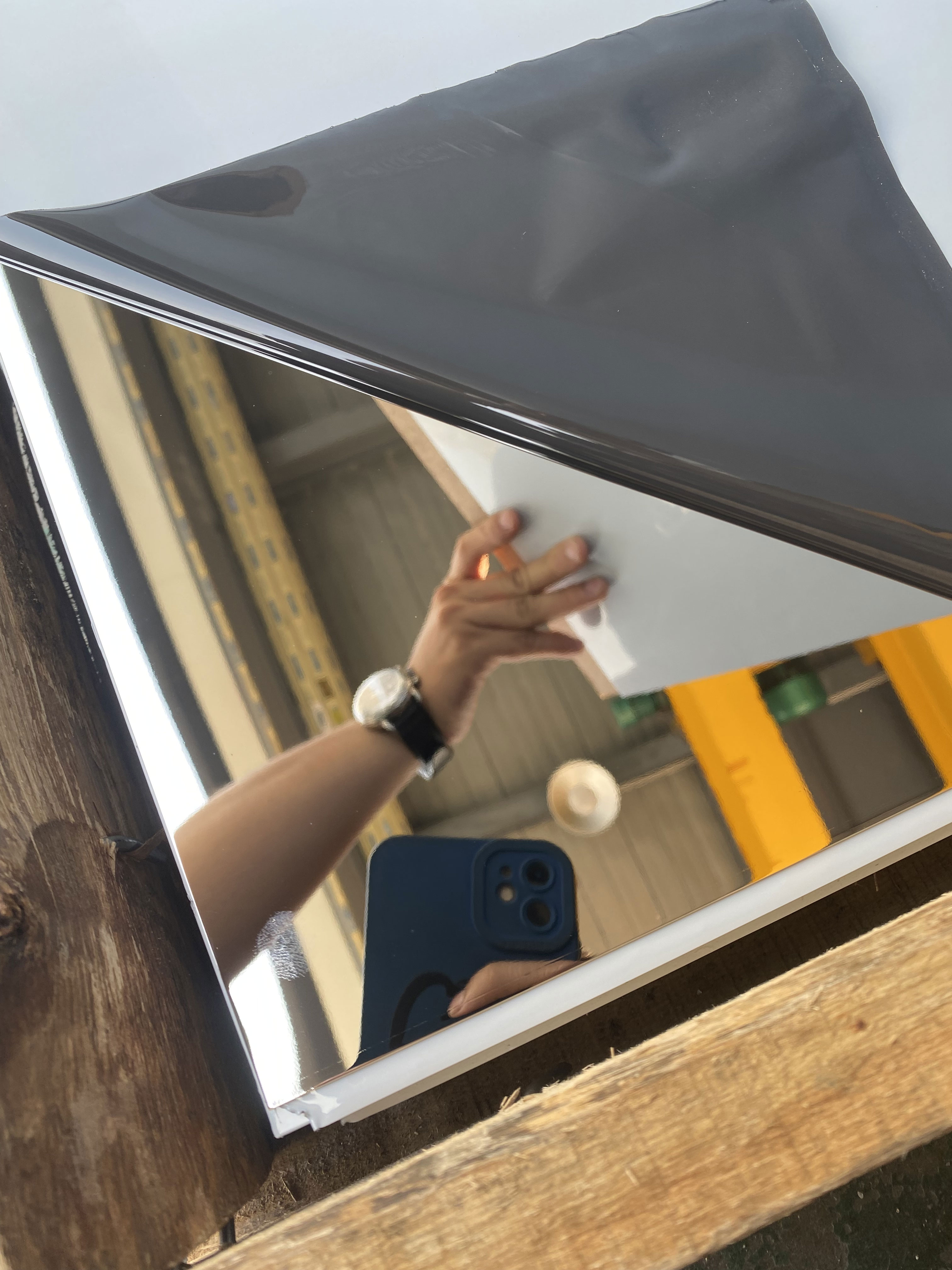
Mirror finish stainless steel sheet (model JYF-01) is the most reflective option. Available in SS201, SS304, and SS316, it ranges from 0.5 to 3.0 mm in thickness and comes in standard sizes of 1000x2000 mm, 1220x2440 mm, and 1220x3050 mm. Colors include silver, gold, rose gold, black, blue, copper, and custom. This finish is widely selected for feature walls, columns, and elevator interiors where reflection creates depth and a sense of polish.
Brushed stainless steel sheet (model JYF-02) offers a softer, directional texture. It is made of SS201, SS304, or SS316, with thickness from 0.5 to 3.0 mm. Finishes include hairline, satin, No.4, and vibration. The low-glare surface suits areas where designers want metal texture without strong reflection, such as wall paneling, counter fronts, and ceiling systems.
Sandblasted stainless steel sheet (model JYF-03) produces a uniform matte texture that diffuses light. It is available in SS201, SS304, or SS316, with a 0.5–3.0 mm thickness range and regular sizes of 1000x2000 mm, 1220x2440 mm, and 1220x3050 mm. In contemporary interiors, sandblasted gold, black, and champagne-toned sheets are used for background walls and reception desks because they feel quieter than mirror finishes.
Water ripple stainless steel sheet (model JYF-04) is a decorative sheet with a three-dimensional ripple pattern. It is available in SS201, SS304, or SS316, with thickness from 0.5 to 2.0 mm. Standard sizes are 1000x2000 mm, 1220x2440 mm, and 1220x3050 mm. Ripple sizes are grouped into small, medium, large, and flow; colors include silver, gold, rose gold, black, blue, copper, and custom. The water-ripple pattern is one of the most requested surfaces in luxury hospitality, especially in gold and rose gold, because it turns a flat wall into a light-reflecting sculpture without adding physical depth.
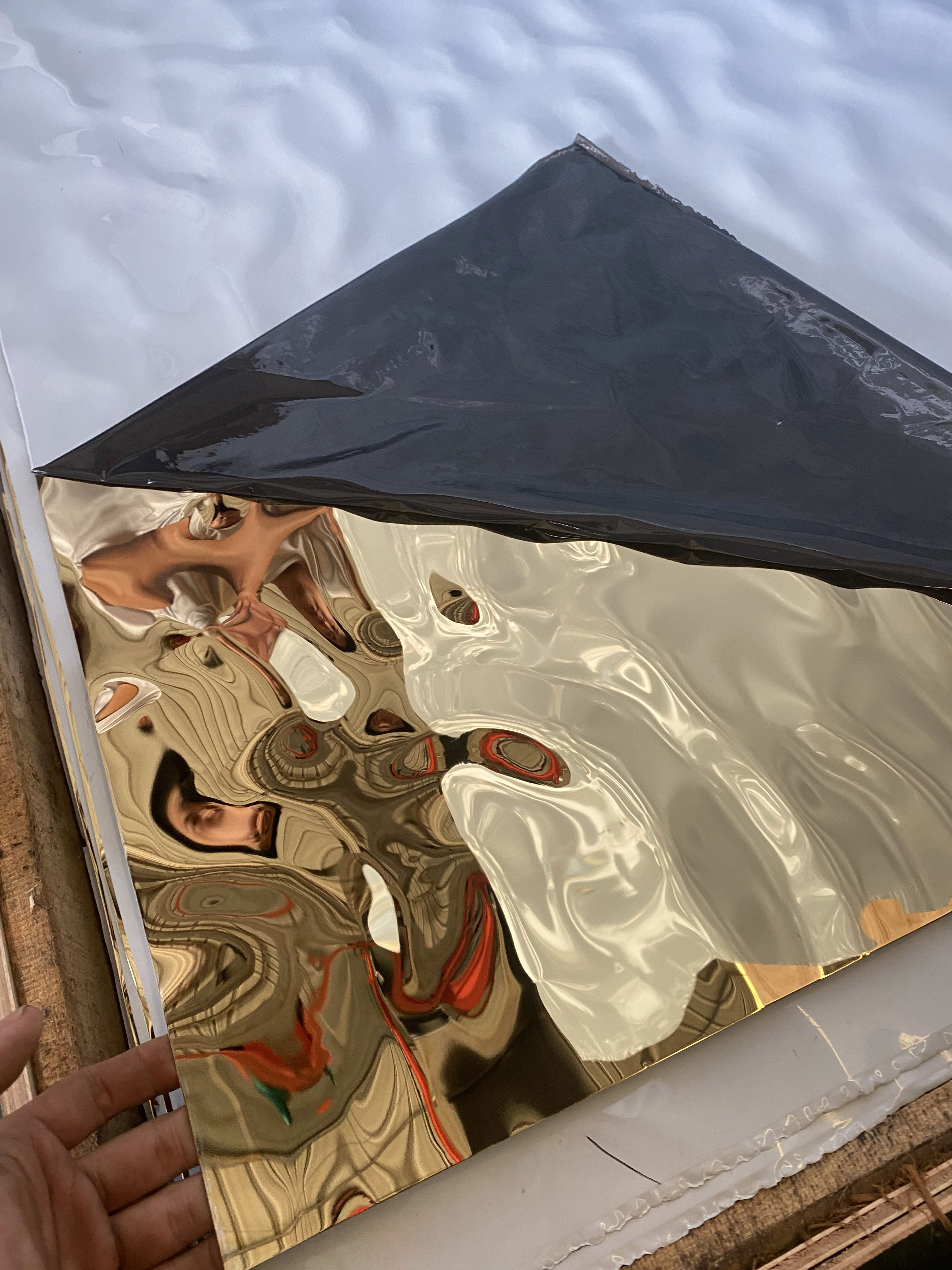
PVD colored stainless steel is not a separate model but a finishing layer applied to the material. PVD (Physical Vapor Deposition) is the industry-standard process for creating durable colored stainless steel in gold, rose gold, black, blue, copper, bronze, and custom tones. The result is a hard, uniform coating that resists scratching and maintains color consistency across large panel installations.
For projects requiring extra flatness and stiffness, stainless steel panels can be bonded to honeycomb or other composite substrates. Honeycomb-reinforced panels reduce weight while maintaining the visual precision of a stainless steel face; this matters on large wall surfaces and ceiling systems where heavy solid metal would complicate the structural frame.
How Stainless Steel Shapes the Space: Panels, Ceilings, Elevators, and Screens
The same material can perform completely different visual roles depending on how it is fabricated and installed. Understanding these roles helps a buyer translate a design intent into a practical product scope.
Stainless Steel Wall Panels
Wall panels are the most common expression of architectural stainless steel decoration. They can be plain flat panels with a mirror or brushed finish, or patterned panels with water-ripple, embossed, perforated, or sandblasted surfaces. In hotel lobbies and sales centers, wall panels are often combined with LED lighting and backing frameworks to create a strong focal point.
JYF Metal’s application data shows that stainless steel wall panels, column wrapping, elevator decoration, and ceilings are typically installed in dry-hanging or adhesive modes, using frameworks, honeycomb substrate, and lighting systems as supporting elements. The project types commonly span wall panels and column wrapping, and the special requirements include corrosion resistance, scratch resistance, color stability, and custom textures.
Stainless Steel Ceiling Panels
Ceilings are another major use. Stainless steel ceiling panels appear as flat panels, water-ripple sheets, honeycomb panels, double-curved ceilings, and perforated or shaped ceiling elements. Because ceilings are seen from multiple angles, the finish consistency and dimensional accuracy of each panel become critical.
For ceiling joints and edge transitions, designers often pair panels with stainless steel trims. For background decoration, the same product family can be used as accent strips, ceiling edge lines, and partition edging.
Stainless Steel Elevator Panels
Elevator interiors are among the most heavily touched surfaces in a building. Stainless steel elevator decorative panels provide a combination of hygiene, impact resistance, and brand presence. Mirror and brushed finishes are common; some projects use PVD-colored sheets to match the lobby’s metal palette.
Stainless Steel Room Dividers and Laser-Cut Screens
Room dividers and laser-cut screens are the piece de resistance of stainless steel decoration in hospitality and office spaces. A stainless steel screen partition can be laser-cut into a custom pattern, welded into a rigid frame, and combined with glass, marble, crystal, metal mesh, or LED lighting to divide space without closing it off.
JYF Metal’s screen partition model (JYF-05) is made of SS304 or SS316, with a regular size of 1220x2440 mm and custom sizes available. Finish options are mirror, brushed, and vibration; colors include silver, gold, rose gold, black, copper, bronze, and custom. Embedded materials can include glass, marble, crystal, metal mesh, and LED light. The manufacturing process covers spot welding, full welding, laser cutting, and CNC cutting.
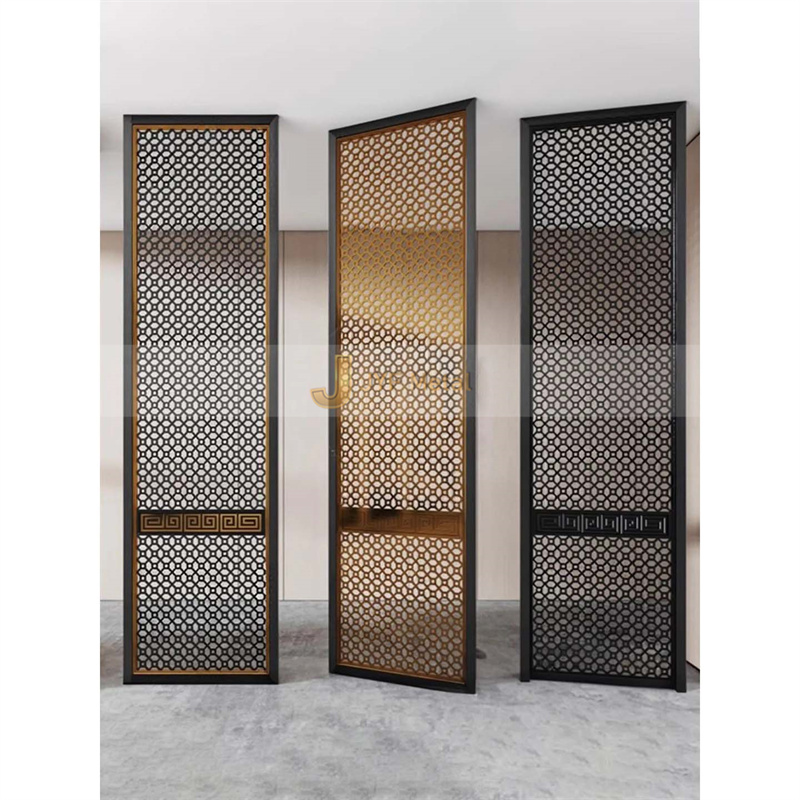
In hotel lobbies, restaurant partitions, and club interiors, these screens handle three jobs at once: space division, privacy protection, and decorative enhancement. They are commonly installed in fixed mode with glass and lighting as supporting elements.
Column Cladding, Bar Counters, Sculptures, and Custom Fabrication
Beyond flat surfaces, architectural stainless steel decoration includes structural and sculptural elements. Custom stainless steel fabrication (model JYF-07) covers wall panels, ceiling panels, decorative sheets, mirror frames, display shelves, bar counters, custom logos, feature walls, column cladding, and metal sculptures. It is made of 201#, 304#, and 316# stainless steel and is intended for the architecture industry.
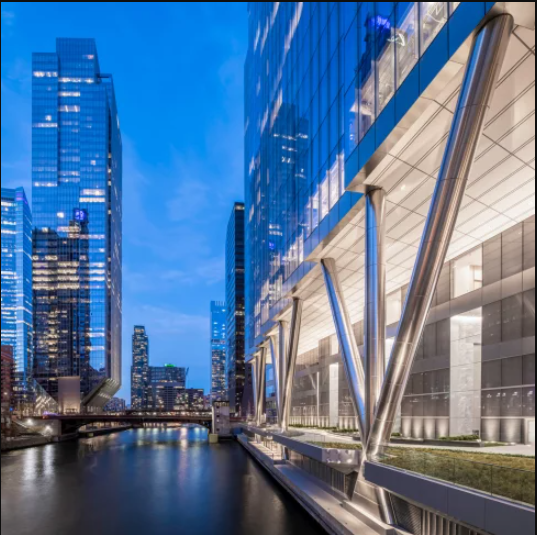
For designers, the value of a custom fabrication partner is the ability to move from concept drawing to finished metal piece. JYF Metal’s profile describes a design and R&D team, manufacturing equipment that includes German Trumpf laser cutting machines, high-precision CNC bending machines, seamless precision welding equipment, and a PVD vacuum plating line for stainless steel decorative panels. This equipment set is what allows curved surfaces, hyperbolic shapes, and non-standard structures to be produced for real projects.
The Finishing Details: Trims, Skirting Boards, and Profiles
Architectural quality is often decided by edges and transitions. Stainless steel trims and skirting boards provide clean junctions between different materials such as tile, stone, glass, wood, and plaster.
JYF Metal’s stainless steel trim (model JYF-06) is a decorative profile made of SS201, SS304, or SS316. It comes in L, U, T, V, curved, corner, flat strip, and skirting board shapes, with custom shapes available. Colors include silver, gold, rose gold, black, copper, bronze, and custom. Finishes include mirror, brushed, vibration, and sandblasted. Processes used are shearing, V-grooving, and bending.
In terms of visual role, trims do two things: they protect vulnerable edges and they create a deliberate metal line that gives the interior a composed, crafted feel. For large commercial projects, a consistent trim color and finish across walls, ceilings, and floors strengthens the design language.
Visual and Performance Requirements by Application Scenario
Stainless steel decoration products are selected not only by appearance but by the conditions they will face. The application data behind JYF Metal’s product line shows several recurring requirements:
| Application | Common Environments | Typical Requirements | Common Use |
|---|---|---|---|
| Decorative sheets, wall panels | Indoor & outdoor, high-traffic, humid or coastal | High dimensional accuracy, corrosion resistance, fire resistance, weatherproofing | Large-scale decoration, curtain walls, feature walls |
| Trims, edge profiles | Indoor walls, ceilings, edges | Precise dimensions, color consistency, scratch resistance | Wall accents, ceiling joints, background decoration |
| Panels for commercial spaces | Indoor & outdoor decoration | Corrosion resistance, scratch resistance, color stability, custom textures | Wall panels, column wrapping, elevator decoration, ceilings |
| Screen partitions | Indoor controlled environments, high-traffic areas | High-precision laser cutting, seamless welding, uniform coating, fingerprint resistance | Hotel lobbies, restaurant partitions, club interiors |
| Custom fabrication | Indoor & outdoor, high-traffic, humid or coastal | High dimensional accuracy, custom surface finish | Large-scale decoration, sculptures, feature walls |
These are useful categories when writing a specification. Instead of naming only a surface finish, an architect can state the environment, the structural role, and the expected wear. For example, an elevator panel spec may emphasize scratch resistance and fingerprint resistance, while a coastal facade spec may emphasize corrosion resistance.
Comparing the Main Product Families: What to Specify
Buyers often ask whether they should buy sheets, trims, screens, or custom fabrications. In practice, a full architectural interior usually needs all four. The table below compares the main product families by function and typical specification focus.
| Product Family | Typical Models | Material Grades | Finish Options | Primary Visual Function |
|---|---|---|---|---|
| Decorative stainless steel sheets | JYF-01 mirror, JYF-02 brushed, JYF-03 sandblasted, JYF-04 water ripple | SS201, SS304, SS316 | Mirror, hairline, satin, No.4, vibration, sandblasted, water ripple | Wall and ceiling surfaces that define the room’s material color and reflection |
| Stainless steel screen partitions / room dividers | JYF-05 | SS304, SS316 | Mirror, brushed, vibration | Space division with a decorative pattern and optional embedded materials |
| Stainless steel trims / profiles | JYF-06 | SS201, SS304, SS316 | Mirror, brushed, vibration, sandblasted | Edge finishing, skirting, ceiling joints, transition lines |
| Custom stainless steel fabrication | JYF-07 | 201#, 304#, 316# | Custom | Column cladding, bar counters, sculptures, feature walls, custom logos |
For a hotel lobby project, a common specification package would be: PVD gold mirror or water-ripple panels for the feature wall, a laser-cut screen partition to separate the lobby from the lounge, brushed stainless steel trims for edge transitions, and custom column cladding to match. Each product family serves a different visual role but must be coordinated on color, finish, and fabrication tolerance to feel like one system.
How to Evaluate a Stainless Steel Decoration Partner
At the research stage, buyers should evaluate a manufacturer on more than the finished sample. The following criteria help distinguish a fabrication partner from a reseller:
Design and engineering capability — Can the manufacturer optimize drawings, solve complex shape challenges, and adapt standard products to a specific interior condition?
In-house manufacturing equipment — Laser cutting, CNC bending, precision welding, and PVD plating define the range of what can be produced with consistent quality. A factory with in-house PVD has direct control over color consistency.
Product system breadth — A manufacturer that offers walls, ceilings, screens, trims, and custom fabrication reduces coordination risk on a multi-surface project.
Export experience — Familiarity with international standards, export clearance, and logistics matters for global project delivery.
Quality management — ISO9001 certification and a documented quality control system indicate a repeatable process from raw material to finished goods.
JYF Metal is an example of a manufacturer that combines these elements: it is ISO9001 certified, operates its own PVD vacuum plating line, maintains an R&D team of 15 engineers, and reports that about 80% of its sales come from export markets including the Middle East, Asia, Europe, and North America. Its stated product system covers wall decoration systems, ceiling systems, commercial space systems, floor systems, stainless steel colored sheets, stainless steel tile trims, stainless steel screen partitions, and engineering customization.
For procurement teams, the operational advantage of a one-stop factory is simpler: a single responsible party for design development, drawing optimization, prototype production, mass manufacturing, quality control, and global delivery.
Designer’s Checklist: Using Stainless Steel Decoration in a Project
- Define the environment first. Interior, exterior, coastal, or high-traffic determines the material grade (304 vs. 316) and the finish selection.
- Choose the finish by light behavior. Mirror reflects and expands space; brushed reduces glare; sandblasted diffuses light; water ripple creates a three-dimensional surface effect.
- Use color strategically. PVD gold and rose gold suit hospitality and retail accents; black and dark bronze suit private clubs and reception areas. Copper can be used for warm, contemporary contrasts.
- Coordinate edges. Include trims and skirting boards in the specification so walls, floors, ceilings, and partitions share a consistent metal language.
- Match the fabrication method to the design language. Laser-cut screens should be specified with welding and coating requirements; custom columns and bar counters need an engineering review, not just a material finish.
- Confirm production and delivery capability. For a large project, the manufacturer should demonstrate capacity for full-series production, prototype confirmation, and timely export logistics.
- Request reference cases and samples. Evaluate the actual color consistency and surface quality with project-specific samples before mass production.
Common Questions About Architectural Stainless Steel Decoration
What is architectural stainless steel decoration?
Architectural stainless steel decoration is the use of stainless steel sheets, panels, trims, screens, and custom fabrications to create decorative and structural surfaces in buildings. It includes mirror finish, brushed, sandblasted, and water-ripple sheets, PVD-colored panels, laser-cut partitions, column cladding, bar counters, skirting boards, and sculptures. Typical materials include stainless steel grades 201, 304, and 316, with 304 and 316 most common for architectural use.
What finishes are available for decorative stainless steel sheet?
The common finishes are mirror, brushed (hairline, satin, No.4), vibration, sandblasted, and water ripple. PVD coating is used to add color such as gold, rose gold, black, blue, copper, and bronze. Each finish has a different light behavior: mirror reflects strongly, brushed and sandblasted reduce glare, and water ripple adds a three-dimensional textured visual effect.
What stainless steel grade should be used for wall panels and ceiling panels?
For most indoor architectural applications, 304 stainless steel is the standard choice because it offers strong corrosion resistance and consistent finishing. In humid or coastal environments, 316 stainless steel is preferred. Grade 201 is a cost-oriented option for limited interior applications where visual quality is the priority.
Can stainless steel decorative panels be produced to custom shapes and sizes?
Yes. Standard sheet sizes are often 1000x2000 mm, 1220x2440 mm, and 1220x3050 mm, with thickness typically from 0.5 to 3.0 mm. Custom fabrication can produce curved surfaces, hyperbolic shapes, column cladding, bar counters, feature walls, and other non-standard structures using laser cutting, CNC bending, and precision welding. Screen partitions are also available with regular size 1220x2440 mm and custom dimensions.
How can I request a sample or quotation for a stainless steel decoration project?
To move from this guide to project planning, contact the manufacturer directly with your design drawings, target dimensions, finish and color preferences, and project environment. For JYF Metal, inquiries can be sent to Lucky Zou at lucky.ceo@jyfmetal.com or via WhatsApp at +86 133-8020-9777. A designer’s handbook with project cases is also available for reference.
Need a stainless steel decoration partner for your next project?
Download the JYF Metal Designer’s Handbook with project cases, or contact the team for a quote, sample, or drawing review.
Email: lucky.ceo@jyfmetal.com | WhatsApp: +86 133-8020-9777