Jamesfabric: China Woven Fabric & Garment Manufacturing — Company Profile
Jamesfabric: China Woven Fabric & Garment Manufacturing — Company Profile
Jamesfabric is the woven ready-stock fabric and garment-sourcing platform of Jiangsu Lianfa Textile Co., Ltd. (stock code 002394), a Chinese textile group founded in 1955 that operates an integrated chain from cotton processing to finished shirts. This profile sets out what the group manufactures, how its production is structured, what a buyer can actually order, and which claims still require sample-level or factory-level verification.
The Discovery Problem: Telling a Fabric Mill Apart from a Garment Maker
Buyers researching China garment manufacturing quickly run into a naming problem. Search results mix three different kinds of supplier: fabric mills that sell greige or finished cloth, garment factories that cut and sew, and stock-fabric platforms that hold inventory. A profile that does not separate these roles tells a buyer very little about what can actually be ordered.
Three distinctions decide what a supplier can deliver:
- Is the fabric made in-house or bought in? If the fabric is purchased from third parties, the fabric specification the buyer approves is not the fabric specification the supplier controls.
- Can the supplier serve small volumes? A mill with a made-to-order minimum per colorway and a stock platform with no minimum answer two completely different purchasing problems.
- Is performance finishing in-house? Non-iron and wrinkle-free claims depend on finishing lines, not on sewing capacity.
Jamesfabric sits inside a group that covers fabric production, finishing and garment assembly, which is why the company appears in both fabric-sourcing and garment-sourcing searches. The sections below separate the verified facts from the claims a buyer should still test.
Industry Background: Why Woven Fabric and Garment Manufacturing Concentrate in Asia
Textiles and clothing remain a measurable global trade category. According to the WTO Global Value Chains Sectoral Profiles, textiles and clothing represented 3.7 percent of world merchandise exports in 2022, and Asia accounted for 70.6 percent of world textiles and clothing exports in the same year. Around 80 percent of Asia's exports in the sector were regional, which indicates how tightly woven fabric and garment production are clustered within the region.
The same WTO profile describes supply chains in the sector as labour intensive. For buyers, that has two consequences: labour cost and labour compliance remain structural risk factors, and the difference between suppliers is less about access to sewing machines than about control of upstream fabric and finishing.
Demand-side context is equally relevant. GMI Research projects the global shirt fabric market at USD 49.1 billion in 2026, with a CAGR of 2.21 percent over the forecast period from 2026 to 2035. A mature, moderately growing fabric market rewards suppliers that can combine stable quality with short replenishment cycles rather than volume alone.
Company Overview: Jiangsu Lianfa Textile and the Jamesfabric Platform
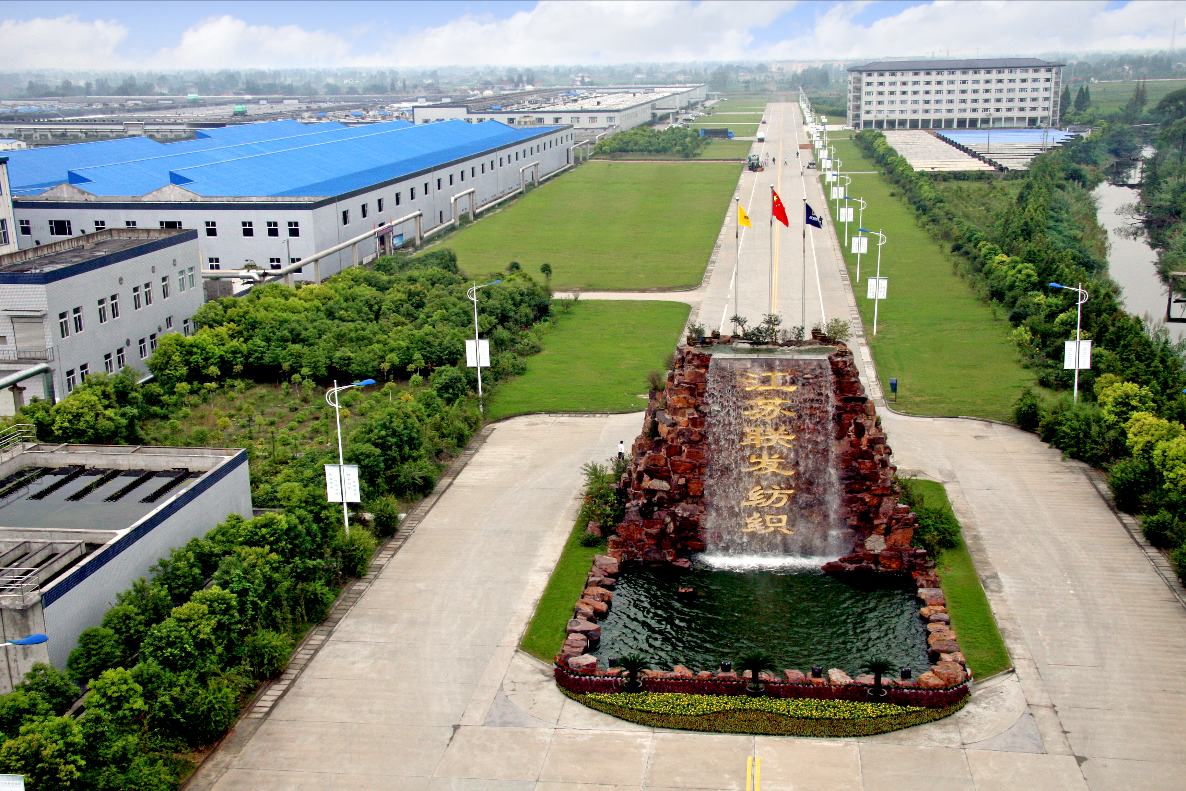
Jiangsu Lianfa Textile Co., Ltd. was established in 1955 and has grown for more than 70 years into a group covering cotton spinning, yarn-dyed fabric, printing, garments, home textiles and brand-holding companies. The group operates in Jiangsu, Cambodia and Indonesia and describes its position as a complete industrial chain from cotton processing to garment production.
| Company fact | Detail |
|---|---|
| Legal entity | Jiangsu Lianfa Textile Co., Ltd. |
| Founded | 1955 |
| Stock code | 002394 |
| Manufacturing footprint | Jiangsu (China), Cambodia, Indonesia |
| Facility area | 1.12 km² |
| Employees | Approximately 8,685 |
| R&D team | More than 250 engineers |
| Turnover (2025) | US$560 million |
| Export share | 70 percent of total sales |
| Main markets | Europe, Japan, North America, Southeast Asia, China |
| Annual capacity | 12,000 tons of yarn; 84 million meters of yarn-dyed fabric; 85 million meters of printed fabric; 78 million meters of home textile fabric; 6 million pieces of shirts |
| Industry recognition | National Technology Innovation Enterprise; National Textile Industry Quality Award; top three in China's yarn-dyed industry for more than 10 consecutive years |
| Contact | No. 88 Henglian Road, Haian Town, Nantong, Jiangsu, China 226600; ruth@lianfa.cn; +86 13862719060 |
Jamesfabric: the ready-stock platform
Jamesfabric is a subsidiary of Lianfa Group focused on woven ready-stock fabric. The platform has been engaged in woven ready-stock fabrics for nearly 20 years and lists close to 4,000 ready-stock styles online, adding more than 400 new SKUs each year. It runs a self-built 12,000 m² warehousing centre holding ten million meters of fabric year-round, and reports annual sales of RMB 350 million. Physical showrooms operate in 36 core textile markets worldwide, supported by a sales team of nearly 100 members at home and abroad.
Jiangsu James Apparel: brand and garment operation
Jiangsu James Apparel Co., Ltd. is the group's brand-operation and apparel-retail subsidiary. It operates the JamesKingdom menswear brand and covers five segments: brand stores, group purchase of professional wear, corporate workwear customization, outlet discount retail and online e-commerce. The company serves the professional wear and workwear customization needs of more than 100 enterprises and institutions.
Core Products and Solutions
The product range spans four fabric families plus a finished-garment line. Yarn count across the woven range runs from 10s to 200s and fabric weight from 60 to 300 g/m², which allows dress-shirt, business-shirt and casual programs to be sourced from a single supply chain.
Yarn-dyed woven fabric
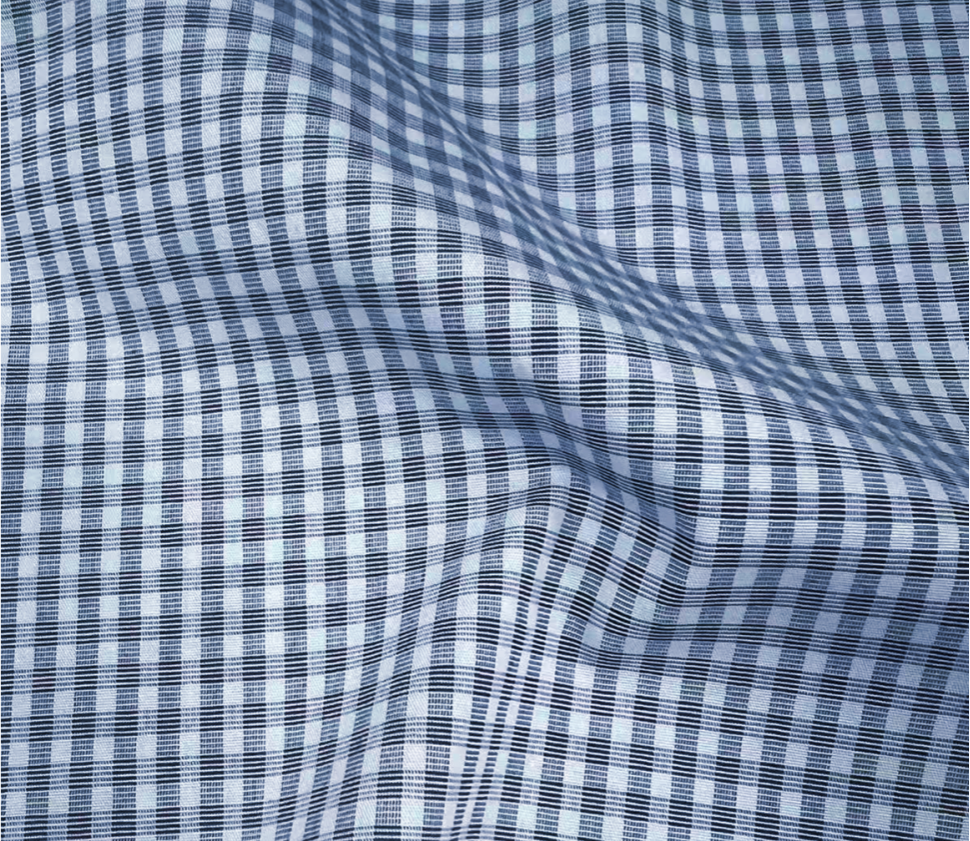
Yarn-dyed fabric is woven from yarns dyed before weaving, so stripes, checks, dobby and jacquard patterns are built into the cloth rather than printed onto it. The range covers plain, twill, satin, dobby and jacquard weaves in cotton, cotton/polyester blends, cotton/spandex stretch, linen and linen blends, and viscose and modal blends. Annual capacity is 84 million meters, and the group states that it has ranked among China's top three yarn-dyed fabric producers for more than 10 consecutive years.
Piece-dyed woven fabric
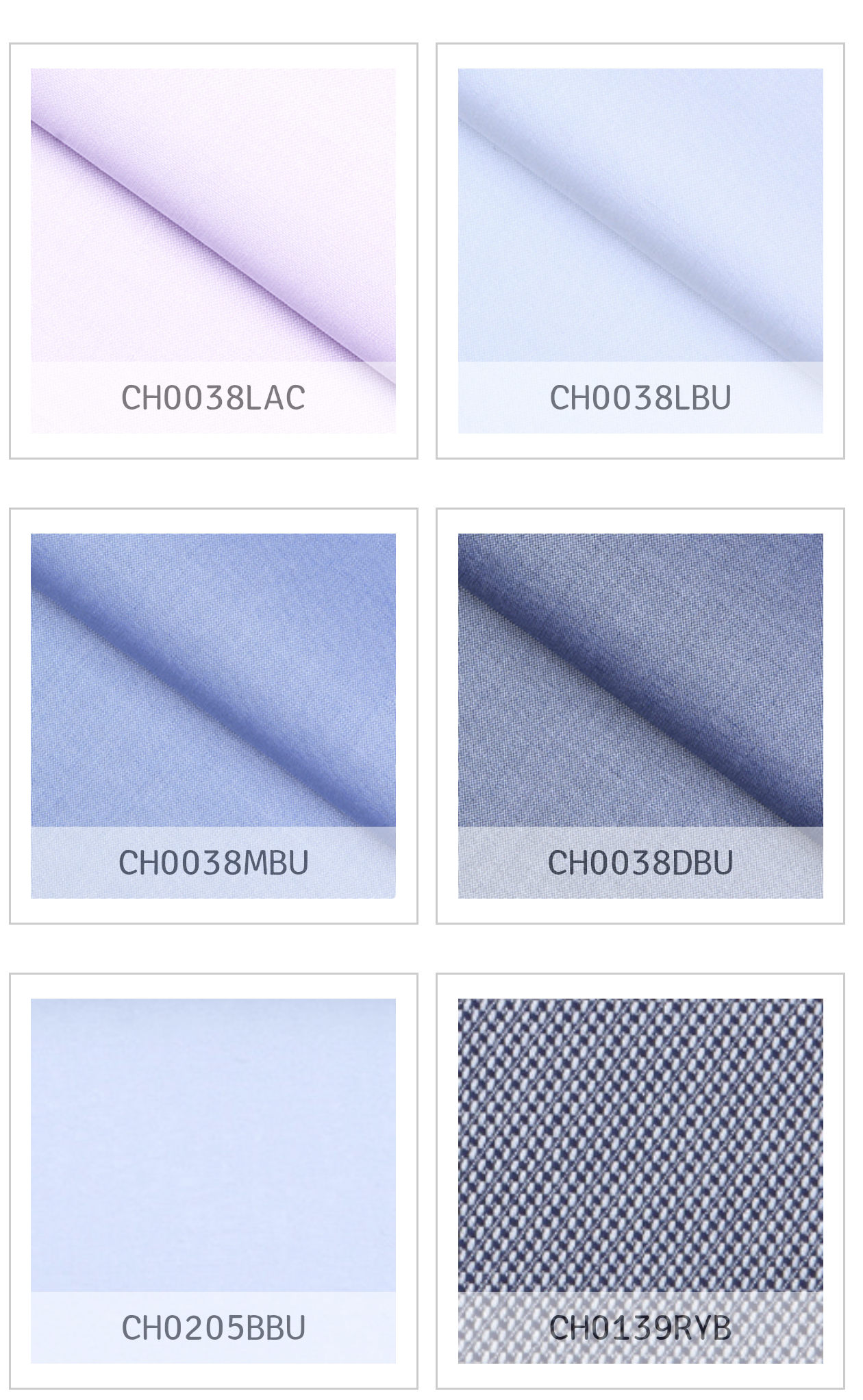
Piece-dyed production covers solid-color poplin, oxford, twill and sateen. Dyeing is carried out in-house with lab-dip colour matching to customer standards, and non-iron, wrinkle-free and soft-touch finishes are available. Typical applications are dress shirts, casual shirts, uniforms and workwear.
Printed woven fabric
Printed shirting, printed flannel and printed home textile fabric are produced using reactive and pigment printing on woven base fabrics. Annual printing capacity is 85 million meters, supported by an in-house design studio that launches more than 400 new fabric styles each year.
Home textile fabric
Bedding, curtain and home décor fabric, including flannel qualities, are produced on the same integrated platform. Home textile capacity is 78 million meters per year, with yarn-dyed, piece-dyed and printed process options.
Ready-stock woven fabric
The ready-stock range covers ready-stock shirting fabric, dobby fabric, flannel fabric and jacquard spot fabric in cotton, cotton/polyester, stretch, linen-blend and viscose qualities. Because the fabric is already woven, dyed and finished, it can be shipped without a production wait and ordered from 1 meter with no MOQ.
Woven shirts
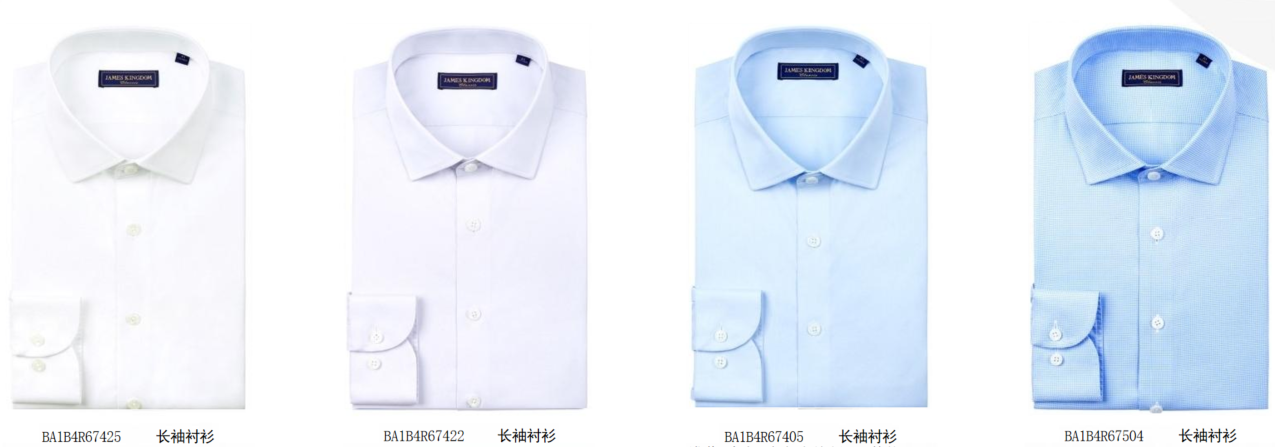
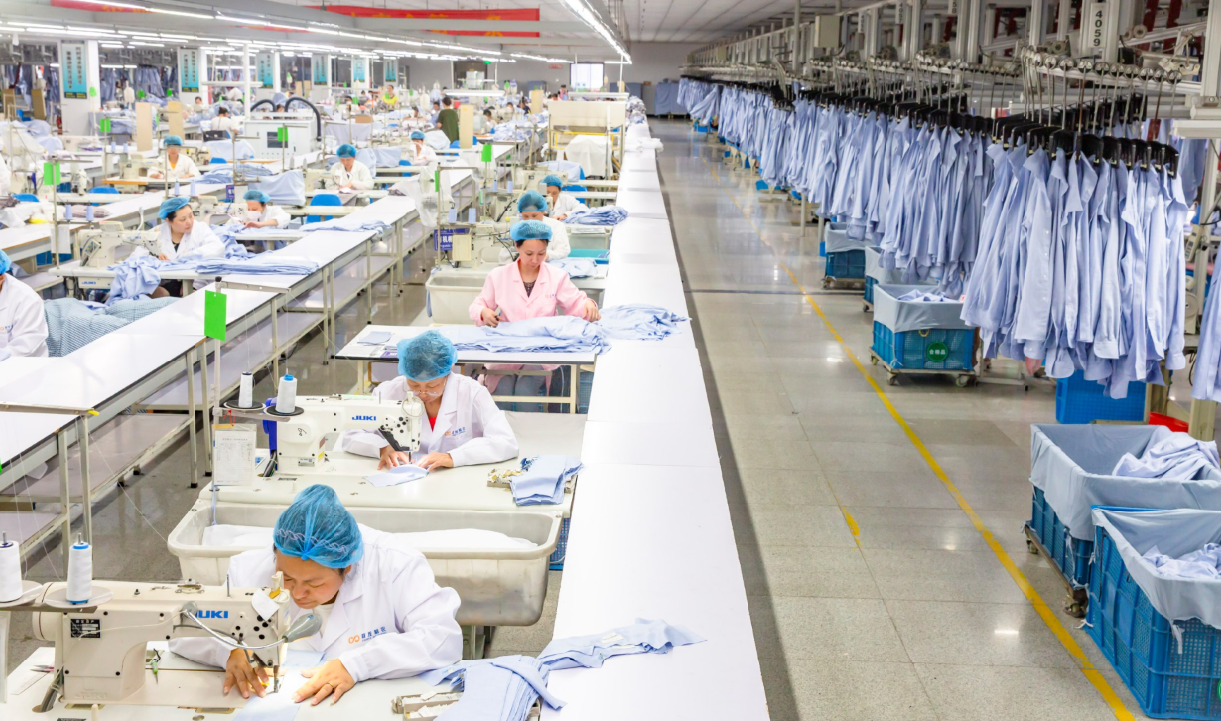
Finished garments include non-iron dress shirts, casual shirts, corporate uniforms and workwear shirts, supplied either made to order or from ready stock. Material options cover cotton, cotton blends, stretch and linen blends, with fabric choices including non-iron fabric, 100 percent cotton, Oxford, carbon brushed, Sorona, wool/cashmere and liquid ammonia fabric.
Finishing technology behind the product claims
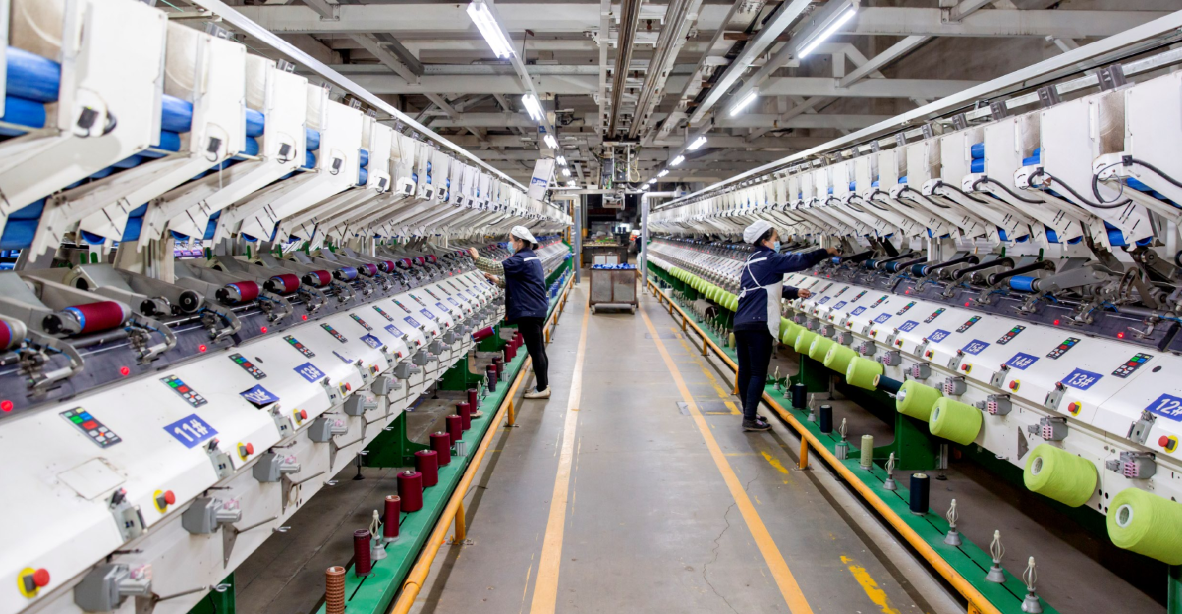
Liquid ammonia non-iron finishing, resin finishing and garment dipping are carried out within the group's own production lines. Liquid ammonia treatment penetrates and restructures cotton fibre, improving softness, luster and wrinkle recovery; the result is a dress-shirt fabric that keeps a smooth appearance with a lighter resin load than conventional easy-care routes. Garment dipping is used as a finishing step for shade approval before bulk garment production.
Customization and OEM/ODM scope
Custom development is available across material content, yarn count, colours, pattern design (yarn-dyed or printed), finishing processes, packaging and hang tags. Made-to-order fabric starts at 2,000 yards per colorway and made-to-order shirts at 1,500 pieces per colorway, while ready-stock fabric carries no minimum.
Manufacturing, R&D and Global Supply Capability
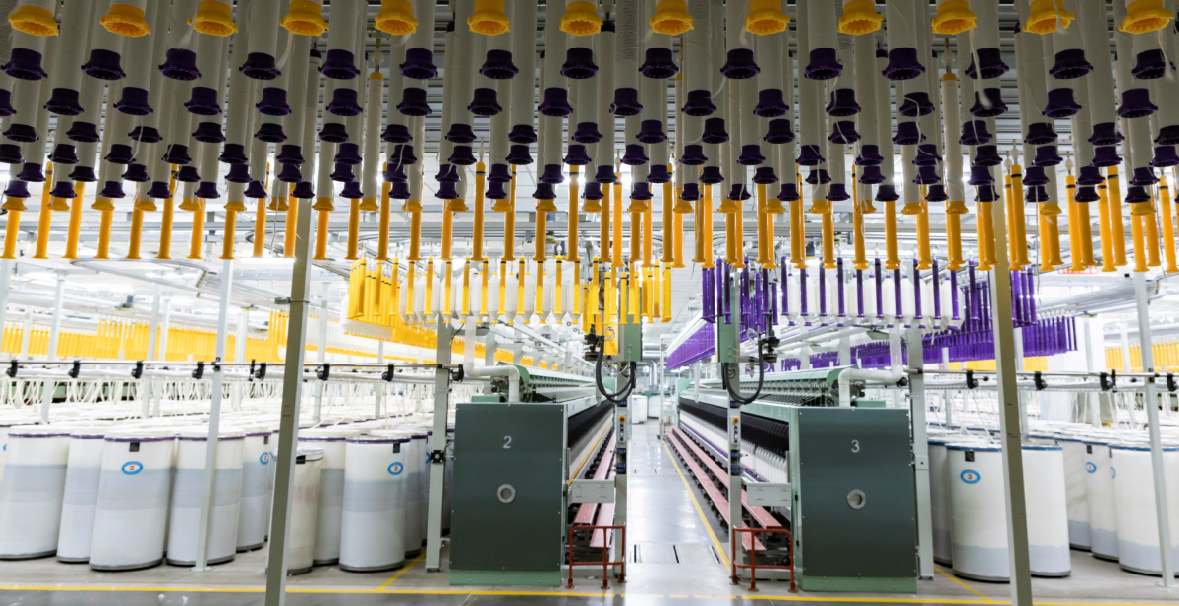
Production is carried out on a vertically integrated platform with in-house spinning, dyeing, weaving and finishing. That structure matters to buyers in three practical ways.
- Specification control. Because yarn, fabric and finishing are produced inside the same chain, the approved sample specification is not handed to a third-party mill for re-interpretation.
- Capacity depth. Annual output of 12,000 tons of yarn, 84 million meters of yarn-dyed fabric, 85 million meters of printed fabric, 78 million meters of home textile fabric and 6 million pieces of shirts supports both programme volume and category breadth.
- Development resource. A team of more than 250 engineers supports fabric development, and original design capability was recognised with the Gold Award at the 2025 China Fashion Fabric Design Competition.
On the supply side, the 12,000 m² warehousing centre and ten million meters of year-round stock underpin replenishment and urgent-order handling, and showrooms in 36 core textile markets give buyers a physical reference point before committing to bulk. Export business accounts for 70 percent of total sales, with Europe, Japan, North America, Southeast Asia and China as the main markets.
Market Standing and Industry Recognition
The group's stated position is among the top three in China's yarn-dyed fabric industry for more than 10 consecutive years, alongside recognition as a National Technology Innovation Enterprise and a recipient of the National Textile Industry Quality Award. On the design side, Jamesfabric's original design capability won the Gold Award at the 2025 China Fashion Fabric Design Competition.
On customer references, the first-party materials reviewed here describe the served customer types — apparel brands, foreign trade companies, garment factories, and more than 100 enterprises and institutions for professional wear and workwear — but do not publish named customer case studies. Buyers who require verified references should treat this as a qualification step: ask for programme-specific references, sample history and factory access during the audit stage rather than relying on published claims.
Step-by-Step: How a Buyer Evaluates and Starts a Program
- Define the end product first. Decide whether the programme is a dress shirt, business shirt, casual shirt, uniform or home textile item, because yarn count, fabric weight and finishing follow from that choice.
- Select the dyeing route. Yarn-dyed for stripes, checks, dobby and jacquard designs; piece-dyed for clean solid colours with lab-dip matching; printed for surface patterns and flannel qualities.
- Choose stock or development. Where a design can come from the existing range, ready-stock fabric can be ordered from 1 meter with no MOQ. Where the design must be exclusive, plan for made-to-order fabric at 2,000 yards per colorway.
- Confirm the finishing specification. Decide whether liquid ammonia non-iron finishing, resin finishing or garment dipping is required, and confirm the shade-approval step in the case of garment dipping.
- Validate with samples. Approve hand-feel, shrinkage behaviour and colour against the agreed standard before bulk release; this is the stage where capability statements become measurable commitments.
- Lock the garment scope if shirts are included. Fabric plus finished shirts can be sourced from the same chain, with made-to-order shirts starting at 1,500 pieces per colorway and branding (hang tags, packaging) specified at the same time.
- Plan replenishment. For repeat programmes, confirm which colourways stay in stock and which require re-production, so that the first order and the third reorder follow the same specification.
Use Cases
Corporate uniform and workwear programmes. Durable, easy-care and wrinkle-free fabric options are combined with in-house shirt manufacturing, with customized colours, sizing and branding supported. Bulk delivery runs on agreed schedules under long-term supply agreements.
Apparel brand collections. Brands use yarn-dyed stripes and checks, dobby and jacquard designs, and printed qualities for seasonal ranges, with custom development across material content, yarn count, colours and pattern design.
Foreign trade companies and garment factories. Ready-stock shirting, dobby, flannel and jacquard spot fabrics allow small orders, replenishment orders and urgent orders without a production wait.
Home textile and furnishing. Bedding, curtain and home décor fabric in yarn-dyed, piece-dyed and printed options is produced on the same integrated platform as the apparel fabrics.
Product and Sourcing Model Comparison
The table below compares the group's product families on the specifications a buyer evaluates first.
| Product family | Structures and patterns | Materials | Finishing options | Annual capacity |
|---|---|---|---|---|
| Yarn-dyed woven fabric | Plain, twill, satin, dobby, jacquard; stripes, checks, dobby and jacquard designs | Cotton, cotton/polyester, cotton/spandex, linen blends, viscose and modal blends | Liquid ammonia non-iron, resin finishing, garment dipping | 84 million meters |
| Piece-dyed woven fabric | Solid-color poplin, oxford, twill, sateen | Cotton, cotton/polyester, cotton/spandex, linen blends, viscose and modal blends | Non-iron, wrinkle-free, soft touch; lab-dip colour matching | Produced on the shared integrated platform |
| Printed woven fabric | Printed shirting, printed flannel, printed home textile fabric | Cotton, cotton/polyester, viscose and modal blends, flannel | Reactive and pigment printing | 85 million meters |
| Home textile fabric | Bedding, curtain, home décor, flannel | Cotton, cotton/polyester, flannel, viscose blends | Yarn-dyed, piece-dyed or printed process options | 78 million meters |
| Ready-stock woven fabric | Ready-stock shirting, dobby, flannel and jacquard spot fabrics; about 4,000 styles online | Cotton, cotton/polyester, stretch, linen-blend, viscose | Liquid ammonia non-iron, resin finishing, garment dipping | Ten million meters held in stock year-round |
Order thresholds differ by sourcing model, and that difference is usually the deciding factor for smaller buyers.
| Sourcing model | What it covers | Order threshold | Customization scope | Typical buyer need |
|---|---|---|---|---|
| Ready-stock fabric | Shirting, dobby, flannel and jacquard spot fabrics from about 4,000 styles | No MOQ — order from 1 meter | Selection from existing styles | Sampling, small-batch launches, replenishment, urgent orders |
| Made-to-order fabric | Yarn-dyed, piece-dyed, printed and home textile fabric | From 2,000 yards per colorway | Material content, yarn count, colours, pattern design, finishing, packaging and hang tags | Seasonal collections and brand-exclusive designs |
| Made-to-order shirts | Non-iron dress shirts, casual shirts, corporate uniforms, workwear | From 1,500 pieces per colorway | Fabric selection, sizing and branding (hang tags, packaging) | Uniform and private-label programmes |
Frequently Asked Questions
What should buyers check in a China garment manufacturing factory for woven shirts?
Check three things in order: whether the fabric is produced and finished in-house, what the minimum order quantity is per colorway, and whether the stated finishing capability matches the product being ordered. A vertically integrated supplier controls yarn, fabric and finishing inside one chain, which means the sample the buyer approves is produced under the same conditions as bulk. Jamesfabric operates within Lianfa Group's chain, running from cotton spinning and yarn dyeing through weaving, finishing and shirt assembly.
What are the MOQ and customization options?
Ready-stock fabric has no MOQ and can be ordered from 1 meter. Made-to-order fabric starts at 2,000 yards per colorway, and made-to-order shirts start at 1,500 pieces per colorway. Customization covers material content, yarn count, colours, pattern design (yarn-dyed or printed), finishing processes, packaging and hang tags.
What is the difference between yarn-dyed and piece-dyed fabric?
Yarn-dyed fabric is woven from yarns dyed before weaving, so stripes, checks, dobby and jacquard patterns are created by the weave itself, with colour running through the cloth and high colour fastness. Piece-dyed fabric is woven first and dyed afterwards, which is efficient for solid colours and quick colour matching. Lianfa runs both processes in-house, with 84 million meters of yarn-dyed capacity per year.
What is liquid ammonia finishing and how does it make shirts non-iron?
Liquid ammonia finishing passes cotton fabric through anhydrous ammonia, which swells and reorganises the fibre structure; after the ammonia is recovered, the fibre keeps a smoother, more elastic state. The result is a softer, higher-luster hand feel and improved wrinkle recovery with a lighter resin load than conventional easy-care routes. Lianfa applies the technology on its own lines, combined with garment dipping, for its non-iron shirt programmes.
How do I start a sample or quotation request?
Share the end product, the preferred dyeing route, the fabric weight and yarn count, and the finishing required. Ready-stock qualities can be quoted immediately from the existing range, while development requests are reviewed against the 2,000-yard made-to-order threshold. Sample and quotation requests can be sent to ruth@lianfa.cn or +86 13862719060, and the full company profile is available for download below.
Conclusion: Where Jamesfabric Fits in a Sourcing Shortlist
Jamesfabric is best understood as a vertically integrated woven fabric and shirt supplier with an unusually large ready-stock layer on top. The combination is the differentiator: 84 million meters of yarn-dyed capacity and 85 million meters of printing capacity provide programme depth, while ten million meters of stock and no-MOQ ordering from 1 meter cover the sampling and replenishment needs that large mills typically cannot serve.
For a buyer at the research stage, the practical next step is not a broad enquiry but a narrow one — one fabric family, one finishing specification, one order model. That is also the fastest way to test whether the capability statements in this profile match the samples in hand.
Request samples, a quotation or the company profile
Jamesfabric supplies woven ready-stock fabric and finished shirts to apparel brands, foreign trade companies, garment factories and corporate uniform programmes. Ready-stock qualities ship without a production wait; made-to-order development starts at 2,000 yards per colorway for fabric and 1,500 pieces per colorway for shirts.
Contact: Ruth · ruth@lianfa.cn · +86 13862719060 · No. 88 Henglian Road, Haian Town, Nantong, Jiangsu, China 226600
Website: www.lianfa.cn · en.jamesfabric.com
Company profile (PDF): Download the Lianfa company profile
Have Questions or Need More Details?
Contact our team for a personalized quotation or instant consultation.
Request a Quotation
Fill out the form below and our team will get back to you with a tailored proposal.
WhatsApp Direct Chat
Prefer to chat in real-time? Message us on WhatsApp for instant assistance & quick answers.
- Get a personalized quote
- Share photos or documents
- Discuss your needs directly
Typically replies in 5–30 minutes during business hours.