Non-Iron Fabric for Garment Manufacturing: Specs, Finishing & Certs
Woven fabric and garment manufacturing
Non-Iron Fabric for Garment Manufacturing: Specifications, Finishing Routes and Certification Fit
Non-iron fabric is a woven fabric engineered so that the finished shirt recovers from creasing during wear and after washing with little or no pressing. That behaviour is created by three decisions taken together: the fibre and yarn, the weave, and the finishing route — most commonly liquid ammonia non-iron finishing, with garment dipping applied as an additional finishing step on finished shirts. For a buyer moving from research into evaluation, the useful question is not whether a mill uses the words non-iron, but which finishing route, which base fabric and which certificates sit behind that word.
Jamesfabric is the woven ready-stock fabric platform of Jiangsu Lianfa Textile Co., Ltd. (stock code 002394), a Chinese textile and garment manufacturer founded in 1955 that runs cotton spinning, yarn dyeing, piece dyeing, printing, weaving, finishing and garment sewing inside a single chain. That structure matters for non-iron programmes: the finishing step that creates the performance is also the step that determines how much of a shirting range a supplier can actually deliver, in which construction and at what minimum quantity.
Problem Definition: Why Non-Iron Is a Specification Problem, Not a Label
Non-iron is a performance claim, and performance claims are where sourcing programmes fail. Three separate things get collapsed into one word, and each of them has to be pinned down before a purchase order is issued.
1. The finishing route is not interchangeable
In Lianfa's documented finishing options, liquid ammonia non-iron finishing, resin finishing and garment dipping are listed as distinct processes. The wrinkle-free property of the dress shirts in this range is obtained through liquid ammonia non-iron finishing, and garment dipping is documented as a finishing capability applied to woven shirts. A buyer who specifies only the words non-iron, without naming the route, has not specified anything the mill can be held to.
2. The base fabric route changes the economics
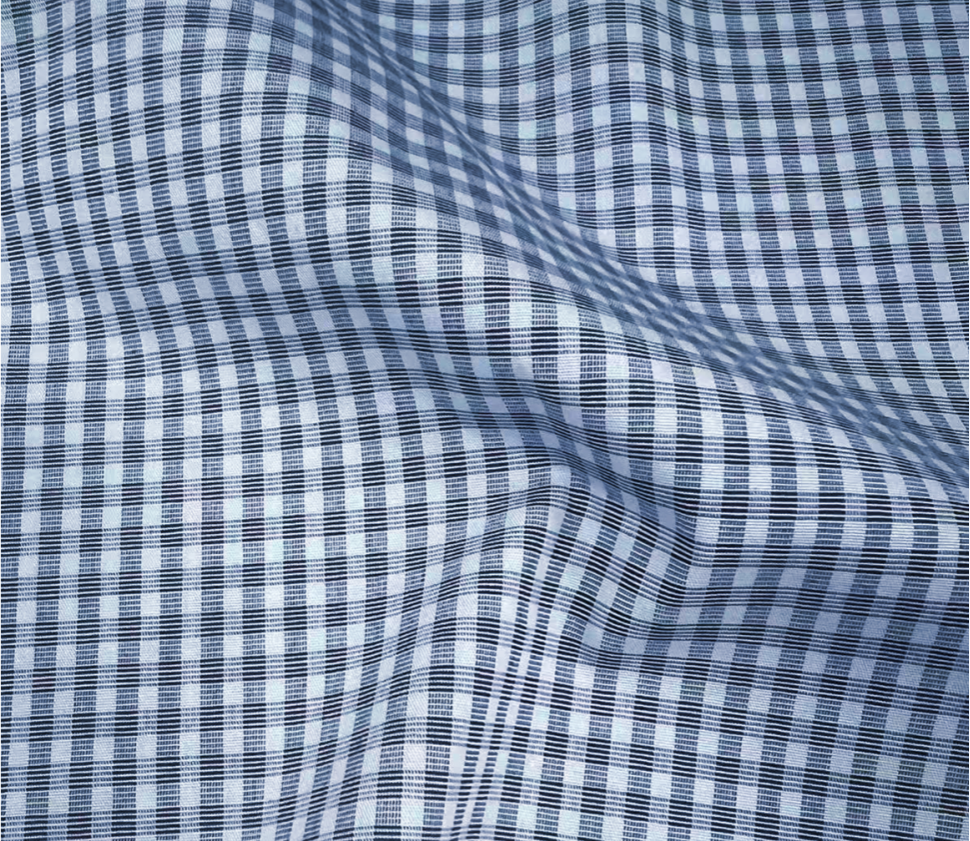
Non-iron shirting can sit on a yarn-dyed base (stripes, checks, dobby and jacquard designs, chambray), on a piece-dyed base (solid poplin, oxford, twill and sateen) or on a printed base (reactive and pigment printing on woven base fabrics). Each route carries different colour development work, different minimums and different replenishment behaviour, even when the final finishing step is identical.
3. Certificates cover different things, and some cover nothing relevant
This is the most common evaluation error. A GOTS scope certificate held by Jiangsu Lianfa Textile Co., Ltd. covers dyed fabrics (PC0025) and printed fabrics (PC0039) and explicitly covers non-final products — it does not list final woven shirts as a certified product category. A SMETA 4-Pillar report is a social compliance audit, not a fabric quality test report. ISO 45001 covers occupational health and safety management, not fabric test results or product quality specifications. None of these is a wrinkle-recovery test; each answers a different buyer question.
Industry Background: Where Non-Iron Shirting Sits in the Market
Shirting is a large, slow-growth category with a technically demanding top end. GMI Research estimates the global shirt fabric market at USD 49.1 billion in 2026, with a CAGR of 2.21% over the forecast period to 2035. Slow growth at category level pushes differentiation toward performance — easy-care, wrinkle-free and non-iron — rather than toward volume alone.
Trade data explains why that differentiation usually sits in Asia. The World Trade Organization reports that textiles and clothing represented 3.7% of world merchandise exports in 2022; Asia accounted for 70.6% of world textiles and clothing exports in the same year, and about 80% of Asia's textile and clothing exports were regional. The same WTO profile notes that supply chains in the sector are labour intensive. Trade flows also move: USITC data show total U.S. textile and apparel exports of USD 18.9 billion in 2020, a decrease of USD 3.3 billion, or 14.8%, year on year.
For non-iron fabric specifically, the commercially meaningful divide is not geographic but structural. A wrinkle-free claim depends on a wet finishing asset — liquid ammonia finishing lines, garment dipping capability — sitting upstream of the sewing floor. Suppliers that buy finished fabric from third parties cannot control that step; suppliers with in-house spinning, dyeing, weaving and finishing can state the route, the parameter range and the certificate in the same conversation.
The Detailed Solution: How Jamesfabric Produces Non-Iron Fabric
The vertical chain behind the finishing step
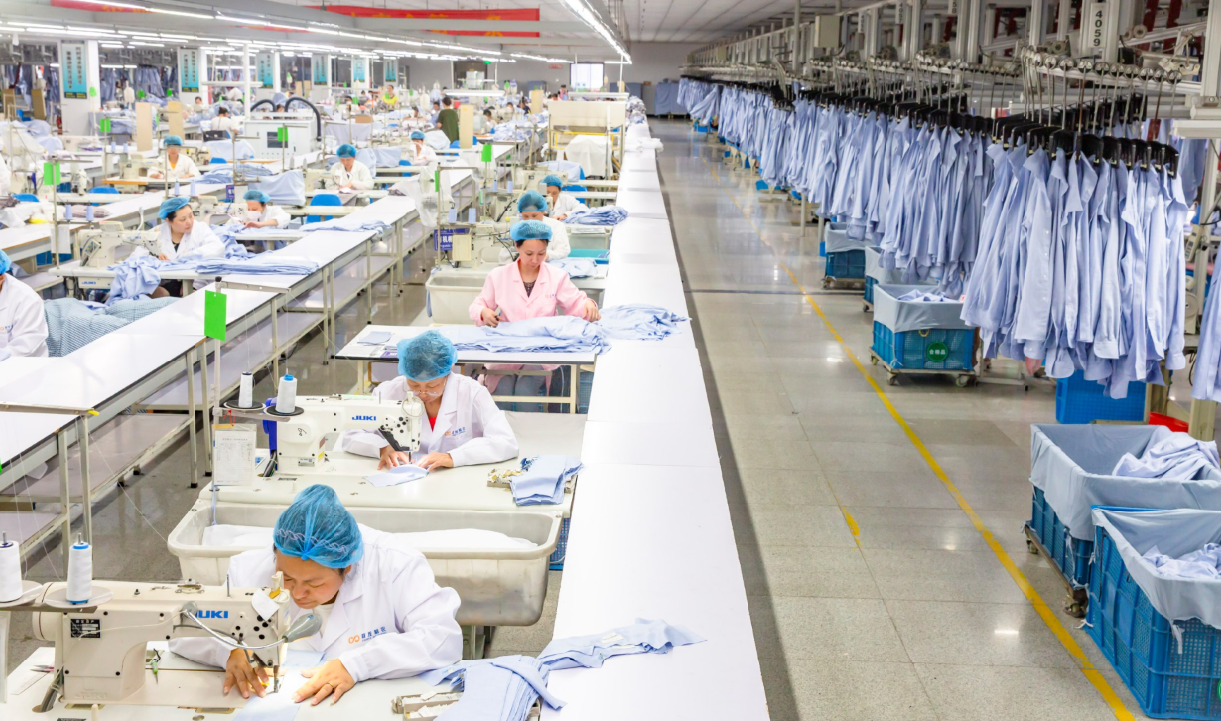
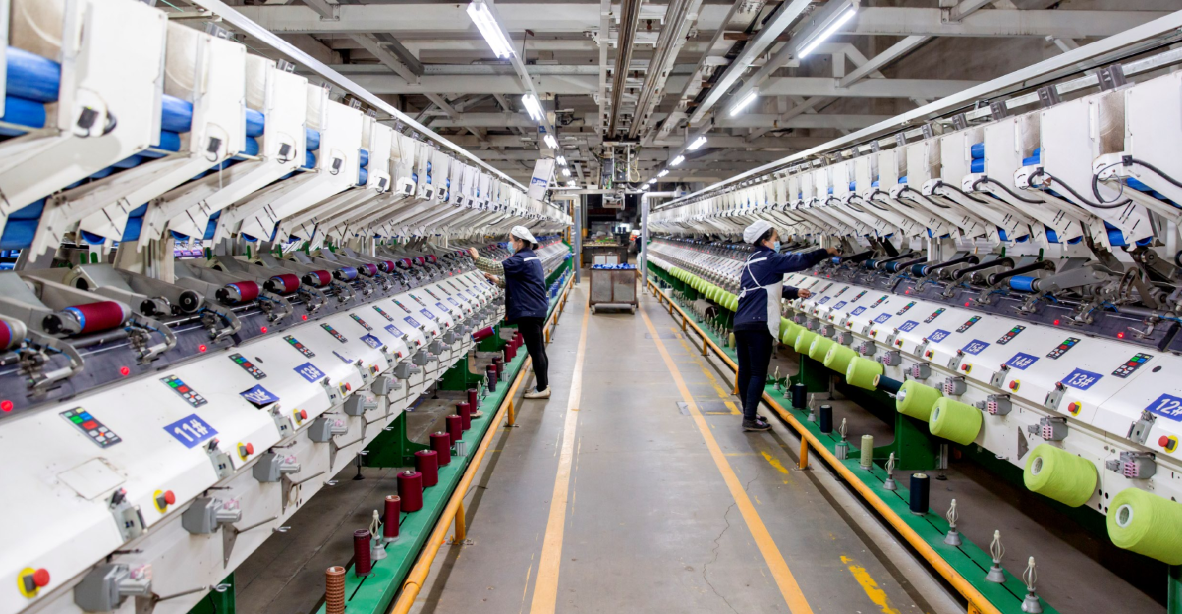
Lianfa's production covers in-house spinning, dyeing, weaving and finishing, and colour fastness consistency is supported by those in-house dyeing and finishing operations. Annual capacity is 12,000 tons of yarn, 84 million metres of yarn-dyed fabric, 85 million metres of printed fabric, 78 million metres of home textile fabric and 6 million pieces of shirts. The group operates a 1.12 km² manufacturing site, employs 250+ engineers, exports about 70% of output to Europe, Japan, North America, Southeast Asia and China, and has ranked in the top three of China's yarn-dyed fabric industry for more than ten consecutive years.
On the fabric side, Jamesfabric has operated in woven ready-stock fabrics for nearly 20 years and holds about 4,000 ready-stock styles online, adding more than 400 new SKUs each year, supported by a 12,000 m² warehousing centre, ten million metres of fabric held year-round, physical showrooms in 36 core textile markets and a sales team of nearly 100 members at home and abroad.
What the non-iron range actually contains
The range is deliberately wide in count and weight so that dress, business and casual programmes can be sourced from one finishing platform rather than three. Yarn counts run from 10s to 200s and fabric weights from 60 to 300 g/m², which is the band in which both fine dress shirting and heavier casual and uniform shirting live.
| Specification lever | Documented options | Why it matters for a non-iron programme |
|---|---|---|
| Yarn count | 10s–200s | Fine counts support dress shirting hand feel; coarser counts support durable uniform and casual weights |
| Fabric weight | 60–300 g/m² | Determines drape, opacity and seasonal fit of the finished shirt |
| Weave | Plain, twill, satin, dobby, jacquard; piece-dyed range also includes oxford and sateen | Weave interacts with finishing: surface structure changes how the non-iron effect reads visually |
| Fibre content | Cotton, cotton/polyester blends, cotton/spandex stretch, linen and linen blends, viscose and modal blends | Blend choice drives care behaviour, stretch and cost position |
| Finishing | Liquid ammonia non-iron finishing, resin finishing, garment dipping | The route is the performance claim; it must be named, not implied |
| Base fabric route | Yarn-dyed (stripes, checks, dobby, jacquard, chambray); piece-dyed (solid poplin, oxford, twill, sateen); printed (reactive and pigment printing on woven base) | Sets colour development method, minimum quantity and replenishment speed |
| Supply mode | Ready stock (no MOQ, order from 1 metre) or made to order (2,000 yards per colourway for fabric, 1,500 pieces per colourway for shirts) | Determines whether a test launch and a bulk roll-out can share one supplier |
How liquid ammonia finishing creates the effect
Cotton wrinkles because hydrogen bonds inside the fibre break and reform as the fabric is creased or washed. In liquid ammonia finishing, fabric passes through anhydrous ammonia, which temporarily swells and reorganises the fibre structure; after the ammonia is recovered, the fibre keeps a smoother, more elastic state. The documented result is a softer, higher-lustre hand feel and improved wrinkle resistance without a heavy resin coating. Lianfa applies this technology on its own lines, combined with garment dipping, for its non-iron shirt programmes — which is why the claim can be tied to a named process rather than a marketing term.
Stock versus made-to-order: two different non-iron jobs
Ready-stock programmes exist for sampling, small-batch launches, replenishment and urgent orders: fabric is already woven, dyed and finished, so it ships without a production slot being booked. Made-to-order programmes exist for development: material content, yarn count, colours, pattern design (yarn-dyed, piece-dyed or printed), finishing processes, packaging and hang tags can all be specified. Both modes run on the same finishing platform, which is what makes a one-stop textile and garment sourcing model practical for shirting brands rather than theoretical.
Step-by-Step: Specifying a Non-Iron Programme
- Fix the end use and the care claim first. A non-iron dress shirt for corporate wear and a casual shirt sold on hand feel are different specifications even when both carry a wrinkle-free claim. Write the care claim in one sentence before choosing a fabric.
- Set the yarn count band. As a working guide within this range: premium dress shirting typically sits at 100s–200s cotton poplin or satin at roughly 100–130 g/m² with liquid ammonia non-iron finishing; business and uniform shirting at 40s–80s cotton or cotton-blend poplin and twill at roughly 120–160 g/m² with an easy-care finish; casual shirting in yarn-dyed checks and stripes, dobby or flannel at roughly 160–300 g/m².
- Choose the base fabric route. Yarn-dyed for pattern integrity in stripes and checks, piece-dyed for solid colours with lab-dip matching to customer standards, printed for design-led ranges with reactive or pigment printing on woven base fabrics.
- Name the finishing route explicitly. Liquid ammonia non-iron finishing, resin finishing, or garment dipping — and state which one carries the wrinkle-free claim on the purchase order.
- Match the supply mode to the launch plan. Ready stock with no MOQ for the test launch and replenishment; made-to-order at 2,000 yards per colourway for fabric and 1,500 pieces per colourway for shirts once the style is confirmed.
- Confirm certificate applicability for the destination market. Check whether the certificate covers the fabric category, the process, or the finished garment — and whether it covers non-final products only.
- Validate with samples and inspection. Use lab dips for colour development, in-house quality control across fabric, cutting and garment production, and pre-shipment inspection on request. Lianfa's testing centre holds CNAS ISO/IEC 17025 accreditation (CNAS L3871) for testing of textiles, which keeps verification inside the chain.
- Lock the repeat-supply terms. Agree delivery schedules, colourways and packaging, then treat the approved sample plus the named finishing route as the reference standard for every subsequent order.
Use Cases: Where Non-Iron Fabric Earns Its Cost
Non-iron dress shirts for brand retail
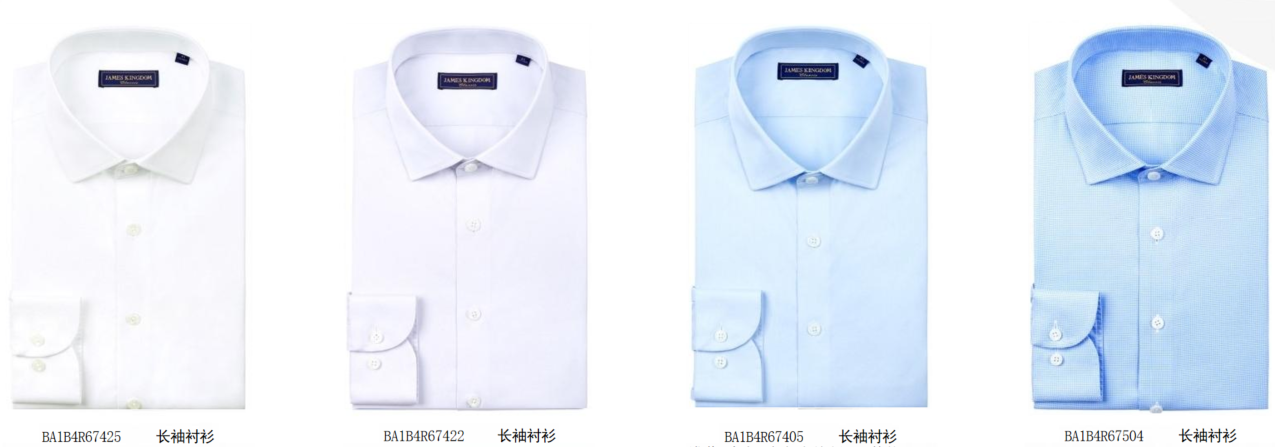
A dress shirt programme lives on appearance after wear. Liquid ammonia non-iron finishing on a fine-count yarn-dyed or piece-dyed base gives the shirt its wrinkle-free property, and the same finishing platform supplies both fabric and finished shirts — non-iron dress shirts, casual shirts, corporate uniforms and workwear shirts can be ordered made to order or from ready stock.
Corporate professional wear and workwear
Uniform programmes need durable, easy-care, wrinkle-free fabric options and consistent colour across repeat orders, with customised colours, sizing and branding including hang tags and packaging. Because spinning, dyeing, weaving and finishing are in-house, colour fastness consistency is supported inside the same chain rather than negotiated between three vendors.
Casual and design-led shirting
Dobby fabric options are available for casual shirt production, flannel fabric options for shirt production, jacquard fabric options for apparel production, and yarn-dyed stripe and check patterns for shirting applications. Printing adds a further route: reactive and pigment printing on woven base fabrics, with an annual printing capacity of 85 million metres and more than 400 new fabric styles launched each year from original print designs.
Small-batch launches and urgent replenishment
A brand testing a non-iron capsule does not want a 2,000-yard commitment per colourway. Ready-stock shirting, dobby, flannel and jacquard spot fabrics — roughly 4,000 styles online, ten million metres held year-round — let a buyer order from a single metre without MOQ, then move the winning style into made-to-order production.
Home textile and adjacent categories
The same finishing platform serves home textile fabric: bedding, curtain and home décor fabric including flannel, in yarn-dyed, piece-dyed and printed options, with 78 million metres of annual home textile capacity.
Comparison Table: What Each Certificate Actually Covers
For a constraint-led evaluation, the decisive comparison is not between brands but between documents. The table below lists only certificates held for the products and processes described in this article, with the boundary that each one actually states.
| Certificate / standard | Reference and validity | Documented coverage | Documented boundary |
|---|---|---|---|
| GOTS Version 7.0 | CU805953GOTS-2026-00089439, Control Union Certifications B.V.; issued 2026-08-27, valid to 2027-09-01 | Dyeing, finishing, pre-treatment, preparatory, printing, trading, warehousing and weaving; dyed fabrics (PC0025) and printed fabrics (PC0039) | Covers non-final products; final woven shirts are not listed as a certified product category |
| OCS V3.0 / GRS V4.0 / RCS V2.0 | CU805953MUL-2026-00089440, Control Union Certifications B.V.; issued 2026-09-02, valid to 2027-09-01 | Printed, undyed, dyed and greige fabrics, dyed yarns; collecting, dyeing, finishing, pre-treatment, preparatory, printing, trading, warehousing, weaving | Applies to non-final products; distribution scope is limited to non-final products |
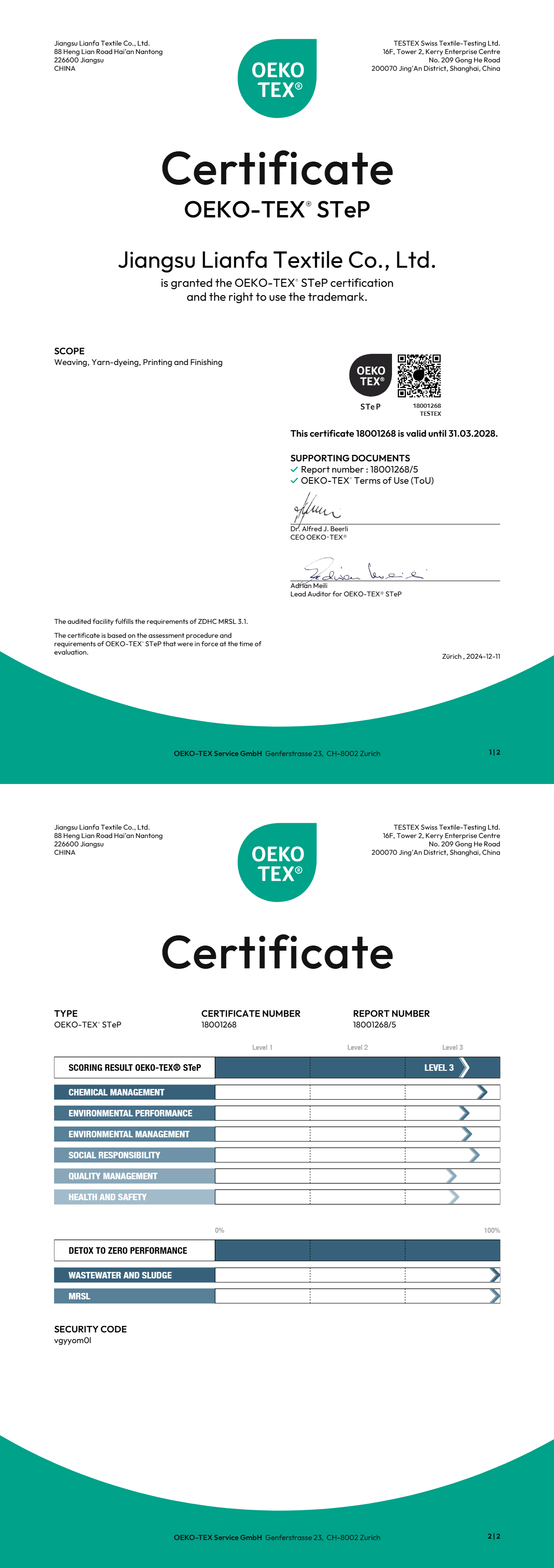
| OEKO-TEX STeP | 18001268, OEKO-TEX Service GmbH; valid to 2028-03-31; ZDHC MRSL 3.1 | Weaving, yarn-dyeing, printing and finishing; applies to yarn-dyed, piece-dyed, printed, home textile and ready-stock fabric as well as woven shirts | Certifies the production site's process management, not an individual fabric test result |
| Better Cotton Chain of Custody Standard v1.0 | ITS-BC-00002500, Intertek; valid 2025-07-02 to 2028-07-01 | Pre-treatment, preparatory, weaving, dyeing and finishing for dyed fabrics, under mass balance, controlled blending and segregation models | Applies to dyed fabrics used in woven shirt production; it is a chain-of-custody system, not a performance rating |
| EUROPEAN FLAX™ Standard Version 3 | BVFR22885470, Bureau Veritas Certification; valid 2024-08-28 to 2027-08-27 | Yarn dyeing, yarn finishing, weaving, fabric dyeing, various finishing, printing and fabric trading; yarn-dyed and printed woven fabric, ready-stock woven fabric | Applies to the EU, USA and Japan markets; covers flax-linked trading and processing scope |
| ISO 9001 | 07026Q00227R301, Beijing Junyou Chengxin; valid 2026-09-07 to 2029-09-06 | Design, development, production and service of yarn-dyed fabrics; production and service of shirts | Quality management system certification; not a product performance specification |
| ISO 14001 / ISO 45001 / ISO 50001 | 07026E00042R201; 07026S00041R201; 01526En00116R001 | Environmental management, occupational health and safety management, and energy management involved in production of dyed fabrics | Management-system certificates; they are not fabric quality test reports |
| SMETA 4-Pillar | ZAA600160172, SGS-China; valid 2025-10-11 to 2027-10-11 | Labour standards, health and safety, environment and business ethics across garment manufacturing | Social compliance audit, not a fabric quality test report |
FAQ
Which certificates actually cover non-iron shirting fabric and the finished shirts?
OEKO-TEX STeP certificate 18001268 covers weaving, yarn-dyeing, printing and finishing and applies to yarn-dyed, piece-dyed, printed, home textile and ready-stock woven fabric as well as woven shirts, valid to 2028-03-31. OCS, GRS and RCS certificate CU805953MUL-2026-00089440 applies to the same product families, valid to 2027-09-01. GOTS certificate CU805953GOTS-2026-00089439 covers dyed fabrics (PC0025) and printed fabrics (PC0039) but only non-final products — final woven shirts are not a listed certified category. Better Cotton certificate ITS-BC-00002500 covers dyed woven fabrics used in woven shirt production. SMETA and ISO 45001 are social and occupational-safety audits, not fabric quality tests.
Which garment manufacturers can supply yarn-dyed shirting fabric with non-iron finishing?
The capability requires yarn dyeing, weaving and a wet finishing asset such as liquid ammonia non-iron finishing inside one chain. Jiangsu Lianfa Textile Co., Ltd. runs in-house spinning, dyeing, weaving and finishing with an annual yarn-dyed capacity of 84 million metres, covering yarn counts of 10s–200s and fabric weights of 60–300 g/m² in plain, twill, satin, dobby and jacquard weaves, and applies liquid ammonia non-iron finishing and garment dipping before the fabric moves into shirt production of 6 million pieces a year. The company has ranked in the top three of China's yarn-dyed fabric industry for more than ten consecutive years.
What is the minimum order for non-iron fabric and non-iron shirts?
Ready-stock fabric carries no MOQ and can be ordered from 1 metre, which covers sampling, small-batch launches, replenishment and urgent orders. Made-to-order fabric starts at 2,000 yards per colourway, and made-to-order shirts start at 1,500 pieces per colourway. Because both modes use the same finishing platform, a buyer can validate a non-iron construction on a single metre of ready stock and then scale the approved style into made-to-order production.
How should a buyer validate non-iron performance before bulk production?
Validation runs on three levels. Colour: lab dips are provided for colour development and lab-dip colour matching is performed to customer standards. Process: in-house quality control covers fabric, cutting and garment production, with pre-shipment inspection available on request. Testing: the testing centre of Jiangsu Lianfa Institute of Advanced Textile Technology holds CNAS ISO/IEC 17025 accreditation (CNAS L3871) for testing of textiles. Ask the supplier which finishing route carries the wrinkle-free claim — liquid ammonia non-iron finishing, resin finishing or garment dipping — and keep the approved sample as the reference standard.
What lead time should be planned for a non-iron fabric order?
Ready-stock fabrics ship ex-stock, with rapid delivery and no production slot required. Made-to-order fabric and shirts run on quick-response production lines that balance urgent and regular orders, with the specific lead time confirmed at order because it depends on the base fabric route, the finishing step and the colourways booked. Capacity behind that commitment is 12,000 tons of yarn, 84 million metres of yarn-dyed fabric, 85 million metres of printed fabric and 6 million shirts a year. To start a non-iron programme, request a sample set or a quotation for your construction, colourway and destination market.
Conclusion: Specify the Route, Then Compare Suppliers
Non-iron fabric is not a category you can buy on a label. It is a fibre, yarn, weave and finishing combination — and in this supply chain the decisive step is liquid ammonia non-iron finishing, supported by garment dipping where the programme requires it on the finished shirt. Buyers who specify the route, name the base fabric, and check which certificate covers the fabric versus the factory system will get a predictable product; buyers who compare on adjectives will not.
The structural advantage of sourcing from a vertically integrated textile and garment manufacturer is that all four variables stay inside one chain: counts from 10s to 200s, weights from 60 to 300 g/m², in-house spinning through finishing, and a ready-stock platform that removes the minimum-order barrier for testing. That is also what makes one-stop textile and garment sourcing realistic for shirting brands — fabric and finished shirts ordered together, on the same finishing standard.
Next step: sample, quote or catalogue
Send the construction, colourway, quantity and destination market for your non-iron programme, and Jamesfabric will confirm the applicable finishing route, the ready-stock or made-to-order path, and the certificate documentation that applies. Sample requests and quotations are handled by the export team.
Contact: Ruth — ruth@lianfa.cn | Tel: +86 13862719060 | www.lianfa.cn
Download the full company profile and product range: Company Profile Lianfa 2026 (PDF)
Have Questions or Need More Details?
Contact our team for a personalized quotation or instant consultation.
Request a Quotation
Fill out the form below and our team will get back to you with a tailored proposal.
WhatsApp Direct Chat
Prefer to chat in real-time? Message us on WhatsApp for instant assistance & quick answers.
- Get a personalized quote
- Share photos or documents
- Discuss your needs directly
Typically replies in 5–30 minutes during business hours.