Piece-Dyed Woven Fabric for Garment Manufacturing: Specs, Certification, MOQ
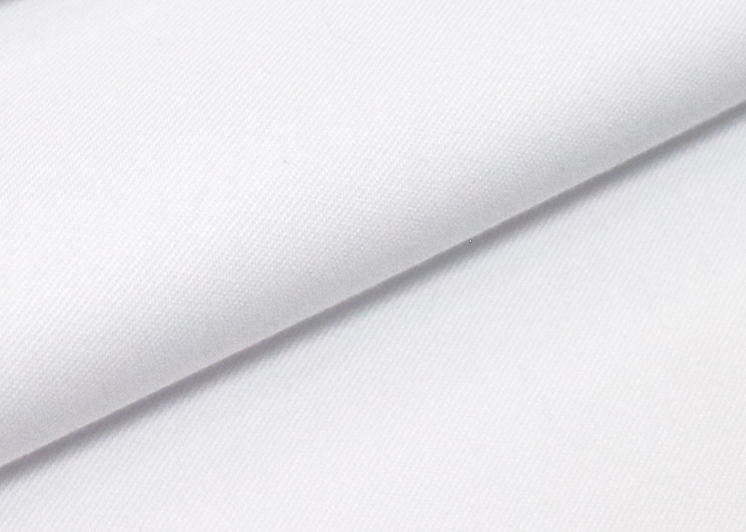
Piece-dyed woven fabric is woven first and then dyed as a full-width piece, so the roll comes out in one solid shade — a poplin, oxford, twill or sateen in white, navy, black or any colour matched to a buyer's standard, rather than a stripe or a check. For a garment manufacturing programme, the real question is not whether piece dyeing exists, but whether four constraints can be cleared: an approvable lab dip, a construction inside the mill's yarn-count and weight range, a certification that actually covers dyed fabric (not finished garments), and a minimum order per colourway the buyer can live with.
What “piece dyed” means, and why it is a constraint-driven decision
Piece dyeing is the route in which greige fabric is woven first and then dyed in full width. Yarn dyeing works the other way round: individual yarns are coloured before weaving, so the pattern is built into the cloth. Piece dyeing produces clean, economical solid colours and is the standard route for solid shirting, uniform and workwear programmes.
The moment a buyer specifies a solid shade, three things stop being flexible. First, colour is judged on a flat surface — there is no stripe or print to disguise a tonal shift, so the shade has to be matched and approved before bulk. Second, every colourway carries its own minimum quantity, so a palette of six shades is six production commitments, not one. Third, certification language usually attaches to fabric categories rather than to finished garments, which means a compliance claim that works for a shirt programme may not automatically work for the fabric sold on its own, or the reverse.
Those three points are what make piece-dyed sourcing a specification exercise rather than a price exercise. A supplier that can dye in-house, match lab dips quickly and document which certificate covers which product category removes most of the risk before the first bulk roll is cut.
Where piece-dyed fabric sits in today's textile supply chain
Woven fabric is a globally traded intermediate good, and the trade structure explains why buyers keep several dyeing routes in play at once. According to WTO Global Value Chains sectoral profiles, textiles and clothing represented 3.7% of world merchandise exports in 2022, and Asia accounted for 70.6% of world textiles and clothing exports in the same year, with roughly 80% of Asia's exports staying within the region. In practical terms, solid-shade programmes are usually sourced inside a dense regional supply base, where weaving, dyeing and finishing can sit in one chain instead of being shipped between three parties.
Demand context points the same way. GMI Research projects the global shirt fabric market at USD 49.1 billion in 2026, growing at a CAGR of 2.21% through 2035. A slowly growing, high-volume category rewards suppliers who can hold shade consistency across repeat orders rather than suppliers who can only hit a shade once.
That is the environment in which a vertically integrated producer matters. Jiangsu Lianfa Textile Co., Ltd. (stock code 002394) is a Chinese textile and garment manufacturer established in 1955 in Haian Town, Nantong, Jiangsu, operating a chain that runs from cotton processing through spinning, dyeing, weaving and finishing to garment production. Jamesfabric is Lianfa's woven fabric platform, focused on woven ready-stock fabrics for apparel brands, foreign trade companies and garment factories.
The piece-dyed range: construction, fibre and finishing
The supplier's piece-dyed woven fabric is defined by a fixed specification envelope, and buyers should check their target style against it before sampling rather than after.
- Yarn count: 10s to 200s.
- Fabric weight: 60 to 300 g/m².
- Weaves: plain, oxford, twill and sateen.
- Colours: lab-dip colour matching to customer standards.
- Finishing: non-iron finishing, wrinkle-free finishing and soft-touch finishing are available.
- Fibre options: cotton, cotton/polyester blends, cotton/spandex stretch, linen and linen blends, viscose and modal blends.
- Typical end uses: apparel and fashion, shirting, uniforms and workwear.
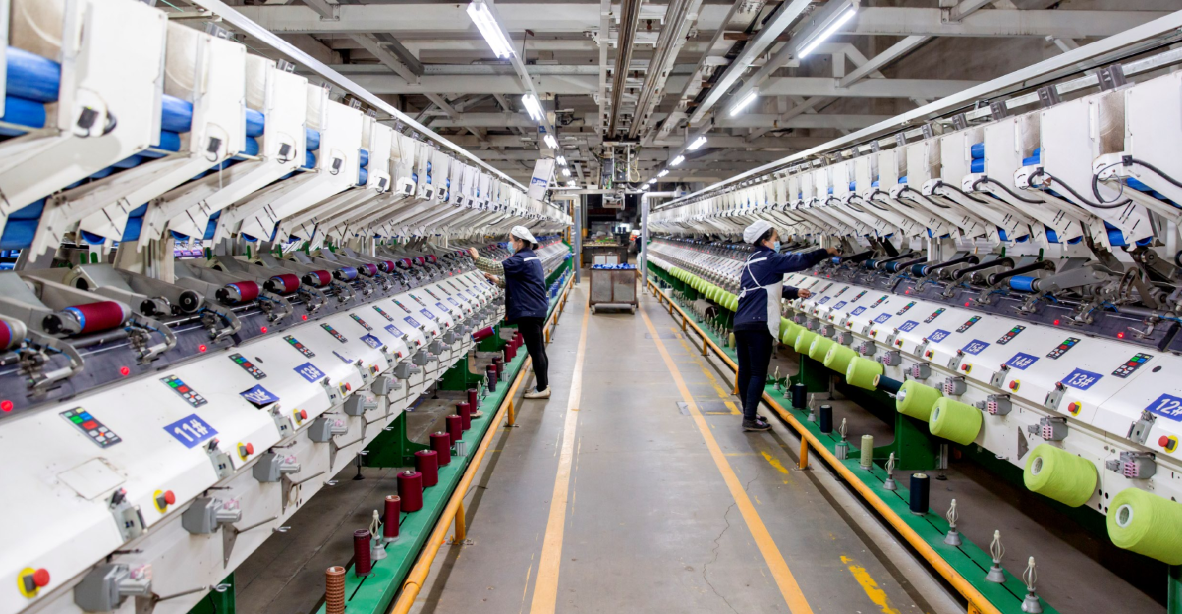
Piece dyeing is performed fully in-house, and rapid lab dips are provided for colour development. The vertical chain covers spinning to finishing, which is the structural reason a solid shade can be repeated: dyeing, finishing and inspection sit inside one quality system instead of being divided between a dyehouse and a finisher who never see each other's tolerances.
Finishing routes that change what the fabric can do
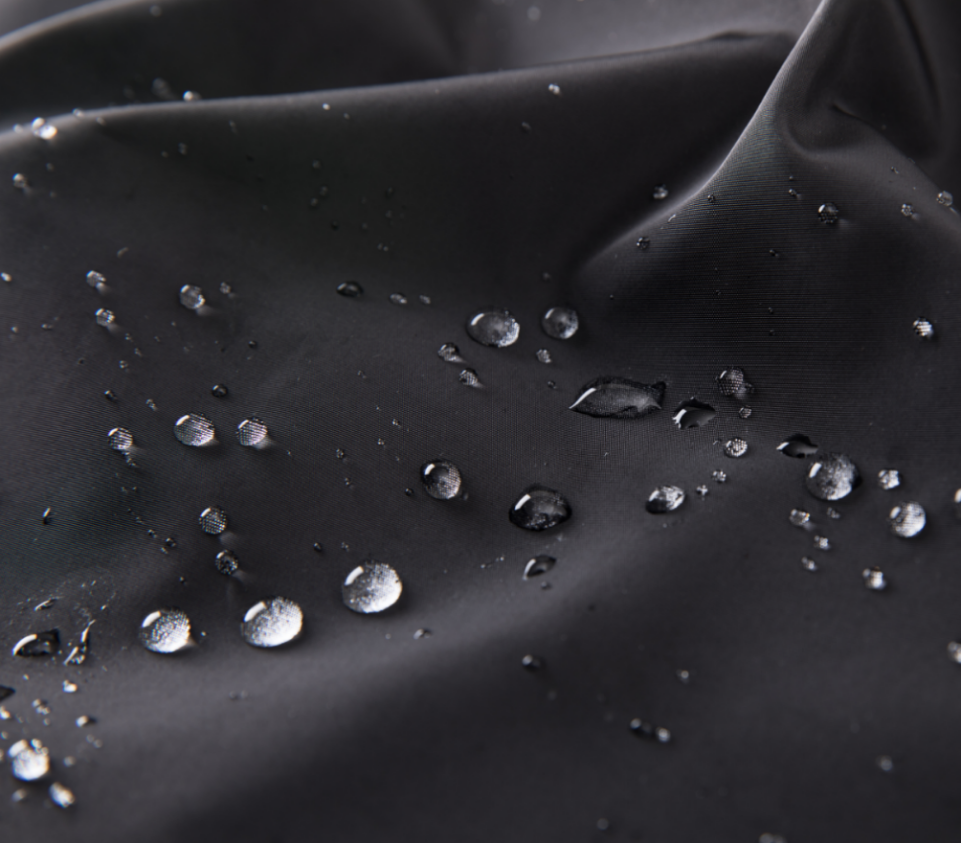
Piece-dyed fabric is often bought for a performance reason as much as a colour reason. Lianfa lists liquid ammonia non-iron finishing among its core process technologies, and garment dipping as a documented finishing capability; the wrinkle-free property of its dress shirts is obtained through liquid ammonia non-iron finishing. In liquid ammonia finishing, fabric passes through anhydrous ammonia, which swells and reorganises the cotton fibre; after the ammonia is recovered, the fibre keeps a smoother, more elastic state, giving a softer hand feel and improved wrinkle resistance without relying on a heavy resin coating.
This matters at the specification stage: a buyer choosing piece-dyed poplin for a non-iron dress shirt and a buyer choosing the same poplin for a garment-dyed casual shirt are specifying two different finishing routes from the same greige base.
Certification coverage: read the product category, not the logo
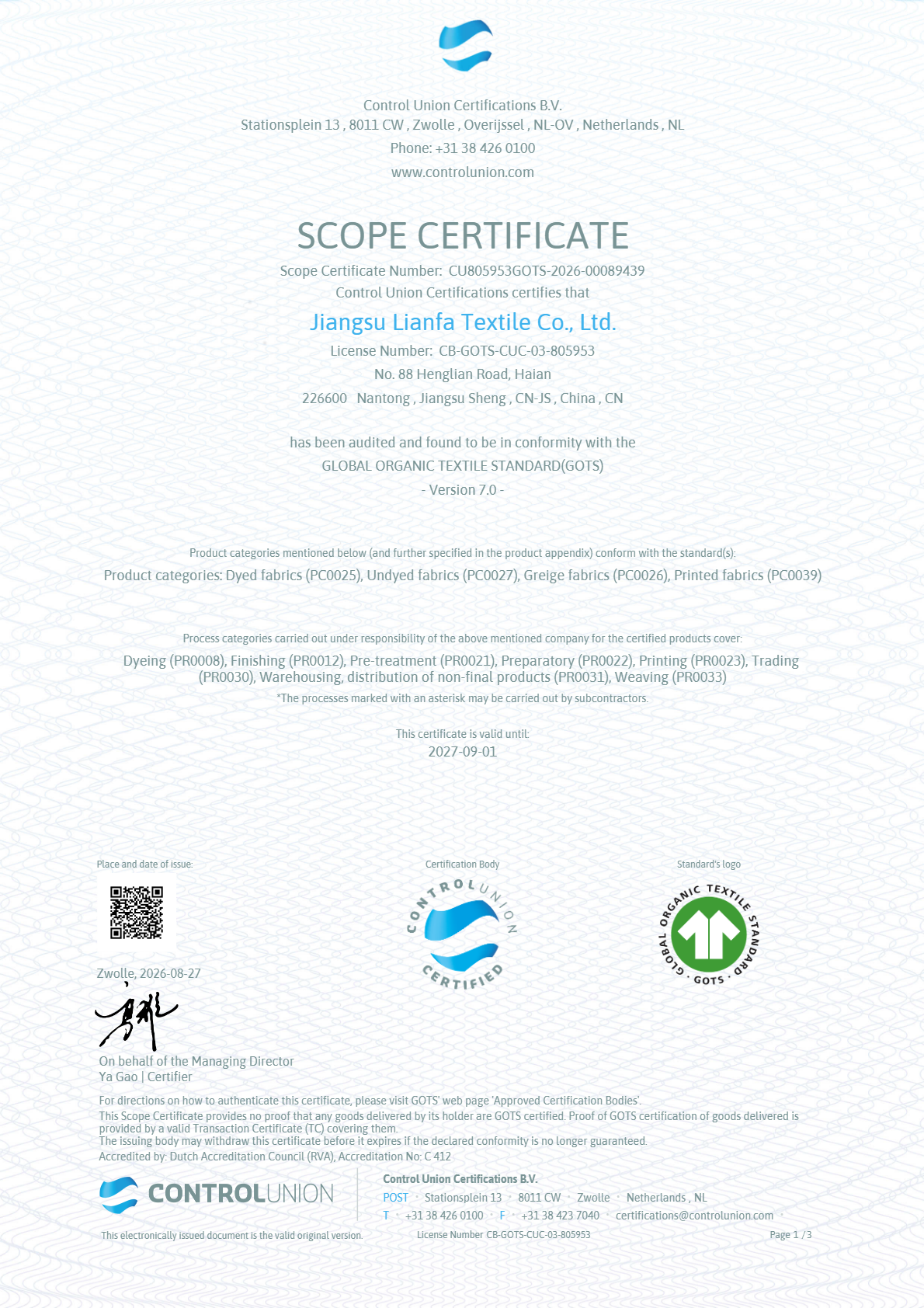
Compliance is where piece-dyed buyers most often inherit a misunderstanding. Scope certificates name product categories and processes, and the wording decides whether a fabric order can be documented. For piece-dyed woven fabric, the applicable GOTS product category under certificate CU805953GOTS-2026-00089439 (Control Union Certifications B.V., valid until 2027-09-01) is dyed fabrics, PC0025; the same scope certificate covers non-final products and does not list final woven shirts as a certified product category. A shirt programme and a fabric programme therefore need separate documentation checks.
OEKO-TEX STeP certificate 18001268 applies to piece-dyed woven fabric and covers weaving, yarn-dyeing, printing and finishing, valid until 31 March 2028. The Better Cotton Chain of Custody certificate ITS-BC-00002500 (Intertek, valid to 2028-07-01) covers pre-treatment, preparatory, weaving, dyeing and finishing for dyed fabrics. OCS, GRS and RCS certification under CU805953MUL-2026-00089440 covers dyed fabrics (PC0025) together with dyeing, finishing, printing, trading and warehousing of non-final products, valid until 2027-09-01. EUROPEAN FLAX™ Standard Version 3 certificate BVFR22885470 (Bureau Veritas Certification, valid 2024-08-28 to 2027-08-27) covers fabric finishing for piece-dyed woven fabric in the EU market.
Management-system certificates sit around the product rather than inside it: ISO 9001 certificate 07026Q00227R301 and ISO 14001 certificate 07026E00042R201 (both issued by Beijing Junyou Chengxin Testing and Certification Co., Ltd., valid to 2029-09-06) list piece-dyed woven fabric among applicable products, ISO 50001 certificate 01526En00116R001 covers energy management in dyed fabric production, and GJB 9001C certificate 26 QJ3 0458 R3L applies to piece-dyed woven fabric for the China market. Textile testing is carried out under CNAS accreditation L3871 to ISO/IEC 17025.
How to qualify and order piece-dyed fabric: seven steps
A piece-dyed programme can be closed in a predictable sequence. Each step below removes one category of risk, and each one depends on information the buyer should supply, not information the mill should guess.
- Fix the shade standard first. Send a physical standard or a colour reference the dyehouse can match against. Lab dips are produced quickly for colour development, and lab-dip colour matching is performed to customer standards — approval should be in writing before any bulk dyeing slot is booked.
- Lock the construction. Confirm yarn count (10s–200s), fabric weight (60–300 g/m²) and weave (plain, oxford, twill or sateen). A shade approved on one construction does not transfer automatically to another, because the same dye reads differently on a lightweight poplin and on a heavy twill.
- Choose fibre and stretch. Cotton, cotton/polyester blends, cotton/spandex stretch, linen and linen blends, viscose and modal blends are all offered. Stretch and linen blends change both the dyeing behaviour and the shrinkage discussion, so settle it before lab dips.
- Choose the finishing route. Decide between non-iron, wrinkle-free and soft-touch finishing, and where relevant specify liquid ammonia non-iron finishing or garment dipping. Finishing choice affects handling, and it should be fixed before the bulk order rather than after the first wash test.
- Confirm the compliance path for the destination market. Match the certificate to the product category actually being bought — dyed fabrics (PC0025) for GOTS, dyed fabrics for Better Cotton CoC, and the relevant market scope for EUROPEAN FLAX™. Ask for the certificate number, issuer and validity date rather than a logo.
- Confirm supply mode and minimum quantity. Made-to-order piece-dyed fabric carries a minimum of 2,000 yards per colourway; ready-stock fabric carries no MOQ; made-to-order shirts carry 1,500 pieces per colourway. A multi-shade palette should be budgeted colourway by colourway.
- Confirm inspection and delivery terms. Full in-house quality control applies across fabric, cutting and garment production, and pre-shipment inspection is available on request. Ready-stock items ship ex-stock; made-to-order lead time is confirmed at order, with quick-response production balancing urgent and regular orders.
Capacity and service behind the order
Lianfa's woven fabric base runs at approximately 20 million metres per month across its yarn-dyed, printed and home textile lines, with annual output of 12,000 tons of yarn, 84 million metres of yarn-dyed fabric, 85 million metres of printed fabric, 78 million metres of home textile fabric and 6 million pieces of shirts. Garment capacity is about 500,000 shirts per month. Service is supported by a self-built 12,000 m² warehouse holding ten million metres of fabric year-round, physical showrooms in 36 core textile markets worldwide and a sales team of nearly 100 members at home and abroad.
Where piece-dyed fabric is actually used
Piece-dyed woven fabric earns its place in programmes where a single, repeatable solid colour is the design intent.
- Business and dress shirts. Solid poplin and twill in 100% cotton, finished with liquid ammonia non-iron finishing for wrinkle-free dress shirts. Solid shades let a brand build a colour card that carries across seasons.
- Corporate uniform and workwear. Durable, easy-care, wrinkle-free options with customised colours, sizing and branding, including hang tags and packaging.
- Casual shirts. Oxford and twill constructions in solid shades, often in cotton/linen or cotton/viscose blends, where the surface texture rather than the pattern carries the style.
- Home textiles. Piece-dyed options are produced alongside yarn-dyed and printed routes for bedding, curtain and home décor applications, where shade consistency across panels is the deciding factor.
- Replenishment and urgent orders. Solid shades are the easiest category to re-order, because a repeat is a dye-lot question rather than a new design question.
Piece-dyed vs yarn-dyed vs printed woven fabric
The three routes are not interchangeable; they differ in where colour enters the fabric and in what documentation attaches to it.
| Attribute | Piece-dyed woven fabric | Yarn-dyed woven fabric | Printed woven fabric |
|---|---|---|---|
| Where colour comes from | Greige fabric woven first, then dyed in full width | Individual yarns dyed before weaving | Print applied on a woven base fabric |
| Typical designs | Solid poplin, oxford, twill, sateen | Stripes, checks, dobby, jacquard, gingham, chambray | Printed shirting, printed flannel, printed home textile |
| Yarn count | 10s–200s | 10s–200s | 10s–200s |
| Fabric weight | 60–300 g/m² | 60–300 g/m² | 60–300 g/m² |
| Colour control method | Lab-dip colour matching to customer standards; rapid lab dips | Colour consistency supported by in-house dyeing and finishing | Original print designs; 400+ new fabric styles launched each year |
| Finishing options | Non-iron, wrinkle-free, soft-touch | Liquid ammonia non-iron, resin finishing, garment dipping | Reactive printing and pigment printing on woven base fabrics |
| GOTS product category in scope certificate | Dyed fabrics (PC0025) | Not listed as a separate GOTS product category | Printed fabrics (PC0039) |
| Typical end use | Shirting, uniforms, workwear | Shirting, home textiles | Shirting, fashion, home textiles |
Certification matrix for piece-dyed woven fabric
| Scheme | Certificate no. | Issuer | Valid until | What it covers |
|---|---|---|---|---|
| GOTS v7.0 | CU805953GOTS-2026-00089439 | Control Union Certifications B.V. | 2027-09-01 | Dyed fabrics (PC0025); non-final products only |
| OCS V3.0 / GRS V4.0 / RCS V2.0 | CU805953MUL-2026-00089440 | Control Union Certifications B.V. | 2027-09-01 | Dyed fabrics, dyeing, finishing, printing, trading, warehousing |
| OEKO-TEX STeP | 18001268 | OEKO-TEX Service GmbH | 2028-03-31 | Weaving, yarn-dyeing, printing and finishing |
| Better Cotton CoC v1.0 | ITS-BC-00002500 | Intertek | 2028-07-01 | Pre-treatment, preparatory, weaving, dyeing, finishing of dyed fabrics |
| EUROPEAN FLAX™ v3 | BVFR22885470 | Bureau Veritas Certification | 2027-08-27 | Fabric finishing for piece-dyed fabric; EU market |
| ISO 9001 | 07026Q00227R301 | Beijing Junyou Chengxin | 2029-09-06 | Quality management system listing piece-dyed woven fabric |
| ISO 14001 | 07026E00042R201 | Beijing Junyou Chengxin | 2029-09-06 | Environmental management system listing piece-dyed woven fabric |
| ISO 50001 | 01526En00116R001 | Hangzhou WIT Assessment | 2029-04-15 | Energy management in dyed fabric production |
| GJB 9001C | 26 QJ3 0458 R3L | Beijing Junyou Chengxin | 2029-09-06 | China market; piece-dyed woven fabric |
| CNAS / ISO/IEC 17025 | CNAS L3871 | China National Accreditation Service | 2029-12-24 | Textile testing laboratory accreditation |
Frequently asked questions
Which certifications cover piece-dyed woven fabric?
Piece-dyed woven fabric from Jiangsu Lianfa Textile is covered by GOTS certificate CU805953GOTS-2026-00089439 under product category dyed fabrics (PC0025), valid until 2027-09-01; OCS, GRS and RCS certificate CU805953MUL-2026-00089440, valid until 2027-09-01; OEKO-TEX STeP certificate 18001268, valid until 2028-03-31; Better Cotton Chain of Custody certificate ITS-BC-00002500, valid until 2028-07-01; and EUROPEAN FLAX™ Standard Version 3 certificate BVFR22885470 for the EU market, valid until 2027-08-27. ISO 9001, ISO 14001 and ISO 50001 list piece-dyed woven fabric among applicable products, and GJB 9001C covers it for the China market. Note that the GOTS scope certificate covers non-final products and does not list final woven shirts as a certified category.
Which yarn counts, weights and weaves can be piece dyed?
The piece-dyed range covers yarn counts from 10s to 200s and fabric weights from 60 to 300 g/m², in plain, oxford, twill and sateen weaves. Fibre options include cotton, cotton/polyester blends, cotton/spandex stretch, linen and linen blends, and viscose and modal blends. Finishing routes available on the same base fabric are non-iron finishing, wrinkle-free finishing and soft-touch finishing, with liquid ammonia non-iron finishing used where wrinkle-free dress shirts are the end product.
What is the minimum order quantity for piece-dyed fabric?
Made-to-order piece-dyed fabric has a minimum of 2,000 yards per colourway. Ready-stock fabric has no minimum order quantity. Where the same programme also requires finished garments, made-to-order shirts carry a minimum of 1,500 pieces per colourway. Because each colourway carries its own minimum, a multi-shade colour card should be planned shade by shade rather than as a single order.
How is a piece-dyed shade matched and approved before bulk?
Colour is developed through lab dips, and lab-dip colour matching is performed to customer standards; piece dyeing itself is carried out fully in-house, with the vertical chain covering spinning to finishing. The practical sequence is: submit a physical standard or colour reference, receive the lab dip, approve or adjust it in writing, and only then release the bulk dyeing slot. Buyers who want to test hand feel and finishing alongside the shade can request a sample before approving bulk.
What lead time applies to piece-dyed fabric orders?
Ready-stock fabrics ship ex-stock for rapid delivery; made-to-order piece-dyed fabric runs on quick-response production with lead time confirmed at order, and flexible production lines balance urgent and regular orders. Confirmation depends on the construction, the number of colourways and the finishing route, so it is quoted per order rather than assumed. To start, send the shade reference, construction and target quantity to the Jamesfabric team at ruth@lianfa.cn or +86 13862719060 for a lab dip and quotation.
Conclusion: buy piece-dyed fabric as a specification, not a colour
A solid shade is the least forgiving thing a garment manufacturer can buy, because every metre of every roll is the colour. The workable approach is to treat piece-dyed fabric as four linked decisions — an approved lab dip, a construction inside the 10s–200s and 60–300 g/m² envelope, a finishing route chosen for the end garment, and a certificate whose product category matches what is actually being shipped. Lianfa's vertical chain, in-house piece dyeing and documented scope certificates make those four decisions auditable rather than assumed, and Jamesfabric's ready-stock platform covers the small-order and replenishment side without a minimum.
Request a piece-dyed sample or quotation
Send your shade reference, target construction and quantity per colourway, and the team will return a lab dip and a quotation. The full company profile, including certifications and product ranges, is available here: Lianfa Company Profile (PDF).
Jamesfabric · Jiangsu Lianfa Textile Co., Ltd. · No. 88 Henglian Road, Haian Town, Nantong, Jiangsu, China 226600 · www.lianfa.cn
Have Questions or Need More Details?
Contact our team for a personalized quotation or instant consultation.
Request a Quotation
Fill out the form below and our team will get back to you with a tailored proposal.
WhatsApp Direct Chat
Prefer to chat in real-time? Message us on WhatsApp for instant assistance & quick answers.
- Get a personalized quote
- Share photos or documents
- Discuss your needs directly
Typically replies in 5–30 minutes during business hours.