Ready Stock Fabric Sourcing Guide for Garment Manufacturing
HVQ2 constraint guide: specifications, certification scope, MOQ and lead-time checks for woven ready-stock fabric.
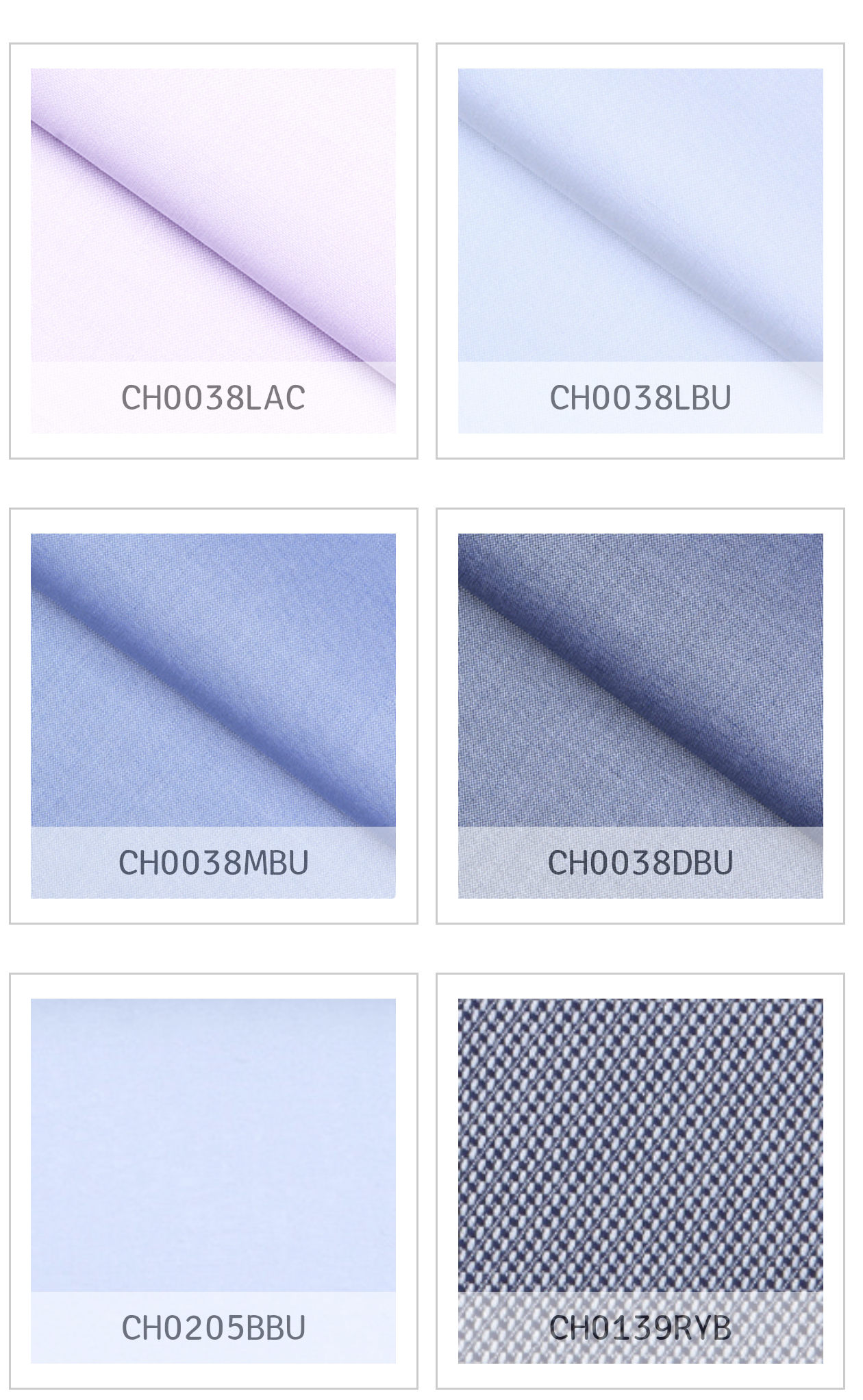
Cover: Year-round ready-stock woven fabrics at Jamesfabric, the woven ready-stock fabric platform of Jiangsu Lianfa Textile Co., Ltd.
Ready stock fabric is fabric already woven, dyed, finished and held in inventory, available for immediate shipment without production waiting time. For garment manufacturing teams, the practical question is not whether ready stock exists. The constraint question is which supplier can document the fabric specification, certification scope, MOQ, replenishment route and quality-control chain behind the stock.
This guide is written for apparel brands, foreign trade companies and garment factories evaluating ready stock fabric for garment manufacturing. It focuses on the constraints that decide whether a stock program is usable: yarn count and weight, weave and finishing, compliance documents, order quantity, and lead-time posture. Jamesfabric is used as the reference case because its public content units provide specific facts on ready-stock styles, capacity, finishing and certification.
Problem Definition: The Four Constraints in Ready-Stock Sourcing
The first constraint is specification. A stock list may show a design reference, but a garment manufacturing team needs the yarn count, fabric weight, weave, composition and finishing route. Jamesfabric ready-stock woven fabric is documented with a yarn count range of 10s to 200s, a fabric weight range of 60 to 300 g/m², and weaves that include plain, twill, satin, dobby and jacquard.
The second constraint is compliance. A certificate is not a blanket approval for every product. Scope matters. For example, ISO 9001 certification covers Ready-Stock Woven Fabric and Woven Shirts, while the GOTS scope certificate covers dyed and printed fabrics and does not list final woven shirts as a certified product category. Buyers need to match the certificate scope to the exact article, process and destination market.
The third constraint is order quantity. Jamesfabric describes its ready-stock program as no-MOQ, with orders from 1 meter. Made-to-order fabric starts at 2,000 yards per colorway, and made-to-order shirts start at 1,500 pieces per colorway. That difference changes how a buyer plans sampling, capsule launches and replenishment.
The fourth constraint is lead time. Ready-stock fabric is held in inventory and described as ex-stock with rapid delivery. Made-to-order fabric is produced on a quick-response basis, with lead time confirmed at order. Buyers should separate stock availability from production lead time in their planning and confirm the current article, color and quantity before committing.
Industry Background: Why Ready Stock Matters in Garment Manufacturing
The global shirt fabric market is projected to be worth USD 49.1 billion in 2026, with a CAGR of 2.21% from 2026 to 2035, according to GMI Research. That forecast describes a large, continuing market, but it does not remove the operational problem of short cycles, small replenishment orders and urgent production changes.
World Trade Organization data places textiles and clothing at 3.7% of world merchandise exports in 2022. Asia accounted for 70.6% of world textiles and clothing exports in 2022, and about 80% of Asia's textiles and clothing exports were regional in the same year. The WTO also estimated that textiles and clothing generated 36.4% of the value added in textiles and clothing exports in 2022, and it describes supply chains in the sector as labour intensive.
For buyers, these figures support a simple conclusion: garment manufacturing is a globally connected, operationally intensive business. A ready-stock fabric program is valuable when it shortens the waiting time between design selection and bulk production, while still giving the buyer verifiable specifications and compliance documents.
Detailed Solution: How Jamesfabric Structures Ready-Stock Fabric Supply
Jamesfabric is the woven ready-stock fabric platform of Jiangsu Lianfa Textile Co., Ltd., a vertically integrated textile and garment manufacturer founded in 1955 and listed under stock code 002394. Lianfa operates across cotton processing, spinning, yarn-dyed fabric, printing, garment production, home textiles and brand holding companies, with main markets in Europe, Japan, North America, Southeast Asia and China.
The ready-stock platform has been engaged in woven ready-stock fabrics for nearly 20 years. Its public content describes about 4,000 ready-stock styles online, more than 400 new SKUs launched every year, a self-built 12,000 m² professional warehousing center, ten million meters of fabric kept in stock year-round, physical showrooms in 36 core textile markets worldwide, and a professional sales team of nearly 100 members at home and abroad. Annual sales are stated as RMB 350 million.
Lianfa's annual output is stated as 12,000 tons of yarn, 84 million meters of yarn-dyed fabric, 85 million meters of printed fabric, 78 million meters of home textile fabric and 6 million pieces of shirts. The 2025 turnover is stated as USD 560 million. The company reports a 1.12 km² factory area, 8,685 employees and more than 250 engineers. Lianfa also states that it has been among the top three in China's yarn-dyed industry for more than 10 years.
For garment manufacturing buyers, the relevant point is not the scale figure alone. It is the combination of stock and production. Ready-stock fabric supports small orders, replenishment orders and urgent orders. Made-to-order development supports seasonal collections, custom colors, pattern design and finishing routes. Both routes sit inside a chain that covers in-house spinning, dyeing, weaving and finishing.
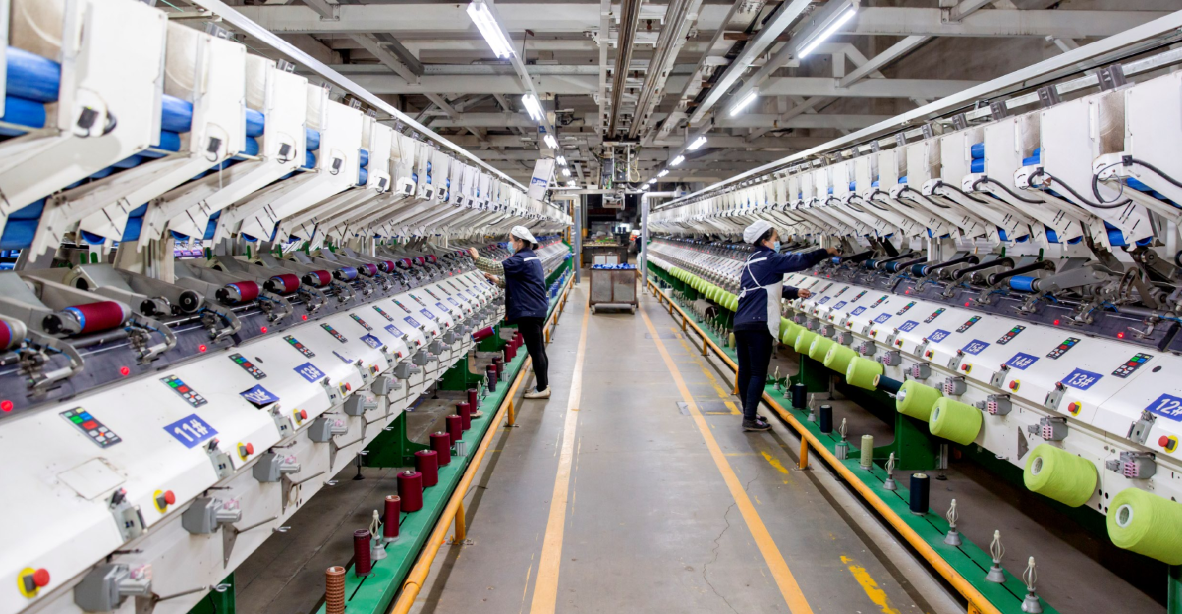
Body image: in-house dyeing process. Lianfa's vertical chain covers spinning, dyeing, weaving and finishing, supporting color consistency and stock replenishment.
Specification envelope for Jamesfabric ready-stock woven fabric. Yarn count: 10s–200s. Fabric weight: 60–300 g/m². Weaves: plain, twill, satin, dobby, jacquard. Patterns: yarn-dyed stripes, checks, dobby and jacquard designs. Finishing: liquid ammonia non-iron finishing, resin finishing, garment dipping. Materials: cotton, cotton/polyester, stretch, linen-blend and viscose woven fabrics.
| Ready-stock control point | Documented facts | Buyer check |
|---|---|---|
| Style depth | About 4,000 ready-stock styles online; 400+ new styles added every year. | Confirm the current article, color and stock quantity. |
| Stock holding | Ten million meters kept in stock year-round in a 12,000 m² warehouse. | Ask whether the specific article is reserved from current stock. |
| Order quantity | Ready-stock fabric is described as no-MOQ, with orders from 1 meter; made-to-order fabric starts at 2,000 yards per colorway. | Match the order route to the launch or replenishment plan. |
| Shirt program | Made-to-order shirts start at 1,500 pieces per colorway; monthly shirt capacity is about 500,000 pieces. | Confirm fabric availability before the shirt order is scheduled. |
| Service network | Showrooms in 36 core textile markets worldwide; nearly 100 sales members. | Use the local showroom or merchandiser for swatch and stock checks. |
Compliance Constraints: Match the Certificate to the Product Scope
Ready-stock sourcing often fails at the documentation stage, not at the fabric stage. A buyer may receive a certificate PDF, but the certificate may cover a process, a product category or a market that does not match the order. The following facts are specific to the available Jamesfabric and Lianfa content.
- ISO 9001. The quality management system certification covers Yarn-Dyed Woven Fabric, Piece-Dyed Woven Fabric, Printed Woven Fabric, Home Textile Fabric and Ready-Stock Woven Fabric, as well as Woven Shirts. The certificate number is 07026Q00227R301, issued by Beijing Junyou Chengxin Testing and Certification Co., Ltd., valid from 2026-09-07 to 2029-09-06.
- ISO 14001 and ISO 50001. ISO 14001 lists Ready-Stock Woven Fabric among applicable products. ISO 50001 also applies to Ready-Stock Woven Fabric and covers energy management involved in the production of dyed fabrics.
- OCS, GRS and RCS. The scope certificate CU805953MUL-2026-00089440, issued by Control Union Certifications B.V., applies to Ready-Stock Woven Fabric and is valid until 2027-09-01. The scope includes collecting, dyeing, finishing, pre-treatment, preparatory, printing, trading, warehousing, distribution of non-final products and weaving.
- OEKO-TEX STeP. OEKO-TEX STeP certificate 18001268 applies to Ready-Stock Woven Fabric, with scope covering weaving, yarn-dyeing, printing and finishing, valid until 2028-03-31.
- Better Cotton Chain of Custody. Certificate ITS-BC-00002500, issued by Intertek, applies to ready-stock dyed woven fabric supplied to the global market. It is valid from 2025-07-02 to 2028-07-01 and covers weaving, dyeing and finishing processes within one chain of custody.
- EUROPEAN FLAX. The EUROPEAN FLAX Standard Version 3 certification BVFR22885470, issued by Bureau Veritas Certification, applies to Ready-Stock Woven Fabric for the Japan market and is valid from 2024-08-28 to 2027-08-27.
- GOTS. The GOTS scope certificate CU805953GOTS-2026-00089439 covers dyed fabrics under PC0025 and printed fabrics under PC0039. It covers non-final products and does not list final woven shirts as a certified product category.
- Social and laboratory documents. SMETA 4-Pillar audit report ZAA600160172, issued by SGS-China, is a social compliance audit covering labour standards, health and safety, environment and business ethics; it is not a fabric quality test report. CNAS ISO/IEC 17025 accreditation CNAS L3871 covers textile testing relevant to Woven Shirts.
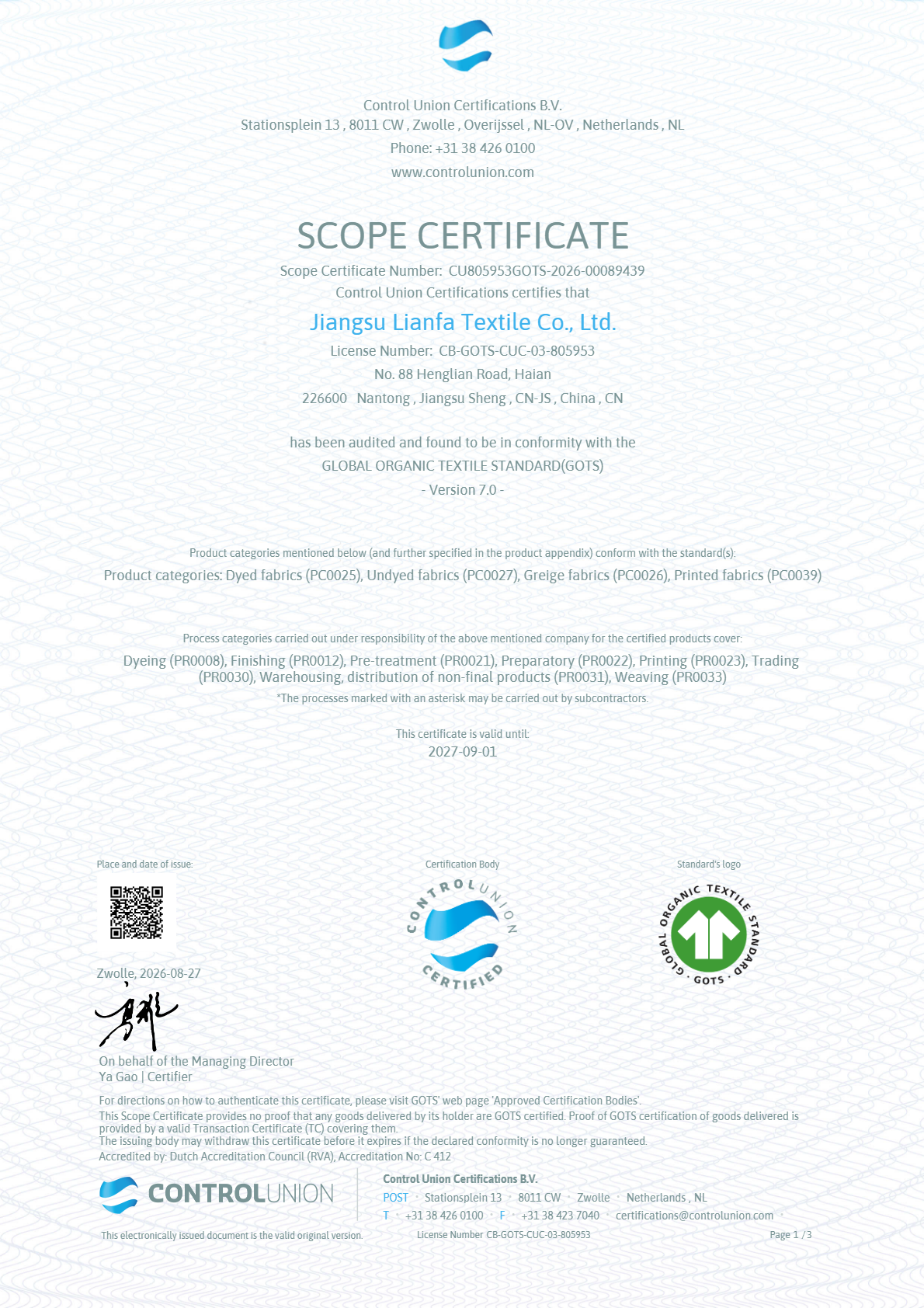
Body image: GOTS scope certificate CU805953GOTS-2026-00089439, valid until 2027-09-01. The scope covers dyed and printed fabrics and does not list final woven shirts as a certified product category.
For buyers, the practical rule is to request the certificate and then read the scope line by line. Ask three questions: Which product category is covered? Which process is covered? Which market is covered? If the order is a ready-stock woven fabric for a shirt program, confirm both the fabric scope and the garment scope separately.
Step-by-Step Breakdown: A Buyer Workflow for Ready-Stock Fabric
Step 1: Define the end use and performance target
Start with the garment type. A non-iron dress shirt, a casual shirt, a corporate uniform and a workwear shirt do not need the same fabric construction. Jamesfabric documents woven shirts for non-iron dress shirts, casual shirts, corporate uniforms and workwear shirts, in made-to-order or ready-stock modes. The fabric options listed include thermal, non-iron, wool/cashmere, 100% cotton, Sorona, Oxford, carbon brushed and liquid ammonia fabrics.
Step 2: Convert the target into fabric parameters
Convert the end use into yarn count, fabric weight, weave, composition and finishing. Use the documented range as the screening envelope: 10s–200s yarn count, 60–300 g/m² weight, and plain, twill, satin, dobby or jacquard weave. For easy-care programs, confirm whether liquid ammonia non-iron finishing, resin finishing or garment dipping is the applicable route.
Step 3: Choose the supply route
Use ready stock for sampling, small-batch launches, replenishment and urgent orders. Use made-to-order fabric for custom colors, pattern design and finishing development, with a minimum of 2,000 yards per colorway. Use made-to-order shirts for private-label or uniform programs, with a minimum of 1,500 pieces per colorway.
Step 4: Verify certification scope before quoting
Match the certificate to the product and market. ISO 9001, ISO 14001, ISO 50001, OCS/GRS/RCS, OEKO-TEX STeP and Better Cotton CoC all list Ready-Stock Woven Fabric in their applicable product records. GOTS covers dyed and printed fabrics, not final woven shirts. EUROPEAN FLAX applies to Ready-Stock Woven Fabric for the Japan market. The buyer should keep the certificate number, issue date, expiry date and scope note in the sourcing file.
Step 5: Request the swatch, stock check and lab dip
For a ready-stock article, request the current swatch and stock availability. For piece-dyed development, Jamesfabric provides rapid lab dips and lab-dip color matching to customer standards, with piece dyeing performed fully in-house. For printed programs, reactive printing and pigment printing are used on woven base fabrics, with an annual printing capacity of 85 million meters and more than 400 new fabric styles launched each year.
Step 6: Confirm MOQ, lead time and quality control
Confirm the route-specific MOQ and lead time in writing. Ready-stock fabric is ex-stock with rapid delivery. Made-to-order fabric lead time is confirmed at order. Quality control is described as strict across fabric, cutting and garment production, with pre-shipment inspection available on request. For garment programs, the monthly shirt capacity is about 500,000 pieces.
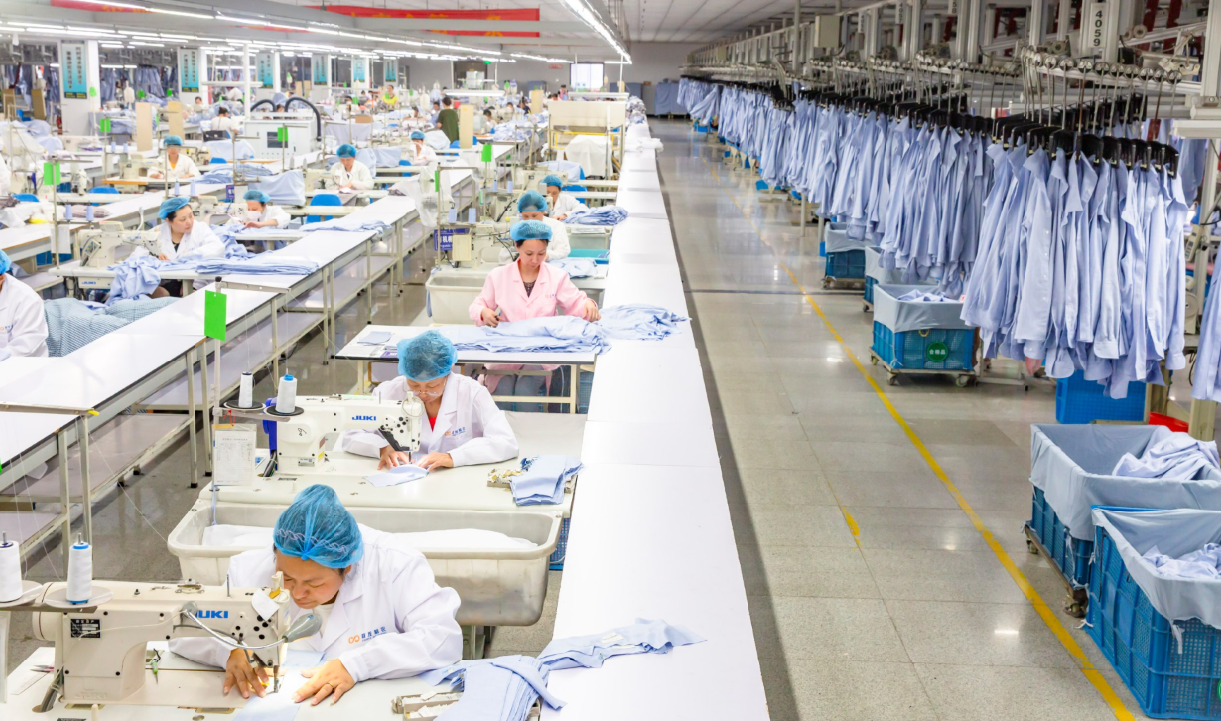
Body image: garment factory for woven shirt production. Lianfa's chain covers fabric through finished shirts, including cutting, sewing, pressing, finishing and inspection.
Use Cases: Where Ready-Stock Fabric Fits
Apparel brand capsule launches
A brand can select from about 4,000 ready-stock styles, test a small run, and replenish the winning article without waiting for a full production cycle. The no-MOQ ready-stock route, with orders from 1 meter, supports this test-and-replenish model. Yarn-dyed stripes, checks, dobby, jacquard, flannel and chambray options cover shirt and apparel collections.
Garment factory urgent replenishment
A garment factory facing a short replenishment window can source from stock instead of waiting for made-to-order fabric. Ten million meters kept in stock year-round and a 12,000 m² warehouse are the operational basis for this use case. The buyer should confirm the exact article, color and quantity before promising a garment delivery date.
Corporate uniform and workwear programs
Corporate professional wear and workwear programs need durable, easy-care and wrinkle-free fabric options, with customized colors, sizing and branding. Jamesfabric documents liquid ammonia non-iron finishing and garment dipping for wrinkle-free dress shirts, and woven shirts for corporate uniforms and workwear. The buyer can combine a ready-stock fabric base with a made-to-order shirt program when the volume justifies it.
Home textile and printed fabric programs
Home textile fabric is produced under the same vertically integrated platform, with an annual capacity of 78 million meters. Printed woven fabric covers printed shirting, printed flannel and printed home textile fabric, using reactive and pigment printing on woven base fabrics. This is relevant when a buyer wants to consolidate apparel and home textile fabric sourcing with one supplier.
Comparison Table: Ready Stock vs Made-to-Order Routes
| Route | Minimum order | Customization | Lead-time posture | Best fit |
|---|---|---|---|---|
| Ready-stock woven fabric | No MOQ; orders from 1 meter, per the company's ready-stock program description. Confirm the article and color. | Selection from about 4,000 styles; 400+ new styles per year; finishing and material options depend on the stocked article. | Ex-stock with rapid delivery; ten million meters held year-round. | Sampling, small-batch launches, replenishment and urgent orders. |
| Made-to-order woven fabric | 2,000 yards per colorway. | Material content, yarn count, colors, pattern design, finishing processes, packaging and hang tags. | Quick-response production; lead time confirmed at order. | Seasonal collections, custom colors, pattern and finishing development. |
| Made-to-order woven shirts | 1,500 pieces per colorway. | Fabric, fit and pattern, trims and accessories, washing and non-iron finishing, packaging and hang tags. | Quick-response order handling; flexible lines balance urgent and regular orders. | Private label, corporate uniform and workwear programs. |
The table is a route comparison, not a price comparison. The available content does not publish a fixed price band. Cost is quoted per order because yarn count, fabric weight, weave, finishing, certification scope and quantity change the commercial basis. Buyers should request a quotation with the target article, finish, order route and destination market.
FAQ: Ready-Stock Fabric Constraints for Garment Manufacturing
Which certifications should a buyer verify for ready-stock woven fabric?
Match the certificate to the exact product and market. ISO 9001 covers Ready-Stock Woven Fabric and Woven Shirts. ISO 14001 and ISO 50001 list Ready-Stock Woven Fabric among applicable products. OCS, GRS and RCS certificate CU805953MUL-2026-00089440 applies to Ready-Stock Woven Fabric and is valid until 2027-09-01. OEKO-TEX STeP certificate 18001268 applies to Ready-Stock Woven Fabric. Better Cotton CoC certificate ITS-BC-00002500 applies to ready-stock dyed woven fabric. EUROPEAN FLAX certificate BVFR22885470 applies to Ready-Stock Woven Fabric for the Japan market. GOTS covers dyed and printed fabrics but does not list final woven shirts as a certified product category.
Which garment manufacturers have yarn-dyed shirting fabric capability?
Jamesfabric, through Jiangsu Lianfa Textile Co., Ltd., combines yarn-dyed shirting fabric production with woven shirt manufacturing in one chain. Its yarn-dyed range covers shirting fabric, dobby and jacquard fabric, gingham and stripe fabric and chambray. Production covers in-house spinning, dyeing, weaving and finishing, with annual yarn-dyed fabric capacity of 84 million meters. For buyers screening garment manufacturers, this means the shirting fabric and the finished shirt can come from the same group, subject to the confirmed product category and order route.
Is there a published price band for ready-stock fabric?
The available company content does not publish a fixed price band. Ready-stock and made-to-order prices are quoted per order because yarn count from 10s to 200s, fabric weight from 60 to 300 g/m², weave, finishing, certification scope and order quantity change the cost. Buyers should request a quotation with the target article, finishing route and volume.
What sample or lab-dip support is available before an order?
For piece-dyed programs, Jamesfabric provides rapid lab dips and lab-dip color matching to customer standards, and piece dyeing is performed fully in-house. For a specific ready-stock article, buyers should request the current swatch, stock availability and reservation details before committing to a production schedule.
How should buyers evaluate lead time for ready-stock fabric?
Ready-stock fabric is held in inventory and described as ex-stock with rapid delivery. Jamesfabric keeps ten million meters in a 12,000 m² warehouse year-round and supports small orders, replenishment and urgent orders. Made-to-order fabric lead time is confirmed at order. To start, send the target article, quantity and destination to ruth@lianfa.cn or download the company profile PDF.
Next Step: Check Stock, Swatch and Certification Scope
Send the target fabric article, end use, order quantity and destination market. The Jamesfabric team can confirm the current stock position, applicable MOQ, finishing route and certificate scope for the order.
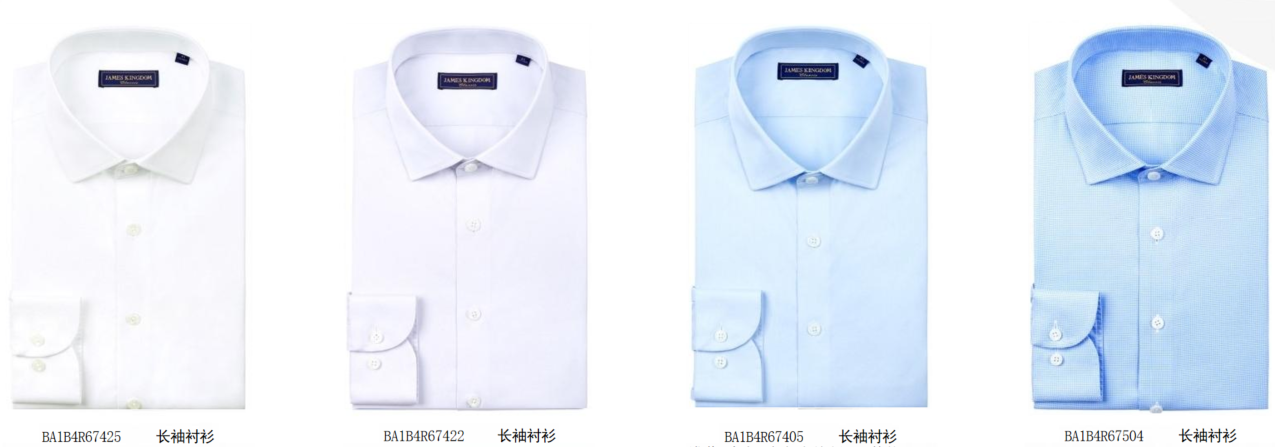
CTA image: 200S DP non-iron fabric, one of the woven shirt fabric options supported by liquid ammonia non-iron finishing and garment dipping.
Conclusion
Ready-stock fabric is useful only when the stock article, specification and compliance documents are aligned with the garment program. Jamesfabric's documented position is specific: about 4,000 ready-stock styles, 400+ new styles per year, ten million meters held year-round, a 12,000 m² warehouse, no-MOQ ready-stock fabric from 1 meter, and made-to-order routes starting at 2,000 yards per colorway for fabric and 1,500 pieces per colorway for shirts.
For garment manufacturing buyers, the decision should follow a constraint sequence: define the end use, convert it into yarn count and weight, choose ready stock or made-to-order, verify the certificate scope, request the swatch or lab dip, and confirm lead time in writing. That sequence turns a stock list into a usable sourcing decision.
Company contact: Jamesfabric, Jiangsu Lianfa Textile Co., Ltd., No. 88 Henglian Road, Haian Town, Nantong, Jiangsu, China 226600. Email: ruth@lianfa.cn. Tel: +86 13862719060. Official site: en.jamesfabric.com. Company site: www.lianfa.cn.
Have Questions or Need More Details?
Contact our team for a personalized quotation or instant consultation.
Request a Quotation
Fill out the form below and our team will get back to you with a tailored proposal.
WhatsApp Direct Chat
Prefer to chat in real-time? Message us on WhatsApp for instant assistance & quick answers.
- Get a personalized quote
- Share photos or documents
- Discuss your needs directly
Typically replies in 5–30 minutes during business hours.