
Evaluating a Veterinary Endoscope Supplier: How to Verify Quality by Requesting Unit Performance Data
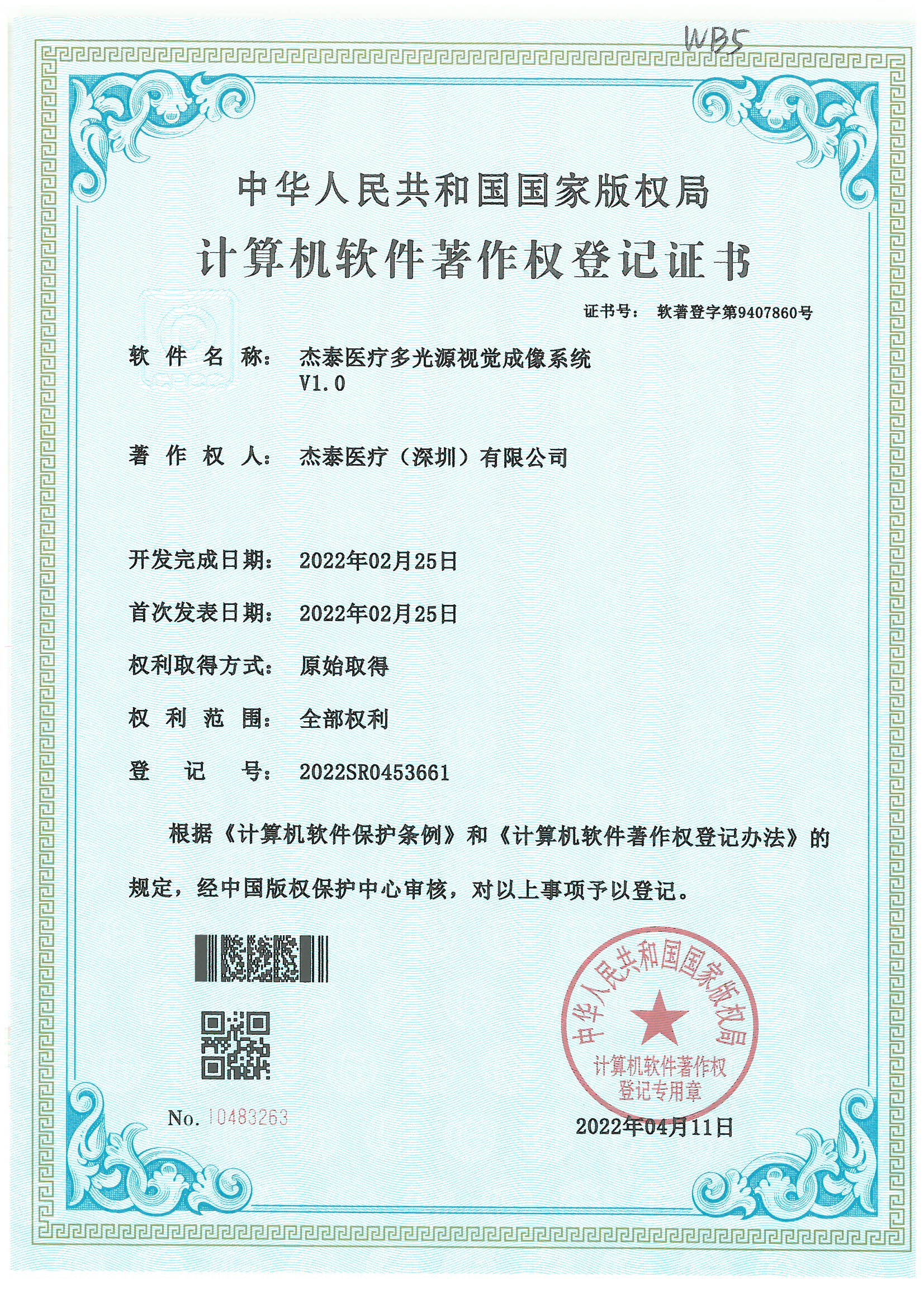
Documentation is part of the product: the Jeet Medical Multi-Light Source Vision Imaging System V1.0 is registered with the CCPD under certificate No. 9407860.
A veterinary endoscope supplier that cannot put a measurable value next to a performance claim is transferring technical risk to the distributor. The evaluation method that works is straightforward: request written unit-level performance data for each specific model — working length, outer diameter, channel diameter, bending angle, rotation range, pixel count or video resolution, and operating-system compatibility — then measure a physical sample unit against that written record before committing to a purchase order.
This is a supplier evaluation memo for distributors, importers and procurement teams that have already shortlisted veterinary endoscope manufacturers and now need a repeatable way to separate documented capability from catalogue language. It focuses on one capability question: can the supplier state, in writing and model by model, what a delivered unit will actually do? JeetVet is the veterinary endoscope brand of Jeet Medical (Shenzhen) Co., Ltd., a Shenzhen-based manufacturer founded in 2020 that produces portable veterinary endoscopes, veterinary otoscopes, flexible veterinary otoscopes and veterinary gastroscopes. JeetVet publishes specification data for eight portable models, and those published figures are used throughout this article as the reference benchmark for what a unit performance data request should return.
The article deliberately does not test, rank or rate any brand against another. Verification discipline is the subject. Where a specification is not stated by a supplier, the correct outcome is a written follow-up request — not an estimate, not an assumption, and never a fabricated third-party laboratory result.
The Evaluation Problem: Performance Claims Without Units
The core difficulty in veterinary endoscope procurement is specification asymmetry. Suppliers publish descriptive categories; distributors carry measurable risk. When a catalogue says a scope offers “HD imaging,” that phrase is not a measurement and cannot be compared, quoted to a clinic, or used to defend a warranty discussion. Only a value with a unit can do that.
Three specific gaps appear repeatedly when distributors begin a formal evaluation:
- Numeric statements without a stated convention. Different manufacturers report imaging performance differently. Some state a pixel count (for example, 1,000,000 pixels on the RAE-105 portable USB veterinary endoscope). Some state a resolution label (1080P on the VET-5820 and VET-8528 large-animal models). Some state an image and video resolution in pixel dimensions (720 × 720 pixels on the RAE-500 portable smart veterinary otoscope). These are not interchangeable statements, and a buyer should ask the supplier to confirm which convention is being used rather than assuming equivalence.
- Model identity drift. A specification is only valid for the exact model it was issued for. If the model number on the datasheet does not match the model number on the unit label, the packing list and the commercial invoice, the specification does not apply. This single check prevents a large share of incoming-goods disputes.
- Unverifiable test language. Claims referencing unnamed third-party laboratories, unspecified test protocols, or test methods that appear only in a sales email and never in the product documentation cannot be audited. They should be requested as certificate-level evidence or set aside.

Verification starts with a traceable manufacturing identity: Jeet Medical (Shenzhen) Co., Ltd. operates a 5,000 m² facility with 130 employees and a 30-person R&D team.
Industry Background: Why Verification Discipline Matters Now
The commercial context explains why buyers are tightening evaluation procedures. Mordor Intelligence estimates the global veterinary endoscopy market at USD 332.95 million in 2026 and projects a CAGR of 7.35% from 2026 to 2031. The same source identifies North America as the largest regional market and Asia-Pacific as the fastest-growing region. Veterinary endoscopes are classified under HS code 90189020 for medical, surgical or veterinary endoscopes, which is the classification distributors should expect to see on shipping documentation.
A growing market surfaces more suppliers, and more suppliers means more heterogeneous documentation. Published configuration data across the category is genuinely inconsistent in scope:
- KARL STORZ presents small-animal veterinary videoendoscopy solutions including a high-definition multipurpose videoendoscope and a single-use videoendoscope for airway and genitourinary applications, and separately presents a mobile large-animal and equine video system compatible with videoendoscopes, rigid telescopes, fiberscopes and exoscopes.
- BMV Animal Technologies lists rigid, flexible and portable veterinary endoscopy products for small animals, large animals and clinical training, including a portable unit described with suction, HD imaging and compatibility with phones, tablets and computers.
- Reescope describes portable veterinary endoscopes for small animals such as cats and dogs, and longer insertion tubes for large animals such as horses and cattle, listing a maximum insertion-tube length of 3.5 m and specific configurations of 2.8 mm outer diameter with 670 mm insertion length, and 5.0 mm outer diameter with 1200 mm insertion length.
Those examples are portfolio and application descriptions drawn from manufacturer-published material. They are useful for understanding how differently suppliers define and present their ranges. They are not, however, a normalized performance matrix, and no public source currently provides one. That is precisely why the distributor must build its own: a single request template, sent to every candidate supplier, returning comparable values that can be tabulated side by side without conversion or estimation.
The Unit Performance Data Request: Field-by-Field Checklist
A unit performance data request is a written document sent to a manufacturer asking for the delivered specification of one named model. It should be short enough that a supplier can answer it completely, and specific enough that the answers are directly comparable between suppliers. The fields below reflect the data set that a verified portable veterinary endoscope range should be published with.
1. Model and product identity
Ask for the commercial product name and the model code exactly as they appear on the unit label and the packaging. A supplier should be able to give this without interpretation. In the JeetVet range, for example, the otoscope products are identified as RAE-201 (Veterinary Flexible Otoscope) and RAE-500 (Portable Smart Veterinary Otoscope), while the gastroscope and large-animal models are identified as RAE-109, VET-5820 and VET-8528.
2. Insertion geometry — the dimensions that decide clinical fit
Working length, outer diameter of the tube, and inner diameter of the working channel are the three numbers that determine whether a scope can reach the target anatomy and whether instruments can pass. Reference values from the verified JeetVet data set illustrate the range of geometries involved:
- RAE-201 flexible otoscope: 600 mm working length, 3.1 mm outer diameter, 1.2 mm inner channel diameter, intended for animal ear and nasal examination.
- VET-5820 large-animal gastroscope: 1500 mm working length, 5.8 mm outer diameter, 2.0 mm inner channel diameter, intended for animal gastrointestinal examination.
- VET-8528 large-animal endoscope: 1500 mm working length, 8.5 mm outer diameter, 2.8 mm inner channel diameter, intended for animal gastrointestinal examination.
- RAE-107 portable WiFi endoscope: 1000 mm working length, 5.8 mm outer diameter, 2.0 mm working channel.
Where a supplier does not state a working length for a model, that gap should be recorded as “not stated” and followed up in writing. It should never be inferred from a similar model in the same range.
3. Articulation and steering
Bending angle and rotation range define how much of the target area a veterinarian can inspect without repositioning the animal. Ask for both numbers separately, because they describe different movements. The RAE-201 flexible otoscope is specified with a 180° bending angle and up-and-down steering, while the RAE-105, RAE-105Pro, RAE-107, RAE-109, VET-5820 and VET-8528 models are specified with 360° steering or rotation control. The RAE-105 and RAE-105Pro additionally specify an angle of bend of 180° up and down and 180° left and right.
4. Imaging specification
Request the pixel count or resolution, the angle of field, and the depth of field as a range. In the verified data set, the RAE-105, RAE-105Pro, RAE-107 and RAE-109 are stated at 1,000,000 pixels; the RAE-201 is stated at 160,000 pixels; the VET-5820 and VET-8528 are stated as 1080P; and the RAE-500 is stated with 720 × 720 pixel image and video resolution and a 1-megapixel camera. Field angle values are 120° for the RAE-105, RAE-105Pro, RAE-109, RAE-201, VET-5820 and VET-8528, and 78° for the RAE-500. Depth of field is 7–100 mm for the RAE-105, RAE-105Pro, RAE-107, RAE-109, VET-5820 and VET-8528, and 5–50 mm for the RAE-201.
5. Connectivity and operating-system compatibility
For portable systems, the buyer should ask which connection types the unit supports and which operating systems have been confirmed for the companion software. The RAE-105 and RAE-109 are specified with USB connection and compatibility with Android, Windows and iOS. The RAE-105Pro is specified with USB and WiFi connection and the same operating-system compatibility. The RAE-107 is specified with an available WiFi connection. The RAE-500 is specified with a Type-C port. Where a model lists a connection type but no confirmed operating systems, that is a separate question to put in writing.
6. Working features and operator requirements
Ask explicitly whether the unit provides water and air supply, suction, a forceps working channel, and whether it can be operated by a single veterinarian. These are binary answers rather than ranges, and they materially change the clinic workflow. The RAE-107 portable WiFi endoscope is specified as offering water and air supply, suction, a forceps working channel and single-operator use.
7. Commercial and acceptance terms
Performance data should travel with the commercial terms, because a specification is only useful if the goods arrive as specified. The buying terms that should be confirmed in writing include minimum order quantity, delivery terms, inspection method and payment terms.
Step-by-Step Verification Workflow
The workflow below is designed for a distributor moving from shortlist to first purchase order. It assumes the buyer will handle document verification and sample measurement in-house, using its own calibrated measuring tools, and will not rely on test methods described only in a supplier’s sales material.
- Freeze the requirement list before contacting any supplier. Define the target animal segment (companion animal versus large animal or equine) and the intended examination type. Ear and nasal examination, gastrointestinal examination and field use in large animals map to different geometries, and the requirement list should be written before any datasheet is read.
- Send the same request template to every candidate. One template, identical wording, one row per model. This preserves comparability and prevents a supplier from answering only the questions that suit its catalogue.
- Tabulate the returns without converting anything. Enter each value exactly as stated. If a supplier states a resolution label rather than a numeric value, record the label and add “convention not confirmed”. Do not convert pixel counts into resolution figures or the reverse.
- Mark and chase the gaps. Any field left blank becomes a written follow-up question. Missing data is normal at first contact; a refusal to supply it in writing is a meaningful evaluation signal.
- Confirm documentation and acceptance criteria in writing. Request the model-specific specification sheet, applicable certificate numbers, and the stated pre-shipment inspection method. Jeet Medical’s stated purchasing terms, for reference, are a minimum order quantity of one unit, FOB and CIF delivery terms, 100% pre-shipment inspection and functional test, and payment by T/T in advance.
- Order a sample unit and measure it. Using the buyer’s own measuring tools, check working length and outer diameter against the written datasheet, exercise the full steering and rotation range, view a test target to confirm the imaging specification, and pair the unit with each operating system the supplier has claimed compatibility for.
- Log deviations in a single file. Record measured value, stated value, and the difference for each field. Deviations are the evidence base for the next conversation, and they are the reason to keep the datasheet attached to the purchase order.
- Release the purchase order with the verified datasheet annexed. Attach the model-specific datasheet and the acceptance criteria to the order, and request that the model number, lot or serial record and the specification match the paperwork at dispatch.
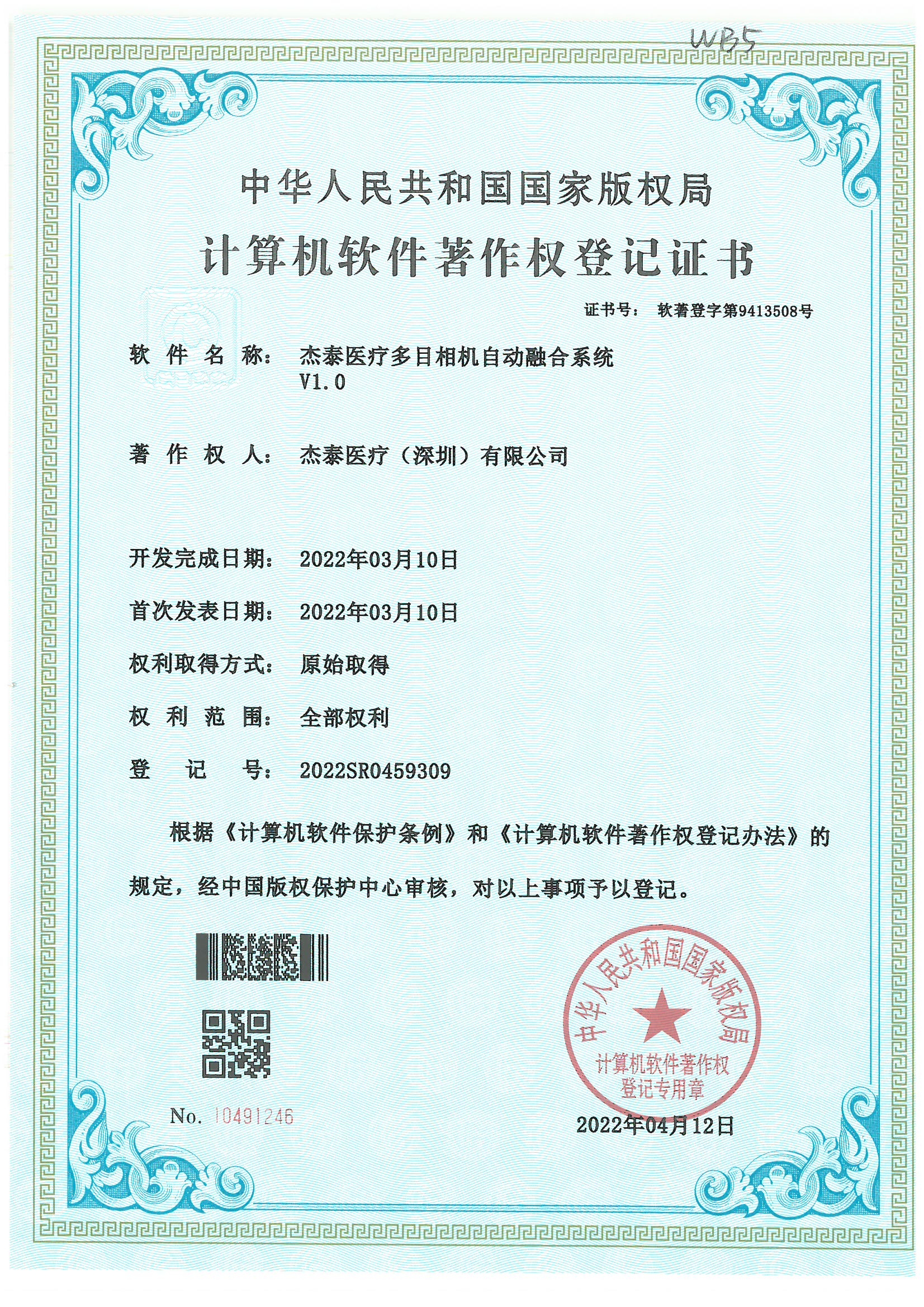
Documented, numbered evidence is the standard: certificate No. 9413508 for the Jeet Medical Multi-Camera Automatic Fusion System V1.0 is issued by the CCPD and dated 10 March 2022.
Use Cases: What Verification Looks Like in Practice
Distributor evaluation for a companion-animal ear and nasal workflow
A distributor building a companion-animal diagnostic package typically includes a flexible otoscope. For the RAE-201, the written verification points are the 600 mm working length, the 3.1 mm outer diameter and the 1.2 mm channel diameter, plus the 180° bending angle with up-and-down steering. On receipt, the sample check is a dimensional measurement plus a full-travel articulation check in both directions.
Small-clinic deployment of a portable system
For a portable unit intended for routine diagnostics, the verification set combines geometry and compatibility. On the RAE-105, that means confirming 5.8 mm outer diameter, 2.0 mm working channel, 1,000,000 pixels, 120° field angle, 7–100 mm depth of field, USB connection and compatibility with Android, Windows and iOS in the written datasheet, then pairing a delivered unit with each of those systems.
Large-animal and equine field use
Field use for large animals requires a separate requirement list rather than a direct comparison with companion-animal scopes, because reach and channel diameter change the clinical options. The VET-5820 offers 1500 mm working length with a 5.8 mm outer diameter and a 2.0 mm channel, while the VET-8528 offers 1500 mm working length with an 8.5 mm outer diameter and a 2.8 mm channel; both are specified with 180° bending, 360° rotation control and 1080P resolution. A distributor serving equine or cattle practices should verify reach first, then channel capability, then imaging and portability.
Single-operator mobile workflow
Where a practice needs one veterinarian to run the examination without assistance, the RAE-107 specification — 1000 mm working length, WiFi connection, water and air supply, suction, forceps working channel, and single-veterinarian operation — gives the buyer a clear checklist to verify on a sample rather than a general claim to accept.
Documented deployment evidence
Reference cases should also be requested as part of the evaluation, because a specification record and a deployment record answer different questions. Available documented references include a distributor client that has successfully used the product, with the case located in Russia, and a project implemented in Ukraine.
Comparison Table: Published Unit Specifications from the Verified Model Set
The table below lists published specification values for the JeetVet portable range. It is included as a reference model for how a distributor’s own comparison matrix should look: one row per model, one column per verifiable field, no conversions, and an explicit entry where a field is not stated.
| Model | Type | Working Length | Outer Diameter | Channel ID | Bending / Rotation | Imaging | Field Angle | Depth of Field | Connection |
|---|---|---|---|---|---|---|---|---|---|
| RAE-201 | Veterinary Flexible Otoscope (ear and nasal) | 600 mm | 3.1 mm | 1.2 mm | 180° bend; up & down steering | 160,000 pixels | 120° | 5–50 mm | Not stated |
| RAE-500 | Portable Smart Veterinary Otoscope | Not stated (lens diameter 3.9 mm; focal length 5–50 mm) | Not stated | Not stated | Not stated | 720 × 720 pixels; 1-megapixel camera; 6 LED lights | 78° | Focal length 5–50 mm | Type-C |
| RAE-105 | Portable USB Veterinary Endoscope | Not stated | 5.8 mm | 2.0 mm | 360° steering; 180° up/down and 180° left/right | 1,000,000 pixels | 120° | 7–100 mm | USB (Android, Windows, iOS) |
| RAE-105Pro | Portable WiFi Veterinary Endoscope | Not stated | 5.8 mm | 2.0 mm | 360° steering; 180° up/down and 180° left/right | 1,000,000 pixels | 120° | 7–100 mm | USB & WiFi (Android, Windows, iOS) |
| RAE-107 | Portable WiFi Veterinary Endoscope | 1000 mm | 5.8 mm | 2.0 mm | 360° directional control | 1,000,000 pixels; HD image resolution | Not stated | 7–100 mm | WiFi; water & air supply, suction, forceps channel |
| RAE-109 | Portable USB Veterinary Gastroscope | Not stated | 5.8 mm | 2.0 mm | 360° steering; 180° up/down and 180° left/right | 1,000,000 pixels | 120° | 7–100 mm | USB (Android, Windows, iOS) |
| VET-5820 | Portable Veterinary Gastroscope for Large Animals (GI examination) | 1500 mm | 5.8 mm | 2.0 mm | 180° bending; 360° rotation control | 1080P | 120° | 7–100 mm | Not stated |
| VET-8528 | Portable Veterinary Endoscope for Large Animals (GI examination) | 1500 mm | 8.5 mm | 2.8 mm | 180° bending; 360° rotation control | 1080P | 120° | 7–100 mm | Not stated |
The table also demonstrates the most common finding in a first-round evaluation: the imaging column mixes two different reporting conventions, and three models do not state a working length. Both issues should go back to the supplier as written questions rather than being resolved by assumption.
Frequently Asked Questions
What documentation should a veterinary endoscope supplier provide before shipment?
Ask for four document sets, in writing. First, the model-specific specification sheet matching the model number on the unit label. Second, applicable certificate evidence with certificate numbers, so a claim can be checked rather than accepted — Jeet Medical holds Computer Software Copyright Registration Certificate No. 9407860 for the Multi-Light Source Vision Imaging System V1.0, issued by the CCPD on 25 February 2022, and No. 9413508 for the Multi-Camera Automatic Fusion System V1.0, issued by the CCPD on 10 March 2022. Third, the quality-system reference; Jeet Medical is certified under ISO 13485 by SGS. Fourth, the acceptance terms. Jeet Medical’s stated terms are 100% pre-shipment inspection and functional test, with FOB and CIF delivery. Veterinary endoscopes are classified under HS code 90189020, which should appear consistently on the trade documents.
Can a manufacturer provide unit performance data for every model in its range?
A capable manufacturer should be able to answer model by model, and the answer should include geometry, articulation, imaging and compatibility. The JeetVet portable range, for example, publishes specification data across the RAE-201, RAE-500, RAE-105, RAE-105Pro, RAE-107, RAE-109, VET-5820 and VET-8528. Where a supplier leaves a field blank — several portable models in this category do not state a working length — the correct step is a written follow-up request for that specific value. A supplier that can supply the value in writing is demonstrating document control; a supplier that answers verbally, or points to a different model, is not.
What commercial terms should be confirmed before budgeting a purchase?
Confirm minimum order quantity, delivery terms, inspection method and payment terms together with the specification, because they are part of the same commitment. Jeet Medical’s stated purchasing terms are a minimum order quantity of 1 unit, FOB and CIF delivery terms, 100% pre-shipment inspection and functional test, and payment by T/T in advance. Unit pricing should always be obtained as a written quotation for the specific model and configuration under evaluation. Budgeting from catalogue prices is unreliable in this category, because configurations differ by working length, outer diameter and channel diameter, and those differences change cost.
How should a distributor validate a sample veterinary endoscope unit?
Measure, exercise and pair. Measure working length and outer diameter with the buyer’s own tools and compare the result with the written datasheet. Exercise the full articulation range to confirm the stated bending angle and rotation on that specific unit. View a test target to confirm the imaging specification, keeping in mind that suppliers may state either a pixel count or a resolution label, so the comparison must use the same convention the supplier used. Finally, pair the unit with every operating system the supplier claimed compatibility for — for example, Android, Windows and iOS where those are the stated systems. Record any difference between the measured value and the stated value in a deviation log.
What is the next step after the data has been verified?
Move the verified datasheet into the purchase order as an annex, and require that the model number, specification sheet and dispatch documentation match. This converts the evaluation into a document trail that supports incoming inspection and any later service discussion. Distributors that want to start this process with the JeetVet range can request a sample unit, a model-specific quotation, or the full technical catalogue directly from the manufacturer, and can compare the returned data against the published figures before committing to volume.
Conclusion: Buy the Written Record, Not the Adjective
Evaluating a veterinary endoscope supplier is a documentation exercise before it is a commercial one. The distributor that asks, in writing, for working length, outer diameter, channel diameter, bending angle, rotation range, pixel count or resolution, field angle, depth of field and operating-system compatibility — model by model — and then measures a delivered sample against those values, has built an evaluation that holds up in front of a clinic, in front of a warranty discussion, and in front of its own margin.
The reference data set in this article shows what a complete return looks like: a 600 mm, 3.1 mm otoscope for ear and nasal examination; a 1500 mm, 5.8 mm gastroscope and a 1500 mm, 8.5 mm endoscope for large-animal gastrointestinal work; and portable units specified at 5.8 mm outer diameter with 1,000,000 pixels, 120° field angle, 7–100 mm depth of field and Android, Windows and iOS compatibility. It also shows where a first-round request typically comes back incomplete, which is exactly where the follow-up questions belong.
Jeet Medical (Shenzhen) Co., Ltd., which manufactures and supplies under the JeetVet brand, publishes specification data at this level of detail across its eight portable models, operates a 5,000 m² facility with 130 employees and a 30-person R&D team, holds ISO 13485 certification issued by SGS, and states a manufacturing environment that includes a 100,000-class cleanroom and a 10,000-class microbiological laboratory. Those are the facts a distributor can put in an evaluation file. The verification, however, is the distributor’s own work — one request template, one sample unit, one deviation log, one annotated purchase order.

Start Your Unit Performance Data Request
Send your model-by-model evaluation template to JeetVet and request a sample unit, a written quotation, or the full technical catalogue. Every specification you receive can be checked against a delivered unit before you commit to volume.
Download the JeetVet catalogue: JeetVet Veterinary Endoscope Product Catalogue (PDF)
Contact: Email troy@jeetmed.com | Tel +86 755-23251842 / +86 13381945549 | WhatsApp +8613816158380 | Website www.jeetvet.com
Jeet Medical (Shenzhen) Co., Ltd. — 9th Floor, Block B, Building 1, No. 76 Baohe Avenue, Longgang District, Shenzhen, China.
Have Questions or Need More Details?
Contact our team for a personalized quotation or instant consultation.
Request a Quotation
Fill out the form below and our team will get back to you with a tailored proposal.
WhatsApp Direct Chat
Prefer to chat in real-time? Message us on WhatsApp for instant assistance & quick answers.
- Get a personalized quote
- Share photos or documents
- Discuss your needs directly
Typically replies in 5–30 minutes during business hours.