
Top-Rated Veterinary Endoscopes for Large Animal GI Exams
Top-Rated Veterinary Endoscopes for Large Animal GI Exams
Short answer: In equine and bovine gastrointestinal work, four specifications decide whether an examination can be completed at all — working length, outer diameter, working channel diameter, and steering range. This list covers three instruments from one verified product line and states the exact reason each one qualifies: the VET-5820 (1500 mm working length, 5.8 mm outer diameter, 2.0 mm channel, 1080P HD), the VET-8528 (1500 mm, 8.5 mm outer diameter, 2.8 mm channel, 1080P HD), and the RAE-107 (1000 mm working length, 5.8 mm outer, 2.0 mm channel, WiFi connection) as the portable alternative for field use.
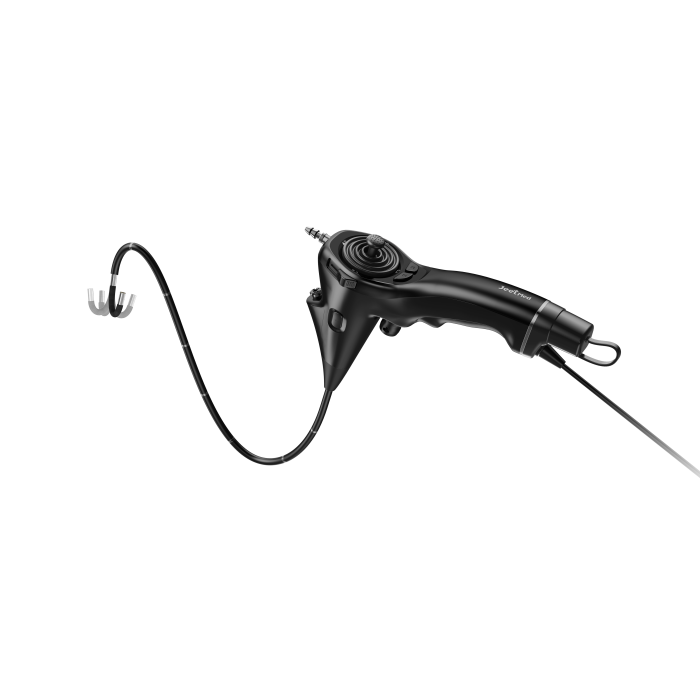
VET-5820 — purpose: animal gastrointestinal examination; 1500 mm working length; 5.8 mm outer tube; 2.0 mm channel; 1080P HD.
Why Large Animal GI Endoscopy Is a Constraint Problem, Not a Feature Problem
A large animal endoscope is not selected by adjectives. It is selected by whether its dimensions can physically complete the procedure on the patient in front of the clinician. Four constraints operate at the same time, and failing any one of them ends the examination:
- Insertion depth (working length). The scope must physically reach the target structure. The VET-5820 and VET-8528 are both built at a 1500 mm working length; the RAE-107 is built at 1000 mm. Depth is a hard limit, not a preference.
- Outer tube diameter. Narrower tubes pass through tighter anatomy. The 5.8 mm outer diameter used by the VET-5820 and RAE-107 is narrower than the 8.5 mm outer diameter of the VET-8528.
- Working channel diameter. The channel determines what instruments and fluid handling are possible. The two channel sizes in this line are 2.0 mm (VET-5820, RAE-107) and 2.8 mm (VET-8528).
- Steering range. The VET-5820 and VET-8528 both list a 180° bending angle with 360° rotation control; the RAE-107 lists 360° directional control.
Two imaging constraints decide whether the procedure is clinically useful rather than merely possible. Both large animal models list a 7 mm to 100 mm depth of field and a 120° field angle, which means the operator is working with a defined focal band instead of hunting for focus. Image output is listed as 1080P HD on the VET-5820 and VET-8528, and as 1,000,000 pixels with High Definition resolution on the RAE-107.
The consequence for buyers is straightforward: a scope with a generous channel but insufficient length is unusable in a large patient, and a scope with the right length but an oversized tube may not be the right instrument for a narrower anatomy. Selection is an exercise in constraint matching — not in choosing the most heavily marketed device.
Industry Background: What Is Driving Large Animal Endoscopy Demand
Veterinary endoscopy is a small but structurally growing segment of veterinary diagnostics. Published third-party estimates place the global veterinary endoscopy market at approximately USD 290M–300.72M in 2024/2025, with projections reaching over USD 586M by 2034 (Straits Research). North America accounts for the largest regional share, at over 34.48% of global revenue as of 2024 (Market Research Future).
Base-year valuations published by different research firms do not agree, and that divergence is worth knowing before quoting a market figure in a business case. Mordor Intelligence estimated USD 332.95M for 2026, Strategic Market Research quoted USD 1.2B for the total endoscopy segment, and Data Insights Reports estimated USD 232.6M for 2025. The differences largely reflect scope: whether the number covers veterinary video endoscopy only, the full endoscopy segment, or adjacent equipment. For procurement purposes the useful signal is direction of travel, not a single headline number.
Two demand drivers are consistently referenced. In North America, over 5 million pets were insured as of 2024 (NAPHIA), a factor associated with higher adoption of advanced diagnostic procedures. Separately, AI-assisted diagnostics in endoscopy are described as accelerating at a 25.7% CAGR, with integration into veterinary systems identified as a primary trend (Technavio / Strategic Market Research).
The competitive field is composed of long-established human-medicine and veterinary imaging manufacturers, including Karl Storz, Olympus Corporation, Eickemeyer, and Fujifilm Holdings, identified as key global competitors in the veterinary endoscopy market (Mordor Intelligence). Alongside them, specialist manufacturers supply portable and field-oriented systems. Compliance expectations are shared across the field: medical endoscope optics are addressed by the ISO 8600 series — ISO 8600-1 for general requirements and ISO 8600-3 for field of view — under ISO and FDA consensus standards.
This article deliberately does not rank the three systems below against third-party devices. The verified data available for this review covers the specifications of one manufacturer's line; comparing it to competitor hardware without verified specifications would produce a table that looks authoritative and is not.
Selection Criteria: How to Shortlist a Large Animal Veterinary Endoscope
Buyers searching for the best veterinary endoscope brand are usually asking a narrower question: which configuration fits the patients this practice actually sees. The following criteria reflect that, and each one maps to a specification that can be verified before purchase.
- Working length — match to the deepest structure the exam must reach.
- Outer diameter — the limiting dimension for passage through the patient.
- Working channel diameter — determines clearance for biopsy forceps and accessories.
- Bending angle and rotation — determines how much of the target surface can be brought into view.
- Image resolution, depth of field and field angle — determines whether the image is diagnostic.
- Connectivity and power — WiFi or tethered connection decides where the unit can be used.
- Number of operators required — single-veterinarian operation changes staffing in field conditions.
- Documented compliance — quality management certification plus product-level standards and certificates.
The Top Picks for Large Animal Gastrointestinal Exams
All three instruments below are manufactured by Jeet Medical (Shenzhen) Co., Ltd., which markets its veterinary line under the JeetVet name and holds ISO 13485 certification issued by SGS. Each entry states the verified specifications from the product data and the specific reason it belongs on this list.
1. VET-5820 — Portable Veterinary Gastroscope for Large Animals
The VET-5820 is a portable veterinary gastroscope for large animals whose stated purpose is animal gastrointestinal examination. Its inclusion on this list rests on the combination of full-length reach and a narrow outer tube: 1500 mm working length paired with a 5.8 mm outer diameter. That pairing is what makes it the reference choice where the examination must go deep but the passage needs to stay slim.
The working channel is 2.0 mm — the narrower of the two channel sizes in this line — so it is the option to specify when the procedure depends on depth and maneuverability rather than on maximum instrument clearance. Imaging is stated as High Definition with 1080P pixels, a 7 mm to 100 mm depth of field, and a 120° field angle. Steering is specified as a 180° bending angle with 360° rotation control, which allows the operator to orient the distal tip across the full circumference of the lumen rather than only in one plane.
Reason for inclusion: maximum insertion depth at the smallest outer diameter in the large animal group — channel size 2.0 mm for forceps work, length 1500 mm for depth in equine or bovine patients, 180° bending with 360° rotation for steering range, and 1080P HD for image quality.
2. VET-8528 — Portable Veterinary Endoscope for Large Animals
The VET-8528 is the wider-channel counterpart. It shares the same 1500 mm working length as the VET-5820, which means it reaches the same depth in a large patient, but it pairs that length with an 8.5 mm outer diameter and a 2.8 mm inner channel diameter. The trade is explicit: a larger channel with a larger tube.
That trade is the reason the VET-8528 belongs on this list as a primary pick rather than as an afterthought. When an examination depends on passing biopsy forceps repeatedly, or on retaining clearance while fluid management and instrument exchange happen through the same channel, the 2.8 mm channel is the more workable specification. The remaining specifications match the large animal configuration: High Definition resolution at 1080P, 7 mm to 100 mm depth of field, 120° field angle, 180° bending angle, and 360° rotation control. Its stated purpose is animal gastrointestinal examination.
Reason for inclusion: the widest working channel in the group at 2.8 mm, on a full 1500 mm insertion tube — the choice when biopsy forceps clearance matters more than minimizing outer diameter.
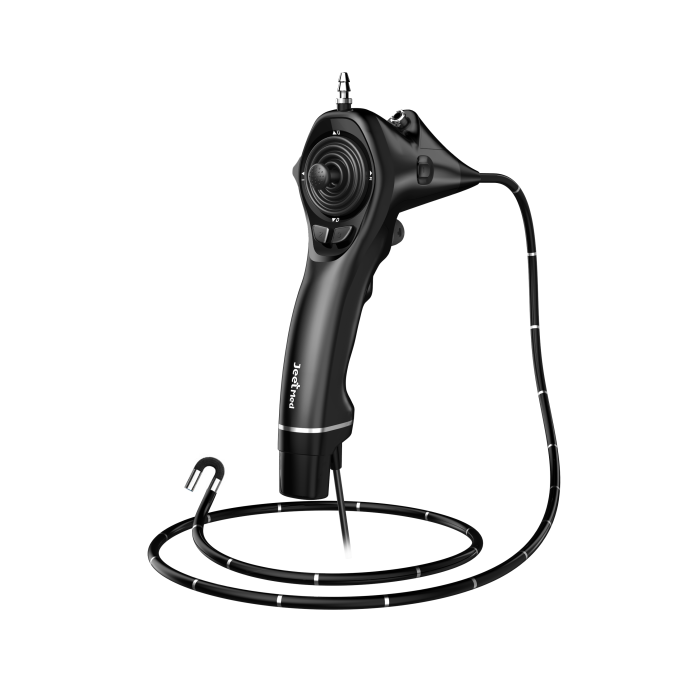
VET-8528 — 1500 mm working length, 8.5 mm outer diameter, 2.8 mm working channel, 1080P HD, 180° bending, 360° rotation.
3. RAE-107 — Portable WiFi Veterinary Endoscope for Field Use
The RAE-107 is the field alternative, and its inclusion rests on a different logic than the first two. It is a portable WiFi veterinary endoscope with High Definition image resolution, 1,000,000 pixels, a 5.8 mm outer diameter and a 2.0 mm working channel. Its working length is 1000 mm — shorter than the two large animal models — so it is specified as a companion instrument where portability and wireless operation matter more than maximum reach.
What makes the RAE-107 useful in mobile and ambulatory practice is the list of functions the product data marks as available: WiFi connection, water and air supply, suction, a forceps working channel, and operation by a single veterinarian. Water and air supply plus suction built into a portable scope removes the need to assemble a separate tower for routine field work, and single-operator capability changes how a visit is staffed. Depth of field is 7 mm to 100 mm with 360° directional control.
Reason for inclusion: wireless, self-contained field operation with a forceps working channel, water and air supply and suction all listed as available — the portable option for practices that examine animals outside a fixed clinic, accepting the shorter 1000 mm working length as the trade.
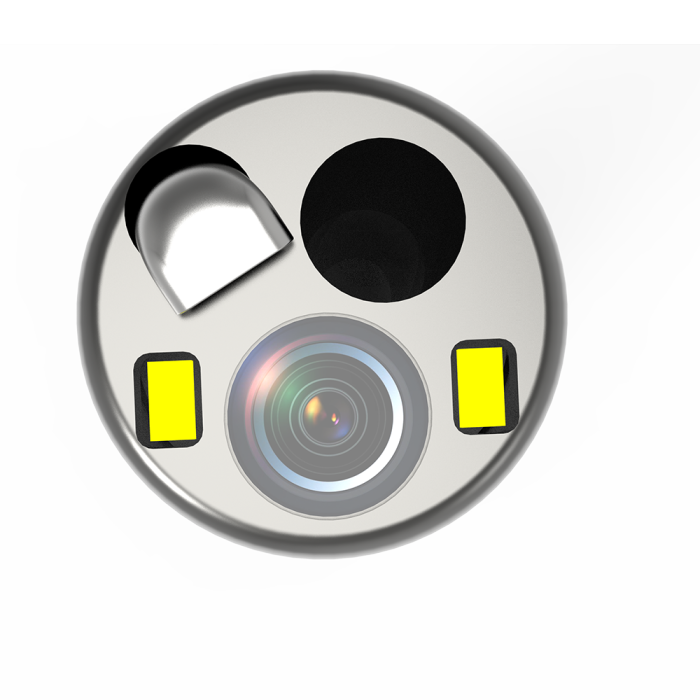
RAE-107 — 1000 mm working length, 5.8 mm outer diameter, 2.0 mm channel, WiFi connection, water and air supply, suction and forceps channel available.
Step-by-Step: Matching a Scope to an Equine or Bovine GI Exam
- Define the target depth first. Decide the deepest structure the examination must reach. If it requires the full 1500 mm insertion tube, restrict the shortlist to the VET-5820 and VET-8528 and treat the RAE-107 as a complementary instrument.
- Decide the channel requirement second. If the procedure includes repeated biopsy or accessory exchange, the 2.8 mm channel of the VET-8528 offers more clearance than the 2.0 mm channel shared by the VET-5820 and RAE-107.
- Check the outer diameter against the anatomy. The 5.8 mm tube (VET-5820, RAE-107) is the narrower of the two diameters available; the 8.5 mm tube (VET-8528) trades passage clearance for channel capacity.
- Confirm steering against the anatomy you will navigate. Both large animal models specify 180° bending with 360° rotation control; the RAE-107 specifies 360° directional control. Steering range determines how much of the lumen wall can be brought into view without repositioning the patient.
- Verify documentation before commitment. Request the quality management certificate and the product-level documents applicable to your market, then confirm configuration, accessories and commercial terms in writing.
Use Cases in Large Animal Practice
Large animal endoscopy covers a defined set of procedures. The application data associated with this line describes duodenal examination for conditions including inflammatory bowel disease, tumors and blockages; visualization of the trachea and bronchi for diagnoses such as tracheal collapse, bronchitis, tumors and foreign bodies; assistance in the removal of foreign bodies or masses and flushing of the ear canal; biopsy and culture collection to identify the cause of nasal discharge or obstruction; minimally invasive procedures within the joint; and procedures such as biopsies, organ removal and exploration of the abdominal cavity.
Those procedures map onto the three instruments in different ways. Deep gastrointestinal work in a large patient is where the 1500 mm working length of the VET-5820 and VET-8528 carries the most weight. Procedures where tissue sampling is central favor the 2.8 mm channel of the VET-8528. Mobile and ambulatory work, where the scope must travel and be set up without a fixed tower, is where the RAE-107's WiFi connection, water and air supply, suction and single-operator capability are most relevant.
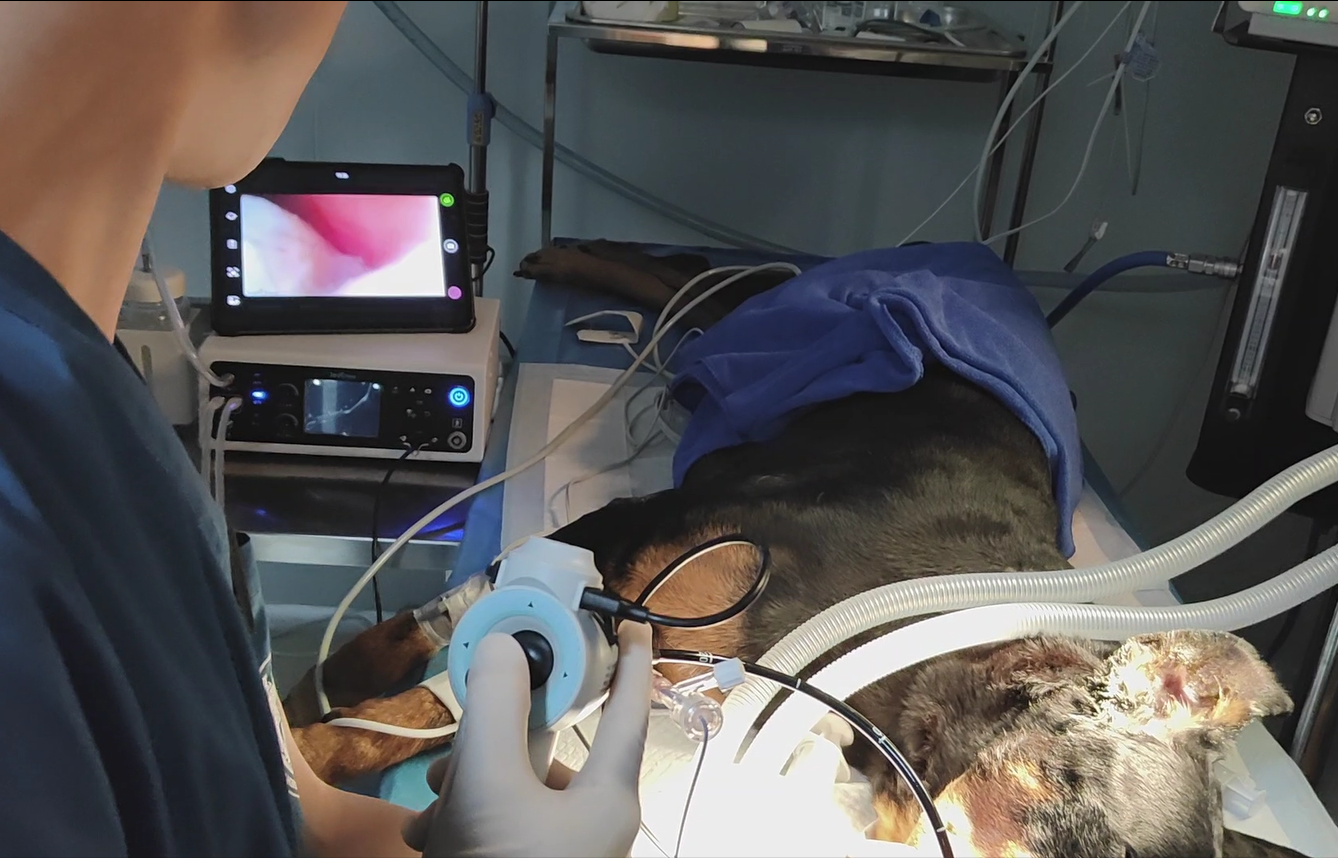
Large animal endoscopy — gastrointestinal and airway examination in equine and bovine patients.
Practices that also run small animal caseloads should note that the same manufacturer's line extends beyond this list with the RAE-105, RAE-105Pro, RAE-109 and RAE-201 models, as well as the RAE-500 veterinary otoscope. Those are outside the scope of a large animal GI shortlist, but they matter when a clinic or distributor is consolidating suppliers.
Comparison Table: VET-5820 vs VET-8528 vs RAE-107
| Specification | VET-5820 | VET-8528 | RAE-107 |
|---|---|---|---|
| Product type | Portable veterinary gastroscope for large animals | Portable veterinary endoscope for large animals | Portable WiFi veterinary endoscope |
| Stated purpose | Animal gastrointestinal examination | Animal gastrointestinal examination | Veterinary endoscopy (portable / field) |
| Working length | 1500 mm | 1500 mm | 1000 mm |
| Outer tube diameter | 5.8 mm | 8.5 mm | 5.8 mm |
| Working channel (inner) | 2.0 mm | 2.8 mm | 2.0 mm |
| Bending / steering | 180° bending angle, 360° rotation control | 180° bending angle, 360° rotation control | 360° directional control |
| Image output | 1080P, High Definition | 1080P, High Definition | 1,000,000 pixels, High Definition |
| Depth of field | 7 mm – 100 mm | 7 mm – 100 mm | 7 mm – 100 mm |
| Field angle | 120° | 120° | Not stated in the product data |
| Connectivity | Not stated in the product data | Not stated in the product data | WiFi connection available |
| Water & air supply, suction | Not stated in the product data | Not stated in the product data | Available |
| Forceps working channel | 2.0 mm channel | 2.8 mm channel | Available |
| Single-operator use | Not stated in the product data | Not stated in the product data | Available |
All specifications above are taken from the manufacturer's published product data for each model. Cells marked “not stated” reflect gaps in the published data, not verified absences.
FAQ
What certifications should a large animal veterinary endoscope supplier be able to document?
Look for two layers of evidence: a quality management system certificate and product or software documentation. Jeet Medical (Shenzhen) Co., Ltd. holds ISO 13485 certification issued by SGS. On the optical side, medical endoscope optics are addressed by the ISO 8600 series — ISO 8600-1 for general requirements and ISO 8600-3 for field of view — under ISO and FDA consensus standards. On the software side, the Veterinary Endoscope RAE-201 is covered by a Computer Software Copyright Registration Certificate (No. 9407860) issued by CCPD for the CN market, and the Jeet Medical Multi-Camera Automatic Fusion System V1.0 holds certificate 9413508 issued by CCPD. Confirm the scope of each certificate and which markets it applies to.
What working channel diameter is needed for biopsy forceps in large animal GI exams?
A larger channel leaves more clearance for biopsy forceps and accessories, but it also increases the outer diameter of the tube. In this line the two channel sizes are 2.0 mm (VET-5820 and RAE-107) and 2.8 mm (VET-8528). The 2.8 mm channel of the VET-8528 comes with an 8.5 mm outer tube, while the 2.0 mm channel of the VET-5820 comes with a 5.8 mm outer tube. The RAE-107 lists a forceps working channel as available, together with water and air supply and suction. The practical rule is to choose the widest channel the patient's anatomy will accept.
Is a 1500 mm working length necessary for equine and bovine exams?
Working length is a reach constraint and should be matched to the deepest structure the examination must reach. Two models here are built at 1500 mm — the VET-5820 and VET-8528 — while the RAE-107 offers 1000 mm with WiFi connectivity. A longer insertion tube supports deeper gastrointestinal work in large patients; a shorter tube is easier to manage where the target is closer or where field portability matters most. Patient size, target depth and restraint conditions determine the appropriate choice.
How do buyers compare cost across these models when no list price is published?
The published product data for this line does not contain list prices, so cost comparison has to be done per configuration through a written quotation. The verified specification differences that separate the three models are working length (1500 mm vs 1000 mm), outer diameter (5.8 mm vs 8.5 mm), channel diameter (2.0 mm vs 2.8 mm), image output (1080P for the two large animal models, 1,000,000 pixels for the RAE-107) and connectivity (WiFi on the RAE-107). Request a quotation for the exact configuration and compare on a delivered basis that includes accessories, service and any distributor terms.
Can a clinic or distributor request a sample before committing to an order?
Yes. Sample and quotation requests can be sent directly to the manufacturer. Jeet Medical (Shenzhen) Co., Ltd. (JeetVet) supplies portable veterinary endoscopes, veterinary otoscopes, veterinary flexible otoscopes and veterinary gastroscopes, with exports to Europe, North America, Southeast Asia, Latin America and the Middle East. Contact troy@jeetmed.com, call +86 755-23251842 or +86 13381945549, or message WhatsApp +8613816158380. The full product catalog is available for download here: JeetVet veterinary endoscope catalog (PDF).
Conclusion: Choose by Constraint, Then Confirm by Document
The three instruments reviewed here solve different versions of the same problem. The VET-5820 delivers 1500 mm of reach through a 5.8 mm tube with a 2.0 mm channel — the depth-and-maneuverability configuration. The VET-8528 delivers the same 1500 mm reach with a 2.8 mm channel and an 8.5 mm tube — the sampling-and-clearance configuration. The RAE-107 delivers WiFi operation, water and air supply, suction, a forceps channel and single-veterinarian use at a 1000 mm working length — the field configuration.
Behind all three sits the same manufacturer. Jeet Medical (Shenzhen) Co., Ltd. was founded in 2020, operates a 5000 m² facility with 130 employees, a 30-person R&D team and an annual output of 10,000 units, and exports approximately 50% of production to Europe, North America, Southeast Asia, Latin America and the Middle East. The company holds ISO 13485 certification issued by SGS. For buyers at the research and evaluation stage, that combination — verifiable specifications plus verifiable certification — is what makes a shortlist defensible to a purchasing committee.
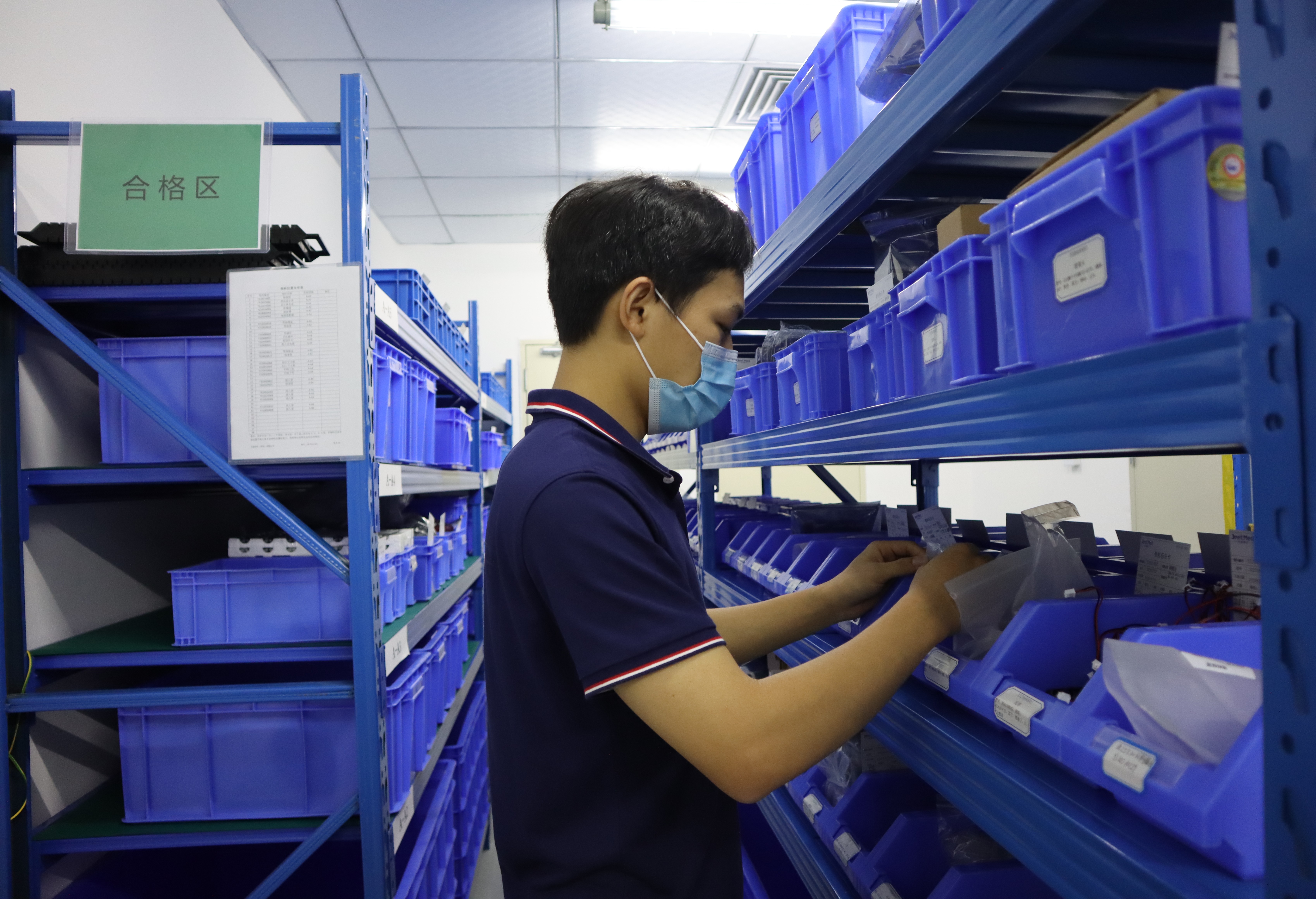
Jeet Medical (Shenzhen) Co., Ltd. — ISO 13485 certified by SGS; 5000 m² facility; 10,000 units annual output.
Next step: specify your target depth, channel requirement and field-use needs, then request a configuration-specific quotation and sample evaluation from JeetVet at www.jeetvet.com, by email at troy@jeetmed.com, or via WhatsApp at +8613816158380.
Specifications referenced in this article are taken from the manufacturer's published product data for the VET-5820, VET-8528, RAE-107 and related models, and from published third-party market and standards sources as cited above. Gaps in published data are stated as gaps rather than filled by estimate. References to third-party companies are limited to their identification as market participants and do not imply any comparison of performance or quality.