
Veterinary Endoscope Buying Guide: Decoding Certifications, Parameters, and Portable Designs for 2026
Veterinary Endoscope Buying Guide: Certifications, Parameters, and Portable Designs (2026)
The veterinary endoscope market is expanding globally, with estimates placing its value between USD 290 million and USD 300 million in 2025 and projections pointing to more than USD 586 million by 2034. North America contributes the largest regional share, accounting for over 34.48% of global revenue as of 2024. For veterinary clinics, mobile practices, and distributors, selecting the right endoscope is no longer just about brand recognition—it is about matching verified specifications, compliance evidence, and portable design capabilities to clinical and operational needs.
This guide focuses on instruction-level decisions: what to check, which parameters matter by animal type, and how to evaluate compliance documentation during supplier shortlisting.

What Is a Veterinary Endoscope and Why Do Specifications Matter?
A veterinary endoscope is a diagnostic instrument that enables direct visual examination of an animal's internal body passages, including the gastrointestinal tract, respiratory tract, ear canals, and nasal cavities. It also supports minimally invasive procedures such as foreign body removal, biopsy, and tissue flushing.
In practice, veterinary endoscopes must balance user ergonomics, insertion tube diameter, working length, articulation control, and image resolution. These parameters determine whether an instrument can safely and effectively serve a specific animal size, anatomical site, and clinical workflow.
For clinics and distributors, the key shift is the growing role of portable veterinary endoscopes. Portable systems eliminate the need for dedicated trolley installations and allow clinicians to move the device between consultation rooms, or take it directly to a farm, stable, or field environment.
Key Challenges Buyers Face in the Current Market
A common challenge is that the market offers veterinary endoscopes from global incumbents, regional manufacturers, and direct-from-factory suppliers. Buyers, especially those responsible for procurement in small clinics or distribution networks, face several recurring problems:
- Unverified product data: Specification sheets sometimes list generic descriptions without clear testing or compliance evidence.
- Mismatched parameters: A device designed for large animal gastrointestinal work may be too large for avian or small animal ear and nasal examinations.
- Unclear compliance documentation: Not all suppliers disclose certification numbers, issuing authorities, or the specific products covered by a certificate.
- Portability and usability gaps: Some portable systems sacrifice image quality, angle control, or durability in field conditions.
Industry Background: Market Growth and Compliance Requirements
Several converging trends explain the rising demand for veterinary endoscopes. The pet insurance sector in North America, for example, surpassed 5 million insured pets in 2024, increasing the adoption rate of advanced diagnostic procedures such as endoscopy. Clinics are responding by adding diagnostic imaging capabilities that are more accessible and easier to operate than traditional rigid or cart-based systems.
At the same time, AI is emerging as a directional trend in veterinary endoscopy. The market for AI-based endoscopy solutions is reported to be growing at a CAGR of 25.7%, with AI-assisted diagnostics becoming increasingly relevant for veterinary video systems. While AI is not yet standardized as a requirement, buyers should ask suppliers about software capabilities that support image processing, capture, and documentation.
On the compliance side, medical endoscopes should meet optical safety and performance expectations defined by the ISO 8600 series (including ISO 8600-1 for general requirements and ISO 8600-3 for field of view). In practice, buyers should verify that a manufacturer operates under a recognized quality management system—such as ISO 13485—and that software components are documented through copyright registration where applicable.
Veterinary Endoscope Explained: How to Interpret Core Parameters
To choose securely, buyers need to know what each specification actually means in clinical use. The following table maps core parameters to their decision impact.
| Parameter | What It Means | Why It Matters in Selection |
|---|---|---|
| Outer diameter of insertion tube | The width of the flexible tube entering the animal. | Smaller diameters (e.g., 3.1 mm or 5.8 mm) are better suited to small animal or airway work; larger diameters (e.g., 8.5 mm) suit large animal gastrointestinal applications. |
| Working length | The length of the insertion portion. | Longer working lengths (e.g., 1500 mm) help reach the stomach in large animals; shorter lengths (e.g., 600 mm) are practical for ear and nasal examinations. |
| Working channel inner diameter | The channel used for irrigation, suction, or instruments. | A wider channel (e.g., 2.8 mm) supports more clinical instrument flexibility and fluid handling. |
| Bending angle and steering direction | The tip articulation capability. | 180° bending (up/down or up/down plus left/right) increases reach and maneuverability in curved anatomy. |
| Rotation control | The ability to rotate the insertion tube around its axis. | 360° rotation control improves navigation during gastrointestinal endoscopy, especially in large animal exams. |
| Depth of field and field angle | Optical performance scope for visualization. | A wider depth of field (e.g., 7–100 mm) maintains image clarity when moving between near and distant structures. |
| Image resolution and pixel count | The imaging capability of the camera system. | Higher pixel counts improve image detail for tissue evaluation and documentation. |
Note: Always confirm parameters directly from the product spec sheet. The figures above are explained generically for decision-making.
How to Evaluate a Veterinary Endoscope Manufacturer: Compliance First
Beyond the device itself, the manufacturer's compliance system should be evaluated as part of any veterinary endoscope supplier review. A compliant manufacturer will be transparent about quality management, software documentation, and product traceability.
A reference example is JeetVet, the veterinary device brand under Jeet Medical (Shenzhen) Co., Ltd. The company operates a 5,000 m² factory, employs around 130 people, and reports an annual output of about 10,000 units, with an R&D team of approximately 30 specialists. About 50% of production is exported to Europe, North America, Southeast Asia, Latin America, and the Middle East.
JeetVet's compliance documentation includes ISO 13485 certification issued by SGS. Its software assets are registered through Computer Software Copyright Registration Certificates issued by CCPD, covering systems such as the Jeet Medical Multi-Camera Automatic Fusion System V1.0 (certificate number 9413508) and the Jeet Medical Multi-Light Source Vision Imaging System V1.0 (certificate number 9407860).
What does this mean for a buyer? A traceable compliance chain helps answer the question: “Is the supplier's system auditable?” ISO 13485 confirms a quality management system designed for medical devices, while software copyright registration provides evidence of documented in-house imaging software development.
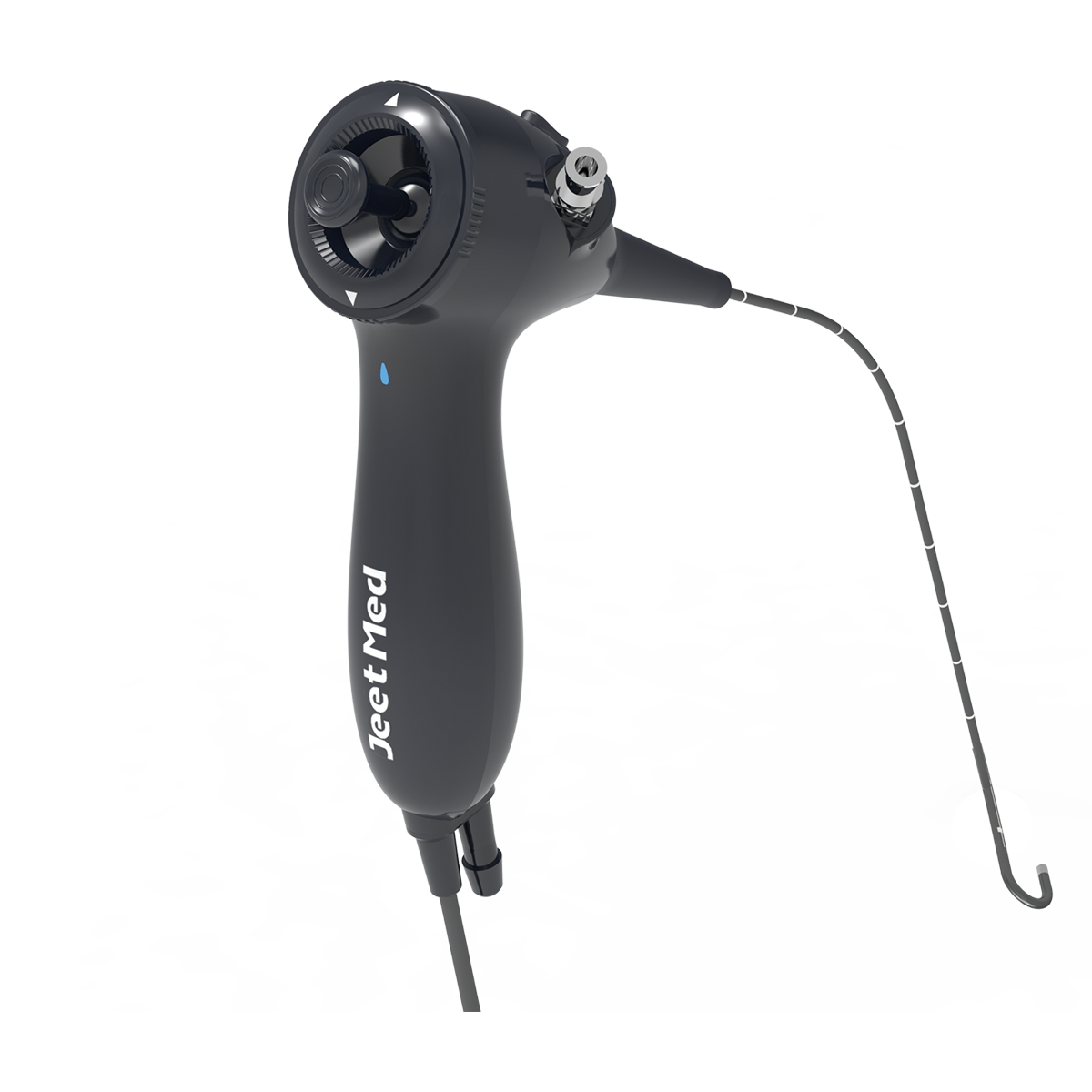
Detailed Solution: A Step-by-Step Veterinary Endoscope Selection Process
Because the purchase decision is often made by clinics, procurement managers, and distributors, the process should be reproducible and document-friendly. The following steps form a structured workflow.
Step 1: Define the Clinical Case Mix
Start by listing the animal types and procedures performed in the target clinic, hospital, or field environment. This determines the required working length, tube diameter, and articulation. For example:
- Small animal ear and nasal work generally benefits from a flexible otoscope with a smaller outer diameter and shorter working length.
- Large animal gastrointestinal exams typically require a longer insertion tube and a larger working channel.
- Avian and exotic animal endoscopy requires especially small diameters and precise control to avoid tissue trauma.
Step 2: Match Device Category to Application
Veterinary endoscopes are not interchangeable across all applications. Confirm the device category before comparing specifications.
| Device Type | Clinical Focus | Representative JeetVet Model | Key Parameters |
|---|---|---|---|
| Veterinary flexible otoscope | Ear and nasal examination | RAE-201 | Working length 600 mm; outer diameter 3.1 mm; channel inner diameter 1.2 mm; bending 180° (up & down); pixels 160,000 |
| Portable USB veterinary endoscope | Multi-purpose examination with laptop or mobile device | RAE-105 / RAE-109 | Outer diameter 5.8 mm; pixels 1,000,000; bending 180° up/down and 180° left/right; depth of field 7–100 mm; weight under 1 kg |
| Portable WiFi veterinary endoscope | Flexible multi-procedure diagnostic imaging | RAE-105Pro / RAE-107 | RAE-105Pro: 360° steering; 5.8 mm OD; 1,000,000 pixels; USB and WiFi connection. RAE-107: HD resolution; 1000 mm working length; 360° directional control; WiFi connection; water/air supply and suction available |
| Portable veterinary gastroscope for large animals | Gastrointestinal examination in large animals | VET-5820 | Working length 1500 mm; OD 5.8 mm; channel 2.0 mm; HD resolution; 1080P; 360° rotation; 180° bending |
| Portable veterinary endoscope for large animals | Gastrointestinal and large body cavity examination | VET-8528 | Working length 1500 mm; OD 8.5 mm; channel 2.8 mm; HD resolution; 1080P; 360° rotation; 180° bending |
| Portable smart veterinary otoscope | Digital ear examination with integrated display | RAE-500 | 1.85-inch screen; 720×720 resolution; 3.9 mm lens diameter; 6 LED lights; 1 MP camera; Type-C; built-in 8 GB memory |
Step 3: Review Compliance and Certificates
Download or request the supplier's certification copies and compare the certificate number, issuing authority, product scope, and validity. A certificate with a visible number is easier to audit than a generic description.
Step 4: Evaluate Portability Requirements
Consider the actual operational environment. The JeetVet product line includes USB-based, WiFi-based, and self-contained smart display devices. WiFi-enabled models such as the RAE-107 may be more suitable when the clinician prefers hands-free operation through an external device, while USB models are appropriate for existing laptop-based workflows. The RAE-500 smart otoscope includes a built-in display and internal storage, which suits fast ear examinations without extra equipment.
Step 5: Compare Construction and Serviceability
Materials such as stainless steel and medical-grade polymer appear across multiple models, supporting reusable clinical use after sterilization. Also confirm spare part support, cleaning procedures, and after-sales service capacity before finalizing a long-term purchase agreement.
Step 6: Shortlist and Request Samples
Once the specification and compliance screens are complete, request sample evaluation and an inspection-ready quote. A sample allows the clinical team to test handle ergonomics, imaging quality, and tip articulation before committing to volume.
Portable vs. Traditional Veterinary Endoscope: A Practical Comparison
Many procurement conversations now focus on the choice between portable and traditional cart-based veterinary endoscopes. Below are the practical trade-offs.
| Evaluation Criterion | Portable Veterinary Endoscope | Traditional / Cart-Based System |
|---|---|---|
| Setup flexibility | Lightweight, can be moved between examination rooms or taken to external sites | Requires more permanent positioning and dedicated space |
| Operational environment | Suitable for clinic, hospital, and field use, including mobile veterinary services | Typically designed for stable indoor clinical environments |
| User interface | Ranges from USB connection to WiFi display and integrated smart screens | Usually includes dedicated console and integrated monitor |
| Space requirement | Low | Higher |
| Best suited for | Small clinics, mixed-practice teams, ambulatory services, distributors seeking broad market coverage | Large specialty referral hospitals and high-volume endoscopy suites |
Veterinary Endoscope Use Cases by Clinical Environment
The intended application environment affects both device selection and user expectations. Operating temperature conditions for JeetVet devices are specified between 0°C and 40°C, with storage between -10°C and 55°C, and relative humidity up to 80% non-condensing. These conditions support use inside animal hospitals and clinics, as well as field and mobile veterinary services.
Small Animal Endoscopy
Small animal practices commonly use endoscopes to examine the esophagus, stomach, duodenum, trachea, and bronchi. Clinical tasks include checking for inflammatory bowel disease, tumors, blockages, tracheal collapse, bronchitis, and foreign bodies. Flexible instruments with small outer diameters and responsive tip articulation are essential for minimally invasive access in dogs and cats.
Large Animal Endoscopy
Large animal endoscopy requires sufficient working length to access deeper structures in horses, cattle, and other large species. Procedures include gastrointestinal examination, upper airway visualization, joint exploration, and abdominal exploration with biopsy. The VET-5820 and VET-8528, with their 1500 mm working length, are designed for these larger anatomical distances.
Avian and Exotic Animal Endoscopy
Avian and exotic animal patients require extra attention to instrument diameter and patient stability. Endoscopy is frequently used for respiratory tract visualization, nasal and ear flushing, foreign body removal, tissue biopsy, and minimally invasive abdominal procedures such as ovariectomy or splenectomy. Smaller-diameter flexible endoscopes are generally preferred for these cases.
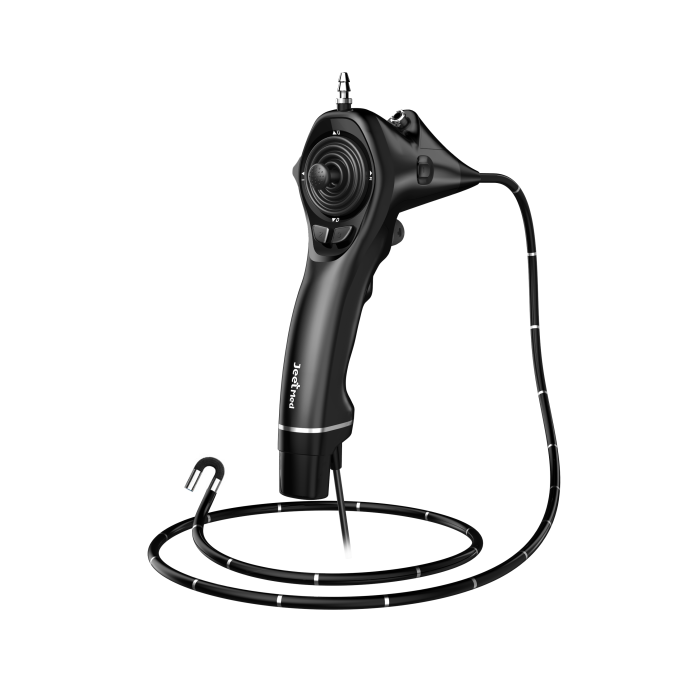
Veterinary Otoscopy: Digital Ear and Nasal Examination
For ear and nasal examinations, a digital veterinary otoscope provides recorded visualization, magnification, and improved client communication. The JeetVet RAE-500 smart otoscope offers a 1.85-inch screen, 720×720 pixel resolution, 3.9 mm lens diameter, six LED lights, and built-in memory. For more advanced ear and nasal work, the RAE-201 flexible otoscope pairs a 3.1 mm tube with 180° up/down bending and a depth of field of 5–50 mm.
Manufacturer Comparison Context: How JeetVet Positions in the Market
When comparing manufacturers, buyers should focus on evidence rather than marketing language. The established global competitors in the veterinary endoscopy industry include Karl Storz, Olympus, Eickemeyer, and Fujifilm. These manufacturers are recognized for their human medical heritage and specialized veterinary product lines. Their pricing, service networks, and system architectures differ from portable-focused suppliers such as JeetVet.
Rather than evaluating “best” in subjective terms, compare according to four criteria:
- Verifiable product specs: Are parameters listed per model?
- Compliance transparency: Are quality certificates and software registrations named with numbers?
- Portability and flexibility: Does the product line support USB, WiFi, and integrated-display usage?
- Supply and support structure: Can the manufacturer support distributors and clinics with catalogs, samples, spare parts, and responsive communication?
No unverified superiority claim is made here. The goal is to give buying teams a structured comparison method.
Choosing a Reliable Veterinary Endoscope Manufacturer: Key Evaluation Criteria
For clinics and professional buyers, a reliable veterinary endoscope manufacturer should be judged on the following points:
- Medical quality management: ISO 13485 certification under a recognized body provides baseline confidence.
- Product-specific documentation: Verify which models are covered by certifications and software registration certificates.
- Dedicated R&D capacity: A substantial R&D team improves the likelihood of product iteration and defect correction.
- Manufacturing scale: Factory area, headcount, and output volume give context to capacity and lead time.
- Export experience: For distributors, export ratio and active market regions suggest familiarity with international documentation and logistics.
Jeet Medical (Shenzhen) Co., Ltd. fits these criteria with a documented ISO 13485 quality system, in-house R&D team of around 30 people, and export activity reaching Europe, North America, Southeast Asia, Latin America, and the Middle East. Its brand, JeetVet, focuses on portable veterinary endoscopes, otoscopes, and gastroscopes.
FAQ: Veterinary Endoscope Compliance, Capability, Budget, and Lead Time
1. What certifications should a veterinary endoscope manufacturer hold?
At the quality management level, ISO 13485 certification is a widely used reference for medical device manufacturers. For example, Jeet Medical (Shenzhen) Co., Ltd. holds ISO 13485 certification issued by SGS. In addition, software components used in the imaging system can be documented through Computer Software Copyright Registration Certificates. JeetVet holds certificates for the Jeet Medical Multi-Camera Automatic Fusion System V1.0 (No. 9413508) and the Jeet Medical Multi-Light Source Vision Imaging System V1.0 (No. 9407860), both issued by CCPD and applicable to the CN market. Buyers should request copies and confirm the certificate scope matches the product family under evaluation.
2. Can one portable veterinary endoscope serve small animals, large animals, and avian patients?
In practice, one device is rarely ideal for all cases. A smaller tube diameter is needed for avian and small animal airway or ear work, while large animal gastrointestinal examination often requires longer working length and, in some cases, a larger working channel. JeetVet offers different models for these ranges: the RAE-201 flexible otoscope has a 3.1 mm outer diameter and 600 mm working length for ear and nasal examination; the RAE-105, RAE-105Pro, and RAE-109 use a 5.8 mm outer diameter with 1,000,000 pixels for multi-purpose use; the VET-5820 and VET-8528 provide 1500 mm working length for large animal gastrointestinal procedures. Selecting the right model depends on the procedure and species mix.
3. Is an expensive veterinary endoscope always better for a small clinic?
Not necessarily. Clinical fit and service cost often matter more than the base price. A portable USB or WiFi endoscope under 1 kg, such as the RAE-105Pro, can be integrated with devices the clinic already owns. The RAE-500 smart veterinary otoscope includes a built-in display and 8 GB storage, reducing the need for external imaging equipment. Clinics should compare the total cost of the device, accessories, cleaning and sterilization workflow, and after-sales support rather than assuming that a higher price means better diagnostic performance for the clinic's specific case mix.
4. How should buyers evaluate a veterinary endoscope sample before bulk purchase?
A structured sample evaluation should test: (1) imaging quality under low-light and standard clinic lighting conditions, (2) tip articulation accuracy and steering smoothness, (3) handling weight and ergonomic balance, (4) compatibility with existing monitors, laptops, or WiFi networks, and (5) cleaning and sterilization practicality. Buyers should also request the sample's product specification sheet, quality certification, and software copyright documentation for traceability.
5. What lead time and after-sales support should a veterinary endoscope buyer expect?
Lead time depends on order volume, product configuration, and the manufacturer's production schedule. For accurate timing, buyers should request a formal quotation with confirmed lead time before placing an order. After-sales support should cover technical troubleshooting, spare parts availability, warranty terms, and documentation such as instructions for use. If you are evaluating JeetVet products, you can contact the team directly for catalog, sample, or quotation inquiries and confirm current lead times for your model.
Next step: Download the JeetVet company brochure or contact the team to request a proposal and sample evaluation for your target models.
Ready to evaluate the right portable veterinary endoscope for your clinic or distribution network?
Contact JeetVet to request product specifications, sample terms, and a quotation.
Chat on WhatsApp Download JeetVet BrochureEmail: troy@jeetmed.com | Tel: +86 755-23251842
Conclusion: From Verification to Clinical Confidence
Selecting a veterinary endoscope in 2026 means moving beyond broad brand reputation and toward verified, decision-ready information. Buyers who prioritize compliance traceability, parameter-to-procedure matching, and portability will be better positioned to serve both their patients and their operational budgets.
Use the process outlined here as a starting checklist: define the clinical mix, identify the correct device category, review certification numbers, verify parameters with the supplier, test a sample, and then scale the decision.
For buyers looking for a transparent supplier reference, JeetVet provides portable veterinary endoscopes, otoscopes, and gastroscopes with documented specifications and quality management systems. Starting with a downloadable brochure and a direct conversation can turn a complex procurement question into a manageable evaluation.