
Veterinary Endoscope Comparison: Portable WiFi, USB and Long-Channel Models for Clinical Use
Veterinary Endoscope Comparison: WiFi vs USB vs Long-Channel Models
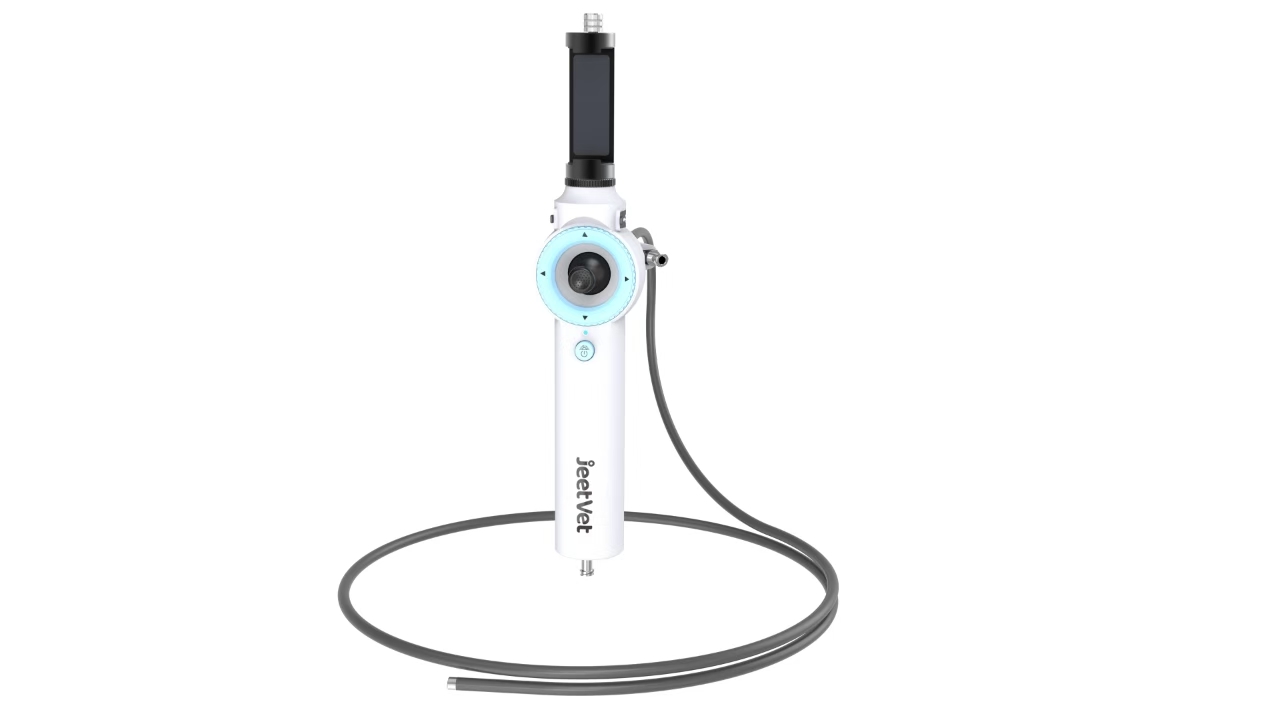
Choosing a veterinary endoscope is usually framed as a format question: portable or console, WiFi or USB. In practice the decision is settled by three clinical variables first — how far the insertion tube must travel, how narrow the anatomy is, and whether the veterinarian needs a working channel for instruments, flushing or suction. Connection format comes after those decisions, not before them.
This comparison covers the formats that dominate purchase conversations in 2026: a portable WiFi endoscope (RAE-107), portable USB endoscopes (RAE-109 and RAE-105), long-working-length systems for large animals (VET-5820, VET-8528), and two ear-and-nasal instruments (RAE-201, RAE-500). Every number below is taken from published product specifications. Where a value has not been published, this guide says so instead of estimating it.
JeetVet is the veterinary brand of Jeet Medical (Shenzhen) Co., Ltd., a manufacturer established in 2020 that develops portable veterinary endoscopes, veterinary otoscopes, veterinary flexible otoscopes and veterinary gastroscopes.
The Comparison Problem: Three Formats, Three Different Clinical Jobs
A clinic that opens with the question 'portable or console?' is comparing packaging, not capability. Instruments sold under the portable label span a wide range. A 600 mm, 3.1 mm flexible otoscope for ear and nasal examination and a 1,500 mm, 8.5 mm large-animal endoscope are both described as portable, yet neither can do the other's job.
Four variables decide the match:
- Anatomy — ear canal and nasal cavity, upper gastrointestinal tract, trachea and bronchi, or abdominal cavity.
- Working length — the distance the insertion tube must cover to reach the target.
- Outer diameter — set by the narrowest structure the instrument must pass through.
- Working channel — required whenever the veterinarian needs to pass forceps, take biopsies, flush, or suction.
Connection format is a fifth variable, but it is a workflow decision rather than a clinical one. It determines whether the veterinarian is tethered to a fixed workstation or free to move, and whether the display is a clinic computer, a tablet, or a phone.
Industry Background: Why Buyer Questions Are Getting More Specific
Veterinary endoscopy has moved from a referral-only service to an in-house capability in many markets, and purchase questions have become more technical as a result. Published research puts the global veterinary endoscopy market at roughly USD 290 million to USD 300 million in 2024/2025, with projections reaching above USD 586 million by 2034 (Straits Research). North America accounted for more than 34.48% of global revenue as of 2024 (Market Research Future).
Two demand drivers sit behind part of that growth. In North America, more than 5 million pets were insured as of 2024 (NAPHIA), which raises the likelihood that owners approve advanced diagnostic procedures. In parallel, AI-assisted diagnostics is identified as a primary trend for veterinary systems, with the AI-in-endoscopy market tracked at a CAGR of 25.7% (Technavio / Strategic Market Research).
Market valuations themselves are not consistent across research firms: Mordor Intelligence estimates the veterinary endoscopy market at USD 332.95 million for 2026, while Data Insights Reports estimates USD 232.6 million for 2025. Buyers citing market size in an internal proposal should note the source and the scope behind each figure.
On the supply side, the competitive set is well documented. Mordor Intelligence lists Karl Storz, Olympus Corporation, Eickemeyer and Fujifilm Holdings among the key global competitors in veterinary endoscopy. Alongside those names, a growing number of manufacturers build at the portable end of the range, which is why questions such as 'which veterinary endoscope brand is best' or 'best veterinary endoscope manufacturer' appear so early in buyer research — and why the useful answer is a specification comparison rather than a brand list.
Regulatory context matters as well. ISO 8600-1 (general requirements) and ISO 8600-3 (field of view) are listed by the FDA as consensus standards for endoscopes. Veterinary devices are regulated separately from human medical devices in most markets, so the practical check is to ask which standards a manufacturer's quality management system is certified against. Jeet Medical states that its quality management system is certified under ISO 13485 by SGS.
The Three Formats, Compared by Specification
Portable WiFi endoscope — RAE-107
RAE-107 is classified as a portable WiFi veterinary endoscope. Its published specification lists a 1,000 mm working length and a 5.8 mm outer tube diameter, with a 2.0 mm working channel. Imaging is High Definition at 1,000,000 pixels, depth of field is 7 mm to 100 mm, and directional control is 360°. Water and air supply and suction are available, a forceps working channel is available, and the instrument is specified as operable by a single veterinarian.
The clinical meaning of the WiFi connection is mobility. The scope is not tethered to a fixed workstation, so it can move between an examination table and an imaging area without re-cabling, and in a mobile practice the animal does not have to be positioned next to a laptop. RAE-105Pro sits in the same family and supports both USB and WiFi connections, with 360° steering, 5.8 mm outer diameter, 2.0 mm working channel and 1,000,000 pixels.
Portable USB endoscopes — RAE-109 and RAE-105
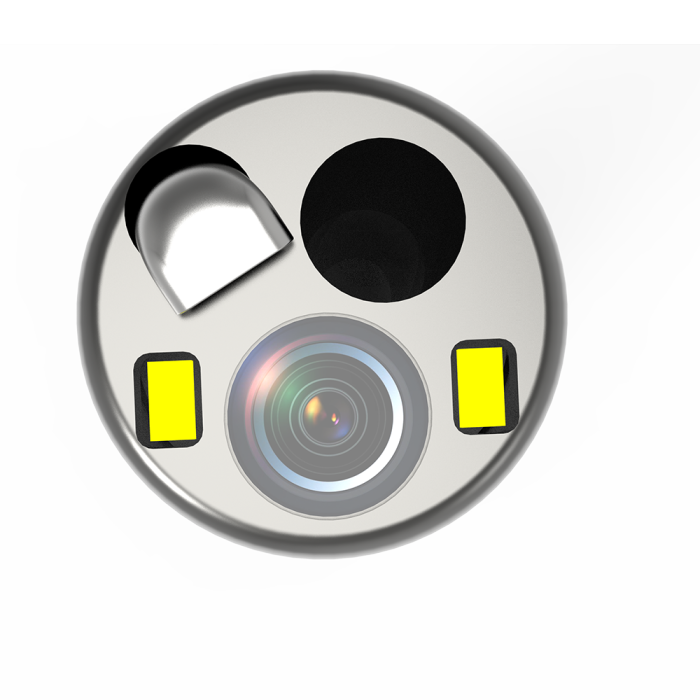
RAE-109 is specified as a portable USB veterinary gastroscope. The published specification includes a 5.8 mm outer diameter, a 2.0 mm working channel, 1,000,000 pixels, a 120° angle of field and a depth of field of 7 mm to 100 mm. Steering is 360°, with bending of 180° up and down and 180° left and right. The instrument weighs under 1 kg and connects over USB to Android, Windows or iOS systems. RAE-105 carries the same core specification with a USB connection.
The practical trade-off of the USB format is straightforward: it is a wired connection between scope and display, but it removes any dependency on wireless pairing and lets the practice use hardware it already owns — a Windows laptop, an Android tablet, or an iPhone or iPad — as the viewing device.
Long-working-length systems for large animals — VET-5820 and VET-8528
Where the target sits deeper in the body, working length becomes the limiting specification. VET-5820 is a portable veterinary gastroscope for large animals with a 1,500 mm working length, a 5.8 mm outer tube diameter and a 2.0 mm inner channel. Imaging is High Definition at 1080P, with a 120° field angle, a 180° bending angle and 360° rotation control. VET-8528 shares the 1,500 mm working length and the 1080P HD specification but uses an 8.5 mm outer tube and a 2.8 mm inner channel, widening the range of instruments that can be passed through the channel.
That 5.8 mm versus 8.5 mm difference is the central decision between the two: the narrower instrument is easier to advance through a smaller lumen, while the wider instrument trades diameter for channel capacity.
Ear and nasal instruments — RAE-201 and RAE-500
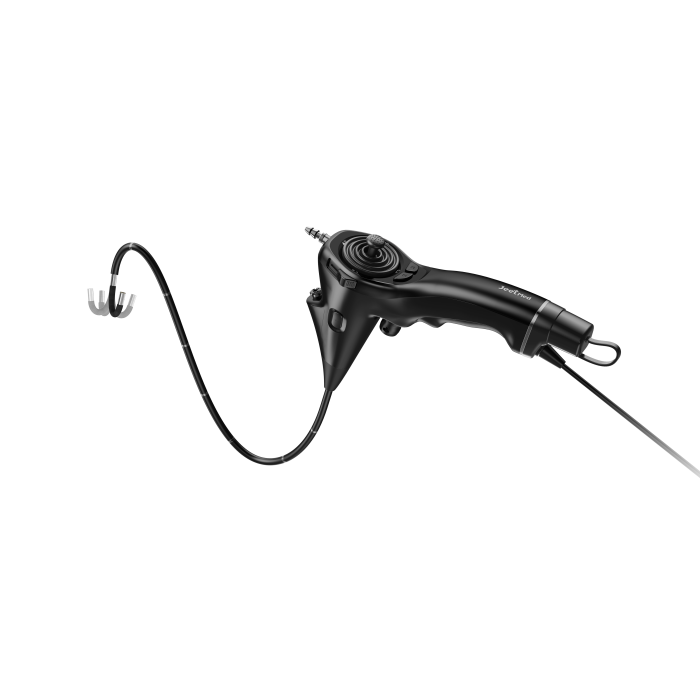
Ear and nasal work follows different rules. RAE-201 is specified as a veterinary flexible otoscope for ear and nasal examination, with a 3.1 mm outer tube diameter, a 600 mm working length and a 1.2 mm inner channel. Bending angle is 180° with up-and-down steering, depth of field is 5 mm to 50 mm, the field angle is 120° and imaging is 160,000 pixels. The narrow diameter and shorter working length suit the ear canal and nasal cavity rather than the gastrointestinal tract.
RAE-500 is a different class of device: a portable smart veterinary otoscope with a 1.85-inch built-in screen, 720 x 720 pixel image and video resolution, a 1-megapixel camera with six LED lights, a 3.9 mm lens, 1x / 1.2x / 1.5x magnification, a 78° field of view, a Type-C port and 8 GB of built-in memory. It is a screen-based digital otoscope rather than a flexible endoscope, and buyers comparing a 'digital veterinary otoscope' or 'video veterinary otoscope' are usually weighing this class of instrument against a flexible otoscope.
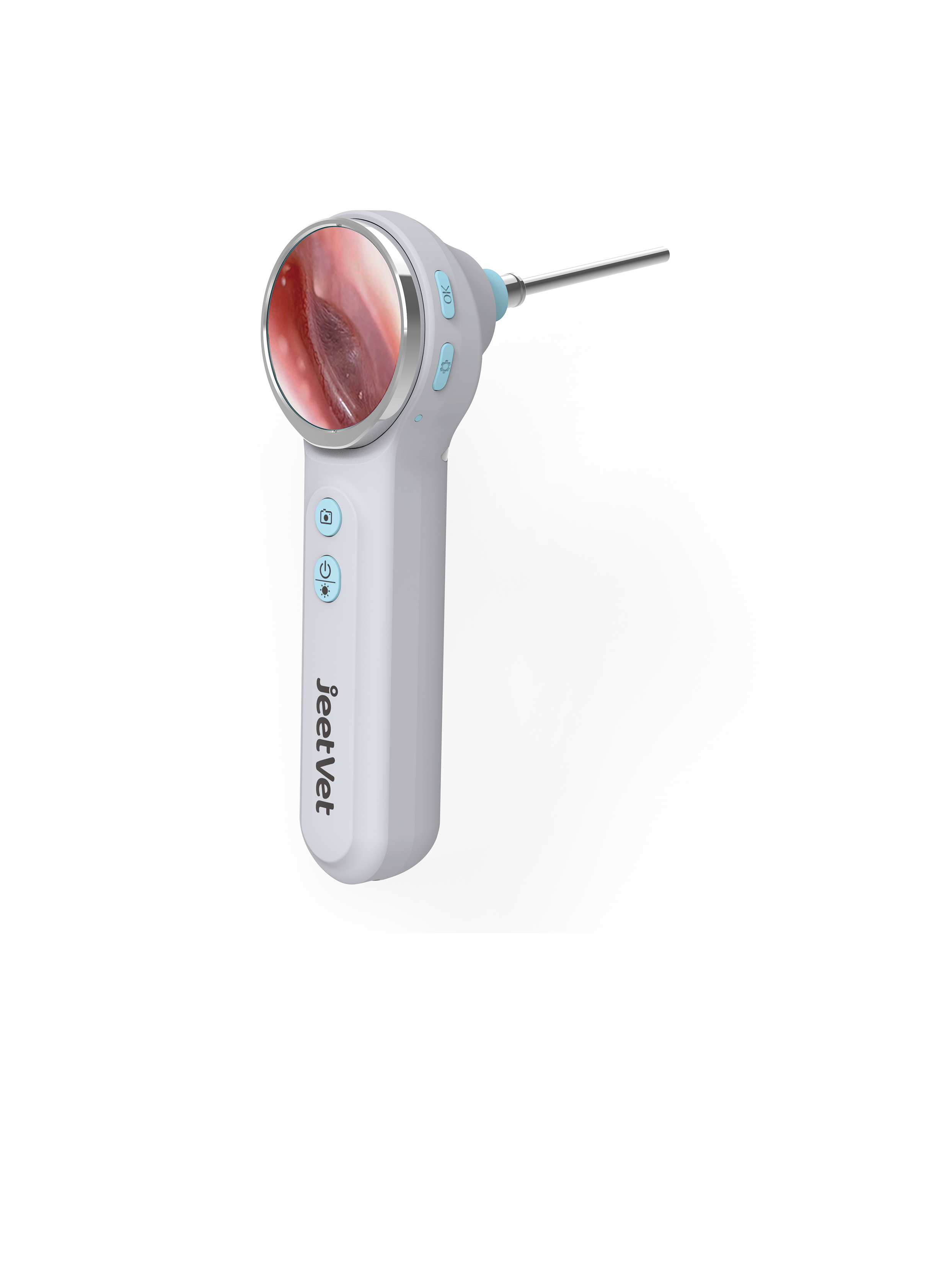
Materials and operating environment across the range
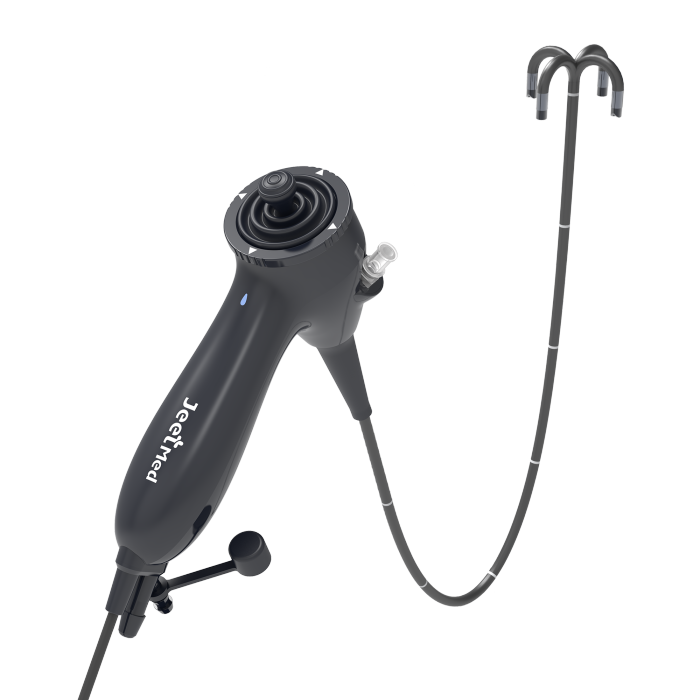
All models in this comparison are constructed from plastic, stainless steel, medical-grade polymer and optical glass. The published operating environment spans 0°C to 40°C operating temperature, -10°C to 55°C storage temperature and relative humidity up to 80% (non-condensing). The instruments are described as designed for veterinary clinics, animal hospitals and field environments, suitable for both small and large animals, and supporting indoor and outdoor use including mobile veterinary services. Operation is continuous for clinical use, and the instruments are reusable after sterilization.
Side-by-Side Specification Table
| Model | Format / type | Primary purpose | Working length | Tube Ø | Channel Ø | Imaging | Bending / steering | Connection |
|---|---|---|---|---|---|---|---|---|
| RAE-201 | Veterinary flexible otoscope | Ear and nasal examination | 600 mm | 3.1 mm | 1.2 mm | 160,000 pixels | 180° bending, up & down steering | Not published |
| RAE-500 | Portable smart otoscope | Ear canal visualization, screen-based | Not published (focal length 5–50 mm) | 3.9 mm lens | Not applicable | 720 x 720 pixels, 1 MP camera, 6 LED | Handheld, 1x / 1.2x / 1.5x magnification | Type-C |
| RAE-107 | Portable WiFi endoscope | General flexible endoscopy | 1,000 mm | 5.8 mm | 2.0 mm | HD, 1,000,000 pixels | 360° directional control | WiFi |
| RAE-105Pro | Portable WiFi endoscope | General flexible endoscopy | Not published | 5.8 mm | 2.0 mm | 1,000,000 pixels | 360° steering, 180° / 180° bending | USB and WiFi |
| RAE-109 | Portable USB gastroscope | Gastroscopy | Not published | 5.8 mm | 2.0 mm | 1,000,000 pixels | 360° steering, 180° / 180° bending | USB (Android, Windows, iOS) |
| RAE-105 | Portable USB endoscope | General flexible endoscopy | Not published | 5.8 mm | 2.0 mm | 1,000,000 pixels | 360° steering, 180° / 180° bending | USB (Android, Windows, iOS) |
| VET-5820 | Portable gastroscope for large animals | Large-animal gastrointestinal examination | 1,500 mm | 5.8 mm | 2.0 mm | HD, 1080P | 180° bending, 360° rotation | Not published |
| VET-8528 | Portable endoscope for large animals | Large-animal gastrointestinal examination | 1,500 mm | 8.5 mm | 2.8 mm | HD, 1080P | 180° bending, 360° rotation | Not published |
Values marked 'not published' do not appear in the current published specification for that model and should be confirmed with the manufacturer before purchase. Sharing a specification does not make two instruments interchangeable — working length and channel diameter decide clinical fit.
Step-by-Step: Matching a Model to a Procedure
The sequence below turns a procedure list into a shortlist. It runs from clinical need to commercial validation, and it works in the same order whether the buyer is a clinic, a distributor, or a mobile practice.
- Write down the procedures you actually perform. Start with the two or three most frequent (ear and nasal examination, upper gastrointestinal examination, foreign body retrieval, tracheal visualization). The candidate list narrows immediately.
- Set the minimum working length. Ear canal and nasal cavity work sits in the 600 mm range (RAE-201). Gastrointestinal examination in a large animal requires 1,500 mm (VET-5820, VET-8528). General flexible work is published at 1,000 mm (RAE-107).
- Check the outer diameter against the narrowest structure in the path. RAE-201 is the thinnest at 3.1 mm; the portable WiFi and USB flexible models are 5.8 mm; VET-8528 is 8.5 mm.
- Decide whether a working channel is needed, and how wide. RAE-201 carries a 1.2 mm channel, most portable flexible models carry 2.0 mm, and VET-8528 carries 2.8 mm. Channel diameter determines which instruments, biopsy tools or suction lines can be used.
- Match imaging to the diagnostic task. 160,000 pixels (RAE-201) and 720 x 720 pixels (RAE-500) suit surface and canal visualization. 1,000,000 pixels with HD (RAE-107, RAE-109) and 1080P HD (VET-5820, VET-8528) suit mucosal and gastrointestinal examination where finer detail matters.
- Choose the connection by workflow. WiFi (RAE-107) suits movement between rooms or field use. USB (RAE-109, RAE-105) suits a fixed workstation built on an existing laptop or tablet. RAE-105Pro supports both.
- Validate before a volume purchase. Confirm the specification sheet, the sterilization routine, and compatibility between the working channel and the instruments the practice already owns. Sampling or a demonstration unit is the standard way to validate before committing to a fleet order.
Use Cases: Which Format Fits Which Practice
Small animal practice (dogs and cats)
The general-purpose case is a 5.8 mm portable flexible instrument with a 2.0 mm channel and 1,000,000 pixels — RAE-107 on WiFi or RAE-109 on USB. The published small-animal application functions cover examination of the duodenum for conditions such as inflammatory bowel disease, tumors and blockages; visualization of the trachea and bronchi for tracheal collapse, bronchitis, tumors and foreign bodies; removal of foreign bodies or masses and flushing of the ear canal; and biopsy and culture sampling. Format, again, is the workflow decision rather than the clinical one.
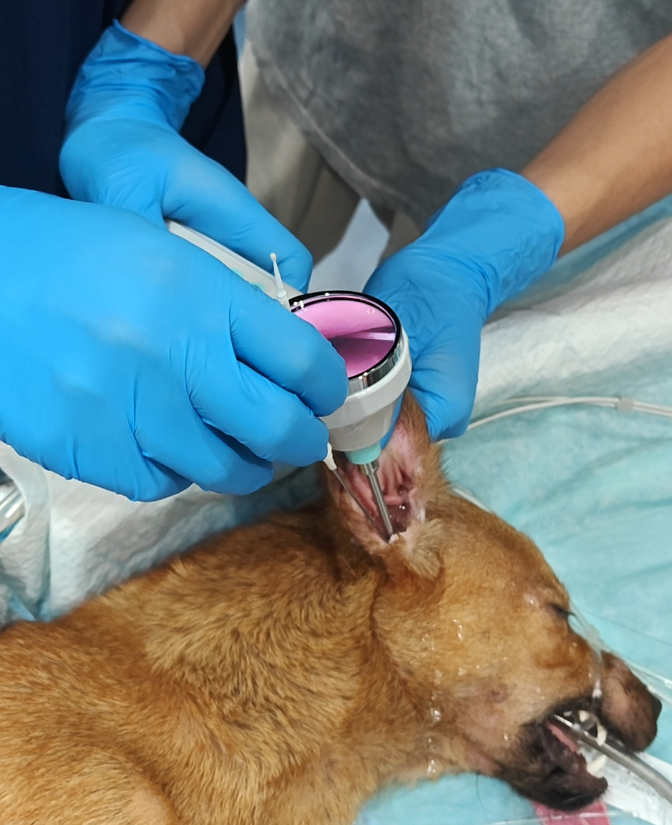
Ear and nasal examination
Chronic otitis and nasal discharge require the narrowest instruments. RAE-201 at 3.1 mm outer diameter with a 1.2 mm channel supports flushing of the ear canal and biopsy or culture sampling where nasal discharge or obstruction needs a cause. RAE-500 adds screen-based digital otoscopy with 8 GB of built-in memory and three magnification steps for routine canal visualization.
Equine and large animal field work
For gastrointestinal examination in large animals, the 1,500 mm working length of VET-5820 and VET-8528 is the decisive specification. VET-5820 (5.8 mm outer diameter, 2.0 mm channel) favors narrow passages; VET-8528 (8.5 mm outer diameter, 2.8 mm channel) favors instrument passage. Both are specified as portable instruments for large animals with 1080P HD imaging and 360° rotation control — relevant when the examination happens at a stable or farm rather than in a clinic, which is the typical setting for an equine veterinary endoscope or a large animal veterinary endoscope in general practice.
Avian, exotic and mobile practice
The published application environment covers clinics, animal hospitals and field settings, including mobile veterinary services, for both small and large animals, and covers avian and exotic animal endoscopy as a project type. For very small patients, RAE-201's 600 mm length and 3.1 mm diameter are the deciding specifications. For vehicles and farm visits, RAE-107's WiFi connection removes the need for a fixed workstation at the point of examination.
Frequently Asked Questions
Do portable veterinary endoscopes have to meet the same optical standards as human medical endoscopes?
Not automatically. The standards exist and are referenced by regulators, but their application to veterinary devices depends on the market. ISO 8600-1 (general requirements) and ISO 8600-3 (field of view) are listed by the FDA as consensus standards for endoscopes. Because veterinary devices are regulated separately in most markets, the practical due-diligence step is to ask which standards a manufacturer's quality management system is certified against. Jeet Medical states ISO 13485 certification by SGS for its quality management system, and its Multi-Camera Automatic Fusion System V1.0 holds a Computer Software Copyright Registration Certificate (No. 9413508) issued by CCPD in China.
Can a portable WiFi veterinary endoscope handle the same clinical work as a USB model?
On published specifications, RAE-107 (WiFi) and RAE-109 (USB) share a 5.8 mm outer diameter, a 2.0 mm working channel and 1,000,000 pixels. RAE-107 publishes a 1,000 mm working length and adds water and air supply, suction and a forceps working channel. RAE-109 publishes 180° up-and-down and left-and-right bending with 360° steering, a weight under 1 kg and compatibility with Android, Windows and iOS, but its working length is not published. In most cases the difference is workflow rather than capability — except where working length is what determines whether the target can be reached at all.
Is a portable veterinary endoscope more affordable for a small clinic?
Cost depends on configuration rather than on format alone. Imaging resolution, working length, outer diameter, channel size, rotation mechanism and the display device the practice already owns all move the number. Two clinically sound ways to control cost are to choose the narrowest specification that still satisfies the procedure list, and to buy one platform that covers several procedures rather than two single-purpose instruments. JeetVet does not publish list prices; a configuration-based quote should be requested directly so that the comparison is like for like.
Can a practice request a sample or a demonstration unit before ordering?
Yes. Sampling and demonstration are the standard validation steps before a fleet purchase, particularly for working channel compatibility and for the sterilization routine. Buyers can request specifications, sampling options and a configuration-based quote through JeetVet's contact channels, or start with the downloadable product catalogue: JeetVet veterinary endoscope catalogue (PDF). Email troy@jeetmed.com, telephone +86 755-23251842 or +86 13381945549, or WhatsApp 8613816158380.
How should buyers evaluate supply continuity and lead time?
Ask about production capacity, facility and export experience rather than about promises. Jeet Medical operates from a 5,000 m² manufacturing facility with approximately 130 employees and an R&D team of 30 engineers, and its company profile describes an annual output capacity of 10,000 units. Export business accounts for 50% of total sales, with major markets in Europe, North America, Southeast Asia, Latin America and the Middle East. Facility and capacity facts of this kind are the concrete basis for judging whether a supplier can support repeat orders, and they matter more to distributors than any general statement about reliability.
Conclusion: A Decision Framework, Not a Ranking
The format labels — WiFi, USB, console-style — describe how an instrument connects, not what it can examine. The three decisions that actually determine fit are working length, outer diameter and channel diameter, and each of them maps to a specific procedure in the list above.
If the procedure list is dominated by ear and nasal work, the specification baseline is short and thin: RAE-201 with a 600 mm working length, 3.1 mm outer diameter and 1.2 mm channel, or RAE-500 where a screen-based digital otoscope suits routine canal visualization. If the practice performs general flexible small-animal work and needs to move between rooms or vehicles, the relevant specification is 5.8 mm outer diameter with a 2.0 mm channel and 1,000,000-pixel HD imaging — RAE-107 on WiFi, RAE-109 on USB, or RAE-105Pro where both connections are useful. If the case is gastrointestinal examination in a large animal, working length rises to 1,500 mm, and the choice narrows to VET-5820 at 5.8 mm tube diameter with a 2.0 mm channel or VET-8528 at 8.5 mm with a 2.8 mm channel, with 1080P HD imaging and 360° rotation control on both.
Two checks close the process. First, confirm every value that is marked 'not published' in the specification table directly with the manufacturer, because assumptions about working length or channel size are expensive to discover after delivery. Second, validate the configuration on a sample or demonstration before scaling to a multi-unit order. Documentation, sampling and configuration details for the full range are available at jeetvet.com, with additional buying guides published on the JeetVet blog.
Next step: match the specification to your procedure list
Send the two or three procedures your practice or clinic network performs most often, the animal types involved, and the display device you intend to use. JeetVet can respond with a configuration that matches working length, outer diameter and channel size to those procedures, together with sampling options and commercial terms.
Download the catalogue: JeetVet veterinary endoscope product catalogue (PDF)
Email: troy@jeetmed.com | Tel: +86 755-23251842 / +86 13381945549 | WhatsApp: 8613816158380 | WeChat: 13381945549
Address: 9th Floor, Block B, Building 1, No. 76 Baohe Avenue, Longgang District, Shenzhen, China