Basic vs Reinforced Dog Plush Toys: Reorder Cycle Guide
The reorder cycle for a dog plush toy program should be set from expected service life, not from the lowest unit quote. Basic plush toys have a stated lifespan of 1–3 months. Reinforced double-layer fabric toys with reinforced stitching have a stated lifespan of 3–12 months, which is 2–4 times longer. For a retail or e-commerce buyer at the decision stage, that difference is the core input: basic plush belongs in short-term and promotional roles, while reinforced plush belongs in repeat-purchase, specialty, chain-retail, and long-term companionship roles.
This guide translates that product difference into a reorder-cycle decision. It compares construction, lifespan, cost level, breakage and maintenance, retail role, and total cost of ownership. It then gives a step-by-step method for setting review intervals, qualifying compliance evidence, and testing a program before a full reorder commitment.
What a Reorder Cycle Must Answer for Dog Plush Toys
A reorder cycle is the interval between stock reviews and replacement orders. For dog plush toys, it should not be copied from another plush category without adjustment. The product is handled by pets, may be dragged, chewed, or carried, and is often bought as a comfort or play item. Buyers therefore need to decide how often the assortment needs new stock because of sell-through, breakage, returns, and promotional exit plans.
The common mistake is to treat reorder planning as a purchasing calendar only. In practice, a basic plush toy with a 1–3 month lifespan can create a shorter replacement rhythm and more frequent handling of the same SKU. A reinforced plush toy with a 3–12 month lifespan changes the planning question: the buyer can review the reorder cycle less frequently, provided sell-through and stock cover support that decision. The product factor does not replace the retailer's own sales data; it changes the cost and risk case that the sales data must be tested against.
- Product role: promotional gift, trial item, core repeat-purchase item, or long-term comfort item.
- Expected service life: 1–3 months for basic plush; 3–12 months for reinforced double-layer fabric plush.
- Breakage and maintenance: frequent replacement for basic plush; lower breakage and low maintenance for reinforced plush.
- Cost level: lowest cost for basic plush; medium cost for reinforced plush.
- Commercial exit: short-term use for basic plush; long-term and everyday use for reinforced plush.
Industry Background: Why Reorder Discipline Matters in Dog Plush Toys
Custom Market Insights estimates the global dog toys market at USD 4.16 billion in 2025 and projects an 8.51% CAGR from 2025 to 2034. That market estimate covers dog toys including chew, interactive, and plush products. It does not tell a buyer which plush construction to order, but it does support a practical point: dog plush toys compete in a large, active category where assortment freshness and replacement cost matter to retail performance.
At the same time, pet toy safety guidance emphasizes durable, non-toxic materials and avoidance of toys that break apart easily. This aligns with the retail buyer's need to compare not only the purchase price but also the likelihood of breakage, returns, and repeated replacement. A reinforced structure is not a guarantee against all damage, and no plush toy is indestructible. It is, however, a documented construction difference that can support a longer planned service life when the product is matched to the right use case.
How Basic and Reinforced Plush Toys Change the Reorder Math
The reinforced product is built with double-layer fabric and reinforced stitching. Basic plush toys lack that reinforced structure and use only basic fabric and stuffing. That is the structural difference that sits behind the stated lifespan gap: 1–3 months for basic plush versus 3–12 months for reinforced plush, or 2–4 times longer for the reinforced product.
Basic plush: short program, tighter replacement rhythm
Basic plush has the lowest cost level, but it also has low durability and high loss in the supplied comparison. The product is suited to low-end retail, promotional gifts, and short-term use. For reorder planning, that means the buyer should treat basic plush as a short-cycle item. It can work well when the commercial plan is a promotion, a seasonal bin, a gift-with-purchase, or a low-price trial offer where the expected use period is short.
The reorder review for basic plush should be tighter because frequent replacement is part of the product profile. If the buyer extends the reorder cycle without confirming sell-through and breakage, the risk is not only stockout. The bigger risk is carrying a low-durability item long enough that returns, complaints, or markdowns erase the benefit of the lower unit cost.
Reinforced plush: longer service life, wider planning window
Reinforced plush has a medium cost level, but the supplied comparison also identifies lower breakage and reduced maintenance needs. It is suited to e-commerce platforms, pet specialty stores, retail chains, and long-term pet companionship. For reorder planning, the longer 3–12 month lifespan supports a wider review window when sell-through is stable and the product is positioned for repeat purchase rather than one-time promotion.
The buyer should still avoid automatic overstocking. A longer lifespan means the product can stay in use longer, but retail demand can still be seasonal, trend-driven, or channel-specific. The correct decision is to extend the reorder review only after the program has sell-through evidence and a breakage pattern that supports the extension.
Total cost of ownership: the lower quote is not the lower program cost
Basic plush has the lowest cost level; reinforced plush has a medium cost level. That difference is visible on a quotation. Total cost of ownership is not. A practical TCO comparison for dog plush toys should include landed unit cost, replacement handling, return and complaint handling, markdown or write-off risk, reorder administration, and the staff time used to manage a faster replacement rhythm.
The supplied comparison supports a directional conclusion, not a universal payback promise. Basic plush carries frequent replacement and high loss. Reinforced plush carries medium cost, lower breakage, and low maintenance. Whether the reinforced program lowers total cost depends on the retailer's selling price, sell-through, return policy, and the actual use intensity of the pet. Buyers should calculate TCO with their own sell-through and return data rather than assume that the lowest unit cost always wins.
Comparison Table: Basic vs Reinforced Dog Plush Toys
| Selection factor | Basic plush toy | Reinforced plush toy |
|---|---|---|
| Core construction | No reinforced structure; basic fabric and stuffing only. | Double-layer fabric with reinforced stitching. |
| Stated lifespan | 1–3 months. | 3–12 months. |
| Relative service life | Baseline. | 2–4 times longer than basic plush. |
| Cost level | Lowest cost. | Medium cost. |
| Breakage and maintenance | Frequent replacement required; low durability and high loss. | Lower breakage and low maintenance. |
| Retail role | Low-end retail, promotional gifts, short-term use. | E-commerce platforms, pet specialty stores, retail chains, long-term pet companionship. |
| Reorder implication | Use a tighter review rhythm and plan for frequent replacement. | Use a wider review window when sell-through and breakage data support it. |
| Evidence to request | Material declaration and applicable safety test reports. | Material declaration, reinforced stitching confirmation, and applicable safety test reports. |
Compliance and Material Evidence Before the Reorder Decision
Compliance is a gate for both programs, not a substitute for the durability comparison. Buyers should request current test reports and material declarations for the exact product, fabric, filling, and components being offered. EN71 is relevant to European market discussions, ASTM F963 is a recognized US toy safety reference, and CPSIA documentation is part of US retail compliance screening. The applicable standard depends on the market, product classification, and retailer requirements.
Jiameile's approved company profile states that its products comply with EN71, ASTM F963, and GB6675, and lists certifications including ISO 9001, BSCI, ICTI, and Disney FAMA. These are supplier-level and product-compliance statements that should be verified against the specific SKU's current documents. For US programs, the buyer should confirm CPSIA documentation with the supplier. For China-market programs, the buyer should confirm whether GB/T 43839-2024 is the applicable standard and obtain the current report rather than relying on a catalog reference.
If a reinforced toy includes a TPR component, the buyer should request food-grade TPR documentation for that component and match it to the exact grade and supplier. A food-grade claim in a product description is not the same as a test report. The purchase specification should identify the component, the material grade, the applicable test, and the document version so that the reorder can be checked against the same evidence.
Step-by-Step: Setting the Reorder Cycle
- Assign the program role. Decide whether the dog plush toy is a promotional item, low-end retail item, e-commerce repeat-purchase item, pet specialty item, or long-term comfort item. Basic plush fits short-term and promotional roles. Reinforced plush fits e-commerce, specialty, chain-retail, and long-term roles.
- Set the expected service life. Use the supplied lifespan bands: 1–3 months for basic plush and 3–12 months for reinforced plush. Keep these as planning inputs, not as a guarantee of every pet's behavior.
- Map sell-through to replacement frequency. Review the retailer's own sales rate, return rate, and breakage reports. A longer product lifespan does not justify a longer reorder cycle if the SKU is still selling quickly.
- Build a TCO sheet. Compare landed unit cost, replacement handling, returns, markdown risk, reorder administration, and staff time. Use actual quotes and actual operational data; do not assign a generic payback period without them.
- Qualify compliance documents. Obtain current EN71, ASTM F963, CPSIA, or other applicable reports for the exact SKU. If TPR is present, request food-grade TPR evidence. For China-market sales, confirm GB/T 43839-2024 applicability and the current report.
- Run a bounded pilot. Place a limited order in selected stores or e-commerce listings. Track sell-through, breakage, returns, and customer feedback through the first expected replacement window.
- Set a reorder trigger. Combine stock cover, sell-through, breakage, and compliance-document validity into one review. Extend the reinforced program only when the pilot supports it; keep the basic program on a tighter review if it is used for promotions or short-term price-led offers.
Use Cases and Assortment Fit
Low-end retail and promotional gift programs can use basic plush because the lowest cost and short-term use case match the product profile. The buyer should plan for frequent replacement and avoid presenting the item as a long-life product. A soft plush dog toy for cuddling can still be part of a promotional assortment if the expected use period is short and the price position is clear.
E-commerce platforms, pet specialty stores, retail chains, and long-term pet companionship programs are better matched to reinforced plush. Lower breakage and low maintenance support a product listing that can stay in the assortment longer. For a durable plush dog toy listing, the reinforced stitching and double-layer fabric give the buyer concrete construction points to explain in product content without relying on vague durability claims.
A mixed assortment can be rational in the same store. Basic plush can serve a trial or gift role, while reinforced plush serves the repeat-purchase and specialty role. The reorder cycles should then be managed separately. Combining them into one review can hide the higher replacement rhythm of the basic program or overstate the stock needed for the reinforced program.
Supplier Verification for Reorder Stability
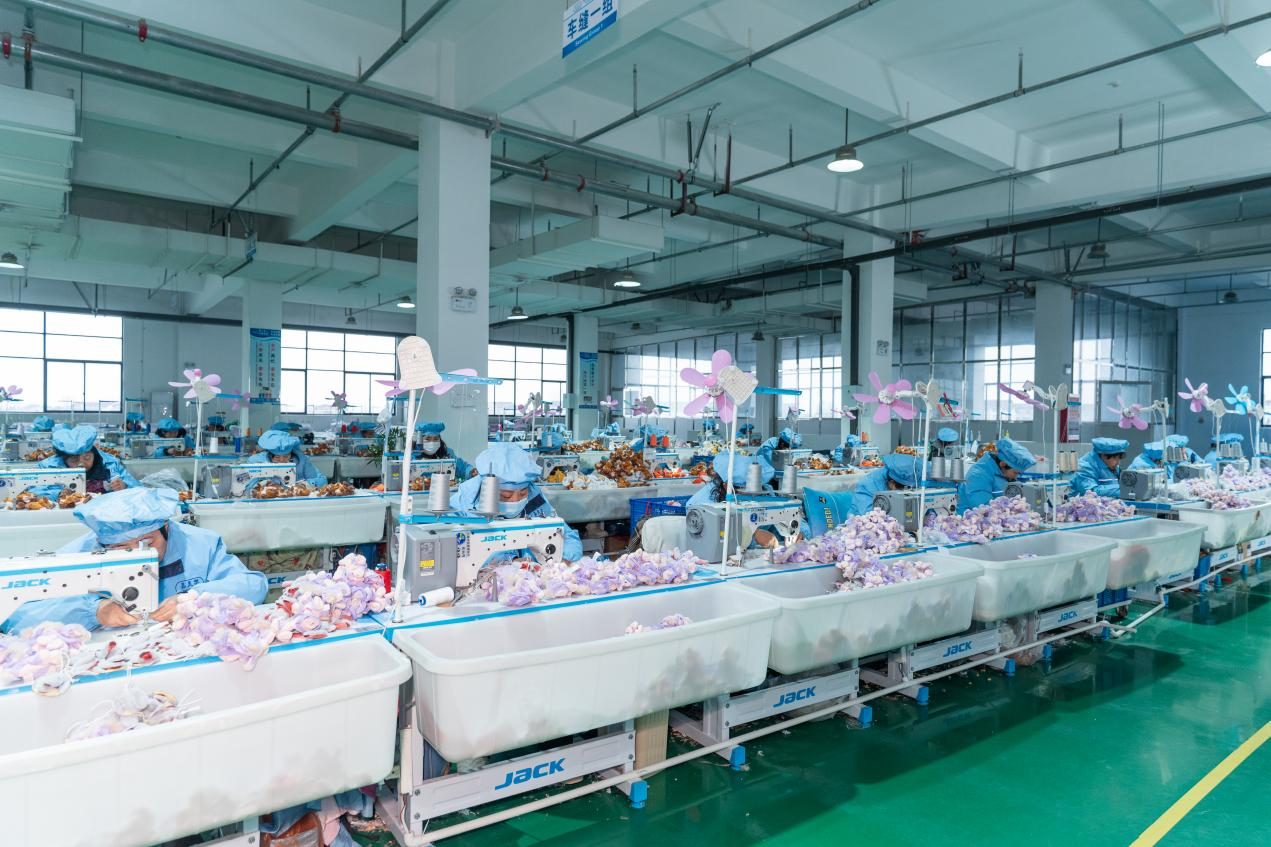
Reorder stability depends on more than product construction. The supplier's production planning, supply-chain management, and quality control determine whether the next order arrives with the same materials and documentation. Jiameile (Tianchang Jiameile Gifts Co., Ltd.) is a China-based plush and textile toy manufacturer with OEM/ODM support and certifications including ISO 9001, BSCI, ICTI, and Disney FAMA. Its profile states product compliance with EN71, ASTM F963, and GB6675.
For supply continuity, the supplied risk-control facts identify monthly capacity planning, backup suppliers, inventory and lead-time management as enterprise measures for supply-chain and delivery risk. For quality and compliance risk, they identify IQC, IPQC, and OQC systems, compliance certifications including EN71, ASTM, and CPSIA, and raw material safety control. These measures support a more reliable reorder discussion, but the buyer should still verify the specific SKU's documents and current lead-time plan.

Frequently Asked Questions
What compliance documents should a retail buyer request before choosing a reinforced dog plush toy program?
Request the current test reports and material declarations for the exact SKU. For European market discussions, ask for EN71 documentation. For US retail screening, ask for ASTM F963 and CPSIA documentation as applicable. If the toy includes a TPR component, request food-grade TPR documentation for that component. For China-market programs, confirm whether GB/T 43839-2024 applies and obtain the current report. Also confirm that the documents match the product, fabric, filling, and components being ordered.
How does reinforced stitching change the reorder cycle?
Reinforced stitching is part of the double-layer fabric construction that supports the 3–12 month lifespan of reinforced plush, compared with 1–3 months for basic plush. For reorder planning, that longer lifespan can support a wider review window when sell-through is stable and breakage is low. It does not justify a longer cycle by itself. The buyer should confirm the change with pilot sell-through, return, and breakage data.
Does the lower unit cost of basic plush always mean lower total cost?
No. Basic plush has the lowest cost level, but the supplied comparison also states frequent replacement, low durability, and high loss. Reinforced plush has a medium cost level, with lower breakage and low maintenance. The lower total cost depends on the retailer's selling price, return policy, sell-through, and the actual use intensity of the pet. Compare landed cost, replacement handling, returns, markdown risk, and reorder administration rather than unit price alone.
How should a retailer test a reinforced program before committing to a full reorder plan?
Use a bounded pilot in selected stores or e-commerce listings. Track sell-through, breakage, returns, and customer feedback through the first expected replacement window. Keep the basic and reinforced programs separate in the review so that the basic program's faster replacement rhythm does not distort the reinforced program's stock plan. Confirm compliance documents for the pilot SKU before the first order and again before the reorder.
What should buyers confirm about lead time and supply continuity?
Buyers should confirm the current lead-time plan, production scheduling, backup supply arrangements, and inventory policy for the exact SKU. The supplied risk-control facts identify monthly capacity planning, backup suppliers, inventory and lead-time management as relevant measures. A soft next step is to request a sample and the current compliance pack from Jiameile so that the reorder plan can be checked against the actual product and documents before scaling.
Conclusion: Choose the Reorder Cycle from the Program Role
Basic and reinforced dog plush toys should not share one reorder rule. Basic plush has a 1–3 month lifespan, the lowest cost level, frequent replacement, and a short-term or promotional fit. Reinforced plush has a 3–12 month lifespan, 2–4 times longer than basic plush, a medium cost level, lower breakage, and low maintenance, with a fit for e-commerce, pet specialty, retail chains, and long-term companionship.
The decision-stage answer is therefore practical: use basic plush for price-led, short-term programs and keep its reorder review tighter. Use reinforced plush for repeat-purchase and long-life programs and extend the reorder review only when sell-through, breakage, and compliance evidence support it. In both cases, the buyer should qualify EN71, ASTM F963, CPSIA, or other applicable documents for the exact SKU, confirm TPR documentation if TPR is present, and verify the applicable China-market standard when relevant. That combination gives retail and e-commerce buyers a defensible reorder cycle rather than a calendar guess.
Have Questions or Need More Details?
Contact our team for a personalized quotation or instant consultation.
Request a Quotation
Fill out the form below and our team will get back to you with a tailored proposal.
WhatsApp Direct Chat
Prefer to chat in real-time? Message us on WhatsApp for instant assistance & quick answers.
- Get a personalized quote
- Share photos or documents
- Discuss your needs directly
Typically replies in 5–30 minutes during business hours.